Dr Jitendra Singh Releases Smart Calories and Common Sense a book written by Dr Anoop Misra

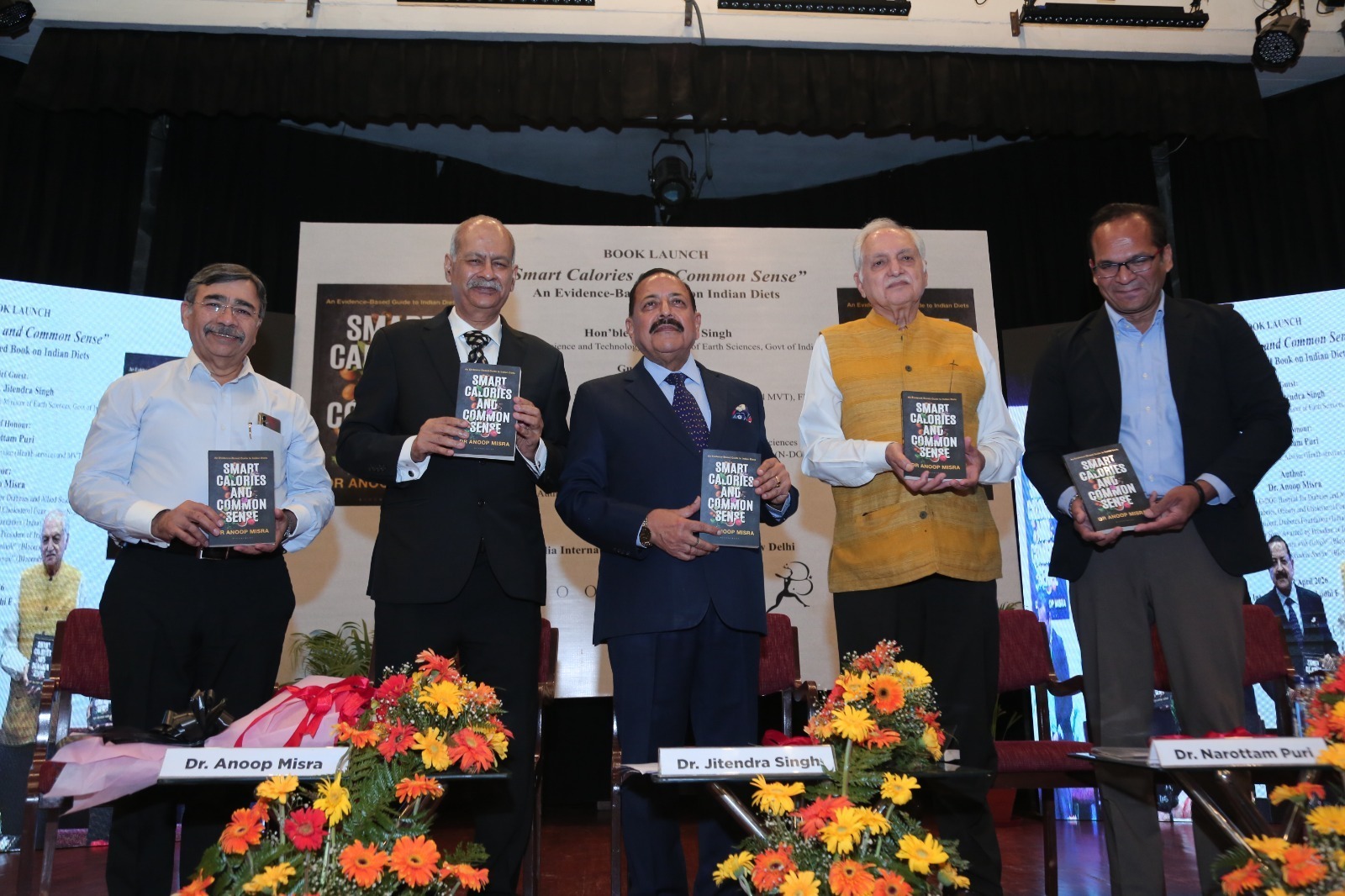
New Delhi, Apr 25: Union Minister of State (Independent Charge) for Science & Technology, Earth Sciences, and MoS PMO, Personnel, Public Grievances, Pensions, Atomic Energy and Space Dr Jitendra Singh has released the book ‘Smart Calories and Common Sense: An Evidence-Based Guide to Indian Diets’, authored by Dr Anoop Misra, Chairman, Fortis-C-DOC Centre of Excellence for Diabetes, Metabolic Diseases and Endocrinology, at the India International Centre, New Delhi.
Speaking at the launch, Dr Jitendra Singh emphasized that science has yet to reach a definitive conclusion on the ideal diet and that dietary choices must be individualized to metabolism and lifestyle. He cautioned against the growing spread of misinformation, noting that diet “cannot be reduced to generalized prescriptions or uniform charts.”
He highlighted the evolving nature of nutrition science and the need for accurate, evidence-based health communication, while cautioning against the commercialization of complex or fashionable diet practices. The Minister also underscored the importance of meal timing, portion control, and individual response to food. Concluding, he reiterated that there is no single “ideal diet” for all, urging a balanced, informed approach guided by moderation and scientific evidence.
The event was attended by distinguished members of the medical and scientific community. Dr Narottam Puri, Advisor (Medical), Fortis Healthcare and Advisor (Health Services and MVT), FICCI, was present as the Guest of Honour.
Published by Bloomsbury India, Smart Calories and Common Sense addresses a critical gap in India-specific nutrition literature, combining decades of clinical experience with rigorous scientific evidence to provide clarity in a field often clouded by myths and conflicting advice.
Key Highlights of the Book:
- Bridges the gap in India-specific, evidence-based nutrition literature, addressing confusion created by conflicting diet trends and social media myths
- Transforms complex nutritional science into simple, practical guidance for the general public while remaining a robust reference for clinicians and researchers
- Critically evaluates popular and controversial diets—including intermittent fasting, ketogenic diets, and diabetes reversal strategies—with balanced discussion of benefits, risks, and suitability for Indians
- Data-driven analysis of commonly debated foods such as mangoes, oils, nuts, dry fruits, sweeteners, and spices—moving beyond “superfood vs. villain” narratives
- Strong focus on metabolic diseases, including diabetes, obesity, fatty liver, and cardiovascular risk, with clinically relevant insights
- Emphasizes portion size, frequency, food combinations, and preparation methods, rather than simplistic “good vs bad food” labels
- Includes practical ‘Easy Reading’ sections answering everyday dietary dilemmas in a clear, relatable manner
- Grounded in decades of research and clinical experience, including Indian data, ensuring cultural relevance and scientific rigor
- Promotes rational, sustainable dietary decision-making, helping readers replace myths with data and opinions with evidence
Dr Anoop Misra noted that the book aims to “replace confusion with clarity, myths with data, and opinions with evidence,” empowering readers to make informed and sustainable dietary choices.

