Telangana’s fruits, vegetables, Turmeric and Chilli have strong export potential: Minister, Tummala Nageswara Rao

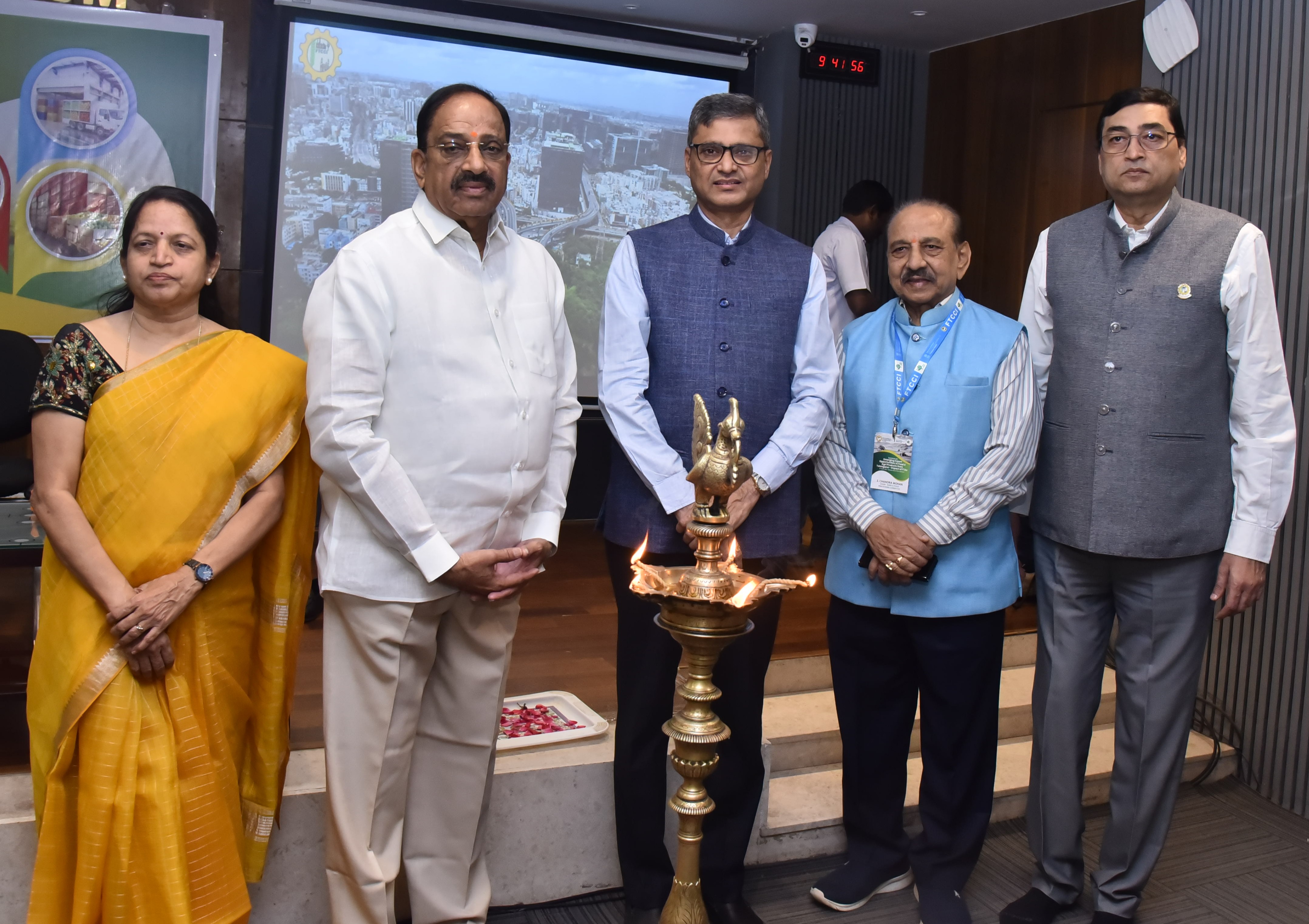
Hyderabad, Mar 13: The Federation of Telangana Chambers of Commerce and Industry (FTCCI), in association with the Directorate General of Foreign Trade (DGFT) and the Agricultural and Processed Food Products Export Development Authority (APEDA), organized a seminar on “Emerging Export Opportunities in Food & Agri Products from Telangana – Impact of FTAs” at KLN Prasad Auditorium, Federation House, Hyderabad on Friday.
The seminar was inaugurated by Sri Tummala Nageswara Rao, Hon’ble Minister for Agriculture, Marketing, Co-operation and Handlooms & Textiles, Government of Telangana, who attended as the Chief Guest. Senior officials from DGFT and APEDA, exporters, food processors, Farmer Producer Organizations (FPOs), agri-entrepreneurs and industry representatives also participated in the program.
In his keynote address, Sri Tummala Nageswara Rao highlighted Telangana’s remarkable growth in agriculture over the past few years, noting that the State has emerged as the number one producer of paddy in the country. He emphasized that while production levels have increased significantly, the next priority is to ensure better value realization for farmers through exports, value addition, and food processing.
The Minister stressed the importance of strengthening grading, processing, packaging, branding, and compliance with international quality standards to enable Telangana’s agricultural products to compete successfully in global markets. He noted that the State Government, under the leadership of Chief Minister Sri Revanth Reddy, is focusing on the development of food processing infrastructure and agri-based industries.
He highlighted initiatives such as the Mega Food Park being established at Buggapadu in Khammam district, which will provide modern processing facilities, cold storage, logistics support, and value addition opportunities for farmers and food processing industries.
The Minister also pointed out the strong export potential of Telangana’s horticulture sector, including fruits, vegetables, and spices such as turmeric and chilli. With improved supply chains, pack houses, cold storage infrastructure, and logistics networks, these sectors can significantly expand their presence in international markets.
At the same time, he emphasized that while promoting agricultural exports, the interests of Indian farmers must be safeguarded, particularly in the context of international trade agreements and tariff policies affecting agricultural commodities.
Earlier, Sri R. Ravi Kumar, President, FTCCI, welcomed the dignitaries and participants. He highlighted Telangana’s growing role in India’s agricultural export landscape, noting that the State produces around 168 lakh metric tonnes of rice annually and has strong potential in exports of rice, spices, fruits, vegetables, and processed food products.
He emphasized the need to strengthen export infrastructure, including pack houses, integrated cold chain systems, food testing laboratories, and refrigerated logistics networks, to support exporters and ensure compliance with international standards. He also underscored the importance of building export-oriented Farmer Producer Organization (FPO) clusters to integrate farmers with global value chains.
Sri Ravi Kumar also requested the Government to consider the development of integrated agri-export processing and logistics zones in Telangana to support the growing food processing and export ecosystem.
Introducing the seminar, Sri S. Chandra Mohan, Chairman, Agro & Food Processing Committee, FTCCI, said the program aims to provide practical insights into export opportunities, international trade trends, and the implications of Free Trade Agreements for the agri and food processing sectors.
He noted that the seminar would help exporters, food processors, agri-entrepreneurs, and FPOs understand global market requirements, export financing, regulatory compliance, and opportunities arising from evolving global trade dynamics.
Officials from DGFT and APEDA —Mr Akshay SC, Joint Director General of Foreign Trade, Directorate General of Foreign Trade(DGFT), Govt of India, and RP Naidu, Regional Head of APEDA delivered technical presentations on India’s trade strategy, export procedures, market access, quality standards, and support mechanisms available for agri exporters.
Mr Akshay SC, DGFT explained what is FTA (Free Trade Agreement) and how it helps.
A Free Trade Agreement (FTA) is a trade agreement between two or more countries to reduce or eliminate tariffs (import duties) and trade barriers on goods and services between them he said
The goal of an FTA is to make trade easier, cheaper, and faster between the participating countries, he added.
India has FTAs with many countries or regions. 250 plus participants through DGFT website and familiarised them with registration process.
Naidu of APEDA said APEDA covers about 700+ agricultural and processed food products under its export promotion mandate. Exports of agricultural and processed food products promoted by APEDA reached approximately ₹2.45 lakh crore in the last financial year. Exports of non-basmati rice facilitated by APEDA reached around ₹55,000 crore last year.
Speaking further he added that Nizamabad has developed into an important rice processing hub, with several rice mills approved for exports to the United States. These mills are performing well in global markets and contributing significantly to India’s non-basmati rice exports.
The seminar also featured panel discussions on export finance, quality and compliance requirements, and product-specific export opportunities from Telangana, along with discussions on the role of government support in strengthening the agri-export ecosystem.
The program witnessed active participation from exporters, food processing units, agri-entrepreneurs, logistics providers, consultants, and Farmer Producer Organizations, who engaged in discussions on expanding Telangana’s presence in global agricultural markets.
The seminar concluded with a strong emphasis on collaboration between government agencies, industry bodies, exporters, and farmers to position Telangana as a major hub for agricultural and food product exports.
The half day seminar featured technical sessions. Experts from government agencies and industry shared insights on India’s trade strategy and Free Trade Agreements, product–market mapping under FTAs, export finance and credit facilities, managing export risks through credit insurance, and export documentation and certification for new exporters. A panel discussion on product-specific export opportunities from Telangana and state support brought together representatives from the Department of Industries, Spices Board, and industry leaders to discuss strategies for strengthening the state’s agri-export ecosystem.
