Author: admin

  • Brookhaven Lab Builds Successful ‘Cloud in a Box’

    Feb 18: In a quiet laboratory, a team of atmospheric scientists and engineers at the U.S. Department of Energy’s (DOE) Brookhaven National Laboratory recently gathered around a workstation to watch as little floating speckles, illuminated by a curtain of green light, swirled into a haze, then wisp of a cloud.

    This instance of creation unfolded inside a programmable atmosphere they’d built from scratch.

    “We saw the birth of a cloud,” said Brookhaven atmospheric scientist Arthur Sedlacek. “There was a lot of excitement and happiness, and relief, in that moment. Needless to say, we definitely weren’t quiet after that.”

    Researchers will use the new convection cloud chamber, a customizable one-cubic-meter metal box, to tackle fundamental unknowns that remain about clouds.

    Clouds might seem simple — white, fluffy shapes drifting overhead — but they remain one of the biggest sources of uncertainty in models of weather and Earth’s complex atmospheric system.

    Scientists know that clouds play important roles in regulating Earth’s energy balance, controlling how water moves through the atmosphere, driving storm formation, and influencing how intense weather systems become. Still, researchers’ understanding of the physics underlying cloud processes is limited.

    “We need repeatable, controlled experiments in order to tease out the key factors and mechanisms governing those underlying small-scale processes,” Sedlacek said. “For example, one long-standing unsolved problem in our community is how drizzle or raindrops are formed in warm clouds. Why do some clouds precipitate while others do not?”

    Collecting key and abundant measurements from clouds in nature, while challenging, provides some data needed to address these questions. Brookhaven scientists and their collaborators have piloted specially equipped aircraft through clouds to collect such data. But each flythrough hits a cloud that has already changed since the plane’s first pass.

    The cloud chamber will allow scientists to study clouds in a more controlled setting.

    “The cloud chamber provides us with a unique environment to isolate and rigorously study important but still poorly understood cloud microphysical processes,” said Brookhaven atmospheric scientist Fan Yang. “We can use it to mimic real atmospheric clouds under well-controlled laboratory conditions and perform detailed, repeatable cloud measurements.”

    Watch as a cloud forms in the chamber. Scientists use a green laser to see the process. (Brookhaven National Laboratory)

    Controlled cloud making

    Brookhaven Lab’s convection cloud chamber combines ingredients needed to make a cloud: air that is supersaturated with water and aerosol particles, tiny particles suspended in the atmosphere that can trigger the condensation of water vapor into cloud droplets.

    Scientists first fill the chamber’s bottom baseplate with water. Then they heat it up, releasing water vapor into the chamber through evaporation. The top panel of the box is cold. As the warm water vapor from the bottom rises and mixes with cool air from the top, it builds up an atmosphere where the air is “thick” with humidity.

    “Cloud formation requires the relative humidity to be greater than 100% — a condition we refer to as supersaturation,” Sedlacek said. “Such a supersaturated environment is achieved in the chamber by the mixing of warm humid air with cold humid air.”

    To trigger cloud droplet formation in this supersaturated atmosphere, scientists inject aerosol particles, such as table salt, into the chamber to serve as “seeds” for cloud formation. When water vapor from the air condenses on the salt particles, it forms tiny cloud droplets. In the humidified environment, these droplets will continue to grow through additional condensation of water vapor. Eventually, this establishes a steady state between the cloud droplet particle size and the relative humidity.

    “One major advantage of a convection cloud chamber, compared with other types of cloud chambers, is that we can maintain a turbulent cloud for hours in a steady state,” Yang said. “This will allow repeated measurements of cloud properties, which improves statistical robustness.”

    The cloud chamber at Brookhaven Lab is made up of individual heating and cooling side panels that allow researchers to steer settings such as relative humidity, temperature, and the degree of mixing and swirling in the air, or turbulence, to create a complex structure. Rearranging the heating and cooling side panels will allow the creation of different internal chamber conditions, resulting in more complex cloud schemes to be formed. Additionally, the chamber is designed so that scientists can measure the influences of things like aerosol composition and size, temperature on cloud formation, cloud droplet size distribution, and cloud persistence.

    “From an experimental perspective, there are lots of knobs we can turn to create specific atmospheric conditions within the chamber,” Sedlacek said. “We’ve started thinking about how we can incorporate artificial intelligence and machine learning into the cloud chamber’s workflow.”

    The unique modular design also offers flexibility for the future. For example, the structure is meant be expandable. Adding another cubic meter on top would expand the working volume, leading to increased cloud lifetime. This would open the door to even more ambitious studies of drizzle and rain drop formation, the researchers said.

    Making measurements with advanced imaging

    A crucial component of these studies is using tools that can take measurements inside the cloud chamber without touching and disrupting the cloud and its environment. The Brookhaven team is developing next-generation instrumentation and methods to make this possible.

    “We want to be able detect the transition of aerosols to cloud droplets to drizzle without sticking instruments inside the chamber so that we don’t disrupt the air flow,” Sedlacek said. “To realize this goal, we’ll use light.”

    Scientists aim to, first, detect aerosols particles that activate into cloud droplets by tagging the particles with fluorescent dye. Tagged and activated aerosols will light up when hit by a laser. Next, researchers will use time-correlated photon-counting lidar — a laser-based remote-sensing instrument — to observe a cloud’s structure at the scale of a single centimeter. Then, to detect drizzle and follow its movement within the cloud chamber, they plan to use novel THz radar that captures individual droplets and measures how fast they fall.

    Powered by collaboration

    What started out as brainstorming, scribbles, and long chats turned into a solid design for a successful convection cloud chamber — one of only two in the nation — thanks to close collaboration between scientists, engineers, and support staff across Brookhaven Lab.

    “The expertise necessary to create something like this chamber requires modelers, observationalists, experimentalists, and engineers to pull it all together — and that is part and parcel of what national labs do,” Sedlacek said.

    Engineers from the Lab’s Instrumentation Department and scientists from the Environmental Science and Technology Department began collaborating on the cloud chamber a few years ago, after a meeting that highlighted Instrumentation’s capabilities and how they could support scientific research. That discussion sparked the idea to build a cloud chamber together.

    As the team formed, engineers refined the design while learning more about the scientific requirements — especially the need for precise temperature control.

    “It was a very iterative process,” said mechanical engineer Nathaniel Speece-Moyer. “We have great people and resources on site, and we used our engineering judgment to weigh different design options with frequent input from the scientific staff. We converged on a final design that the group is happy with.”

    The final design is modular and carefully controls temperature while ensuring that air and particles inside the chamber remain undisturbed. All of the hardware is located outside the chamber to avoid interfering with experiments.

    Many of the components were fabricated in house by Brookhaven Lab’s fabrication services, which reduced costs and allowed the engineering team to make adjustments along the way, said mechanical engineer Connie-Rose Deane.

    “This cloud chamber is a great example of how engineers, scientists, and technicians can collaborate together to achieve something special,” Deane said. “We also had a lot of support from budget, safety, and facilities staff. What really powered me through this work was the excitement everyone brought to the project.”

    Throughout the process, the team also drew on experience gained from the Michigan Technological University’s (MTU) Pi Cloud Chamber, the only other convection cloud chamber in the United States. Raymond Shaw, a professor at MTU, has a joint appointment with Brookhaven’s Environmental Science and Technology Department and was key to developing both chambers.

    “Cloud chamber science is experiencing a resurgence for several reasons,” Shaw said. “Perhaps most importantly, the atmospheric physics community has realized that there are still fundamental questions about how aerosol and cloud particles interact that directly influence how we can simulate atmospheric flows using coarse-resolution models, such as for storm or weather forecasting. The simplified, controlled, repeatable, and well-characterized conditions provided by a laboratory experiment in a cloud chamber can provide important insights.”

    At the same time, additional advances now make it possible to simulate these processes in great detail, enabling direct comparisons between experiments and computational models, Shaw said.

    Yang added: “The cloud chamber at Brookhaven Lab is the outcome of more than 10 years of experience. We’ve learned a lot from the Michigan Tech Pi Cloud Chamber group and from a multi-institution research activity jointly funded by DOE and the National Science Foundation aimed at exploring ideas for a larger-scale cloud chamber facility. We want to shout out all the work that led to this very smart design.”

    Scientists, engineers, and technicians worked together to assemble Brookhaven Laboratory’s convection cloud chamber. (Timothy Kuhn/Brookhaven National Laboratory)

    Looking beyond the clouds

    The potential of Brookhaven Lab’s new “cloud in a box” testbed stretches beyond just studying clouds. Its creators encourage suggestions for other research areas it can support. 

    Ideas floated for potential uses so far include investigations into how atmospheric conditions impact the performance of energy and information infrastructure, as well as the movement of bioaerosols — tiny natural particles such as pollen and pathogens.

    “The environment we create inside this chamber opens up other applications,” Sedlacek said. “We welcome the opportunity for ‘out-of-the-box’ ideas that this brand-new capability at Brookhaven Lab can provide.”

    This work was supported by Brookhaven’s Laboratory Directed Research and Development program.

     Brookhaven National Laboratory is supported by the Office of Science of the U.S. Department of Energy. The Office of Science is the single largest supporter of basic research in the physical sciences in the United States and is working to address some of the most pressing challenges of our time.


  • Barbra Streisand Women’s Heart Center Leads $7.5M Aging Study

    LOS ANGELES (Feb. 17, 2026) — The National Institutes of Health and the National Institute on Aging have awarded a multi-institutional research team led by investigators in the Smidt Heart Institute at Cedars-Sinai $7.5 million to further study how damage to tiny blood vessels contributes to heart disease, cognitive decline and frailty as women age.

    The new, five-year grant to examine sex-based differences in multiple age-related diseases supports the Microvascular Aging Effects—Women’s Evaluation of Systemic Aging Tenacity in Heart, Brain and Frailty study, commonly called MAE-WEST HBF. The acronym is a nod to the late actor, who reportedly once said, “You’re never too old to become younger.”

    MAE-WEST HBF builds on prior research from Cedars-Sinai’s Barbra Streisand Women’s Heart Center that showed small blood vessel disease, chronic inflammation and iron buildup in women are linked to impaired heart, brain and kidney function, and declining physical strength.

    “Armed with this funding, we are eager to continue uncovering biological mechanisms behind sex-based differences in aging and heart health,” said C. Noel Bairey Merz, MD, the principal investigator of MAE-WEST HBF and director of the Barbra Streisand Women’s Heart Center in the Smidt Heart Institute. “A better understanding of the causes of common age-related conditions in women could lead to more effective prevention and treatment strategies.”

    For more than two decades, Bairey Merz and her team have made landmark discoveries in women’s heart health, particularly in coronary microvascular disease—a condition that occurs more often in women and results from damage to the heart’s smallest blood vessels. Symptoms of the condition, which can be subtle, were previously often dismissed, misdiagnosed or undertreated. But improved diagnostic tools and treatments resulting from Bairey Merz’s discoveries have contributed to significant reductions in cardiovascular deaths among women.

    The new study brings together a multidisciplinary team of experts, including Pascal Sati, PhD, director of the Neuroimaging Program in the Department of Neurology at Cedars Sinai. Collaborators at UCLA will oversee biostatistical analysis, while those at the University of Texas at Arlington will lead frailty research.

    “We now have effective treatments for small vessel dysfunction in the heart,” Bairey Merz said. “If we can better understand its effects on the brain and musculoskeletal system, we may be able to find ways to prevent or slow multiple age-related diseases—including declines in cognition and mobility—in both women and men.”

    Although women generally live longer than men do, women experience higher rates of chronic conditions and so spend more years in poor health. Ultimately, investigators hope the new study will pave the way for a future in which healthy aging for women includes earlier screenings, advanced technology, and preventive care that identifies risks and stops diseases before they begin.

    “After more than 25 years of progress in women’s cardiovascular research, this grant helps advance whole-person care that supports heart health, brain function and physical strength,” said Eduardo Marbán, MD, PhD, executive director of the Smidt Heart Institute. “All three are equally essential to healthy aging.”

    Cedars-Sinai Health Sciences University is advancing groundbreaking research and educating future leaders in medicine, biomedical sciences and allied health sciences.

  • Airrived Named Gartner Tech Innovator in Agentic AI, Defining the Agentic Era for Enterprise Security and IT

    Gartner recognition spotlights Airrived’s composable multiagent architecture, domain-specialized cybersecurity agents, and leadership in making Agentic AI native to enterprise security, IT, and operations—shifting from bolt-on experimental AI to built-in, standardized AI that delivers infinite outcomes

    DUBLIN, Calif.Feb 18:- Airrived, the company behind the Agentic OS, announced it has been named a Tech Innovator in Agentic AI in the Gartner “Emerging Tech: Tech Innovators in Agentic AI” report (16 September 2025). Airrived was recognized for its composable multiagent architecture and expert cybersecurity agents that enable automated risk remediation, positioning it as a leader in domain-specialized agentic AI for enterprise security, IT, and business operations.

     According to the report, “Airrived offers a no-code platform for the development and management of cybersecurity agents to cybersecurity practitioners. Airrived provides a library of prebuilt security agents as well as tools to create enterprise-specific agents. Airrived offers customization tools, such as RAG, reinforcement learning from human feedback (RLHF) and low-rank adaptation (LoRA) fine-tuning. Airrived’s multiagent solution uses a composite AI architecture that includes open-source large language models, large vision models, domain- and task-specific LLMs, machine learning models, knowledge graphs and vector databases. This multifaceted model and data architecture is unique in its ability to support domain-specialized automation and complex use cases with high accuracy.”

    “Bolt-on AI creates demos; built-in agentic intelligence delivers outcomes. Airrived moves enterprises from experimentation to a true operating model for AI, and that shift is what Gartner recognized with our Tech Innovator designation in Agentic AI,” said Anurag Gurtu, Co-Founder and CEO of Airrived. “The future of enterprise AI is not assistive or scripted—it is standardized, agentic intelligence embedded into the operating layer. This recognition validates Airrived as the enterprise operating system for agentic AI, built to deliver measurable operational advantage at scale.”

     From Bolt-On Experimental AI to Built-In Standardized AI

    Enterprises today are constrained by fragmented agentic AI point products and legacy platforms with bolt-on experimental AI. Intelligence is fragmented, AI is shallow, and only a handful of specialists can make it work. What’s left is AI that summarizes instead of deciding, automation that collapses under real-world complexity, and humans forced to act as the glue stitching systems together to connect workflows, make decisions, and drive outcomes.

     Airrived eliminates that fragmentation entirely with built-in standardized AI.

     Airrived’s Agentic OS is a new operating layer that makes agentic intelligence native to the enterprise. Rather than delivering AI as features, copilots, or scripted automation, Airrived enables organizations to fine-tune LLMs, compose deep-reasoning agents, and orchestrate intelligence across systems, all without requiring AI expertise.

     The platform unifies and operationalizes critical enterprise domains—including SOC, GRC, IAM, vulnerability management, IT, and business operations—within a single agentic system designed to reason end-to-end, take action across tools, and continuously improve over time.

    This is why enterprises don’t just deploy Airrived. They standardize on it.

     Recognition and Momentum

    Airrived has been recognized as a Security Today CyberSecured Award winner, and a BIG Innovator in Agentic AI, underscoring its leadership in shaping the next generation of enterprise AI platforms.

     In addition to industry recognition, Airrived is deployed across many leading enterprises, including a Fortune 150 insurance company, one of the largest fast-casual restaurant chains, a global bank, and a major telecom infrastructure company. These early deployments validate Airrived’s ability to operate at enterprise scale and support complex, high-volume environments where reliability, governance, and speed are critical.

     By positioning agentic intelligence as an operating system—not a feature, Airrived is setting a new standard for how enterprises design, deploy, and scale AI across their most critical operations.

  • Ambuja Cements inaugurates STEM Lab to promote experiential learning

    New Delhi, Feb 18: Ambuja Cements, the 9th largest building materials solutions provider globally and part of the diversified Adani Portfolio, as part of its CSR, inaugurated a STEM (Science, Technology, Engineering and Mathematics) Lab at the Ambuja Cements supported Zilla Parishad Primary School in Upparwahi, Chandrapur. The event was held in the presence of Block Education Officer Mr. Kalyan Jogdan, school and Panchayat representatives, and Ambuja Cements staff.

    During the event, students demonstrated various models developed in the newly established STEM Lab, reflecting experiential learning and scientific curiosity. The presentations impressed the Chief Guest, who interacted with the students, appreciated their efforts, encouraged them to continue exploring science and technology, and distributed chocolates as a token of appreciation.

    Ambuja Cements’ continued CSR support for education initiatives, has encouraged the school to aim for state-level recognition. The school administration has also secured first place in the State Government’s Mazi Shala drive and winning a prize of ₹11 lakh.

    The Block Education Officer acknowledged Ambuja Cement’s consistent support in strengthening infrastructure and enhancing the quality of education across Upparwahi and surrounding areas. The programme also featured an interaction session where student Ms. Nisha Kanarkar interviewed the Chief Guest, who responded enthusiastically. Along with the STEM Lab, a cement concrete road was also inaugurated, contributing to improved local infrastructure.

  • Infinix India Unveils ‘World Take NOTE’ Campaign, Launches NOTE Edge with Yashasvi Jaiswal as the Face of All-Round Power

    Feb 18: Infinix India has strengthened its NOTE series portfolio with the announcement of the NOTE Edge, set to launch tomorrow. Alongside the launch, the brand has rolled out its high-impact digital campaign, #WorldTakeNote, featuring young cricket sensation Yashasvi Jaiswal as the face of the NOTE series.

    Conceptualised by Havas Creative India, the campaign reflects Infinix’s core philosophy—performance over noise—and reinforces its commitment to delivering meaningful innovation for India’s ambitious youth.

    The 77-second brand film draws a compelling parallel between Jaiswal’s journey—from being doubted to becoming one of India’s most talked-about young cricketers—and Infinix’s challenger mindset as a tech brand that prioritises consistent, uncompromising performance. The narrative underscores the belief that true impact is driven by substance, not hype.

    Speaking on the collaboration, Yashasvi Jaiswal said, “I am excited to partner with Infinix for the NOTE series. I have always believed that hard work, preparation, and self-belief matter more than the noise around you. Together, we are launching the NOTE Edge, which stands for performance, innovation and delivering real value to users. This collaboration reflects the same spirit that drives me on the field and inspires me off it.”

    Anupama Ramaswamy, MD & Chief Creative Officer, Havas Creative India, added, “Gen Z doesn’t wait for the world to take note. They make sure it does. For them, technology isn’t just a device—it’s identity and expression. Yashasvi represents that unapologetic, ambitious spirit. This campaign is built on a simple idea: when ambition finds its edge, you don’t chase the spotlight—you become impossible to ignore.”

    NOTE Edge: Built for All-Round Power

    The NOTE Edge introduces cutting-edge technology powered by Android 16-based XOS 16, offering enhanced personalisation, fluid animations, and smarter AI-driven features. It is equipped with India’s first MediaTek Dimensity 7100 SoC in its category, ultra-fast charging capabilities, and a sleek 7.2mm design featuring a One Tap AI Button.

    Positioned as an all-round performer, the NOTE Edge integrates strength across design, display, power, camera, and durability—ensuring that performance is embedded throughout the entire device experience rather than isolated to a single feature.

    With this launch, Infinix reinforces its commitment to delivering tangible, everyday performance for students, gamers, creators, and first-time achievers who demand speed, reliability, and power without compromise.

    The NOTE Edge will be available on Flipkart, the official Infinix website, and retail stores across India.

  • Mihup, Qualcomm Technologies Partner to Boost Multilingual Voice AI for BFSI

    New Delhi, Feb 18 : Mihup, a pioneering Indian Voice AI company, today announced a collaboration with Qualcomm Technologies, Inc. to co-create and take to market multilingual, enterprise-grade Voice AI solution for the Banking, Financial Services and Insurance (BFSI) sector, optimized for on-device AI platforms.

    The collaboration aims to enable a new generation of secure, scalable and high-performance voice AI, where intelligence runs directly on the device, reducing dependency on the cloud while delivering low latency, stronger privacy, and reliable performance in real-world enterprise environments.

    As BFSI organizations accelerate digital transformation, the need for AI-powered customer engagement has never been greater. However, cloud-only Voice AI deployments continue to face challenges around cost, bandwidth constraints, latency, and sensitive data exposure. Qualcomm Technologies and Mihup will work together to enable Voice AI that is built for regulated industries, delivering faster customer service, improved agent productivity, and better governance of critical customer data.

    “In a linguistically diverse market and voice-first like India, enterprises and industries such as BFSI need secure, scalable AI to drive efficiency and financial inclusion”,

    said Savi Soin, Senior Vice President, India President, Qualcomm Technologies.

    “Our collaboration with Mihup demonstrates how on-device AI on Qualcomm platforms can bring real-time, multilingual conversational intelligence closer to users. By enabling Mihup’s vernacular Voice AI to run directly on our on-device AI platforms, we are helping deliver high-performance, secure solutions for frontline systems, thereby supporting broader financial inclusion and global scalability.”

    Tapan Barman, CEO, Mihup commented on the partnership

    Mihup’s long-standing mission is to bridge the gap between humans and machines through seamless, voice-first interactions. In a market as vast as India, it requires intelligence that is both local and affordable. By merging Qualcomm’s NPU capabilities with Mihup’s proprietary voice stack – engineered specifically for vernacular and on-device usage – we have eliminated the barrier of recurring infrastructure costs. We are delivering an 80% cost reduction and total data sovereignty directly on the silicon. This is the shift from vision to production reality, providing the Indian frontline with Voice AI that is secure, instant and built to scale.”

    Mihup’s Voice AI contact center solution will operate on a hybrid architecture, with its vernacular speech recognition and custom language models optimized to run on Qualcomm NPUs, enabling real-time transcription and agent to assist directly on-device. High-volume and repetitive workloads such as speech-to-text and real-time agent support will run locally, while advanced tasks can scale through cloud resources when required.

    This architecture is designed to significantly reduce cloud reliance and improve cost efficiency. According to Mihup’s internal deployment analysis, shifting high-volume speech workloads on-device can reduce total cost of ownership by up to 78%, depending on scale and usage patterns. For BFSI institutions, the solution enables multilingual customer service, sales, and collections powered by real-time conversational intelligence that mirrors how customers naturally speak. By bringing intelligence closer to the conversation, it delivers quicker responses, real-time insights, and a more secure and consistent customer experience.

    With commercial deployments in India acting as a proof-of-scale, the collaboration is expected to validate the on-device AI model for Voice AI adoption at enterprise scale. While built for India’s linguistic diversity and cost sensitivity, the solution will be positioned for expansion into other developing markets and regulated industries globally.

  • Timely delivery the key for developers in face of rising Dubai construction costs

    Century Tower completes handovers two months ahead of schedule in Business Bay as wider delay threat looms


    Dubai, UAE, Feb 18: With rising construction costs reshaping the economics of Dubai’s real estate market, a project in Business Bay has shown that timely delivery remains the most powerful asset for developers.


    Century Tower, a 23-floor residential building comprising 210 units, has completed handovers two months ahead of schedule, a rarity in today’s property sector.


    Developed by AMBS Real Estate Development, with sales led by fäm Properties as master agent, the project is a reminder that finishing projects on or ahead of schedule can make all the difference in an increasingly competitive real estate landscape.


    Firas Al Msaddi, CEO of fäm Properties, says the message to developers across Dubai is that, regardless of how well a project sells on launch, the priory is to start construction immediately.


    “Developers who have launched projects, whether fully sold or partially sold, must recognise that the market pricing they relied on two or three years ago, or even one year ago, is no longer relevant. Construction costs have increased and are still rising,” said Al Msaddi.


    “The longer that construction is delayed, the higher the cost the developer has to absorb, and the primary driver, inflation, is forecast to continue rising over the coming years. Developers must do their homework, select proven contractors, secure materials early, and build realistic timelines into their financial models from day one.”


    A Turner & Townsend report revealed a notable 2025 increase in the price of construction materials, which now amount to around 60% of construction baseline costs in the UAE.


    Concrete, MEP, plastics, timber and structural steel prices are forecast to rise again this year, while supply chain issues continue to compound delays. Developers are increasingly buying materials in bulk to reduce lead times and limit cost exposure.


    Off-plan demand remains dominant in Dubai real estate. Data from DXBinteract showed that first sales from developers accounted for 12,106 transactions totalling AED52B in January, compared with 5,362 resales valued at AED 20.5B.


    But the pressure is on developers to match demand with delivery. Investors and end users attracted by quality construction and design are more focused than ever on how soon their income-generating assets, or homes, will go from off-plan to ready.


    In the case of Century Tower, more than 90% of the apartments were sold on the launch day in June 2024. By then, unlike typical off-plan projects that go to market before construction starts, building work was already well advanced.


    “This response to property launches has generally become much more considered in recent years, as investors and end users take more time and care to analyse projects, and do their own market research,” said Al Msaddi.


    “Buyers look beyond the marketing renders and location promises. They want to see that the developer has a trusted reputation for quality construction and timely delivery. This is another sign of market maturity. Early completions help alleviate common concerns about off-plan projects, and reinforce buyer confidence in those who deliver on their promises.”


    Century Tower was designed to meet a gap in the market for uniquely crafted residences in Business Bay’s Golden Triangle. The building’s design, layout and specifications were the result of in-depth market research and analysis by fäm Properties to match investor and buyer needs.

  • Garmin Partners with Giant Bicycles India to Strengthen India’s Performance Cycling Ecosystem

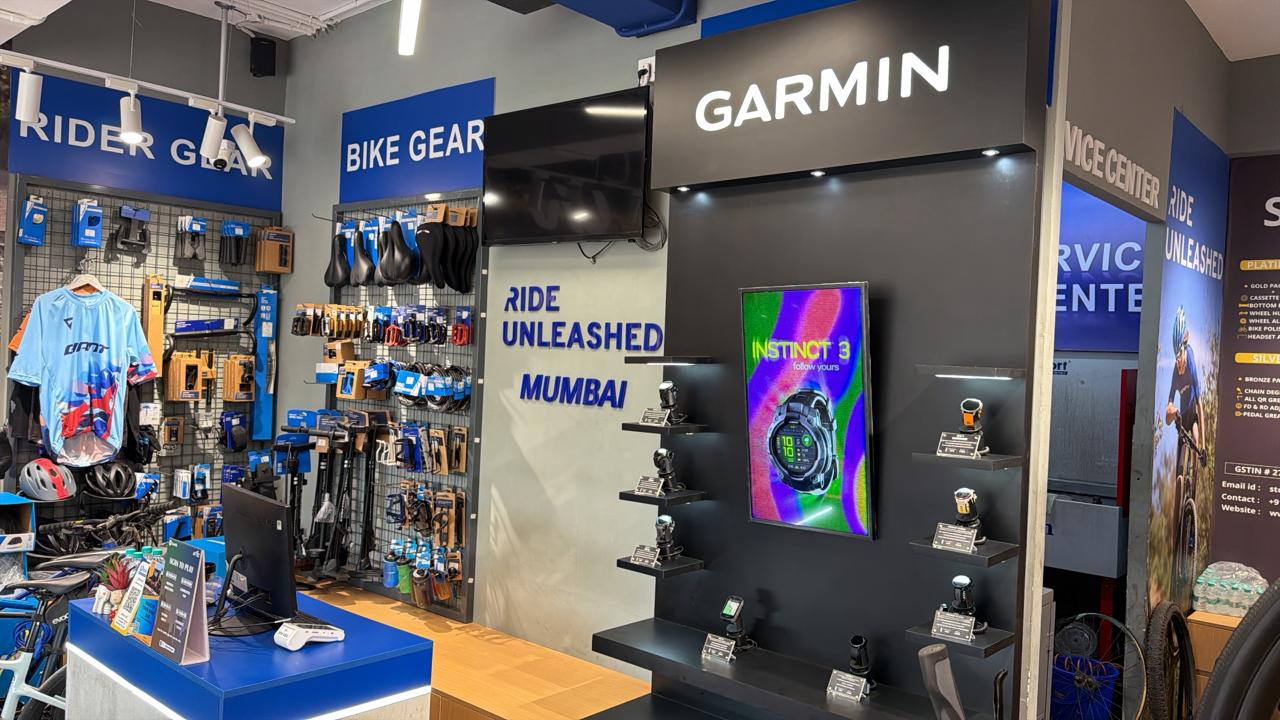
    New Delhi, Feb 18: Garmin, a global leader in GPS-enabled wearables and cycling technology, has announced a strategic retail partnership with Giant Bicycles India, one of the most respected names in the cycling ecosystem. This collaboration brings together Giant’s strong presence in India’s cycling market and Garmin’s expertise in ride tracking, navigation, endurance monitoring, and training insights. While Giant offers high-quality bicycles trusted by enthusiasts and competitive riders, Garmin provides advanced cycling computers and bundles (which have HRM with Speed and Cadence sensors), TACX indoor trainers, smartwatches, power meters, power pedals, smart bike lights with rear view radar alerts, best in class 4K ride recording cameras, performance trackers, and related accessories designed to support riders before, during, and after every ride. Together, the brands aim to make advanced performance technology more accessible to cyclists within trusted retail environments.

    As part of the initial phase, Garmin is now available at select Giant retail stores in Mumbai, Pune, and Jaipur. Customers visiting these stores can explore Garmin’s cycling ecosystem alongside Giant’s bicycle range, enabling informed purchase decisions based on both equipment and performance technology.

    Garmin’s cycling portfolio includes advanced TACX indoor trainer which compliments Giant Cycles, giving the cyclists an option to cycle indoors with same Giant Bicycle and replicate same terrains indoors and training as actual outdoor, cycling computers with bike-specific mapping and detailed performance monitoring, power meters and power pedals for deeper training analysis, smart lighting systems with rearview radar that alerts riders to approaching vehicles, 4K ride recording cameras, as well as GPS smartwatches and performance trackers that support endurance and fitness goals. By placing these products within Giant’s retail network, the partnership supports cyclists who are increasingly looking for data-driven tools to improve performance, safety, and ride planning.

    Commenting on the partnership, Mr. Deepak Raina, Director, AMIT GPS & Navigation LLP., said:

    “Data has become central to how cyclists understand and improve their performance. Access to accurate ride metrics, training insights, and navigation information helps riders make better decisions and measure real progress over time without compromising on the safety on roads by increasing situational awareness. Through our partnership with Giant Bicycles India, we are bringing reliable, data-driven technology closer to cyclists at the point where they invest in their riding journey.”

    Adding to this, Varun Bagadiya, Director, Giant Bicycles India, said: “We are pleased to partner with Garmin, a brand synonymous with precision and performance. Offering Garmin’s full product portfolio at our stores allows us to deliver a more comprehensive experience to cyclists, supporting them not just with world-class bicycles but also with advanced performance technology.”

    Cycling in India continues to see steady growth, particularly in urban markets where community riding groups, endurance events, and performance-focused training are becoming more common. Through this partnership, both brands aim to support serious cyclists, fitness-driven riders, and aspirational enthusiasts seeking dependable performance technology.

  • MediaMatrix Inducted into NAMM TECnology Hall of Fame

    MERIDIAN, MS — Feb 18 — MediaMatrix, the groundbreaking networked DSP and control platform from Peavey Commercial Audio, has been officially inducted into the NAMM TEC Awards’ TECnology Hall of Fame during this year’s NAMM Show in Anaheim, California.

    Founded by veteran industry journalist and engineer George Petersen to honour technologies that have fundamentally shaped the professional audio industry, the NAMM TECnology Hall of Fame recognises innovations that stand the test of time. MediaMatrix joins a distinguished roster of legendary audio technologies that have redefined how the industry designs, deploys and manages sound.

    Since its introduction, MediaMatrix has been a trailblazer in digital signal processing and networked audio control, helping to pioneer scalable, software-based audio architectures long before they became industry standard. Its influence spans stadiums, transportation hubs, theme parks, higher education campuses, government facilities and large-scale commercial environments worldwide.

    At a time when much of the industry was still analogue-centric, MediaMatrix introduced a forward-thinking, programmable DSP revolution that enabled integrators and consultants to design complex routing, processing and control systems within a flexible, networked framework. That foundation laid the groundwork for today’s converged AV-over-IP and enterprise-scale audio ecosystems.

    Courtland Gray, CEO of Peavey Commercial Audio, commented: “MediaMatrix was ahead of its time and a genuine game-changer in audio distribution. It fundamentally changed how systems could be designed and managed, moving intelligence into software and onto the network. To see it recognised by the NAMM TECnology Hall of Fame is not just an honour for Peavey, but recognition of the engineers, integrators and partners who trusted the platform and pushed it into some of the world’s most demanding environments.”

    The induction celebrates not only MediaMatrix’s technological innovation, but also its longevity and continued relevance. Over the decades, the platform has evolved to support modern network protocols, expanded processing power and increasingly sophisticated control capabilities, while maintaining the core philosophy of scalable, mission-critical reliability.

    Today, MediaMatrix continues to underpin major global installations where resilience, flexibility and audio clarity are paramount — reinforcing its legacy as one of the most influential DSP platforms in professional audio history. SCION, the third generation of MediaMatrix, was recently demonstrated at the ISE show in Barcelona. With MediaMatrix being the industry pioneer of real-time network audio streaming, SCION is the first with input – processing – to output for CobraNet 1998, Dante 2009 and RAVENNA compatible with the new MediaMatrix sNET (AES67) protocol. 

  • hubergroup Chemicals launches ELARA: tailored additives for coatings, printing inks, and more

    Feb 18: hubergroup Chemicals is expanding its portfolio with a new brand of high-performance additives: ELARA. The launch marks a significant step in the company’s evolution from a supplier of printing ink raw materials to a comprehensive partner for the coatings, inks, and adhesives industries. ELARA will make its official debut at PAINT INDIA 2026 in Mumbai, as a clearly structured additive portfolio supporting formulators in facing today’s complex technical and regulatory challenges.

    As markets demand higher performance, compliance with increasingly complex regulations, and greater sustainability, additives have become the silent enablers behind modern formulations. hubergroup Chemicals responds to this shift with ELARA – a product range that combines scientific precision with practical usability across diverse application areas.

    “With ELARA, we are taking another decisive step in our strategic transformation,” says Premal A. Desai, CEO of hubergroup. “We are expanding our horizons beyond traditional applications and positioning hubergroup Chemicals as a strong, future-oriented partner for formulators worldwide. ELARA stands for our ambition to shape chemistry responsibly while enabling our customers to innovate with confidence.”

    Additives as silent enablers of modern formulations

    Whether dispersion, wetting, process stability or surface quality – additives play a decisive role in the performance and reliability of modern coating and ink systems. With ELARA, hubergroup Chemicals consolidates its deep expertise in polymer and surface chemistry into a clearly structured, application-driven additive platform.

    The name ELARA, inspired by one of Jupiter’s moons, symbolises stability, precision, and orientation within complex systems. Each product has been developed for a clearly defined function – delivering maximum impact both individually and as part of a perfectly balanced formulation.

    A structured portfolio for defined formulation challenges

    Under the claim “Shaping chemistry. Expanding horizons.”, ELARA brings together high-performance dispersing and wetting additives tailored to the requirements of modern formulations:

    • ELARA Disperion 400: Non-aqueous dispersing agents for organic and inorganic pigments, carbon blacks, extenders, and matting agents. Designed for high pigment loading, excellent colour development, and robust process stability in solvent-based, solvent-free and UV/EB systems.
    • ELARA Disperion 500: Aqueous dispersing agents delivering high colour consistency, reproducible quality and broad binder compatibility. Suitable for VOC-free and biocide-free formulation architectures in coatings and printing inks.
    • ELARA Wetora 300: Versatile wetting agents for water-based, solvent-based, solvent-free and UV-curable systems. They improve substrate wetting, support uniform pigment incorporation and help reduce surface defects – even on challenging substrates.

    “ELARA represents a new level of system understanding,” says Franziska Trapp, Technical Marketing Manager Coatings at hubergroup Chemicals. “Each additive line is developed with the formulator’s reality in mind – balancing technical performance, regulatory compliance, and processing efficiency.”

    A portfolio shaped by chemistry and responsibility

    The ELARA range reflects hubergroup Chemicals’ deep expertise in polymer and surface chemistry. Many grades are solvent-free or VOC-reduced, aligning with global sustainability goals. At the same time, the portfolio is designed for broad compatibility across solvent-based, water-based, and UV-curable systems, giving formulators maximum design freedom and security of supply.

    Precision chemistry with a clear growth roadmap

    From the outset, ELARA is designed as a scalable additive system. A defined development roadmap includes the future introduction of defoamers, humectants and rheology modifiers. This creates a forward-looking additive platform that addresses both current and emerging industry needs. The ELARA portfolio will be available globally from March 2026. hubergroup Chemicals’ dedicated experts provide formulation guidance to optimise performance and ensure reliable implementation across diverse application areas.