Author: admin

  • IIJS Bharat – Tritiya 2026 Unveils India’s Strength as a Global Jewellery Powerhouse

    Bengaluru, March 22: India reinforced its position as a global jewellery powerhouse with the inauguration of the 4th edition of IIJS Bharat – Tritiya 2026, organised by the Gem & Jewellery Export Promotion Council (GJEPC) at the Bengaluru International Exhibition Centre (BIEC). As one of the country’s leading B2B jewellery trade shows, the event serves as a key sourcing platform for the upcoming festive and wedding seasons, bringing together stakeholders from across the global gem and jewellery ecosystem.

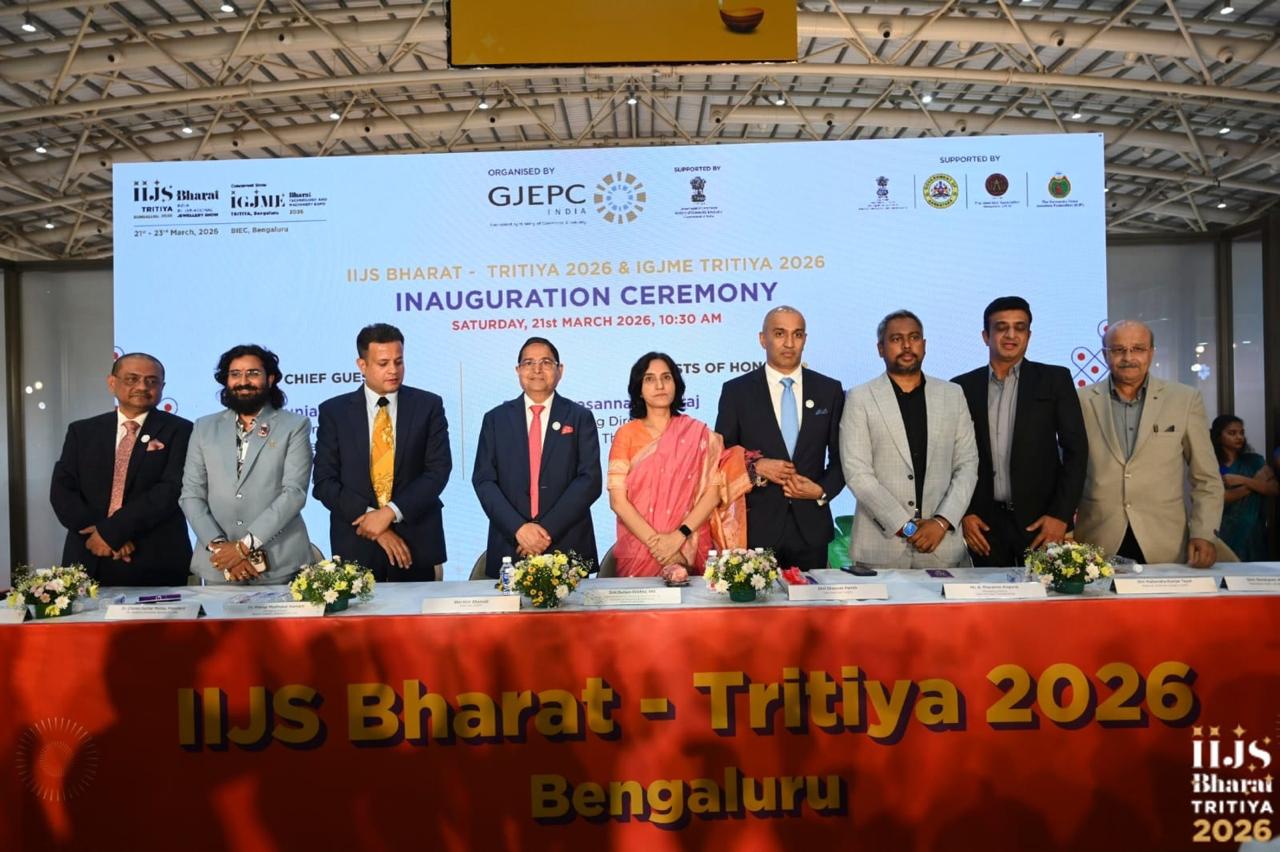
    The inauguration ceremony was graced by Chief Guest Smt. Gunjan Krishna, IAS, Commissioner for Industrial Development and Director of Industries and Commerce, Government of Karnataka. The event was attended by Guests of Honour A. Prasanna Anguraj, Managing Director, Sree Kumaran Thangamaligai, and Pratap Madhukar Kamath, Managing Director, Abaran Timeless Jewellery Pvt. Ltd., along with senior GJEPC leadership and key industry stakeholders.
    IIJS Bharat – Tritiya 2026 Unveils India’s Strength as a Global Jewellery Powerhouse

    Supported by the Government of Karnataka and the Ministry of Commerce & Industry, the 2026 edition marks a significant scale-up, featuring over 1,100 exhibitors across 1,900+ stalls. Spanning three expansive halls, the exhibition offers a comprehensive sourcing platform across gold, diamond, silver, and studded jewellery, alongside loose natural diamonds, coloured gemstones, couture jewellery, lab-grown diamonds, and machinery and allied segments.

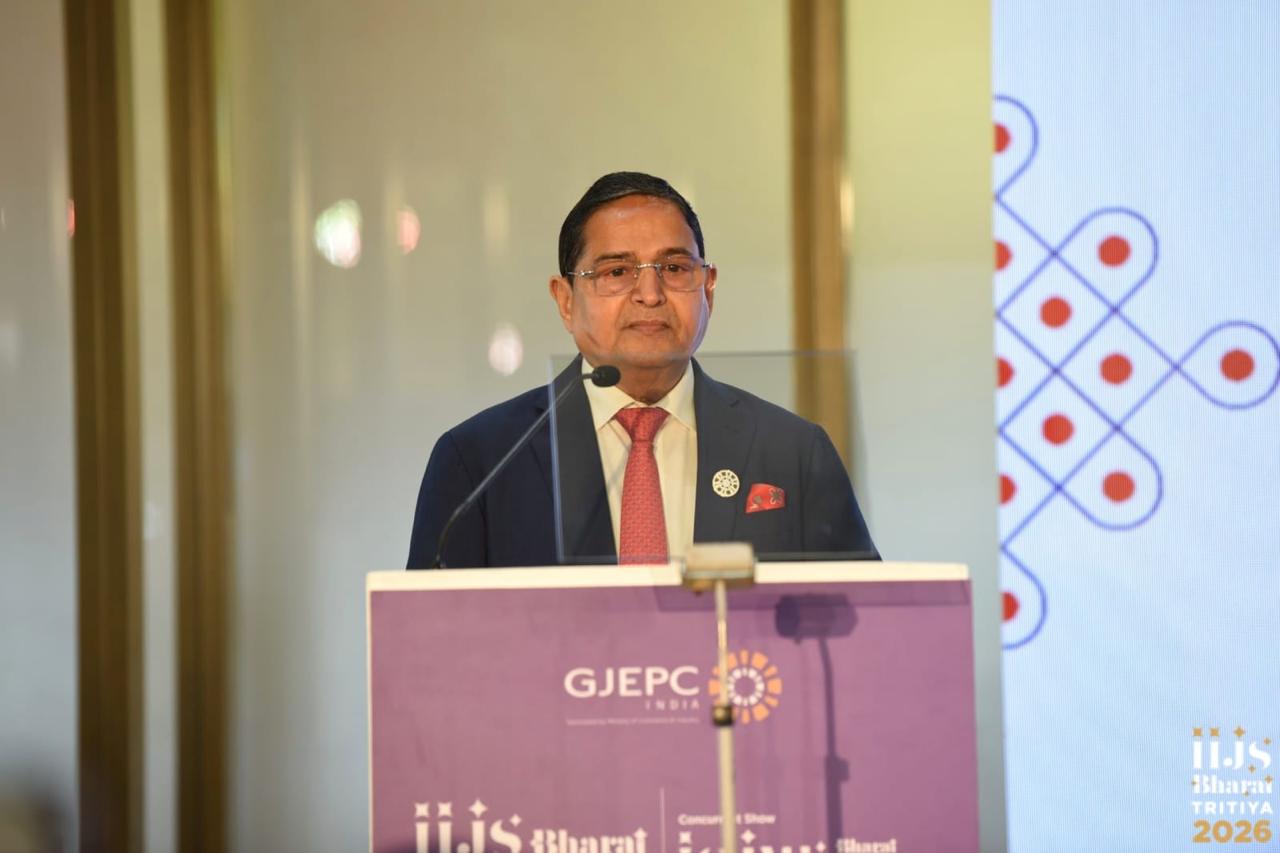
    Highlighting the industry’s resilience, Kirit Bhansali, Chairman, GJEPC, noted that India’s gem and jewellery exports reached ₹2.28 lakh crore between April 2025 and February 2026, registering over 4% growth despite a 44% decline in traditional markets such as the United States. He emphasised that strategic market diversification, evolving design innovation, and new free trade agreements are helping the sector navigate global challenges while unlocking new opportunities.
    IIJS Bharat – Tritiya 2026 Unveils India’s Strength as a Global Jewellery Powerhouse

     This year’s edition has also attracted participation from over 270 new companies, reflecting the sector’s expanding footprint and dynamism. Running concurrently is the India Gem & Jewellery Machinery Expo (IGJME) Bharat – Tritiya 2026, showcasing advanced machinery, allied products, and packaging solutions, further strengthening the link between manufacturing excellence and retail demand.

    Underscoring Karnataka’s support, Smt. Gunjan Krishna highlighted the participation of exhibitors and visitors from over 500 cities and 40 countries, calling it a testament to the industry’s global relevance. She emphasised the need to move towards high-value, design-led luxury segments while leveraging India’s rich heritage of craftsmanship.

    In a significant development, GJEPC signed a Memorandum of Understanding (MoU) with The Jewellers’ Association Bengaluru (JAB), aimed at strengthening the regional jewellery ecosystem, enhancing industry participation, and creating new growth opportunities through the IIJS platform.

    The exhibition also features a Crafts Pavilion celebrating India’s GI-tagged jewellery traditions, including Banaras Meenakari, Cuttack Tarakasi filigree, Thewa jewellery of Rajasthan, and Hupari silver craft—highlighting the country’s rich artisanal legacy.

    Adding to the experience, The Select Club presents a curated luxury segment showcasing high-end couture jewellery, while Innov8 Talks at the Launch Pad hosts thought leadership sessions, panel discussions, and product launches focused on emerging trends and innovation in the sector.

    The event also includes a Networking Night and the IIJS Icon Awards, recognising excellence within the industry, along with the Hidden Star Awards that honour the contributions of retail merchandising teams.

    With over 15,000 retailers expected from 500 cities across India and international participation from 40 countries, IIJS Bharat – Tritiya 2026 is set to serve as a powerful platform for business networking, knowledge exchange, and global market expansion—further strengthening India’s position on the world jewellery map.

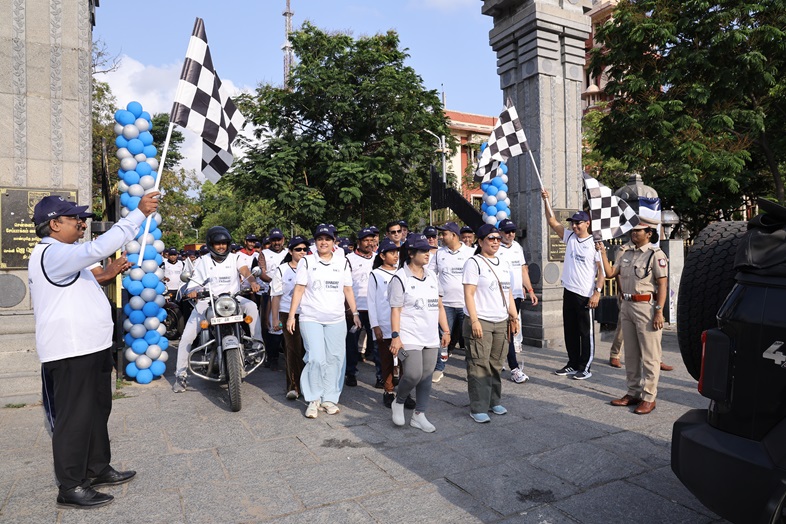
  • IHCL Hotels in Tamil Nadu Reinforce Responsible Hospitality, Mark Four Years of Paathya with Bharat Eksaath Walkathon

    CHENNAI, MARCH 22, 2026: Indian Hotels Company (IHCL), India’s largest hospitality company, continues to advance its sustainability and social impact agenda through Paathya, its ESG+ framework.

    IHCL Hotels in Tamil Nadu Reinforce Responsible Hospitality, Mark Four Years of Paathya with Bharat Eksaath Walkathon

    Photo caption: Dr. S. Armstrong, Vice-Chancellor Convener Committee, University of Madras, Megalina Iden, DC Traffic – East, and Ian Dubier, Area Director Operations for Tamil Nadu and General Manager of Taj Coromandel, flagging off IHCL’s Bharat EkSaath Walkathon at University of Madras in Chennai.

    Marking its fourth year, IHCL reinforced its commitment to responsible tourism with Bharat EkSaath Walkathon – Tamil Nadu edition, an inclusive 3 km walk that brought together associates, their families, local partners, vendors and community members. This was held simultaneously across 14 countries in over 200 locations. The funds raised through the walkathon support the Taj Public Service Welfare Trust (TPSWT), reinforcing IHCL’s approach to social impact.

    Teams from Taj Coromandel, Taj Connemara, Taj Club House, Taj Fisherman’s Cove Resort & Spa Chennai, Taj Wellington Mews Chennai, Vivanta Chennai IT Expressway, Ginger Chennai, OMR, Ginger Chennai, Vadapalani, Ginger Chennai, IITM, TajSATS, Vivanta Coimbatore, Savoy, Ooty – IHCL SeleQtions, Gateway Madurai and Gateway Coonoor participated in the 3-km walk.

    The Walkathon commenced from the University of Madras and was flagged off by distinguished guests, Dr. S. Armstrong Vice-Chancellor Convener Committee, University of Madras, and Megalina Iden, DC Traffic – East. The route began at the University of Madras, proceeded along Madras Beach Road, and concluded back at the University campus.  The event concluded with a hearty breakfast, followed by the distribution of medals and certificates to all participants.

  • India Launches Carbon Market Portal at Prakriti 2026, Positions Carbon Trading as Key to Climate Action

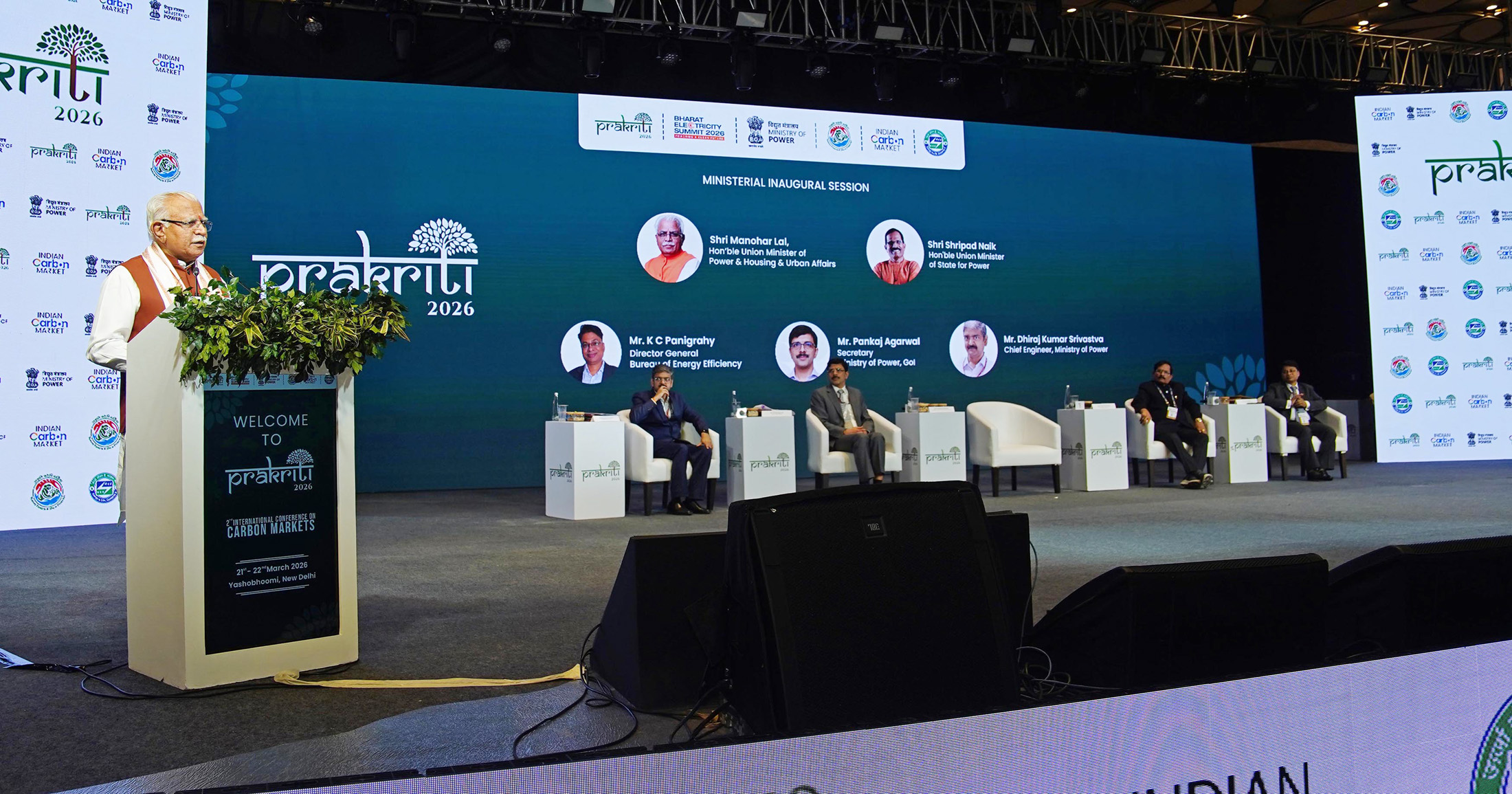
    New Delhi, March 21 (BNP): Union Power Minister Manohar Lal on Saturday inaugurated the International Conference on Carbon Markets, Prakriti 2026, and launched the Indian Carbon Market Portal, underscoring India’s commitment to advancing climate action alongside economic growth.

    The two-day conference, organised by the Bureau of Energy Efficiency under the Ministry of Power and the Ministry of Environment, Forest and Climate Change, is being held in the national capital as part of the Bharat Electricity Summit 2026.

    India Launches Carbon Market Portal at Prakriti 2026, Positions Carbon Trading as Key to Climate Action

    The event brings together global experts, policymakers, industry leaders and researchers to deliberate on carbon markets and their role in supporting climate goals and green growth. The theme of this year’s conference is “Unlocking Carbon Finance for NDC Implementation through Global Partnerships and Digital Pathways.”

    During the inaugural session, the Indian Carbon Market Portal (www.indiancarbonmarket.gov.in
    ) was launched by Manohar Lal, along with Minister of State for Power Shripad Naik and other dignitaries. The portal is designed as a central platform for implementing and administering the country’s carbon market.

    Addressing the gathering, the Union Minister said India has demonstrated that climate responsibility and economic development can progress together. He highlighted initiatives such as the Carbon Credit Trading Scheme (CCTS), renewable energy expansion and energy efficiency programmes as key steps toward building a transparent and credible carbon market framework.

    He noted that the country has already notified nine methodologies under the CCTS, with over 40 entities registering projects in sectors such as biogas, hydrogen and forestry. Additionally, greenhouse gas emission intensity targets have been set for nearly 490 entities across seven energy-intensive sectors.

    Emphasising the economic potential of carbon markets, Lal urged businesses to view them not merely as compliance mechanisms but as opportunities for innovation, investment and entrepreneurship.

    Minister of State for Power Shripad Naik highlighted three key pillars for robust carbon markets — credibility through digital monitoring, reporting and verification systems, capital mobilisation for clean technologies, and international collaboration under Article 6 of the Paris Agreement.

    He said India’s progress in renewable energy and energy efficiency demonstrates that climate action and economic growth are complementary, adding that carbon markets can empower MSMEs and farmers while enabling transparent global cooperation.

    The conference will feature discussions on global carbon markets under the Paris Agreement Crediting Mechanism, compliance frameworks, digital technologies, carbon border policies and financing clean technologies.

    Officials said Prakriti 2026 reflects India’s growing role as a global leader in climate action and its efforts to develop a transparent, inclusive and innovation-driven carbon market ecosystem.

  • Luxor Introduces Crayola to India; Amitabh Bachchan Calls It a ‘New Beginning’ for Creativity

    Mumbai, Mar 21: As Luxor group brings America’s No.1 iconic creative brand Crayola to India, Amitabh Bachchan has extended his wishes to the company, calling the moment “a beginning” for creativity and expression in the country.

    The veteran actor’s message comes at a time when Luxor, long associated with writing instruments in India, expands its portfolio to strengthen the creative tools category through its partnership with Crayola.

    The launch signals a renewed focus on nurturing imagination and hands-on creativity among young audiences, with Luxor aiming to make globally trusted creative products more accessible across India.

    Mr Bachchan’s note adds cultural resonance to the launch, spotlighting the growing importance of creativity as a core part of learning and self-expression.

  • Water and the Feminine: A Reflection for World Water Day

    Water has always been more than a natural resource. It is life, movement, and meaning. On World Water Day, observed every year on 22 March, the world reflects on the importance of water—not only for survival, but for balance, dignity, and harmony in human life.

    Water and the Feminine: A Reflection for World Water Day

    Water is often symbolically linked with the feminine. It is nurturing, sustaining, and deeply life-giving. Like the feminine principle, water carries quiet strength. It flows gently, yet it shapes entire landscapes over time. It sustains life in silence, yet holds immense power within it.

    This dual nature—calm and powerful, soft and unstoppable—makes water a powerful reflection of feminine energy. Rivers that nourish fields, rain that renews life, and oceans that connect continents all represent both care and strength in motion.

    The connection becomes even more meaningful in the context of the theme “Water and Gender.” Across the world, women are often the primary managers of household water. They walk long distances, collect water, and ensure its use for families and communities. This daily responsibility reflects resilience, patience, and care—qualities often associated with both water and femininity.

    Yet this also highlights an important truth: water inequality affects women and girls the most. When access is limited, it is they who carry the burden. When access improves, entire communities move toward dignity, education, and opportunity.

    Water can also be forceful and unpredictable. Floods and storms remind us of its strength and ability to transform landscapes. In the same way, feminine strength is not limited to gentleness—it also carries the power to change, rebuild, and endure.

    On World Water Day, this symbolism becomes a reminder of responsibility. Water must be protected, shared fairly, and valued not just as a resource, but as the foundation of life. Recognizing its connection to gender equality helps us understand a deeper truth: sustainability and justice go hand in hand.

    Ultimately, water teaches balance. It shows that strength does not always mean force, and care does not mean weakness. In its flow, stillness, and power, water reflects life itself—and invites us to protect it with respect and awareness.

  • FANS Patna Hosts Seminar on National Security Challenges and Policy Strategies

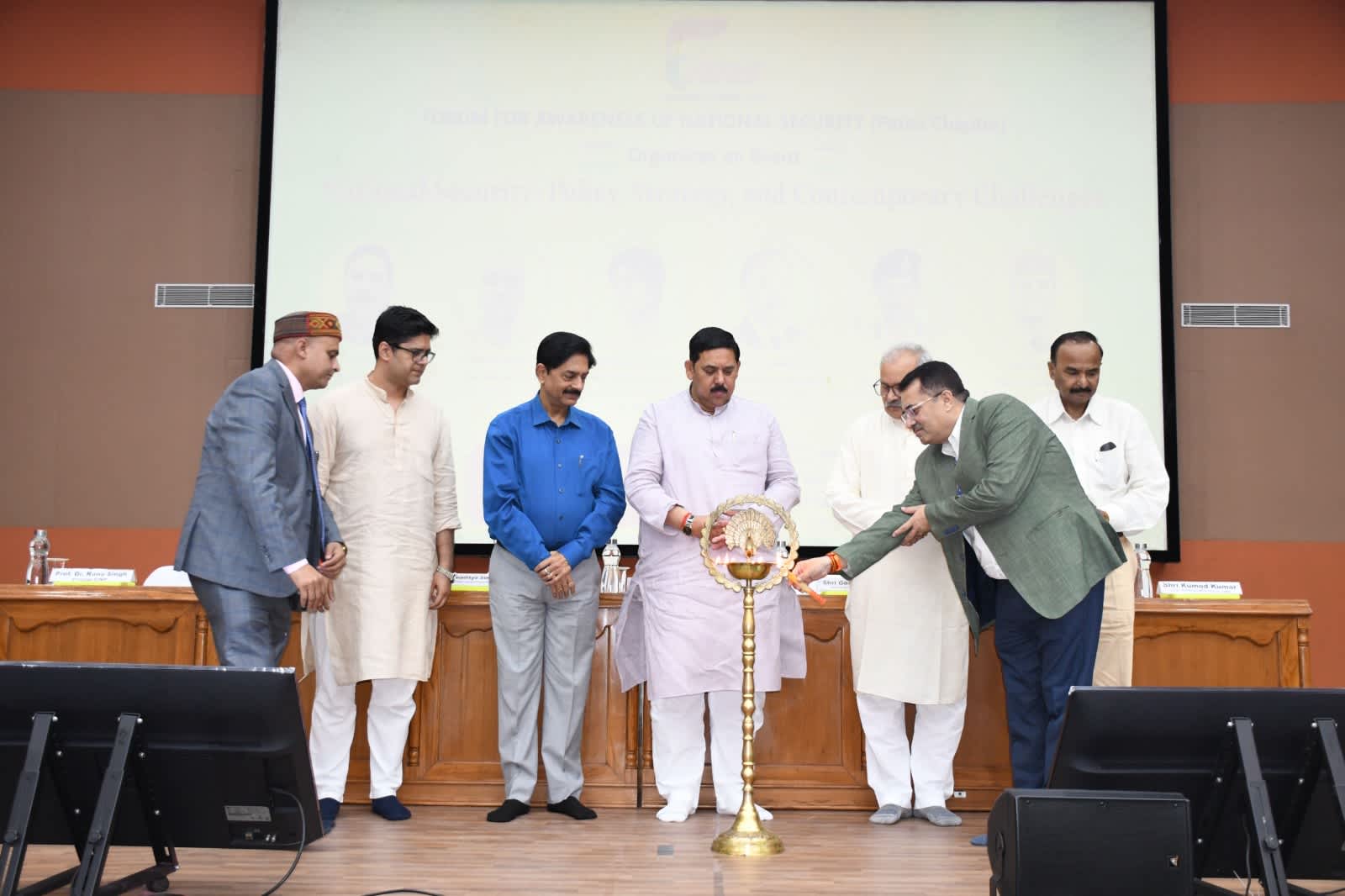
    Patna, March 21, 2026 (BNP) — The Forum for Awareness of National Security (FANS), Patna Chapter, on Friday organized a seminar on “National Security: Policy, Strategy and Contemporary Challenges” at the CIMP Auditorium in Patna, bringing together academicians, security experts and public figures to deliberate on evolving threats and policy responses.

    The programme commenced at 4:00 PM with a welcome address by Shri Kumod Kumar, CAO, CIMP and General Secretary of the FANS Patna Chapter, who greeted the dignitaries and participants and outlined the objectives of the seminar.

    FANS Patna Hosts Seminar on National Security Challenges and Policy Strategies


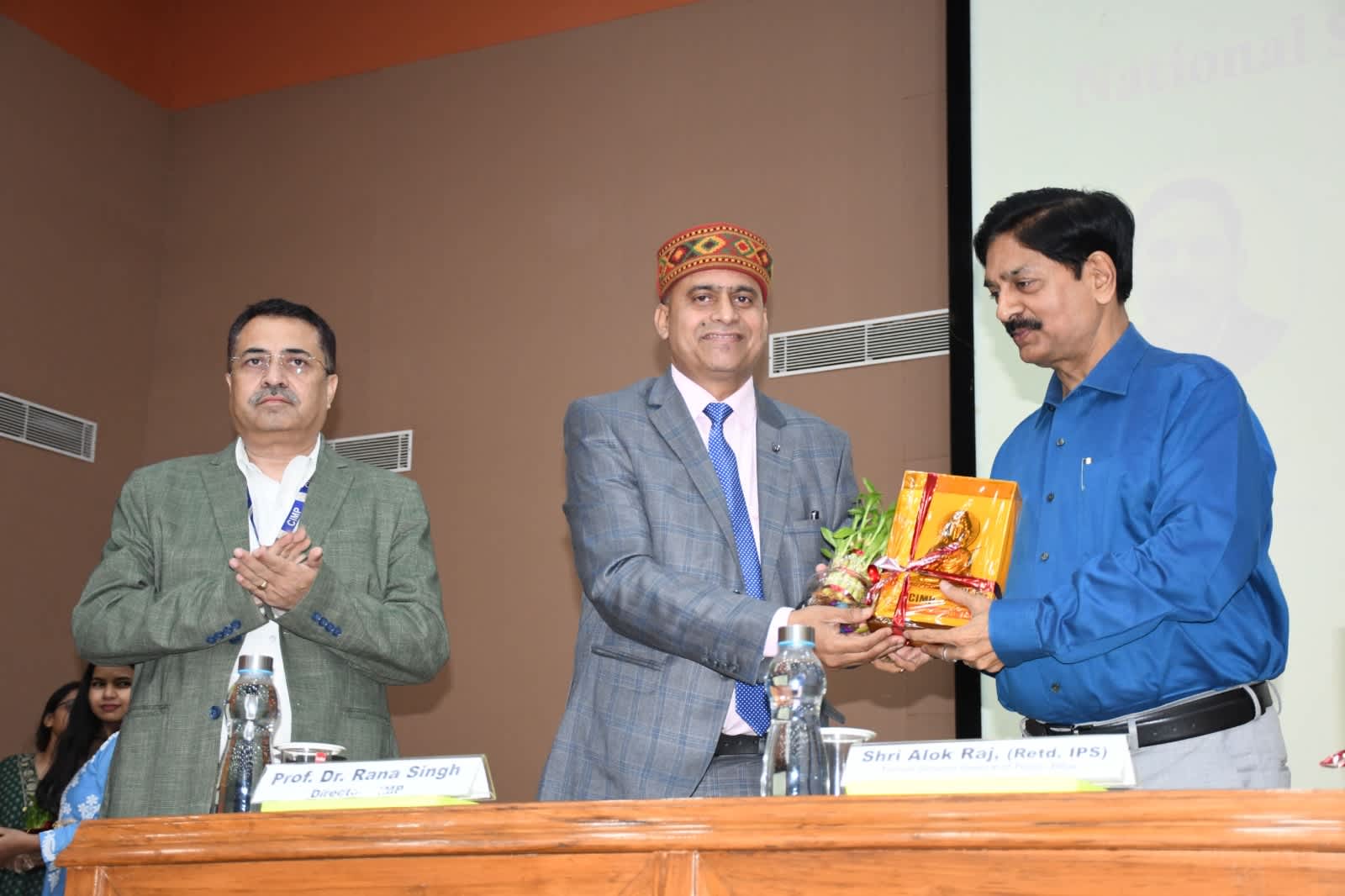
    Delivering the presidential address, Prof. (Dr.) Rana Singh, Director of CIMP, elaborated on the concept of strategy in national security and highlighted emerging threats, including nuclear, chemical, biological and radiological risks. He underscored the importance of indigenous research and digital preparedness, noting the role of DRDO in strengthening secure networks and advancing technological sovereignty to reduce dependence on external systems.

    Lt. Gen. Ashok Kumar Choudhary, President of the FANS Patna Chapter, described national security as a multi-dimensional concept encompassing economic stability, social harmony and technological strength. He called for an integrated approach, emphasizing that citizens also play a crucial role in building national resilience.

    Chief Guest Dr. Dinesh Chandra Rai, Vice Chancellor of B.R. Ambedkar Bihar University, spoke on the need to preserve cultural values alongside promoting self-reliance. He highlighted the role of technology in agriculture, integrated farming practices and training, while stressing rural development as a cornerstone of national progress. He also raised concerns over the influence of western culture on Indian heritage.

    Distinguished Guest Shri Vikramaditya Singh, National Organization General Secretary of FANS, addressed issues related to interstate coordination, international dimensions of national security and the need to create protective environments for sustainable development.

    FANS Patna Hosts Seminar on National Security Challenges and Policy Strategies

    Keynote Speaker Shri Golok Bihari Rai, member of the National Steering Committee of FANS, emphasized citizen security, peace and societal well-being. He spoke on challenges such as population pressure, the alcohol-crime nexus and policy transparency, linking economic growth with national sovereignty.

    Guest of Honour Shri Alok Raj, retired IPS officer and former Director General of Police, Bihar, discussed both traditional and emerging security challenges. He referred to threats from neighbouring regions, cyber and digital attacks, and the misuse of social media for propaganda. He lauded the role of security forces and stressed the importance of public awareness, preparedness and coordinated action.

    The seminar concluded with a vote of thanks by Shri Kumod Kumar. The event facilitated meaningful discussions on strengthening India’s national security framework in the face of contemporary challenges.

  • Understanding Down Syndrome: Importance of Awareness, Early Detection, and Inclusion: World Down Syndrome Day (21 March)

    Observed on 21 MarchWorld Down Syndrome Day serves as a reminder to raise awareness, challenge misconceptions, and promote inclusion for individuals with Down syndrome across the world. The day highlights the need for better understandingearly support, and equal opportunities for every child.

    Despite medical advancements and growing conversations around child health, awareness about Down syndrome continues to remain limited, especially in many parts of India. Misconceptions, social stigma, and lack of open discussions often prevent families from fully understanding the condition and seeking timely support. Experts believe that improving awareness, promoting early screening, and encouraging acceptance can make a significant difference in the lives of children and their families.

    Down syndrome is not a disease, but a genetic condition caused by an extra copy of chromosome 21. While it is present at birth and cannot be prevented, early screening during pregnancy and timely diagnosis can help in better management and care. Unfortunately, awareness is still limited, and many myths continue to exist—ranging from it being contagious to assumptions that children cannot learn or live independently. With early intervention, proper healthcare, education, and family support, children with Down syndrome can lead meaningful and fulfilling lives. As a society, we need to move from awareness to acceptance and ensure inclusion, respect, and equal opportunities for every individual.”
    — Dr. Swati Chhabra, Consultant & Incharge, Child Development Centre, Yatharth Hospital Noida Extension

    Early detection plays a crucial role in managing Down syndrome effectively. With advancements in medical science, it is now possible to assess the risk during pregnancy itself through various screening methods. Identifying the condition at an early stage allows families and doctors to prepare better and ensure timely medical care and developmental support.

    According to Dr. Ankit Prasad, Senior Consultant Paediatrician, Fortis NoidaDown syndrome can be detected as early as 12 weeks of pregnancy through screening tests such as the triple marker test. If missed, it can be further assessed through an early anomaly scan along with the quadruple marker test between 15–20 weeks. Non-invasive prenatal testing (NIPT), done between 12–20 weeks, is considered the most accurate screening method. After birth, if features of Down syndrome are observed in a baby, a karyotyping test is performed to confirm the diagnosis.

    However, beyond diagnosis, one of the biggest challenges remains the widespread myths and misconceptions associated with the condition. Many parents still believe that children with Down syndrome are incapable of learning or leading a normal life. Such beliefs are more common in rural areas, where lack of awareness and support systems often leads to hesitation in accepting and caring for these children. Addressing these misconceptions through proper counselling is essential to ensure that children receive the care, education, and support they deserve.

    Awareness about Down syndrome is still limited in many parts of India, especially in smaller towns and villages, where families may not receive proper counselling during pregnancy. Today, early screening methods such as first trimester tests, NIPT, and detailed ultrasounds help identify the risk at an early stage. This allows parents and doctors to be better prepared and ensure timely care and support. Additionally, there are many misconceptions about Down syndrome, including the belief that it occurs because of something the mother ate or did, or that such children cannot learn or live a normal life. In reality, it is a genetic condition caused by an extra chromosome 21 and occurs in about 1 in 700 to 800 births. With early intervention and education, many children can develop skills and actively participate in society.”
    — Dr. Pragati Jain, Senior Consultant, Obstetrics & Gynaecology, Yatharth Hospital, Noida 110 Unit

    As experts highlight, the focus must now shift from just awareness to acceptance. With the right medical care, early intervention, and inclusive environment, children with Down syndrome can lead fulfilling lives. Building a more informed and compassionate society is key to ensuring that every child is given the opportunity to grow, learn, and thrive with dignity.

  • PM-Vidyalaxmi Emerges as a Key Gateway for Education Loans

    The Government of India’s PM-Vidyalaxmi Scheme has completed one year since its launch, emerging as a significant platform for students seeking financial support for higher education. The scheme has witnessed strong demand, with a large number of applications received from across the country and an approval rate of around 50 percent, indicating steady implementation.

    Designed as a single-window digital portal, PM-Vidyalaxmi has simplified the education loan process by allowing students to apply to multiple banks through one platform. This has reduced delays, improved transparency, and made it easier for applicants to track their loan status without navigating complex procedures.

    A key feature of the scheme is its focus on accessibility. By offering collateral-free loan options and reducing traditional barriers, it has opened up opportunities for students from middle-class and economically weaker backgrounds. The scheme supports those admitted to recognized institutions, ensuring that financial assistance is directed toward quality higher education.

    In its first year, PM-Vidyalaxmi has contributed to strengthening a more inclusive and structured education financing system in India. With growing awareness and participation, it is expected to play an important role in helping students pursue their academic goals without being constrained by financial limitations.

  • FIA and UNTourism announce first ever Sustainable Sports Tourism Award winners

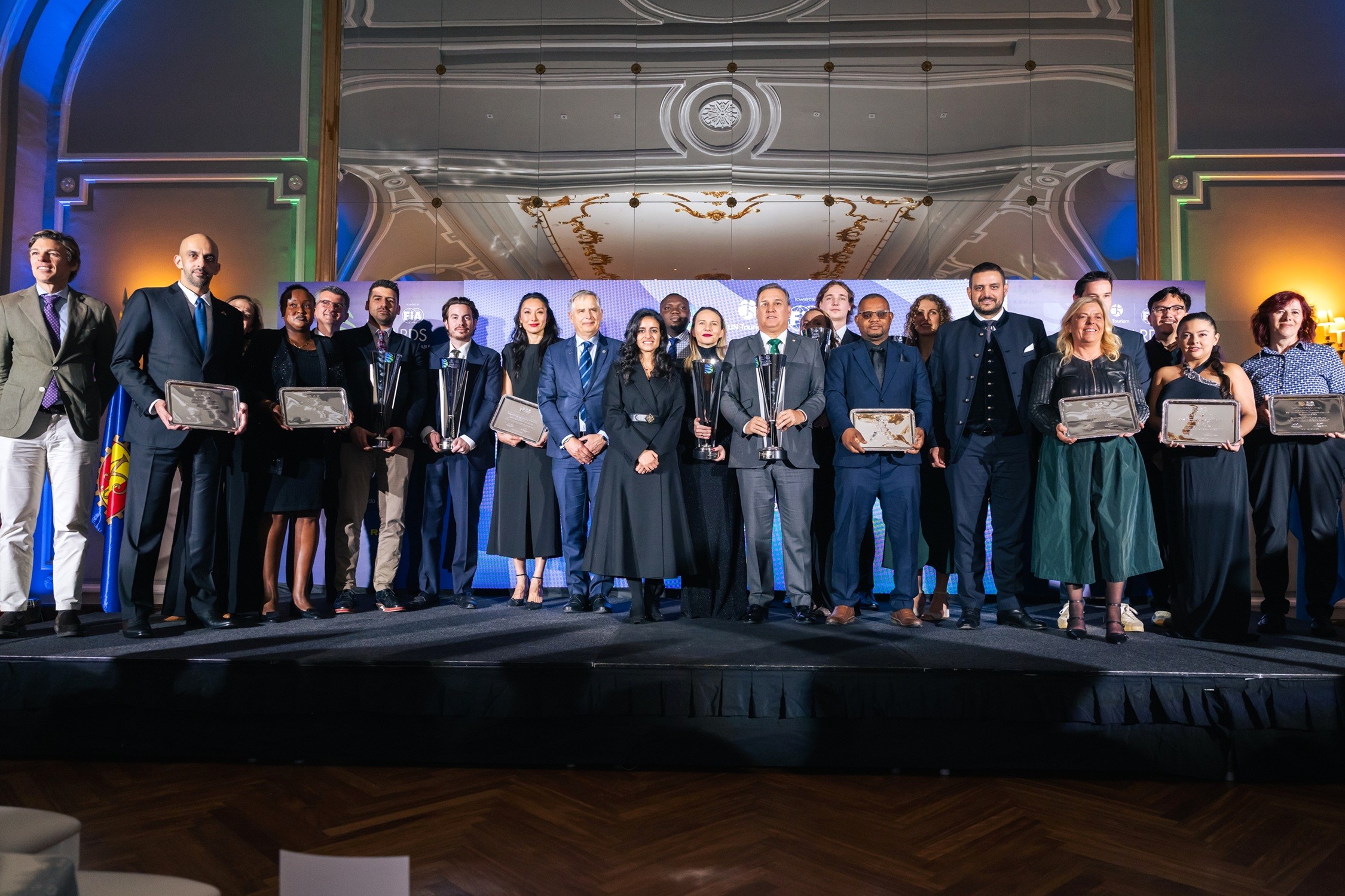
    Dubai, UAE, 21st March, 2026: The Fédération Internationale de l’Automobile (FIA), the global governing body for motor sport and the federation for mobility organisations worldwide, has announced the winners of the first UN Tourism Awards for Excellence in Sustainable Sports Tourism, powered by the FIA. 


    Announced at a ceremony in Madrid, ahead of this weekend’s ABB FIA Formula ECUPRA Raval Madrid E-Prix, the winners demonstrated leadership and innovation across key areas insustainable tourism, showcasing environmental, social and economic impact, governance, scalability, and long-term legacy. 


    FIA and UNTourism announce first ever Sustainable Sports Tourism Award winners


    FIA President and UN Ambassador for Sustainable Tourism in Sport, Mohammed Ben Sulayem, commented: “The diversity and quality of our inaugural winners highlights the growing global momentum behind sustainable sports tourism. 


    These awards celebrate sport’s positive impact as a driving force of innovation, sustainable development, and economic growth, and together with UN Tourism, we are setting new benchmarks for sustainability while building a future where sport continues to unite people across borders.”


    FIA and UNTourism announce first ever Sustainable Sports Tourism Award winners


     Awards winners


    Most Sustainable Sport EventWinner: Secto Rally Finland – Pioneering ISO 20121 & Spark the Future Sustainability Forum (AKK Sports Ltd., Finland). 


    Community Impact in Sports Tourism – Winner: Salomon Cappadocia Ultra Trail (Türkiye Tourism Promotion and Development Agency & Argeus Travel & Events, Türkiye). 


    Innovation in Sports Tourism Development – Winner: Saalfelden Leogang – Nature-Driven Performance in Eco-Friendly Mountain Bike Tourism (Saalfelden Leogang Touristik GmbH, Austria). 


    Outstanding Public-Private Parntership in Sports Tourism – Winner: MadCup Universe (MadCup S.L., Spain). 


    FIA President’s Exceptional Award – Winner: Tirana – European City of Sports 2023 (Municipality of Tirana, Albania). 


    UN Tourism Secretary-General Exceptional Award – Winner: WRC UENO Rally of Paraguay 2025 (SENATUR, Paraguay).


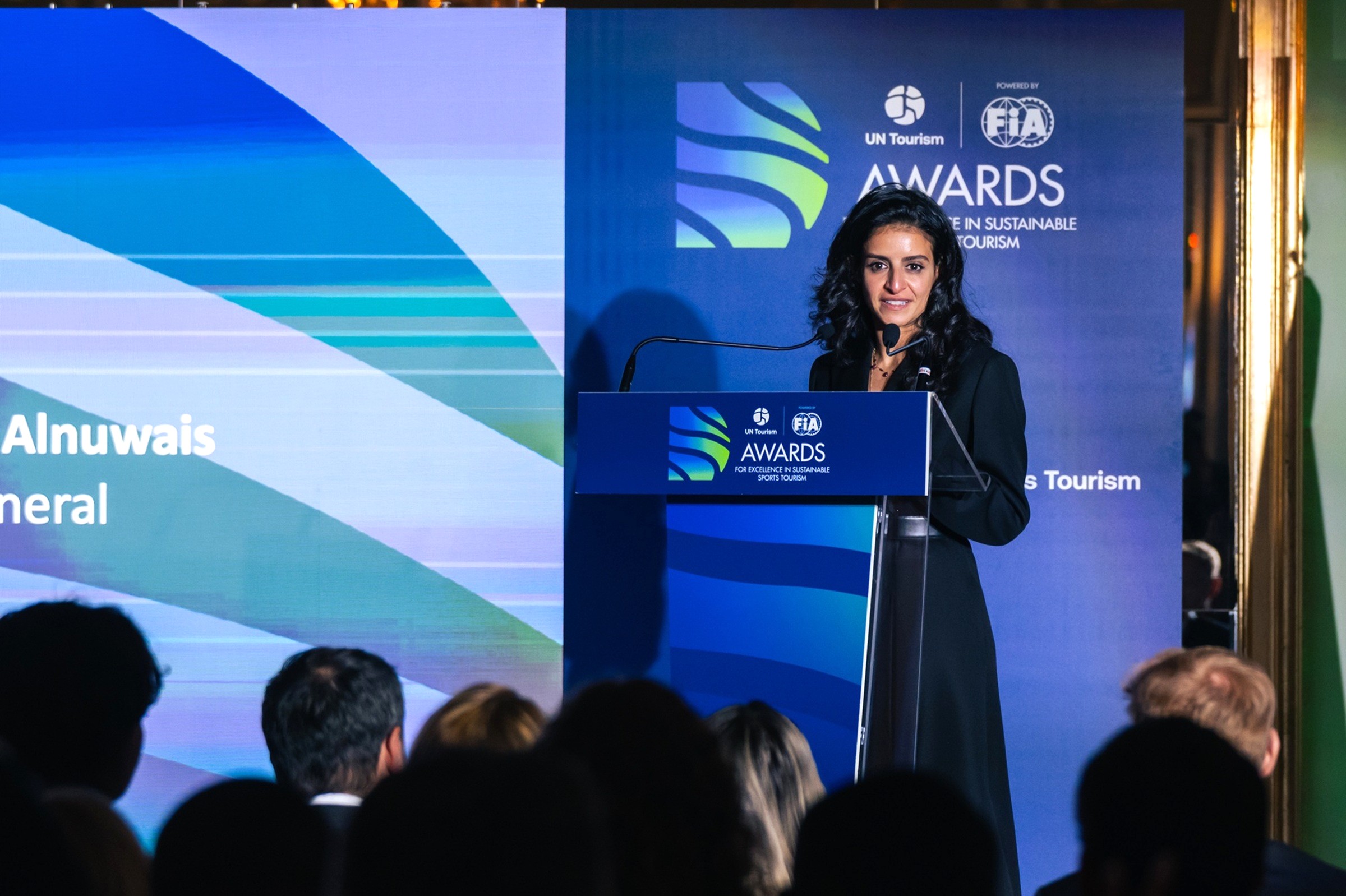
    UN Tourism Secretary-General, H.E. Shaikha Nasser Al Nowais said: “When UN Tourism and the FIA signed the Memorandum of Understanding in 2024, we committed to advancing together a more sustainable sports tourism industry.


    “Last night, that commitment became a reality with the inaugural ceremony for the Awards for Excellence in Sustainable Sports Tourism. This milestone proves that our collaboration is now a global platform recognizing sustainability, innovation, and community impact, turning our shared vision into a powerful legacy for the sector.”


    A total of 70 applications were submitted by organisations worldwide, including federations, tourism boards, governments, NGOs, companies and universities, with 28 shortlisted for the final, where the winners were selected by a seven-member jury of experts. 


    A joint initiative between UN Tourism and the FIA, the awards recognise the projects and events that are successfully integrating sport and tourism with sustainable development.

  • Tata Steel Inaugurates India’s First Scrap-Based Electric Arc Furnace in Ludhiana

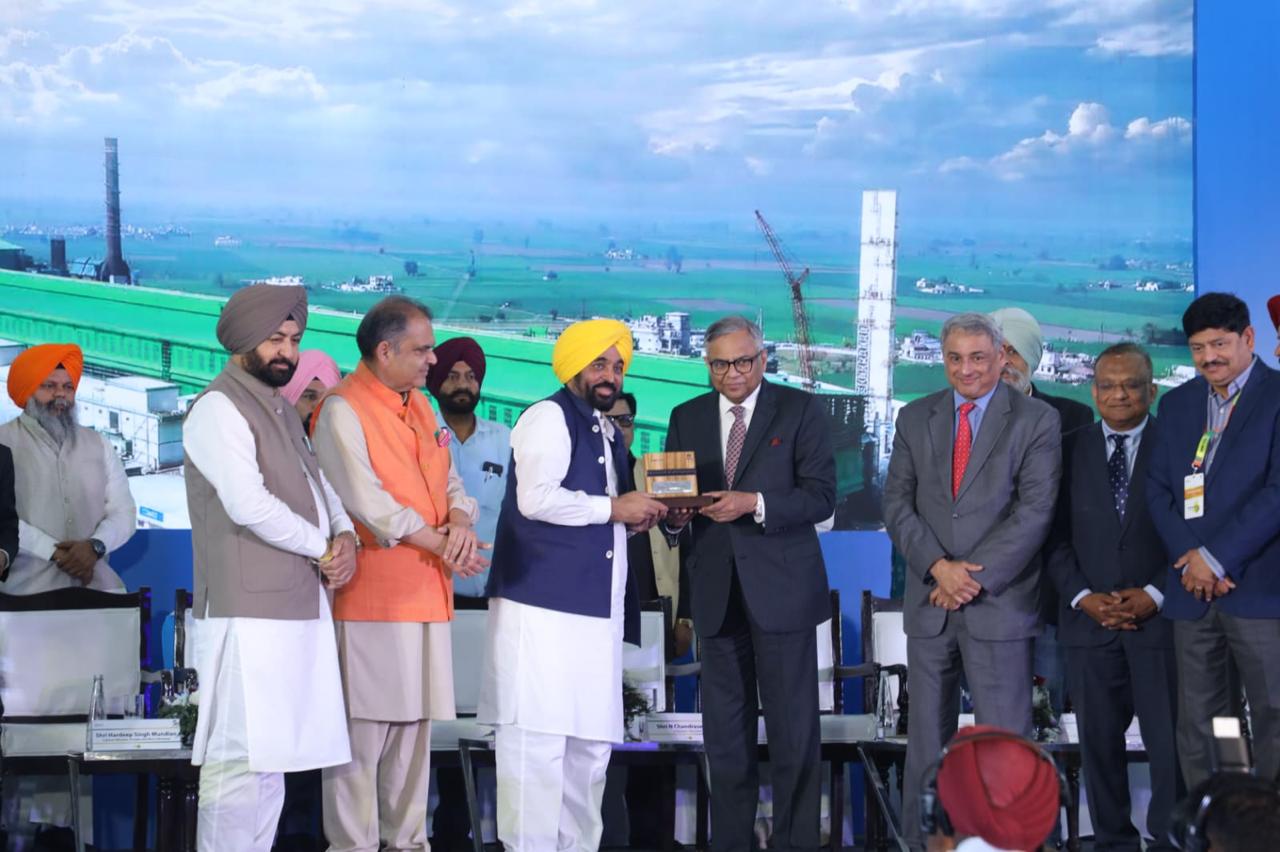
    Chandigarh, Mar 21: Tata Steel has marked a significant milestone in its sustainability journey with the inauguration of India’s first scrap-based Electric Arc Furnace (EAF) plant at the Hi-Tech Valley in Ludhiana. Built with an investment of approximately ₹3,200 crore, the plant has an annual production capacity of 0.75 million tonnes.

    Tata Steel Inaugurates India’s First Scrap-Based Electric Arc Furnace in Ludhiana

     The state-of-the-art facility is designed to keep CO₂ emissions below 0.3 tonnes per tonne of steel produced, aligning with Tata Steel’s long-term commitment to achieve net-zero emissions by 2045.

    The inauguration ceremony was graced by Bhagwant Mann, Chief Minister of Punjab, along with Natarajan Chandrasekaran, Chairman of Tata Steel, and T. V. Narendran, CEO & Managing Director, alongside senior government officials and company representatives.

    Speaking on the occasion, N. Chandrasekaran said,

    “As India moves toward a climate-conscious future, sustainability has become a national priority requiring collective action. Tata Steel’s Ludhiana EAF plant reflects the Tata Group’s long-term commitment to building a greener and more resilient industrial future.”

    T. V. Narendran added,

    “The Ludhiana EAF is a key milestone in our journey to achieve net zero by 2045. It highlights our approach to investing in circular economy-driven technologies that reduce resource consumption while maintaining global competitiveness. We are grateful for the continued support of the Punjab Government and look forward to creating long-term value for local communities.”

    Designed to support low-carbon steel production, the plant will utilize around 50% renewable energy and rely entirely on 100% steel scrap as raw material. Approximately 40% of the scrap will be sourced from Tata Steel’s recycling facility in Rohtak, Haryana.

    The facility will manufacture construction-grade steel rebars under the company’s flagship retail brand Tata Tiscon, further strengthening Tata Steel’s presence in the construction sector.

    Over the past three years, Tata Steel, through the Tata Steel Foundation, has actively engaged with local communities around the Ludhiana plant. Initiatives have focused on healthcare, education, agriculture, and women’s empowerment. Key programs include skill development for ITI students, livelihood opportunities for women, installation of solar-powered street lights, promotion of climate-resilient farming practices, community-based waste management systems, enhancement of school infrastructure, and scholarships for meritorious students.

    This milestone underscores Tata Steel’s commitment to sustainable industrial development while contributing to India’s transition toward a greener, low-carbon economy.