Author: admin

  • Middle East War: 3,640 Dead, 90,000 Homes Destroyed in 40 Days of Intense Conflict

    April 9(BNP): The ongoing conflict in the Middle East has resulted in a devastating humanitarian crisis, with at least 3,640 people reported dead and over 90,000 homes destroyed within just 40 days of intense fighting.

    Middle East War: 3,640 Dead, 90,000 Homes Destroyed in 40 Days of Intense Conflict

    According to preliminary reports from humanitarian agencies and local authorities, thousands of civilians are among the casualties, with many more injured or displaced. The large-scale destruction of residential areas has left countless families homeless, forcing them to seek shelter in overcrowded camps and temporary facilities.

    Critical infrastructure, including hospitals, schools, and water supply systems, has also suffered extensive damage, severely impacting access to essential services. Aid organizations have raised concerns over the rapidly deteriorating situation, warning of shortages in food, clean water, and medical supplies.

    International leaders and global organizations have called for an immediate ceasefire and urged all parties involved to prioritize civilian safety and allow unhindered humanitarian access to affected regions.

    The situation remains highly volatile, with continued airstrikes and ground operations exacerbating the crisis. Relief agencies are working around the clock, but access constraints and security risks continue to hamper rescue and rehabilitation efforts.

  • India Real Estate Capital Markets Rebound in FY26; Deal Activity Hits 7-Year High

    Mumbai, April 9: India’s real estate capital markets witnessed a decisive recovery in FY26, shaking off two years of subdued activity to reclaim levels last seen in FY22. According to ANAROCK Capital’s FLUX FY26 Annual Edition, the sector recorded total deal value of USD 4.3 billion — a 13% and 16% rise over FY24 and FY25, respectively — with the uptick underpinned by a far healthier, broad-based deal environment than in previous years.

    “India’s real estate capital markets have moved from a period of concentration and caution to one of breadth and conviction,” said Shobhit Agarwal, CEO – ANAROCK Capital. “FLUX FY26 captures a market that is deepening — more deals, more participants, more asset classes — even as it navigates a complex global backdrop.”

    Agarwal adds “FY26’s recovery is especially significant for its quality. Unlike FY24 and FY25 – where a single mega-transaction (Brookfield RE Trust/GIC and RIL/ADIA/KKR, respectively) accounted for 37% and 41% of total deal value – the largest deal in FY26 contributed just 9% of total activity. This marks a structural improvement in market depth, with capital flows distributed more evenly across geographies, sectors, and asset classes.”

    Deal Volume at a 7-Year Peak

    The number of transactions rose to 60 in FY26, the highest in seven years and up sharply from 41 deals in FY25. Average deal size, at USD 71 million, was the lowest in the same period — a reflection not of declining appetite, but of wider market participation with more players transacting across a broader ticket-size spectrum.

    Equity Dominates; Office Sees a Strong Comeback

    Equity continued to be the preferred deal structure, accounting for approximately 77% of total deal value in FY26 — consistent with the long-term norm and a sharp reversal from FY25, when a single large hybrid transaction distorted the mix. Debt accounted for 23%, with no hybrid deals recorded during the year,

    Sector-wise Performance

    Commercial office emerged as the standout performer, with 14 transactions aggregating USD 1.6 billion at an average deal size of ~USD 116 million — up from ~USD 80 million across 12 transactions in FY25. Robust office absorption led by Global Capability Centres (GCCs) continued to underpin investor confidence in this segment. Notably, domestic investors made meaningful inroads into commercial real estate, a segment historically dominated by international capital.

    Retail real estate staged a notable comeback after being virtually absent in FY24 and FY25, contributing 9% of deal value in FY26. Blackstone’s acquisition of Kolkata’s South City Mall for USD 377 million — the single largest equity deal of the year — anchored activity in this segment, signalling renewed institutional appetite for quality retail assets backed by India’s strong consumption growth.

    Residential saw 26 institutional transactions, broadly in line with prior years, with average deal size remaining stable at ~USD 25 million. Strong banking sector support — evidenced by high-teen growth in outstanding credit — continues to provide developers with a more cost-effective funding alternative to private equity. Nevertheless, institutional platforms remained active, particularly for established and credible developers.

    Industrial & Logistics, after commanding 47% of deal activity in FY25, moderated to 10% in FY26, though underlying investor interest remains firm, driven by e-commerce-led demand and the rapid evolution of warehouses into tech-enabled fulfilment hubs.

    Domestic Capital at a Multi-Year High

    Aashiesh Agarwaal, SVP – Investment Advisory, ANAROCK Capital, said,

    “One of the most consequential trends is the accelerating rise of domestic capital. Foreign investors’ share of total deal value fell from 82% in FY22 to 52% in FY26, while domestic investors’ share rose from 15% to 38% over the same period — with domestic capital in absolute terms reaching USD 1,642 million, the highest in at least seven years. Rising domestic prosperity, improved market transparency, and growing local conviction in real estate as an asset class are driving this shift.”

    Geography: NCR Leads, Pan-India Deals Decline

    NCR led city-level deal activity in FY26 with a 23% share, followed by MMR (17%), Bengaluru (13%), and Chennai (9%). Kolkata, buoyed by the South City Mall acquisition, jumped from 0% in FY25 to 9% in FY26. The share of Pan-India/multi-city deals fell sharply from 50% in FY25 to 18% in FY26, reflecting a more city-specific capital deployment strategy across investors.

    Platform Deals Open Fresh Frontiers

    Platform investing remained a defining feature of FY26, with HDFC Capital participating in half of all platform transactions — backing Eldeco (USD 174 Mn), Hero Realty (USD 112 Mn), and Curated Living Solutions for rental housing (USD 109 Mn). The year also saw the emergence of differentiated platforms in rental housing and luxury second homes, highlighting the evolution of investor strategies beyond traditional residential and commercial plays.


  • World Bank Raises India’s FY27 Growth Outlook, Warns of Inflation Pressures

    Washington, Apr 9 (BNP): The World Bank has revised India’s economic outlook, projecting GDP growth of 7.6% for FY26 while raising its forecast for FY27 to 6.6%. The updated estimate marks an improvement from its earlier projection of 6.3% made in October.

    Despite the upward revision, the global lender expects growth to moderate in FY27 compared to FY26. This anticipated slowdown is attributed in part to external uncertainties, including the ongoing tensions in West Asia, which could weigh on global economic conditions.

    World Bank Raises India’s FY27 Growth Outlook, Warns of Inflation Pressures

     Pic Credit: Pexel

    The report also highlights potential inflationary pressures. Strong domestic demand, along with stabilizing food prices and rising energy costs, may push inflation higher in the coming months.

    India’s growth continues to be supported by resilient consumption and steady economic activity. However, the World Bank cautions that managing inflation and navigating global risks will be crucial to sustaining momentum.

    Overall, while India remains one of the fastest-growing major economies, the outlook suggests a balance between strong fundamentals and emerging challenges in the year ahead.

  • OrbitronAI Launches NovaOS: Governed AI Agents for the Legacy Architecture That Runs Regulated Industry

    OrbitronAI has announced the launch of NovaOS, a platform designed to support the deployment and management of AI agents in regulated industries such as aerospace, energy, government and industrial enterprises, enabling organizations to deploy AI within legacy enterprise infrastructure without replacing existing systems.

    The system introduces a structured approach to AI operations, focusing on auditability, human oversight, and compliance. NovaOS acts as a control layer on top of existing enterprise systems, allowing organizations to manage how AI agents are deployed and operated without replacing current infrastructure.

    OrbitronAI Launches NovaOS: Governed AI Agents for the Legacy Architecture That Runs Regulated Industry

     “The bottleneck holding enterprises back from AI is not model quality – it is governance, isolation, and operational control,” said Saul Adomaitis, Founder and Global CEO of OrbitronAI. “NovaOS closes that gap. Regulated industries can now deploy AI agents that are fully auditable, human-supervised, and compliant by design – not as an afterthought.”

    The platform is architected around a six-layer value stack in which every agent action passes through policy enforcement, approval gates, and a complete audit trail. Human-in-the-Loop supervision is embedded at the platform level: high-risk actions always require human approval before execution. 

    Core capabilities include a visual workflow builder (NovaOS Studio) with pre-built components and natural-language Copilot, enterprise integrations via Model Context Protocol (MCP) Gateway enabling connection to ERP and CRM systems without custom code, and knowledge and document intelligence (RAG) that turns internal data into actionable insights.

    The platform also supports persistent cross-session memory across multiple dimensions, an agent marketplace for managing deployments across business units, and full observability with evidence export, ensuring that all actions are logged, traceable, and audit-ready.

    NovaOS supports four deployment strategies – Managed Cloud, Bring Your Own Cloud (AWS, Azure, GCP), On-Premise, Air-Gapped, and Hybrid – with production regions active in Middle East, Europe, and North America. All deployment options include tenant isolation, data residency compliance, and encrypted communication between services. 

    The platform is AI model agnostic, allowing organizations to run agents on the large language model of their choice without vendor lock-in. The platform is designed for organizations where data sovereignty, SOC 2 and ISO 27001 compliance, and Arabic NLP readiness (roadmap Q3 2026) are strategic requirements. 

  • Single-Phase Voting Begins Across Kerala, Assam and Puducherry for 296 Seats

    Kolkata, Apr 9 (BNP): Polling is underway today across Kerala, Assam and the Union Territory of Puducherry, covering a total of 296 Assembly constituencies in a single-phase election.

    Single-Phase Voting Begins Across Kerala, Assam and Puducherry for 296 Seats

    Voting commenced at 7:00 AM under comprehensive security arrangements, with election authorities ensuring smooth and peaceful conduct across all polling stations. Long queues of voters were seen since early morning, reflecting strong enthusiasm among the electorate.

    Kerala is witnessing polling across its 140 constituencies, while Assam is voting in 126 seats. In Puducherry, elections are being held for 30 Assembly segments. Together, these polls represent a significant electoral exercise involving millions of voters.

    Initial reports indicate a steady turnout in the early hours, with participation expected to rise as the day progresses. Special arrangements have been made for senior citizens, women, and differently-abled voters to ensure inclusive participation.

    The elections are crucial for all major political parties, with keen contests expected in all three regions. Authorities have deployed adequate security forces and monitoring mechanisms to maintain law and order and ensure free and fair polling.

    Counting of votes will be taken up in the coming weeks, which will decide the political landscape of the three regions.

     
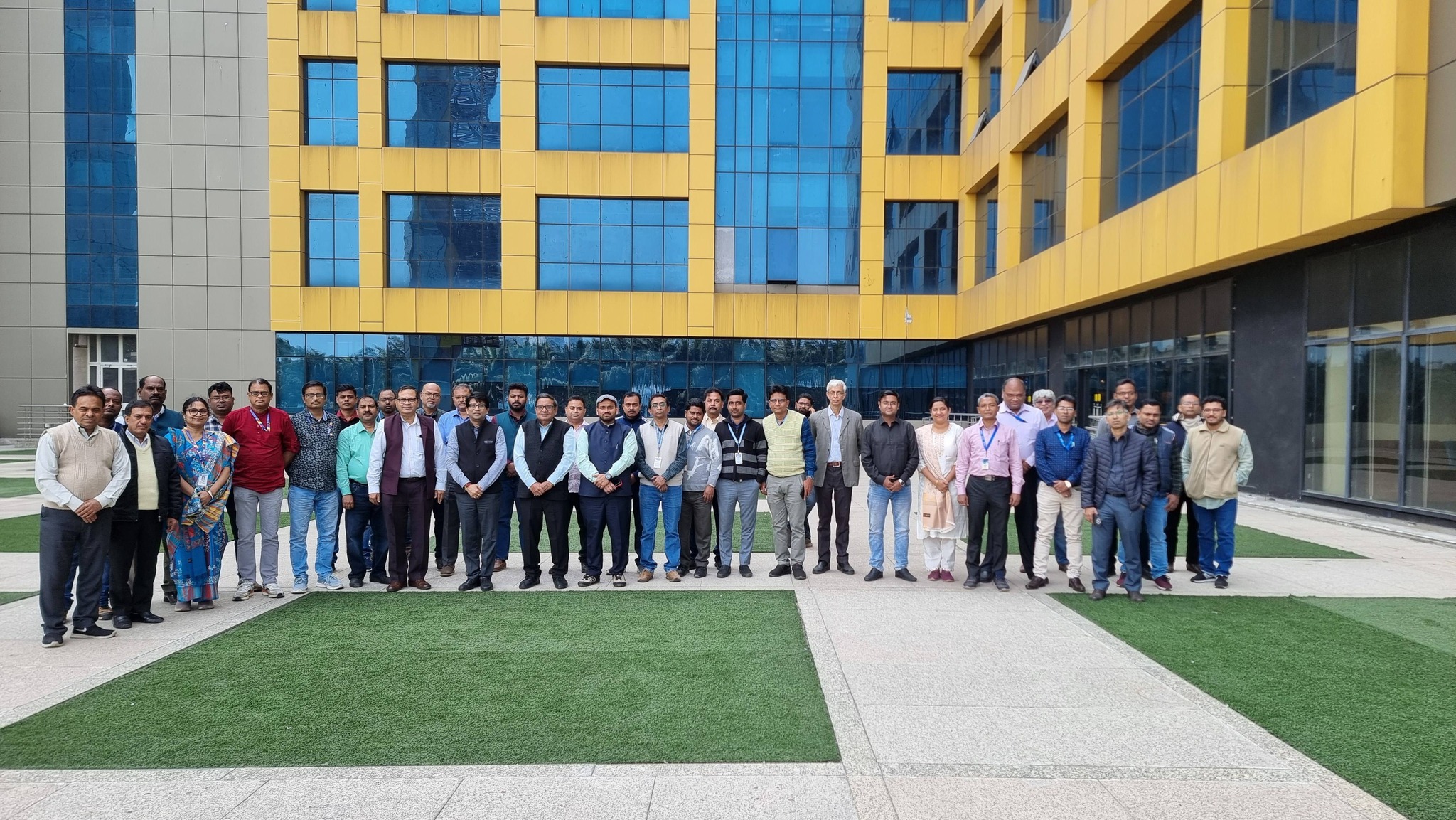
  • Simon India, IIT Dhanbad Partner to Develop Catalysts and Speciality Chemicals related Process Technologies for Scalable Green Solutions

    Dhanbad, April 9: Simon India Limited (SIL) has entered into a strategic Memorandum of Understanding (MoU) with Indian Institute of Technology (ISM) Dhanbad to advance catalyst and process technologies aimed at enabling industrial-scale deployment of green and low-carbon solutions.

    Simon India, IIT (ISM) Dhanbad Partner to Develop Catalysts and Speciality Chemicals related Process Technologies for Scalable Green Solutio

    The engagement brings together IIT (ISM) Dhanbad’s research capabilities with Simon India’s engineering, project execution, and industrial deployment expertise, with a focus on translating research into scalable and commercially viable outcomes.

    A key focus will be the joint development of advanced catalysts and process technologies, which are critical to improving efficiency, optimizing costs, and enabling large-scale adoption of sustainable solutions. These efforts will support applications such as green hydrogen, green ammonia, circular economy solutions, energy efficiency, sustainable aviation fuel, and biomass-to-value-added chemicals.

    The scope also includes waste utilization, rare earth recovery, development of new fertilizer grades, and chemical derivatives, with an emphasis on scalable industrial processes.

    The MoU provides a framework for joint research and development programs, pilot and demonstration projects, and collaborative grant initiatives, including cross-country proposals. It will also support capacity building through faculty–industry exchange, internships, industrial training, and mentorship programs, strengthening the pipeline of industry-ready talent.

    In addition, the engagement will enable technology transfer, commercialization pathways, and intellectual property development aligned with industrial priorities and global competitiveness.

    Both institutions will work through a coordinated approach to move from laboratory validation to engineering design and pilot-scale deployment, supported by joint project development and structured governance for effective implementation.

    The initiative reflects a broader focus on strengthening industry-academia collaboration to accelerate the development and scale-up of sustainable, process-driven solutions in India

    Mr. Athar Shahab, Chairman, Simon India Limited, said:

    “India has a strong foundation in research, and there is a growing need to translate this into scalable industrial applications. This partnership brings together academic and engineering capabilities to support that transition across sustainable and emerging sectors.”

    Mr. Aashutosh Aggarwal, CEO, Simon India Limited, added:

    “This partnership allows us to focus on critical areas such as catalyst development and process innovation, which are central to advancing sustainable industrial solutions. At Simon India, our strength lies in engineering and scaling these innovations for industrial deployment, enabling efficient and commercially viable outcomes across green and low-carbon sectors.”

    Emphasizing the importance of nurturing innovation at an early stage, Prof. Sukumar Mishra, Director, IIT ISM, Dhanbad, stated, 

    Undergraduate students are the most important group. They are at a stage where their thinking can still be shaped. Exposure to real-world problems through industry interaction is essential for building meaningful innovation capacity, and the next generation must be trained not just to study technologies, but to build them.”

    Dr. Fawzia Tarannum, Lead- Climate Tech and Sustainability, Simon India Limited, highlighted the systemic gap in innovation translation stating that, 

    Our innovation journey often stops at publications. Unless research moves beyond papers into products and processes, its true value remains unrealized. We need integrated pathways where academia and industry co-create solutions from the outset.”

  • Global Indian Workforce to Push Remittances Near Dollar 137 Billion by FY27

    New Delhi, Apr 9 (BNP): Money sent home by Indians working abroad is expected to rise steadily, with remittances projected to reach nearly $137 billion by FY27, according to estimates by the World Bank.

    India has long remained the world’s top recipient of remittances, reflecting the strong global presence of its workforce—from skilled professionals in advanced economies to workers in the Gulf region. These financial flows continue to play a vital role in supporting millions of families across the country.

    Global Indian Workforce to Push Remittances Near Dollar 137 Billion by FY27

     Pic Credit: Pexel

    For many households, remittances are more than just income—they help cover everyday expenses, fund education, improve healthcare access, and even support small businesses. In rural and semi-urban areas especially, this inflow often acts as a financial lifeline.

    The projected growth is being driven by stable employment conditions in key destination countries, rising wages in certain sectors, and the increasing migration of skilled Indian workers. Digital payment systems have also made it faster and easier to send money home, further supporting the upward trend.

    At a broader level, these inflows strengthen India’s external position by boosting foreign exchange reserves and helping balance the current account.

    Even as global economic uncertainties persist, the resilience of Indian migrants and their continued connection to families back home remain at the heart of this steady rise in remittances.

  • Faith in Motion: Over 23 Lakh Pilgrims Flock to Vaishno Devi Shrine in 2026

    Jammu, Apr 9 (BNP): In a powerful display of devotion, more than 23 lakh pilgrims have visited the Shri Mata Vaishno Devi Shrine so far in 2026, reaffirming its place as one of India’s most cherished spiritual destinations.

    Located in the scenic Trikuta hills of Jammu and Kashmir, the shrine continues to attract devotees from all walks of life. For many, the journey is more than a pilgrimage—it is a deeply personal experience of faith, endurance, and hope.

    Pilgrims, chanting hymns and walking together along the mountain path, create an atmosphere filled with spirituality and shared purpose. The steady rise in footfall also reflects improved facilities, including better connectivity, enhanced safety measures, and more efficient crowd management.

    Authorities say these efforts have made the pilgrimage more accessible and comfortable, encouraging even elderly devotees and families to undertake the journey with greater ease.

    Beyond its religious significance, the surge in visitors is also providing a boost to the local economy, supporting livelihoods linked to tourism and services in the region.

    The continued influx of devotees highlights the timeless appeal of the shrine, where faith continues to draw millions seeking blessings and inner peace.

  • New Year, New SMB: 3 Ways Indian Businesses Can Set Themselves Up for Success in 2026

    India’s small and medium businesses (SMBs) are not just contributors to economic growth — they are its backbone. From digital-first startups to traditional family-run enterprises embracing online channels, SMBs drive employment, innovation, and entrepreneurship across the country.

    However, the operating environment remains complex. Rising costs, evolving compliance requirements, and fluctuating demand cycles continue to pressure margins. In India, this complexity is further amplified by regulatory obligations such as GST compliance, audit trail requirements, and data retention mandates.

    For SMB leaders, success in 2026 will depend not just on expansion, but on smarter decision-making, tighter cost control, and stronger compliance readiness — powered by intelligent use of technology.

    1. Automate Core Processes with AI — With Compliance Built In

    Since generative AI entered the mainstream, operational efficiency has moved to the top of the agenda. SMBs are now shifting from experimentation to measurable outcomes.

    AI is increasingly embedded across finance and employee workflows — from travel booking to automated expense reporting. Intelligent assistants help employees complete submissions faster, while finance teams gain improved visibility into compliance, risk, and employee safety.

    Platforms like SAP Concur are enabling this shift by embedding automation directly into expense and invoice workflows — while maintaining audit-ready records.

    In the Indian context, this is critical:

    • GST compliance requires accurate capture of invoice data (GSTIN, tax breakup, place of supply)
    • Input tax credit (ITC) depends on valid, traceable documentation
    • E-invoicing and reconciliation demand consistency across systems

    When AI connects data across travel, expense, and invoice systems, businesses gain a unified and compliant view of spend — reducing errors that could impact tax filings or audits.

    Looking ahead, autonomous systems will not only process transactions but also flag compliance risks proactively — helping businesses stay ahead of regulatory scrutiny.

    2. Make Cost Control a Strategic Priority — With Full Auditability

    In today’s environment, disciplined spending is non-negotiable. With limited buffers, SMBs need visibility into every rupee spent — and the ability to justify it during audits.

    This is especially relevant under India’s regulatory framework:

    • The Companies (Accounts) Amendment Rules, 2021 mandate an audit trail (edit log) for all accounting transactions
    • Businesses must maintain tamper-proof records of changes, approvals, and deletions
    • Data retention requirements demand secure storage and easy retrieval of financial records

    Modern spend management solutions, including SAP Concur, help address these needs by:

    • Maintaining digital audit trails for every expense and approval
    • Enforcing policy controls before and after spend
    • Providing real-time visibility into transactions
    • Enabling centralised documentation for audit readiness

    Additionally, structured workflows ensure that supporting documents — such as GST invoices — are consistently captured and linked to transactions, reducing compliance gaps.

    As AI adoption grows, so do risks like manipulated or AI-generated receipts. This makes trusted, auditable systems essential to prevent financial leakage and ensure regulatory compliance.

    3. Pair Technology Adoption with a Compliance-First Mindset

    Technology alone is not enough — mindset matters just as much.

    In India, compliance cannot be an afterthought. It must be embedded into everyday processes — from how employees submit expenses to how finance teams review and approve them.

    Successful SMBs in 2026 will:

    • Build a compliance-by-design” culture
    • Ensure employees understand GST and documentation requirements
    • Use systems that guide correct behaviour automatically
    • Regularly review policies to align with evolving regulations

    Platforms like SAP Concur support this shift by embedding compliance checks into user workflows — making it easier for employees to “do the right thing” without additional effort.

    Unlike large enterprises, SMBs have the advantage of agility. With fewer layers and faster decision-making, they can quickly adapt processes to meet new regulatory requirements — if supported by the right tools and culture.

    The Bottom Line

    AI will not replace financial discipline — it will strengthen it.

    For Indian SMBs, the opportunity lies in combining automation, cost control, and compliance readiness into a single, integrated approach.

    Businesses that modernise spend management, ensure GST and audit trail compliance, and empower their teams to adapt will be better positioned to navigate regulatory complexity and accelerate growth in 2026.

    With the right digital foundation — supported by platforms like SAP Concur — organisations can turn compliance from a burden into a strategic advantage.

  • Gujarat Titans Register First Win of IPL 2026 with Thrilling 1-Run Victory Over Delhi Capitals

    New Delhi,Apr 9: In a high-voltage encounter at the Arun Jaitley Stadium, Gujarat Titans clinched their first win of the Indian Premier League 2026 season, edging past Delhi Capitals by a dramatic one-run margin.

    The match went down to the final ball, where a crucial run-out sealed the victory for Gujarat, marking a remarkable turnaround after losing their first two matches of the season.

    Chasing a competitive target, Delhi Capitals put up a strong fight led by KL Rahul, who played a brilliant knock of 92 runs off 52 balls. He was well supported by David Miller, who remained unbeaten on 41 off 19 balls, keeping Delhi in contention till the very end.

    The match witnessed a dramatic finish in the final overs. Miller showcased his explosive batting, taking on the Gujarat bowlers with aggressive stroke play. In the 19th over, he struck two sixes and a four against Mohammed Siraj, shifting the momentum in Delhi’s favour.

    With eight runs required off the last three balls, the tension peaked. Miller smashed a towering six off Prasidh Krishna, bringing the equation down to the final deliveries. However, Gujarat held their nerve, and a decisive run-out on the last ball denied Delhi a famous win.

    Earlier in the over, Vipraj Nigam contributed with a boundary but was dismissed at a crucial moment, adding to the late drama. Kuldeep Yadav also played a role in rotating the strike during the final over.

    This thrilling victory marks a significant comeback for Gujarat Titans, boosting their campaign momentum, while Delhi Capitals will look to regroup after a heartbreaking defeat.