Author: admin

  • Rubrik & Rackspace Launch UK Sovereign Cyber Recovery Cloud


    Enterprises empowered to detect threats early and recover in significantly faster timelines, in a fully sovereign environment

    LONDON, UK — Mar 19 — Rackspace Technology® (NASDAQ: RXT), a leading end-to-end hybrid cloud and AI solutions company, and Rubrik, (NYSE: RBRK), the Security and AI Operations Company, today announced UK Sovereign Cyber Recovery Clouda new ransomware cyber recovery solution engineered to protect and restore UK public sector and regulated workloads within hours of an attack.

    As the UK enters a pivotal year for digital sovereignty, new legislation mandates higher standards for organisations’ resilience and recovery. To meet these demands, UK Sovereign Cyber Recovery Cloud provides a dedicated, automated “clean room” recovery environment that remains entirely within UK borders and features pre-built runbooks ready for immediate activation.

    The collaboration integrates Rubrik Security Cloud with Rackspace UK Sovereign Services to provide a secure, isolated recovery environment. All sensitive data, critical metadata, and support are strictly confined to the UK jurisdiction and remain offline from the outside world. An isolated cyber recovery cloud environment is activated and brought online only when a specific ransomware recovery event occurs.


    Key Features of the UK Sovereign Cyber Recovery Cloud:

    • True Digital Sovereignty: providing operational and data sovereignty by maintaining all hardware, data, and administrative access within the UK; this strict jurisdictional control isolates organisations from foreign influence.
    • Rapid Cyber Recovery: Leverages advanced automation to reduce recovery times from days or weeks to hours.
    • Regulatory Alignment: Designed to support alignment with the National Cyber Security Centre (NCSC)’s Cyber Assessment Framework (CAF) and mandatory 24-hour breach reporting requirements.
    • Continuous Operations: The Rackspace security operations centre leverages Rubrik technology to monitor SaaS Cloud and on-premises applications around the clock, ensuring anomalies are detected and addressed at speed.

    “2026 is the year where control becomes the new foundation of trust and truly having control over where our data is accessed and located,” said Rick Martire, General Manager, Sovereign Services at Rackspace UK.” By partnering with Rubrik, we are providing UK enterprises with the autonomy they need to recover from cyber threats while meeting the highest standards of digital sovereignty.”

    “Our joint solution isn’t just about where data is stored – it’s about who has the authority to protect and restore it,” added David Kosman, Vice President, Global Managed Service Providers at Rubrik. “For UK public sector bodies and regulated enterprises, today’s announcement is a major leap forward in national cyber resilience. The evolution of our close partnership with Rackspace – which began with our strategic collaboration to deliver isolated recovery environments – continues to support enterprises that need strong security and compliance.”

    In 2025, Rackspace and Rubrik announced Rackspace Cyber Recovery Cloud, to help enterprises achieve true cyber resilience and ensure business continuity in the event of a cyber-attack. Learn more here. Rubrik and Rackspace Technology are Platinum Sponsors of the CSO ThreatScape Manchester event, March 19th at the Hyatt Regency Manchester. Learn more about our presentations here.

     

  • 8Bit Creatives expands into lifestyle creator economy; onboards popular creator Nishu Tiwari

    8Bit Creatives expands into lifestyle creator economy; onboards popular creator Nishu Tiwari

    Mumbai, Mar 19th: India’s leading gaming talent management agency, 8Bit Creatives, has announced its strategic expansion into the lifestyle creator economy with the onboarding of popular content creator Nishu Tiwari. This move marks a significant milestone for the agency as it evolves from a category leader in gaming to building a more holistic creator ecosystem, in line with the rapid growth of lifestyle content in India.

    Over the years, 8Bit Creatives has built a formidable roster of India’s top gaming creators, including Naman Mathur (Mortal), Payal Dhare (Payal Gaming), Raj Varma (Snax), Parv Singh (Regaltos), Krutika Ojha (Krutika Plays), and Gulrez Khan (Joker Ki Haveli), among others. With a proven track record of executing campaigns for over 100 brands across more than 20 industries, including apparel, FMCG, personal care, HORECA, and entertainment, the agency has consistently set new benchmarks in influencer marketing by crafting customized, high-impact campaign experiences.

    With Nishu’s addition, 8Bit Creatives takes a significant step toward diversifying into mainstream lifestyle content, further strengthening its ability to deliver integrated, cross-category campaigns powered by some of the country’s most influential digital creators.

    Speaking about the expansion, Animesh Agarwal, Founder & CEO, 8Bit Creatives said, “Gaming has been the foundation of what we’ve built at 8Bit Creatives, and over time we’ve seen how deeply it connects with broader youth culture, including lifestyle, fashion, food and travel. Today’s audiences do not consume content in silos. They follow creators for their personality and storytelling across formats, and that shift is also influencing how brands approach collaborations. Our expansion into lifestyle is a strategic step in that direction, and Nishu coming on board strongly reflects this vision. As we continue to grow and expand across industries, our focus remains on creating long-term value for both creators and brands by enabling meaningful collaborations rooted in culture, community and creativity.”

    Known for her engaging and relatable content, Nishu brings with her a strong and loyal digital community of over 4.37 million subscribers on YouTube and 1.6 million followers on Instagram. She creates high-engagement, concept-driven lifestyle content spanning challenges, food explorations, travel, and social experiments, combining relatable storytelling with mass appeal for a young, digitally native audience.

    The Delhi-based creator has collaborated with leading brands such as Nykaa Fashion, Duolingo, realme, Himalaya Facecare, Red Label Tea, and Samsung, making her a strong addition to the agency’s growing portfolio. Her versatility across formats and categories allows brands to tap into a wide spectrum of audiences, complementing 8Bit Creatives’ deep-rooted expertise in gaming and youth culture.

    “I’m really excited to join 8Bit Creatives. What stood out to me is their approach to working closely with creators while building impactful brand collaborations. I’m looking forward to exploring new formats, working with a wider set of brands, and creating content that continues to connect with my audience in a meaningful way,” commented Nishu Tiwari.

    The expansion comes at a time when India’s influencer ecosystem is witnessing exponential growth. According to a report by Qoruz, the country is now home to over 4 million influencers, with the lifestyle category emerging as the largest and fastest-growing segment, growing from 1.28 lakh influencers in 2023 to 2.95 lakh in 2024. At the same time, gaming continues its strong upward trajectory, scaling from just over 1 lakh influencers in 2020 to 4.67 lakh by the end of 2024, reinforcing the convergence of gaming and mainstream digital content.

    By expanding into lifestyle8Bit Creatives is strategically positioned to bridge these two high-growth ecosystems, enabling brands to unlock deeper and more diverse audience engagement.

  • Govt Approves Rs.472 Crore Road Over Bridge to Boost Tuna-Tekra Port Connectivity

    New Delhi, March 19: The government has approved a ₹472 crore project for construction of a Road Over Bridge (ROB) and associated infrastructure at Tuna-Tekra to strengthen port connectivity and improve cargo evacuation, the Ministry of Ports, Shipping and Waterways said.

    Union Minister for Ports, Shipping and Waterways Sarbananda Sonowal approved the project, which includes viaduct structures, a bridge over a creek, and provisions for maintenance over a 10-year period.

    The ROB is expected to serve as a key connectivity link for the upcoming mega container terminal and multipurpose cargo berth at Tuna-Tekra. The container terminal is planned with a capacity of 2.19 million TEUs, while the cargo berth will handle up to 18.33 million metric tonnes per annum.

    Officials said the project will help reduce logistics turnaround time, ease congestion, and improve overall supply chain efficiency in the region.

    The execution of the ROB will be aligned with the commissioning of the Tuna-Tekra container terminal, which is currently about 45% complete. This is aimed at ensuring that supporting infrastructure is ready alongside port operations.

    The project is expected to ease rail-road congestion and facilitate smoother movement of heavy cargo traffic to and from the port, strengthening last-mile connectivity.

    The development is part of the government’s broader maritime strategy under Maritime India Vision 2030 and Maritime Amrit Kaal Vision 2047, aimed at enhancing port-led development and positioning India as a global maritime hub.

  • National Workshop on One Health in Nagpur Focuses on Pandemic Preparedness, Coordination

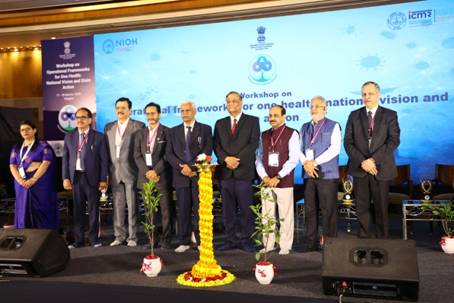
    New Delhi/Nagpur, March 19: A two-day national workshop on “Operational Frameworks for One Health: National Vision and State Action” was held in Nagpur to strengthen coordination across sectors for improved disease surveillance and pandemic preparedness.

    The workshop was organised by the National Institute of One Health (NIOH), Nagpur, under the Department of Health Research, in collaboration with the ICMR-Regional Medical Research Centre, Bhubaneswar.

    National Workshop on One Health in Nagpur Focuses on Pandemic Preparedness, Coordination


    The event aimed to translate the National One Health Mission into actionable strategies at the state and local levels, with a focus on integrating human, animal, and environmental health systems.

    Delivering the keynote address, Principal Scientific Advisor Ajay Sood stressed the need for integrated and interoperable surveillance systems.

    He said early warning mechanisms depend on seamless data sharing across human health, veterinary, wildlife, and environmental sectors, adding that states like Maharashtra could serve as models for structured implementation of the One Health approach.

    Department of Health Research Secretary Rajiv Bahl highlighted the importance of inter-sectoral coordination in tackling zoonotic diseases and strengthening national health security.

    He said the One Health Mission reflects a whole-of-government approach, given the complex interactions between humans, animals, and ecosystems that can lead to emerging health threats. He also emphasised the need to strengthen outbreak response mechanisms at the state and district levels.

    The workshop included technical sessions and panel discussions on operationalising the One Health framework, with a focus on zoonotic diseases and spillover risks.

    Discussions on the second day centred on biothreat preparedness, development of medical countermeasures, and investigation of wildlife-related outbreaks.

    The inaugural session was attended by senior officials and experts from health, veterinary, and research institutions, including representatives from AIIMS Nagpur, NCDC, and Maharashtra Animal and Fishery Sciences University.

    The workshop forms part of ongoing efforts to strengthen India’s preparedness against emerging and re-emerging diseases through coordinated policy and scientific action.

  • Centre Releases Over Rs.24,600 Lakh for Indigenous Cattle Development in Andhra Pradesh

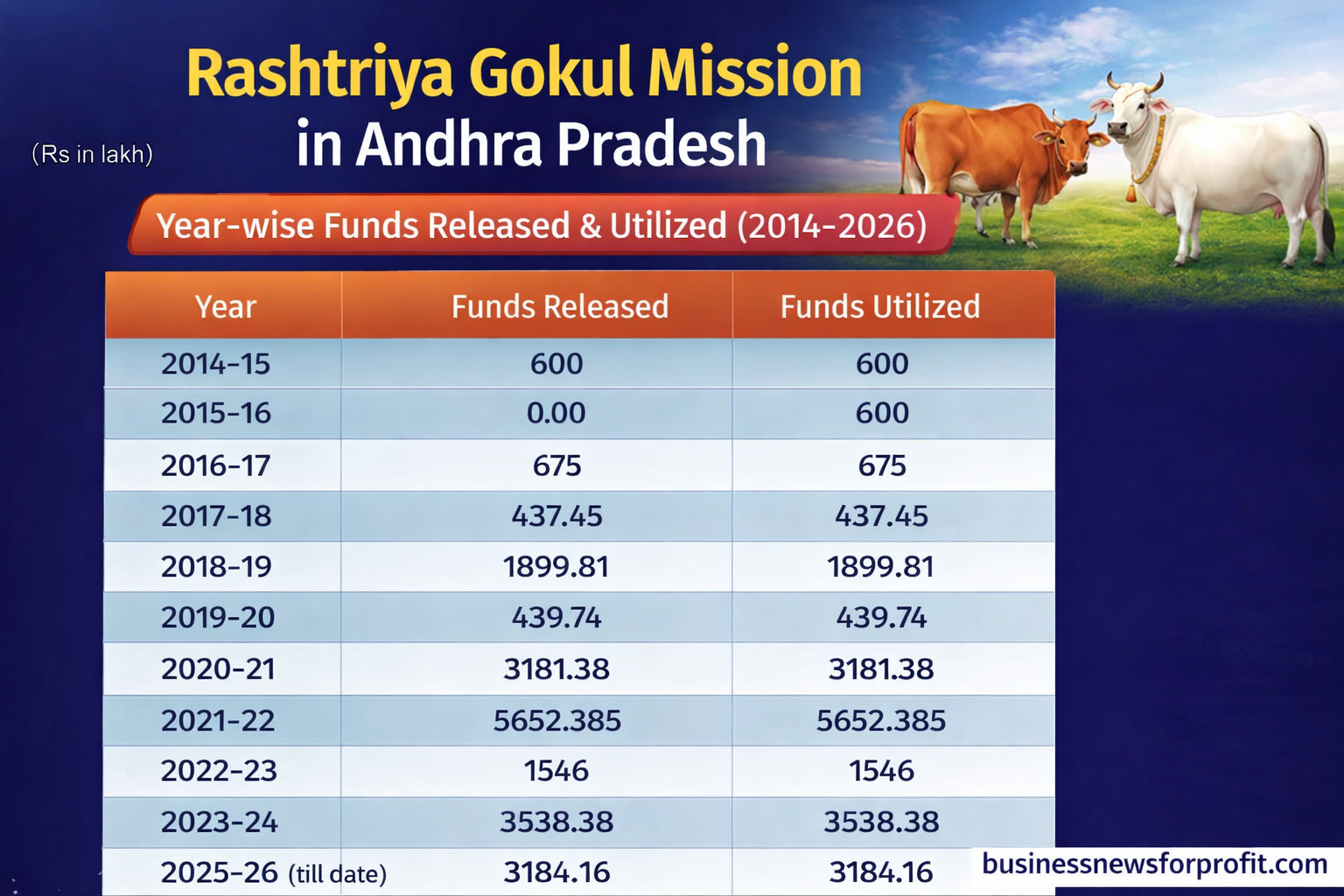
    New Delhi, March 19: The Centre has released over ₹24,600 lakh under the Rashtriya Gokul Mission (RGM) to Andhra Pradesh between 2014–15 and 2025–26 to support indigenous cattle development, the Lok Sabha was informed.

    In a written reply, Fisheries, Animal Husbandry and Dairying Minister Rajiv Ranjan Singh said the funds have been largely utilised by the state over the years, with utilisation matching releases in most financial years.

    According to official data, major allocations were made in recent years, including ₹5,652.38 lakh in 2021–22, ₹3,538.38 lakh in 2023–24, and ₹3,184.16 lakh in 2024–25. An amount of ₹1,500 lakh has been released in 2025–26 so far, with utilisation yet to be reported.

    Centre Releases Over ₹24,600 Lakh for Indigenous Cattle Development in Andhra Pradesh


    Gokul Grams Established

    The minister said 16 Gokul Grams were established in the state under the scheme. However, the component has been discontinued under the revised and realigned Rashtriya Gokul Mission for the period 2021–22 to 2025–26.

    Rise in Indigenous Cattle Population

    The government said the scheme has contributed to a significant increase in indigenous bovine breeds. At the national level, the population of indigenous cattle rose by nearly 30% between 2013 and 2022.

    In Andhra Pradesh, the increase was higher at 62.11% during the same period, reflecting the impact of both central and state-level interventions.

    Focus on Breed Improvement

    The Rashtriya Gokul Mission aims to conserve and develop indigenous bovine breeds, improve milk productivity, and enhance farmers’ income through scientific breeding and better livestock management practices.

    The government said coordinated efforts under the mission have supported breed improvement and strengthened the livestock sector in the state.

  • India’s Data Centre Boom: Capacity Quadruples as Digital Demand Surges

    India’s data centre industry is entering a high-growth phase, driven by rising digital consumption, regulatory push, and the rapid expansion of cloud and data-driven services. Over the past five years, the country’s data centre capacity has grown from 375 MW in 2020 to more than 1,500 MW in 2025, underscoring the scale of demand emerging from a digitising economy.

    This fourfold expansion reflects more than infrastructure growth. It signals a structural shift in how India stores, processes, and secures its data as businesses, governments, and consumers increasingly move online.

    Demand Drivers: Data Explosion Meets Policy Push

    The surge in capacity is closely tied to India’s broader digital transformation. Rising internet penetration, cheaper data, and widespread adoption of digital platforms have led to an explosion in data generation.

    At the same time, regulatory frameworks are shaping demand. The Reserve Bank of India’s mandate requiring payment system data to be stored locally has accelerated investments in domestic data infrastructure. Similar trends are expected across sectors such as fintech, e-commerce, and government services.

    For hyperscalers, cloud providers, and enterprise players, India is no longer just a consumption market. It is becoming a critical data storage and processing hub.

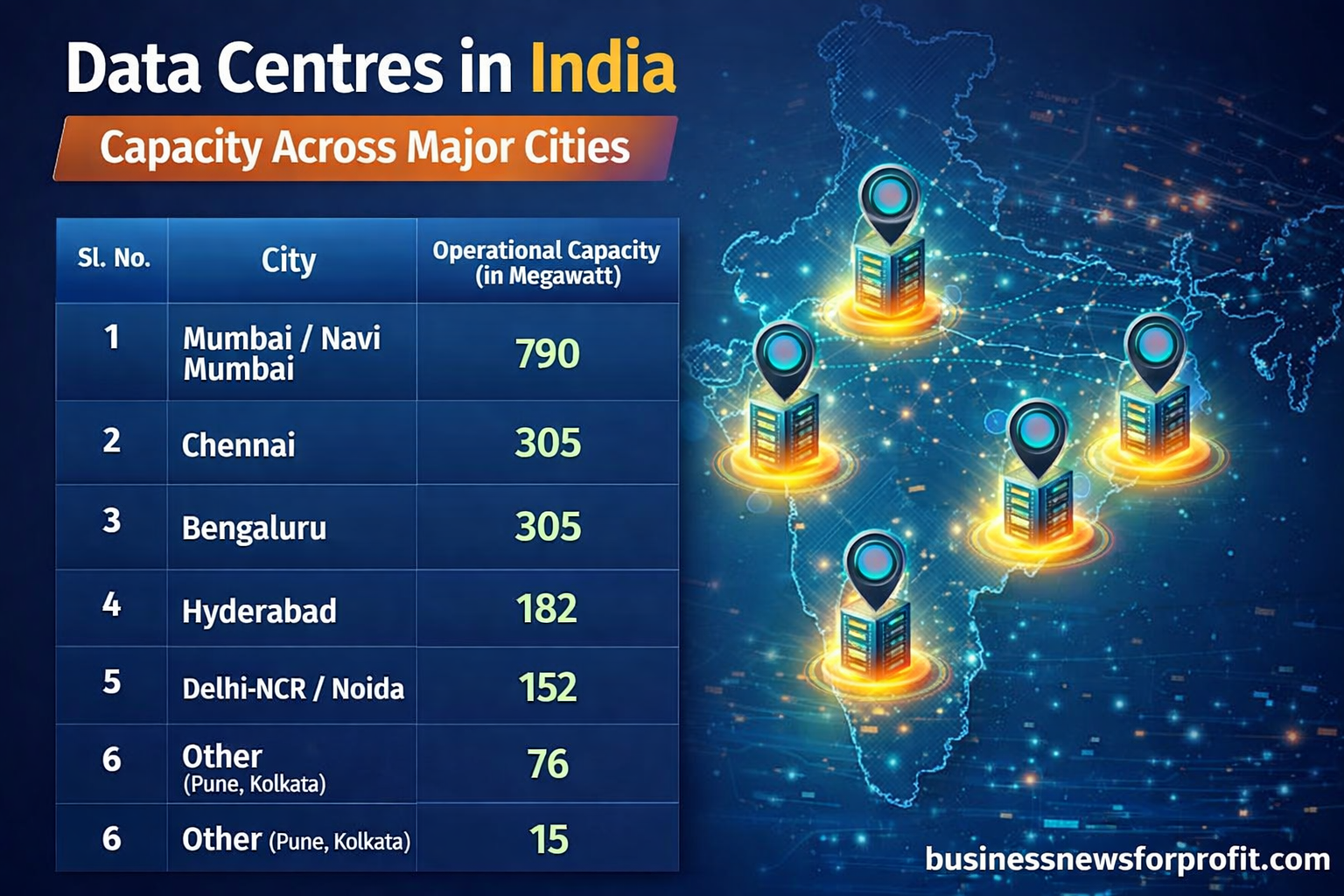
    India’s Data Centre Boom: Capacity Quadruples as Digital Demand Surges


    Mumbai Leads, Chennai Emerges

    Geographically, data centre capacity remains concentrated in a few key hubs. Mumbai and Navi Mumbai dominate with around 790 MW of operational capacity, benefiting from strong connectivity and proximity to submarine cable landing stations.

    Chennai has emerged as the second-largest hub with over 300 MW capacity, leveraging its strategic coastal location. Bengaluru, Hyderabad, and Delhi-NCR are also growing steadily, driven by enterprise demand and tech ecosystems.

    Smaller markets like Pune and Kolkata are beginning to see early-stage development, indicating gradual geographic diversification.

    Connectivity Backbone: Submarine Cables in Focus

    India’s global data connectivity is being strengthened through new submarine cable systems. Four such systems are currently being commissioned at cable landing stations, while three more are in the planning stage.

    These cables are critical for handling international data traffic, improving latency, and supporting cloud and hyperscale operations. As global data flows increase, robust submarine connectivity will be key to positioning India as a regional data hub.

    However, the government has indicated that there are no immediate plans to establish new subsea gateways, suggesting a focus on optimising existing infrastructure.

    Strategic Importance: Data Sovereignty and Security

    The push for domestic data centre capacity is also tied to concerns around data sovereignty, cybersecurity, and regulatory compliance.

    By ensuring that critical data is stored within the country, policymakers aim to create a more secure and accountable digital ecosystem. This is particularly relevant for sectors handling sensitive data, including finance, healthcare, and governance.

    Investment Opportunity and Industry Outlook

    The data centre sector is attracting significant investment from global hyperscalers, domestic conglomerates, and infrastructure funds. The combination of rising demand, policy support, and improving connectivity makes India one of the fastest-growing data centre markets globally.

    Opportunities are emerging not just in core infrastructure, but also in allied areas such as renewable energy integration, cooling technologies, real estate, and edge computing.

    Challenges Ahead

    Despite strong growth, the sector faces challenges. High energy consumption, land acquisition issues, and the need for reliable power supply remain key constraints. Additionally, as capacity expands, maintaining efficiency and sustainability will become critical.

    Bottom Line

    India’s data centre expansion reflects the country’s transition into a data-driven economy. With capacity scaling rapidly and connectivity improving, the country is positioning itself as a key node in global digital infrastructure.

    For investors and businesses, the message is clear: India’s next infrastructure boom is not just physical, it is digital.

  • Digital India at 10: How Connectivity, Data and Platforms Are Rewiring India’s Economy

    A decade after its launch, the Digital India programme is no longer just a government initiative. It has evolved into the backbone of India’s economic and service delivery architecture, quietly reshaping everything from banking and payments to welfare distribution and digital commerce.

    The scale of transformation is striking. Broadband subscribers have grown from 25 crore in 2014–15 to over 103 crore in 2024–25, a fourfold increase that signals not just connectivity expansion, but the creation of a massive digital consumer base.

    Digital India at 10: How Connectivity, Data and Platforms Are Rewiring India’s Economy


    This growth has been supported by a rapid expansion of telecom infrastructure. Mobile base stations have nearly quadrupled, while optical fibre networks have expanded exponentially, laying the groundwork for high-speed data access across urban and rural India alike.

    The Data Revolution: Cheap, Ubiquitous, Transformative

    Perhaps the most consequential shift has been in data consumption. Average monthly usage per user has surged from just 61 MB to over 25 GB. At the same time, the cost of data has dropped by nearly 97 percent.

    This combination of affordability and availability has unlocked new markets. From short video platforms and e-commerce to edtech and telemedicine, entire digital industries have scaled on the back of cheap data.

    For businesses, this means access to one of the world’s largest and fastest-growing internet user bases, with consumption patterns increasingly mirroring mature digital economies.

    Digital Public Infrastructure as a Growth Engine

    At the heart of this transformation lies India’s digital public infrastructure stack, often referred to as DPI. Aadhaar, UPI, and the broader JAM trinity have created a foundational layer on which both government services and private innovation now operate.

    With over 143 crore Aadhaar identities issued, India has achieved near-universal digital identity coverage. This has enabled seamless onboarding for financial services, telecom, and government schemes.

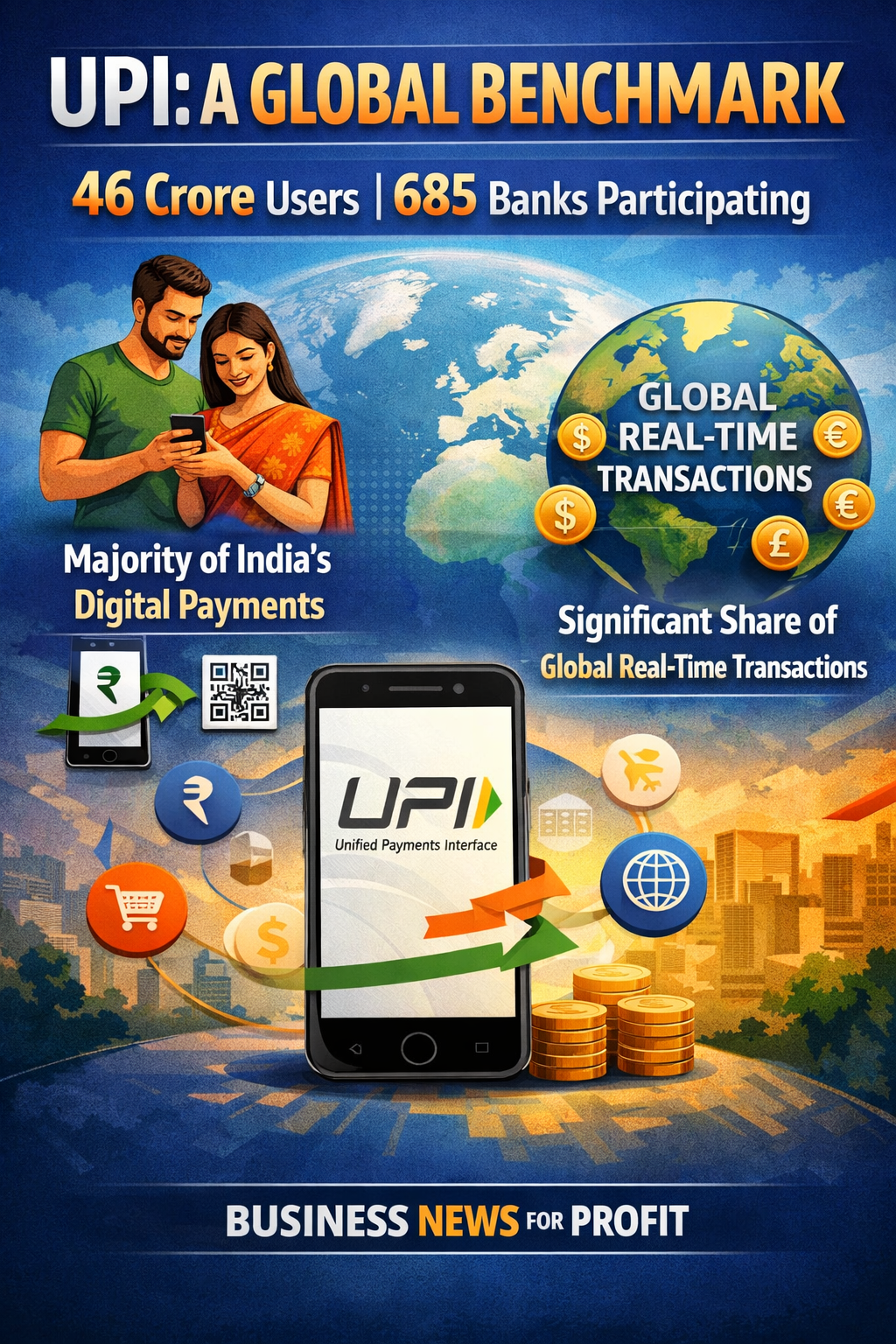
    UPI, in particular, has emerged as a global benchmark. With over 46 crore users and participation from 685 banks, it now powers the majority of India’s digital payments and accounts for a significant share of global real-time transactions.

    For businesses, UPI has dramatically reduced transaction friction, enabling everything from street vendors to large enterprises to operate in a cash-light ecosystem.

    Direct Transfers and Fiscal Efficiency

    The JAM trinity has also transformed welfare delivery. Direct benefit transfers worth nearly ₹50 lakh crore have been routed directly to beneficiaries, reducing leakages and improving targeting.

    This shift has implications beyond governance. It increases disposable income certainty at the household level, which in turn supports consumption, especially in rural markets.

    Platforms That Scale with the Economy

    Government-backed platforms such as DigiLocker and UMANG are quietly becoming part of everyday digital infrastructure.

    DigiLocker, with 67 crore users and nearly 1,000 crore documents issued, is reducing paperwork and enabling faster verification processes across sectors like banking, education, and transport.

    UMANG, offering more than 2,400 services, reflects a broader trend toward platformisation of public services, where citizens interact with the state through a single digital interface.

    For private players, these platforms create opportunities for integration, partnerships, and service delivery innovations.

    Bridging the Last Mile

    One of the more understated achievements of Digital India has been its focus on inclusion. Village-level connectivity has reached near-universal levels, while digital literacy programmes like PMGDISHA have trained over 6.39 crore individuals.

    This expansion is critical for unlocking demand in rural India, which remains the next frontier for digital growth.

    What It Means for Business

    Digital India has effectively created a large, connected, and increasingly data-savvy market. For companies, this translates into:

    • Lower customer acquisition and onboarding costs

    • Faster digital payments and reduced transaction friction

    • Access to verified digital identities

    • Expansion into rural and semi-urban markets

    Sectors such as fintech, e-commerce, logistics, health tech, and edtech are already leveraging this ecosystem.

    The Road Ahead

    The next phase of Digital India will likely focus on deepening usage rather than just expanding access. This includes improving service quality, enhancing cybersecurity, and integrating emerging technologies like AI into public platforms.

    As India moves toward a $5 trillion economy, its digital backbone will play a central role in driving productivity, formalisation, and innovation.

    Bottom Line

    Digital India has moved beyond infrastructure to become an economic multiplier. By combining connectivity, affordability, and scalable platforms, it has created a digital ecosystem that is not only inclusive but also commercially transformative.

    For businesses, the message is clear: India’s growth story is increasingly a digital story.

  • Cooperative Banks in Odisha Stable, NPAs Decline: Govt

    New Delhi, March 19: Cooperative banking institutions in Odisha remain financially stable, with no banks under liquidation and a marginal decline in non-performing assets (NPAs), the government informed the Rajya Sabha.

    In a written reply, Union Minister for Home and Cooperation Amit Shah said the state has 9 Urban Cooperative Banks, 18 Rural Cooperative Banks — including one State Cooperative Bank and 17 District Central Cooperative Banks (DCCBs) — and 4,287 Primary Agricultural Credit Societies (PACS).

    According to data shared by the Reserve Bank of India (RBI) and NABARD, none of the cooperative banks in Odisha are under liquidation. However, around 725 cooperative societies are currently under liquidation, with outstanding dues of ₹11.08 crore to banks.

    The minister said annual audits of these societies are conducted by the Directorate of Cooperative Audit, Odisha.

    The asset quality of cooperative banks in the state has shown improvement. The Gross NPA ratio of the Odisha State Cooperative Bank (OSCB) declined from 1.08% as of March 2024 to 0.87% as of March 2025.

    Similarly, the cumulative Gross NPA ratio of all 17 DCCBs reduced from 7.33% to 7.18% during the same period.

    As of March 2025, seven DCCBs reported NPAs below 5%, eight were in the 5–10% range, and two had NPAs between 10% and 15%.

    The financial position of cooperative banks is regularly reviewed by the state government, RBI, and NABARD. NABARD also conducts statutory inspections of the Odisha State Cooperative Bank and DCCBs.

    The government said several measures have been implemented to improve governance and financial stability. These include allowing cooperative banks to expand branch networks, offer doorstep banking services, and enhance lending capacity.

    Other reforms include higher loan limits, one-time settlement schemes, integration with the RBI’s Integrated Ombudsman Scheme, onboarding on Aadhaar-enabled payment systems (AePS), and inclusion under the Credit Guarantee Fund Trust for Micro and Small Enterprises (CGTMSE).

    The Odisha government has also extended financial support to strengthen cooperative banks by contributing to their share capital. Assistance to DCCBs stood at ₹102 crore in 2022–23, ₹73 crore in 2023–24, and ₹28.02 crore in 2024–25.

    The government said ongoing regulatory reforms, technological integration, and capital support are aimed at improving governance, reducing financial risks, and strengthening the cooperative banking sector in the state.

  • Over 4,400 PACS Computerised in Bihar to Boost Transparency, Farm Services: Govt

    New Delhi, March 19: The government has computerised more than 4,400 Primary Agricultural Credit Societies (PACS) in Bihar as part of efforts to improve efficiency, transparency, and service delivery to farmers, the Rajya Sabha was informed.

    In a written reply, Union Minister for Home and Cooperation Amit Shah said Bihar has a total of 8,463 PACS, of which 4,477 have been taken up for computerisation. So far, 4,474 societies have been onboarded to ERP software, and 4,465 have been declared as e-PACS.

    The minister said a majority of PACS in the state are being transformed into multipurpose entities. Of the total, 7,617 PACS are engaged in at least two services, while 6,234 are involved in three or more activities.

    These include procurement operations, custom hiring centres, storage facilities, fertiliser distribution, fair price shops, and common service centres.

    In addition, 5,375 PACS are functioning as Common Services Centres, 2,304 are involved in fertiliser distribution, and 1,696 have been upgraded as PM Kisan Samriddhi Kendras. Some PACS are also operating as Jan Aushadhi Kendras and banking correspondents for cooperative banks.

    The government is also implementing a pilot project under the “World’s Largest Grain Storage Plan in Cooperative Sector” to address storage gaps and build decentralised infrastructure.

    In Bihar, 36 PACS across nine districts have been identified under the plan, with a total storage capacity of 1.045 lakh metric tonnes. Loans have been sanctioned for 27 PACS, while construction support is being provided through the Bihar State Warehousing Corporation.

    Data shared by the government showed that in 2024–25, 305 godowns with a capacity of 2.43 lakh metric tonnes were sanctioned, of which 77 have been completed and 228 are under construction. In 2025–26, 278 additional godowns have been approved, with most currently under construction.

    To support the transition, extensive training has been conducted for PACS and cooperative bank officials. Over 10,000 participants have been trained in ERP operations, handholding support, and refresher programmes.

    The computerisation initiative enables PACS to carry out transactions through a common digital platform, improving accountability and streamlining financial operations.

    The Ministry of Cooperation, NABARD, and state authorities are monitoring progress through multi-level committees at national, state, and district levels. Regular review meetings are being held to track performance and ensure timely implementation.

    The government said these measures are aimed at strengthening the cooperative sector in Bihar, enhancing farmer outreach, and improving access to agricultural services.

  • India Post Serves 47 Crore Savings Accounts, Expands Citizen Services: Govt

    New Delhi, March 19: The Department of Posts is serving over 47 crore Post Office Savings Bank (POSB) account holders through its network of more than 1.64 lakh post offices, the government informed the Lok Sabha.

    In a written reply, Minister of State for Communications Dr Pemmasani Chandra Sekhar said India Post continues to play a key role in financial inclusion by offering a range of savings schemes, including savings accounts, time deposits, recurring deposits, Public Provident Fund, and Senior Citizens Savings Scheme.

    The department also supports the distribution of pensions, subsidies, and other benefits through Direct Benefit Transfer (DBT) into post office accounts.

    According to the data, Sukanya Samriddhi Yojana accounts have reached 3.83 crore, while the Mahila Samman Savings Certificate scheme has 37.3 lakh accounts as of February 28, 2026. These schemes aim to promote financial security for the girl child and enhance women’s financial participation.

    India Post has set up 13,352 Aadhaar centres across the country, including mobile units for remote areas. These centres have processed over 14.72 crore transactions, improving access to identity services, particularly for rural and elderly populations.

    In collaboration with the Ministry of External Affairs, the department operates 452 Post Office Passport Seva Kendras (POPSKs). These centres have processed more than 2.09 crore passport applications and police clearance certificates, improving access to passport services in rural and semi-urban areas.

    India Post Payments Bank (IPPB) is providing a range of citizen-centric services, including Aadhaar-enabled payments, digital life certificates, mobile number updates in Aadhaar, and enrolment services for children under five years of age.

    The department has also upgraded its Complaint Management System under Advanced Postal Technology 2.0, launched in March 2025. The new system includes a customer-interactive resolution process, requiring user consent before closing complaints and enabling automatic escalation in case of disputes.

    The government said these initiatives are aimed at strengthening financial inclusion and improving access to essential services, particularly in rural and underserved areas.