Author: admin

  • India’s 1.4 Billion People Key to Global Green Transition; Green Infrastructure to Drive Growth: Jitendra Singh

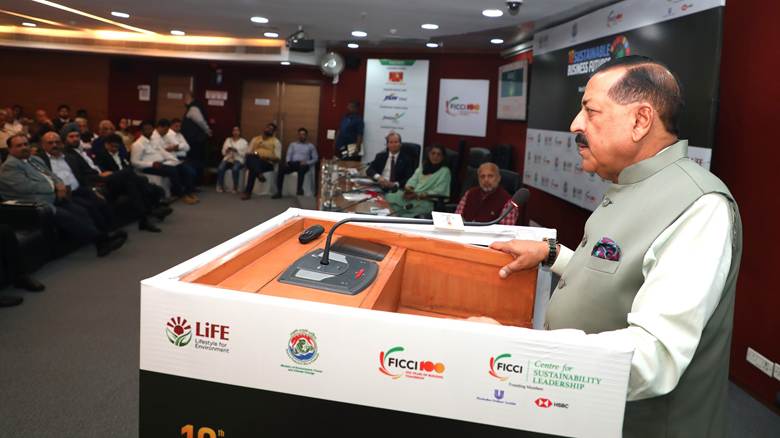
    India, home to nearly 1.4 billion people, holds a pivotal role in the global transition towards a greener future, said Jitendra Singh, Union Minister of State (Independent Charge) for Ministry of Science and Technology and Ministry of Earth Sciences, while addressing the 10th Sustainable Business Futures Summit 2026.

    The minister said that India stands at a decisive stage in the global shift towards a green economy, and its development trajectory will significantly influence the success of worldwide sustainability efforts.

    “With a large share of the world’s population, India’s progress will play a critical role in shaping the outcome of the global green transition,” he said, adding that the country now has both an opportunity and responsibility to emerge as a leading driver of sustainable development powered by clean energy and green technologies.
    India’s 1.4 Billion People Key to Global Green Transition; Green Infrastructure to Drive Growth: Jitendra Singh

    Green Infrastructure as Growth Engine

    Highlighting the country’s future growth strategy, Singh said green infrastructure will be a central pillar of India’s economic expansion in the coming decades. According to him, the global economy is increasingly moving towards recycling, regeneration and environmentally sustainable technologies, and India is aligning its development pathway with these priorities.

    He noted that India’s economic journey over the past decade has been marked by a strong expansion of its innovation ecosystem. The country now hosts over two lakh startups, placing it among the world’s leading startup ecosystems.

    Notably, nearly half of these startups are emerging from Tier-II and Tier-III cities, indicating a significant shift in entrepreneurial activity beyond traditional metropolitan hubs.

    Clean Energy for Emerging Technologies

    The minister also emphasised the need for a robust clean energy ecosystem to support emerging sectors such as data centres and artificial intelligence, which require reliable and continuous energy supply.

    In this context, Singh highlighted the significance of the SHANTI Act, describing it as a major reform that opens India’s nuclear energy sector to wider participation, including private players, and enables the expansion of clean and dependable power generation.

    Integrated Approach to Green Transition

    India’s approach to sustainability, Singh said, is based on an integrated strategy that combines technological innovation, economic growth and environmental protection.

    This includes:

    • Development of next-generation energy systems

    • Advanced energy storage technologies

    • Flexible and digitally enabled power grids capable of integrating multiple energy sources such as solar, wind, nuclear and hydrogen

    • Climate modelling and risk analytics

    • Sustainable construction technologies

    Net Zero and Sustainable Lifestyles

    Referring to policy direction from Narendra Modi, Singh reiterated that India has committed to achieving net-zero emissions by 2070. He also highlighted the importance of the Lifestyle for Environment (LiFE) initiative, which promotes sustainable consumption and environmentally responsible lifestyles.

    According to the minister, this reflects India’s broader vision of inclusive and responsible growth aligned with global environmental priorities.

    Circular Economy and Collaborative Action

    Singh also underscored the growing importance of circular economy practices, noting that innovative waste-to-wealth initiatives are helping redefine the concept of waste by converting it into economic and environmental value.

    Looking ahead, he said future infrastructure development must prioritise climate resilience, sustainable urban systems, clean mobility solutions and water security, supported by collaboration between government, industry and research institutions.

    “The era of working in silos is over,” Singh said, stressing that collective action and partnerships will be critical for achieving long-term sustainability and building a green future.


  • Empowering Panchayats: Inside the Latest Rs.1,789 Crore Rural Funding Push

    The Union government’s recent release of over ₹1,789 crore in untied grants to rural local bodies across five states marks another step in strengthening grassroots governance in India. The funds, disbursed under the recommendations of the Fifteenth Finance Commission, will benefit Panchayati Raj Institutions (PRIs) and Rural Local Bodies (RLBs) in Chhattisgarh, Gujarat, Madhya Pradesh, Telangana and Maharashtra.

    While the announcement appears routine—Finance Commission grants are released regularly—its broader significance lies in how these funds are reshaping fiscal decentralisation and accountability in India’s rural governance framework.

    Strengthening the Fiscal Backbone of Panchayats

    India’s Panchayati Raj system comprises more than 2.6 lakh Gram Panchayats, making it one of the largest grassroots governance networks in the world. However, many of these institutions historically struggled with limited financial autonomy and dependence on state governments.

    Finance Commission grants have gradually become a crucial funding source for rural local bodies. The 15th Finance Commission recommended over ₹2.36 lakh crore for rural local bodies between FY 2021 and FY 2026, making it one of the largest fiscal transfers aimed directly at local governance.

    The latest release of ₹1,789 crore reflects the Centre’s continued push to ensure that funds reach local institutions capable of delivering essential services and development works in villages.

    Why Untied Grants Matter

    A significant feature of this release is that it primarily consists of Untied Grants, which give local governments flexibility to address location-specific development needs.

    Unlike centrally sponsored schemes that come with strict guidelines, untied funds can be used across the 29 subjects listed in the Eleventh Schedule of the Constitution, including rural infrastructure, local roads, agriculture support services, drinking water, sanitation, and community assets.

    This flexibility is critical because rural development needs vary widely—from water management in drought-prone regions to sanitation infrastructure in densely populated villages.

    Compliance-Driven Funding

    Another key aspect of the grant release is that fund disbursement is tied to compliance and financial accountability.

    The grants are recommended by the Ministry of Panchayati Raj and the Department of Drinking Water and Sanitation under the Ministry of Jal Shakti, and then released by the Ministry of Finance.

    States receive funds in two installments each year, but only after meeting eligibility conditions such as:

    • Submission of utilisation certificates for previous grants

    • Completion of audits

    • Uploading development plans on digital governance platforms

    • Compliance with financial reporting systems

    The fact that a portion of funds released in this cycle represents previously withheld installments highlights how the system is increasingly linking fiscal transfers to governance performance.

    Regional Implications

    Among the five beneficiary states, Madhya Pradesh and Gujarat received the largest shares, reflecting their large number of Panchayati Raj institutions.

    In Chhattisgarh and Telangana, the grants will help support local governance in predominantly rural regions where Panchayats play a central role in delivering public services.

    Meanwhile, the release of withheld funds to Maharashtra indicates improved compliance by local bodies that had earlier missed eligibility requirements.

    Beyond Funding: Improving Service Delivery

    Although Finance Commission grants are often seen as fiscal transfers, their impact goes beyond funding. The grants are designed to improve service delivery outcomes at the local level, particularly in areas such as sanitation, drinking water supply and rural infrastructure.

    Tied grants, which accompany untied grants in the Finance Commission framework, focus specifically on water and sanitation services—two sectors where Panchayats have a direct implementation role.

    This aligns with national programmes such as rural sanitation and drinking water initiatives, where local institutions are expected to manage and maintain assets over the long term.

    The Bigger Governance Shift

    The latest grant release also reflects a broader shift in India’s governance model toward decentralised development and digital transparency.

    Over the past few years, digital platforms have been introduced to track Panchayat finances, planning and audits, making it easier for the Centre and states to monitor fund utilisation.

    As a result, rural local bodies are gradually transitioning from being passive recipients of funds to accountable local governments responsible for planning and execution.

    A Continuing Experiment in Decentralisation

    India’s Panchayati Raj system has often been described as one of the most ambitious decentralisation experiments in the world. However, its success depends heavily on whether local institutions receive adequate financial resources and the capacity to use them effectively.

    The latest Finance Commission grant release underscores the Centre’s commitment to strengthening this system—but it also highlights the growing emphasis on performance, compliance and accountability.

    If implemented effectively, such fiscal transfers could help transform Panchayats into more responsive institutions capable of addressing the diverse development needs of rural India.

  • 15th Finance Commission Grants Strengthen Rural Governance Through Panchayats

    India’s rural local governance system has received a major financial push under the recommendations of the Fifteenth Finance Commission, which has allocated substantial grants to Rural Local Bodies (RLBs) during the award period from FY 2020–21 to FY 2025–26.

    The 15th Finance Commission recommended ₹60,750 crore for FY 2020–21 (interim period) and ₹2,36,805 crore for the period FY 2021–2026 to support rural local governance institutions such as Gram Panchayats, Block Panchayats and District Panchayats. These grants aim to strengthen grassroots democracy, improve local service delivery and support development at the village level.

    Allocation Framework for Rural Local Bodies

    The fund allocation framework developed by the Finance Commission is based on a population–area formula, with 90% weightage given to population and 10% to geographical area for inter-state distribution.

    Within states, the distribution among different tiers of Panchayati Raj institutions is guided by the recommendations of the respective State Finance Commissions and must fall within the following ranges:

    Tier Minimum Share Maximum Share
    Gram Panchayats 70% 85%
    Block Panchayats 10% 25%
    District Panchayats 5% 15%

    For states with a two-tier system—comprising only village and district panchayats—the distribution bands are:

    Tier Minimum Share Maximum Share
    Gram Panchayats 70% 85%
    District Panchayats 15% 30%

    Where State Finance Commission recommendations are unavailable, state governments determine the distribution within these bands.

    Eligibility Conditions for Grant Release

    The release of grants is linked to several mandatory conditions set by the Ministry of Finance to ensure transparency, accountability and effective utilisation of funds.

    Key conditions include:

    • Constitution of elected Rural Local Bodies, except in areas where constitutional provisions do not apply.

    • Uploading annual development plans on the eGramSwaraj portal.

    • Mandatory onboarding of RLBs on eGramSwaraj–PFMS for financial transactions.

    • Completion of audits through the AuditOnline platform.

    • Availability of provisional accounts on eGramSwaraj.

    • Constitution and operationalisation of State Finance Commissions by states.

    States must also transfer funds to Panchayats within 10 working days after receiving them from the Union Government. Delays beyond this period require payment of interest by the state government.

    Digital Governance Tools for Panchayats

    To strengthen financial transparency and monitoring, the Ministry of Panchayati Raj introduced the eGramSwaraj application in April 2020. The platform supports planning, budgeting, accounting and auditing functions of Panchayats.

    Additionally, the AuditOnline platform enables digital auditing of Panchayat accounts and financial records, helping improve accountability in rural governance.

    Strong Adoption of Digital Systems

    The latest data for FY 2025–26 indicates widespread adoption of these digital platforms across the country:

    • 2,54,604 Gram Panchayats (96.36%) uploaded their Gram Panchayat Development Plans (GPDPs) on eGramSwaraj.

    • 2,42,871 Panchayats (91.92%) transferred ₹38,491 crore to vendors using the eGramSwaraj–PFMS interface.

    • For FY 2024–25, over 2.58 lakh Panchayati Raj Institutions closed their annual accounts, while 1.63 lakh generated audit reports.

    Role of Key Ministries

    The implementation of these grants involves two nodal ministries:

    • Ministry of Panchayati Raj — responsible for recommending release of Untied (Basic) Grants.

    • Department of Drinking Water and Sanitation — responsible for recommending Tied Grants, largely linked to water and sanitation services.

    Grants are released in two instalments each year, and subsequent instalments are approved only after states submit a Grant Transfer Certificate (GTC) and meet the prescribed eligibility conditions.

    State-Wise Disbursement Trends

    Between FY 2020–21 and FY 2025–26, a total allocation of ₹2,97,555 crore was recommended for Rural Local Bodies across states, out of which ₹2,67,250.78 crore has been released.

    Large states such as Uttar Pradesh, Maharashtra, Tamil Nadu, Rajasthan and West Bengal have received the highest allocations, reflecting their population size and rural governance requirements.

    Strengthening Grassroots Democracy

    The Finance Commission’s grant framework represents one of the largest fiscal transfers to local governments in India. By linking funding with digital governance, auditing requirements and planning processes, the initiative aims to ensure that Panchayats become more accountable, financially empowered and capable of driving rural development.

    The details were shared by Rajiv Ranjan Singh, Union Minister for Ministry of Panchayati Raj, in a written reply in the Lok Sabha on March 17, 2026.

  • From Solar Boom to Solar Waste: India’s Push for a Circular Economy in the Renewable Energy Sector

    India’s rapid expansion in solar energy capacity has been one of the defining features of its clean energy transition. However, alongside this growth, policymakers and industry experts are beginning to focus on an emerging challenge: managing the growing volume of end-of-life solar panels and ensuring that renewable energy infrastructure does not create a new environmental burden.

    Estimates supported by the Ministry of New and Renewable Energy (MNRE) and prepared by the Council on Energy, Environment and Water suggest that cumulative waste from existing and projected solar photovoltaic installations in India could reach around 600 kilo-tonnes by 2030. As India accelerates towards ambitious renewable energy targets, this figure highlights the need for a robust ecosystem for recycling, recovery of materials, and sustainable disposal.

    Recognising this challenge, the government has begun taking steps to promote domestic recycling capacity and strengthen circular economy practices in the solar sector. The objective is not only to manage waste responsibly but also to recover valuable materials such as silicon, aluminium, glass and critical minerals that can be reused in the clean energy value chain.

    From Solar Boom to Solar Waste: India’s Push for a Circular Economy in the Renewable Energy Sector


    A key policy framework supporting this transition is the E-Waste (Management) Rules, 2022, notified by the Ministry of Environment, Forest and Climate Change. The rules provide for environmentally sound management of electronic waste generated from electrical and electronic equipment, including solar photovoltaic panels. Under the regulations, manufacturers and producers are required to take responsibility for the lifecycle of their products through the Extended Producer Responsibility (EPR) mechanism.

    To operationalise this framework, the Central Pollution Control Board has launched an online Extended Producer Responsibility (EPR) portal, which enables producers to register, track and fulfil their recycling obligations for e-waste.

    Beyond regulatory measures, the government is also working to encourage innovation and technology development in the recycling space. The MNRE has constituted a Committee on Circular Economy in Solar Panels to prepare action plans for transitioning the sector from a linear “produce-use-discard” model to a circular system where materials are continuously reused.

    The ministry has also launched an Innovation Challenge for Circularity in Renewable Energy Technologies – Batteries and Solar Photovoltaic under the Renewable Energy Research and Technology Development programme. The initiative is designed to promote research and entrepreneurial innovation in areas such as recycling technologies, second-life applications for solar components, and circular product design.

    At the same time, the Department of Science and Technology has issued a call for research proposals focused on recovery and recycling of end-of-life solar PV modules. The initiative aims to foster collaborations between academia and industry to develop economically viable recycling technologies and specialised equipment.

    Another important policy push is coming from the Ministry of Mines, which has launched a ₹1,500-crore recycling incentive scheme under the National Critical Mineral Mission. The programme seeks to build domestic capacity to recover critical minerals from e-waste, lithium-ion battery waste, and components of end-of-life vehicles—an effort that aligns closely with India’s broader clean-energy supply chain strategy.

    The emerging policy framework reflects a broader realisation that the clean energy transition must also incorporate sustainable material management. Solar panels typically have a lifespan of 20 to 25 years, meaning that the earliest large-scale installations in India will begin reaching the end of their operational life within this decade.

    Industry experts note that building recycling capacity now will help India avoid future environmental risks while also creating new economic opportunities. The recovery of valuable materials from solar panels can reduce dependence on imported raw materials and support the domestic manufacturing ecosystem.

    As India expands its solar capacity to meet its renewable energy targets, the next phase of the sector’s evolution will involve integrating sustainability across the entire lifecycle of solar technologies—from manufacturing and installation to recycling and resource recovery.

    The government’s focus on circular economy practices indicates that the solar revolution is no longer only about generating clean power. It is increasingly about ensuring that the clean energy ecosystem itself remains sustainable for decades to come.

    This information was shared by Shripad Yesso Naik, Minister of State for the Ministry of New and Renewable Energy, in a written reply in the Rajya Sabha on March 17.

  • Centre, States Sign Reform MoUs to Strengthen Rural Water Governance under Jal Jeevan Mission 2.0

    New Delhi, March 18: In a major step to strengthen rural drinking water governance, the Government of India has signed reform-linked Memorandums of Understanding (MoUs) with the states of Rajasthan and Madhya Pradesh under the extended phase of the Jal Jeevan Mission (JJM) 2.0. The agreements mark the formal rollout of the reform-based implementation framework of the mission, which was approved by the Union Cabinet on March 10, 2026.

    The MoU with Rajasthan was signed in the presence of Union Minister of Jal Shakti C. R. Patil, Chief Minister Bhajan Lal Sharma, and Minister of State for Jal Shakti V. Somanna. The ceremony was attended by Rajasthan’s Public Health Engineering Department (PHED) Minister Kanhaiya Lal Choudhary and senior officials from both the Centre and the state government.

    Centre, States Sign Reform MoUs to Strengthen Rural Water Governance under Jal Jeevan Mission 2.0

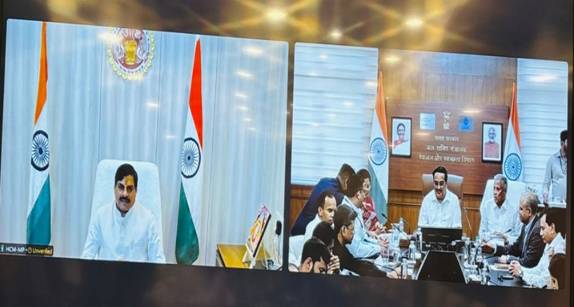
    Later in the day, a similar MoU was signed with Madhya Pradesh in the presence of Union Minister C. R. Patil and Chief Minister Mohan Yadav, who joined the event through video conferencing. Madhya Pradesh PHED Minister Sampatiya Uikey and other senior officials were also present.

    Senior officials from the Department of Drinking Water and Sanitation (DDWS), including Secretary Ashok K. K. Meena and Additional Secretary and Mission Director (NJJM) Kamal Kishore Soan, attended the MoU signing ceremonies.

    For Rajasthan, the agreement was signed between Swati Meena Naik, Joint Secretary (Water), DDWS, and Akhil Arora, Additional Chief Secretary, PHED Rajasthan. For Madhya Pradesh, the MoU was signed between Swati Meena Naik and P. Narahari, Principal Secretary, PHED Madhya Pradesh.

    Addressing the gathering, Union Minister C. R. Patil reiterated the Union government’s zero-tolerance policy toward corruption and stressed that quality, transparency and accountability must guide all works under the Jal Jeevan Mission. He urged both states to maintain strict quality standards to ensure that water supply assets remain functional and sustainable in the long term.

    Highlighting the different water challenges faced by the two states—including water scarcity in Rajasthan and diverse hydro-geological conditions in Madhya Pradesh—the minister praised both governments for proactively adopting the reform-linked framework.

    He also emphasised that effective implementation of the mission would significantly reduce the burden on women and girls, particularly in water-stressed rural regions, while ensuring reliable and safe drinking water supply for households.

    Rajasthan Chief Minister Bhajan Lal Sharma reaffirmed the state’s commitment to implementing Jal Jeevan Mission reforms with a focus on timely execution, institutional strengthening and long-term sustainability of rural drinking water systems.

    Similarly, Madhya Pradesh Chief Minister Mohan Yadav said the state would fully align with the national reform agenda and work toward strengthening governance systems, improving service delivery and achieving the goal of 24×7 drinking water supply in rural areas.

    The MoUs outline 11 key structural reform areas aimed at strengthening governance and sustainability in rural drinking water systems. These include institutional architecture for water governance, service utility frameworks, technical compliance in scheme implementation, citizen-centric water quality governance, water source sustainability, digital data governance, participatory governance through community involvement, capacity building, human resource development, operational and financial sustainability of water supply systems, and research and innovation.

    A key feature of the reform framework is a Gram Panchayat-led model of water governance, under which completed piped water supply schemes will be handed over to Gram Panchayats and Village Water and Sanitation Committees (VWSCs) through the “Jal Arpan” process.

    The MoU also calls for operationalising a Decision Support System (DSS) developed by DDWS as a digital planning tool for districts and Gram Panchayats to improve water source sustainability and planning.

    In addition, the agreement provides for “Jal Seva Aankalan” at the Gram Panchayat level to assess service delivery and share results with citizens through the Meri Panchayat mobile application.

    The reform agenda also includes the Jal Utsav initiative, a nationwide awareness campaign celebrating the importance of water through three tiers—Jal Mahotsav at the national level, Rajya Jal Utsav or Nadi Utsav at the state level, and Lok Jal Utsav at the Gram Panchayat level. As part of this initiative, National Jal Mahotsav 2026 began with a nationwide Jal Arpan event on March 8, 2026, and will culminate on March 22, World Water Day. The national event held on March 11 was attended by the President of India Droupadi Murmu.

    The extension of Jal Jeevan Mission until December 2028 with enhanced financial outlay aims to shift the programme’s focus toward assured service delivery, water quality, system functionality, sustainability and community ownership.

    Through the reform-linked framework, the government aims to ensure that every rural household receives adequate, safe drinking water on a regular basis, strengthening community participation and improving living standards while contributing to long-term water security under the national vision of Viksit Bharat @2047.

  • Centre Pushes Capital Goods Sector Competitiveness with Rs.1,207-Crore Scheme

    New Delhi, March 18: The Government of India is implementing the “Enhancement of Competitiveness in the Indian Capital Goods Sector – Phase II” scheme to strengthen domestic manufacturing capabilities and support the growth of a globally competitive capital goods industry.

    The scheme, implemented by the Ministry of Heavy Industries, has a total financial outlay of ₹1,207 crore, including ₹975 crore in budgetary support from the government and ₹232 crore contribution from industry stakeholders.

    The initiative aims to develop a robust ecosystem for the capital goods sector by promoting research, innovation, skill development, and advanced manufacturing technologies.

    According to the ministry, the scheme focuses on five key objectives: building a strong and globally competitive capital goods sector, establishing a sustainable ecosystem for research and manufacturing innovation through technology portals, enhancing skill levels of existing manpower while expanding the pool of highly skilled professionals, promoting smart manufacturing and adoption of Industry 4.0 technologies, and encouraging progressive indigenisation of technologies used in capital goods production.

    So far, 29 projects have been sanctioned under the scheme. These include seven Centres of Excellence (CoEs), four Common Engineering Facility Centres (CEFCs), six Testing and Certification Centres, nine Industry Accelerators for Technology Development, and three projects focused on creating qualification packs for skill levels six and above.

    The scheme builds on the outcomes of its earlier phase. A third-party evaluation of Phase I was conducted by an expert committee chaired by S. Chaudhary. The committee observed that the first phase helped address technological and infrastructure requirements of the capital goods sector to a certain extent.

    However, the committee recommended scaling up the initiative to support the broader needs of the capital goods industry across the country. Expanding the programme, it noted, would generate a stronger impact in advancing the government’s Make in India initiative and strengthening domestic manufacturing capabilities.

    Following these recommendations, the government formally notified the Phase II version of the scheme on January 25, 2022, aimed at expanding its scope and impact.

    To ensure effective implementation, the ministry has constituted a Project Review and Monitoring Committee (PRMC) for each approved project. These committees are responsible for regularly reviewing progress and ensuring that project objectives are achieved in line with the scheme’s goals.

    The initiative is expected to play a crucial role in boosting technology development, strengthening manufacturing infrastructure, and promoting innovation within India’s capital goods sector.

    This information was provided by Bhupathiraju Srinivasa Varma, Minister of State for Ministry of Heavy Industries, in a written reply in the Lok Sabha on March 17.

  • Centre Launches Nationwide Free HPV Vaccination Campaign for 1.2 Crore Girls

    New Delhi, March 18, 2026:
    The Government of India has launched a nationwide free Human Papillomavirus (HPV) vaccination campaign targeting around 1.2 crore girls aged 14 years across all 36 states and union territories, as part of its efforts to reduce the burden of cervical cancer in the country.

    The campaign began on February 28, 2026, with the single-dose Gardasil-4 vaccine being administered free of cost at government healthcare facilities across the country. These include Ayushman Arogya Mandirs, Primary Health Centres (PHCs), Community Health Centres (CHCs), Sub-District Hospitals (SDHs), District Hospitals (DHs), and Government Medical Colleges (GMCs), covering both urban and rural areas, including underserved regions.

    The vaccination drive is scheduled to run for three months, after which the HPV vaccine will continue to be provided through routine immunisation sessions at government health facilities.

    Health authorities have put in place safety measures to ensure smooth implementation of the campaign. Vaccination is being conducted in the presence of medical officers, and all vaccination sites are linked to 24×7 Adverse Events Following Immunization (AEFI) management centres to provide immediate medical support in the event of any adverse reaction.

    The government has clarified that HPV vaccination is voluntary, and parental consent is mandatory before the vaccine is administered to eligible beneficiaries. Operational guidelines for implementing the campaign have already been shared with all states and union territories.

    The vaccination initiative forms part of a broader national strategy to combat Cervical Cancer, which includes screening, early diagnosis, and timely treatment. Health experts have highlighted that HPV vaccination—supported by strong global evidence—can significantly reduce the incidence of cervical cancer among women.

    Details regarding the efficacy and safety profile of approved HPV vaccines are available in the Summary of Product Characteristics (SmPC) published on the website of the Central Drugs Standard Control Organization (CDSCO).

    This information was provided by Anupriya Patel, Union Minister of State for Ministry of Health and Family Welfare, in a written reply in the Rajya Sabha on March 17.

  • Food Processing Industry Must Align with Nutrition Security Goals: Chirag Paswan

    New Delhi, March 18: Union Minister of Food Processing Industries Chirag Paswan has called for a long-term strategic roadmap for India’s food processing and nutraceutical sectors, stressing that the industry must align its growth with the country’s broader goal of becoming a developed nation by 2047.

    Speaking at “NutriBharat 2026: National Conference on the Role of Nutraceuticals and Functional Foods in Strengthening Nutrition Security,” organised by ASSOCHAM on March 17, the minister urged stakeholders to set clear milestones for the short, medium and long term while working closely with policymakers and regulators.

    Paswan emphasised the need for a structured roadmap for the next one year, five years and ten years, highlighting that collaborative efforts between industry, government and regulatory bodies will be essential to unlock the sector’s full potential.

    Food Processing Industry Must Align with Nutrition Security Goals: Chirag Paswan


    “India has successfully moved from food scarcity to food security. The next frontier is nutrition security, ensuring that our future generations are healthy and free from malnutrition,” he said.

    The minister noted that the food processing industry will play a critical role in strengthening the country’s nutrition ecosystem by ensuring the availability of safe, nutritious and high-quality food products. With rising consumer awareness around health and wellness, sectors such as nutraceuticals and functional foods are expected to emerge as key drivers of India’s food economy.

    Paswan also stressed the importance of maintaining global standards and stringent quality control to safeguard India’s credibility in international markets. He warned that even a single rejected export consignment at a foreign port could undermine the reputation that Indian food exporters have built over decades.

    Calling for higher industry accountability, he urged companies to prioritise quality assurance, innovation, and responsible manufacturing practices, while strengthening collaboration with regulatory authorities and research institutions.

    Industry experts attending the conference highlighted that nutraceuticals and functional foods are increasingly becoming important tools for addressing malnutrition, lifestyle diseases, and micronutrient deficiencies. With India aiming to improve public health outcomes, the integration of food processing, nutrition science and regulatory frameworks is expected to play a pivotal role in achieving the country’s long-term nutrition security goals.

    The conference brought together policymakers, industry leaders, researchers and nutrition experts to discuss strategies for strengthening the nutraceutical ecosystem and advancing India’s food processing sector in line with national development priorities.

  • Centre Supports Fisheries Infrastructure in Himachal Pradesh; NABARD Funds Rs.5 Crore Training Centre

    New Delhi, March 18: The Government of India has supported the establishment of a state-of-the-art fisheries training centre in Himachal Pradesh to strengthen aquaculture capacity and improve skill development in the fisheries sector.

    The Department of Fisheries under the Ministry of Fisheries, Animal Husbandry and Dairying approved a proposal from the Government of Himachal Pradesh during 2022–23 for the establishment of a State-of-the-Art Fisheries Training Centre at Gagret. The project was sanctioned at a total cost of ₹5.17 crore, with the project cost restricted to ₹5 crore for interest subvention under the Fisheries and Aquaculture Infrastructure Development Fund (FIDF).

    The National Bank for Agriculture and Rural Development (NABARD), one of the designated nodal loaning entities under FIDF, sanctioned ₹5 crore to the Himachal Pradesh government for the project and has already disbursed the full sanctioned amount to facilitate its implementation.

    The fisheries department is implementing several schemes nationwide aimed at holistic development of the fisheries sector across all states and union territories, including Himachal Pradesh. Key initiatives include the Pradhan Mantri Matsya Sampada Yojana (PMMSY), being implemented from 2020–21 to 2025–26, the FIDF scheme covering the period 2018–19 to 2025–26, and the central sector sub-scheme of PMMSY, Pradhan Mantri Matsya Kisan Samridhi Sah Yojana (PM-MKSSY), which runs from 2023–24 to 2026–27.

    These programmes aim to address critical gaps in fish production and productivity by strengthening infrastructure, promoting technological adoption, improving post-harvest management systems, and modernising fisheries value chains. The schemes also focus on improving fishers’ livelihoods and enhancing welfare measures across the sector.

    The government has also extended the Kisan Credit Card (KCC) facility to fishers and fish farmers since 2018–19, enabling them to meet working capital requirements and improve access to institutional credit for fisheries-related activities.

    Data provided by the Himachal Pradesh government shows steady growth in fish production in key districts such as Kangra and Chamba over the past three years. Fish production in Kangra increased from 4,871.09 tonnes in 2022–23 to 5,480.62 tonnes in 2024–25, while Chamba recorded growth from 1,075.36 tonnes to 1,379.48 tonnes during the same period.

    Overall fish production in Himachal Pradesh has also risen significantly in recent years. According to official figures, the state’s fish output increased from 13,745 tonnes in 2019–20 to 16,250 tonnes in 2025–26, reflecting steady expansion in aquaculture and fisheries activities.

    Within this growth, Kangra district contributed around 2,850 tonnes of fish production, while Chamba district accounted for about 1,920 tonnes, highlighting the expanding aquaculture base in these regions.

    The government believes that improved infrastructure, enhanced training facilities, and better access to institutional credit will further strengthen the fisheries ecosystem and support sustainable growth in fish production across the hill state.

    This information was provided by Rajiv Ranjan Singh, Union Minister for the Ministry of Fisheries, Animal Husbandry and Dairying, in a written reply to a question in the Lok Sabha.

  • Government Steps Up Measures to Boost Agricultural Credit Flow, Focus on Small Farmers and Allied Sectors

    New Delhi, March 18: The Government of India has implemented a series of policy measures aimed at expanding institutional credit to the agriculture sector, with particular emphasis on underserved segments such as small and marginal farmers and allied activities including dairy, fisheries, and animal husbandry.

    The initiatives are designed to improve access to affordable credit, strengthen rural financial institutions, and enhance agricultural productivity through increased financial inclusion in rural areas.

    According to information shared in the Rajya Sabha by Pankaj Chaudhary, Minister of State in the Ministry of Finance, the government sets annual Ground Level Credit (GLC) targets for agriculture and allied sectors, which banks are required to meet during each financial year.

    These credit targets are allocated region-wise and agency-wise across institutions such as Scheduled Commercial Banks, Regional Rural Banks, and rural cooperative banks. Since the financial year 2021–22, the government has also introduced dedicated credit targets for allied agricultural activities to ensure focused financial support for sectors like dairy farming, fisheries, and animal husbandry.

    The credit expansion strategy is also supported by regulatory norms under Priority Sector Lending (PSL) issued by the Reserve Bank of India. Under these guidelines, commercial banks—including Regional Rural Banks, Small Finance Banks, Local Area Banks and primary urban cooperative banks—must allocate at least 18% of their Adjusted Net Bank Credit (ANBC) or credit equivalent of off-balance sheet exposures to agriculture.

    Within this mandate, a sub-target of 10% has been earmarked specifically for Small and Marginal Farmers (SMFs), who account for a significant majority of India’s agricultural community. The PSL framework also includes incentive mechanisms to encourage higher credit flow to districts with lower lending levels while discouraging excessive concentration of credit in already well-served districts.

    A key instrument supporting farmers’ access to credit is the Kisan Credit Card (KCC) scheme, which provides timely and affordable credit to farmers for purchasing agricultural inputs such as seeds, fertilizers and pesticides, as well as meeting working capital needs. Since 2019, the scheme has also been expanded to cover working capital requirements related to animal husbandry, dairying, and fisheries.

    To further reduce borrowing costs for farmers, the government operates the Modified Interest Subvention Scheme (MISS), under which farmers can access short-term crop loans at a concessional interest rate of 7% through Kisan Credit Cards. Farmers who repay their loans on time are eligible for an additional 3% incentive, effectively reducing the interest rate to 4%.

    In another move to improve credit access, the collateral-free loan limit for short-term agricultural loans has been raised from ₹1.60 lakh to ₹2 lakh per borrower, effective January 1, 2025. The increase is expected to particularly benefit small and marginal farmers, who constitute over 86% of India’s farming community, by enabling easier access to formal credit without the need for collateral.

    The government has also been strengthening rural infrastructure and financial ecosystems through institutional support from the National Bank for Agriculture and Rural Development (NABARD). Funds allocated under the Rural Infrastructure Development Fund (RIDF) are used to support infrastructure projects in rural areas, which in turn enhance credit absorption capacity in agriculture and allied sectors.

    As part of the Union Budget 2025–26, the government also announced the launch of the PM Dhan Dhaanya Krishi Yojana (PM-DDKY). One of the key objectives of the scheme is to improve the availability of both long-term and short-term agricultural credit in districts where credit disbursement to the sector remains low.

    Efforts are also underway to strengthen rural financial institutions such as cooperative banks and Regional Rural Banks through technology upgrades and institutional reforms to improve their operational efficiency and outreach.

    NABARD continues to play a central role in boosting credit flow to the agriculture sector. Under the RBI’s Lead Bank Scheme, NABARD prepares Potential Linked Credit Plans (PLPs) for each district every year to estimate the credit potential under priority sectors. These district-level plans are aggregated at the state level and used as the basis for setting annual credit targets for agriculture.

    To support banks in meeting these targets, NABARD provides refinance assistance for both short-term and long-term agricultural lending. Short-term refinance is extended to institutions such as State Cooperative Banks, Regional Rural Banks, and Small Finance Banks for crop loans and other agricultural lending activities.

    Long-term refinance support is also provided to rural financial institutions, scheduled commercial banks, small finance banks, and non-banking financial companies to strengthen lending for agriculture and allied sectors.

    In addition, NABARD offers concessional refinance under various specialised schemes supporting sectors such as micro food processing, animal husbandry infrastructure development, solar rooftop installations, aspirational districts, and initiatives like the Agriculture Infrastructure Fund and the National Rural Livelihoods Mission.

    The government believes these coordinated policy interventions will strengthen the rural credit ecosystem, improve farmers’ access to affordable finance, and support sustainable agricultural growth across the country.