Author: admin

  • Govt Reviving Stalled Irrigation Projects, Expanding Digital Agriculture Push: Shivraj Singh in Lok Sabha

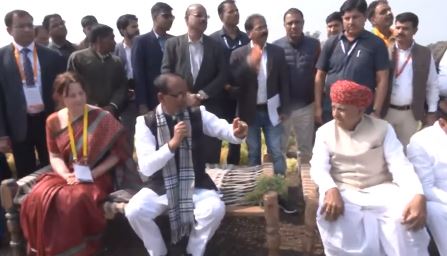
    New Delhi, March 19: Union Agriculture Minister Shivraj Singh Chouhan on Thursday said the government has expedited long-pending irrigation and river-linking projects while undertaking structural reforms in agriculture aimed at improving farmer incomes and rural productivity.

    Replying to a discussion in the Lok Sabha on the Ministry of Agriculture and Farmers Welfare, Chouhan said several major irrigation projects that remained incomplete for years have been fast-tracked under the Pradhan Mantri Krishi Sinchai Yojana.

    He stated that out of 140 major irrigation projects, 99 had remained stalled earlier, and the government has now prioritised their completion, with work progressing to bring irrigation coverage to about 2.7 million hectares of additional farmland.
    The minister also said river-linking initiatives, including the Ken–Betwa project connecting parts of Madhya Pradesh and Uttar Pradesh, are being advanced to address issues of floods and droughts.

    Chouhan said the government is working to ensure the availability of quality seeds, fertilisers, and pesticides to farmers. He informed the House that new legislation on seeds and pesticides is being prepared to regulate standards and prevent the sale of substandard products.

    He added that strict approval mechanisms have been introduced for bio-stimulants, with only those products cleared after multiple scientific trials being allowed in the market.

    Highlighting digitisation efforts, the minister said nearly 9 crore farmer IDs have been created under the Digital Agriculture Mission. These digital profiles are expected to streamline access to institutional credit and improve delivery of government schemes.

    He also referred to an AI-based platform, “Bharat Vistaar,” which will enable farmers to seek real-time advisory services by sharing crop images or queries, with responses provided in local languages.

    Chouhan said the government is promoting natural farming to address concerns over soil health and sustainability. The initiative aims to reach one crore farmers, provide training to 18 lakh farmers, and expand natural farming practices to around 75 lakh hectares.

    He added that the Centre is working with states to develop region-specific agricultural plans based on local conditions and crop suitability.

    The minister said government interventions, including MSP operations and direct benefit transfers, are aimed at ensuring income support and reducing vulnerabilities faced by farmers.

    He maintained that the focus is on improving farm productivity, strengthening rural economies, and advancing the goal of a self-reliant agricultural sector.


  • Kerala Scales Up Ayush Network with Rs.285 Crore Funding and 700 Wellness Centres

    Kerala Scales Up Ayush Network with Rs.285 Crore Funding and 700 Wellness Centres

    Kerala is expanding its Ayush healthcare ecosystem with central assistance of over ₹285 crore in the last four years, alongside the operationalisation of 700 Ayush wellness centres, strengthening its position as a key hub for traditional medicine and wellness services.

    Data presented in Parliament shows that funding under the National Ayush Mission (NAM) to Kerala has risen steadily, peaking at ₹110.37 crore in 2024–25, before moderating to ₹51.38 crore in 2025–26. The total allocation between 2022–23 and 2025–26 stands at ₹285.65 crore.

    Expanding Wellness Infrastructure

    A major component of the expansion is the upgrade of 700 dispensaries into Ayushman Arogya Mandirs. All centres are now operational, delivering integrated healthcare services that include Ayurveda, Yoga, and other Ayush systems.

    This large-scale rollout strengthens Kerala’s already established reputation in Ayurveda and wellness tourism, while also expanding access to preventive and primary healthcare at the community level.

    Healthcare Meets Wellness Economy

    Kerala’s push comes at a time when demand for alternative medicine and preventive healthcare is rising, both domestically and globally. The state is well-positioned to leverage this trend, given its strong base in Ayurveda, trained practitioners, and established wellness infrastructure.

    The integration of Ayush services into public healthcare through these centres also signals a shift toward cost-effective, preventive care models, which can reduce long-term healthcare expenditure.

    Boost to Medical Value Travel

    The promotion of Medical Value Travel (MVT) is emerging as a key economic driver. The Ministry of Ayush recently held a South Zone MVT Summit in Chennai, with participation from Kerala and other southern states, aimed at positioning India as a global destination for traditional medicine and wellness therapies.

    Kerala, in particular, stands to benefit due to its global brand recognition in Ayurveda-based treatments and wellness retreats.

    Policy and Funding Trends

    While public health remains a state subject, central funding through NAM continues to play a catalytic role in infrastructure development and capacity expansion. The funding pattern indicates both strong central support and the state’s active participation through State Annual Action Plans.

    Opportunities and Challenges

    The expansion opens up opportunities across multiple segments, including wellness tourism, herbal product markets, training institutions, and tele-health services.

    However, scaling up services while maintaining quality, standardisation, and global credibility will be critical, especially as Kerala targets international patients under medical value travel initiatives.

    Outlook

    With a combination of public investment, infrastructure expansion, and global demand for wellness services, Kerala is positioning itself at the intersection of healthcare and tourism.

    If supported by quality assurance and international outreach, the state’s Ayush ecosystem could evolve into a significant contributor to both public health outcomes and the regional economy.

  • Ayush Services Expand in Rural Odisha with Focus on Outreach, Training and Tele-Consultation

    Ayush Services Expand in Rural Odisha with Focus on Outreach, Training and Tele-Consultation


    Ayush healthcare services are witnessing steady expansion in rural and tribal areas of Odisha, supported by increased deployment of doctors, outreach programmes, and digital health initiatives, according to official data presented in Parliament.

    The state currently has 584 Ayurvedic Medical Officers, 525 Homoeopathic Medical Officers, and 2 Unani Medical Officers posted across government dispensaries, strengthening primary healthcare delivery in underserved regions.

    Strengthening Rural Healthcare Delivery

    The expansion reflects a broader push to integrate traditional systems of medicine into public healthcare, particularly in areas where access to conventional medical infrastructure remains limited.

    Public health being a state subject, Odisha has taken the lead in scaling awareness, training, and service delivery. At the same time, central support under the National Ayush Mission (NAM) is enabling infrastructure development, capacity building, and outreach programmes.

    Investment in Training and Capacity Building

    The state has rolled out induction and refresher training programmes for Ayush practitioners, including those serving as Community Health Officers at 422 Ayushman Arogya Mandir centres.

    This focus on workforce development is critical for standardising care quality and expanding the role of Ayush practitioners in preventive and primary healthcare services.

    Expanding Outreach and Preventive Care

    Odisha has increased awareness through large-scale health campaigns and camps, including integrated Ayush camps, geriatric care initiatives, and screening programmes for musculoskeletal disorders.

    These efforts are aligned with a preventive healthcare model, which is gaining policy traction as a cost-effective way to manage long-term health burdens, particularly in ageing populations.

    Digital Push with Tele-AYUSH

    A notable development is the rollout of tele-consultation services under the e-Sanjeevani platform. The model connects 50 Ayushman Arogya Mandir centres as spokes with major institutions such as Dr. Abhin Chandra Homoeopathic Medical College in Bhubaneswar and Gopabandhu Ayurveda Mahavidyalaya in Puri acting as hubs.

    This hub-and-spoke approach is expected to improve access to specialist consultations in remote areas while reducing the need for physical travel.

    Emerging Healthcare Ecosystem

    The state’s network of 422 Ayushman Arogya Mandirs is playing a central role in delivering holistic healthcare services, including preventive, promotive, curative, and rehabilitative care. Activities such as yoga sessions, medicinal plant distribution, and health awareness campaigns are also being integrated into service delivery.

    Policy and Market Implications

    The expansion of Ayush services reflects growing institutional support for alternative medicine systems within India’s healthcare framework. For the broader healthcare ecosystem, this could open opportunities in areas such as herbal medicine, wellness services, tele-health platforms, and training infrastructure.

    Outlook

    As demand for affordable and preventive healthcare rises, Odisha’s model of integrating Ayush services with digital platforms and community outreach could serve as a template for other states.

    The long-term impact will depend on service quality, patient trust, and the ability to scale infrastructure while maintaining standards.

  • Cabinet Approves Rs.1,718 Crore MSP Support for Cotton, Strengthening Farm Incomes and Textile Supply Chain

    The Cabinet Committee on Economic Affairs has approved ₹1,718.56 crore in Minimum Support Price (MSP) funding to the Cotton Corporation of India (CCI) for the 2023–24 cotton season, reinforcing price support mechanisms for cotton farmers.

    The funding is aimed at enabling CCI to undertake large-scale procurement when market prices fall below MSP, ensuring farmers receive assured returns and are protected from price volatility.

    Cabinet Approves Rs.1,718 Crore MSP Support for Cotton, Strengthening Farm Incomes and Textile Supply Chain


    Stabilising Prices, Supporting Farm Incomes

    MSP operations play a critical role in preventing distress sales during periods of weak market demand. By stepping in as a buyer of last resort, CCI helps stabilise cotton prices, which has broader implications for both farmers and downstream industries.

    India’s cotton economy is substantial, with around 60 lakh farmers dependent on the crop and an estimated 4–5 crore people engaged across the value chain, including ginning, trading, and textiles.

    For the 2023–24 season, cotton cultivation covered about 114.47 lakh hectares, with production estimated at 325.22 lakh bales, making India one of the largest global producers with roughly a quarter of total output.

    Implications for Textile Industry

    Stable cotton prices are crucial for India’s textile sector, which relies heavily on domestic raw material supply. MSP-backed procurement can help ensure consistent availability of cotton, reducing supply-side uncertainties for manufacturers.

    However, large-scale procurement can also influence market dynamics by tightening open market supply in the short term, potentially impacting prices for mills depending on the scale and timing of CCI interventions.

    Expanding Procurement Network

    CCI has strengthened its procurement infrastructure, operating over 508 centres across 152 districts in 11 major cotton-growing states. This wide network improves farmer access to MSP operations, particularly in key producing regions.

    The agency continues to procure Fair Average Quality (FAQ) cotton without any quantity cap, ensuring that farmers can sell their produce at MSP whenever market prices fall below the threshold.

    Technology Push in Procurement

    The corporation has also introduced digital tools to improve transparency and efficiency. Initiatives such as the Bale Identification and Traceability System (BITS) and the “Cott-Ally” mobile app aim to streamline procurement processes and improve communication with farmers.

    These measures could help reduce delays, improve traceability, and enhance trust in MSP operations.

    Fiscal and Policy Perspective

    The MSP funding reflects the government’s continued reliance on price support mechanisms to stabilise farm incomes. While such interventions provide immediate relief to farmers, they also carry fiscal implications and can influence market behaviour over time.

    Outlook

    The approval comes at a time when global cotton markets remain sensitive to demand fluctuations and supply disruptions. A strong MSP-backed procurement framework could help shield Indian farmers from global volatility while ensuring raw material stability for the domestic textile industry.

    The effectiveness of the intervention will depend on procurement efficiency, market conditions, and how well supply is balanced between government stocks and industry demand.

  • Cabinet Clears Rs.6,969 Crore Barabanki–Bahraich Highway Project to Boost Trade and Logistics

    In a move aimed at strengthening regional connectivity and cross-border trade, the Cabinet Committee on Economic Affairs has approved the construction of a four-lane access-controlled National Highway-927 from Barabanki to Bahraich in Uttar Pradesh. The 101.5 km project will be developed at a cost of ₹6,969.04 crore under the Hybrid Annuity Mode (HAM).

    The project is expected to significantly improve logistics efficiency in eastern Uttar Pradesh while enhancing trade linkages with Nepal through the Rupaidiha Land Port near the Nepalganj border.

    Logistics and Trade Gains

    The upgraded highway is designed to reduce travel time between Barabanki and Bahraich to nearly one hour, improving freight movement and lowering transportation costs. By easing congestion and improving road geometry, the corridor is likely to enhance fuel efficiency and reduce vehicle operating expenses for logistics operators.

    The project will connect multiple economic, social, and logistics nodes, including 12 logistics hubs, strengthening supply chain networks in the region. Improved connectivity to airports and trade gateways is expected to further support cargo movement.

    Boost to Cross-Border Commerce

    With improved access to the Rupaidiha Land Port, the highway is poised to play a key role in facilitating India–Nepal trade. Faster transit times and better infrastructure could increase the volume of goods moving across the border, particularly agricultural produce and small-scale industrial goods.

    Industry observers note that better road connectivity in border areas can help reduce delays and inefficiencies that often impact cross-border trade.

    Investment and Regional Growth

    The project is expected to unlock economic potential in districts such as Bahraich and Shravasti by improving access to markets and attracting new investments. Enhanced connectivity could also support sectors like agriculture, tourism, and small-scale manufacturing.

    Under the HAM model, private players will participate in project execution, ensuring a mix of public funding and private sector efficiency. The model has become a key instrument in India’s highway development strategy, helping to accelerate infrastructure creation while managing fiscal risks.

    Construction and Employment Impact

    Beyond long-term gains, the project is expected to generate employment during the construction phase and create opportunities in ancillary sectors such as logistics, roadside services, and maintenance.

    Outlook

    The Barabanki–Bahraich highway project aligns with the government’s broader focus on improving logistics infrastructure under the PM GatiShakti initiative. By integrating road networks with economic and trade nodes, the project aims to enhance overall supply chain efficiency.

    If executed on schedule, the corridor could emerge as a key logistics link in northern India, supporting both domestic commerce and cross-border trade flows.

  • BHAVYA Scheme Signals Shift to Ready-to-Use Industrial Ecosystems

    The Union Cabinet’s approval of the ₹33,660 crore Bharat Audyogik Vikas Yojna (BHAVYA) marks a significant shift in India’s industrial policy, from land allocation and incentives to fully serviced, plug-and-play manufacturing ecosystems.

    At its core, BHAVYA attempts to solve a long-standing problem in India’s industrial landscape: delays between investment intent and actual production. By offering pre-cleared land, ready infrastructure, and integrated services, the scheme aims to compress this timeline dramatically.

    Moving Beyond Industrial Corridors

    The scheme builds on the National Industrial Corridor Development Programme (NICDP), which focused on large, strategically located industrial regions. However, BHAVYA expands this model in two important ways.

    First, it decentralizes industrial development by spreading 100 parks across states and Union Territories. Second, it introduces a more execution-focused approach, where readiness of infrastructure becomes the key selling point rather than just location or policy incentives.

    This suggests a policy evolution from macro-planning to micro-level execution.

    Plug-and-Play: Solving India’s Entry Barrier Problem

    One of the biggest deterrents for investors in India has been procedural complexity and infrastructure gaps. Even after approvals, companies often face delays due to land issues, utilities, or logistics bottlenecks.

    BHAVYA directly targets this friction. By ensuring that land is pre-approved and infrastructure is in place, the government is effectively lowering the cost and uncertainty of entry.

    If implemented well, this could particularly benefit MSMEs and global manufacturers looking to diversify supply chains away from single-country dependencies.

    Competitive Federalism in Action

    The “challenge mode” selection of projects introduces a competitive dynamic among states. Only those offering reform-oriented, investment-ready proposals will qualify for central support.

    This approach aligns with a broader trend of competitive federalism, where states compete on ease of doing business, infrastructure readiness, and policy stability. It also shifts responsibility to states to deliver reforms rather than rely solely on central funding.

    Infrastructure Depth, Not Just Scale

    The scheme’s design indicates a move toward deeper infrastructure development rather than just expanding industrial land.

    Support for core, value-added, and social infrastructure reflects a recognition that industrial ecosystems require more than factories. Worker housing, logistics facilities, testing labs, and digital systems are critical for sustained productivity.

    The inclusion of underground utility corridors and green energy systems also signals a push toward more efficient and sustainable industrial zones, potentially reducing long-term operational disruptions.

    Economic Multiplier and Job Creation

    With parks ranging from 100 to 1,000 acres, BHAVYA is expected to generate significant employment across manufacturing, logistics, and services. The clustering of industries could also strengthen domestic supply chains and reduce dependence on imports.

    However, the real multiplier effect will depend on how quickly these parks attract anchor investors. Without early movers, infrastructure risks remaining underutilized, as seen in some past industrial projects.

    The Execution Challenge

    While the design of BHAVYA is ambitious, its success will hinge on execution at the state and local levels.

    Key challenges include:

    • Timely land acquisition and clearances

    • Coordination between multiple agencies

    • Ensuring last-mile connectivity

    • Maintaining investor confidence through policy stability

    Past experience with industrial parks in India shows that delays and uneven implementation can dilute impact.

    Strategic Timing

    The scheme comes at a time when global supply chains are being reconfigured, and countries are competing to attract manufacturing investments. India’s push for plug-and-play infrastructure aligns with this global shift.

    If executed effectively, BHAVYA could position India as a more predictable and efficient manufacturing destination, complementing initiatives like Production Linked Incentive (PLI) schemes.

    Bottom Line

    BHAVYA represents a structural shift in India’s industrial strategy, from policy-driven incentives to infrastructure-led competitiveness. It acknowledges that investors value speed, certainty, and ecosystem readiness as much as financial support.

    The intent is clear. The outcome will depend on whether India can deliver industrial parks that are not just announced, but fully operational when investors arrive.

  • Cabinet Approves Rs.2,584 Crore Small Hydro Power Scheme to Boost Clean Energy

    The Union Cabinet, chaired by Prime Minister Narendra Modi, has approved the Small Hydro Power (SHP) Development Scheme for the period 2026–27 to 2030–31. The scheme has a total outlay of ₹2,584.60 crore and aims to install small hydro power projects with a combined capacity of around 1,500 MW.

    The initiative focuses on promoting small hydro projects with capacities between 1 MW and 25 MW across the country. It is expected to significantly benefit hilly regions and North Eastern states, where there is high potential for such projects.

    Under the scheme, enhanced financial support will be provided to projects in North Eastern states and districts along international borders. These areas will receive central assistance of up to ₹3.6 crore per MW or 30 percent of the project cost, whichever is lower, subject to a maximum of ₹30 crore per project. In other states, assistance will be up to ₹2.4 crore per MW or 20 percent of the project cost, capped at ₹20 crore per project.

    Cabinet Approves Rs.2,584 Crore Small Hydro Power Scheme to Boost Clean Energy


    Out of the total allocation, ₹2,532 crore has been earmarked for project development. The scheme is expected to attract investments of around ₹15,000 crore in the sector, boosting clean energy capacity and driving development in remote and rural regions. It will also support domestic manufacturing, with 100 percent of plant and machinery expected to be sourced within the country, aligning with the Atmanirbhar Bharat initiative.

    Additionally, ₹30 crore has been allocated to support state and central agencies in preparing detailed project reports (DPRs) for approximately 200 future projects. This is aimed at creating a strong pipeline for continued growth in the small hydro sector.

    The scheme is projected to generate about 51 lakh person-days of employment during the construction phase, along with long-term jobs in operation and maintenance. Since these projects are decentralized, they require minimal transmission infrastructure, reducing energy losses.

    Officials said the initiative will help revive the small hydro power sector and accelerate the use of untapped potential. SHP projects are considered environmentally sustainable as they involve limited land use, minimal deforestation, and low displacement of communities. With a typical lifespan of 40 to over 60 years, these projects are also expected to contribute to long-term socio-economic development in remote areas.

  • SK Telecom and Ericsson Sign MoU to Advance Network Innovation towards 6G

    SEOUL, Korea, Mar 19 – SK Telecom (NYSE: SKM, hereinafter referred to as “SKT”) and Ericsson (NASDAQ: ERIC) today announced the signing of a Memorandum of Understanding (MoU) to strengthen their collaboration on mobile network technologies spanning 5G to future 6G. The agreement underscores the two companies’ shared commitment to driving innovation in next-generation connectivity.


    vp12vgctb2

    Under the agreement, the two companies will explore joint initiatives across key technology areas, including:

    ·AI-powered Radio Access Networks (AI-RAN) to enhance performance, security, and energy efficiency by autonomously learning, predicting, and optimizing channel conditions, as well as managing resources more efficiently.

    ·5G advancements to unlock new business opportunities and enable next-generation services.

    ·Open and autonomous networks to improve productivity and operational efficiency., aiming to enhance productivity and operational efficiency in multi-vendor environments.

    ·End-to-end security built on zero trust architecture and continuous monitoring, providing stronger protection and real-time threat response across both 5G Advanced and 6G environments.

    ·6G standardization and future technologies such as spectrum strategy, extreme MIMO evolution, energy efficiency, and Integrated Sensing and Communication (ISAC). Through joint research, SKT and Ericsson aim to strengthen their global collaboration framework and secure a leading position in the 6G technology ecosystem, driving the evolution of next-generation AI-powered networks.

    This collaboration will establish a framework for ongoing technology evolution, enabling the practical deployment of innovations in the 5G era while laying the foundation for long term 6G research and standardization. The MoU is effective until March 2, 2031, and focuses on joint exploration and validation of cutting-edge network technologies.

    “Our collaboration with Ericsson will be a core engine propelling the evolution of AI-powered networks, paving the way toward 6G,” says Yu Takki, Head of Network Technology Office at SK Telecom. “Through research focused on global standardization and real-world validation, we aim to secure world-class technological leadership in AI-powered network evolution and 6G.”

    Mårten Lerner, Head of Networks Strategy and Product Management at Ericsson, said: “We’re pleased to deepen our partnership with SK Telecom to accelerate AI‑powered RAN, 5G monetization, open autonomous networks and zero‑trust security — while laying the groundwork for AI‑native 6G. Together we’ll move rapidly from standards and trials to commercial solutions that boost performance, energy efficiency and security — strengthening South Korea’s leadership in next‑generation connectivity.”


  • InnoVision Marketing Group Unveils ‘The Fundamentals of Success,’ A Video Series on What It Really Takes to Succeed

    The nationally recognized Anti-Agency™ pulls back the curtain on the behaviors reshaping performance, leadership and success in modern business 

    SAN DIEGO — March 19 — Award-winning marketing agency InnoVision Marketing Group, known as the Anti-Agency™ for its elevated client service, today announced the launch of its new digital series, The Fundamentals of Success. Developed by InnoVision Marketing Group CEO and Executive Creative Director Ric Militi, the series explores the core behaviors, standards and expectations that, when applied, drive long-term professional success. 

    Just as athletes, musicians and dancers must master the fundamentals of their craft to perform at the highest level, Militi believes business professionals must do the same. For nearly 20 years, he has instilled this philosophy within his teams while also sharing it with wider audiences through keynote talks, leadership discussions and industry gatherings.  

    “Success means something different to everyone,” said Militi. “For some it’s family, for others it’s financial independence, meaningful work, or building something that truly matters. But along the journey, many of the obstacles we encounter are often created by our own behaviors and how we show up every day.” 

    After watching a video of author and inspirational speaker Simon Sinek, Militi was struck by one point from Sinek in particular: while businesses have ways to formally measure employee performance by tracking sales, metrics, etc., they rarely measure trustworthiness or foundational soft skills. As Sinek points out in his video, elite teams such as the Navy SEALs don’t choose their most valued members based on performance alone — they prioritize trust. 

    For years, clients and team members have encouraged Militi to share these ideas more broadly. Inspired further by Sinek’s insight, he formalized the principles he has championed since 2005 into The Fundamentals of Success. The framework outlines a set of soft-skill principles designed to help professionals build careers rooted in trust, consistency and respect, ultimately cultivating teams of high performers. After years of teaching, InnoVision Marketing Group is now transforming Militi’s internal leadership philosophy into short, impactful videos that are uploaded to social media platforms for anyone to view for free.  

    During the agency’s weekly companywide meetings, Militi introduces five different fundamentals, ranging from extraordinary communication and detail obsession to grit, enthusiasm and humility. These team meetings are recorded and transformed into short-form digital content, offering an authentic look at the ideas shaping leadership inside the agency. 

    “The Fundamentals of Success are built around the simple principles we all know — things like extraordinary communication, humility, accountability and respect — but too often fail to consistently practice,” added Militi. “When we’re willing to look in the mirror and hold ourselves to those fundamentals, something powerful happens. The friction we experience in our careers and relationships begins to fade, and the path forward becomes much clearer.” 

    Designed for today’s ambitious professionals, The Fundamentals of Success highlights the behaviors that elevate both individuals and teams. By sharing real discussions from inside InnoVision Marketing Group, the series challenges viewers to rethink assumptions, take ownership of their growth and develop the habits that drive meaningful success in their careers. Recognized as one of Inc. Magazine’s 5000 fastest-growing private companies of 2025, InnoVision Marketing Group continues to underscore the critical role these fundamentals play in supporting its high-performing team. 

    Through a growing stream of insights, perspectives and leadership lessons, The Fundamentals of Success serves as a hub for professionals seeking to elevate how they approach work, leadership and collaboration. As the series expands, it aims to spark broader conversations around the principles that underpin sustained success in modern business.  

    For Militi, the series is also deeply personal. 

    “I didn’t learn these lessons overnight,” added Militi. “They were shaped through decades of experience, and often by learning the hard way. Looking back, I only wish I had understood them much earlier in life. Today, being able to share these ideas and watch others apply them in ways that positively impact their careers, their teams and their lives is incredibly rewarding. Helping others find their path to success has ultimately become my own definition of success.” 

    By opening a window into the conversations shaping its culture, InnoVision Marketing Group is sharing the mindset that continues to drive the agency’s rapid growth and continued excellence in the industry. 

  • AAEON to Unveil its Next Gen Network Security Platforms at RSAC 2026


    Join AAEON at Booth N-5165 of the Moscone Center, San Francisco for the ultimate event in the cybersecurity sphere.

    (Taipei, Taiwan – Mar 19) Leading network computing and security platform provider AAEON (Stock Code: 6579) will showcase an array of networking and cybersecurity offerings at the RSAC 2026 Expo, an event that will host security and networking professionals from across the globe.

    RSAC Banner

    Date: March 23 – 26, 2026

    Booth: N-5165

    Venue: Moscone Center, San Francisco, California

    The event, which takes place from March 23 – 26, 2026 at the Moscone Center, San Francisco, California, will not only showcase cutting edge cybersecurity platforms from hundreds of exhibitors, but also present hundreds of sessions, keynotes, seminars, and more.

    AAEON will present a diverse lineup from its network appliance range, beginning with the Intel Atom x7000C/RE processor series-powered FWS-2291 from its Desktop Network Appliance series, which holds the distinction of hosting a powerful combination of four 2.5GbE RJ-45 copper ports and two GbE SFP ports, alongside two pairs of LAN bypass.

    From its Rackmount Network Appliance range, AAEON will have the FWS-7370 and FWS-7851 on show, displaying the company’s versatility across the Intel Atom P5300 and C5000 processors, as well as 12th, 13th, and 14th Generation Intel Core processor-based platforms, respectively.

    RSAC 2026 will mark one of the first public showings of the upcoming FWS-7700, AAEON’s first product to leverage the power, performance, and efficiency of Intel Xeon 6 processors with P-cores. The FWS-7700 is positioned for advanced networking applications such as network function virtualization (NFV), given its support for up to 350W CPUs from the new Intel lineup alongside exceptional PCIe expansion.

    In keeping with the cybersecurity theme of the show, AAEON will also present a video demonstration of NetSec AI Reference Software from Intel, showcasing Intel Advanced Matrix Extensions that accelerate AI inferencing on Intel Xeon 6 processors. The demo also features a collection of networking and security reference solutions optimized for Intel platforms, such as AAEON’s Rackmount Network Appliances, for use in enterprise networks and cloud infrastructure.