Author: admin

  • Centre Launches Nationwide Free HPV Vaccination Campaign for 1.2 Crore Girls

    New Delhi, March 18, 2026:
    The Government of India has launched a nationwide free Human Papillomavirus (HPV) vaccination campaign targeting around 1.2 crore girls aged 14 years across all 36 states and union territories, as part of its efforts to reduce the burden of cervical cancer in the country.

    The campaign began on February 28, 2026, with the single-dose Gardasil-4 vaccine being administered free of cost at government healthcare facilities across the country. These include Ayushman Arogya Mandirs, Primary Health Centres (PHCs), Community Health Centres (CHCs), Sub-District Hospitals (SDHs), District Hospitals (DHs), and Government Medical Colleges (GMCs), covering both urban and rural areas, including underserved regions.

    The vaccination drive is scheduled to run for three months, after which the HPV vaccine will continue to be provided through routine immunisation sessions at government health facilities.

    Health authorities have put in place safety measures to ensure smooth implementation of the campaign. Vaccination is being conducted in the presence of medical officers, and all vaccination sites are linked to 24×7 Adverse Events Following Immunization (AEFI) management centres to provide immediate medical support in the event of any adverse reaction.

    The government has clarified that HPV vaccination is voluntary, and parental consent is mandatory before the vaccine is administered to eligible beneficiaries. Operational guidelines for implementing the campaign have already been shared with all states and union territories.

    The vaccination initiative forms part of a broader national strategy to combat Cervical Cancer, which includes screening, early diagnosis, and timely treatment. Health experts have highlighted that HPV vaccination—supported by strong global evidence—can significantly reduce the incidence of cervical cancer among women.

    Details regarding the efficacy and safety profile of approved HPV vaccines are available in the Summary of Product Characteristics (SmPC) published on the website of the Central Drugs Standard Control Organization (CDSCO).

    This information was provided by Anupriya Patel, Union Minister of State for Ministry of Health and Family Welfare, in a written reply in the Rajya Sabha on March 17.

  • Food Processing Industry Must Align with Nutrition Security Goals: Chirag Paswan

    New Delhi, March 18: Union Minister of Food Processing Industries Chirag Paswan has called for a long-term strategic roadmap for India’s food processing and nutraceutical sectors, stressing that the industry must align its growth with the country’s broader goal of becoming a developed nation by 2047.

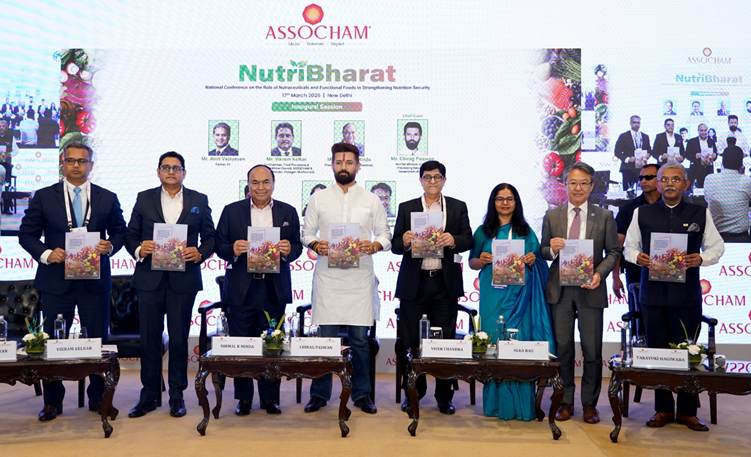
    Speaking at “NutriBharat 2026: National Conference on the Role of Nutraceuticals and Functional Foods in Strengthening Nutrition Security,” organised by ASSOCHAM on March 17, the minister urged stakeholders to set clear milestones for the short, medium and long term while working closely with policymakers and regulators.

    Paswan emphasised the need for a structured roadmap for the next one year, five years and ten years, highlighting that collaborative efforts between industry, government and regulatory bodies will be essential to unlock the sector’s full potential.

    Food Processing Industry Must Align with Nutrition Security Goals: Chirag Paswan


    “India has successfully moved from food scarcity to food security. The next frontier is nutrition security, ensuring that our future generations are healthy and free from malnutrition,” he said.

    The minister noted that the food processing industry will play a critical role in strengthening the country’s nutrition ecosystem by ensuring the availability of safe, nutritious and high-quality food products. With rising consumer awareness around health and wellness, sectors such as nutraceuticals and functional foods are expected to emerge as key drivers of India’s food economy.

    Paswan also stressed the importance of maintaining global standards and stringent quality control to safeguard India’s credibility in international markets. He warned that even a single rejected export consignment at a foreign port could undermine the reputation that Indian food exporters have built over decades.

    Calling for higher industry accountability, he urged companies to prioritise quality assurance, innovation, and responsible manufacturing practices, while strengthening collaboration with regulatory authorities and research institutions.

    Industry experts attending the conference highlighted that nutraceuticals and functional foods are increasingly becoming important tools for addressing malnutrition, lifestyle diseases, and micronutrient deficiencies. With India aiming to improve public health outcomes, the integration of food processing, nutrition science and regulatory frameworks is expected to play a pivotal role in achieving the country’s long-term nutrition security goals.

    The conference brought together policymakers, industry leaders, researchers and nutrition experts to discuss strategies for strengthening the nutraceutical ecosystem and advancing India’s food processing sector in line with national development priorities.

  • Centre Supports Fisheries Infrastructure in Himachal Pradesh; NABARD Funds Rs.5 Crore Training Centre

    New Delhi, March 18: The Government of India has supported the establishment of a state-of-the-art fisheries training centre in Himachal Pradesh to strengthen aquaculture capacity and improve skill development in the fisheries sector.

    The Department of Fisheries under the Ministry of Fisheries, Animal Husbandry and Dairying approved a proposal from the Government of Himachal Pradesh during 2022–23 for the establishment of a State-of-the-Art Fisheries Training Centre at Gagret. The project was sanctioned at a total cost of ₹5.17 crore, with the project cost restricted to ₹5 crore for interest subvention under the Fisheries and Aquaculture Infrastructure Development Fund (FIDF).

    The National Bank for Agriculture and Rural Development (NABARD), one of the designated nodal loaning entities under FIDF, sanctioned ₹5 crore to the Himachal Pradesh government for the project and has already disbursed the full sanctioned amount to facilitate its implementation.

    The fisheries department is implementing several schemes nationwide aimed at holistic development of the fisheries sector across all states and union territories, including Himachal Pradesh. Key initiatives include the Pradhan Mantri Matsya Sampada Yojana (PMMSY), being implemented from 2020–21 to 2025–26, the FIDF scheme covering the period 2018–19 to 2025–26, and the central sector sub-scheme of PMMSY, Pradhan Mantri Matsya Kisan Samridhi Sah Yojana (PM-MKSSY), which runs from 2023–24 to 2026–27.

    These programmes aim to address critical gaps in fish production and productivity by strengthening infrastructure, promoting technological adoption, improving post-harvest management systems, and modernising fisheries value chains. The schemes also focus on improving fishers’ livelihoods and enhancing welfare measures across the sector.

    The government has also extended the Kisan Credit Card (KCC) facility to fishers and fish farmers since 2018–19, enabling them to meet working capital requirements and improve access to institutional credit for fisheries-related activities.

    Data provided by the Himachal Pradesh government shows steady growth in fish production in key districts such as Kangra and Chamba over the past three years. Fish production in Kangra increased from 4,871.09 tonnes in 2022–23 to 5,480.62 tonnes in 2024–25, while Chamba recorded growth from 1,075.36 tonnes to 1,379.48 tonnes during the same period.

    Overall fish production in Himachal Pradesh has also risen significantly in recent years. According to official figures, the state’s fish output increased from 13,745 tonnes in 2019–20 to 16,250 tonnes in 2025–26, reflecting steady expansion in aquaculture and fisheries activities.

    Within this growth, Kangra district contributed around 2,850 tonnes of fish production, while Chamba district accounted for about 1,920 tonnes, highlighting the expanding aquaculture base in these regions.

    The government believes that improved infrastructure, enhanced training facilities, and better access to institutional credit will further strengthen the fisheries ecosystem and support sustainable growth in fish production across the hill state.

    This information was provided by Rajiv Ranjan Singh, Union Minister for the Ministry of Fisheries, Animal Husbandry and Dairying, in a written reply to a question in the Lok Sabha.

  • Government Steps Up Measures to Boost Agricultural Credit Flow, Focus on Small Farmers and Allied Sectors

    New Delhi, March 18: The Government of India has implemented a series of policy measures aimed at expanding institutional credit to the agriculture sector, with particular emphasis on underserved segments such as small and marginal farmers and allied activities including dairy, fisheries, and animal husbandry.

    The initiatives are designed to improve access to affordable credit, strengthen rural financial institutions, and enhance agricultural productivity through increased financial inclusion in rural areas.

    According to information shared in the Rajya Sabha by Pankaj Chaudhary, Minister of State in the Ministry of Finance, the government sets annual Ground Level Credit (GLC) targets for agriculture and allied sectors, which banks are required to meet during each financial year.

    These credit targets are allocated region-wise and agency-wise across institutions such as Scheduled Commercial Banks, Regional Rural Banks, and rural cooperative banks. Since the financial year 2021–22, the government has also introduced dedicated credit targets for allied agricultural activities to ensure focused financial support for sectors like dairy farming, fisheries, and animal husbandry.

    The credit expansion strategy is also supported by regulatory norms under Priority Sector Lending (PSL) issued by the Reserve Bank of India. Under these guidelines, commercial banks—including Regional Rural Banks, Small Finance Banks, Local Area Banks and primary urban cooperative banks—must allocate at least 18% of their Adjusted Net Bank Credit (ANBC) or credit equivalent of off-balance sheet exposures to agriculture.

    Within this mandate, a sub-target of 10% has been earmarked specifically for Small and Marginal Farmers (SMFs), who account for a significant majority of India’s agricultural community. The PSL framework also includes incentive mechanisms to encourage higher credit flow to districts with lower lending levels while discouraging excessive concentration of credit in already well-served districts.

    A key instrument supporting farmers’ access to credit is the Kisan Credit Card (KCC) scheme, which provides timely and affordable credit to farmers for purchasing agricultural inputs such as seeds, fertilizers and pesticides, as well as meeting working capital needs. Since 2019, the scheme has also been expanded to cover working capital requirements related to animal husbandry, dairying, and fisheries.

    To further reduce borrowing costs for farmers, the government operates the Modified Interest Subvention Scheme (MISS), under which farmers can access short-term crop loans at a concessional interest rate of 7% through Kisan Credit Cards. Farmers who repay their loans on time are eligible for an additional 3% incentive, effectively reducing the interest rate to 4%.

    In another move to improve credit access, the collateral-free loan limit for short-term agricultural loans has been raised from ₹1.60 lakh to ₹2 lakh per borrower, effective January 1, 2025. The increase is expected to particularly benefit small and marginal farmers, who constitute over 86% of India’s farming community, by enabling easier access to formal credit without the need for collateral.

    The government has also been strengthening rural infrastructure and financial ecosystems through institutional support from the National Bank for Agriculture and Rural Development (NABARD). Funds allocated under the Rural Infrastructure Development Fund (RIDF) are used to support infrastructure projects in rural areas, which in turn enhance credit absorption capacity in agriculture and allied sectors.

    As part of the Union Budget 2025–26, the government also announced the launch of the PM Dhan Dhaanya Krishi Yojana (PM-DDKY). One of the key objectives of the scheme is to improve the availability of both long-term and short-term agricultural credit in districts where credit disbursement to the sector remains low.

    Efforts are also underway to strengthen rural financial institutions such as cooperative banks and Regional Rural Banks through technology upgrades and institutional reforms to improve their operational efficiency and outreach.

    NABARD continues to play a central role in boosting credit flow to the agriculture sector. Under the RBI’s Lead Bank Scheme, NABARD prepares Potential Linked Credit Plans (PLPs) for each district every year to estimate the credit potential under priority sectors. These district-level plans are aggregated at the state level and used as the basis for setting annual credit targets for agriculture.

    To support banks in meeting these targets, NABARD provides refinance assistance for both short-term and long-term agricultural lending. Short-term refinance is extended to institutions such as State Cooperative Banks, Regional Rural Banks, and Small Finance Banks for crop loans and other agricultural lending activities.

    Long-term refinance support is also provided to rural financial institutions, scheduled commercial banks, small finance banks, and non-banking financial companies to strengthen lending for agriculture and allied sectors.

    In addition, NABARD offers concessional refinance under various specialised schemes supporting sectors such as micro food processing, animal husbandry infrastructure development, solar rooftop installations, aspirational districts, and initiatives like the Agriculture Infrastructure Fund and the National Rural Livelihoods Mission.

    The government believes these coordinated policy interventions will strengthen the rural credit ecosystem, improve farmers’ access to affordable finance, and support sustainable agricultural growth across the country.

  • RBI Tightens Oversight on Digital Lending; Govt Steps Up Action Against Illegal Loan Apps

    New Delhi, March 18: The Reserve Bank of India (RBI) has strengthened its regulatory oversight of digital lending platforms as part of broader efforts by the government and financial regulators to curb the proliferation of illegal mobile loan applications and enhance consumer protection in India’s fast-growing digital lending ecosystem.

    The central bank had earlier constituted a working group to examine issues related to digital lending, including loans offered through online platforms and mobile applications. Based on the recommendations of the panel, RBI introduced comprehensive regulatory guidelines aimed at strengthening the framework governing digital lending activities and safeguarding borrowers.

    Under the framework, all regulated entities (REs), including banks and non-banking financial companies, are required to comply with the digital lending guidelines issued by the RBI. Compliance with these rules is periodically assessed during supervisory evaluations, and any deviations identified are required to be rectified. In cases of serious non-compliance, the RBI may initiate supervisory or enforcement actions.

    In parallel, the Ministry of Electronics and Information Technology (MeitY) has been empowered to block fraudulent digital loan applications under Section 69A of the Information Technology Act, 2000, following due procedures outlined in the Information Technology (Procedure and Safeguards for Blocking for Access of Information by Public) Rules, 2009.

    Authorities have intensified coordinated efforts across ministries and agencies to prevent citizens from being exploited by unauthorised lending platforms, many of which operate through offshore entities or disguise themselves as legitimate financial service providers.

    One of the key steps taken by the RBI includes the launch of a directory of Digital Lending Apps (DLAs) on its official website from July 1, 2025. The directory lists apps deployed by RBI-regulated entities and is intended to help customers verify whether a digital lending application is legitimately linked to a regulated financial institution.

    The regulator has also been actively engaging with major internet intermediaries and messaging platforms to monitor the activities of unauthorised loan apps. Technology-driven vetting mechanisms and real-time enforcement systems have been introduced to detect and prevent the advertisement and circulation of fraudulent loan apps, particularly those originating from overseas operators.

    The Indian Cyber Crime Coordination Centre (I4C) under the Ministry of Home Affairs has also been analysing digital lending applications to identify cybercrime patterns. To facilitate public reporting of such incidents, the government has launched the National Cybercrime Reporting Portal and a dedicated cybercrime helpline number 1930.

    Meanwhile, banks have been supporting public grievance mechanisms through platforms such as the SACHET portal, which enables citizens to lodge complaints against entities involved in illegal deposit-taking or unauthorised financial activities. State-level coordination committees among financial regulators further assist in monitoring and addressing such cases.

    The RBI and banks have also intensified public awareness campaigns to educate consumers about the risks associated with fraudulent lending apps. These campaigns include SMS alerts, radio outreach programmes, and digital banking awareness initiatives such as the e-BAAT training programme, which focuses on cyber fraud prevention and risk mitigation.

    However, enforcement against illegal mobile applications ultimately falls under the jurisdiction of state governments. Under India’s constitutional framework, “Police” and “Public Order” are state subjects, making state law enforcement agencies primarily responsible for the prevention, investigation, and prosecution of such crimes.

    The central government continues to support states and union territories through advisories and financial assistance for capacity building of law enforcement agencies to combat cybercrime and financial fraud.

    This information was shared by Pankaj Chaudhary, Minister of State in the Ministry of Finance, in a written reply in the Rajya Sabha on March 17.

  • Udacity, Part of Accenture, Launches Accredited MBA to Train the Next Generation of AI Product Leaders

    MOUNTAIN VIEW, Calif. and NEW YORK CITY – Udacity, part of Accenture LearnVantage and the leading provider of tech skills for the AI economy, announced the launch of a fully accredited Master of Business Administration degree programme designed specifically for the next generation of AI product leaders.

    While traditional MBAs have long held a direct path into product management, they often lack the hands-on, technical training required in today’s AI-driven economy. This MBA focused on AI product management combines rigorous business fundamentals with applied, project-based training—equipping graduates with both the strategic foundation and practical experience required to lead in the AI economy.

    “As AI continues to redefine the global workforce, the need for leaders who can bridge the gap between technology and business strategy has never been more critical,” said Kishore Durg, global lead of Accenture LearnVantage. “This innovative MBA programme directly addresses the advanced skills crisis by providing an affordable, accredited path for the next generation of AI product leaders. By democratising access to high-quality education, we are helping both individuals and organisations unlock the full potential of the AI economy.”

    For the first time, learners can earn an MBA degree built around Udacity’s hallmark project-based curriculum at a fraction of the cost of traditional MBA programmes. Degrees are awarded by Woolf, a global leader in higher education innovation, and are recognised through the European Credit Transfer and Accumulation System (ECTS) across more than 60 countries—including the U.S., Canada, Australia, and 43 European nations. 

    “Artificial intelligence is defining a new way of doing business, and MBAs need to prepare students for that new world,” said Woolf President and Rector Dr. Joshua Broggi. “We’re proud of this exceptional programme, which brings Accenture and Udacity’s depth of expertise to a degree that is affordable, practical, and rigorous.”

    Answering the AI Product Skills Crisis
    Young professionals are standing at a crossroads. 59% of executives believe AI automation is actively closing doors for new talent, according to Accenture’s January 2026 Pulse of Change report. Yet, most companies are still struggling to make AI work at scale, with only 32% reporting real enterprise-wide success.

    This disconnect presents an outsized opportunity for professionals who retool. AI product management is powering the fastest-growing frontier in tech, with job openings surging nearly 90% last year. By mastering the intersection of AI and product development, professionals can secure roles that pay 36% more than traditional product manager roles while solving the C-suite’s biggest challenges.

    An MBA Degree Built for the AI Economy
    The Master of Business Administration programme from Udacity and Woolf addresses these critical gaps by providing a flexible, affordable path to advanced credentials for working professionals and career changers without sacrificing career momentum:

    • Radically Affordable: Can be completed for less than ₹2 lakh—a fraction of private university MBA programmes with an average cost between ₹4 lakh – ₹25 lakh.
    • Industry Relevant: Courses are project-based and developed with input from leading tech companies, helping graduates build portfolios that prove their capabilities.
    • Fully Accredited: Degrees awarded by Woolf carry academic weight comparable to other leading higher education institutions in Europe, North America, and Australia—and are widely accepted for immigration, visa applications, and doctoral programmes in 60+ countries.
    • Backwards Compatible: With “Recognition of Prior Learning,” Udacity learners can apply previously completed Nanodegree programmes toward a master’s degree, potentially accelerating their path to graduation.
    • Highly Flexible: Students progress at their own pace through 14 Udacity Nanodegree programmes plus a capstone project—approximately 2,250 hours in total, the standard workload for a European master’s degree under the European Credit Transfer and Accumulation System.

    Pioneering the Future of AI Education

    Udacity has pioneered large-scale AI education for over a decade, but its recent entry into accredited degrees has set a new industry benchmark. This MBA with a focus in AI product management follows the successful launch of its Master of Science in Artificial Intelligence degree programme, which amassed more than 1,500 learners in its inaugural cohort—demonstrating the industry appetite for high-rigor, high-ROI AI credentials.

    The MBA represents the next evolution of this success. By combining Udacity’s “skills-first” DNA with Woolf’s international accreditation, the company is transforming 15 years of AI innovation into an MBA designed for the next generation of technology product leaders.

    “We’re not just adding credentials to existing learning, we’re democratising access to advanced education in one of the most important fields of the 21st century,” said Dr. Kai Roemmelt, CEO of Udacity and Dean of the Udacity Institute of AI & Technology. “This programme combines Udacity’s hallmark project-based curriculum with Woolf’s internationally recognised accreditation to offer an MBA degree that is both radically affordable and industry-relevant. It proves that you can break down traditional barriers to higher education while maintaining the academic rigor necessary to deliver immediate career impact for professionals in the AI economy.”

    The creation of the MBA degree programme from Udacity and Woolf is a continuation of Accenture’s $1 billion investment in LearnVantage—a comprehensive learning and training service that helps individuals, organisations, and nations build the skills they need to grow in the AI economy. Since launching LearnVantage in 2024, Accenture has acquired UdacityTalentSprintAscendient LearningAidemy, and Award Solutions, scaling Accenture’s deep capabilities as a world-class learning organisation helping clients meet their business growth objectives and enabling people to develop the relevant skills they need to make the most of the opportunities that technological change is bringing.

    Enroll now and forge a new future in tech.

  • Epson on CDP A List for Water Security

    Epson has been selected as an A List company, the highest possible rating, in the Water Security category of the CDP assessment conducted by the international non-profit organisation CDP. In addition, Epson received an A- rating in the Climate Change category.

    Epson on CDP A List for Water Security


    These ratings reflect CDP’s recognition of Epson’s leadership in addressing issues related to water security and climate change, as well as the transparency of its related disclosures.

    CDP represents more than 640 institutional investors with combined assets of over USD 127 trillion worldwide. It evaluates corporate environmental actions through environmental disclosures made to CDP. 

    The results of this assessment are also utilised in the environmental evaluations of leading global socially responsible investment (SRI) indices, which serve as benchmarks for ESG investing.

    More than 22,000 companies worldwide disclosed information to CDP. Epson was one of the select few to be named to the A List-only about 4% make it-and was acknowledged as one of the leading companies in sustainability.

    Epson recognises that this CDP assessment is an important evaluation not only for institutional investors engaged in ESG investing, but also for all stakeholders-including customers and business partners-who seek environmentally conscious products and services, as it helps to enhance trust in the company.

    Epson views nature as a vital foundation of its business operations and has long conducted its activities with environmental stewardship as a core principle. 

    The company has worked to reduce water usage and strengthen wastewater management by taking into account the regional characteristics of the areas in which its group sites are located, while steadily advancing climate change initiatives over many years through technological innovation and continuous improvements at operating sites.

    Going forward, Epson will continue to pursue sustainable growth while fulfilling our responsibility to the environment through our business activities.
     

    For more information on Epson’s environmental initiatives go to: https://corporate.epson/en/sustainability/environment/


  • SK Telecom’s AI Data Center Interconnection Architecture Approved as ITU-T International Standard

    SEOUL, Korea, Mar 18 – SK Telecom (NYSE: SKM, hereinafter referred to as “SKT”) announced that its Recommendation, “Signalling Requirements and Architecture for Artificial Intelligence Data Centers (AIDC),” was officially approved as an international standard at the ITU-T Study Group 11 (SG11) meeting held in Geneva earlier this month.

    ITU-T, the Telecommunication Standardization Sector of the International Telecommunication Union, is a leading global body responsible for developing international standards for information and communication technologies, with participation from 190+ member states and 900+ organizations.

    With the approval of this standard, a global benchmark for AIDC system interconnection has been established, further strengthening the foundation for the development and operation of AI infrastructure worldwide.

    SKT proposed a standardization work item titled “Interconnection Structure and Methods for AI Data Centers” to ITU-T in May 2024, which was approved as a new standardization project. Following related discussions, the final standard was officially approved at the ITU-T SG11 meeting in March 2026.

    ■ Increasing Complexity of Data Centers with AI Expansion Calls for Interconnection Standards

    With the increasing complexity of data center system interconnection architectures driven by the proliferation of AI services, there is a growing need for global standards to define interconnection and signalling requirements for data center operations.

    In particular, AIDCs are complex infrastructures that not only handle large-scale computational processing, but also integrate various systems such as power, cooling, storage, security, and resource management. This results in a higher structural complexity compared to conventional data centers.

    Amid these changes, the industry has consistently called for global standards that define signalling and interconnection methods among internal AIDC systems.

    This newly approved standard organizes the interconnection structure and signalling requirements among internal AIDC systems, providing a global technical benchmark for data center operation and service delivery.

    ■ Defining AI Data Center Architecture Based on Three Layers: Service, Management, and Infrastructure

    The new standard classifies the main functions of AIDCs into a three-layer architecture—Service, Management, and Infrastructure—and systematically defines the roles and functions of each layer, as well as the signalling requirements for interconnection between them.

    The Service Layer is responsible for functions such as service-level authentication and authorization, service status monitoring, and overall service management. The Management Layer handles data center-level authentication and authorization, operational management, resource allocation, and cybersecurity. The Infrastructure Layer encompasses the core AI infrastructure, energy systems, and cooling systems that support operations of the data center.

    Together, these layers serve as higher-level concepts that organize various components and function blocks, ensuring that the AIDC operates efficiently and securely through clearly defined roles and systematic interconnection.

    This can be likened to an airport, where airlines, air traffic control, and runway infrastructure coordinate operations by exchanging signals—similarly, the standard defines how internal systems within an AIDC interoperate organically through signalling.

    SKT expects that the approval of this standard will serve as a catalyst for the global adoption of AIDCs by enterprises and organizations.

    The company also explained that this achievement was made possible through collaboration with various SK Group affiliates and years of accumulated expertise and technology development in the AI and ICT fields.

    “The approval of this standard is significant as it recognizes SKT’s accumulated expertise and operational know-how in AI Data Centers,” said Choi Dong-hee, Head of AI Strategy Planning Office at SK Telecom. “Moving forward, SKT will continue to strengthen its technological competitiveness across AI infrastructure, operations, and services through SK Group’s capabilities and global collaboration, contributing to international standardization and the expansion of the global AI ecosystem.”


  • Wordly Named Bronze Sponsor of the Association of National Olympic Committees (ANOC) to Power AI Translation for All 2026 Events

    Los Altos, California – March 17 – The Association of National Olympic Committees (ANOC) has announced a sponsorship agreement with Wordly, naming the AI translation platform a Bronze Sponsor for 2026 and provider of real-time AI translation for ANOC events worldwide. 

    As part of the agreement, Wordly’s technology will support ANOC meetings, assemblies, and activities throughout 2026, including the ANOC General Assembly in Hong Kong. The partnership will enhance accessibility and engagement for National Olympic Committees (NOCs) and stakeholders worldwide and align with ANOC’s broader digital transformation strategy. 

    “Following the success of our previous partnership during the ANOC General Assembly in Cascais in 2024, we are pleased to renew our collaboration with Wordly as a Bronze Level Sponsor for 2026,” said ANOC Secretary General Gunilla Lindberg. “This renewed partnership means that all ANOC in-person and online events throughout 2026, including the ANOC General Assembly in Hong Kong, will be supported by Wordly’s AI interpretation solutions. This is an important step in making ANOC, and the Olympic Movement as a whole, more inclusive, ensuring that language is never a barrier to participation, dialogue, and representation.”

    “We are honored and excited to continue our relationship with ANOC to enhance inclusivity and engagement at their events in 2026,” said Wordly CMO Dave Deasy. “The Olympic Movement is a very important global program and Wordly will help ensure everyone involved will be able to consistently and accurately communicate their message and understand the presentations and discussions.” 

    Wordly provides real-time, AI-driven translation that lets participants access live spoken content in their preferred language on their personal devices, without traditional interpretation equipment, enabling more accessible, efficient, and sustainable multilingual communication.

  • NIPER Raebareli Partners with Roche Pharma India to Strengthen Pharmaceutical Education and Research

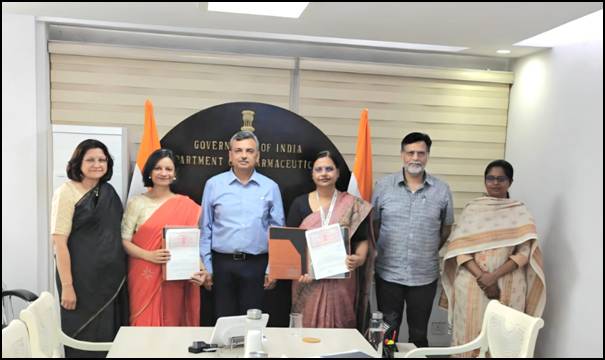
    New Delhi: The National Institute of Pharmaceutical Education and Research, Raebareli, has signed a Memorandum of Understanding (MoU) with Roche Pharma India to promote academic collaboration and advance pharmaceutical education and research in India.

    The MoU was signed at Shastri Bhawan, New Delhi, in the presence of Manoj Joshi, Secretary, Department of Pharmaceuticals under the Ministry of Chemicals and Fertilizers.

    The partnership seeks to bridge the gap between academic learning and industry practices by providing students and faculty with practical exposure to the evolving pharmaceutical and regulatory landscape.

    NIPER Raebareli Partners with Roche Pharma India to Strengthen Pharmaceutical Education and Research

    Under the agreement, the two institutions will jointly undertake several initiatives, including a certificate programme in regulatory affairs for students and industry professionals. The collaboration will also feature guest lecture series by industry experts, focusing on emerging areas such as AI-driven pharmaceutical research, drug development and healthcare innovation, aimed at enhancing industry-oriented knowledge and skills among students.

    Speaking on the occasion, Joshi stressed the importance of strengthening India’s capabilities in regulatory sciences, biologics and artificial intelligence in pharmaceuticals to sustain global competitiveness. He noted that stronger partnerships between academia and industry would play a crucial role in achieving these goals and positioning India as a leader in advanced pharmaceutical innovation.

    The collaboration aligns with the government’s broader development vision and initiatives such as #ViksitBharat and the BiopharmaShakti mission, which aim to transform India’s pharmaceutical sector from a volume-driven model to a value-driven innovation ecosystem.

    The initiative is expected to contribute to the development of a future-ready workforce, while also supporting sustainable growth in India’s rapidly evolving life sciences and biopharmaceutical sector.