Author: admin

  • New WCS Wild Audio Podcast Explores What’s at Stake at Global Migratory Species Summit

    BRONX, NY, March 6—A new episode of the WCS Wild Audio podcast examines the challenges facing migratory wildlife worldwide and previews the upcoming 15th Conference of the Parties to the Convention on the Conservation of Migratory Species of Wild Animals (CMS CoP15), to be held March 23–29 in Campo Grande, Brazil. WCS scientists and policy experts will be available to journalists covering the meeting.

    In the 12-minute episode, Amy Fraenkel, Executive Secretary of the CMS Secretariat, describes the state of the world’s migratory species and the urgent conservation issues governments will confront at the global summit.

    CMS is the only international treaty focused specifically on animals that regularly cross national borders—from birds and whales to big cats, sharks, and freshwater fish—making international cooperation essential to their survival.

    New WCS Wild Audio Podcast Explores What’s at Stake at Global Migratory Species Summit

    ©️Dani Escayola/Ocean Image Bank

    The conversation highlights findings from the first-ever State of the World’s Migratory Species report, which found that nearly half of CMS-listed species are in decline and that overexploitation—including hunting, illegal take, and fisheries bycatch—has become the leading threat to many migratory species globally.

    “These species connect ecosystems across continents and oceans,” says Fraenkel. “But the pressures facing them—from overexploitation to habitat fragmentation—are increasing, and addressing them requires coordinated international action.”

    The discussion also explores emerging priorities for CMS CoP15, including stronger efforts to address illegal and unsustainable taking of wildlife, protection of ecological connectivity across landscapes and seascapes, and new attention to migratory freshwater fish, which are among the most threatened groups of migratory animals.

    The Wildlife Conservation Society will have a strong presence at the meeting (read more here), where its scientists and policy experts will advocate for science-based decisions and stronger international cooperation to conserve migratory species and the ecosystems they depend on.

    WCS will focus in particular on proposals to strengthen protections for species such as the striped hyena, giant otter, and several migratory shark species, as well as conservation initiatives addressing freshwater fish in major river basins such as the Amazon.

    The organization is also working with partners and governments to advance broader CMS priorities, including tackling illegal and unsustainable wildlife use, reducing fisheries bycatch, and protecting ecological connectivity for species that depend on large, intact landscapes and migratory corridors.

  • Taylor Geospatial Launches as a New Hub for GeoAI Innovation

    ST. LOUIS — March 6: Taylor Geospatial on Mar 5 announced its launch as a new organization focused on unlocking AI-driven geospatial breakthroughs for global public benefit while strengthening innovation capacity in St. Louis. The organization brings together deep geospatial research expertise and proven pathways to commercialization under a single mission, leadership structure, and brand—positioning it to accelerate the development and real-world use of geospatial artificial intelligence (GeoAI).

    “This new organization brings strategic focus to a fast-moving field at exactly the right time,” said Robert Cardillo, Chair, Taylor Geospatial. “Taylor Geospatial will be a trusted bridge—aligning research with operational needs and converting GeoAI innovation into reliable, scalable capabilities. Uniting our efforts under one organization gives partners a clear front door and strengthens our ability to deliver measurable impact.”

    Formed by bringing together the Taylor Geospatial Institute and Taylor Geospatial Engine, both originally launched with support from a philanthropic gift from Andy Taylor, Executive Chairman, of Enterprise Mobility, Taylor Geospatial unifies research and applied innovation under a single organization and brand. The launch contributes to St. Louis’s development as a national center for geospatial innovation while advancing accessible GeoAI tools, datasets, and digital public goods for global use.

    “Society has reached an inflection point where the pace of scientific progress is faster than our ability to put it into practice,” said Elliott Kellner, President, Taylor Geospatial. “Taylor Geospatial was built to do the hard work of execution—connecting research to real operational needs, reducing fragmentation across the ecosystem, and turning promising GeoAI advances into tools and capabilities that people can actually use at scale.”

    Every day, satellites generate vast volumes of Earth observation data, yet much of its potential remains untapped. Taylor Geospatial works with partners to turn that data into insight for the public good by accelerating the development and commercialization of GeoAI. The non-profit organization focuses on building shared scientific infrastructure—open datasets, benchmarks, models, and tools—that enable researchers, governments, and industry partners to reduce risk, accelerate adoption, and deliver tangible outcomes.

    Headquartered in St. Louis, Taylor Geospatial pairs a strong regional commitment to innovation and economic development with a global outlook. Its work supports applications ranging from climate resilience and food security to deforestation monitoring, infrastructure planning, and environmental compliance.

    “We are thrilled at the potential with this new organization, which is thoroughly designed for this moment,” said Jennifer Marcus, Vice President of Strategic Innovation Programs, Taylor Geospatial. “By bringing together deep academic research, industry expertise, and entrepreneurial pathways, Taylor Geospatial is uniquely positioned to turn GeoAI breakthroughs into digital public goods. Our focus on applying AI to satellite imagery at scale will help address critical global challenges while building a world-class center for geospatial innovation in St. Louis.”

    The launch includes a new visual identity, logo, and redesigned website that reflect Taylor Geospatial’s unified strategy and role within the global GeoAI ecosystem. From this point forward, all programs, partnerships, and initiatives will operate under the Taylor Geospatial name.

  • How the Middle East conflict is reshaping gas and LNG markets

    LONDON/HOUSTON/SINGAPORE, March 6: Wood Mackenzie analysis indicates the Middle East conflict could disrupt 200 Mtpa of forecast Asian LNG demand growth over the next decade as QatarEnergy’s force majeure removes 20% of global supply. The disruption threatens to raise long-term structural challenges for global gas and LNG markets similar to those seen following Russia’s 2022 invasion of Ukraine.

    With QatarEnergy’s declaration of force majeure on LNG shipments from Ras Laffan and European gas prices nearly doubling since Monday, the situation threatens to reshape buyer confidence, supply strategies, and even energy policy worldwide.

    “The consequences of the war for gas and LNG are uncertain but could rival those that followed Russia’s invasion of Ukraine in 2022,” said Simon Flowers, Chairman and Chief Analyst at Wood Mackenzie. “Much will depend on whether the disruption is a short-lived blip or is more enduring, and whether gas and LNG infrastructure in the region suffers major damage.”


    Key Facts:

    • QatarEnergy declaration of force majeure removes 20% of global LNG supply
    • Asian LNG demand forecast to grow by 200 Mtpa over next decade
    • Qatar and the UAE account for 79 Mtpa and 5.6 Mtpa of LNG capacity respectively
    • European gas prices nearly doubled since 3 March 2026
    • Nearly 100 Mtpa of US pre-FID LNG projects offer geographic diversification alternatives


    Supply diversification imperative

    The crisis has exposed the concentration risk for those importing countries which are most dependent on Middle Eastern LNG supply. According to Gavin Thompson, Vice Chairman, Energy for Wood Mackenzie, this will fundamentally alter how buyers approach new long-term supply contracts.

    “Assuming no significant damage to existing projects in Qatar and the UAE, the amplified risks associated with these volumes will, in time, dissipate,” Thompson said. “But the crisis will drive home the importance of supply diversification. The raft of US pre-FID projects – almost 100 Mtpa currently – come without a single geographic point-of-failure risk.”

    However, US supply is not risk-free, not least from domestic energy policy and cannot be the only solution. Wood Mackenzie analysis indicates that pre-FID projects in Canada, Mozambique and Argentina will look to capitalize on the uncertainty, while projects that have slipped on timeline, such as Abadi in Indonesia and Browse in Australia, could gain fresh impetus. Portfolio suppliers and national oil companies, including QatarEnergy itself, are expected to seek greater diversification of their own supply sources.

    Asian demand growth at risk

    Asia represents the cornerstone of the bullish outlook for gas and LNG, with Wood Mackenzie forecasting Asian LNG demand to increase by around 200 Mtpa over the coming decade. However, that growth depends on competitive pricing and supply reliability, which are both now in question.

    Asian markets could respond to the current loss of supply in several ways, according to Wood Mackenzie analysis. Coal is expected to take market share from gas and LNG in the power sector across Japan, South Korea, China, India and Southeast Asia. Asian governments may accelerate renewables growth plans, though near-term upside will be limited. Additional incentives for domestic gas development could be fast-tracked but will similarly offer little immediate relief.

    “Fundamentally, however, Asia needs more energy, while the region’s rising emissions will need to be addressed,” said Thompson. “With limited alternative options, we maintain our long-held view that LNG remains central to meeting future Asian energy demand.”

    Confidence crisis for gas and LNG

    Following Russia’s invasion of Ukraine, gas and LNG’s reputation as a reliable and affordable fuel was severely tested. While swift action to increase LNG availability helped rebuild confidence, the current crisis has reopened those wounds.

    “In the eyes of gas and LNG sceptics, war has once again highlighted how supply disruptions and volatile prices can imperil energy security and affordability,” Massimo Di Odoardo, Vice President, Gas and LNG Research at Wood Mackenzie noted. “A swift restoration of supply and lower prices will allay some concerns among importers in the short term. But beyond the immediate crisis, more work will be required to rebuild confidence.”

    Europe remains determined to reduce its dependence on gas and LNG, though the reality is that the region is already moving as fast as realistically possible on decarbonization given budget constraints. With Russia still engaged in war with Ukraine, the chances of the EU lifting its ban on Russian gas and LNG imports remains highly unlikely—leaving Europe facing towering gas prices for the second time this decade.

    Building resilience

    Wood Mackenzie analysis suggests the gas and LNG industry may need to adopt structural changes similar to the oil market to restore buyer confidence. Building spare capacity and higher levels of storage could help address concerns about reliability and volatility, though this will require significant investment, time and coordinated effort.

    “Gas and LNG markets are reeling from the loss of supply,” said Di Odoardo. “The industry has been here before and has proven it can recover. Gas’s primary role in decarbonisation ‒ displacing coal and supporting the expansion of renewables ‒ is clear, but the industry may need to go further this time.”

    Looking forward

    For now, an end to the conflict remains the priority. Longer term, reinforcing gas and LNG supply reliability and minimizing price volatility will be required to ensure the fuels’ demand trajectory remains intact.

    “Gas and LNG have work to do to rebuild confidence,” Flowers said. “Building in spare capacity and higher levels of storage, for example, could help soothe a market anxious about reliability and volatility, just as has been done with oil. But this will be neither quick nor easy, requiring investment, time and coordinated effort.”

  • Holyvolt Acquires Wildcat Discovery Technologies in$73 Million dealto Fuse Lab Breakthroughs with Production at Scale

    Stockholm / San Diego, Mar 6– Swedish battery technology company Holyvolt has completed the acquisition of Wildcat Discovery Technologies, the world’s leading battery materials development firm, in a move that fundamentally reshapes how next-generation batteries are created, optimized, and manufactured.

    The combination creates a group with end-to-end capability from molecular discovery to pilot-scale productionusing a fully integrated High Throughput Platform, eliminating the bottlenecks that have traditionally separated laboratory breakthroughs from commercial reality. The combined entity brings together Holyvolt’s pioneering process technology based on screen-printing and water-based processes, with Wildcat’s proprietary High Throughput Platform (HTP), which can quickly generate terabyte-scale structured datasetsthrough combinatorial experimentation. These datasets – among the highest quality in the industry -are primed for AI-driven analysis and accelerated learning.

    The announcement follows Holyvolt’s recent €20 million funding round and will deliver world-class technical capabilities to the global battery sector across a broad range of industries, including automotive, consumer electronics, aerospace, storage, and defence. The combined entity will serve partners and customers across the entire battery supply chain as a technology development partner, with commercialization models – including licensing arrangements – tailored to each customer’s specific requirements.

    Leveraging more than 20 years of development, the combination of Holyvolt’s unique process technology and Wildcat’s world-leading chemistry expertise has created a supplier capable of quickly bringing world-class battery innovations to market by integrating rapid innovation, flexible process technology, and rapid scaling to pilot capacity.

    This transformational step directly addresses the critical challenges facing the global clean energy transition in Europe and North America: production costs, sustainability, and supply chain independence and competitiveness.

    Mathias Ingvarsson, Founder & CEO, Holyvolt, said:“The acquisition of Wildcat is a perfect complement to our intended strategy of developing new technologies for the battery industry. Holyvoltis focused on developing new processes to make batteries cleaner and more affordable, and Wildcat has been pursuing the same goals via materials development and better chemistry. Combined, we are building what we believe is the most compelling technology to deliver on these objectives.”

    Magnus Tyreman, Chairman of Holyvolt and former Head of McKinsey Europe, said:
    The West must accelerate the development of next-generation battery technologies to secure long-term energy independence. The acquisition of Wildcat strengthens our ability to advance that mission.

    Mark Gresser, President and CEO, Wildcat Discovery Technologies,said:“The Wildcat team is thrilled with this acquisition by Holyvolt. Mathias and team are very thoughtful with regard to their objectives in the battery industry, and recognise the value that Wildcat’s High Throughput Platform can deliver to our combined company and the industry at large. With Holyvolt’s vision and financial backing, Wildcat can finally unlock the true potential of high throughput combinatorial chemistry for battery materials.”

    Prof. Peter Schultz, Founder, Wildcat Discover Technologies, noted pioneer of High Throughput, &CEOof Scripps Research – with six accociated Nobel prizes, said: “With Holyvolt, we can do for batteries what high throughput and AI have done for drug discovery.”

  • African Energy Chamber Amplifies Diversity Fight in Africa’s Energy Sector

    SANDTON, South Africa, Mar 5/ — As Africa’s oil and gas sector gathers unprecedented momentum — buoyed by major discoveries, renewed exploration campaigns and intensifying global demand for diversified supply — the African Energy Chamber (AEC) (https://EnergyChamber.org) has sharpened a parallel and increasingly vocal campaign: ensuring that Africa’s energy renaissance is not built on exclusion.

    In a firm public statement that has reverberated across industry circles, the Chamber declared that as Africa’s oil and gas sector expands, investment must “guarantee African participation, reject discrimination and uphold local content.” It warned that in the coming weeks it will engage African officials and industry leaders to secure “clear commitments to inclusive hiring and equal opportunity,” adding pointedly that “where progress is absent, we will exercise our lawful right to protest.”

    The message marks the latest escalation in what has become a sustained, multi-year advocacy push targeting global conference organizers and industry platforms that derive significant revenue from African markets but, according to the AEC, fail to reflect Africa in their leadership structures.

    A Campaign Years in the Making

    The current confrontation did not emerge overnight. Over the past several years, the AEC has issued multiple press releases, public letters and statements addressing what it describes as systemic exclusion within certain international energy forums.

    Among those most frequently cited are Frontier Energy Network, organizer of the Africa Energies Summit in London, and Hyve Group, a global exhibitions firm with significant exposure to African-focused extractive industry events.

    In successive communications dating back several conference cycles, the Chamber has called for structural reform, urging these entities to hire, promote and empower African professionals — including Black women — into senior executive and board-level positions.

    The AEC argues that while African ministers, national oil companies, regulators and indigenous firms are prominently featured on stage at major summits, decision-making power within the organizing companies remains largely non-African.

    To reinforce its position, the Chamber has publicly circulated graphics highlighting what it says is the near absence of Africans on boards and executive leadership teams of these organizations — despite the fact that a substantial portion of sponsorship revenue, delegate participation and thematic focus centers on Africa.

    For the AEC, this disconnect is not symbolic — it is structural.

    NJ Ayuk: “Inclusion Is Not Optional”

    Executive Chairman NJ Ayuk has been at the forefront of the campaign, framing it as a matter of principle rather than rivalry.

    “Africa’s energy future cannot be dictated from boardrooms that do not include Africans,” Ayuk has said in connection with the Chamber’s recent statements. “If you are making substantial revenue from African markets, hosting Africa-focused events and leveraging African participation, then Africans must be part of your leadership and governance structures.”

    He has consistently rejected the notion that the campaign is confrontational for its own sake. Instead, he presents it as aligned with the continent’s local content laws and sovereignty agenda.

    “We are not asking for favors. We are demanding fairness, merit-based opportunity and respect. Africa cannot champion local content at home while tolerating exclusion abroad.”

    Frontier Energy Network in the Spotlight

    In its most recent release on exclusion, the Chamber directly cited Frontier Energy Network, reigniting scrutiny around the Africa Energies Summit.

    The AEC contends that while the summit convenes high-level African participation — including ministers, regulators and executives — the internal hiring and leadership structure of the organizing body does not adequately reflect African professionals.

    “Frontier Energy Network’s hiring practices – widely understood across the industry to exclude Black professionals – are wrong. Full stop,” the AEC said. It further warned that organizations earning substantial revenue from Africans cannot expect to benefit from African markets while denying fair employment to Africans.

    Following publication of the Chamber’s latest statement naming Frontier, Pan African Visions reached out via email to Frontier Energy Network seeking comment and reaction. At press time, no formal response had been received.

    However, shortly after the AEC’s renewed charge, Frontier’s Founder and CEO, Gayle Meikle, published a detailed LinkedIn essay titled “Frontier CEO Brief: What Is an African?”

    While the post did not directly reference the Chamber’s allegations, it addressed themes central to the debate — identity, sovereignty and partnership.

    “I am an African woman. I am Zimbabwean. I was born in Zimbabwe. That is who I am,” Meikle wrote, emphasizing Africa’s diversity across 54 sovereign states and more than 2,000 languages. She cautioned against reducing Africa to binary definitions of who is “African enough,” politically or economically.

    Meikle underscored Africa’s civilizational depth — from Arab and Amazigh communities in the north to Yoruba, Igbo, Swahili, Shona, Zulu and Xhosa traditions — and argued that Africa’s resources must serve African development first.

    “Africa welcomes investment, but it expects partnership,” she wrote. “Sovereignty and collaboration are not in conflict; they are mutually reinforcing.”

    She concluded with a personal declaration: “No one grants me that agency. It is inherent. And anyone who attempts to diminish it will discover that it cannot be taken.”

    Ayuk’s Direct Rebuttal

    The LinkedIn post drew an immediate and sharply worded response from Ayuk.

    In a public post visible on and off LinkedIn, Ayuk accused Frontier’s leadership of avoiding the core issue.

    “Don’t pee on my leg and tell me it’s raining,” Ayuk wrote, stating that he had received outreach from industry professionals offended by what he described as a “No Blacks employment policy in 2026.”

    He called directly on Meikle and Frontier executive Daniel Davidson to commit to hiring Black professionals.

    “Don’t just beg them to come to Africa Energies Summit® and give you their money. Your brothers and sisters are qualified and need jobs. Hire them,” Ayuk wrote.

    He further warned that African professionals were privately indicating they would not attend the summit if the alleged exclusionary hiring practices continued.

    “A lot of Africans are already telling me in private they will not attend because of this race-based no blacks hiring policy. Don’t spend your money where you can’t work.”

    Ayuk’s post went beyond institutional critique and focused particularly on Black women in the energy sector.

    He recounted a conversation with a young woman in the seismic industry who told him that white male executives often pave the way for white women to be hired, while Black women must “fight hard” for similar opportunities — especially within companies profiting from African markets.

    “In today’s oil industry, black women are still the last hired and the first fired,” Ayuk wrote. He emphasized that Black women often navigate the intersection of race and gender as dual minorities in senior roles, facing unique mental health and professional pressures.

    Quoting Maya Angelou, he concluded: “Do the best you can until you know better. Then when you know better, do better.”

    Hyve Group and Boardroom Representation

    Similarly, Hyve Group has been the subject of sustained criticism from the African Energy Chamber — most forcefully articulated in 2024 — over what the Chamber described as a persistent absence of African leadership within a company that derives substantial revenue from African markets.

    In a strongly worded 2024 statement, the AEC argued that while Hyve plays a pivotal role in Africa’s energy and mining landscape through flagship events such as Mining Indaba and Africa Oil Week, its executive and board-level leadership did not reflect the continent from which it earns significant commercial returns.

    “It is disheartening to note that despite being a major beneficiary of Africa’s economic contributions, Hyve Group has yet to usher in a leadership team that reflects the rich diversity and talent pool present on the continent,” the Chamber stated at the time.

    The AEC further contended that prevailing hiring practices based on personal networks, trust and familiarity perpetuate exclusionary patterns that leave qualified African professionals — including Black women — outside decision-making circles.

    Executive Chairman NJ Ayuk contrasted Hyve’s leadership composition with what he described as the oil and gas industry’s stronger track record in promoting African talent.

    “The Oil and Gas industry that I love and champion is the greatest advocate for hiring Africans. It has trained Africans, promoted them, and many have become great entrepreneurs today,” Ayuk said in 2024. “That’s why I love Oil and Gas.”

    He expressed disappointment at what he described as a disconnect between Hyve’s commercial success in Africa and its internal leadership structure.

    “Hyve Group makes a huge part of its revenue from Africa, yet no African is in its leadership. They hire people they know, they trust and like. We’re not in that circle. I am very disappointed,” Ayuk stated. “People of African heritage are greater participants and sponsors of their programs. I believe they are capable of doing the leadership jobs, but there has not been an adequate commitment to hire and promote them at Hyve Group.”

    Ayuk also argued that corporate rebranding and public-facing diversity messaging must translate into measurable structural change.

    “Their rebranding and wokeness must lead to some inclusion and vice versa; otherwise, their wokeness is pure self-indulgence.”

    The Chamber framed the issue as one of fairness, economic reciprocity and governance consistency, particularly for countries such as South Africa, Nigeria, Kenya, Ghana, Namibia and Tanzania that actively support and host Hyve events.

    “We cannot accept that in 2024, companies doing business in Africa and earning huge revenues will not have Blacks in leadership,” Ayuk said. “Africans must not buy where they can’t work.”

    He further called for greater transparency around tax contributions linked to African-hosted exhibitions, urging disclosure of VAT collections and payments to relevant revenue authorities.

    While the 2024 statement focused squarely on Hyve’s governance structure at that time, the broader principle articulated by the Chamber has since evolved into a wider campaign encompassing multiple global event organizers: diversity must extend beyond speaker lineups and branding to executive authority, hiring pipelines and boardroom representation.

    “Inclusion cannot stop at the podium,” Ayuk has repeatedly maintained. “It must extend to governance, strategy and ownership of the narrative.”

    As Africa’s energy and mining sectors continue to expand, the Chamber argues that companies profiting from the continent’s markets must align their internal leadership structures with the local content and economic sovereignty principles increasingly enforced across African jurisdictions.

    The message — first forcefully delivered in 2024 — remains central to the AEC’s current push: representation is not optional, and economic partnership without leadership inclusion is unsustainable.

    A Growing Ripple Effect

    What distinguishes the current phase of the campaign is its intensity and visibility.

    The public exchange between Frontier’s CEO and the AEC Chairman has transformed what was once a policy dispute into a high-profile industry debate about race, governance and economic sovereignty.

    Industry insiders suggest some companies and institutions are quietly reassessing their participation in forums organized by entities facing exclusion allegations. While no major withdrawals have been publicly announced, reputational risk has become part of the calculation.

    African state-owned enterprises and regulators — increasingly conscious of domestic local content laws — face growing pressure to align external partnerships with internal policy commitments.

    Redefining Global Engagement with Africa

    As energy security reshapes geopolitical priorities, Africa is emerging not as a peripheral supplier but as a strategic partner.

    The AEC’s campaign seeks to ensure that this partnership reflects equity not only in rhetoric, but in leadership and employment structures.

    Africa’s energy renaissance, the Chamber argues, must be defined not only by reserves, LNG terminals or licensing rounds — but by who holds influence and who benefits from growth.

    “Africa’s energy renaissance must include Africans at every level,” Ayuk has insisted. “We will continue to fight for that principle — respectfully, lawfully and persistently.”

    With the Africa Energies Summit approaching, the pressure shows no sign of easing. What began as a governance question has evolved into a broader reckoning over representation, partnership and the future architecture of Africa’s global energy engagement.


  • KT and Rohde & Schwarz to showcase AI-enhanced radio transmission performance

    Mar 05: In a joint 6G AI proof-of-concept demonstration, the CMX500 one-box tester from Rohde & Schwarz shows significant downlink throughput gain in an AI-based wireless transmission compared to conventional non-AI technology. Additionally, the demonstration illustrates how this translates to an enhanced video streaming user experience. This collaboration validates the feasibility of multi-vendor AI interoperability for future 6G standardization.
     

     The CMX500 shows significant downlink throughput gain in an AI-based wireless transmission.

    KT has joined forces with Qualcomm Technologies, Inc. and Rohde & Schwarz to present significant performance gains achievable through AI-enhanced radio transmission, paving the way for optimized 5G-Advanced and future 6G networks. Visitors to MWC Barcelona 2026 can experience the demonstration at the KT booth 4A60 in hall 4.

    Qualcomm Technologies and Rohde & Schwarz collaborated in 2025 to realize Channel State Information (CSI) feedback technology leveraging AI/ML for advanced mobile networks and RAN infrastructure. The telecommunications company KT, driver of 6G research and AI implementation, now joined the effort to demonstrate the practical benefits of integrating AI into next-generation wireless systems.

    In the setup, Qualcomm’s AI-enabled wireless device prototype connected to the CMX500, configured as an AI-enabled base station emulator, achieves an increase in downlink throughput of approximately 50% compared to conventional non-AI technology. Leveraging the advanced application testing capabilities of the CMX500, the demonstration illustrates how the increased performance translates to an enhanced user experience for video streaming applications. The improvement was achieved using a “two-sided AI model” for CSI feedback, enabling cooperative compression of wireless channel state information transferred between the device and base station. The model leverages CSI-RS-based analysis and compressed feedback, significantly enhancing radio transmission performance in massive MIMO scenarios. AI-driven CSI enhancements are expected to result in even greater efficiency, reduced overhead and improved user experience in 5G-Advanced and future 6G networks.

    A key achievement of this work is the validation of an interoperable architecture allowing real-time cooperation between AI models from different vendors – a critical step towards 6G standardization and a more open, flexible network ecosystem. The precise and controlled testing environment of the CMX500 one-box tester proves essential for accurately assessing the performance of these sophisticated AI-based algorithms under realistic radio conditions.

    Alexander Pabst, Vice President of Wireless Communications at Rohde & Schwarz, said: “We are proud to collaborate with KT and Qualcomm in showcasing the immense potential of AI in next-generation networks. The CMX500’s ability to verify these performance gains underscores our commitment to providing leading-edge test and measurement solutions for the future of communication technologies.”

    Lee Jong-sik, Executive Vice President and Head of KT’s Future Network Research Laboratory, said: “6G represents an evolution towards intelligent networks that combine AI and wireless communications rather than simply delivering higher speeds.” He added that KT will continue to secure AI-based wireless technologies that enhance customer experience through strategic partnerships.

    Spencer Kim, Vice President and President of Qualcomm Korea, QUALCOMM CDMA Technologies (Korea) YH, noted: “6G will serve as an innovation platform for advanced intelligent edge AI, enabling AI-driven control of network resources. Our collaboration with Rohde & Schwarz and KT marks a critical step in bringing this vision to life and is expected to accelerate progress in next-generation communications.”

    At MWC Barcelona 2026, visitors can learn how to achieve significant performance gains through AI-enhanced CSI feedback at the KT booth 4A60 in hall 4. 

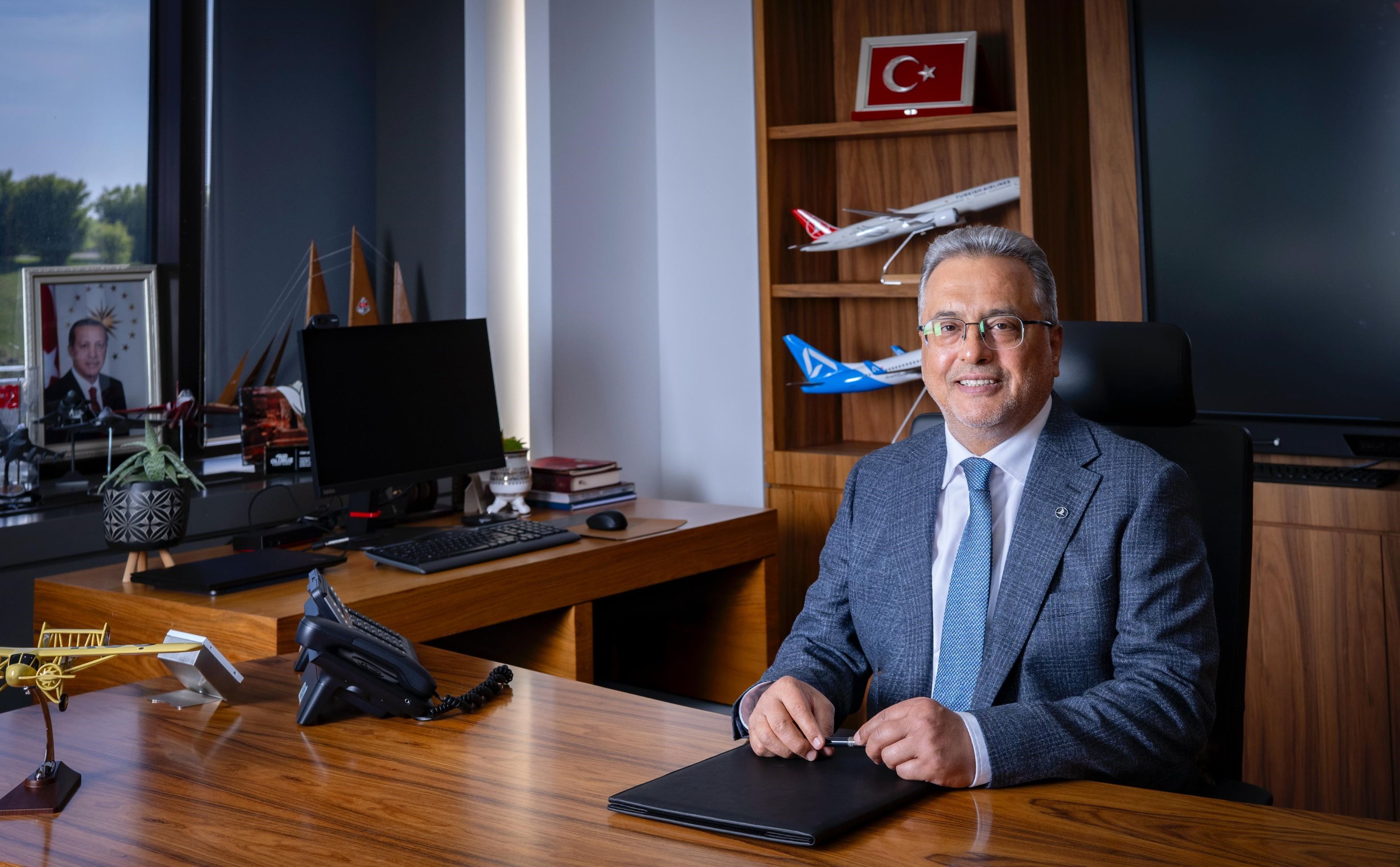
  • Turkish Airlines achieved 2.2 billion USD Profit from Main Operations in 2025

    Turkish Airlines achieved 2.2 billion USD Profit from Main Operations in 2025

    Bengaluru, Mar 05: Maintaining its position as the network carrier operating the highest number of flights in Europe, Turkish Airlines sustained its steady growth throughout 2025 despite geopolitical tensions and economic uncertainties caused by trade wars, as well as aircraft delivery and engine supply issues in the aviation industry.  Despite production bottlenecks, our Company expanded its fleet by 5% year over year to 516 aircraft by the end of 2025 and welcomed the “second 500” period with 92.6 million passengers and 2.2 million tons of cargo, recording the highest operational results in its history.

    In 2025, our Company’s total revenues increased by 6.3% year over year to 24.1 billion USD supported by the strong contribution from the passenger operations.  Passenger revenues increased by 7.4%, driven by favorable demand in international and premium segments. The decline in cargo unit yields stemming from the slowdown in global trade volumes and the adverse effects of tariffs was offset by a 16.6% increase in cargo volume, resulting in 3.4 billion USD of cargo revenue.  Under ongoing inflation driven cost pressures and engine issues, our Company’s 2025 Profit from Main Operations was recorded at 2.2 billion USD.

    Commenting on 2025 third quarter results, Turkish Airlines Chairman of the Board and the Executive Committee, Prof. Ahmet Bolat stated: “Despite an exceptionally challenging and unpredictable operating environment, the financial success we achieved in 2025 once again showed our ability to adapt to rapidly changing commercial and geopolitical conditions thanks to our diversified revenue structure.  In line with our long-term value creation objectives, the investments we implemented and the commercial partnerships we established throughout 2025 served as milestones that further expanded our global reach and contributed to our Company’s continued progress toward its Centennial vision.”

    In 2025, EBITDAR, indicating the Company’s operational cash generation capacity, was recorded at 5.7 billion USD, while the EBITDAR margin exceeded the mid-point target set at the beginning of the year, reaching 23.7%. As the strong performance in late 2025 continued in the early months of 2026, the 2026 EBITDAR margin is projected to be in the 22–24% range, in line with the Company’s long-term target.

    Concluding 2025 with successful results, Turkish Airlines continues to lead the industry with its unparalleled flight network, modern fleet, superior service and strong performance. In the coming years, our contribution to the sustainable growth of the aviation sector will continue to increase in line with our Centennial Strategy and our country’s development objectives.

  • Luxury Dubai apartment sold for AED422M

    Sale hailed as major sign of confidence in city’s real estate market and security in UAE

    Luxury Dubai apartment sold for AED422M


    Dubai, UAE, March 5:  A luxury apartment in Dubai has been sold off-plan for AED422 million, and the deal has been hailed as powerful sign of confidence in the city’s real estate market, and security in the UAE. 

    The sale yesterday of the 31,201 sq ft apartment at Aman Residences Dubai on the Jumeirah Peninsula, has been confirmed by fäm Properties.

    Data from DXBinteract, the data platform developed by the company in partnership with Dubai Land Department, said the transaction put the value at AED 13,525 per sq ft.

    Firas Al Msaddi, CEO of fäm Properties, said: “The sale of an ultra-luxury villa at this level is particularly relevant in the current circumstances. It underlines the fact that the Dubai real estate market is structurally stronger than it has ever been.

    “Over 70% of transactions are now end-user driven, not speculative. The buyer base is globally diversified. Mortgage activity has doubled in four years.

    “The regulatory environment has matured. The UBS Global Real Estate Bubble Index rates Dubai moderate risk, while cities like Miami and Tokyo sit in the high-risk zone. The fundamentals haven’t changed overnight because of regional events.

    “And of course, the enormous lengths that the UAE authorities have gone to in order to keep everyone who lives and works here safe at all times, sends out the strongest possible message to investors.

    “That has long been the case, and the effect of all this is highlighted by an apartment being sold for AED422 million in the current climate, at a time when the eyes of the world are on Dubai, and the Gulf region.

    “It’s a sale which says so much about the UAE as a whole, and in this case in particular, about Dubai as one of the world’s leading destinations for wealthy real estate investors.

    “While headlines elsewhere paint one picture of the UAE, the reality for those of us living and working here is completely different.”

  • International Film Festival Delhi 2026 offers a powerful platform with industry access for young filmmakers and content creators

    New Delhi, Mar 05:  In a significant boost to India’s emerging film talent, IFFD CineXchange, the official industry platform of the International Film Festival Delhi 2026, is accepting entries and submissions for its inaugural edition, with the final deadline now extended.

    Following an enthusiastic response from filmmakers across India and overseas, organisers have extended the submission deadlines, giving creators a final opportunity to be part of one of the festival’s most ambitious industry initiatives.

    As India’s content economy expands across cinema, OTT (over-the-top media services), and digital storytelling, the International Film Festival Delhi 2026 is positioning CineXchange as a launchpad for the next generation of creators. By bringing together mentors, producers, financiers, and distributors under one roof, the festival is offering young filmmakers and emerging content creators not just visibility but also meaningful pathways to funding, collaboration, and global reach.

    Designed as a dynamic marketplace within IFFD 2026, CineXchange aims to establish direct connections between storytellers, producers, mentors, distributors, and collaborators. The platform aims to move projects forward from script to screen by offering structured mentorship, co-production opportunities, and industry visibility.

    Rough Cuts | Post-Production Stage

    The call is for feature films (60 minutes or longer) that are at early to intermediate stages of editing. This curated initiative offers structured mentorship and feedback sessions with accomplished industry professionals, allowing filmmakers to evaluate creative choices and refine their films before final completion.

    Deadline: 10 March 2026

    Viewing Room | Completed & Near-Completion Projects

    This programme is designed for films that are either completed or in post-production and are seeking festival, distribution, or financing opportunities.

    The Viewing Room will provide ten dedicated terminals accessible to accredited industry professionals, including festival directors, distributors and gap financiers looking for new stories across formats and genres.

    Deadline: 10 March 2026

    Pitch Your Idea

    The platform offers a curated pitching opportunity for writers and filmmakers to showcase their original ideas for films and web shows to producers, investors, OTT platforms, and industry professionals.

    Selected participants will present their story concept, characters and creative vision through structured pitching sessions.

    Deadline: 10 March 2026

    Script Workshop

    An intensive, curated workshop designed for aspiring and emerging filmmakers who want to understand both the craft and business of screenwriting.

    Featuring sessions by leading industry professionals from film and OTT platforms, the workshop focuses on narrative structure, character development and practical industry insights that shape powerful screenplays.

    Deadline: 10 March 2026

    Delegate Registration Now Open

    Industry professionals who wish to attend CineXchange as delegates, including producers, distributors, festival programmers, investors, commissioning editors, studio representatives and media professionals, are invited to register through the official portal.

    Accredited delegates will gain access to curated networking sessions, pitch forums, panel discussions and structured industry meetings designed to facilitate meaningful collaboration.

    All programmes and applications are open.

    With IFFD 2026 set to transform Delhi into a dynamic cinematic and industry hub, CineXchange stands at the centre of its professional engagement strategy. For filmmakers, writers, and industry stakeholders who are ready to build partnerships and take projects forward, now is the time to participate.

  • DEE Development Engineers’ Thailand Subsidiary Secures a EURO 1.9 Million LOI for HRSG Piping Supply for Taiwan Project

    Mumbai, Mar 05: DEE Development Engineers Limited, has announced that its material subsidiary DEE Piping Systems (Thailand) Co., Ltd. has received a Letter of Intent (LOI) from an international customer for the prefabrication and supply of piping and supports for a Taiwan-based project.

    The LOI is valued at approximately €1.9 million (around ?20 crore). While the name of the customer cannot be disclosed due to commercial considerations, the project relates to the supply and prefabrication of piping materials associated with Heat Recovery Steam Generator (HRSG) systems, a critical component in modern combined-cycle power plants.

    Under the terms of the engagement, the Thailand subsidiary will undertake the prefabrication and supply of HRSG piping and related supports for the Taiwan project, with execution scheduled to be completed by May 2027.

    This mandate further strengthens DEE’s export execution pipeline through its Thailand manufacturing platform, which plays a key role in servicing international customers across the power and energy infrastructure sectors.

    Commenting on the development, Mr. K. L. Bansal, Chairman and Managing Director, DEE Development Engineers Limited, said:

    This LOI further reinforces the growing role of our Thailand subsidiary in servicing international customers and executing technically demanding piping projects. The mandate reflects continued confidence in DEE’s engineering capabilities, manufacturing standards, and delivery reliability for complex energy infrastructure programs.

    As global investments in high-efficiency power generation and energy infrastructure continue to expand, we remain focused on strengthening our international presence and building long-term partnerships with global OEMs and project developers.

    This international LOI follows a series of significant wins during the current quarter, including the previously announced Letter of Intent exceeding USD 40 million for international HRSG piping supply across 16 units from a leading U.S.-headquartered OEM, as well as domestic and Thailand subsidiary orders aggregating to over ?170 crore across fabrication, HRSG piping, and fittings. Together, these mandates reflect sustained traction across both domestic and export markets and reinforce DEE Development Engineers’ positioning as a trusted manufacturing partner for large-scale energy infrastructure projects.