Author: admin

  • Meta & Retailers Association of India Whitepaper Highlights AI, Creators, Messaging Driving India’s Omnichannel Shopping Boom

    India, Feb 25: As Indian consumers move fluidly between scrolling on social media and shopping in-store or online, retail journeys are becoming increasingly omnichannel. To understand this shift, Meta, in collaboration with the Retailers Association of India (RAI), has unveiled findings from a new whitepaper highlighting how AI, short-form video, creators, and messaging platforms are reshaping Indians discover, evaluate, and purchase products across digital and physical channels.

    The report finds that omnichannel shoppers are significantly more valuable, with consumers who shop across channels spending 2.5 times more than single-channel shoppers and up to 73% more when engaging across multiple touchpoints. Blending research insights with real-world case studies, the whitepaper outlines how discovery, conversation, and commerce are converging to make unified retail journeys a core growth model.

    Said Meghna Apparao, Director, E-Commerce & Retail (India), Meta,

    “I urge retail leaders to focus on three transformative pillars highlighted in this whitepaper. First, harness the power of Reels and Creators to drive authentic engagement and brand storytelling. Second, embrace omnichannel performance marketing to seamlessly connect with consumers across platforms, optimizing reach and impact. Third, leverage WhatsApp as a direct, personalized channel for customer interaction and commerce. Together, these strategies unlock new growth opportunities, foster deeper relationships, and position your brand at the forefront of digital retail innovation in India’s dynamic market.”

    Said Hitesh Bhatt, Director – Marketing & Communications, Retailers Association of India (RAI),

    “There has been a fundamental shift in retail: consumers no longer move between online and offline; they operate across both at once. Discovery, influence, and purchase now happen through content, creators, conversations, and stores, often in the same journey. For retailers, the challenge is no longer adopting digital tools, but integrating them to drive measurable outcomes. Omnichannel maturity will define competitiveness in Indian retail, and this report outlines what it takes to get there.”

    Social Media & Creators – The New Gateway to Retail 

    The Indian retail landscape is undergoing a clear shift from a search-based transaction model to a scroll-led discovery ecosystem. Today, 77% of retail brand and product discovery happens on social media, with Meta platforms accounting for 96% of this discovery, underscoring the growing influence of Instagram and Facebook on both online and offline purchases.

    Short-form video has emerged as the dominant engagement format, with 97% of consumers watching it daily and 60% of time on Facebook and Instagram spent on video. At the same time, the rise of micro and nano creators is reshaping trust and accelerating purchase decisions, with creator-led campaigns delivering measurable lifts across consideration, intent, and conversion.

    Said Manoj Jain, Senior VP & Head, Omni Channel Marketing, Reliance Digital,

    “Reliance Digital has embraced a Reels-forward strategy, leveraging it to drive brand awareness and business outcomes on Meta. Central to this is our collaboration with regional creators on Meta, enabling authentic connections that resonate with diverse communities, delivering stronger engagement and measurable impact, making Meta an important pillar in our marketing strategy.”

    AI-powered omnichannel is redefining retail growth

    Indian consumers are increasingly adopting a “phygital” shopping behaviour, with more than half researching products online before buying in-store and a similar proportion researching in-store before purchasing online. This shift is pushing retailers to move beyond siloed digital and physical channels toward unified commerce models that integrate discovery, conversion, and fulfillment across touchpoints.

    Retailers that have adopted integrated omnichannel strategies are reporting tangible business gains. Indian retailers using Meta’s Omnichannel Optimization have seen over fourfold improvements in omnichannel return on ad spend, while integrated data strategies have driven up to 15% revenue growth. Those integrating in-store sales data with Meta advertising measurement are also reporting two to fivefold increases in ROAS and up to ninefold incremental sales growth, underscoring the impact of unified data and AI-driven optimisation in connecting digital marketing to offline revenue.

    Said Amit Agarwal, CMO, Croma,

    Meta’s AI-powered solutions have fundamentally elevated our omnichannel approach, enabling us to integrate offline data and activate performance marketing across all touchpoints. This strategic shift empowers us to optimize customer journeys, unlock new growth opportunities, and drive sustained incremental footfall & revenue impact—online and offline—while future-proofing our business in a rapidly evolving retail landscape.”

    WhatsApp Is Transforming Commerce into Conversations

    Bridging discovery and transaction is the rapid rise of WhatsApp as a commerce channel, with messaging emerging as a powerful engine for discovery, conversion, and customer engagement. 72% of product discovery now happens on WhatsApp, highlighting the platform’s growing role in shaping purchase journeys.

    Retailers using Business Messaging and Click-to-WhatsApp campaigns are seeing a 61% average improvement in return on ad spend, a 62% increase in leads generated, and 22% higher order values, reinforcing the role of conversational commerce in driving acquisition and sales.

    Creators are further accelerating this shift, with 71% of consumers making a purchase within a couple of days after seeing creator content on Meta technologies, highlighting how discovery on social platforms is increasingly translating into real-world transactions. 

    Businesses integrating in-store sales data with Meta advertising are seeing 2x–5x+ ROAS uplift and up to 9x incremental sales growth, demonstrating how AI-driven optimization and unified data can connect digital discovery with real-world commerce outcomes.

    Key Stats from the Retail Whitepaper:

    • Rise of Omnichannel Consumer Journeys: More than 50% of retail consumers research a product online before buying in-store and over 50% research in-store before buying online, highlighting the seamless consumer journeys between physical and digital touchpoints.
    • Omnichannel shoppers are significantly more valuable: Consumers who shop across channels spend 2.5× more than single-channel shoppers, making unified commerce a critical business growth lever for retailers.
    • Meta’s Conversions API is unlocking measurable offline impact: Businesses that integrated in-store sales with Meta advertising data via CAPI are able to evaluate the true impact of Meta ads on in-store sales with ROAS uplift ranging from 2x–5x+ and up to 9x incremental sales uplift depending on industry and market.
    • Meta’s Omnichannel Optimization is driving higher marketing efficiency: Indian retailers using Omnichannel Optimization have seen 4×+ omnichannel ROAS lift, demonstrating the impact of AI-driven optimisation across online and offline conversions.
    • Reels and creators are driving measurable retail performance: Retail brands using Reels and creators are seeing 71% higher brand intent lift and 19% lower acquisition costs, showing that creator-led and short-form video content is now a core performance driver.
    • WhatsApp is becoming a key retail discovery and conversion channel: 72% of product discovery happens on WhatsApp, and retailers using Business Messaging and Click-to-WhatsApp are seeing:
    • 61% average improvement in ROAS
    • 62% average increase in leads generated
    • 22% higher order values
  • Anastasia Beverly Hills Launches Smooth Blur Bronzer in India

    News : Anastasia Beverly Hills introduces the Smooth Blur Bronzer

    New Delhi, Feb 25: Anastasia Beverly Hills expands its iconic complexion portfolio in India with the launch of the NEW Smooth Blur Bronzer, a luxurious gel-powder formulation crafted for effortless application and all-day wear.

    Designed for makeup enthusiasts seeking a soft matte, naturally sun-kissed glow, Smooth Blur Bronzer features an innovative blurring gel-powder hybrid formula that seamlessly melts into the skin for a smooth, non-powdery finish. Its buttery, lightweight texture blends and builds beautifully without patchiness, making it ideal for everything from minimal everyday makeup to softly sculpted, polished looks. The result is natural-looking warmth paired with lasting comfort.

    Created with versatility in mind, the bronzer works flawlessly on bare skin or layered over foundation, making it perfect for both quick touch-ups and full glam routines. The intuitive formula allows users to customize their bronzed finish with ease.

    Thoughtfully formulated, Smooth Blur Bronzer is cruelty-free and vegan, and free from gluten, parabens, phthalates, mineral oil, fragrance, oil, and sulfates — delivering high performance with mindful ingredients.

    Available Shades:

    • Golden Beach Glow

    • Beach Bum Bronze

    • Sunset Sizzle

    • Tropical Tan

    Availability: Tira, Sephora, Tata CliQ, Myntra, SS Beauty

  • When things have to be done quickly

    Rail brakes support fast roller changes in laminating units

     SAUERESSIG has evolved from being a manufacturer of printing and embossing rollers to becoming a highly innovative machine manufacturer with a diverse product range.

    In a large laminating unit by SAUERESSIG Engineering for laminating steel strip on both sides, rubber rollers press a protective PET film onto hot steel strip. Despite cooling, these rubber rollers do wear down and need to be replaced regularly. Four profiled rail brakes by mayr® power transmission ensure that the laminating process, which takes place 24 hours a day, only has to be interrupted briefly to replace the rollers.

    SAUERESSIG began manufacturing printing and embossing rollers for the packaging and printing industry around 70 years ago. Today, the company is a highly innovative mechanical engineering company with a diverse portfolio. As a leading full-range supplier of calendering, embossing and rotary processing systems in standard and special designs, the company supplies a wide range of industries.

    The machine solutions include both complete production lines and customized systems for embossing, finishing, coating, smoothing, perforating and calibrating sheet materials such as paper, film or metal sheets. The company offers comprehensive expertise from the initial idea to the final customized solution, including planning and designing mechanics, drive and automation technology, pre-assembly and commissioning in the factory, and final approval at the customer’s premises.

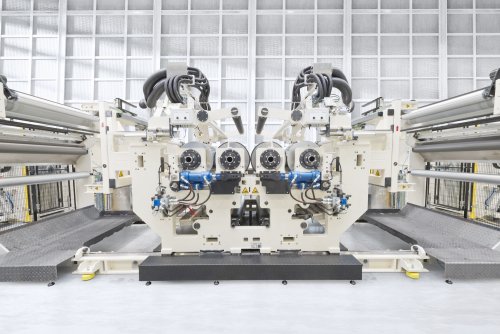
    SAUERESSIG’s large laminating unit coats both sides of the steel strip with a protective PET film

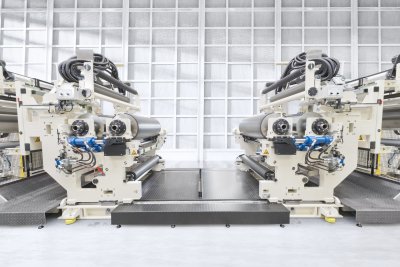
     One such customized system, no less than six metres long and around four metres wide, coats a steel strip on both sides with a thin protective PET film. Harald Bartsch, Head of Design/Expert Advisor at SAUERESSIG Engineering, describes the machine’s design concept as follows “The complete laminating unit consists of two nearly identical, symmetrically arranged side frames, each with a rubberized laminating roller and a contact cooling roller. For laminating, the steel strip moves vertically between the two laminating rollers through the laminating unit at a conveying speed of up to 250 m/min. The laminating rollers press the film onto the hot steel strip from both sides.”

    The steel strip’s high temperatures of up to 260 °C heat up the rubber coating on the laminating rollers. Water-cooled contact rollers dissipate this heat and limit the rubber coating’s temperature to a maximum of 90 °C. Despite the cooling, the rubber linings of the laminating rollers are subject to wear and must be replaced regularly. “As the laminating process should ideally be running continuously all year round and 24/7 without interruption,” explains Harald Bartsch, “the time required to replace the laminating rollers must be kept as short as possible. Therefore, the laminating unit is designed in such a way that the automated roller replacement only takes half an hour.”

    The laminating unit consists of two symmetrically arranged side frames. Both side frames are mounted onto profiled rail guides and can be separated axially to replace the worn laminating rollers. While the coating process is in progress, profiled rail brake of the ROBA® guidestop® series by mayr® power transmission hold the two system parts in position backlash-free and with high rigidity. To replace the rollers, these safety brakes are released hydraulically, the two machine halves can be moved apart via rack and pinion gears and the laminating rollers can be replaced.

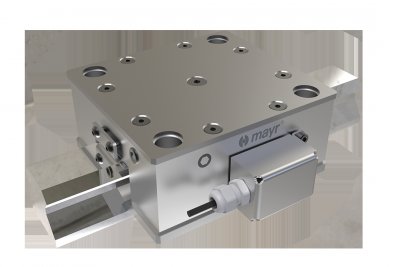
    Profiled rail brake of the ROBA® guidestop® series by mayr® power transmission hold the two system parts of a large laminating unit in position backlash-free and with high rigidity.

     The ROBA® guidestop® profiled rail brake serves as a reliable safety brake and backlash-free clamping unit. It can brake movements safely and quickly and clamps the axes rigidly and backlash-free.

    Just like all safety brakes by mayr®power transmission, the profiled rail brakes also work according to the fail-safe principle. This means they are closed in de-energised condition. The ROBA® guidestop® brakes use pre-tensioned cup springs to press the brake shoes against the ‘waist’ of the profiled rail, thus clamping it in place.

    The hydraulic brake design used in the SAUERESSIG laminating unit is released using a nominal pressure of 70 bar. This is comparatively low in relation to the very high holding forces. The brake mechanism is dimensioned for relatively large strokes. As a result, the brake can compensate for production tolerances on the profiled rails without losing braking force. The ROBA® guidestop® safety brakes are equipped with two independent brake circuits: This allows for either double holding forces or a redundant design.

    The profiled rail brakes are therefore directly mounted onto the masses which are to be braked or held. This minimises the risk of hazards, particularly with gravity-loaded axles, as drive elements between the motor and the moving mass, such as spindles, spindle nuts, shaft couplings and gears, do not affect safety. This is different for concepts with motor brakes, as all drive elements must transmit the braking torque to the carriage. Furthermore, every element between the brake and the carriage has a negative effect on rigidity. ROBA® guidestop® safety brakes are therefore considerably more rigid than motor brakes, rod brakes or band brakes, which are often subject to backlash.

    ROBA® guidestop® safety brakes by mayr® power transmission are available in pneumatic or electromagnetic versions in addition to the hydraulically opening design. The hydraulically releasing ROBA® guidestop® series covers nominal holding forces from 5000 to 34000 N with four sizes. The pneumatically releasing version offers the greatest variety of options: Six sizes with nominal holding forces from 700 to 15000 N are available in the standard product range. Both versions (i.e. pneumatically and hydraulically releasing) are available for all common linear guides. Electromagnetically opening rail brakes do not require any pneumatic or hydraulic equipment. mayr® power transmission developes this variant on request, customizing it for the respective application.

  • Raj Cooling Systems Appoints Bollywood Actress Bhagyashree as Brand Ambassador for Kiozy+ Air Purifiers

    Raj Cooling Systems Appoints Bollywood Actress Bhagyashree as Brand Ambassador for Kiozy+ Air Purifiers

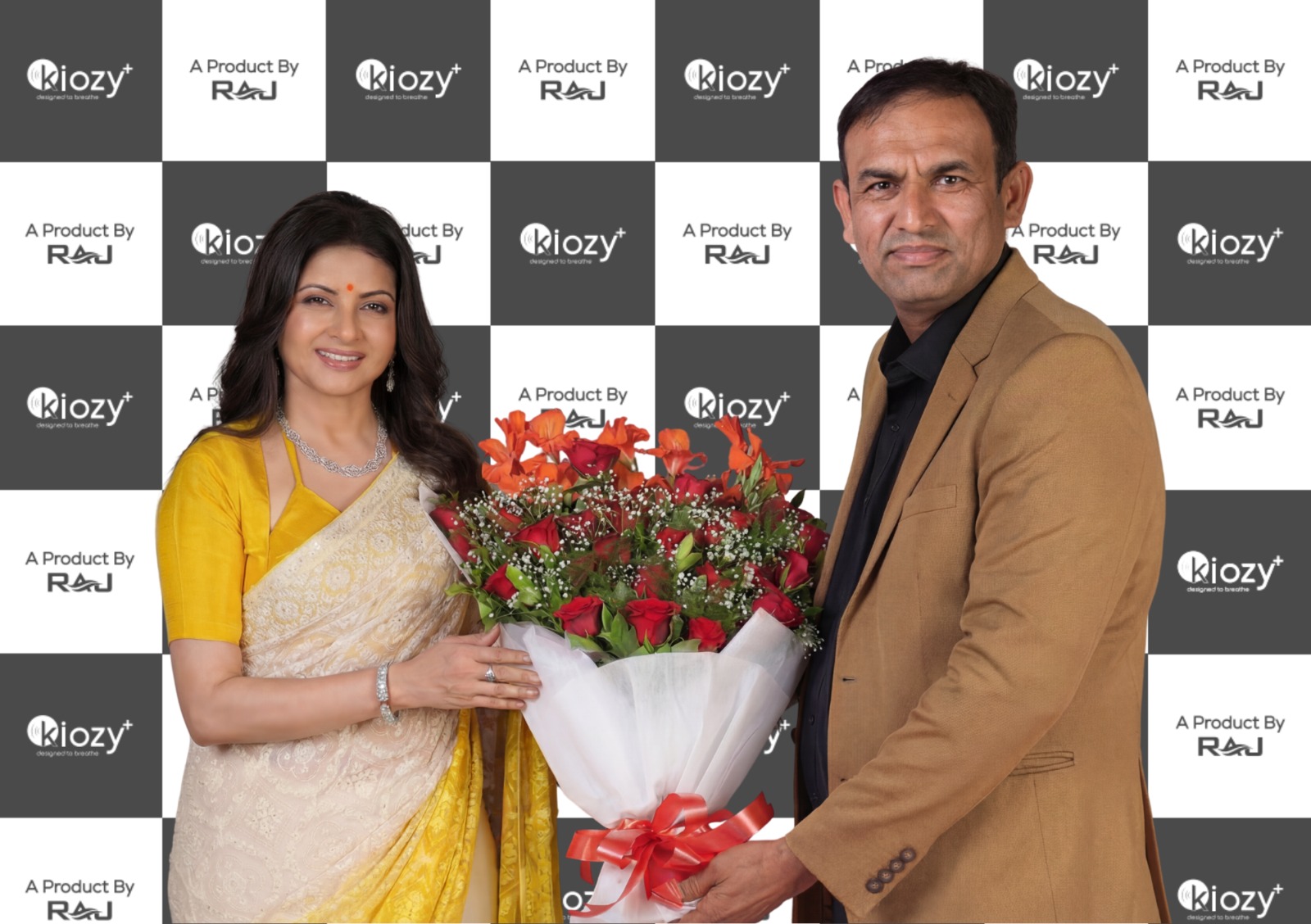
    Feb 25: Kiozy+ introduces its new premium air purifier collection, which features film actress Bhagyashree as its brand ambassador, to combat rising pollution through its advanced purification system, which supports healthy living and provide luxurious indoor environments for contemporary residential and commercial spaces. 

    Raj Cooling Systems Private Limited, a trusted name in the home appliances industry, proudly announces the launch of its Kiozy+ Air Purifier, a product designed to redefine indoor air quality in modern urban spaces. The company continues its mission to create innovative smart products which enhance people’s lifestyle through healthy and comfortable premium living experiences under the leadership of entrepreneur Mr. Kalpesh Manubhai Ramoliya.

    The Kiozy+ air purifier launch will feature Bhagyashree Dassani, a famous film actress, to promote the product. The partnership intends to show how essential clean air is for healthy living, which becomes especially vital during winter when pollution levels rise in Tier 1 cities.

    Air pollution has become a serious environmental problem that affects Tier 1 cities because smog and toxic particles create dangerous health risks that damage lung function and disrupt normal daily activities. The Kiozy+ air purifier has been thoughtfully designed to combat these challenges by filtering harmful pollutants, dust, allergens, and toxins from indoor air. Kiozy+ provides homes and workplaces with continuous fresh air, which has been purified to help people achieve better breathing, together with improved health.

    Speaking about the launch, Mr. Kalpesh Manubhai Ramoliya shared,

    At Raj Cooling Systems, we believe that clean air is a basic necessity, not a privilege. With Kiozy+, we want to empower families and professionals to take control of their indoor environment and protect their health. Our product demonstrates our dedication to developing new ideas while delivering products of high quality that benefit our customers’ health.

    Bhagyashree Dassani expressed her opinion by saying,

     “Clean air has a direct impact on our immunity and overall health. The Kiozy+ system uses an intelligent design that delivers air purification through its comfortable living spaces and attractive design elements, which create a healthy environment. I am delighted to be associated with a brand that truly prioritizes healthier living.

    Raj Cooling Systems Private Limited starts its entry into wellness and lifestyle markets through the launch of Kiozy+ product. The product functions as a representation of pure modern luxury, which enables users to experience unbound healthy breathing. Kiozy+ functions as an air purifier, which provides users with clean air and health improvements while creating comfortable spaces for modern indoor environments.

  • EUR/USD Remains Under Pressure as the USD Maintains Its Advantage on Growth and Interest Rate Differentials

    By Linh Tran, Market Analyst at XS.com

    EUR/USD has continued its downward trend since peaking around 1.2080 at the end of January, as the divergence in economic prospects between the United States and the Eurozone has become increasingly evident. This movement reflects the current macroeconomic landscape, where the US dollar remains supported by relatively stable growth and inflation that is still above target, while the Eurozone faces slower expansion and lacks sufficient policy momentum to trigger a meaningful shift in expectations.

    Recent US economic data suggest that growth has moderated but has not deteriorated significantly. GDP expanded by only 1.4% year-on-year in the fourth quarter, a notable slowdown from the 4.4% recorded in the third quarter, partly reflecting the impact of a prolonged government shutdown that disrupted public spending and investment. Nevertheless, for the full year 2025, the US economy still grew by 2.2%, its lowest pace since 2020 but sufficient to avoid a broad-based recession.

    While growth has cooled, inflationary pressures have not fully subsided. Core PCE remained around 3.0% year-on-year, well above the Federal Reserve’s 2% target, forcing the central bank to maintain a cautious stance. At the same time, the US trade deficit in goods and services widened to approximately $901.5 billion in 2025, among the highest levels since records began in 1960, highlighting structural imbalances in external trade. However, with inflation still above target, the Fed’s primary policy focus remains price stability rather than growth stimulus.

    The combination of slower but still positive growth and persistent inflation makes it difficult for the Fed to signal an early easing cycle. The “higher for longer” narrative continues to gain traction, keeping US Treasury yields relatively attractive compared to Europe. This yield differential remains a key factor supporting the US dollar and weighing on the euro.

    On the other hand, the Eurozone has posted modest growth. The region’s GDP rose by 0.3% quarter-on-quarter in Q4 2025 and approximately 1.5% for the full year. Although the February Flash Composite PMI improved to 51.9 from 51.3 the previous month, indicating a mild expansion in overall activity, the pace of improvement remains insufficient to significantly alter expectations for ECB policy. In an environment of fragile growth, the ECB has less room to maintain a hawkish stance compared to the Fed.

    In my view, the near-term outlook for EUR/USD will largely revolve around the policy divergence between the Fed and the ECB. With US policy rates still considerably higher than those in the Eurozone and core US inflation hovering around 3%, the Fed is unlikely to ease policy soon. Conversely, Eurozone inflation has eased to around 1.7% while growth remains modest, giving the ECB limited incentive to maintain a restrictive stance.

    Under the base-case scenario, where US growth continues to slow but avoids a sharp downturn and inflation declines only gradually, the US dollar is likely to retain its relative advantage through yield differentials. The euro may only stage a sustained recovery if US economic data weaken sufficiently to push the Fed toward earlier-than-expected rate cuts. For now, the macro balance continues to tilt slightly in favor of the dollar, leaving EUR/USD more prone to sustained pressure than a decisive reversal.

  • TravClan Index 2025 Reveals Tier 2 & 3 Cities Driving India’s Outbound Travel

    New Delhi, Feb 25 :TravClan has released the India Outbound Travel Index 2025, a comprehensive analysis of outbound travel patterns based on real booking behaviour across its nationwide travel agent network. The report analyses data from approximately 2,47,000 international passengers, representing over ₹500 crore in booking value across 170+ international destinations, and identifies five structural shifts shaping how Indians travel abroad.

    A defining insight from the Index shows that non-metro cities now contribute 63% of India’s outbound travellers, positioning non-metro India as the largest source of international travel demand. This reflects a fundamental shift in market composition, with outbound growth increasingly anchored in emerging cities alongside traditional metro hubs.

    Ahmedabad, Lucknow, Kochi, Amritsar, and Pune are now among India’s fastest-growing outbound markets, driven by rising incomes and expanding regional connectivity. This momentum reflects sustained demand formation, supported by rising income levels, expanding passport access, and improving regional air connectivity.

    Commenting on the findings, Arun Bagaria, Founder and CEO, TravClan, said,

    “The center of gravity for India’s outbound travel has shifted. Travel Businesses cannot build strategies just around Delhi and Mumbai anymore as we see consistent growth from Tier 2 and Tier 3 cities, driven by travellers who are digitally confident and decisive. Airlines, destinations, and travel brands need to embrace the next phase of outbound growth that will be built around these emerging markets.”

    Destination preferences are also evolving. Indian travellers are increasingly selecting markets that combine strong air access, competitive pricing, and diverse experiences. Vietnam has emerged as the fastest-growing destination, gaining 4.01 percentage points in market share, alongside strong hotel booking growth in Egypt, Japan, the Philippines, and Georgia.

    Travel planning cycles continue to compress. Over 42% of outbound trips are booked within seven days of departure, while 21.9% are planned over a month in advance, reflecting high digital confidence and predictable, price-responsive behaviour, particularly on short-haul and high-frequency routes.

    Affordable air connectivity remains central to outbound expansion. Low-cost carriers account for nearly 70% of bookings on key leisure routes such as the Maldives and Thailand. At the same time, travellers are extending average stays across several destinations, signalling deeper engagement and experience-led travel.

    The India Outbound Travel Index 2025 shows that the next phase of outbound growth will be shaped by localised source markets, faster booking cycles, and differentiated travel intent. For industry stakeholders, long-term relevance will depend on how effectively strategies align with these structural shifts.

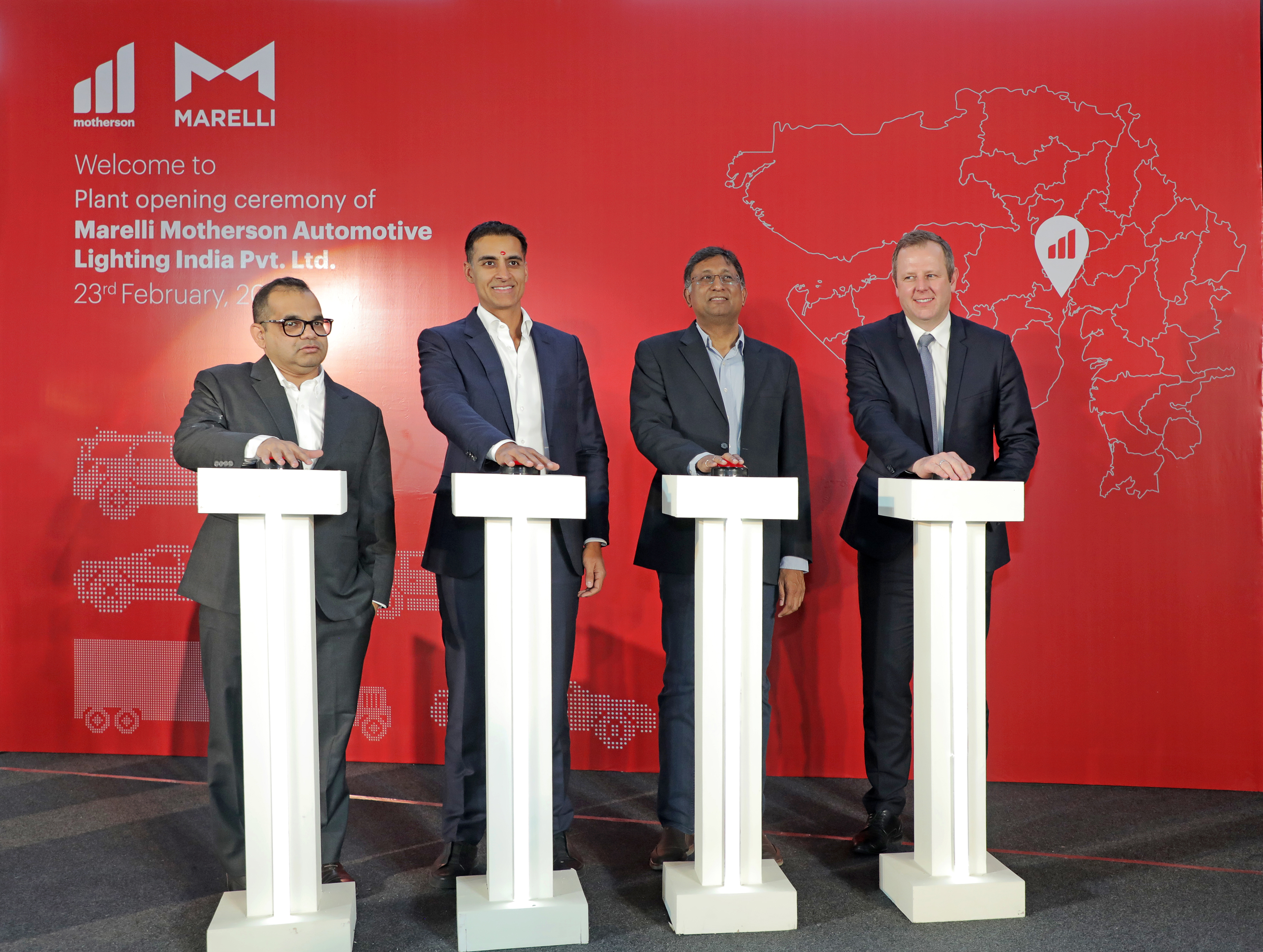
  • Motherson inaugurates its state-of-the-art automotive lighting plant in Sanand, India

    Motherson inaugurates its state-of-the-art automotive lighting plant in Sanand, India

    Chandigarh, Feb 25: Motherson has inaugurated a world-class manufacturing facility in Sanand, Gujarat, India. Established as a strategic joint venture with Marelli, this advanced plant is dedicated exclusively to producing cutting-edge exterior lighting systems, further strengthening the group’s capabilities in automotive component manufacturing.

    The new automotive lighting facility spans 8,200 square meters and utilises the latest technologies to serve the rising demand for premium lighting solutions. It is the first facility in India capable of manufacturing edge-to-edge single-piece long lighting parts, powered by high-tonnage multi-colour moulding machines (2,000T to 2,700T).

    This plant achieves several milestones for the Indian industry: localising the slimmest headlamp module, enabling the first single-piece, end-to-end Daytime Running Lights (DRL) and Rear Combination Lamps (RCL) in the country. In line with its commitment to sustainability, the plant features rooftop solar power, with plans underway to source open-access green power.

    Commenting on the occasion, Mr Laksh Vaaman Sehgal, Vice Chairman, Motherson, said:

    “The inauguration of our cutting-edge automotive lighting plant underscores Motherson’s unwavering commitment to innovation, excellence, and customer-centricity. This strategic investment strengthens our ability to deliver advanced, future-ready lighting solutions while meeting the evolving needs of our customers. We deeply appreciate the trust and support of our customers, which has been instrumental in achieving this significant milestone.”

    Frank Huber, President of Marelli’s Lighting business, said,

     “Our new facility in Sanand is a key milestone in bringing advanced lighting technologies to our customers in India. Together with our partner Motherson, we are uniting global innovation with strong local manufacturing capabilities to deliver cutting-edge solutions for the Indian market. Our joint venture continues to be a great success—built on Marelli’s global technology leadership, Motherson’s great infrastructure, execution excellence and deep customer relationships on the subcontinent, and the significant autonomy both partners have entrusted to the MMLI team since its establishment in 2008.”

  • Dusky India Features in Women’s Day Plant-Powered Skincare Gifting List

    This Women’s Day, celebrate mindful self-care with a simple yet sensorial skincare ritual from Dusky India—thoughtfully designed for women who balance it all and still make time for themselves. Rooted in clean, contemporary skincare, the brand blends plant-powered actives with everyday rituals, making this duo a meaningful gift that prioritises both results and well-being.

    Moondew Mogra Toner sets the tone for refreshed, balanced skin. This lightweight, non-sticky face mist gently rebalances the skin, refines pores, and uplifts the senses with the calming aroma of mogra (jasmine). Infused with rose water, mogra essential oil, green bamboo powder, aloe vera juice, and glycerin, it helps control excess oil, soothe irritation, and boost hydration without stripping moisture. Suitable for all skin types, especially oily and combination skin, it preps the skin beautifully for the next steps in your routine.

    Follow it with Glow Getter – Gotukola Face Serum, a fast-absorbing, nutrient-rich elixir powered by Ayurvedic Gotukola oil and a blend of rosehip, argan, hempseed, grapeseed, and cucumber seed oils. The serum deeply hydrates, strengthens the skin barrier, improves elasticity, and restores natural radiance while calming the skin with a subtle natural citrus aroma.

    Together, these two products create an effortless AM–PM ritual that leaves skin feeling refreshed, rejuvenated, and visibly healthier—making it a perfect Women’s Day gift for women on the go who believe in conscious, feel-good skincare.

  • EdTech and Cross-Border Learning- Integrating Virtual Global Classrooms Post-Pandemic

    EdTech and Cross-Border Learning- Integrating Virtual Global Classrooms Post-Pandemic

    Kolkata, Feb 25: The global pandemic marked a turning point in education delivery, accelerating digital adoption at an unprecedented pace. What was once viewed as a supplementary learning tool has now become a core pillar of global education. As international travel resumed, the conversation shifted from “temporary contingency” to “permanent integration,” giving rise to the concept of virtual global classrooms.

    In 2025, EdTech and cross-border learning are no longer separate conversations. Instead, hybrid learning ecosystems now integrate physical campuses with international online classrooms—offering access, flexibility, and globally connected learning experiences.

    From Disruption to Strategic Integration

    When institutions worldwide shut their doors in 2020 due to COVID-19, remote education became an immediate necessity. Synchronous video lectures replaced lecture halls, while asynchronous modules ensured continuity. According to global EdTech analytics, the e-learning market continues to project growth rates exceeding 20% into the late 2020s, even after campus reopenings.

    For international education stakeholders, this shift created new possibilities. Students facing visa restrictions, financial barriers, or logistical challenges could access global curricula remotely. Simultaneously, institutions began exploring blended internationalisation models—integrating online collaboration with physical mobility.

    Defining the Virtual Global Classroom

    A virtual global classroom extends far beyond live-streamed lectures. It includes:

    • Co-created curricula across institutions in different countries

    • Synchronous sessions with multi-country student participation

    • International collaborative, problem-based projects

    • Shared credentialing and stackable micro-certifications

    • Integrated global learning assessments

    In this model, the campus remains relevant—but learning becomes borderless. Students engage with diverse perspectives digitally, often achieving international exposure comparable to traditional study-abroad experiences.

    Why This Matters for Indian and South Asian Learners

    The emergence of global virtual classrooms addresses long-standing mobility challenges:

    1. Affordability Without Geographic Sacrifice
    Traditional study-abroad pathways involve tuition differentials, living expenses, and travel costs. Hybrid models allow students to begin globally aligned programs from home, building international portfolios before physical relocation.

    2. Visa and Timing Flexibility
    Visa delays and policy uncertainty remain significant stress factors. Virtual global classrooms allow early participation in international programs without immediate relocation.

    3. Skill Relevance in a Fragmented Labour Market
    Employers increasingly prioritize global competence—the ability to collaborate across cultures and time zones. Virtual classrooms simulate these environments long before workforce entry.

    Institutional Adoption Accelerates

    Leading universities across North America, Europe, Asia, and the Middle East have integrated elements of digital global learning through:

    • Collaborative digital electives co-taught across continents

    • MOOCs linked to formal credit pathways

    • Cross-institutional digital research seminars

    • Stackable, globally recognized micro-credentials

    These initiatives demonstrate that global learning no longer depends exclusively on physical relocation but can deliver internationally comparable outcomes through integrated models.

    Addressing the Challenges

    Despite strong potential, the path to integration presents hurdles:

    • Regulatory complexity: Accreditation and quality assurance systems remain nationally structured.

    • Digital divide: Connectivity, device access, and platform literacy vary across regions.

    • Credential recognition: Some employers and frameworks continue to equate traditional formats with higher legitimacy.

    However, these challenges also create opportunities for ecosystem platforms that bridge recognition gaps and ensure outcome-oriented learning validation.

    EdTech’s Evolving Role

    The shift toward global integration requires more than technology—it demands pedagogical redesign. Learning outcomes must emphasize collaboration, cultural competence, and critical thinking. Assessments must be authentic and transferable across institutions.

    EdTech providers are increasingly evolving into engagement ecosystems that combine analytics, adaptability, and collaborative tools to replicate real-world problem-solving environments.

    Platforms such as MSM Unify and its skills-focused initiatives are supporting this transition by integrating virtual learning pathways with upskilling and micro-qualification frameworks.

    Employer Expectations and Global Capability

    A 2024 global HR study found that employers rank cross-cultural collaboration and virtual teamwork proficiency nearly alongside domain expertise. Virtual global classrooms are intentionally designed to cultivate these competencies.

    For Indian and South Asian learners, early exposure to international digital collaboration provides a competitive advantage in remote and hybrid work environments—reinforcing that the future of education lies not only in global degrees but in validated global capability.

    Outlook for 2026–27

    For students evaluating study options in 2026–27, key implications include:

    • Early international exposure without immediate relocation

    • Digitally built skill portfolios complementing traditional degrees

    • Reduced risk before physical mobility decisions

    • Growing employer recognition of digital literacy and global collaboration

    As the education ecosystem evolves, virtual global classrooms are transforming cross-border education from a mobility-driven model to a competence-driven one. The future of learning is increasingly borderless—defined not solely by where students study, but by how effectively they engage in globally connected environments.

  • Caspia Launches New RTL Security Analyzer Enabling Agentic Silicon Security Verification

    GAINESVILLE, Fla., Feb. 25: Caspia Technologies announced broad availability of its flagship security verification product CODAx. New and unique capabilities delivered by the product were described, along with its impact on the customer base. The company also provided a preview of its plans to build agentic security verification workflows.

    CODAx is Caspia’s security-aware auditing solution that analyzes early (RTL) code of IP/SoC designs to detect coding styles that can introduce security vulnerabilities. Over 150 insecure coding practices are recognized and suggested corrections are also provided.

    CODAx security checks are informed by public vulnerability databases including CWE, CVE, and Trust-Hub, which catalog over 1,000 known hardware security weaknesses. Caspia applies GenAI techniques to systematically map these weaknesses to detectable RTL coding patterns.

    The latest release of CODAx, V2026.1 provides deeper security checks that span across the design hierarchy, enabling identification of weaknesses that travel up and across design modules. The company reported that comprehensive stress testing was performed on this release with 10,000+ intentionally vulnerable designs.

    Caspia also reported that a popular open-source root-of-trust design containing 400+ design files, approximately 3 million gates, and 500,000 lines of RTL code was analyzed by CODAx in about 45 minutes. Multiple security weaknesses were found during this analysis.

    Caspia has been working with all the major EDA suppliers to ensure a smooth integration of its tools with existing design flows. The company also reported that major chip and system companies from around the world are successfully deploying CODAx for designs that support applications such as automotive, data center, communication, storage, multimedia, precision analog and embedded computing.

    Caspia announced that Stuart Audley has joined the company as VP/GM of product management, with a focus on agentic security workflows. Audley brings decades of experience designing and deploying cryptographic hardware and security IP for top defense primes and leading semiconductor companies. He previously led advanced security platform development for FPGAs and ASICs at The Athena Group, Inc. and Mercury Systems.

    “We are expanding our security verification footprint to include both advanced tools and enablement of agentic workflows,” said Rick Hegberg, CEO of Caspia. “I am delighted to add someone with Stuart’s experience and background to the team. This will ensure we can focus on delivering cutting-edge capabilities and AI-driven security automation.”

    “Caspia is evolving from a provider of point security verification tools to an agentic platform supplier where AI orchestrates comprehensive hardware security workflows,” said Audley.

    He went on to say, “the elements of our plan include unifying all our tools with AI-assisted workflows that span the entire hardware security lifecycle: analyzing RTL, identifying vulnerabilities, and verifying the results.

    Traditional design flows remain fully supported, but we are creating a new category for agentic-enabled hardware security verification.”

    Caspia will present its latest technology in booth 702 at DVCon on March 2-5, 2026, to be held at the Santa Clara Hyatt Regency in Santa Clara, CA.