Category: Business

  • MBD Group Hosts Distributors Meet 2026 in Ludhiana, Strengthens Growth Vision

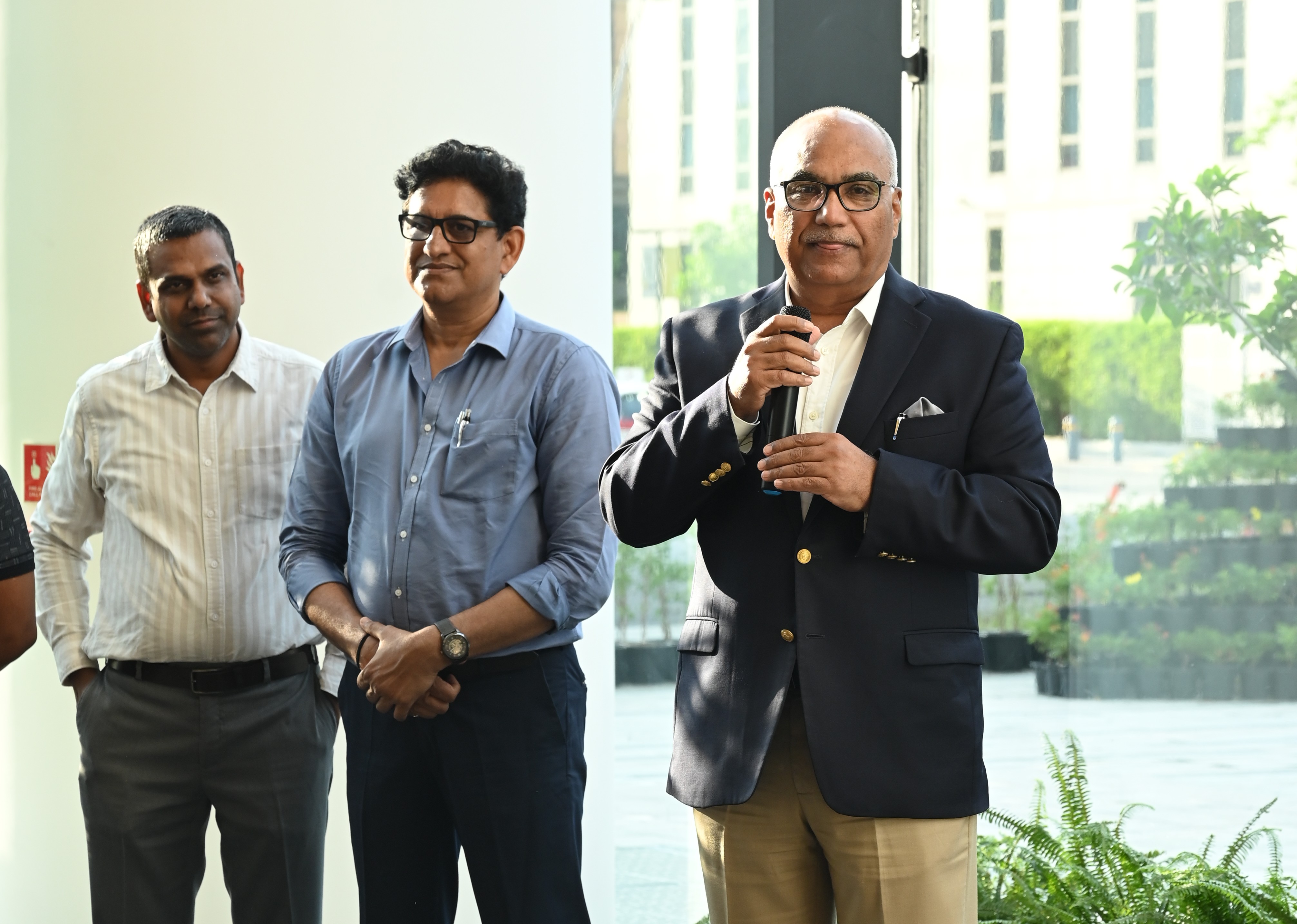
    Ludhiana, Mar 2: MBD Group, one of India’s most trusted names in educational publishing and learning solutions, hosted its Distributors Meet 2026 in Ludhiana, bringing together partners from the Punjab region ahead of the upcoming academic year. The meet was led by Ms. Monica Malhotra Kandhari, Managing Director, MBD Group, and saw the presence of Mr. Praveen Singh, CEO, AASOKA, along with senior leaders from MBD Group, including Mr. Sanjay Bhatt, Senior Zonal Head, and members of the team. The meetunderscored MBD Group’s focus on strengthening long-term relationships, improving distribution effectiveness, and ensuring the timely and affordable delivery of learning resources to schools.

    MBD Group Hosts Distributors Meet 2026 in Ludhiana, Strengthens Growth Vision

     The distributors meet focused on aligning book trade partners with the academic year’s priorities and product roadmap, while also addressing affordability, supply chain efficiency, and market readiness. It served as a strategic forum to review evolving curriculum requirements, market dynamics, and the changing needs of schools and educators. With a strong emphasis on quality-first education, MBD reiterated its approach of combining strong content with accessibility and cost-conscious delivery. Discussions also centred on equipping partners with clearer planning visibility, streamlined processes, and collaborative growth opportunities to ensure smoother reach across schools and institutions in the region.

    Addressing the gathering, Ms. Monica Malhotra Kandhari, Managing Director, MBD Group, said,

    “For MBD Group, the strength of our distribution network directly impacts the quality and consistency of learning delivered in classrooms. This meet was about setting clear priorities for the academic year ahead, including curriculum relevance, academic integrity, and execution excellence, while ensuring our partners are equipped to deliver consistently across geographies. Alongside this, we remain focused on responsible pricing, so that our books continue to make quality education accessible without compromising on standards.”

    Sharing his perspective on the Group’s digital learning journey, Mr. Praveen Singh, CEO, AASOKA, added,

    Growth at MBD Group has been guided by disciplined execution and strong alignment across the ecosystem, rather than scale for its own sake. As blended learning becomes integral to classroom delivery, the focus remains on ensuring clarity around learning outcomes, effective use of technology, and consistent on-ground implementation. These elements are critical to building a sustainable education ecosystem that supports teachers, strengthens classroom effectiveness, and maintains rigorous academic standards, while also ensuring learning solutions remain simple, effective, and affordable for students.”

    A key highlight of the meet was MBD Group’s integrated blended learning strategy, where academic content is designed simultaneously for print and digital learning. As part of this blended learning ecosystem, AASOKA has engaged with over 4,000 schools since its launch in 2021, supporting 9.5 lakh students and having trained over 80,000 teachers across the country. The discussions emphasised the role of distributors in strengthening the reach and delivery of AASOKA’s blended learning offerings, ensuring adoption aligned with curriculum requirements and classroom outcomes.

    The MBD Distributors Meet 2026 concluded with interactive discussions and strategic exchanges aimed at reinforcing trust, collaboration, and shared growth. With a steadfast focus on quality, innovation, and partnership-led expansion, MBD Group continues to strengthen its mission of building a resilient, future-ready education ecosystem in India.

  • Why Wealth Changes How We Think About Fair Prices

    By Kirsten Hilgeford

    When it comes to the price of financial services such as loans, mortgages, and insurance, the perception of what is “fair” has a lot to do with how wealthy you are. In the study “Seeing Like a Company or a Customer: Selective Empathy in Pricing,” appearing in the February 2026 issue of the American Sociological Review, authors Barbara Kiviat (Columbia University) and Carly R. Knight (New York University) examine how Americans evaluate the fairness of risk-based pricing—where consumers who are predicted to be high-risk/costly are charged more. 

    Grounding their approach in previous sociological research on empathy, Kiviat and Knight demonstrate that either side of an economic transaction—company or customer—can become the object of empathy. To establish this, Kiviat and Knight conducted three studies on risk-based pricing, focusing on transactions between customers and companies. In the first study, they analyzed two nationally representative surveys to examine the relationship between household income and beliefs about the fairness of charging high-risk people more for insurance and credit. The authors uncovered a pattern in which wealthier individuals, regardless of their economic self-interest or ideology, were more likely to accept the moral legitimacy of tying prices to a person’s behavior.  

    The authors then proposed the new lens of “selective empathy” to apply to their remaining two studies. Selective empathy is when an individual disproportionately directs their empathy to and takes the perspective of either the company or the customer in evaluating pricing arrangements. Kiviat and Knight found that wealthier individuals are more likely than lower-income individuals to empathize with companies—and less likely to empathize with high-risk consumers. 

    “Our findings show that support for pro-business pricing practices is not simply about self-interest,” said the authors. “Instead, wealthier Americans more easily see things from a company’s ‘point of view,’ making these practices appear fair even when they consistently burden high-risk consumers. This class-based split in perspective matters to how people judge the fairness of our economy.” 

    The authors note that their findings ultimately “reveal that risk-based pricing—even in its most institutionalized, ostensibly innocuous form—reflects a class-based understanding of market fairness.” 

  • Honda Cars India Registers Total Sales of 7,212 units in February 2026

    New Delhi, Mar 02: Honda Cars India Ltd. (HCIL), a leading manufacturer of premium cars in India, announced that it recorded total sales of 7,212 units with domestic sales of 5,629 units and exports of 1,583 units in February 2026.

    Sharing his thoughts on the sales performance, Mr. Kunal Behl, Vice President, Marketing & Sales, Honda Cars India Ltd. said, “We maintained our sales momentum through February, driven by strong popularity of Honda Amaze as a practical sedan with outclass safety. Honda City and Elevate also recorded steady volumes with exciting promotions during the month. As we approach the final month of the fiscal, we remain optimistic about market performance.”

    The company had registered 5,616 units in domestic sales and 4,707 units in exports during February 2025.


  • Oil prices could hit USD 100/bbl as Strait of Hormuz traffic halts

    LONDON/HOUSTON/SINGAPORE, Mar 2: Higher oil and gas prices are certain as the closure of the Strait of Hormuz threatens to disrupt 15% of global oil supply and 20% of global LNG supply, with oil prices potentially exceeding $100/bbl if tanker flows are not quickly restored, according to Wood Mackenzie. Following US and Israeli attacks on Iranian government, military and nuclear facilities, Iran warned shipping away from the waterway and insurers withdrew coverage, effectively halting tanker traffic.

    The disruption creates a dual supply shock: not only are current exports through the Strait halted, but OPEC+ additional volumes and ultimately most of OPEC’s spare capacity—typically a key lever for balancing the global oil market—are inaccessible while the waterway remains closed.

    “The key question is when do vessels re-establish export flows,” said Alan Gelder, SVP of Refining, Chemicals and Oil Markets at Wood Mackenzie. “No doubt, tanker rates and insurance will increase dramatically, but these costs would only be a small part of the oil price impact associated with a curtailment of oil flows if they last for more than a few days.”

    Given the uncertainty around events, it is plausible that it takes a few weeks for export flows to re-establish themselves in the most optimistic scenario (in which the Iranian regime elects to co-operate with the US), Gelder added.

    “During that time, oil prices are heavily risked to the upside,” Gelder said. “The most recent comparison is during the early days of the Russia/Ukraine conflict, when the fear of loss of Russian supplies drove the oil price to over US$125/bbl.”

    In the current scenario, oil prices over US$100/bbl are possible if transit flows are not re-established quickly, according to Gelder.

    OPEC+ production response

    The group of eight OPEC+ countries responsible for voluntary production cuts – Saudi Arabia, Russia, Iraq, UAE, Kuwait, Kazakhstan, Algeria and Oman – agreed on 1 March to resume unwinding the April 2023 1.65 million b/d cut. They will increase production by 206,000 b/d in April and meet again on 5 April to assess next steps.

    “The OPEC+ decision does not come as a surprise, due to the uncertainty surrounding the US-Iran tensions, and that the market for non-sanctioned crudes is tight,” said Gelder. “There is, however, a risk that the OPEC+ decision is moot if flows do not resume through the Strait of Hormuz.”

    While there are potential alternative supply routes available to Middle East producers—including Saudi Arabia’s East-West pipeline to the Red Sea and additional Iraqi volumes via the Mediterranean—no alternatives can fully compensate for the loss of exports that transit the Strait of Hormuz. Strategic stock releases by IEA member countries could provide some relief, but IEA members account for less than half of global oil demand.

    Gas market implications

    A halt in LNG flows through the Strait of Hormuz would be equally disruptive for global gas and LNG markets, according to Wood Mackenzie. Around 81 Mt (110 bcm) of LNG transited the Strait in 2025—primarily from Qatar—accounting for nearly 20% of global LNG supply.

    “Disruptions to LNG flows would reignite competition between Asia and Europe for available cargoes, particularly at a time when European storage levels are below seasonal norms and around 10% lower than at the same point last year, following a severe cold spell in January,” said Massimo Di Odoardo, Vice President, Gas and LNG Research at Wood Mackenzie. “With approximately 1.5 Mt (2.2 bcm) of LNG exports at risk for each week that flows through the Strait of Hormuz are halted, both Asian and European markets would need to draw more heavily on existing storage and would increase the need for restocking over the summer. This would tighten market conditions well beyond the eventual resumption of trade through the Strait.”

    Precautionary closures of the Leviathan and Karish gas fields in Israel—which supplied more than 10 bcm to Egypt last year—could add further pressure, as Egypt would likely increase LNG imports to offset lost volumes. Potential disruptions to gas exports from Iran to Turkey, which accounted for more than 7 bcm in 2025, could compound the supply strain.

    A halt in LNG flows through the Strait of Hormuz would be comparable in scale to the curtailment of Russian gas supplies to Europe, which sent prices soaring to nearly US$100/mmbtu at their peak and averaging US$40/mmbtu in 2022, according to Di Odoardo.

    “This time, however, the reaction is unlikely to be as extreme,” added Di Odoardo. “Unlike the prolonged disruption of Russian pipeline flows, a blockage in the Strait could be viewed as temporary, tempering the upside. Still, Monday will see a dramatic price jump at market opening, and any signal that disruptions could drag on would add further fuel to the rally.”

    Looking forward

    “The nearest historical analogue in our view is the Middle East oil embargo of the 1970s, which increased oil prices by 300 percent to around US$12/bbl in 1974,” said Gelder. “That is only US$90/bbl in 2026 terms. Eclipsing this in today’s market concerned about significant losses of supply seems very achievable.

    “The global economy is now far less oil intensive than 50 years ago. The shock at the time of the oil embargo was the pace and scale of the price increase. Oil prices would need to reach well over US$200/bbl to exert a similar level of shock to today’s global economy.”

  • TiE Hyderabad launches 7th Edition of TiE Women 2026, chalks out plans to take the initiative to tier 2 cities in Telangana, targets 200 applicants with statewide outreach

    Cuts 50% membership fee to encourage more women founders to join their fold. The offer is open only in March

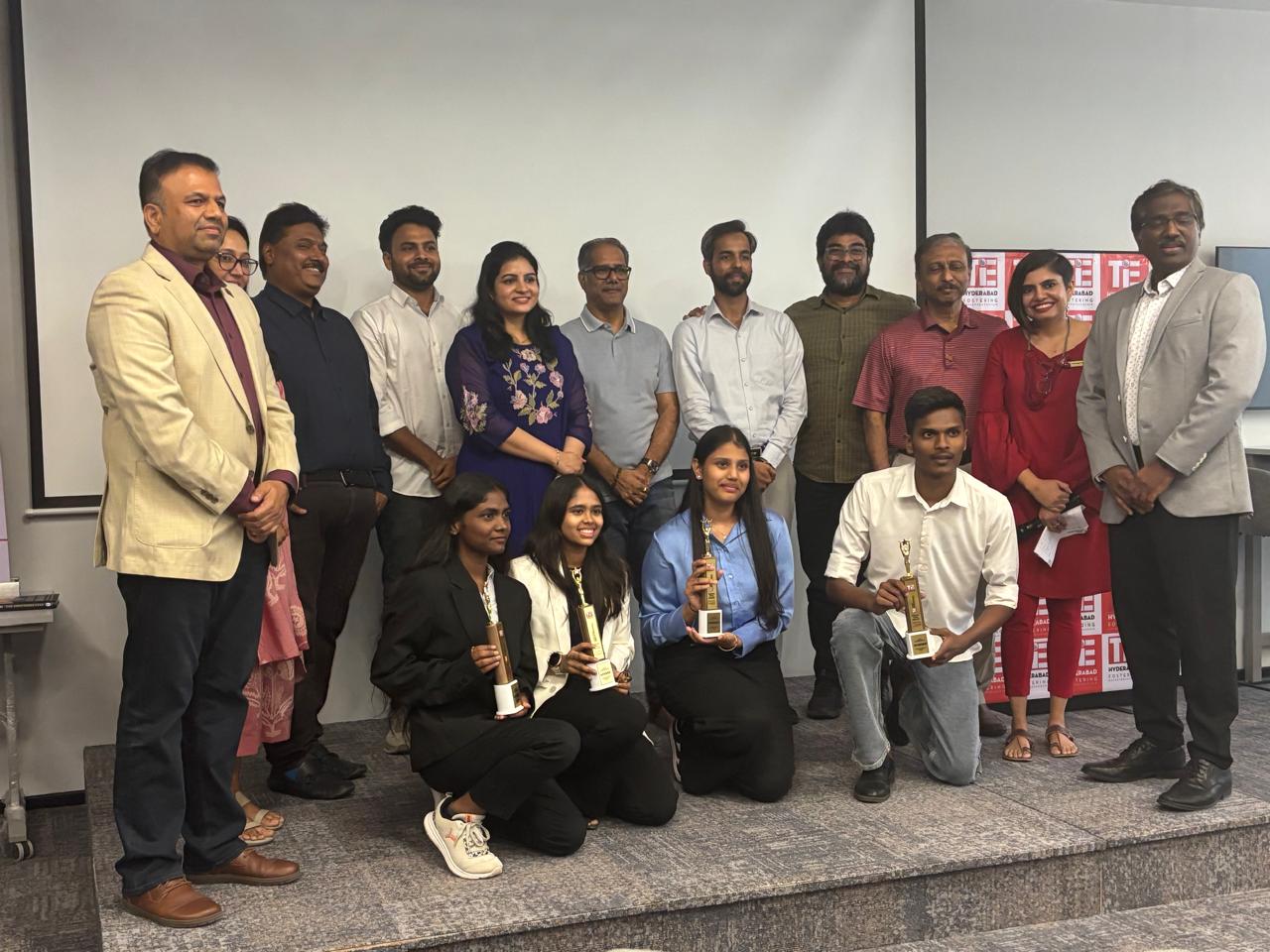
    Hyderabad, Mar 1: TiE Hyderabad launched the 7th edition of TiE Women 2026 at a brief function held during the Women Entrepreneurs’ Special Edition of TiE OpenMic at Akan, near Durgam Cheruvu, this weekend.

    Announcing an ambitious expansion plan, Murali Kakarla, President, TiE Hyderabad, said the chapter is targeting 200 applicants this year—double the participation from last year. He, along with Ankit Sanjay Shah and other TiE members, unveiled the TiE Women 2026 poster at the event.

    TiE Hyderabad launches 7th Edition of TiE Women 2026, chalks out plans to take the initiative to tier 2 cities in Telangana, targets 200 applicants with statewide outreach


    Addressing the gathering, Murali Kakarla emphasised that language should not be a barrier for aspiring women entrepreneurs. “Let language not stop women from participating,” he said, adding that women founders from rural backgrounds will be allowed to pitch in the TiE Women 2026 challenge in the Telugu language to encourage women founders who are comfortable communicating in Telugu.

    He also clarified that there is no entry fee to participate in the TiE Women program.

    This year, the Chapter will be conducting roadshows in Tier 2 cities of Telangana, like Nizamabad, Warangal, Karimnagar and others.

    To further encourage women to join the network, the TiE Hyderabad Board has announced a 50 per cent discount on Associate and Charter Membership fees for women who register on or before March 31.

    Ankit Sanjay Shah, TiE Hyderabad Committee Chair for TiE Women, described the initiative as a flagship global program that collaborates with over 60 TiE chapters worldwide to embrace, engage, and empower women entrepreneurs through mentorship, investor connects, networking opportunities, and entrepreneurial development programs. Each participating chapter selects one woman entrepreneur to represent it at the Global Pitch Competition, which will be held in Jaipur later this year. Over the years, TiE Hyderabad has engaged and mentored more than 600 women entrepreneurs, with over 100 receiving structured mentorship support.

    TiE Hyderabad launches 7th Edition of TiE Women 2026, chalks out plans to take the initiative to tier 2 cities in Telangana, targets 200 applicants with statewide outreach


    Highlighting the program’s impact, Murali Kakarla noted that last year’s winner, Sowmya Darapaneni, Founder of Avinya Neurotech, was featured on the prestigious TiE50 and TGS100 global lists of promising startups.

    TiE Women Hyderabad has so far engaged over 600 women entrepreneurs and facilitated more than $352,000 in equity-free grants, underlining its tangible contribution to strengthening the startup ecosystem.

    Shanthala Veigas, Senior Director, TiE Hyderabad, said that building on the success of last year’s Nizamabad roadshow, the initiative will expand its outreach across Tier-2 cities, including Nizamabad, Warangal, Karimnagar, Khammam, and other parts of Telangana. Supported earlier by KOTAS Foundation, the program received 103 applications last year, and with enhanced state-wide roadshows and regional engagement this year, it aims to significantly widen participation.

    The launch event brought together entrepreneurs, aspiring founders, investors, and ecosystem enablers, providing a vibrant platform for networking, collaboration, and the exchange of ideas. Women entrepreneurs across Telangana are invited to apply for TiE Women 2026 by expressing their interest through the official application link. Through this expanded edition, TiE Hyderabad reaffirmed its commitment to empowering women founders, enabling access to mentorship and global exposure, and strengthening their role in shaping the region’s entrepreneurial landscape.

    TiE Hyderabad has also organised Women Entrepreneurs’ Special Edition of TiE OpenMic where seven women founders shared their journey, challenges, lessons learnt, their strengths, weaknesses etc. More than two aspiring entrepreneurs participated in the program.

  • Vodia Announces the New Vodia Partner Portal and Partner Program

    BOSTON – Mar 1: Vodia Networks, Inc., a provider of unified cloud communications solutions to enterprises, contact centers, and service providers, today announced the new Vodia Partner Portal and Partner Program. Vodia partners now have the exact tools they need to provide their customers with Vodia’s industry-standard phone system, in the cloud or on-prem, faster, more efficiently, and more profitably. 

    The new Vodia Partner Portal and the Partner program help Vodia partners be truly competitive. Vodia partners need to get licenses quickly, access attractive pricing, reduce the burden on sales teams, and focus on CX and higher margins, and the portal and the program have been designed to address these day-to-day needs. Vodia partners can now purchase, manage, and track PBX licenses with just a few clicks. 

    Partner certification is the first milestone in the Vodia Partner Program. Once certified, partners can move through different levels to gain more benefits. Partner levels and points structure apply to licenses purchased directly through the portal. 

    The new Vodia Partner Portal and Partner Program

    ·        The partner program is structured around a transparent points system. Completion of the Vodia Partner Certification provides the points required to reach Silver level, after which partners accumulate points and progress to higher membership tiers.
    Pre-qualified sales leads are accessible within the portal. Vodia partners receive contact information for potential customers who have already expressed interest in a VoIP solution.
    Vodia partners have access to professionally crafted marketing collateral, sales presentations, and argumentation frameworks for immediate deployment in local markets. 

    ·        Partners can now access Vodia Professional Services, implementation support, and other technical assistance via the Portal. 

    These capabilities are available now, with others to be introduced as the portal and program evolve:

    ·        Purchase experience: direct access to Vodia Professional Services, including training, implementation support, integration support, AI integration, call-flow optimization, and add-ons.

    ·         Knowledge transfer: certifications and regular webinars to help partners build their expertise and enhance their competitive advantage.

    ·         Ordering efficiency: integration of the portal with partner ordering systems.

    ·         Faster PBX customization: call-flow and industry-specific templates to accelerate deployments and tailor the Vodia PBX to customer needs. 

    To celebrate the launch of the Vodia Partner Portal, every registered partner will receive an exclusive welcome package upon first login. To thank current Vodia partners for their loyalty, Vodia will give each partner complimentary premium support for the first 90 days after login, plus a starter kit with demo licenses and ready-to-use sales materials.

  • Apollo Hospitals Vice Chairperson Upasana Kamineni Konidela Inaugurates 1000th Apollo Pharmacy Store in Telangana

    Hyderabad, Feb 28: On 28th February, Upasana Kamineni Konidela, Vice Chairperson – CSR, Apollo Hospitals, inaugurated the 1000th Apollo Pharmacy store in Telangana, marking a significant milestone in Apollo’s continued effort to expand access to quality healthcare. India’s largest and most trusted pharmacy network now operates across all 33 districts of Telangana and employs more than 10,000 people across its retail, digital and supply chain ecosystem.

    Apollo Hospitals Vice Chairperson Upasana Kamineni Konidela Inaugurates 1000th Apollo Pharmacy Store in Telangana


    The network provides access to over 50,000 genuine medicines and wellness essentials round the clock, with quick delivery facilities available across all districts, strengthening essential healthcare access across urban and semi-urban communities. Apollo currently services more than 1.65 lakh medicine orders daily and plans to add over 200 new pharmacy stores in Telangana over the next three years.

    Expressing her thoughts on the milestone, Upasana Kamineni Konidela said, “This milestone is not only about expanding access to quality healthcare, but also about creating meaningful and sustainable employment opportunities especially for women across Telangana. As we grow, we are committed to building inclusive workplaces that empower women with stable careers, leadership opportunities, and financial independence, enabling them to uplift their families and communities.”

    Through its omni-channel platform, Apollo 24/7, Apollo offers an integrated continuum of care including teleconsultations with Apollo doctors, diagnostic services, and customised insurance solutions all accessible from the comfort of home. 

  • 2nd edition of DJGF Signature 2026 Powers North India’s Jewellery Trade for Akshaya Tritiya and Wedding Season Demand

    New Delhi, Feb 28: North India’s jewellery trade received a significant early-season boost as the 2nd edition of DJGF Signature 2026 opened today at Bharat Mandapam, Pragati Maidan. Organised by Informa Markets in India, the three-day B2B exhibition (28 February – 2 March 2026) has established itself as the capital’s definitive sourcing platform for retailers, wholesalers, and manufacturers preparing for the crucial first-half buying cycle.


    2nd edition of DJGF Signature 2026 Powers North India's Jewellery Trade for Akshaya Tritiya and Wedding Season Demand

    The inaugural ceremony was graced by Shri Avinash Gupta, Vice Chairman, GJC (Chief Guest); Shri Ramavtar Verma, Chairman, TBJA; Shri Naveen Kumar Jindal, Senior Chairman, TBJA; and Shri Kamal Pawal, President, TBJA, alongside Mr Yogesh Mudras, Managing Director, Informa Markets in India, Ms. Pallavi Mehra, Senior Group Director, Informa Markets in India, and Mr. Pankaj Shende, Group Director, Informa Markets in India amidst an august industry presence.

    Spanning over 70,000 square feet of exhibition space, DJGF Signature 2026 brings together 120+ exhibitors representing more than 400 leading jewellery brands. These include Vikash Chain, Beera Jewellers, Neeru Jewels, Riddhima Chain, Grover Jewels, ASV Polki, SRK Jewels, Unique Alankar, Shri Radhey Krishna Jewellers and Many more. The show is expected to attract over 7,000 trade visitors, including 400+ VIP and curated hosted buyers comprising senior retail decision-makers, trade bodies, and sourcing delegates.

    Industry Context: Strong Structural Momentum

    India’s gems and jewellery industry continues to demonstrate robust growth. Contributing nearly 7–8% to India’s GDP and accounting for 12–14% of merchandise exports, the sector supports over 5 million livelihoods. With India processing nearly 90% of the world’s diamonds by volume and remaining one of the largest global consumers of gold, the country occupies a pivotal position in the global value chain.

    The domestic jewellery market, currently valued at approximately USD 85–90 billion, is projected to expand to USD 130–150 billion by 2030, driven by wedding demand, premiumisation, organised retail expansion, and rising consumer confidence.

    Comprehensive Showcase Aligned with Key Buying Cycles

     The exhibition presents a comprehensive showcase across Fine Jewellery, Gold Jewellery (plain, antique, and contemporary), Gold & Diamond Jewellery, Polki & Jadau, Silver Jewellery, Loose Gemstones, Lab-Grown Diamonds, Casting Jewellery, and Jewellery Technology & Packaging Solutions — offering the trade a decisive first-mover advantage ahead of Akshaya Tritiya and the upcoming wedding and festive seasons.

    Shri Avinash Gupta, Vice Chairman, GJC, said, “It is truly heartening to witness the scale and energy of this exhibition today. The participation from exhibitors and buyers reflects not just strong business sentiment, but also the growing maturity of our gem and jewellery ecosystem. Platforms like DJGF Signature 2026 have evolved into structured marketplaces that enable systematic procurement, networking, and meaningful knowledge exchange. Today, the jewellery industry operates in a new normal: gold premiums hovering around 3% and silver nearly 5% have become standard, while tighter inventory cycles and frequent B2B exhibitions every 8–15 days allow us to manage procurement with lower risk and greater efficiency. However, alongside growth, we must prepare for critical regulatory shifts: BIS-led HUID transfers expected to streamline traceability, mandatory silver hallmarking, currently limited to 90 and 80 standards despite nearly 50 tonnes of silver trade, and PMLA compliance supported by AI-driven monitoring.”

    Speaking on the occasion, Yogesh Mudras, Managing Director, Informa Markets in India, said: “With the domestic jewellery market projected to expand to USD 130 billion by 2030, the sector is entering a phase of structured growth driven by festive demand, bridal purchasing, and increasing formalisation. As design innovation, supply agility, and trend forecasting become critical differentiators, DJGF Signature 2026 is strategically positioned to empower the trade with early-season insights, high-quality sourcing, largest display of light weight jewellery as per market demands, and curated business matchmaking — enabling jewellers to capitalise on emerging opportunities across segments.”

    Shri Ram Avtar Verma, President, TBJA, said, “DJGF Signature 2026 truly reflects how far our industry has come. The sheer scale, participation, and energy at this edition are remarkable. Today, this event hosts over 400 respected brands, drawing an unmatched crowd and creating a business environment once seen only in Mumbai, now firmly established in Delhi. And, not just jewellery traders, but machinery, technology, and allied industries found a comprehensive marketplace here. For that, heartfelt thanks to the entire team.”

    Shri Kamal Pawal, President, TBJA, said, “Today, DJGF Signature has established itself as a show of the scale and stature we once associated only with Mumbai. In North India, we had never witnessed such a grand and professionally organized platform before. We are fortunate to be part of this journey and confident that the future will bring even greater growth.”

    Knowledge Agenda and Industry Recognition

    Beyond sourcing, DJGF Signature 2026 features insightful sessions addressing export fundamentals, luxury retail transformation through AI, bullion price volatility, and evolving Gen-Z consumer behaviour. Structured B2B matchmaking sessions will facilitate high-value business conversations.

    The show is supported by key associations such as The Bullion and Jewellers Association, Delhi, Delhi Jewellers Association, Gurugram Jewellers Association, Karol Baug Jewellers Association, Maliwara Jewellers Association, Dariba Jewellers Association, Lucknow Mahanagar Sarafa Jewellers Association and Ghaziabad Jewellers Association

     With its focused positioning, curated buyer programme, and forward-looking knowledge agenda, DJGF Signature 2026 continues to strengthen North India’s jewellery ecosystem — setting the tone for the larger DJGF 2026 exhibition and reinforcing India’s competitive edge in the national and global jewellery landscape.

  • Born of Racing, Now in Rhythm: TVS Apache Releases ‘The Apache DNA’ Anthem

    Born of Racing, Now in Rhythm: TVS Apache Releases ‘The Apache DNA’ Anthem

    Chandigarh, Feb 28: Turning the exhaust note into the beat of music, TVS Apache, today launched its first-ever official anthem — ‘The Apache DNA’, celebrating 20 years of the brand’s legacy. Bringing excitement to customers, especially the new generation in India and across the world, the anthem has been composed by one of India’s finest rapper and songwriter Brodha V. Launched in 6 languages – English, Hindi, Marathi, Tamil, Telugu & Kannada, the anthem marks a landmark cultural moment for an iconic racing and performance motorcycling brand like TVS Apache.

    Music is a powerful motivator for motorcyclists, and TVS Apache channels that same energy through its performance-driven style. Embodying a fearless spirit, and racing DNA, TVS Apache has become synonymous with performance, technology, and innovation for over 6.5 million riders across 60+ countries. The anthem further amplifies this spirit, positioning itself as a bold expression of confidence and unmatched energy on and off the racetrack.

    Commenting on the first-ever TVS Apache anthem, Mr. Vimal Sumbly, Business Head, Premium Segment, TVS Motor Company, said, “For 20 years, TVS Apache has been the living expression of our racing DNA, an attitude and legacy that has empowered 6.5 million riders globally. ‘The Apache DNA’ anthem is our tribute to every rider who embodies the philosophy of TVS Apache. As we continue to democratize racing-bred technology, we are also expanding TVS Apache’s presence into music and youth culture, creating deeper connections with the communities that live and breathe the brand every single day.”

    The lyrics of ‘The Apache DNA’ reflect the core ethos of TVS Apache: speed, precision, and control. With the launch of the anthem, TVS Apache takes its racing DNA beyond motorcycles, strengthening its emotional connect with riders and expanding its presence across music genres and the community. As the brand continues to push the boundaries of performance motorcycling, it resonates a powerful expression of TVS Apache’s commitment to confidence, authenticity, and an unstoppable riding ethos that resonates with the next generation of riders

  • Real GDP growth pegged at 7.6 Percent as new base year and data improvement take effect: PHDCCI

    Feb 27: New estimates of Real GDP at INR 322.58 lakh crore in the FY 2025-26, against the First Revised Estimate (FRE) of GDP for the year 2024-25 of INR 299.89 lakh crore pegs GDP growth rate at 7.6% as compared to 7.1 % in FRE 2024-25. Further, nominal GDP is estimated at ₹345.47 lakh crore in the year 2025-26, against ₹318.07 lakh crore in 2024-25, showing a growth rate of 8.6% said Mr. Rajeev Juneja, President, PHDCCI.

    Real GVA at INR 294.40 lakh crore in the year 2025-26, against ₹273.36 lakh crore in FY 2024-25, registers a growth rate of 7.7% as compared to 7.3% in 2024-25, he added.

    As India moves towards deeper integration in the global value chains, base year updates at regular intervals, current after every five years, reflects government’s commitment to data-driven policy intervention to shocks in the global economy, he said.

    The revised GDP framework will enhance the credibility and analytical usefulness of India’s national accounts statistics. The updated methodology is expected to provide policymakers, businesses, and investors with a more accurate picture of economic activity across sectors, he added.

    New series integrates multiple data sources such as GST statistics, financial results of listed companies, transport indicators, and digital administrative sources. This broader data coverage is expected to strengthen measurement of economic output, consumption, investment, and sectoral contributions, and prepare India for the next phase of growth trajectory, he said.

    Given the revised statistical framework and the evolving economic landscape, PHDCCI suggests the following policy priorities to sustain high growth momentum in the coming years:

    1. Accelerate implementation of industrial policies and PLI incentive initiatives to deepen domestic manufacturing capabilities, particularly in high-value and growth sectors such as electronics, engineering goods, chemicals, and renewable energy equipment.
    2. Facilitate faster project clearances, enhance access to long-term finance, and further improve ease of doing business.
    3. Further, expanding infrastructure investments in transport, energy, and logistics networks to reduce logistics costs and improve supply chain efficiency.
    4. Expand credit access, technology adoption programs, and export facilitation measures to enable MSMEs to integrate into global value chains.

    Improved statistical measurement will support data-driven and evidence-based policymaking and facilitate better economic planning. Foreign investors, both institutional and non-institutional, that are keen to invest in India’s growth story, will see this as reliable and internationally comparable data, which augurs well for increasing India’s private capex-driven growth momentum said Dr. Ranjeet Mehta, CEO & SG, PHDCCI.