Category: Business

  • Africa’s Green Economy Summit 2026 Charts a Course from Vision to Viability

    The gathering is built on a singular premise, that Africa’s environmental challenges are, in fact, its greatest economic opportunities

    CAPE TOWN, South Africa, Feb 26– The Africa’s Green Economy Summit (AGES) 2026 opened its doors in Cape Town today, marking a pivotal moment in the continent’s economic trajectory. Convening a powerful coalition of policymakers, financiers and innovators, the summit signals a decisive shift from conceptual ambition to concrete, bankable action in the pursuit of a sustainable African future.

    Under the banner of From Ambition to Action: Scaling Opportunities in Africa’s Green and Blue Solutions,” AGES 2026, proudly sponsored by Sanlam Investments, is not merely a forum for discussion but a catalyst for deal-making and partnership. The gathering is built on a singular premise, that Africa’s environmental challenges are, in fact, its greatest economic opportunities.

    “Ambition lights the path, but it does not pave it. To transform our economies and uplift our communities, we must move beyond rhetoric to robust execution,” said Lerato Mbele, Summit Moderator. “This summit is a marketplace of ideas where we connect visionaries with investors, ensuring that Africa’s green transition is not just sustainable, but also scalable and profitable.”

    The strategic focus of this year’s agenda is underpinned by compelling data. The summit is shining a spotlight on the blue economy, a colossal yet often under-leveraged asset that already injects nearly $300 billion annually into the continent’s GDP and sustains 46 million livelihoods through fisheries, tourism and logistics. Simultaneously, the green economy, with agriculture and renewable energy at its core, is projected to unlock a staggering $10 trillion in global business value over the next decade, positioning Africa to generate an estimated 300 million new jobs for its burgeoning youth population.

    These are not distant prospects, but immediate frontiers for investment and innovation.

    Echoing this sentiment, the Honourable Naren Singh, Deputy Minister of Forestry, Fisheries and Environment, addressed delegates with a call for holistic progress. “Our journey towards a low-carbon future must be defined by a fundamental truth: sustainability is a three-legged stool, balancing the health of our planet, the prosperity of our people and the creation of shared value,” he stated. “By investing in our natural capital, we are investing in the most resilient infrastructure of all our communities.”

    Over the next two days, the summit floor will be a hive of activity. Attendees will engage in high-level interactive sessions, witness live project pitches from Africa’s most promising green entrepreneurs, and participate in curated networking forums designed to fast-track collaboration and knowledge transfer.

    AGES 2026 is more than an event, it is a declaration that Africa is ready to build a future where economic resilience and environmental stewardship are the same.

  • Epson Installs Monna Lisa 64000 at Priyadharshini Designs

    Bengaluru, Feb 26: The Indian textile industry is witnessing a rapid shift toward digital printing as manufacturers seek shorter production cycles, greater design flexibility, consistent quality, and more sustainable processes.

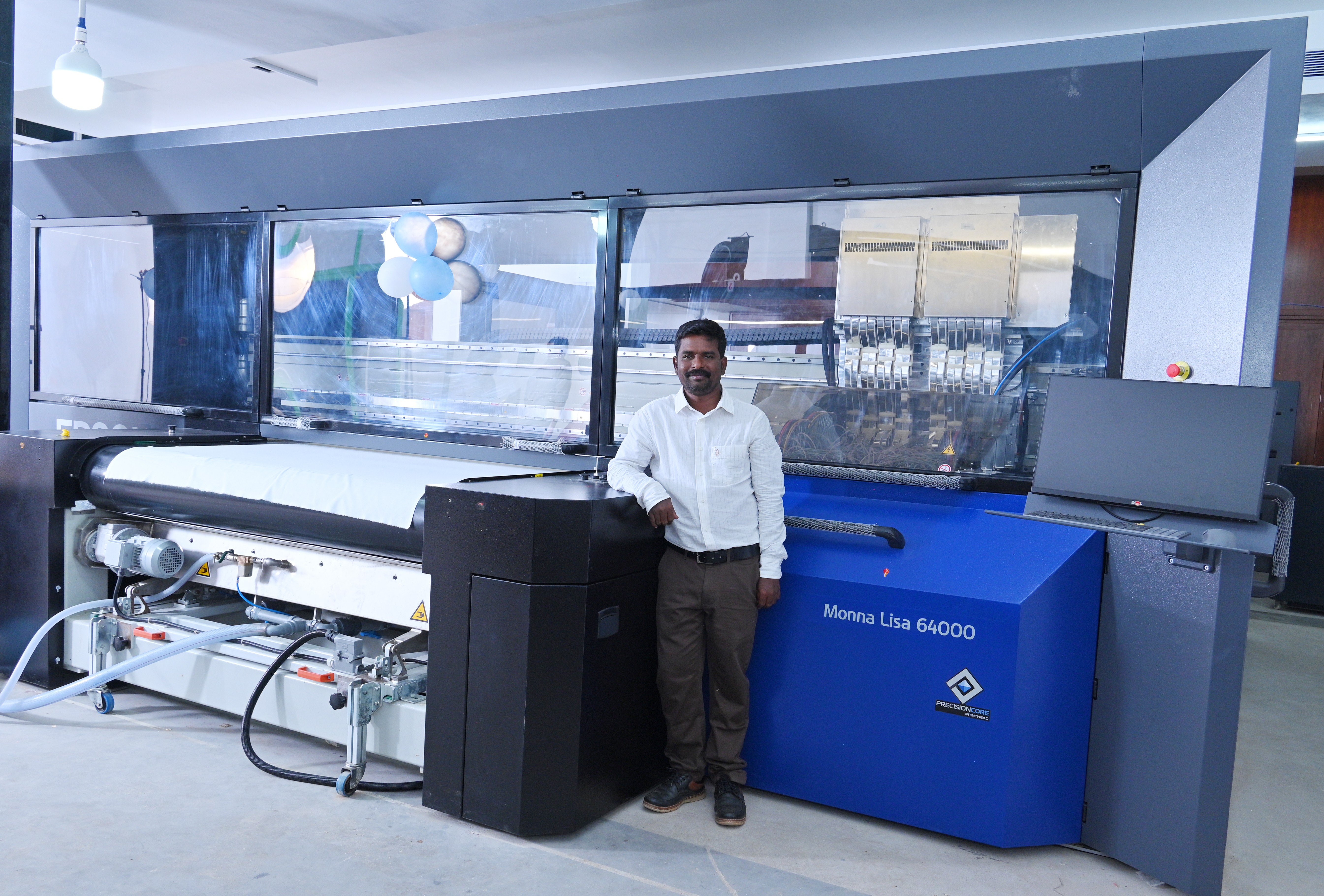
    Epson India today announced the installation of its 64-print head Monna Lisa 64000 digital textile printer at Priyadharshini Designs, Karur. This is the first installation of this printer in India with advanced pigment ink technology. This installation reinforces the growing adoption of high-capacity digital textile printing in the country.

    Priyadharshini Designs, a renowned supplier to exporters in the home d?cor textile segment, is an existing Epson customer and has been successfully using the Monna Lisa 8000 for the past three years. Building on its experience with Epson’s print quality, consistency, operational efficiency and post-sales support, the company has now invested in the Monna Lisa 64000 to significantly enhance production capacity, improve turnaround times, and better serve growing demand.

    Digital textile printing enables on-demand production, reduced water and chemical consumption, and faster response to global export markets, making it increasingly critical for home d?cor, fashion, and industrial textile segments. As a global innovator in digital textile printing, Epson is further strengthening this transformation with its Monna Lisa digital textile printers. The Epson Monna Lisa series is recognised for its exceptional colour precision, production reliability, and advanced pigment ink technology, enabling manufacturers to achieve industrial-scale productivity while advancing more sustainable, resource-efficient production.

    “Our experience with the Monna Lisa 8000 gave us the confidence to invest in Monna Lisa 64000. The printer delivers consistent colour, reliable production, and the flexibility we need for export markets. With Epson’s strong product performance and post-sales support, we have enhanced efficiency and grown our business with confidence,” said Selvaraj Dhivakar, Owner, Priyadharshini Designs.

    Epson Monna Lisa 64000 – Key Highlights

    • Industrial-Scale Productivity: Designed for high-volume textile production
    • PrecisionCore Printheads: High-speed printing with superior image clarity
    • Advanced Pigment Ink Technology: Supports compliance with OEKO-TEX? Eco Passport, GOTS 7.0, and bluesign? standards
    • Colour Consistency & Repeatability: Critical for export-oriented supply chains
    • 10L Bag-in-Box Ink System: Hot-swap capability for uninterrupted production
    • Automated Maintenance & Calibration: Built-in RGB camera and nozzle verification reduce downtime
    • Remote Monitoring: Enabled via Epson Cloud Solution PORT
    • Reduced Water & Chemical Usage: Supports more sustainable, resource-efficient textile production

    “The installation of the Monna Lisa 64000 at Priyadharshini Designs further strengthens the structural shift toward digital textile printing that delivers both productivity and sustainability. At Epson, we are committed to supporting our customers with advanced technologies and end-to-end solutions that enable scalable, profitable growth for our customers,”

    said Samba Moorthy, President, Epson India.

    Epson further supports customers through process consultation, profiling expertise, and access to its Textile Solution Center in Bengaluru, helping manufacturers maximise performance and scale with confidence.

  • Benin Tourism agency to join ITB Berlin 2026 to advance Benin’s international reach and tourism growth

    Cotonou, Feb 26 — Benin Tourism announces its participation in ITB Berlin, the leading trade show for the global travel and tourism industry, taking place March 3–5, 2026, in Berlin, Germany. Through this strategic presence, Benin aims to further strengthen its position as a forward-looking destination on the international stage by combining institutional visibility, industry engagement, market development of its tourism offering, and the promotion of its cultural identity. This participation builds on Benin’s recent presence at major international tourism events, following its participation in IFTM in Paris and FITUR in Madrid in recent months. It extends the country’s broader international outreach strategy to enhance Benin’s attractiveness, deepen relationships with travel industry stakeholders, and accelerate the commercialization of the destination across priority markets.

     ITB Berlin: A key international platform for promoting Destination Benin

    ITB Berlin is a must-attend event for any destination seeking to build a lasting position on the global tourism stage. Since 1966, the show has established itself as the world’s leading platform for the travel industry, and the 2026 edition will be especially significant as it marks the event’s 60th anniversary, taking place March 3–5 in Berlin under the theme, “Discover the stories behind 60 years of legacy.” With its structure organized both geographically (by destination) and by market segment (including adventure tourism, business travel, luxury travel, medical tourism, travel technology, and more), ITB offers a unique environment for visibility, strategic intelligence, and business development. The scale of the event underscores its importance: the previous edition brought together more than 170 countries and territories, 5,800 exhibitors, and nearly 100,000 trade visitors. Benin’s participation in 2026 is the result of long-term planning: after attending last year as an observer, Benin Tourism returns this year with a fully structured pavilion, building on preparatory work launched in 2025.

     A delegation structured around experience and commercialization

     For the 2026 edition of ITB Berlin, Benin Tourism has chosen to work alongside partners that reflect the growing strength of Benin’s tourism ecosystem, bringing together complementary stakeholders from across the value chain. The Benin pavilion will feature Benin Tours S.A., which is being mobilized to support the commercialization of Destination Benin and the structuring of its tourism offering, with the goal of expanding distribution opportunities and partnerships with international travel professionals. Alongside it, Ouidah Golf Club will highlight Benin’s potential across leisure, experiential tourism, and hospitality segments, while Sofitel Cotonou Marina Hotel & Spa, a flagship property, will showcase the rising quality of the country’s hospitality infrastructure and its ambition in the high-end travel segment. Together, these partners reflect a clear objective: to present in Berlin a destination that is not only inspiring, but also market-ready, programmable, and well-positioned for integration into international tour operators’ catalogs and travel offerings.

    A pavilion designed as a living showcase of Benin

     Beyond its institutional dimension and B2B engagement, the Benin pavilion will offer an immersive discovery experience designed to leave a lasting impression on visitors, spark the

    interest of travel professionals, and embody the full richness of Beninese hospitality. A dedicated tasting area will be set up to introduce visitors to flavors and products from Benin as part of a sensory storytelling approach to the destination. This tasting experience will play a central role in telling Benin’s story, highlighting the quality of its products, the diversity of its culinary traditions, and the refinement of its culture of hospitality. The goal is to give visitors a tangible first encounter with Benin through an experience that engages the senses and creates lasting recall. Conceived as a space for exchange, discovery, and projection, the pavilion will bring together the cultural, tourism, and commercial dimensions of the destination within a scenographic concept aligned with Benin’s positioning.

     An artistic and cultural program at the heart of the pavilion’s identity

     Benin’s presence at ITB Berlin will be brought to life through an ambitious artistic and cultural program designed as a central driver of differentiation, visibility, and appeal. The program is intended to make the Benin pavilion a vibrant, recognizable space deeply rooted in the country’s cultural expressions.

     In this spirit, Pépit’Arts will play a major role in the pavilion’s artistic and musical programming through the presentation of FAADJI, a percussion-based creation presented in formats tailored to visitor flow and the trade show environment. This performance concept will establish a strong sonic and stage presence, creating an experience that is immediately distinctive and memorable.

    The pavilion will also welcome Akonhoun Delidji, a cultural ensemble from Abomey renowned for its traditional dance performances, including Zinli and the Akonhoun dance. The sequences presented will highlight the expressive power, symbolic depth, and heritage significance of these dances, echoing the history of the Danxomè Kingdom and the imagery of strength, courage, and pride associated with the Amazons. Through this presence, Benin will deliver a powerful cultural performance that is identity-driven, visually striking, and fully aligned with the story it is bringing to the international stage.

     More broadly, these cultural performances will strengthen the identity of the Benin pavilion, showcase the country’s intangible cultural heritage, and affirm Beninese artistic creation as a core pillar of the national narrative presented in Berlin.

    A clear objective: elevating and selling Destination Benin

     Through its participation in ITB Berlin, Benin Tourism is pursuing a clear ambition: to combine international visibility with the market development of the destination. The trade show will provide a strategic platform to engage with tour operators, travel agencies, key industry influencers, specialized media, and institutional partners, while presenting a tourism offer that is more clearly defined, more competitive, and more distinctive.

    Benin’s participation in this major international event reflects a resolutely modern approach to destination promotion, one that goes beyond simply showcasing assets. It is an approach that builds connections, creates emotion, structures commercialization, and establishes a lasting brand image. By leveraging the complementarity between public and private stakeholders, and between hospitality, culture, and distribution, Benin is affirming its ambition to claim its full place in the global tourism conversation.

     Sindé CHEKETE, CEO of Benin Tourism, said: “Benin’s participation in ITB Berlin 2026 is part of a consistent strategy to strengthen our presence on the world’s leading tourism stages, following our participation in IFTM in Paris and FITUR in Madrid. It reflects our determination to steadily advance the visibility, credibility, and commercialization of Destination Benin. In

    Berlin, we will present a structured tourism offering, supported by complementary stakeholders from across our ecosystem, and a pavilion designed as a space for engagement, experience, and forward-looking dialogue.”
  • Lightrun Launches Industry’s First AI SRE With Live Dynamic Runtime Context

    NEW YORK, Feb 26 — Lightrun, a leader in software reliability, announced the industry’s first and only real-time AI SRE built on live, in-line runtime context. This allows AI agents and engineering teams to create missing evidence dynamically without redeployments, prove root causes with live execution data (“ground truth”), and validate fixes directly in live environments.

     The mass adoption of AI agents and coding assistants has accelerated code generation, outpacing reliability. This has shifted developer time from writing code to verifying and fixing issues, and moved the development bottleneck to runtime, where behavior is complex and often non-deterministic. As enterprises accelerate investment in AI-driven reliability and autonomous operations, this has created a market for AI SREs valued at billions of dollars.

     Despite this growth, most available ‘AI SRE’ tools are optimized for post-incident workflows and limited to relying on traditional, static telemetry that was already captured. When logs are missing, traces are incomplete, or execution context is unclear, teams are left to guess. Engineers are forced into long reactive cycles of redeploys, rollbacks, and manual validation.

     Lightrun’s AI SRE closes this gap by bringing live, code-level runtime context directly into the reliability loop. Lightrun has been recognized in the 2026 Gartner® Market Guide for AI Site Reliability Engineering Tooling.

     Instead of passively observing telemetry, the Lightrun AI SRE can safely interact with live systems via Lightrun’s patented Sandbox to create new evidence, test hypotheses, and validate outcomes against real execution behavior. This capability transforms AI SRE from a reactive post-incident advisor into a trusted, runtime-verified autonomous engineer that ensures reliability by design.

     Built on Lightrun’s Runtime Context engine, the AI SRE supports reliability across the entire SDLC, from proactive issue detection during development and testing (“peace time”) to autonomous investigation and remediation during live incidents (“war time”). It enables teams to understand how code truly behaves in runtime, close visibility gaps without redeploying, and resolve issues with confidence. Lightrun is designed for every team responsible for the behavior, reliability, or outcomes of running software.

     “Lightrun addresses a structural visibility gap in the emerging AI site reliability engineering workflows (SRE) market,” said Jim Mercer, Program Vice President, Software Development, DevOps, and DevSecOps at IDC. “By integrating dynamic instrumentation into SRE workflows, the company enables validation of root cause and remediation against live execution, reducing reliance on static, pre-instrumented telemetry and strengthening reliability across the software development lifecycle.”

     With Lightrun’s AI SRE, engineering and reliability teams benefit from:

    ●        Root cause analysis based on new evidence from live environments, without requiring prior instrumentation.

    ●        Runtime-validated code changes to eliminate guesswork and reduce rollback-and-redeploy cycles.

    ●        Live issue debugging in safe remote sessions with execution-level behavior inspections.

    ●        Dynamic telemetry to running systems to fill visibility gaps that traditional observability tools cannot address.

    ●        Reduced reliance on expensive war rooms, due to autonomous remediation and the ability to receive a code fix of incidents before escalating to a human.

    ●        Resilience to “unknown unknowns” introduced by multiple AI agents across the SDLC.

    Zahi Kapeluto, AVP Engineering, AT&T, stated, “Modern, AI-driven software reliability depends on connecting telemetry to real execution context. Without understanding how code behaves in live environments, alerts and metrics alone don’t tell the full story. Lightrun helps our teams close that gap by exposing runtime behavior directly, enabling faster investigation and more confident remediation.”

     “AI cannot resolve what it cannot see. Lightrun’s runtime context engine allows AI to see application behavior at a single line level of granularity, which positions us to streamline remediation for any software issues in real-time,” added Ilan Peleg, CEO of Lightrun. “Trusted by Fortune 100 companies and the largest enterprises in the world, Lightrun is proud to lead the way in making self-healing software a reality.”

  • Liquid Intelligent Technologies Announces Debt Repayment and Agrees New Credit Facilities

    LONDON, United Kingdom, Feb 26 — Liquid Intelligent Technologies, a business of Cassava Technologies (www.CassavaTechnologies.com), has confirmed the full repayment of its ZAR term loan and USD revolving credit facility.

    In tandem with this repayment, Liquid has agreed $410 million in new ZAR and USD credit facilities from a syndicate of commercial and development finance lenders. Cassava Technologies is further reinforcing Liquid’s financial position by injecting $195 million in fresh capital into the business.

    Commenting on these developments, Hardy Pemhiwa, President and Group CEO stated: “These transactions, alongside the recent sale of a minority stake in a data centre subsidiary in South Africa, are part of a significant strengthening of our capital structure as we position the Group for accelerated growth. Through our One Cassava ecosystem, we are delivering innovative AI, cloud, data centre, payments, and low latency broadband connectivity solutions to enterprise customers across Africa.”

    Africa Data Centre Holdings (“ADCH”) remains a wholly owned subsidiary of Cassava Technologies as the minority stake sale was in the ADCH South Africa business.

    Looking ahead, Liquid intends to issue a new $300 million bond to replace its existing $620 million bond in advance of its maturity in September 2026. This move will reduce Liquid’s overall leverage and further strengthen the company’s balance sheet.

  • Wootzwork raises $6.6M to bring predictability to offshore manufacturing

    Wootzwork is scaling a new manufacturing model that gives global OEMs a single, accountable partner for complex industrial programs across India and Southeast Asia. 


    Houston, Dallas – Feb 25; As global manufacturing shifts across regions, supply chains, and regulatory environments, execution risk has quietly become one of the biggest constraints on industrial growth. For many OEMs, the challenge is no longer access to factories, but the complexity of coordinating dozens of suppliers, quality systems, timelines, and interfaces across borders. Wootzwork was built to solve that problem. Today, the company announced a $6.6 million Series A round to scale a new model of manufacturing execution built around single-point accountability. 

     The round was led by Z47, with continued participation from Nexus Venture Partners and AdvantEdge Founders, and the addition of Stride Ventures. The capital will be used to expand Wootzwork’s global engineering and program teams, support larger and more complex OEM programs, and scale its manufacturing control systems across regions.

     As industrial supply chains globalise, execution has become increasingly fragmented. Programs now span multiple countries, dozens of suppliers, and different quality frameworks, creating coordination gaps that lead to delays, rework, and cost overruns. It is estimated that 15 to 30 percent of anticipated offshore savings are typically lost through these breakdowns. What should be a strategic advantage often turns into an operational burden that absorbs time, talent, and leadership attention.

     Wootzwork was built as an alternative to that model. The company operates as a single, accountable manufacturing partner to global OEM’s for complex industrial programs across India and Southeast Asia, with on-shore manufacturing where required in customer markets. This allows OEMs to execute at scale without managing factories, interfaces, or execution risk internally. Wootzwork operates with engineering and program teams across India, the United States, the United Kingdom, and Germany, enabling close coordination with enterprise customers while retaining deep on-ground manufacturing control.

     “Most companies treat manufacturing complexity as a risk to be minimised,” said Karan Anand, co-founder and CEO of Wootzwork. “We treat it as a competitive advantage. When the system is engineered properly, complexity becomes leverage – not chaos.” 

     No factory in the world is fully efficient for any complex product. Modern OEM programs involve high-mix parts, specialised processes, and sequencing that rarely exist under one roof and often shouldn’t, for economic reasons. Even when capacity exists, the right machine, process maturity, or quality discipline is usually fragmented across suppliers. By mapping, qualifying, and governing manufacturing capacity across regions, Wootzwork orchestrates the journey of a product from concept to factory-level output in weeks rather than years. For global enterprises, this translates into faster time to production, fewer internal teams tied up in supplier coordination, and full visibility and control from raw materials through final delivery which allows them to stay focused on product, engineering, and customers instead of execution complexity.

     Over the past year, Wootzwork has executed highly complex, cross-border manufacturing programs for more than 22 global enterprises across 12 international trade lanes spanning North America, Europe, and APAC. These include the US, UK, Germany, Italy, Switzerland, Australia, and New Zealand. 

     The company has activated a network of more than 300 suppliers, executing over 30 million parts and assemblies across precision components, heavy and structural fabrication, industrial fasteners and hardware, custom industrial machines, process equipment and skids, and multi-part assemblies. Programs span industries including food processing, packaging, renewable energy, data centres, automotive engineering, material handling, warehousing, and industrial hardware. Across these programs, Wootzwork has maintained greater than 98 percent on-time delivery and quality compliance under stringent international quality frameworks.

     “Even as a relatively new partner, Wootzwork moved very quickly to support us across a broad range of work, including programs tied to demanding end customers,” said Felix Franke, managing director at Saxonia-Franke GmbH & Co. KG. “Their ability to ramp up fast while maintaining quality gave us confidence early on.”

     “Working with Wootzwork has been a seamless experience,” added Curtis Bishop, director of sales at AFC Industries. “The team stands out for its responsiveness and ability to stay flexible as our requirements evolve. Their quoting process is extremely thorough, and they remain highly adaptable to our needs. We look forward to continuing our partnership with Wootzwork in 2026 and beyond.”

     Under the hood, Wootzwork overlays its proprietary engineering, governance, and execution systems on top of existing factory infrastructure, enabling manufacturing partners to operate at global standards without being replaced or rebuilt. “Scale usually breaks quality because systems don’t scale with it,” explains Himanshu Uniyal, co-founder and COO of Wootzwork. “We built the system so quality scales with execution, not against it.”

     “Wootzwork represents the kind of founder-led global ambition in advanced manufacturing that we want to back from India,” said Sudipto Sannigrahi, Managing Partner and Investor at Z47. “Karan and Himanshu have built deep execution capability in a space where trust is earned over years, not quarters. We are happy to see the AI driven manufacturing engine that Wootzwork has built and the quality of global customers they are adding value to. We’re proud to support them with patient capital, conviction, and partnership as they build a globally relevant manufacturing company.” 

     The Series A will enable Wootzwork to expand its engineering footprint, deepen its manufacturing control capabilities, and take on larger, more mission-critical OEM programs. As global supply chains continue to rebalance, the company believes the next phase of industrial manufacturing will be defined less by geography and more by who owns execution.


  • Amid a Shifting Publishing Scene, Ascot Media Group Reaches 18-Year Milestone

    Texas-based firm reflects on nearly two decades of helping authors find visibility in a fast-changing media market

    HOUSTON, Texas, Feb. 25 — From the rise of self-publishing to growing concerns over AI-driven scams, authors today face a complex path to visibility. Ascot Media Group, now celebrating 18 years in operation, continues to work with writers across genres to help their stories reach journalists, producers and readers in an increasingly crowded media environment.

    “For nearly two decades, our mission has been to help authors share their voices with the world,” said Trish Stevens, founder of Ascot Media Group. “Every story has the power to touch someone’s life. We just make sure it reaches the people who need to hear it.”

    The Story Behind the Stories

    Founded 18 years ago in Friendswood, Texas, Ascot Media Group has become a trusted bridge between authors and the media. From debut writers to NY Times bestselling authors and public figures, politicians, judges and celebrities, the company has helped clients across every genre find their audiences — and, in some cases, even movie deals.

    “Every day, our inbox fills with fascinating people and powerful stories waiting to be told,” Stevens said. “Whatever the topic, whatever the genre, chances are we’ve worked with an author who has brought one of those stories to life.”

    A Reputation Built on Access and Approachability

    Behind Ascot’s success is Stevens’ belief that every author deserves a fair shot at being heard — not just those with big budgets or big names. Known for her compassion toward “struggling authors,” she offers a range of affordable publicity plans designed to meet writers where they are.

    “I never want cost to be the barrier between an author and their readers,” Stevens said. “Some of our most inspiring clients started with nothing more than a manuscript and a dream of making it big.”

    That approach has earned Ascot both loyalty and respect. Many authors return with every new book, and other PR firms even turn to Ascot behind the scenes to execute their campaigns — a testament to the firm’s results and professionalism.

    Expanding Services for a Changing Market

    In 2026, Ascot Media Group plans to expand its services to include additional support across the publishing process, such as editorial assistance, back-cover copy development, publishing guidance and audiobook production. The expansion reflects broader industry shifts as authors increasingly seek integrated support beyond traditional publicity.

    Transparency in an AI Era

    As AI-driven scams flood the publishing world, it’s become more important than ever for authors to do their due diligence when it comes to doing business with agents, publishers and marketing firms. Ascot Media Group stands apart because it operates with full transparency, credible testimonials (www.ascotmedia.com/testimonials) and a long track record of real results.

    A Partner to the Media

    With countless media relationships built over the years, Ascot remains a go-to resource for journalists and producers worldwide in search of credible guests and compelling story ideas.

    “If you need stories, we have them — all of them,” Stevens said. “Because stories are what connect us, and helping share them is what drives us.”

  • Barakat Group Starts Construction of AED 150M Baby Food Manufacturing Facility in KEZAD

    First Dedicated Industrial-Scale Halal Baby Food Purée Facility in the GCC to be Developed within KEZAD Abu Dhabi


    Abu Dhabi, United Arab Emirates – Feb 25: Khalifa Economic Zones Abu Dhabi – KEZAD Group, one of the largest operators of integrated and purpose-built economic zones in the region, and Barakat Group, the UAE’s leading fresh food and juice producer, today announced the commencement of construction of a dedicated baby food manufacturing facility through Barakat Group’s joint venture with Pure Baby Food Industries, in KEZAD.

     The project marks the development of the Gulf Cooperation Council’s first industrial-scale facility dedicated exclusively to the production of baby food purées. Representing a total investment of approximately AED 150 million by the company, the facility will strengthen local food manufacturing capacity and support growing regional demand for locally produced infant nutrition.

     Once fully operational, the 10,000 sqm facility is expected to achieve an annual production capacity of 90 million units of baby food products, covering fruit and vegetable purées as well as protein-rich meat and fish baby foods. Products will be manufactured using fresh fruit, vegetables, meat, and fish, and supplied in both pouch and glass jar formats. Selected ambient juice products will also be produced as part of the integrated operation.

     The facility is projected to create approximately 200 direct jobs, spanning manufacturing, quality assurance, food safety, logistics, and operational support roles. Additional indirect employment is expected across local supply chains, logistics, and agricultural sourcing.

     The facility is being designed as a fully halal-certified baby food manufacturing plant, applying end-to-end halal certification across the full baby food category, including protein-based meat and fish purées. This addresses a clear gap in the GCC market, where locally produced, halal-compliant protein baby foods remain limited.

     Abdullah Al Hameli, CEO of Economic Cities & Free Zones Cluster – AD Ports Group, said, “This investment reflects the scale and sophistication of food manufacturing projects now choosing KEZAD. The projected production capacity and employment impact underline how specialised manufacturing can deliver both economic value and strategic resilience within the food sector.”

     Kenneth D Costa – Managing Director, Barakat Group, said, “By expanding our production footprint into premium infant nutrition, this facility reinforces Barakat Group’s mission to nourish the ambitions of the nation. Establishing dedicated capacity within KEZAD allows us to meet regional demand efficiently while creating skilled employment and maintaining the highest standards of quality and halal compliance.”

     Designed to meet the highest international standards for food safety, quality, and traceability, the facility will prioritise nutrition, freshness, and clean-label production. It is expected to reduce reliance on imported baby food products while contributing to the development of a domestic, halal baby food manufacturing ecosystem.

     The project supports national objectives related to food security, local manufacturing, and value-added food production, and represents a significant milestone in the continued expansion of Abu Dhabi’s food processing sector within KEZAD.

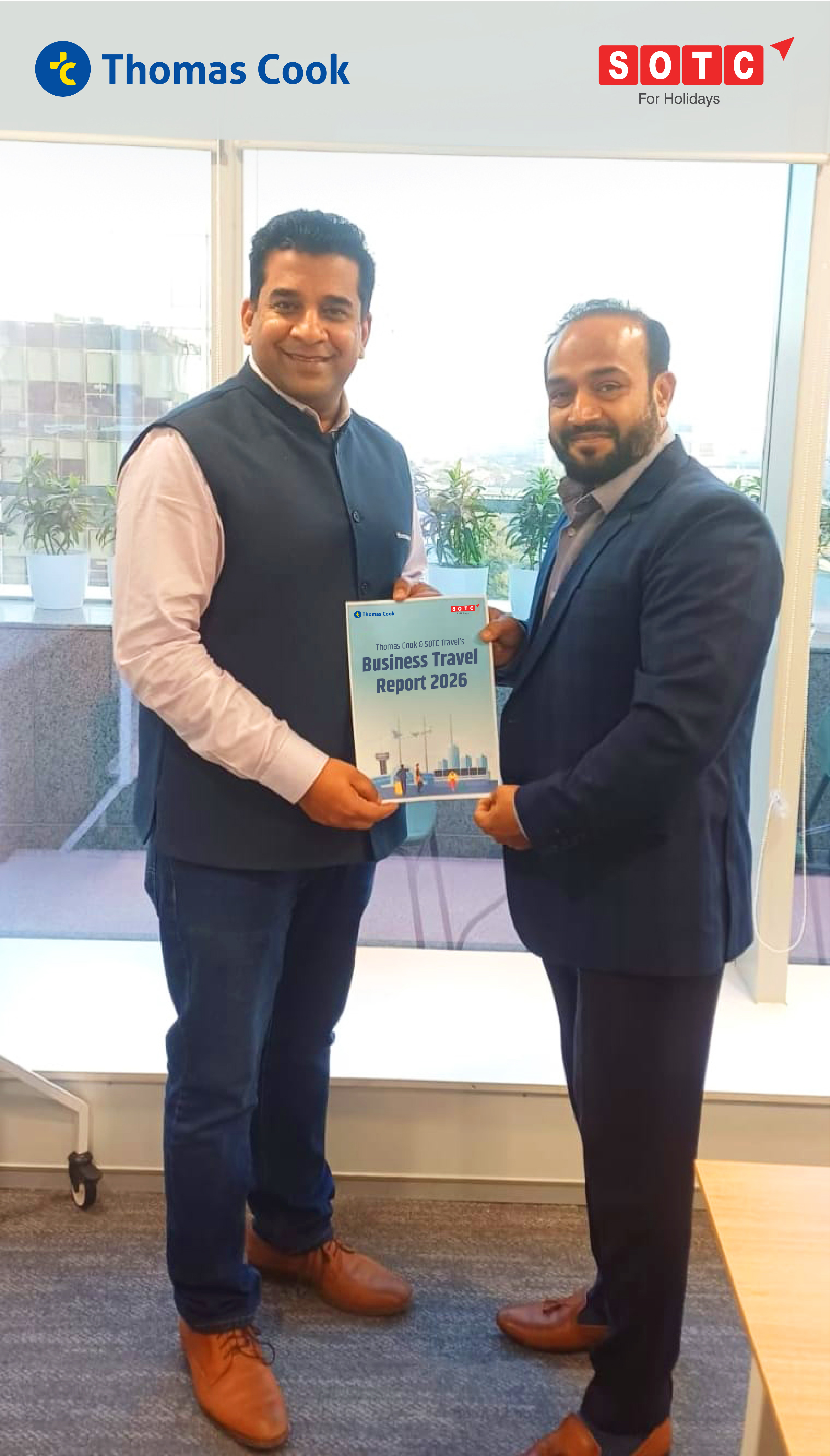
  • Thomas Cook India & SOTC Travel launch Business Travel Report 2026

    Thomas Cook India & SOTC Travel launch Business Travel Report 2026

    Mumbai, Feb 25: Thomas Cook (India) Limited, India’s leading omnichannel travel services company, and its group company, SOTC Travel, have released the inaugural edition of their Business Travel Report 2026, offering insights into­­ the evolving priorities, patterns and pressures shaping business travel across India.

    The survey conducted over a two-month period, is based on responses received from 25+ leading enterprises across sectors including BFSI, manufacturing, hospitality, healthcare, conglomerates and professional services, along with insights from internal booking and transactional data. The report highlights a strong revival in business travel demand, alongside a heightened focus on cost optimization, policy discipline, traveller experience and compliance.

    Business Travel Trend Report 2026 key observations:

    ·        Business travel demand remains resilient: Nearly 65% of corporates expect their business travel volumes to increase over the next 12 months, while 30% expect it to remain stable. Only 5% anticipate a decline. This translates to 95% of respondents projecting stable-to-growth spend, underlining travel’s continued role in driving growth, client engagement and business continuity. Client meetings, sales-related travel and internal business-critical movement continue to dominate business travel demand.

    ·        Technology and data-led decision-making on the rise: More than 70% of corporates are increasing their reliance on digital tools for booking, approvals, expense management and MIS reporting, enabling improved visibility, policy compliance and data-backed decision-making across business travel programs.

    ·        Shift towards value-driven travel management: While cost optimization remains critical, over 62% of respondents highlighted a move towards value-led travel decisions — balancing cost efficiency with safety, reliability, compliance and traveller well-being. This has elevated the role of managed travel programs and strategic travel partners.

    ·        Traveller experience, flexibility and duty of care gain prominence: Alongside business objectives, over 56% of respondents acknowledged the growing importance of traveller experience, flexibility and duty of care — particularly for frequent flyers and senior leadership. The findings point to a clear trade-off between traveller convenience and policy compliance, underscoring the need for smarter, more flexible travel policies supported by technology and data-led controls to reduce friction while maintaining governance.

    ·        Policy tightening and supplier renegotiations gain momentum: Close to 60% of corporates indicated that they have tightened or are in the process of revisiting their travel policies. Renegotiation of airline and hotel contracts, rationalization of preferred suppliers and stricter approval workflows have emerged as key levers to offset rising costs and tax-related pressures.

    ·        B-Leisure travel on the rise: 68% of corporates report that employees are increasingly extending business trips to include personal leisure time — blending work and downtime. This growing shift is prompting organizations to reassess travel policies, clarify cost‑sharing norms and offer greater flexibility to support work‑plus‑leisure travel.

    ·        Domestic hubs dominate, with growth in international business travel: 72% of corporate travel continues to be domestic, led by key business hubs such as Mumbai, Delhi-NCR, Bengaluru, Chennai, Hyderabad and Pune. These cities remain critical for client meetings, internal reviews and project-based travel. On the international front, Singapore, Thailand, Hong-Kong, Maldives, Dubai-Abu Dhabi, UK, Italy, Netherlands, USA, South Africa and Australia remain preferred destinations for leadership meetings, supplier engagements and strategic business expansion —with China and Japan emerging strongly on the radar.

    ·        ­­Rising airfares and costs driving sharper controls: A sharp 80% of respondents reported an increase in Average Ticket Prices (ATP) over the past year — with over 36% witnessing a significant rise of more than 15%, and 45% reporting a moderate increase of 5–15%, highlighting tighter controls, advance booking mandates and closer monitoring of travel spends.

    ·        GST and input tax credit challenges add pressure to travel budgets: GST-related complexities continue to weigh on business travel programs. Over 55% of respondents highlighted challenges around GST applicability, compliance and input tax credit (ITC) optimization — particularly for air travel and hotel stays. This has led corporates to increasingly seek structured invoicing, compliant supplier ecosystems and expert support to minimize leakage and improve tax efficiency.

    Indiver Rastogi, President & Group Head, Global Business Travel, Thomas Cook (India) and SOTC Travel, said,

     “We are pleased to launch the Thomas Cook India and SOTC Travel Business Travel Report 2026, which presents a comprehensive view of how leading Indian corporates are recalibrating travel strategies in an increasingly dynamic environment. The findings highlight a clear shift towards value-driven programs, accelerated technology adoption and tighter governance. At Thomas Cook India and SOTC Travel, our sustained engagement with customers and deep market understanding have enabled us to anticipate shifts early and introduce innovations such as Dhruv.ai, our voice-enabled AI advisor, and TravelOne, our integrated booking and management platform — helping create smarter, policy-aligned and technology-enabled travel ecosystems. As business travel continues to evolve amid economic, regulatory and technological changes, we aim to publish this report regularly to equip industry stakeholders with actionable insights that support informed, future-ready decision-making.”

  • RAKEZ strengthens UK investment ties through multicity roadshow

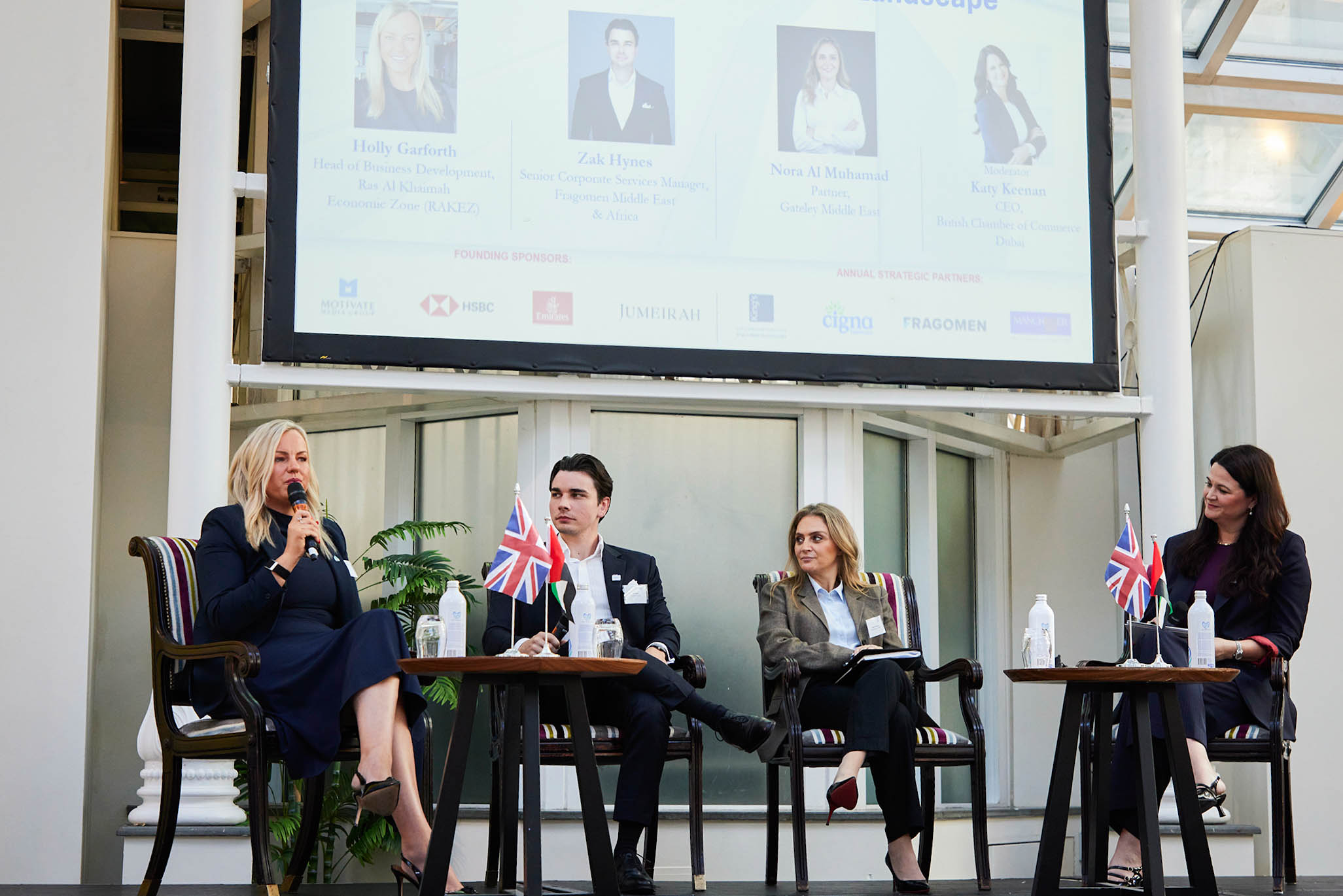
    Head of Business Development at RAKEZ, Holly Garforth (L), during the panel at BCCD’s London event

    Ras Al Khaimah, Feb 25: A high-level delegation from Ras Al Khaimah Economic Zone (RAKEZ) visited the United Kingdom, engaging British investors and reinforcing its position as a strategic gateway to the UAE and wider regional markets. The economic zone’s representatives met with investors, industry leaders, and business stakeholders across London and Manchester.

    In London, RAKEZ sponsored the British Chamber of Commerce Dubai’s (BCCD) business briefing titled ‘Doing Business in Dubai and Northern Emirates’, which brought together British investors exploring opportunities in the Middle East. During the session, Holly Garforth, Head of Business Development at RAKEZ, joined a panel discussion to provide practical insights on setting up and relocating businesses within Ras Al Khaimah’s plug-and-play ecosystem.

    The roadshow continued in Manchester, where the RAKEZ delegation took part in discussions on Making the Right Business Setup Choice in the UAE.

    Across both cities, the team conducted targeted B2B meetings with stakeholders from the advanced manufacturing, supply chain, and professional services sectors.

    Commenting on the roadshow, RAKEZ Group CEO Ramy Jallad said, “The UK continues to be a priority market for RAKEZ, with strong interest from British companies seeking scalable, cost-effective bases for regional and global expansion. Our presence in London and Manchester allowed us to engage directly with decision-makers, understand their ambitions, and demonstrate how Ras Al Khaimah offers the infrastructure, regulatory clarity, and connectivity needed to grow with confidence.”

    RAKEZ is home to more than 3,600 British investors operating across SME and industrial sectors. Established British companies at RAKEZ include Ahmad Tea, A2C, Spatial Composite, Polar Manufacturing, Green Rock Manufacturing Group, and Waste to Wonder, operating across sectors such as tea production, aircraft cabin crew training simulators, carbon fibre manufacturing, sustainable packaging, circular economy-led remanufacturing, and social enterprise initiatives. Their continued growth highlights Ras Al Khaimah’s appeal as a reliable base for scale, export-oriented operations, and long-term investment.

    The UK roadshow forms part of RAKEZ’s ongoing international outreach efforts to deepen commercial ties, attract quality investment, and further strengthen the economic bridge between Ras Al Khaimah and the United Kingdom.