Category: Education

  • Target Learning Ventures Honors Educators with Shikshak Ratna Award for Excellence in Education


    Target Learning Ventures Honors Educators with Shikshak Ratna Award for Excellence in Education


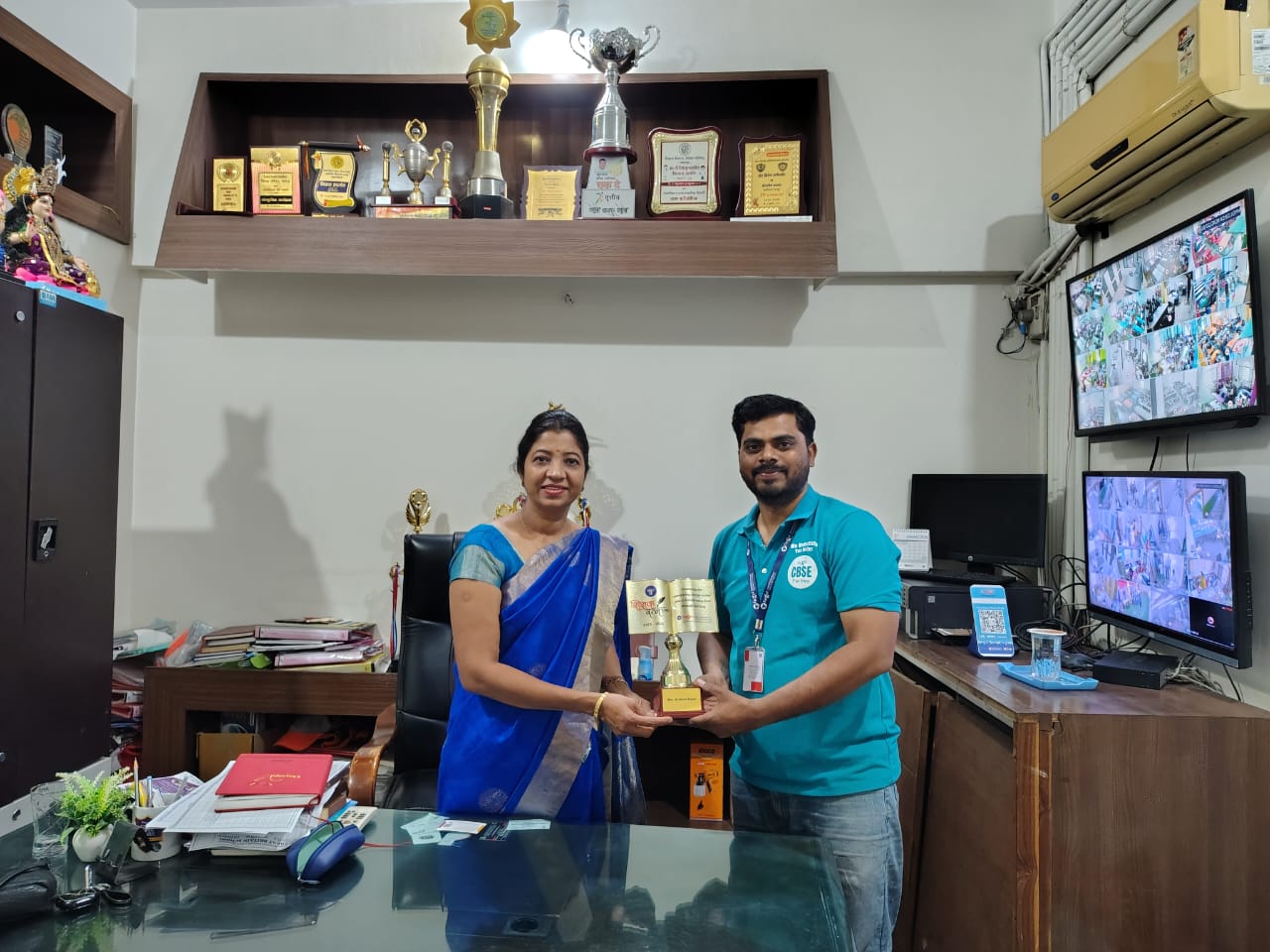
    Mumbai Feb 28:  Target Learning Ventures Pvt. Ltd., a leading educational resource provider and trusted publishing house, recently honoured two esteemed educators with the Shikshak Ratna Award from Maharashtra – Ms. Archana Kapse, from Veershaiva Upper Primary School Shantinagar, Nagpur and Dr. Ravi Prakash Singh, from R P Singh tutorials, Vile Parle. 

    Ms. Archana Kapse was honoured by Target Learning Ventures for receiving Krantijyoti Savitribai Phule State Teachers Recognition Award. Her recognition highlights her efforts in encouraging students to participate in scholarships and inter-school competitions, as well as her contributions to publishing a book on phonics.

    On the other hand, Dr. Ravi Prakash Singh of R P Singh Tutorials, Vile Parle, was felicitated with the Shikshak Ratna Award by Target Learning Ventures Pvt. Ltd. for receiving the Rashtriya Gaurav Puraskar in Rajasthan. This award recognizes his exceptional dedication and impactful contributions to both society and the field of education.

    Dilip Gangaramani, Founder Director & CEO of Target Learning Ventures Pvt. Ltd., said, “We are delighted to honor these esteemed educators with the Shikshak Ratna award for their exceptional contribution to education. Our goal is to empower educators who inspire children to think critically and embrace learning in fresh, exciting ways. Ms. Kapse and Mr. Singh truly embody this vision, and we are proud to support their outstanding efforts.”


  • Stanford Seed Opens Applications for 2027 South Asia Program

    New Delhi, 2026: Stanford Graduate School of Business has opened applications for the Seed Transformation Program in South Asia, its flagship 10-month leadership program for CEOs and founders of established enterprises. Designed for founders and leaders of growth-stage companies with annual revenue between USD 300K–15M (equivalent to approximately: INR 2.7 – 135 Crore), the program focuses on scaling businesses, strengthening leadership teams, and driving long-term impact in emerging markets.

    Stanford Seed partners with entrepreneurs in emerging markets to build thriving enterprises that transform lives. Since its launch, Seed has worked with more than 1,500 entrepreneurs worldwide, with participants collectively securing over USD 2 billion in capital and adding $1.7 billion in revenue to local economies after completing the program.

    Stanford Seed will host in-person information sessions across South Asia in March and April, giving prospective participants the opportunity to learn about the program, hear from graduates, and meet the Seed team. Sessions are scheduled for Hyderabad (Tuesday, 12 March), Coimbatore (Friday, 13 March), Kochi (Monday, 16 March), Pune (Friday, 27 March), Colombo (Wednesday, 1 April), Kolkata (Tuesday, 7 April), Kathmandu (Thursday, 9 April) and Indore (Thursday, 16 April). The Seed Transformation Program blends in-person learning with online modules and practical assignments, delivered by Stanford GSB faculty, experienced facilitators, and local experts. Participants work closely with a carefully selected peer group, applying Stanford frameworks directly to their businesses while maintaining day-to-day operations. Two intensive in-person weeks are held in Chennai, India, in January and June. The program emphasizes strategic clarity, financial discipline, leadership development, and execution excellence.

    The Seed Transformation Program is designed for founders ready to scale with purpose and confidence,” said Harish Arnezath, Regional Director of Stanford Seed South Asia. “We equip business leaders to create ownership-driven cultures that sustain systemic growth, moving beyond founder-driven models to enterprises built for scale, anchored by a powerful peer tribe that accelerates the journey.

    Program graduates receive a certificate from Stanford Graduate School of Business and become members of the global Seed Transformation Network, gaining access to Stanford Seed Network benefits and ongoing learning opportunities. Applications are now open and will close 1 May 2026. To learn more, register for an information session,

  • EdTech and Cross-Border Learning- Integrating Virtual Global Classrooms Post-Pandemic

    EdTech and Cross-Border Learning- Integrating Virtual Global Classrooms Post-Pandemic

    Kolkata, Feb 25: The global pandemic marked a turning point in education delivery, accelerating digital adoption at an unprecedented pace. What was once viewed as a supplementary learning tool has now become a core pillar of global education. As international travel resumed, the conversation shifted from “temporary contingency” to “permanent integration,” giving rise to the concept of virtual global classrooms.

    In 2025, EdTech and cross-border learning are no longer separate conversations. Instead, hybrid learning ecosystems now integrate physical campuses with international online classrooms—offering access, flexibility, and globally connected learning experiences.

    From Disruption to Strategic Integration

    When institutions worldwide shut their doors in 2020 due to COVID-19, remote education became an immediate necessity. Synchronous video lectures replaced lecture halls, while asynchronous modules ensured continuity. According to global EdTech analytics, the e-learning market continues to project growth rates exceeding 20% into the late 2020s, even after campus reopenings.

    For international education stakeholders, this shift created new possibilities. Students facing visa restrictions, financial barriers, or logistical challenges could access global curricula remotely. Simultaneously, institutions began exploring blended internationalisation models—integrating online collaboration with physical mobility.

    Defining the Virtual Global Classroom

    A virtual global classroom extends far beyond live-streamed lectures. It includes:

    • Co-created curricula across institutions in different countries

    • Synchronous sessions with multi-country student participation

    • International collaborative, problem-based projects

    • Shared credentialing and stackable micro-certifications

    • Integrated global learning assessments

    In this model, the campus remains relevant—but learning becomes borderless. Students engage with diverse perspectives digitally, often achieving international exposure comparable to traditional study-abroad experiences.

    Why This Matters for Indian and South Asian Learners

    The emergence of global virtual classrooms addresses long-standing mobility challenges:

    1. Affordability Without Geographic Sacrifice
    Traditional study-abroad pathways involve tuition differentials, living expenses, and travel costs. Hybrid models allow students to begin globally aligned programs from home, building international portfolios before physical relocation.

    2. Visa and Timing Flexibility
    Visa delays and policy uncertainty remain significant stress factors. Virtual global classrooms allow early participation in international programs without immediate relocation.

    3. Skill Relevance in a Fragmented Labour Market
    Employers increasingly prioritize global competence—the ability to collaborate across cultures and time zones. Virtual classrooms simulate these environments long before workforce entry.

    Institutional Adoption Accelerates

    Leading universities across North America, Europe, Asia, and the Middle East have integrated elements of digital global learning through:

    • Collaborative digital electives co-taught across continents

    • MOOCs linked to formal credit pathways

    • Cross-institutional digital research seminars

    • Stackable, globally recognized micro-credentials

    These initiatives demonstrate that global learning no longer depends exclusively on physical relocation but can deliver internationally comparable outcomes through integrated models.

    Addressing the Challenges

    Despite strong potential, the path to integration presents hurdles:

    • Regulatory complexity: Accreditation and quality assurance systems remain nationally structured.

    • Digital divide: Connectivity, device access, and platform literacy vary across regions.

    • Credential recognition: Some employers and frameworks continue to equate traditional formats with higher legitimacy.

    However, these challenges also create opportunities for ecosystem platforms that bridge recognition gaps and ensure outcome-oriented learning validation.

    EdTech’s Evolving Role

    The shift toward global integration requires more than technology—it demands pedagogical redesign. Learning outcomes must emphasize collaboration, cultural competence, and critical thinking. Assessments must be authentic and transferable across institutions.

    EdTech providers are increasingly evolving into engagement ecosystems that combine analytics, adaptability, and collaborative tools to replicate real-world problem-solving environments.

    Platforms such as MSM Unify and its skills-focused initiatives are supporting this transition by integrating virtual learning pathways with upskilling and micro-qualification frameworks.

    Employer Expectations and Global Capability

    A 2024 global HR study found that employers rank cross-cultural collaboration and virtual teamwork proficiency nearly alongside domain expertise. Virtual global classrooms are intentionally designed to cultivate these competencies.

    For Indian and South Asian learners, early exposure to international digital collaboration provides a competitive advantage in remote and hybrid work environments—reinforcing that the future of education lies not only in global degrees but in validated global capability.

    Outlook for 2026–27

    For students evaluating study options in 2026–27, key implications include:

    • Early international exposure without immediate relocation

    • Digitally built skill portfolios complementing traditional degrees

    • Reduced risk before physical mobility decisions

    • Growing employer recognition of digital literacy and global collaboration

    As the education ecosystem evolves, virtual global classrooms are transforming cross-border education from a mobility-driven model to a competence-driven one. The future of learning is increasingly borderless—defined not solely by where students study, but by how effectively they engage in globally connected environments.
  • Coventry University Group’s India Hub strengthens research partnerships through collaboration in AI, clean tech and healthcare

    Coventry University Group’s India Hub is hosting a week of high-powered engagements with strategic research partners, government and industry stakeholders to explore priority themes including artificial intelligence (AI) and data science, healthcare and clean growth. 

    A delegation from Coventry University Group’s senior research leadership team led by Professor Richard Dashwood, Deputy Vice-Chancellor (Research), and including Professors Elena Gaura, Carl Perrin and Rohit Bhagat travelled to India to deepen those strategic partnerships. 

    Over the past year the education group has developed a growing portfolio of collaborations with leading Indian institutions, including IIT Guwahati and GITAM, translating global engagement into real-world research impact and harnessing strategic relationships to create tangible research activity and joint programmes. 

    Caption: Coventry University’s delegation meets with representatives of IIT Delhi

     Coventry University Group and IIT Guwahati formalised their collaboration through a Memorandum of Understanding, enabling joint research, co-funded PhDs, staff and student mobility, and community engagement projects.  

    Coventry University Group and IIT Delhi held a Winter School centred on energy storage, green hydrogen and the application of AI and machine learning in material development, characterisation and data analytics. This will further strengthen knowledge exchange and open avenues for exploring joint supervision models and collaborative research in those areas. 

    The India Hub is playing a central role in strengthening academic, research and innovation partnerships with India in areas such as AI, healthcare innovation and societal wellbeing, as well as supporting Coventry University Group’s growing footprint in doctoral education, researcher development and innovation capacity-building. 

    Through its partnership with GITAM, the Group has established a dual-award PhD programme, with the first cohort of candidates already enrolled across projects spanning health technologies, clean growth and creative disciplines. 

    As part of the visit the delegation will also be engaging with government agencies, industry and various research institutes to advance joint initiatives in India across a range of stakeholders. 

    Professor Richard Dashwood, Deputy Vice-Chancellor (Research) at Coventry University, said: “Our research always comes with a real-world change in mind and working alongside institutions and partners in India we can have a lasting impact on areas such as clean tech, AI and healthcare. This visit highlighted the importance of multi-disciplinary research, ethical frameworks and real-world validation, and demonstrated how UK–India collaboration can accelerate progress in these areas.” 

    Yashodhara Dasgupta, Regional Managing Director of Coventry University Group’s India Hub, said: “The India Hub exists to turn relationships into outcomes. Whether through joint PhDs, research-led training or policy-facing dialogue, our focus is on creating platforms where UK and Indian expertise can come together to address real-world challenges and deliver shared value.” 

  • Aakash Institute Launches Specialized Academic Programs for WBCHSE Students

    Aakash Institute Launches Specialized Academic Programs for WBCHSE Students

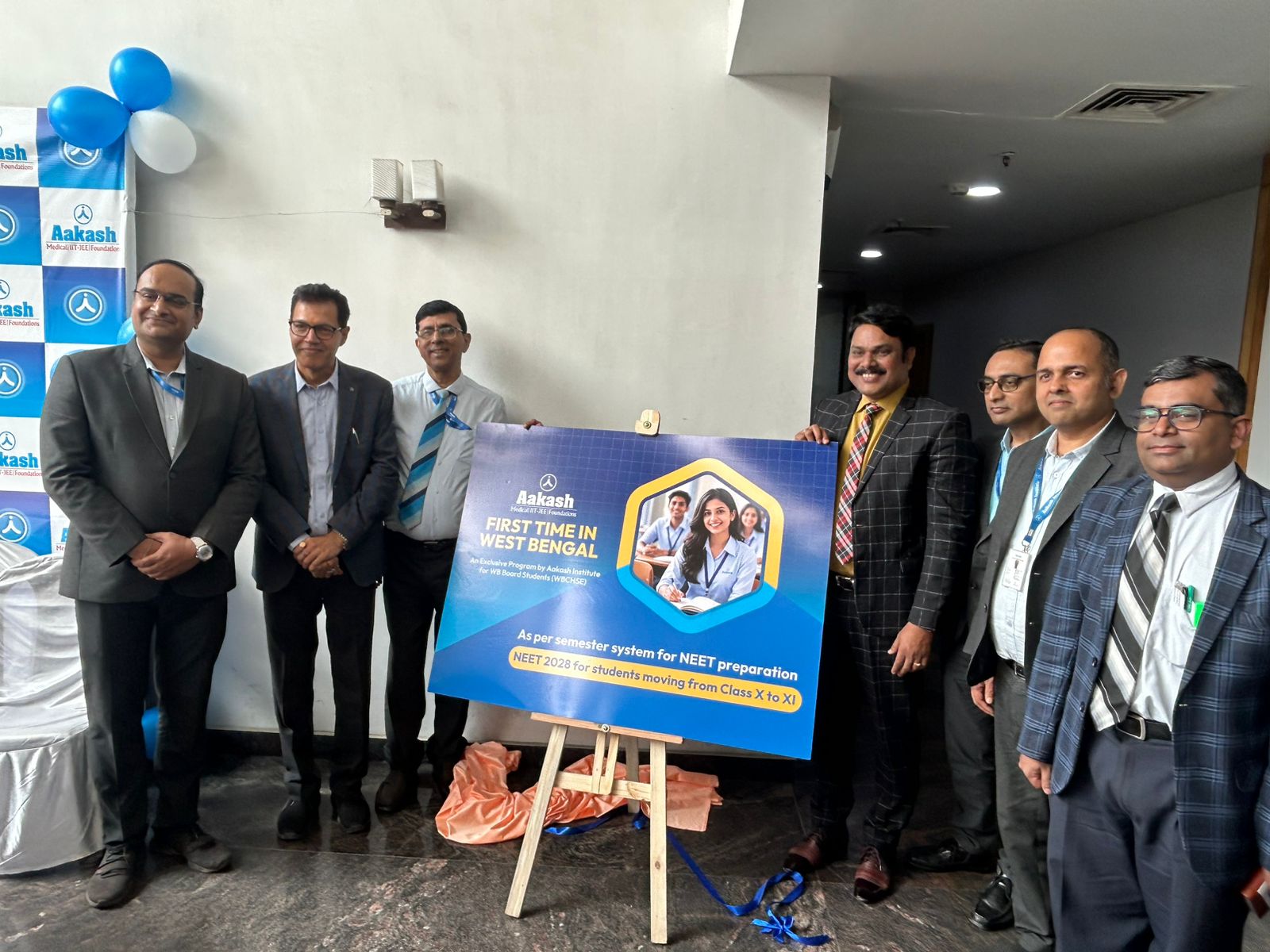
    Kolkata, Feb 23:  Aakash Institute today announced the launch of its Specialized Academic Programs designed specifically for students of the West Bengal Council of Higher Secondary Education (WBCHSE). The initiative is aimed at helping students adapt to the evolving academic structure under the new semester-based system while simultaneously preparing for competitive examinations such as NEET and WBJEE.

    The program was conceptualized following extensive feedback from students and parents seeking structured academic support to navigate the newly introduced four-semester framework. Mr. Tilak Raj Khemka, Director, Aakash Institute, spearheaded the initiative to create a learning ecosystem tailored to the academic and competitive needs of WBCHSE students.

    With over 37 years of academic excellence, Aakash Institute’s program is structured to help students strengthen conceptual understanding and examination readiness across both board and entrance examinations.

    Addressing the Semester System Transition

    Under the revised WBCHSE framework, students progress through four semesters featuring varied assessment patterns:

    Odd Semesters (I & III): Objective-based assessments focusing on MCQs and analytical thinking

    Even Semesters (II & IV): Descriptive evaluations emphasizing conceptual depth and expression

    Curriculum Alignment with WBCHSE

    The program has been carefully mapped to the official WBCHSE syllabus, ensuring comprehensive coverage of all prescribed topics and concepts. This structured alignment enables students to focus on academic mastery while pursuing parallel preparation for competitive examinations such as NEET.

    Early Completion Strategy for Enhanced Readiness

    A key highlight of the initiative is its early syllabus completion model for Class 12 students. By completing the Semester IV curriculum ahead of the February examination schedule, the program provides students with extended revision time, structured mock testing and practice sessions, greater confidence and reduced exam stress, and dedicated preparation time for competitive exams such as NEET and WBJEE.

  • Kyndryl Expands AI Skilling Programs for Government Employees, Students and Youth in India

    Bangalore, Feb 17: Kyndryl (NYSE: KD), a leading provider of mission-critical enterprise services, today announced an expanded series of social impact programs aimed at advancing AI skills among students, civil servants and youth in India through inclusive training and capability-building initiatives.

    The programs are part of Kyndryl’s long-term commitment towards developing future-ready talent in India as outlined in the US$2.25 billion investment commitment announced in August 2025, and its broader focus on supporting national digital and skilling priorities. The expanded programs include:

    1. Strengthening Public Sector AI Readiness: Kyndryl will contribute to building a future-ready public sector workforce by integrating the company’s AI for Governance programs with the Government’s Karmayogi iGOT Platform, the central digital learning platform for government employees. The curated courses will focus on AI fundamentals, responsible use of AI, and cyber safety, and are designed to help officials identify practical AI opportunities while strengthening cyber resilience across public institutions.
    2. Introducing Foundational AI education in Government schools: Kyndryl will launch a foundational AI learning initiative for students in government schools. The pilot will begin in Varanasi and Ayodhya, with a focus on PM SHRI and Navodaya schools and aims to introduce age-appropriate AI education for 50,000 students while upskilling 1,000 teachers across 100 schools in two years.
    3. Empowering Youth as AI change-makers: Kyndryl will empower India’s youth to serve as AI change-makers in their communities by training graduate students to drive AI literacy, map community challenges, and support the adoption of AI-enabled solutions across areas including rural governance, agriculture, and livelihood development. In three years, the initiative aims to enable 30,000 youth annually across India covering several states contributing to the development of sustainable, AI-ready rural ecosystems.

    “Our mission is to support both India’s digital growth and to help unlock progress at every level,” said Lingraju Sawkar, President, Kyndryl India. “By strengthening the AI and cyber readiness of government officials, students and youth, we are helping build a confident, future-ready India that can lead with responsibility, resilience and innovation. Our programs are about empowering people everywhere to participate fully in the country’s digital transformation.”

    Kyndryl’s ongoing commitment to talent development and digital skilling was one of the key highlights during a previous meeting between the Hon’ble Prime Minister of India, Shri Narendra Modi, and Kyndryl Chairman and CEO Martin Schroeter, where discussions focused on leveraging AI for government efficiency, empowering underserved communities, and accelerating skilling at scale. Through continued collaboration and targeted initiatives, Kyndryl is contributing to national priorities related to public sector capacity-building, education, and rural development.

  • Gold & Jewellery Valuation Program Held on February 9–10, 2026

    Kolkata, Feb 16 :With the rapid expansion of the gold loan ecosystem across India, there is a growing demand for professionally trained and certified gold appraisers. Jewellers-cum-valuers, along with bank and NBFC officials engaged in gold loan operations, are increasingly seeking formal training in Gold & Jewellery Appraisal for skill upgradation, standardisation, and regulatory compliance.

    Further, in view of the new guidelines issued by the Reserve Bank of India (RBI), proposed to be effective from April 2026, banks and NBFCs are expected to adopt more structured, transparent, and compliant gold loan appraisal and reimbursement mechanisms. This regulatory shift makes professional and technically sound training in gold appraisal even more critical.

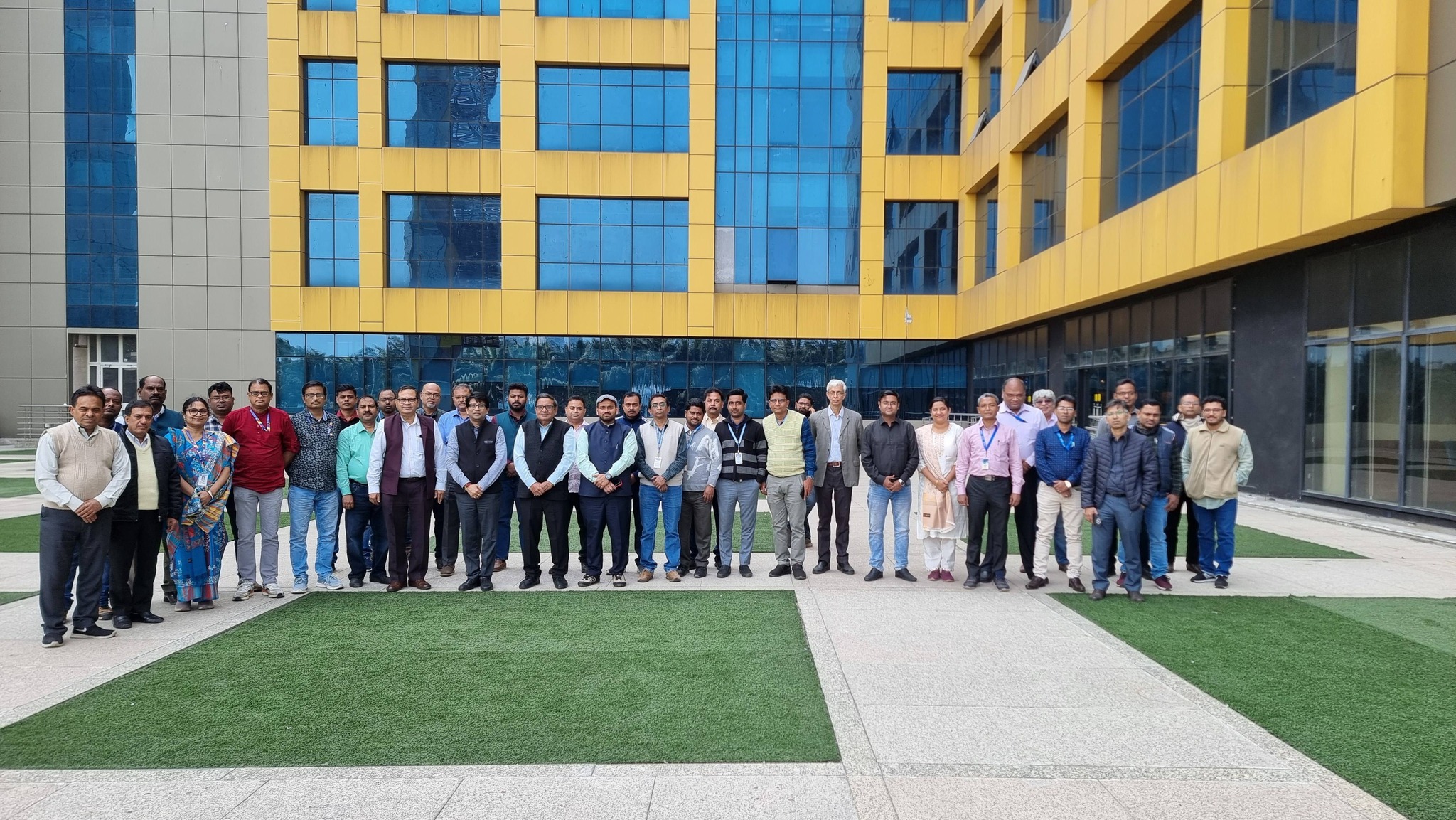
    Recognising this emerging need, the Centre for Valuation Studies, GLF Business School, organised a two-day specially designed workshop on Gold & Jewellery Valuation & Appraisal in Kolkata on February 9–10, 2026. The programme was conducted under the aegis of the MSME Technology Development Centre, Ministry of MSME, Government of India, in association with the ICMAI Registered Valuers Organisation (ICMAI RVO).

    Expert Faculty & Programme Design

    The workshop was conducted by renowned expert faculty Dr. Pravin R. Joshi from MSME-TDC. The specialised programme provided participants with a strong conceptual foundation, complemented by extensive hands-on practical demonstrations to ensure real-world applicability and industry relevance.

    Key Topics Covered

    The sessions covered:

    • Fundamentals of gold, purity standards, and hallmarking
    • Identification of different types and caratage of gold jewellery and alloys
    • Methods of testing gold purity (visual inspection, touchstone method, and instrument-based testing)
    • Weight calculation, wastage estimation, and scientific valuation techniques
    • Risk factors, fraud detection, and best practices in gold appraisal
    • Regulatory and operational aspects of gold loans in Banks and NBFCs, including RBI compliance requirements

    The programme emphasised practical exposure, enabling participants to develop technical accuracy and confidence in appraisal processes.

    Participant Profile

    The workshop witnessed active participation from:

    • Bank Managers and Loan Officers
    • Valuers and Chartered Appraisers
    • Jewellery Shop Owners
    • Jewellery Manufacturers

    Distinguished Presence

    The programme was graced by the presence of:

    • Prof. Avijit Banerjee, Director, GLF Business School
    • Prof. Lopamudra Bhattacharyya, Founder & CEO, GLF Business School
    • Shri Goutam Maiti, Programme Coordinator, MSME-TDC
    • Dr. S. K. Gupta, Managing Director, ICMAI RVO (who joined online)

    The workshop concluded with positive feedback from participants, who appreciated the technical depth, practical orientation, and regulatory insights offered by the programme. The initiative marks a significant step toward strengthening professional standards in gold valuation and supporting compliance-driven growth in the gold loan sector.