Category: Health

  • Researchers played music to cells – aggressiveness of laryngeal cancer decreased


    Mar 04: The continuous movement of the vocal cords weakens and eventually stops as laryngeal cancer progresses. Researchers have, for the first time, discovered that restoring cellular vibration reduces the aggressiveness of advanced vocal cord cancer. When cancer cells were exposed to sound-wave vibration, a protein that promotes cancer growth and severity decreased.

    “What music should we play to our cells?” This question sparked a groundbreaking study on laryngeal cancer that revealed a previously unknown sensitivity of this cancer type to a targeted drug currently under development.

    Laryngeal cancer is one of the most common malignant tumours of the head and neck region. The most common early symptom is hoarseness, as the cancer typically appears in the vocal cords, and their movement gradually becomes impaired as the disease develops. Movement decreases because the vocal cord tissue stiffens and the cancer invades surrounding tissue.
    Researchers played music to cells – aggressiveness of laryngeal cancer decreased

    The most significant risk factors are smoking and heavy alcohol consumption. The prognosis for advanced laryngeal cancer is poor, and there are currently no targeted drug therapies available.

    Stiffer the tissue, more malignant the cancer

    Researchers have long known that increased tissue stiffness promotes cancer malignancy in non-moving tissues such as breast, liver, and pancreatic cancers, because cells sense and respond to the physical properties of their environment. The sensitivity of cells to external forces led researchers to take an interest in laryngeal cancer, which develops in constantly moving tissue.

    “We wondered whether ‘movement could be medicine’ and whether tissue stiffening and immobilisation contribute to cancer development,” says Academy Professor Johanna Ivaska, Director of the BarrierForce Centre of Excellence funded by the Research Council of Finland.

    “We developed this idea together with BarrierForce Vice Director Professor Sara Wickström and her research group. With their help, we used a bioreactor in which cells were grown on a vibrating membrane placed on top of a loudspeaker,” explains Ivaska.

    The study included researchers from the BarrierForce Centre of Excellence and the InFLAMES Research Flagship. The study’s lead author, Jasmin Kaivola, who recently completed her doctoral degree at the University of Turku in Finland, came up with the idea of connecting an old mobile phone to the device to play sounds and music, and the experiments began.

    Vibration affected cancer cells

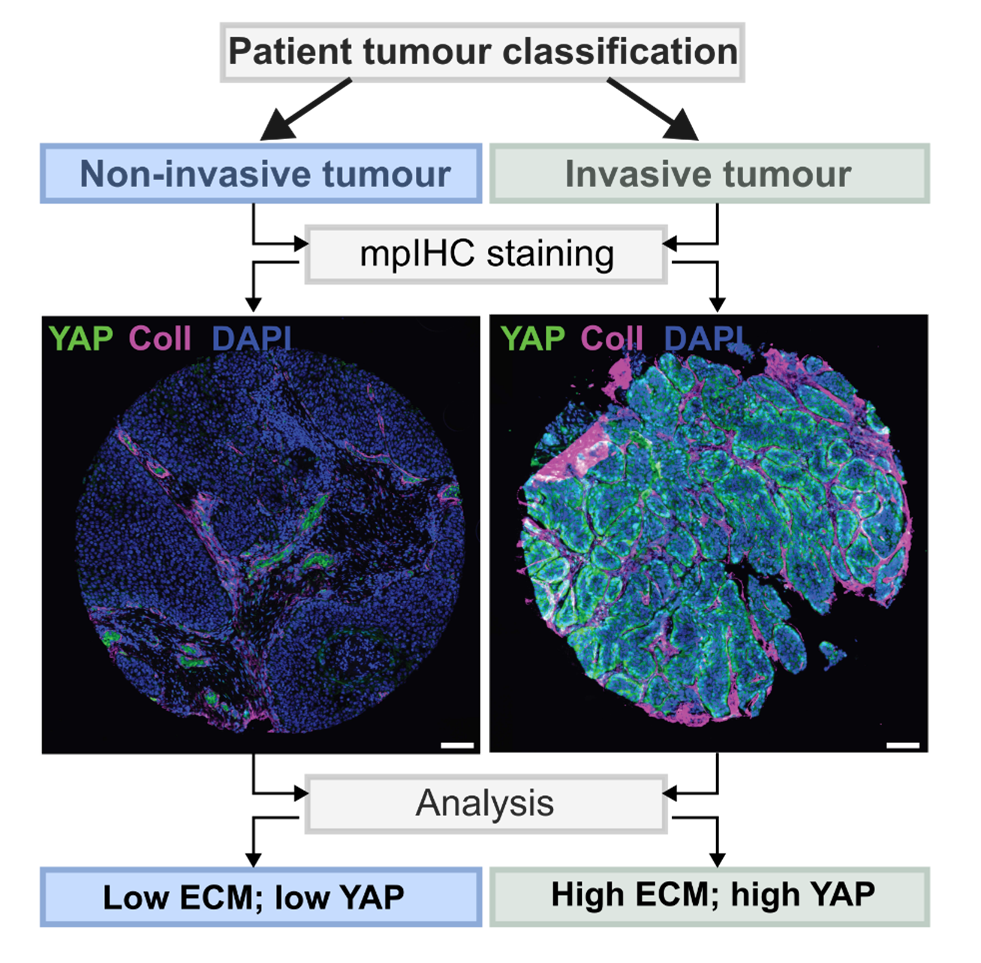
    The researchers’ predictions proved correct: exposing cancer cells to vibration-mimicking vocal cord movement reduced their malignancy. One of the observed changes was a decrease in a protein called YAP in the cells.

    Using samples of early-stage and advanced laryngeal cancer collected from approximately 200 Finnish patients, the researchers found that elevated expression of proteins that increase tissue stiffness enhanced YAP activity and predicted mortality. In an experimental cancer model, the researchers discovered that the cancer was sensitive to a targeted drug under development that inhibits YAP protein activity.

    Jasmin Kaivola notes that the study is entirely groundbreaking because the biomechanics of developing cancers have not previously been studied in moving tissues. She says it would be interesting to investigate whether the mechanism they identified has prognostic value in other cancers of moving tissues, such as lung cancer.

    “We are excited about the results and believe that our findings may encourage developers of these drugs to explore their suitability for this difficult-to-treat cancer with a poor prognosis,” says Kaivola.

    The study was recently published in the highly prestigious scientific journal Nature Materials. The project, conducted primarily in the research laboratory of Academy Professor Johanna Ivaska at the Turku Bioscience Centre in Finland also involved three clinicians treating and studying oral cancers at the University Hospitals of Turku and Helsinki, as well as soft matter physicists from the University of Vienna and Milan.

    InFLAMES is a joint flagship initiative of the University of Turku and Åbo Akademi University. Its aim is to identify new drug development targets and promote drug development in collaboration with biotechnology and pharmaceutical companies. The flagship also advances diagnostics to enable tailored targeted therapies for patients. InFLAMES is part of the Academy of Finland’s Flagship Programme.

  • Study Reveals Extensive Benefits of Emergency Department Clinical Trials

    A new study published in JAMA Network Open reveals that participation in emergency department-based clinical trials delivers substantial benefits that extend far beyond improved patient outcomes. The study, co-led by Gail D’Onofrio, MD, MS, Albert E. Kent Professor of Emergency Medicine at Yale School of Medicine, offers compelling evidence that clinical research can be a catalyst for positive change across multiple domains.

    The cross-sectional survey, co-led by Joseph E. Carpenter, MD, from Emory University School of Medicine, examined investigators who participated in the ED-INNOVATION (Emergency Department–Initiated Buprenorphine and Validation Network) Trial, which spanned 33 emergency departments (EDs) across 23 states. The trial compared initiation of extended-release injectable buprenorphine with traditional sublingual buprenorphine and treatment engagement after the emergency department visit, addressing evidence-based care for opioid use disorder (OUD) in acute care settings.

    Strengthening the research pipeline

    According to D’Onofrio, ED INNOVATION lead investigator, “Participation in clinical trials can improve patient care while also strengthening the emergency medicine research pipeline—an area in need of sustained support and development. By engaging emergency department physicians in research activities, the trial built capacity, expanded investigator expertise, and positioned sites for future federally funded studies.”

    Transforming institutional culture

    The study documented remarkable institutional impacts from trial participation. One survey respondent noted that involvement in the clinical trial “completely changed the culture of our ED,” highlighting how research engagement can fundamentally reshape clinical practice environments. Participating institutions reported widespread practice changes that extended well beyond the trial’s specific focus, demonstrating how clinical trials can drive sustainable quality improvement in emergency care.

    Career advancement and professional development

    Individual clinicians experienced significant professional benefits from their involvement in the multi-site emergency medicine clinical trial. Site directors became more research-active, submitting additional funding proposals following their participation. Some clinicians obtained advanced certification in addiction medicine as a direct result of their trial participation, demonstrating that National Institutes of Health-supported clinical research can serve as a pathway to specialized expertise, leadership development, and career advancement.

    Community engagement and partnership

    The ED-INNOVATION trial successfully engaged a diverse array of community partners, including organizations and settings that could reach at-risk patients. This community-oriented approach demonstrates how clinical research can extend its impact beyond hospital walls to support broader public health initiatives and address social determinants of health.

    Implications for the future

    The findings come at a crucial time when clinical research infrastructure faces mounting pressures. The study underscores the multifaceted value of investing in emergency medicine clinical trials, suggesting that research funding generates returns not only through improved patient care but also through institutional development, workforce enhancement, and community strengthening.


  • Bacterial pathogens build antibiotic-resistant “bunkers” using filament scaffolds

    Researchers have discovered and characterized at the atomic level a mechanism that enables bacterial pathogens—including hospital bacteria Acinetobacter baumannii and Pseudomonas aeruginosa—to assemble antibiotic-resistant three-dimensional (3D) biofilms. These findings open a new avenue for developing therapies against multidrug-resistant bacterial infections by targeting the biofilm assembly.  Many pathogenic bacteria form 3D biofilms to protect themselves from the immune system, antibiotic treatments, and drying on environmental surfaces. Some of the most problematic hospital bacteria, such as multidrug-resistant A. baumannii and P. aeruginosa, use specialized hair-like filaments called adhesive pili to attach to tissues or abiotic surfaces. After attaching, the bacteria then grow into thick 3D biofilms consisting of multiple layers of bacteria. This process is also mediated by adhesive pili, but until now it has been unclear how they prevent the growing 3D biofilm from falling apart. 

    Using a combination of advanced electron microscopy methods, the researchers at the MediCity Research Laboratory of the University of Turku in Finland, led by S. Jusélius Senior Researcher Anton Zavialov, discovered that adhesive Csu pili from neighboring A. baumannii bacteria attach to each other in an antiparallel manner. These pili rapidly assemble into flat sheets that link bacteria together and shield them from hostile environments. 

    “Impressively, Csu pili can self-assemble into huge, complex networks connecting hundreds of bacterial cells,” says Dr. Zavialov. 

    The team demonstrated that Csu pili can form at least two types of flat structures and resolved them at a near-atomic resolution.  

    “Cryo-electron microscopy methods are developing very rapidly. To obtain the first model, I initially developed a manual approach, and only later did we apply computational tools to solve these exceptionally large assemblies in 3D,” explains first author, Doctoral Researcher Henri Malmi

    The researchers also found that the pilus network becomes embedded in a less defined matrix composed of polysaccharides and DNA secreted by the bacteria.  

    “This final structure somewhat resembles reinforced concrete: the pili act like steel bars, while polysaccharides and DNA form the concrete. In this way, the bacteria effectively hide in a bunker,” adds Dr. Zavialov. 

    The team is now focused on developing inhibitors that target the connections between pili. Such inhibitors could be used in combination therapies to prevent 3D biofilm assembly and help antibiotics eliminate the pathogens more effectively. 

  • Ministry of Ayush Marks Unani Day 2026 with National Conference on “Innovation and Evidence in Unani Practice” in Mumbai

    Mumbai, Feb 19: The Ministry of Ayush, Government of India, commemorated World Unani Day 2026 by organising a two-day National Conference on “Innovation and Evidence in Unani Practice” on February 14–15, 2026, in Mumbai. Held under the aegis of the Central Council for Research in Unani Medicine (CCRUM), the conference brought together policymakers, researchers, academicians, and industry stakeholders in a hybrid format.

    Shri Prataprao Jadhav, Hon’ble Minister of State (Independent Charge), Ministry of Ayush and Minister of State, Ministry of Health and Family Welfare, Government of India, graced the occasion as Chief Guest. Shri Babasaheb Mohanrao Patel, Minister of Co-operation of Maharashtra, and Vaidya Rajesh Kotecha, Secretary, Ministry of Ayush were present as the Guests of Honour. The event was also attended by senior dignitaries including Ms. Monalisa Dash, Joint Secretary, Ministry of Ayush; Dr. M. A. Qasmi, Advisor (Unani), Ministry of Ayush; Dr. Syed Shah Alam, Director, NIUM, Bengaluru; and Dr. N. Zaheer Ahmed, Director General, CCRUM.

    Observed annually on February 11 to commemorate the birth anniversary of Hakim Ajmal Khan, Unani Day highlights the legacy and contemporary relevance of Unani Medicine. The 2026 conference focused on strengthening scientific validation, promoting innovation in diagnostics and therapeutics, advancing clinical documentation, and fostering integration of traditional knowledge with evidence-based medical approaches.

    The deliberations addressed the growing need for rigorous research, standardisation, and outcome-based studies to enhance the credibility and global acceptance of Unani practice, particularly in the context of rising chronic and lifestyle diseases.

    An industry delegation led by Hamdard Laboratories also participated in the conference, represented by Mr. Abdul Majeed, Chairman and Managing Trustee, Hamdard Laboratories, along with other senior representatives. On the occasion, an MoU was exchanged between Hamdard Laboratories (India), represented by Dr. Santosh Joshi, Head, R&D, Hamdard Laboratories and Dr. N. Zaheer Ahmed, Director General, CCRUM, to strengthen collaborative research and innovation in Unani Medicine.

    The conference served as a platform for knowledge exchange, thematic discussions, and showcasing research outcomes aimed at reinforcing the role of innovation and evidence in advancing Unani practice within India’s evolving healthcare framework and the broader vision of Viksit Bharat 2047.

  • Barbra Streisand Women’s Heart Center Leads $7.5M Aging Study

    LOS ANGELES (Feb. 17, 2026) — The National Institutes of Health and the National Institute on Aging have awarded a multi-institutional research team led by investigators in the Smidt Heart Institute at Cedars-Sinai $7.5 million to further study how damage to tiny blood vessels contributes to heart disease, cognitive decline and frailty as women age.

    The new, five-year grant to examine sex-based differences in multiple age-related diseases supports the Microvascular Aging Effects—Women’s Evaluation of Systemic Aging Tenacity in Heart, Brain and Frailty study, commonly called MAE-WEST HBF. The acronym is a nod to the late actor, who reportedly once said, “You’re never too old to become younger.”

    MAE-WEST HBF builds on prior research from Cedars-Sinai’s Barbra Streisand Women’s Heart Center that showed small blood vessel disease, chronic inflammation and iron buildup in women are linked to impaired heart, brain and kidney function, and declining physical strength.

    “Armed with this funding, we are eager to continue uncovering biological mechanisms behind sex-based differences in aging and heart health,” said C. Noel Bairey Merz, MD, the principal investigator of MAE-WEST HBF and director of the Barbra Streisand Women’s Heart Center in the Smidt Heart Institute. “A better understanding of the causes of common age-related conditions in women could lead to more effective prevention and treatment strategies.”

    For more than two decades, Bairey Merz and her team have made landmark discoveries in women’s heart health, particularly in coronary microvascular disease—a condition that occurs more often in women and results from damage to the heart’s smallest blood vessels. Symptoms of the condition, which can be subtle, were previously often dismissed, misdiagnosed or undertreated. But improved diagnostic tools and treatments resulting from Bairey Merz’s discoveries have contributed to significant reductions in cardiovascular deaths among women.

    The new study brings together a multidisciplinary team of experts, including Pascal Sati, PhD, director of the Neuroimaging Program in the Department of Neurology at Cedars Sinai. Collaborators at UCLA will oversee biostatistical analysis, while those at the University of Texas at Arlington will lead frailty research.

    “We now have effective treatments for small vessel dysfunction in the heart,” Bairey Merz said. “If we can better understand its effects on the brain and musculoskeletal system, we may be able to find ways to prevent or slow multiple age-related diseases—including declines in cognition and mobility—in both women and men.”

    Although women generally live longer than men do, women experience higher rates of chronic conditions and so spend more years in poor health. Ultimately, investigators hope the new study will pave the way for a future in which healthy aging for women includes earlier screenings, advanced technology, and preventive care that identifies risks and stops diseases before they begin.

    “After more than 25 years of progress in women’s cardiovascular research, this grant helps advance whole-person care that supports heart health, brain function and physical strength,” said Eduardo Marbán, MD, PhD, executive director of the Smidt Heart Institute. “All three are equally essential to healthy aging.”

    Cedars-Sinai Health Sciences University is advancing groundbreaking research and educating future leaders in medicine, biomedical sciences and allied health sciences.

  • Physiotherapists Explain How Pain Can Be Treated Without Painkillers

    New Delhi, Feb 16: With chronic back and joint pain increasingly common among working professionals, the shift toward non-pharmacological pain management is gaining momentum among physiotherapists. The focus is on restoring function, improving mobility, and reducing discomfort.

    Global research indicates that up to 70–80% of adults experience it at least once in their lifetime, and physiotherapy-based interventions are known to provide significant improvement for a large proportion of cases. More than half of chronic back pain patients can be managed effectively without long-term dependence on pain medication, a study suggests. 

    According to Dr. Dharam P. Pandey, Managing Director, APARC Healthcare, said: “Pain is often a sign that the body’s mechanics are off balance — weak muscles, poor posture, or restricted joints. Through progressive strengthening, flexibility drills, aerobic conditioning, and joint mobilization, we help patients move better and feel better. The goal isn’t just pain relief, but restoring daily function.”

    Physiotherapy blends therapeutic exercise, manual techniques, and non-invasive modalities to relieve pain and improve mobility. Strengthening and flexibility exercises reduce stiffness, build support around affected joints, and stimulate the body’s natural pain-regulating mechanisms. 

    Hands-on manual therapy, including soft tissue work, myofascial release, and joint mobilization, eases tension and restores movement. Tools such as TENS, ultrasound, heat, cold therapy, and dry needling help control inflammation and modulate pain without pharmacological intervention. Patients are also guided on posture, ergonomics, pacing, and stress management to prevent recurrent flare-ups and support long-term recovery.

    While painkillers are useful during acute injury or high-intensity pain, especially where inflammation must be controlled quickly, long-term use is not without risk. Commonly used NSAIDs may lead to gastric irritation, acidity, kidney strain, or elevated cardiovascular risk when consumed frequently. Stronger medications, including opioids, may also carry dependency risks if used improperly.

    Dr. Meenakshi Rajput, HOD Physiotherapy, Jaipur Golden Hospital, Rohini, Delhi, says: “Medication certainly has a place in pain management. But physiotherapy equips individuals with tools to stabilize, strengthen, and protect their bodies, reducing reliance on medicines for chronic problems and improving long-term outcomes.” 

    Physiotherapists emphasize that chronic back and neck pain, arthritis-related stiffness, sports injuries, sciatica, and post-surgical rehabilitation respond especially well to structured physiotherapy, particularly when treatment begins early, and compliance is high.