Category: News

  • Noida International Airport Launch Marks Major Infrastructure Push in Uttar Pradesh

    Prime Minister Narendra Modi inaugurated the Noida International Airport at Jewar, marking a significant step in Uttar Pradesh’s infrastructure growth. With this addition, the state now ranks among those with the highest number of international airports in India.

    Noida International Airport Launch Marks Major Infrastructure Push in Uttar Pradesh

    Pic Credit: https://x.com/PMOIndia

    Describing the occasion as important for both the state and the country, he said the airport reflects the broader vision of a developed Uttar Pradesh contributing to a developed India. He also noted his long-standing association with the state, emphasizing that the project strengthens its identity at a national and global level.

    The airport is expected to improve connectivity across western Uttar Pradesh, benefiting cities such as Agra, Mathura, Aligarh, Ghaziabad, Meerut, Etawah, Bulandshahr, and Faridabad. It is likely to create new opportunities for farmers, small businesses, and young people in the region, while also supporting trade and travel.

    Referring to global challenges, Modi mentioned ongoing tensions in West Asia and their impact on supplies of essential commodities like fuel and fertilizers. He said the government is taking steps to reduce the burden of such disruptions on citizens.

    He also highlighted recent development projects in the region, including a semiconductor facility in Noida, expansion of metro services in Meerut, and the progress of the Namo Bharat rail corridor. These initiatives, he said, are strengthening connectivity and supporting economic growth.

    The airport project was originally approved in 2003 during the tenure of former Prime Minister Atal Bihari Vajpayee and has now been completed after gaining momentum in recent years. It is expected to emerge as a key aviation hub for North India.

  • IndiGo Flight Makes Safe Emergency Landing at Delhi Airport

    An IndiGo flight was forced to make an emergency landing at Indira Gandhi International Airport on Saturday, following a technical issue reported mid-air. All passengers and crew on board were safely evacuated, and no injuries were reported.

    Airport and airline officials confirmed that the flight landed smoothly, and emergency services were on standby as a precaution. Passengers were later assisted with alternate travel arrangements.

    IndiGo has stated that it is investigating the cause of the incident and emphasized that passenger safety is its top priority. The airline also reassured travelers that all standard safety protocols were followed.

    Authorities are coordinating with the airline to ensure that operations at the airport continue without disruption while the investigation is underway.

  • PM Modi to Inaugurate ₹891 Crore Rail Projects in Gujarat

    PM Modi to Inaugurate ₹891 Crore Rail Projects in Gujarat

    Gujarat is set to witness a major boost in railway infrastructure as Prime Minister Narendra Modi prepares to inaugurate a series of projects worth ₹891 crore. The initiatives include a new rail line and multiple track-doubling projects aimed at enhancing connectivity and improving the efficiency of the state’s rail network.

    Officials say that the new rail line will connect key regions, reducing travel time and providing better access for passengers and freight transport. The track-doubling projects are expected to ease congestion on busy routes, allowing more trains to run smoothly and improving punctuality.

    The launch of these projects reflects the government’s continued focus on strengthening infrastructure to support economic growth and regional development. Enhanced rail connectivity is expected to benefit industries, trade, and tourism across Gujarat.

    With these initiatives, commuters can look forward to faster, more reliable train services, while the state’s transport network becomes better equipped to handle increasing passenger and cargo demand.

    The Prime Minister’s visit underscores the importance of modernizing the rail sector and delivering infrastructure projects that directly improve the quality of life for residents while fostering economic opportunities.

  • Parliament Approves Finance Bill 2026 to Roll Out Union Budget 2026-27

    The Parliament on Friday passed the Finance Bill 2026, paving the way for the implementation of the Union Budget 2026-27 from April 1. The Rajya Sabha returned the bill to the Lok Sabha by a voice vote after a brief discussion, during which Finance Minister Nirmala Sitharaman addressed questions raised by members.

    The Lok Sabha had cleared the bill on March 25, incorporating 32 amendments. With its approval, the budget proposals now have legal backing for execution in the new financial year.

    The Union Budget 2026-27 outlines total expenditure of ₹53.47 lakh crore, a 7.7% rise over the current fiscal year. Capital expenditure is set at ₹12.2 lakh crore, aimed at accelerating infrastructure projects, generating employment, and supporting economic growth—up ₹2.2 lakh crore from the previous year.

    To facilitate major infrastructure initiatives, an Infrastructure Risk Development Fund will be established. The fiscal deficit is projected to fall to 4.3% of GDP in 2026-27, balancing growth support with fiscal stability.

    The government plans net borrowing of ₹11.7 lakh crore through dated securities to fund the deficit, with gross market borrowing estimated at ₹17.2 lakh crore.

    The Finance Bill’s passage ensures that key budget measures, including infrastructure investment and fiscal consolidation, will be implemented smoothly at the start of the new fiscal year.

  • India Gate Goes Dark to Mark Earth Hour 2026

    New Delhi’s iconic India Gate will switch off its lights on Saturday from 8:30 p.m. to 9:30 p.m. IST in observance of Earth Hour 2026, a global initiative aimed at raising awareness about climate change and environmental conservation.

    The campaign encourages people and institutions to turn off non-essential lights for one hour as a simple yet powerful gesture in support of the planet. This year’s theme, “Give an Hour for Earth,” highlights the importance of small, collective actions in building a sustainable future.

    Organised by the World Wildlife Fund, Earth Hour began in 2007 and has since grown into a worldwide movement, with participation from millions across over 190 countries.

    By joining the initiative, India Gate becomes part of a global effort to spread awareness and inspire communities to take meaningful steps toward protecting the environment.

  • Noida International Airport Project to Strengthen Connectivity and Boost Regional Growth

    The Noida International Airport, developed with an investment of ₹11,200 crore, is set to significantly improve connectivity in the National Capital Region (NCR).

    In its initial phase, the airport is designed to handle around 12 million passengers annually, with plans for gradual expansion to meet rising demand. It is expected to ease the load on Delhi’s existing airport while offering better travel options for passengers across the region.

    Along with passenger services, the airport will also support cargo and logistics operations, helping boost trade and improve supply chain efficiency.

    The project is likely to play a key role in driving economic growth by attracting investment, generating employment, and supporting the development of nearby areas. Improved connectivity is also expected to benefit businesses and industries in the region.

    Overall, the airport marks an important step toward strengthening infrastructure and enhancing the region’s position as a major economic hub.

  • Osho Dham Celebrates the 23rd Mahaparinirvana Day of Beloved Swami Om Prakash Saraswati

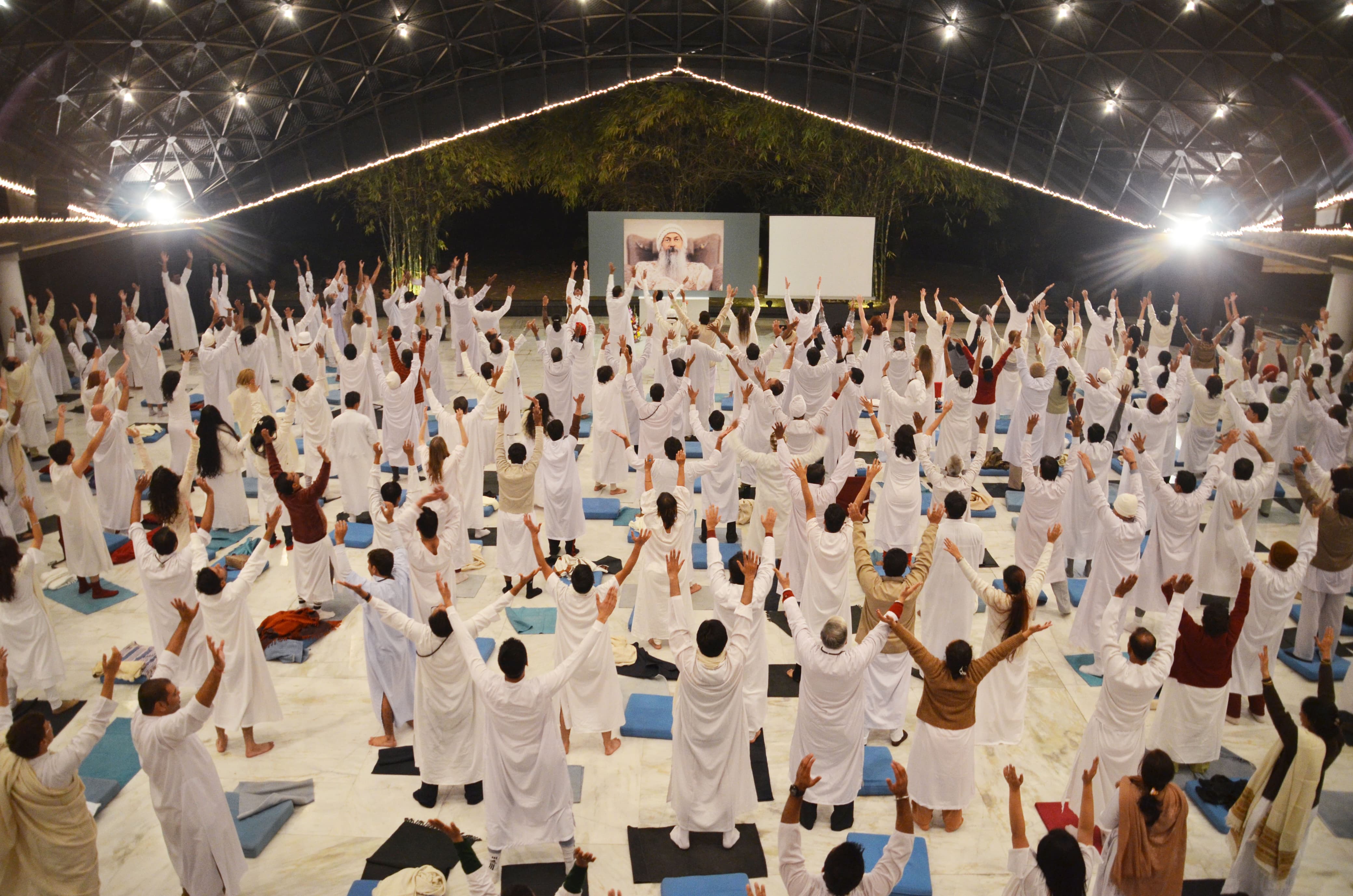
    New Delhi, Mar 286: Osho Dham witnessed a heartfelt gathering as seekers, friends, and followers came together to commemorate the 23rd Mahaparinirvana Day of Swami Om Prakash Saraswati. The day was marked not by mourning, but by a serene celebration of his life and spiritual legacy through meditation, music, dance, and shared reflections.

    Osho Dham Celebrates the 23rd Mahaparinirvana Day of Beloved Swami Om Prakash Saraswati

     Held under the tranquil canopy of trees at Osho Dham, the event created an atmosphere of quiet joy and remembrance. Participants reflected on Swamiji’s journey—from his early life in Faridnagar near Meerut to his transformation following an encounter with Osho during a meditation camp in Mount Abu in 1971.

    Entrusted by Osho in 1978 to carry forward the vision of Osho Rajyoga in Delhi, Swami Om Prakash Saraswati dedicated his life to building a spiritual community rooted in awareness and simplicity. Through initiatives such as Osho World, publications, and the Osho World Galleria, he played a key role in making Osho’s teachings accessible to a wider audience.

    The commemoration featured guided meditation sessions, soulful music, and personal anecdotes highlighting Swamiji’s compassion, clarity, and silent strength. Attendees remembered him as a gentle yet powerful presence—one who guided seekers with simplicity and depth.

    Swamiji attained enlightenment on May 21, 2001, and left his physical body on March 27, 2003, in a state of full awareness—an event described in Osho philosophy as Mahaparinirvana, symbolizing a conscious merging with existence.

    The gathering concluded with a shared sense of gratitude, as participants reflected on his enduring influence. Even in his physical absence, his teachings and presence continue to inspire and awaken countless seekers.

  • Innovation Paradox at Work: 41% of U.S. Employees Fear Job Loss for Mistakes Despite Pressure to Innovate

    New INTOO/Harris Poll Study Reveals Innovation Paradox in the American Workplace: Employees Are Expected to Innovate — Yet 41% Fear Being Fired for Making a Mistake

     
    Innovation is no longer optional in today’s workplace. According to a new study conducted by The Harris Poll on behalf of INTOO, nearly three out of four full/part-time employed Americans (74%) say they are expected to bring new ideas to improve things at work, like processes, strategies, or results.
     
    The good news: employees are rising to the challenge. More than three-quarters (78%) report that they regularly contribute new ideas for improvement at work. Yet the study reveals a striking tension at the heart of workplace culture. Despite strong expectations—and strong participation—nearly two-thirds (64%) of employees say they wish they were more innovative at work. At the same time, 41% admit they are afraid of being fired if they make a mistake, such as giving incorrect information or forgetting to complete a task.
     
    The findings point to what INTOO calls an “innovation perception gap,” in which formal encouragement to experiment coexists with lingering fear of the consequences of failure.
     
    Encouragement and Anxiety Coexist
     
    On the surface, many organizations appear to be fostering supportive environments:
     
    82% say they would feel safe admitting they don’t know something at work, without worrying about being fired.
     
    81% of employees say they feel safe trying new things to improve business results at their organization.
     
    79% say mistakes are typically treated as learning opportunities at their organization.
     
    77% say their manager is always receptive to their new ideas.
     
    Yet the fear of termination suggests emotional safety has not been fully internalized across the workforce.
     
    “So many organizations are sending the right messages about innovation and learning,” said Mira Greenland, Chief Revenue Officer at INTOO. “But this data shows that policy and perception are not always aligned. When employees are expected to innovate while simultaneously fearing the consequences of missteps, creativity can stall. Leaders must go beyond encouraging experimentation and consistently demonstrate that smart risk-taking is truly safe.”
     
    Younger Professionals Better Understand the Importance of Contributing New Ideas
     
    The study also found that employees ages 35–44 are significantly more likely than older employees (ages 55+) to agree that their manager is receptive to their new ideas (83% vs 73%), and those ages 18-44 are more likely than those 65+ to say they regularly contribute innovative thinking at work (81% vs. 62%).
     
    This suggests that the newer generation of employees understands that they need to innovate to succeed, but also raises a question on whether leaders are equally empowering employees to contribute. Implications for Leaders and HR
     
    The research underscores a critical opportunity for senior leaders and HR decision-makers: closing the perception gap between stated cultural values and lived employee experience.
     
    Innovation does not fail because employees lack ideas. It falters when employees feel they must calculate the career risk of every bold move.
     
    “To unlock innovation at scale, organizations must ensure that psychological safety is not just communicated, but consistently experienced,” Greenland added. “That means creating space for honest conversations about mistakes and, more importantly, the lessons that come from them. When leaders openly discuss missteps, model vulnerability, and frame setbacks as learning moments, employees stop worrying about whether a mistake could cost them their job. That’s when creativity accelerates.”
     
    Survey Method:
     
    This survey was conducted online within the United States by The Harris Poll on behalf of INTOO from February 17-19, 2026 among 1,223 full/part-time employed adults ages 18 and older. The sampling precision of Harris online polls is measured by using a Bayesian credible interval. For this study, the sample data is accurate to within +/- 3.4 percentage points using a 95% confidence level.
  • Indian Rupee Hits Record Low Amid Rising Oil Prices and Stronger Dollar

    The Indian rupee weakened sharply on Friday, dropping 74 paise to touch a new record low of 94.70 against the US dollar in intra-day trading. The decline comes amid rising global crude oil prices and a firm US dollar, with ongoing tensions in West Asia showing no signs of resolution.

    The currency opened at 94.18 and continued to fall through the session, slipping past the 94.50 level before hitting its lowest-ever mark.

    Market participants say the rupee is under pressure from multiple fronts. Strong demand for dollars from oil-importing companies, coupled with continued foreign investor outflows from Indian equities, has weighed heavily on the local currency. Exporters, meanwhile, are delaying conversions in anticipation of more favorable rates, further tightening dollar supply.

    The weakness in the currency also coincides with a downturn in domestic stock markets, reflecting cautious investor sentiment.

    In the previous session on Wednesday, the rupee had already fallen to 93.96, which was its closing record low at the time. Financial markets remained shut on Thursday due to Ram Navami.

    Experts note that sustained demand for the US dollar—especially from importers—continues to keep the rupee under pressure.

    Globally, the US dollar remains firm, with the dollar index edging higher, indicating strength against major currencies. At the same time, Brent crude prices climbed significantly before easing slightly, hovering around $107 per barrel. Elevated oil prices are particularly impactful for India, which depends heavily on imports to meet its energy needs.

  • Silver Prices Drop Sharply in Bhubaneswar Amid Global Uncertainty

    Silver Prices Drop Sharply in Bhubaneswar Amid Global Uncertainty

    Pic Credit: Pexel

    Bhubaneswar: Silver prices witnessed a significant decline in Bhubaneswar today, falling by ₹15,000 per kilogram. As a result, the price of silver now stands at ₹2,45,000 per kg.

    In recent days, both gold and silver prices have shown noticeable fluctuations. Market experts attribute this volatility to ongoing global uncertainties, particularly concerns related to geopolitical tensions and the possibility of war.

    Meanwhile, gold prices have moved in the opposite direction. The price of 22-carat gold increased by ₹150, reaching ₹1,32,650. Similarly, 24-carat gold rose by ₹160 and is now priced at ₹1,44,710.

    The current trend reflects an unstable market, with precious metal prices continuing to react to global developments.