Category: News

  • Jal Jeevan Mission 2.0 Goes Beyond Infrastructure to Focus on Sustainable Water Access

    Jal Jeevan Mission 2.0 Goes Beyond Infrastructure to Focus on Sustainable Water Access

    Pic Credit: Pexel

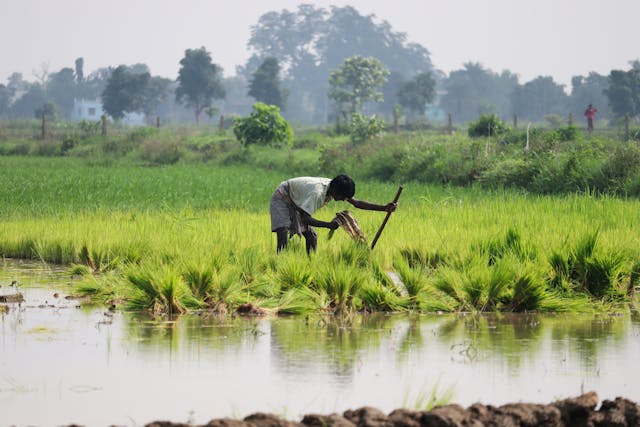
    New Delhi: Jal Jeevan Mission 2.0 is set to expand its focus beyond the installation of pipes and pumps, aiming to ensure long-term, sustainable access to safe drinking water in rural India.

    The upgraded phase of the mission emphasizes not only expanding household tap connections but also strengthening water source sustainability, improving quality monitoring, and enhancing local water management systems.

    Officials said the new approach seeks to address challenges such as groundwater depletion and seasonal water scarcity by promoting community participation and efficient resource management.

    The initiative builds on the progress of the original Jal Jeevan Mission, which significantly increased rural tap water coverage across the country. The second phase is expected to deepen its impact by ensuring reliability, quality, and long-term water security for every household.

    With a stronger focus on sustainability and decentralised management, Jal Jeevan Mission 2.0 aims to move beyond infrastructure delivery towards a more resilient and future-ready drinking water system.

  • PM KISAN Scheme Provides INR 4.27 Lakh Crore Direct Support to Farmers

    The Pradhan Mantri Kisan Samman Nidhi (PM-KISAN) scheme has disbursed a total of ₹4.27 lakh crore in direct financial assistance to farmers across India, marking a significant milestone in the government’s efforts to strengthen the agricultural sector.

    PM KISAN Scheme Provides INR 4.27 Lakh Crore Direct Support to Farmers

    The initiative provides income support to eligible farmers through direct benefit transfers, ensuring timely financial aid to help meet agricultural and household needs. Officials said the scheme reflects the government’s continued focus on farmer welfare and rural development.

    Launched to supplement the income of small and marginal farmers, PM-KISAN has played a key role in providing economic stability to millions of farming families. The programme has also contributed to improving access to resources required for agricultural productivity.

    Authorities highlighted that the scheme aligns with the broader vision of building a self-reliant and developed nation, where farmers remain central to economic growth and food security.

    With continued fund transfers and expanded outreach, PM-KISAN remains one of the largest direct income support programmes for farmers globally, reinforcing India’s commitment to strengthening its agricultural backbone.

  • Empowering Rural Odisha: Mission PoWaR Drives Integrated Development Push

    Odisha: The state’s Mission PoWaR is emerging as a major initiative aimed at transforming rural areas through a convergence-based development approach focused on infrastructure and essential services.

    Under the mission, significant investments have been allocated to strengthen connectivity and improve basic facilities across villages. The plan includes ₹3,491 crore for rural roads, ₹2,050 crore for bridges, and ₹1,000 crore dedicated to ensuring all-weather connectivity, aiming to improve access even in remote regions.

    Alongside infrastructure development, the initiative places strong emphasis on providing reliable electricity supply and safe drinking water to every village. Officials say the programme is designed to create inclusive growth by linking remote habitations with mainstream development.

    Mission PoWaR focuses on coordinated efforts across departments to accelerate rural transformation, improve mobility, and enhance the quality of life for rural communities.

    The initiative is expected to play a key role in strengthening rural Odisha’s infrastructure backbone while supporting long-term socio-economic development.

  • Devotees Flock to Temples Across India on Seventh Day of Chaitra Navratri

    Temples across India witnessed a large influx of devotees on the seventh day of Chaitra Navratri, as worshippers gathered to offer prayers and seek blessings of Goddess Durga.

    Devotees observed the day with traditional rituals, fasting, and special pujas dedicated to Goddess Kaalratri, the form worshipped on the seventh day of the nine-day festival. Temples were decorated with flowers and lights, creating a festive and spiritual atmosphere.

    Across major pilgrimage sites and local shrines, long queues of devotees were seen from early morning as people participated in prayers and devotional activities. Priests conducted special ceremonies and recitations of sacred hymns throughout the day.

    The festival of Chaitra Navratri is observed with deep devotion across the country, marking a period of spiritual reflection, discipline, and celebration of divine feminine energy. The ongoing celebrations will continue until Ram Navami, which marks the culmination of the festival.

    Authorities in several regions made arrangements to manage crowds and ensure smooth darshan for devotees.

  • Prakriti 2026 Conference on Carbon Markets Begins in New Delhi

    The Union government has launched Prakriti 2026, an international conference on carbon markets and climate action, bringing together policymakers, industry leaders, and global experts to discuss sustainable growth and emission reduction strategies.

    The conference focuses on strengthening carbon market frameworks, improving global cooperation, and exploring innovative solutions to address climate change challenges.

    It is being organised by the Bureau of Energy Efficiency under the Ministry of Power and the Ministry of Environment, Forest and Climate Change. The event reflects India’s growing emphasis on clean energy transition and climate-responsible development.

    Experts are expected to deliberate on policy improvements, market mechanisms, and ways to enhance transparency and participation in carbon trading systems.

    Prakriti 2026 aims to support global climate goals while positioning India as a key contributor in shaping sustainable economic practices.

  • India’s Sports Economy Surpasses $2 Billion, Cricket Dominates Revenue Share

    India’s sports industry has achieved a significant milestone, crossing the $2 billion mark for the first time, reflecting strong growth and increasing commercial potential. The sector expanded by 13.4% year-on-year to reach approximately $2.13 billion (Rs 18,864 crore), underlining its rapid evolution in recent years.

    Over the past four years, the industry has nearly doubled in size, registering an impressive compound annual growth rate (CAGR) of around 19%. This steady rise highlights growing investments, expanding fan engagement, and the increasing commercialization of sports across the country.

    Cricket continues to dominate India’s sports economy, contributing a massive 89% of the total revenue—an increase from 85% the previous year. With earnings of about Rs 16,704 crore, cricket alone now surpasses the total value of the entire Indian sports industry recorded just a year earlier.

    Meanwhile, the share of other emerging sports has declined to 11%, indicating a widening gap between cricket and the rest of the sporting ecosystem. Despite efforts to promote disciplines such as football, badminton, and kabaddi, cricket’s overwhelming popularity and financial strength continue to drive the market.

    The latest figures highlight both the success and the imbalance within India’s sports landscape. While the overall growth signals a positive outlook, experts believe there is a need to further support and invest in non-cricket sports to ensure more balanced and sustainable development across the sector.

  • BPCL Assures Uninterrupted Availability of Petrol, Diesel & Domestic LPG Across Dharwad

    Hyderabad, Mar 25: Bharat Petroleum Corporation Limited (BPCL), a Fortune Global 500 company and one of India’s leading oil and gas enterprises, has assured citizens of Telangana that adequate supplies of Petrol, Diesel, CNG, and Domestic LPG are available across its extensive network.

    All BPCL fuel stations and Domestic LPG distributorships in the state are fully operational and equipped to meet consumer energy needs. The company emphasizes that there is no cause for concern or panic buying, as its supply chain operations remain robust and efficient, ensuring uninterrupted availability of petroleum products.

    BPCL remains committed to energy accessibility, reliability, and consumer convenience, continuing its mission to provide seamless service across all touchpoints.

  • Automha and Comau Showcase Advanced Logistics Solutions at LogiMAT 2026

    Stuttgart, March 24, 2026 – Automha, together with Comau, is showcasing a full portfolio of end-to-end logistics solutions at LogiMAT 2026 (Hall 1, Booth F37), Europe’s most important International Trade Show for Intralogistics Solutions and Process Management, taking place in Stuttgart, Germany from March 24–26. The solutions on display are designed to optimize the entire logistics value chain – from inbound handling to automated storage and outbound shipping – addressing the needs of both third-party logistics (3PL) operators and manufacturing intralogistics environments.

    By combining Automha’s expertise in high-density automated storage and retrieval systems (AS/RS) with Comau’s advanced robotics, mobile automation solutions, intelligent vision systems and digital integration capabilities, customers can now rely on a complete offering that covers all phases of the logistics flow: inbound product handling, intelligent storage strategies, automated storage and retrieval, order preparation and synchronized shipping. This integrated 360° approach ensures seamless connectivity across the entire logistics process and can include, when required, process design, software orchestration and turnkey solutions implementation.

    Pietro Gorlier, CEO of Comau, affirms: “The global automation and logistics market is expected to exceed 10% CAGR, driven by sustained mid-to-high growth across key segments over the next several years*. With our combined process knowledge, systems and software expertise, we are perfectly positioned to deliver turn-key solutions that cover the entire intralogistics value chain, from the design and optimization of warehouse layouts to automated process flows and outbound material handling.”

    During the three-day event, visitors have the opportunity to discover Quaterways, Automha’s advanced multidirectional shuttle system, designed to move orthogonally along aisles and easily access storage channels, enabling fully automated storage and retrieval operations. Unlike traditional shuttle solutions, which are limited in movement or require dedicated transfer systems between different warehouse areas, Quaterways introduces a truly multidirectional movement logic, allowing the shuttle to operate continuously and smoothly both along main aisles and within storage channels. This approach enables significant reductions in cycle times, increased storage density, simplified system architecture and improved operational flexibility, especially in high-variability environments.

    Integrated with Automha’s proprietary Warehouse Management System (AWMS), Quaterways offers high versatility, enabling maximum storage density, operational flexibility, and real-time control. Its ability to manage multiple pallet formats within the same channel and dynamically optimize movement paths makes Quaterways particularly well suited for complex environments, such as those typical of 3PL and e-commerce operations.

    Autosat GTR, the latest evolution of Automha’s Autosat shuttle technology, will also be featured at the booth. A benchmark solution for high-density pallet storage, with over 12,500 units installed worldwide and a presence in 79 countries, Autosat GTR is available in 20 standard models. It is designed to handle a wide range of pallet types and load units while maintaining full compatibility with major racking systems and forklifts, allowing for easy integration into both new warehouses and existing infrastructures.

    Comau’s MyMR autonomous mobile robots will also be on display as will its MATE-XT and MATE-XB wearable exoskeletons, which enhance material handling efficiency and operator ergonomics across logistics and manufacturing workflows. MyMR AMRs provide flexible, software-driven material transport between storage areas and production lines, enabling just-in-time supply and reducing non-value-added movements. The wearable robotic exoskeletons, MATE-XT and MATE-XB, are engineered to improve worker safety and productivity during repetitive or overhead tasks, including truck unloading and manual sorting activities, by reducing shoulder and lower-back muscle strain.

    * In-house estimates based on published market research.. 
  • Indian Railways Updates Ticket Cancellation and Refund Rules

    Indian Railways has revised its ticket cancellation and refund guidelines to improve transparency, reduce misuse, and make seat allocation more efficient for passengers.

    Under the updated system, refund eligibility will now depend on how early a passenger cancels their ticket before the train’s departure.

    Revised Refund Structure

    As per the new rules:

    • Tickets cancelled 72 hours or more before departure will be eligible for up to 75% refund, after deduction of applicable charges.
    • Cancellations made between 72 and 24 hours before departure will allow around 25% refund.
    • If a ticket is cancelled between 24 and 8 hours, passengers may receive approximately 50% refund.
    • No refund will be granted if cancellation is done within 8 hours of departure.

    Officials say the revised structure is designed to discourage last-minute cancellations that often lead to seat blocking and reduce availability for other passengers.

    Greater Flexibility for Boarding Point Changes

    Along with refund reforms, Indian Railways has also introduced a passenger-friendly update allowing changes to the boarding station.

    Passengers can now modify their boarding point up to 30 minutes before departure, offering greater flexibility, especially for those travelling from cities with multiple railway stations.

    Earlier, such changes were permitted only until chart preparation. The new rule extends convenience closer to departure time.

    Aim: Prevent Misuse and Improve Efficiency

    Railway officials have stated that the updated policy also aims to curb irregular practices by ticket agents and bulk booking operators who sometimes reserve and cancel tickets repeatedly for unfair advantage.

    By tightening cancellation rules, Indian Railways hopes to ensure fair access to confirmed seats and improve overall booking system efficiency.

    Significance of the New Policy

    The revised rules are important because they:

    • Promote fair ticket availability for genuine passengers
    • Reduce last-minute cancellations and seat wastage
    • Improve transparency in refund calculations
    • Strengthen system efficiency and booking discipline
    • Offer better flexibility for boarding adjustments

    Conclusion

    The new cancellation and refund framework marks a step toward a more structured and efficient railway booking system. While stricter in approach, the policy is designed to enhance fairness, reduce misuse, and improve travel convenience for millions of passengers across India.

  • DALKHAI Initiative: Strengthening Local Livelihoods to Curb Migration

    The state government of Odisha has stepped up efforts to address the issue of labour migration by promoting the DALKHAI initiative, a programme aimed at creating more employment opportunities within local communities and improving rural livelihoods.

    The initiative focuses on ensuring that people, especially in rural and tribal regions, can find work closer to home instead of being forced to migrate to other states in search of daily wages. Officials said the programme is being implemented through coordinated efforts of multiple departments to support income generation and skill-based employment.

    The main objective is to build stronger village-level economies by promoting self-reliance and creating sustainable livelihood options. The government believes that when employment is available locally, families can remain together and maintain better social and economic stability.

    Under the initiative, emphasis is being placed on encouraging small-scale enterprises, supporting agricultural and allied activities, and expanding rural infrastructure-related work. Skill development and capacity-building programmes are also being integrated to help youth and workers access better job opportunities within their own regions.

    Officials highlighted that migration is often driven by lack of stable income opportunities in local areas. By addressing this gap, the DALKHAI initiative aims to reduce economic pressure on families and improve overall living conditions in rural communities.

    The government has described the programme as part of its broader commitment to inclusive development, where growth is not limited to urban centres but extends equally to villages and remote areas.

    Experts note that such initiatives can help strengthen rural economies, increase local spending power, and reduce dependency on external labour markets. Over time, this is expected to contribute to more balanced regional development and improved quality of life.

    In essence, the DALKHAI initiative is being positioned as a step towards ensuring that people can earn a dignified livelihood in their own villages, reducing the need for migration and supporting long-term rural development.