Category: News

  • India’s Heritage Sites Attract Film Shoots and Foreign Tourists, Boosting Eco-Tourism Growth

    India’s iconic heritage monuments are emerging as popular destinations for film shootings and international tourism, reflecting a growing blend of culture, cinema, and sustainable travel promotion across the country.

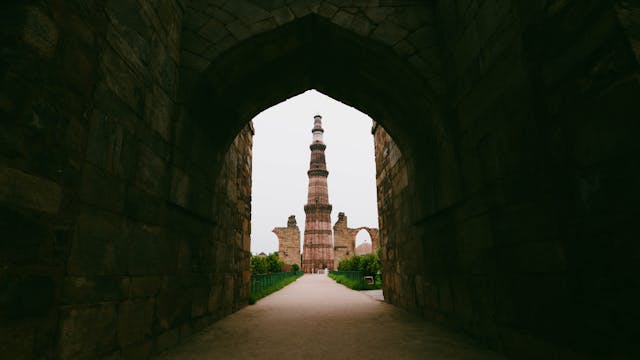
    Among the most prominent examples is the UNESCO World Heritage Site Qutub Minar, which has recently witnessed a rise in film shoots, documentary productions, and visual storytelling projects. The monument’s architectural grandeur and historical significance continue to attract filmmakers seeking authentic backdrops for cinema and digital content.

    India’s Heritage Sites Attract Film Shoots and Foreign Tourists, Boosting Eco-Tourism Growth

    Pic Credit: Pexel

    Tourism officials report that increased media exposure and cinematic visibility of heritage sites have contributed to a steady rise in foreign tourist arrivals. International visitors are showing greater interest in India’s cultural landmarks, history, and architectural heritage, with sites like Qutub Minar becoming key attractions in travel itineraries.

    Experts say this growing trend is not only boosting tourism but also strengthening India’s cultural and eco-tourism ecosystem. By promoting responsible tourism practices, authorities aim to ensure that heritage conservation goes hand in hand with visitor engagement and economic development.

    The government and tourism bodies have been encouraging controlled film shootings at protected monuments under strict guidelines to ensure that heritage structures are not damaged. These initiatives are designed to balance creative use of historical sites with long-term preservation.

    Tourism stakeholders believe that film shoots play a major role in global destination branding. When Indian monuments appear in films, documentaries, or digital media, they generate international curiosity and encourage more foreign travelers to explore these destinations in person.

    Alongside cultural tourism, eco-tourism efforts are also being strengthened. Sustainable travel practices such as regulated visitor flow, improved cleanliness standards, and awareness campaigns are being implemented at major heritage sites to reduce environmental impact.

    Officials note that this integrated approach—combining heritage conservation, film tourism, and eco-friendly travel—supports local employment, boosts small businesses, and enhances India’s global tourism profile.

    With rising international interest and increasing creative use of historical sites, India’s heritage monuments are evolving into dynamic cultural spaces that connect history, cinema, and sustainable tourism.

  • India’s Growth Accelerates Across Infrastructure, Economy and Global Standing: PM Narendra Modi

    Prime Minister Narendra Modi on Monday said India is witnessing rapid and broad-based growth, driven by major improvements in infrastructure, economic performance, and global influence.

    Speaking at an event, he pointed to the sharp expansion of infrastructure as a key sign of progress. India now has over 160 airports, alongside growing road networks, railway modernization, and digital connectivity—developments that are improving mobility and boosting economic activity across regions.

    The Prime Minister emphasized that India’s growth is no longer limited to policy announcements but is visible on the ground. He said faster execution of projects and time-bound delivery have helped shift the country from gradual progress to accelerated development.

    On the economic front, he noted that India has remained resilient despite global challenges, including geopolitical tensions in regions such as West Asia. Stable growth, rising investments, and continued focus on manufacturing and exports have supported this momentum.

    He also highlighted India’s increasing global standing, stating that the country is being seen as a reliable economic partner. According to him, consistent policy decisions and reforms have strengthened confidence among international investors and institutions.

    Referring to governance, the Prime Minister said several key decisions taken in recent weeks reflect the government’s intent to maintain growth despite external pressures. He added that India’s ability to move forward even during global uncertainty demonstrates its economic strength.

    Earlier in the day, while addressing the Lok Sabha, he also assured that India is prepared to handle global disruptions, including energy challenges, through strategic planning.

    Overall, the Prime Minister presented India’s growth as a combination of faster infrastructure development, economic resilience, and rising global credibility, signaling a shift toward sustained, high-speed progress.

  • Odisha’s Debt Climbs to INR 1.26 Lakh Crore; Fresh Borrowing to Push Burden Higher

    Odisha’s debt burden is steadily increasing, with the state’s total outstanding liabilities reaching ₹1,25,951 crore by the end of February 2026. The rising debt translates to an average burden of about ₹26,783 per person.

    The situation is expected to intensify in the coming financial year, as the state government plans to raise an additional ₹47,800 crore in 2026–27. This could take the total debt stock to nearly ₹1,73,751 crore.

    At the same time, the government has outlined repayment commitments. Around ₹22,000 crore will go toward clearing existing loans, while ₹8,200 crore is expected to be spent on interest payments. After accounting for repayments, the net debt is projected to stand at approximately ₹1,51,751 crore.

    The data, presented in the State Assembly by Chief Minister Mohan Charan Majhi, highlights the growing reliance on borrowings to support the state’s financial requirements.

    In recent years, Odisha has sourced funds from a mix of channels, including central government loans, open market borrowings, and institutions such as NABARD. A similar strategy is planned for 2026–27, with a major share expected from market borrowings, supplemented by institutional and government funding.

    The continued rise in debt indicates mounting fiscal pressure, which may further increase the per capita burden in the future, even as the state attempts to balance borrowing with repayments.

  • Amid Rising Heat, Odisha Halts Outdoor Work During Peak Hours

    Bhubaneswar: With temperatures expected to rise sharply in April, increasing the risk of heatstroke, the state Labor and Employees’ State Insurance Department has issued new safety guidelines to protect workers from extreme heat conditions.

    According to the directive, outdoor labor activities should be suspended daily between 10:00 AM and 3:00 PM from April 1 to June 15. Instructions have been sent to all Revenue Commissioners, District Collectors, and the State Labor Commissioner to ensure strict implementation.

    The advisory applies to all government departments, central government offices operating within the state, private employers, industrial units, commercial establishments, shops, and contractors. Employers have been urged to reschedule working hours to avoid exposing workers to peak daytime heat.

    In cases where work is unavoidable—particularly for essential services—employers must take adequate precautionary measures to safeguard workers. These include:

    • Providing sufficient drinking water
    • Arranging shaded rest areas
    • Ensuring access to medical facilities
    • Supplying ORS (Oral Rehydration Solution) packets to workers

    Additionally, healthcare institutions such as district hospitals, sub-divisional hospitals, primary health centers, and community health centers have been directed to remain prepared to handle heat-related illnesses.

    The move aims to minimize the risk of heatstroke and ensure worker safety during the intense summer months.

  • Rosatomflot provided assistance in the evacuation of the sailor

    Moscow, 23rd March 2026, A search and rescue air ambulance helicopter evacuated a seriously ill sailor from the Arktika-2 motor vessel aboard the universal nuclear icebreaker Ural in the Kara Sea. On March 16, near Mys Zhelaniya, the vessel received a signal that there was a seriously ill sailor on board. Together with the Dikson Marine Rescue Coordination Center, a decision was made to transport the patient aboard the nuclear-powered vessel to the nearest helicopter landing point. The sailor is currently receiving qualified medical care in the hospital

    The patient was placed in the medical unit on board the universal nuclear icebreaker Ural. The ship’s doctor and paramedic provided the necessary assistance to the sailor before evacuation. Captain Viktor Suryadov’s crew quickly transported the patient to the helicopter’s landing point. The nuclear-powered icebreaker covered the 215-mile journey in 15 hours at an average speed of 13.9 knots. Because all universal nuclear icebreakers of Project 22220 are equipped with a certified landing pad, the helicopter was able to quickly evacuate the patient,” said, Yakov Antonov, General Director of FSUE AtomFlot.


  • CMS COP15 World’s Nations Gather in Brazil to Agree on Actions Amid New Findings that More Migratory Species of Animals Are Facing Extinction

    Campo Grande, Brazil, March 24 — The 15th Meeting of the Conference of the Parties (COP15) to the Convention on the Conservation of Migratory Species of Wild Animals (CMS) opens here on Monday March 23 as a new reports reveals that almost half (49%) of all CMS-listed species have decreasing population trends, and nearly one in four are global threatened with extinction. Launched days before the summit, the State of the World’s Migratory Species: Interim Report (2026) paints a stark picture of animals under pressure from a combination of overexploitation and habitat destruction, as well as pollution, climate change and invasive species.

    Over participants are expected, including delegates from among the 133 countries that are Parties to the treaty, scientists, indigenous peoples and local communities, and conservation organizations. The meeting is taking place at the gateway to the Pantanal – the Earth’s largest tropical wetland, increasingly under threat from drought, wildfire and land-use change.

    “It is a great honor for Brazil to host COP15. Holding this event in Campo Grande, in the state of Mato Grosso do Sul, is a strategic choice. We are at the gateway to the Pantanal—the world’s largest tropical wetland. This region uniquely symbolizes the natural wealth of South America and the interdependence among countries whose fauna and flora cross borders. The Convention on Migratory Species reminds us of a simple yet powerful message: migration is natural,” said President Luiz Inácio Lula da Silva of Brazil.

    The stakes could not be higher

    The UN wildlife conservation meeting carries particular resonance in Brazil, home to more biodiversity than any nation on Earth. On Sunday, President Luiz Inácio Lula da Silva of Brazil convened a High-Level Segment with President Santiago Peña Palacios of Paraguay, minister of foreign affairs of Bolivia, leadership of the United Nations Environment Programme, and the heads of the world’s major biodiversity environmental agreements — the Convention on Biological Diversity (CBD), CITES, and the Ramsar Convention on Wetlands among them — signaling that migratory species have moved firmly onto the political agenda as part of global efforts to tackle biodiversity loss.

    “Paraguay is convinced that protecting migratory species is not only an environmental task but also a development one. Ensuring the stability of natural systems guarantees the stability of our people, acknowledging the human right to a healthy and productive life in harmony with nature,” said President Santiago Peña of Paraguay.

    “The conservation of migratory species challenges humanity’s ability to cooperate in the face of a simple fact: life on Earth is interdependent. At this moment in history, this is not merely a scientific observation — it is an ethical and political imperative that demands responses commensurate with the multiple crises we face: climate, ecological, and global governance,” said Marina Silva, Brazil’s Minister of the Environment and Climate Change.

    “The theme of COP15, ‘Connecting Nature to Sustain Life,’ has never been more important. Migratory animals — from elephants, big cats, raptors, freshwater fish, sea turtles, whales, waterbirds, and even butterflies — are not just wildlife spectacles. They are the planet’s circulatory system, driving pollination, seed dispersal, carbon storage, pest control and nutrient cycling across entire continents. When their corridors break down, ecosystems follow,” said Inger Andersen, Executive Director of the United Nations Environment Programme.

    What’s on the table

    Across more than 100 agenda items, negotiators will grapple with threats that mirror the full breadth of the impacts of human activities on nature: illegal and unsustainable hunting or capturing of species, bycatch, habitat destruction and fragmentation, deep-sea mining, light, noise and chemical pollution, impacts from infrastructure, and the accelerating disruption of climate change.

    Negotiators will consider proposals to include 42 additional species under the treaty, including iconic animals such as the snowy owl, the great hammerhead shark and the striped hyena.

    “COP15 in Brazil – the world’s most biodiverse country – represents a significant milestone for advancing international collaboration on the conservation of migratory species and more broadly on reversing biodiversity loss. The 2024 State of the World’s Migratory Species report and the 2026 Interim Report provide invaluable information on the conservation status of migratory species, the major threats, and the actions needed to address such threats. The main drivers of declines remain unchanged – habitat loss, overexploitation, climate change, and pollution. We know what needs to be done, and Parties here in Campo Grande have the opportunity to adopt measures to ensure the long-term survival of migratory wildlife and healthy ecosystems for future generations,” said Amy Fraenkel, CMS Executive Secretary.

    What happens next

    Plenary and working group negotiations run through the week. Listing proposals, concerted actions, resolutions and decisions, which will shape conservation policy and species protections for years to come, will be considered for adoption on Sunday, 29 March 2026.

    Throughout the week, special events will include the unveiling of a major scientific study on migratory freshwater fish (Global Assessment of Migratory Freshwater Fishes), and the introduction of the Americas Flyways Atlas, a groundbreaking new online platform developed by CMS and the Cornell Lab of Ornithology highlighting vital corridors and stopover sites for migratory birds.

    A new CMS effort to address the serious threat of illegal and unsustainable taking – the Global Initiative on Taking of Migratory Species (GTI) will also be launched at COP15 to help governments, experts and local communities to ensure that any taking of migratory species is legal, sustainable and safe – and achieve their commitment under the Kunming-Montreal Global Biodiversity Framework. The Initiative focuses on domestic use, which may pose a significantly greater risk than international trade.

    On the evening of 23 March, the Migratory Species Champion Night will recognize CMS Parties for outstanding contributions to protecting wildlife on the move.

    At a glance: CMS and COP15

    The Conference of the Parties (COP) is the governing body of CMS, which meets every 3 years to review progress, add new species under the Treaty, and strengthen actions to address conservation needs as well as continuing or emerging threats. Strong science underpins the COP’s agenda, ensuring that policy discussions reflect the best available evidence on threats, population trends and effective response measures.

    COP15 opening press conference

    Monday, March 23, 2026, at the COP15 venue in Campo Grande. Scheduled for 1:45 pm AMT / 5:45 pm GMT,

    The event will be livestreamed via the CMS Youtube Channel COP15 Playlist and will feature the presentation of the State of the World’s Migratory Species: Interim Report 2026.

    Key speakers include

    • Minister of Environment and Climate Change Marina Silva of Brazil;
    • João Paulo Capobianco, Chair of COP15 and Executive Secretary, Ministry of the Environment and Climate Change (Brazil);
    • Elizabeth Maruma Mrema, Assistant UN Secretary-General and Deputy Executive Director, UN Environment Programme;
    • Amy Fraenkel, Executive Secretary, Convention on Migratory Species;
    • Kelly Malsch, Head of Nature Conserved, UNEP-WCMC, and lead author of the State of the World’s Migratory Species: Interim Report (2026).

    The press conference will provide an overview of the week’s agenda, major scientific findings, and anticipated negotiations and outcomes.

  • WCS Backs Urgent Protections for Giant Otter at Wildlife Summit in Brazil

    WCS Backs Urgent Protections for Giant Otter at Wildlife Summit in Brazil


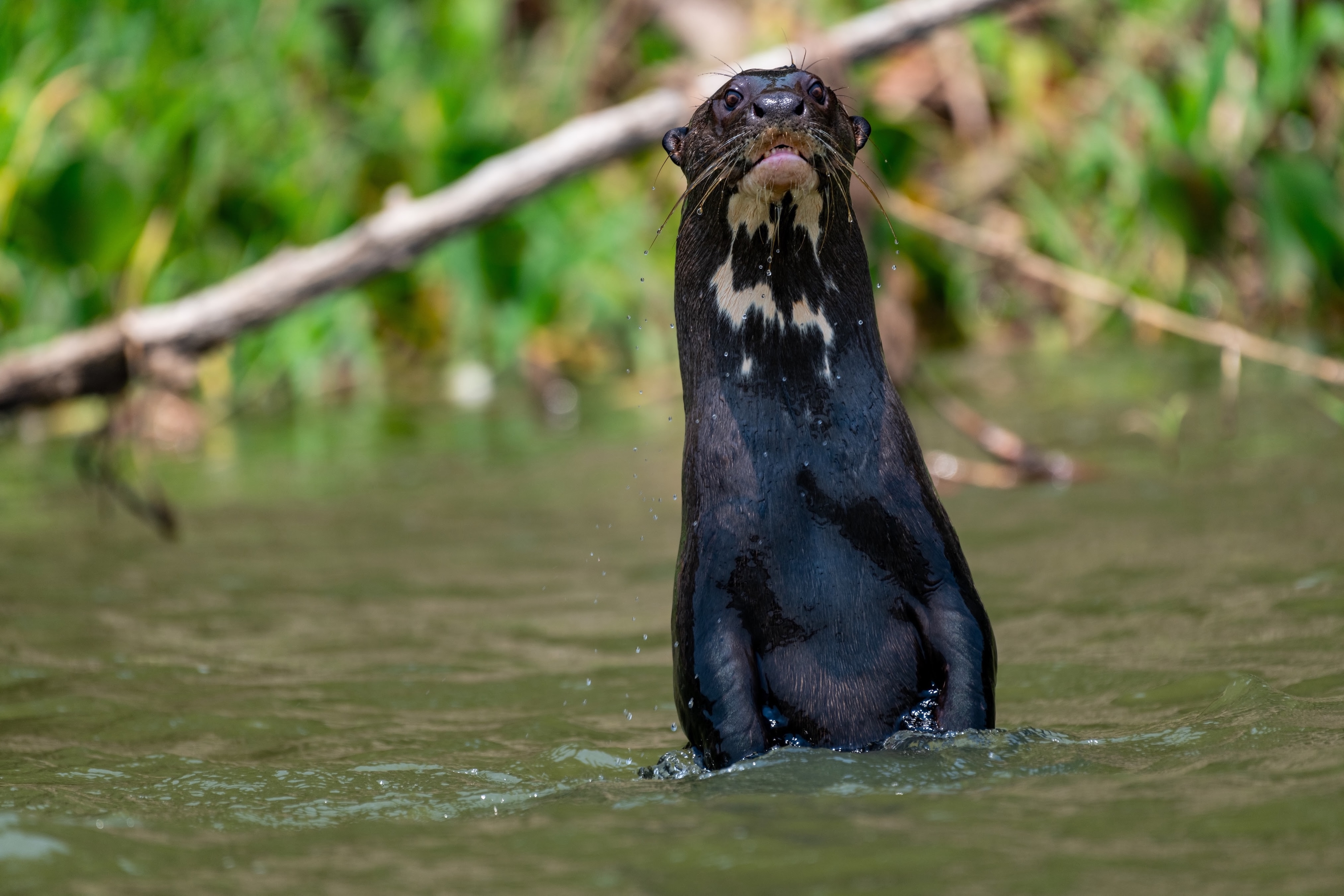
    Photo credit: Omar Torrico ©️WCS
     
    CAMPO GRANDE, BRAZIL, March 23, 2026—The Wildlife Conservation Society (WCS) is supporting a proposal to secure for this endangered species the highest level of protection under CMS while strengthening international cooperation across its range in the Amazon, Orinoco, and Pantanal river basins.
     
    Proposal 30.2.3 would list the giant otter (Pteronura brasiliensis) on both Appendix I and Appendix II of the Convention on the Conservation of Migratory Species of Wild Animals (CMS), as governments prepare to convene for the 15th meeting of the Conference of the Parties (CoP15) in Campo Grande, Brazil, from March 23–29.
     
    Often described as a sentinel of freshwater ecosystem health, the giant otter depends on intact, connected river systems that cross national boundaries. Its decline reflects mounting pressures on these ecosystems, including habitat loss, fragmentation, human disturbance, and the expansion of illegal and artisanal gold mining, which contaminates waterways with mercury.
     
    “Listing the giant otter on both Appendix I and Appendix II of CMS will send a clear signal that urgent, coordinated international action is needed to conserve this species and the freshwater ecosystems it depends on,” said Susan Lieberman, Vice President for International Policy at WCS. “Appendix I status requires strict protection and prohibits take, while Appendix II enables the cross-border collaboration that is essential for species that move through shared river systems.”
     
    Giant otters have experienced significant population reductions across much of their range, now occupying only about 60 percent of their historical distribution. Conservation experts have identified priority areas for protecting remaining populations, underscoring the importance of maintaining connectivity between river systems and safeguarding critical habitats.
     
    “Following decades of major range contraction due to illegal trade in skins, giant otters are now largely restricted to a few stronghold populations in the Amazon, Orinoco, and Pantanal biomes and many of these strongholds are transboundary across two or more countries,” said Rob Wallace, Senior Conservationist with WCS Bolivia. 
     
    Added Wallace, “Now, these very same strongholds are under threat from illegal gold mining, associated habitat loss, forest fires, climate change, and disturbance. Protecting this species requires protecting entire freshwater river systems—and that can only happen through coordinated action among countries that share these waters.”
     
    The CMS listing would require range states to implement stronger protections, monitor populations, and report on conservation status, helping to build a more coordinated and transparent approach to safeguarding the species. It would also support broader global efforts to ensure that any use of migratory species is legal, sustainable, and safe.
     
    The upcoming CMS CoP15 meeting comes at a critical time, as many migratory species worldwide continue to decline. By elevating protections for the giant otter, WCS and its partners aim not only to secure the future of a charismatic and ecologically important species, but also to advance conservation of the rivers, wetlands, and forests that sustain biodiversity and human communities alike.
  • Boston Imaging and NeuroLogica Unify Under Samsung HME America, Announcing Brand Update and Strategic Advancements

    Medical Imaging equipment provider receives Samsung rebrand

    BOSTON (March 23, 2026)- Samsung Medison today announces that its U.S. medical imaging businesses, previously operating as Neurologica and Boston Imaging, will unify under a new corporate identity, Samsung HME (Healthcare and Medical Equipment) America. This transition brings the company’s U.S. ultrasound, digital radiography, and computed tomography (CT) operations under one integrated structure that reflects the global Samsung brand behind its technology. 

    The unification underscores Samsung’s continued strategic investment in advancing medical imaging innovation and strengthening its presence in the United States healthcare market. By aligning its brand structure with its expanding portfolio and growing U.S. footprint, Samsung reinforces its long-term commitment to delivering cutting-edge imaging solutions, deep clinical collaboration, and sustained operational excellence.

    “This milestone represents more than a name change,” said Kyu Tae Yoo, CEO of Samsung Medison and Division Head of Samsung HME at Samsung Electronics. “It reinforces Samsung’s long-term commitment to healthcare providers nationwide and reflects the growth and maturity of our U.S. medical imaging organization. Our growth has been powered by listening closely to our customers and translating real clinical challenges into innovation at a pace rarely seen in healthcare; and we will continue along this path.”

    The announcement follows a period of significant growth across Samsung’s U.S. medical imaging portfolio, marked by expanded product innovation, organizational investment, and deeper engagement with health systems nationwide. As demand for advanced imaging solutions continues to evolve, the company is scaling its U.S. presence to meet the needs of a rapidly transforming healthcare environment. 

    “This new chapter as Samsung HME America strengthens how we connect with customers and partners while giving us the flexibility to innovate and advance medical imaging for the future,” said Tracy Bury, Chief Commercial Officer. “With a unified organization, we can deliver greater consistency, deeper collaboration, and a more streamlined experience across ultrasound, digital radiography, and CT. This alignment positions us to move faster, support our partners more effectively, and continue building long-term relationships grounded in trust and performance”.

    Recent advancements within Samsung HME America include the Samsung R20 and Z20 ultrasound systems, designed to deliver enhanced image quality and AI-powered tools that support more confident clinical decision-making. The company has also continued to expand its AI capabilities through the Samsung acquisition of Sonio, a French AI-powered prenatal ultrasound startup specializing in early-stage fetal abnormality detection. In addition, Samsung is advancing and expanding its Digital Radiography portfolio with innovations focused on dose reduction and workflow enhancements.

    Samsung HME America remains the global headquarters and manufacturing center for the CT business, advancing point-of-care platforms and pushing the boundaries of medical imaging with photon counting detector technology.

    The rebrand decision aligns with Samsung HME America’s mission of improving patient care by developing outstanding, customer-centric imaging solutions quickly and with passion. Under the newly established branding, the company looks to new AI technology releases, strategic partnerships, along with upcoming innovative product introductions into 2026. For more information on Samsung medical imaging products and technology, please visit: https://usa.samsunghealthcare.com/

  • PM Modi Urges Swift De-escalation in West Asia, Highlights Risks to India’s Energy and Diaspora Interests

    New Delhi, March 23 (BNP): Prime Minister Narendra Modi on Monday raised serious concerns in the Lok Sabha over the escalating conflict in West Asia, cautioning that the prolonged crisis is exerting pressure on global economic stability and directly impacting India’s strategic and humanitarian interests.

    Addressing Members of Parliament, the Prime Minister observed that the ongoing conflict, now stretching beyond three weeks, has disrupted international trade flows and heightened uncertainty worldwide. He emphasized that there is a growing global consensus calling for an immediate and peaceful resolution.

    Underscoring India’s deep linkage with the region, Modi noted that a large Indian diaspora—estimated at nearly one crore—resides in Gulf countries, while Indian seafarers constitute a considerable share of crew on commercial shipping routes passing through the affected zone. In this context, he stressed that India’s concerns are both natural and significant, warranting a united national voice.

    The Prime Minister highlighted the strategic importance of the region for India’s energy security, pointing out that critical supplies such as crude oil, natural gas, and fertilizers transit through the Strait of Hormuz. He acknowledged that shipping operations in the corridor have become increasingly difficult due to the conflict, but assured that the government is taking proactive steps to maintain steady fuel supplies and shield citizens from major disruptions.

    Reiterating India’s long-standing diplomatic position, Modi said that dialogue remains the only sustainable path forward. He affirmed that India is actively engaging with relevant international stakeholders to promote de-escalation and ensure that tensions do not spiral further.

    On the safety of Indian nationals, the Prime Minister informed the House that extensive support mechanisms have been activated, including continuous coordination through Indian missions, helplines, and evacuation measures where required.

    Highlighting the government’s preparedness, Modi said authorities are closely tracking developments and implementing both immediate and long-term strategies to mitigate economic fallout and safeguard supply chains. He called for collective vigilance and cooperation across sectors to navigate the evolving situation.

    Concluding his remarks, the Prime Minister reiterated India’s commitment to peace and humanitarian principles, asserting that protecting human lives must remain paramount and that all efforts should be directed towards an early resolution of the conflict.

  • Odisha Strengthens Maternal Care with INR 500 Crore Investment Under Mamata and PM Matru Vandana Yojana

    The Government of Odisha has announced a focused investment aimed at improving maternal health and nutrition across the state, reinforcing its commitment to ensuring comprehensive care for pregnant and lactating mothers.

    A total allocation of approximately ₹320 crore under Mamata Yojana and ₹180 crore under the Pradhan Mantri Matru Vandana Yojana (PMMVY) has been directed toward strengthening maternal welfare programs and enhancing health security at every stage of motherhood.

    The initiative is designed to improve nutrition support, promote better healthcare access, and ensure timely assistance for expectant and new mothers. Officials stated that these schemes play a crucial role in supporting safe motherhood and improving overall maternal and child health outcomes.

    Under these programs, financial assistance and nutritional support are provided to eligible women, helping reduce health risks during pregnancy and the postnatal period. The focus is also on encouraging regular health check-ups and improving awareness about maternal care practices.

    The government emphasized that maternal health remains a key priority in its broader public health strategy. By investing in these welfare schemes, Odisha aims to reduce maternal and infant health risks while ensuring better nutrition and care for mothers across rural and urban areas.

    Officials further highlighted that strengthening maternal healthcare systems is essential for building a healthier future generation and improving overall community well-being.

    With this investment, the state continues to reinforce its commitment to inclusive healthcare and social security, ensuring that every mother receives the care and support she needs during one of the most important stages of life.