Category: Technology

  • GitHub Selects Codio as Exclusive Commercial Partner to Extend Use of GitHub Classroom Benefits to Codio’s Advanced CS Learning Platform

    CAMBRIDGE, MA – Feb 26 – Codio, the cloud-based teaching platform built to scale computer science and technical skills education, today announced it has been selected by GitHub as the exclusive commercial partner extending the options available to GitHub Education users to use cutting-edge CS-specific learning tech for course management and the hands-on student experience. Codio has supported major universities and tech companies globally at scale, delivering evidence-based tools designed to support and streamline instructor workflows, enhance the student learning experience, and integrate AI responsibly into teaching and learning.

    Under this partnership, more than 3,000 instructors and 500,000 students who currently use GitHub Classroom will be eligible to transition their assignments and courses to Codio’s proven, enterprise-grade learning platform while retaining their GitHub-native workflows, including course materials, assignments, and grading scripts stored in Git repositories. Codio’s platform offers a robust environment for instruction and assessment, trusted for reliability at scale by hundreds of CS teaching institutions, with greater compute flexibility and modern AI tools, designed to help scale high-quality computing and tech skills programs.

    “This partnership reflects our shared vision with GitHub to keep the computing and tech skills learning experience at the forefront of advances in edtech and learning experience design, while embracing the use of AI to enhance the learner experience,” said Doug Hughes, CEO of Codio. “We’re working closely with the GitHub Education team to give instructors an easy, disruption-free path to use Codio while retaining the workflows they rely on, and in doing so gain access to tooling, support, and learner experiences at the forefront of modern computing education.”

    GitHub Classroom users will also gain access to Codio’s AI teaching assistant, Coach, which provides immediate feedback to help students with common challenges, such as programming error messages, without giving away answers. This approach has been shown to improve assignment completion rates, lower DWF rates, and raise median grade performance by 15%, while reducing the manual grading load. Codio’s platform also delivers advanced autograding, LLM rubric-based evaluation, and learner behavior insights across entire programs, features that make it possible to scale high-quality instruction to thousands of learners.

    In partnering with GitHub, Codio is launching a dedicated onboarding program that includes migration tools, live sessions, and two flavors of free access, giving users the option to continue to use GitHub Codespaces or migrate fully to the Codio platform. Beyond the free tiers, institutions can enjoy preferential pricing with enhanced support options for the largest-scale users.

  • IR Power launches derisked solution for factory energy loss and smart opex savings

    LONDON, UK – Feb 26: IR Power, a Scottish energy tech firm owned by MWNW Group, introduces its cutting-edge solution to the vast industrial energy waste experienced when factory machines slow down – helping manufacturers to achieve extensive energy savings using a rental model where manufacturers pay nothing upfront and only pay from proven savings.

    In modern factories, many large machines constantly speed up and slow down as part of normal operation; automotive presses lifting and lowering, conveyor systems starting and stopping, industrial mixers ramping up and down. Every time these machines decelerate, they generate electricity that’s currently wasted.

    IR Power’s plug-and-play systems work like regenerative braking in electric cars, but for industrial equipment. They capture this energy (that would otherwise be burned off as heat) and feed it back into factory power grids for immediate reuse. On large automotive press lines typically consisting of machine clusters cycling every six seconds, this recaptures 10-20% of total electricity consumption – representing up to £50,000-100,000 in annual savings per machine cluster at current UK energy prices.

    The problem: Proven technology, broken business model

    While energy recovery technology has existed for years, previous solutions required expensive custom engineering that typically demanded weeks or months of install and interrupted operations, high upfront costs, and longer integration cycles – particularly where drive systems had to be modified or replaced. At historical electricity prices of £50/MWh, the complexity wasn’t justified. At today’s prices of £100-150/MWh – combined with binding net-zero commitments – the economics have fundamentally changed.

    The solution: Redesigned technology and commercial model

    IR Power has eliminated the adoption barriers that prevented previous solutions from scaling:

    Standardised sizing – Three standard product sizes work across different applications, replacing expensive custom engineering that previously cost £30-40k or more.

    Plug-and-play installation – Systems connect to existing equipment in hours. No modifications to machines, no changes to operations, and no production downtime.

    Rental model – Customers pay nothing upfront. Monthly fees are based only on measured energy savings. If the system doesn’t save energy, customers don’t pay.

    Equipment agnostic – Unlike solutions locked to one manufacturer’s drives or motors, IR Power’s systems integrate with any supplier. Factories can connect multiple machines into a single energy recovery network, optimising across the entire site.

    Fail-safe design – When braking energy exceeds system capacity, excess safely routes to existing waste resistors while the system continues operating. Competitor systems often shut down completely when overloaded, requiring manual restarts.

    Why now: Energy prices and net-zero create perfect storm

    With industrial electricity prices doubling and manufacturers facing binding net-zero commitments, energy efficiency has shifted from ‘nice-to-have’ to business-critical. IR Power’s technology addresses both imperatives simultaneously: cutting costs and carbon.

    Industrial machines have 20–30-year lifespans and even upgrading drive systems can cost £1m or more, making retrofit the viable route for capturing immediate savings. The rental model, typically approved as operating expense rather than capital, removes approval barriers and aligns incentives perfectly – IR Power only succeeds when customers save money.

    Richard Bradshaw, Founder and Managing Director of IR Power, said:

    “For years, energy recovery systems existed but didn’t deploy at scale because they cost too much and put all the risk on customers. We’ve inverted that model completely. Our customers pay zero upfront – no capital expenditure, just operating expense. Installation takes hours with no production downtime. And here’s the key: if our system doesn’t save them money, we don’t get paid; we take all the performance risk. The equipment lasts 15-20 years, so customers get over a decade of pure savings. The technology works – it always has. Our job was removing every barrier that prevented adoption: the cost, the complexity, the risk, and the disruption.”

    Commercial deployment

    IR Power is beginning commercial deployments in 2026, prioritising press applications including tier-one automotive and construction materials manufacturing. The company deliberately chose diverse sectors to prove the technology across different operating conditions before accelerating deployment.

    The addressable market includes thousands of suitable machines across automotive, construction materials, food processing, and other sectors in the UK alone, with global expansion planned once the model is proven. Target applications include motor-driven machinery with frequent start/stop or speed-change cycles where braking energy is highest and most consistent.

    Prospective customers can currently request a complimentary, no-obligation site assessment by contacting the IR Power team at info@i-r-power.com.

  • Wordly Introduces Mobile-First Enhancements to Translation App, Expanding Onsite and Hybrid Event Accessibility

    Los Altos, CA, Feb 26: As events become more global and multilingual, organizers are under increasing pressure to deliver seamless, inclusive experiences without adding operational complexity. Wordly, the pioneer and leader in live AI translation and captioning, on February 25 announced new mobile-first enhancements to the Wordly Translation App designed specifically for conference, tradeshow, and events.

    The latest updates include background audio and screen-lock functionality, allowing attendees to listen to live translations while multitasking and conserving battery life, along with instant language search for faster onboarding. Speakers also benefit from push-to-talk and automatic language detection, enabling seamless, two-way multilingual communication in dynamic sessions, all at no additional cost to existing customers.

    “Event professionals are rethinking accessibility as a core part of the attendee experience,” said Lakshman Rathnam, Founder and CEO of Wordly. “These mobile enhancements give organizers a scalable way to provide inclusive, multilingual access without additional hardware, staffing, or logistical burden.”

    Designed for the Realities of Live Events

    The updated Wordly Translation App introduces several features tailored to how attendees and speakers engage during events, including:

    •  Background Audio for Multitasking: Attendees can now continue listening to translated audio while switching between apps on their mobile device. Whether checking the event app, reviewing presentation materials, or responding to messages, participants remain connected to the session without interruption.
    •  Screen-Lock Battery Optimization: With extended conference days in mind, the app now allows translated audio to continue playing while a device screen is locked. This feature helps conserve battery life, critical for multi-session agendas and large-scale conventions.
    •  Instant Language Search: A newly added search function enables users to quickly locate their preferred language from dozens of options, reducing onboarding friction and minimizing the need for onsite support.

    New Capabilities for Speakers and Session Leaders

    In addition to enhancing the attendee experience, Wordly has expanded functionality for presenters and facilitators, including:

    •  Push-to-Talk Functionality: Speakers can now use push-to-talk directly within the app, allowing for two-way communication in multilingual settings. The feature is particularly well-suited for breakout discussions, workshops, hosted buyer meetings, and small-group sessions, where interactive dialogue is essential.
    •  Automatic Language Detection and Switching: For sessions where presenters shift between languages, the app automatically recognizes language changes and adjusts translations accordingly to ensure a smooth experience for diverse audiences without manual resets.

    Scalable Language Access Without Headsets or Booths

    Unlike traditional interpretation models that require physical equipment, interpreters onsite, or dedicated booths, the Wordly mobile app operates on attendees’ own iOS or Android devices. Participants simply enter a Session ID provided by the organizer and select their language, no account creation is required. For speakers, access to advanced features such as push-to-talk is granted through a secure passcode.

    Meeting Industry Demand for Inclusive Design

    With international attendance rebounding and hybrid formats remaining standard, language accessibility has become a strategic priority for event organizers, associations, and corporate planners. Wordly’s mobile enhancements support:

    •  Global events and tradeshows seeking to broaden international participation
    •  Corporate events connecting distributed teams
    •  Association meetings aiming to increase member engagement
    • Education and campus events serving multilingual communities
    • Government and civic gatherings prioritizing public access

    By eliminating hardware requirements and simplifying user onboarding, the updated Wordly Translation App enables planners to scale multilingual access across general sessions, breakouts, and ancillary meetings with minimal operational lift.

  • Teledyne Flir OEM, Teledyne FLIR OEM Launches Lepton XDS at Mobile World Congress; A Compact Thermal‑Visible Camera Module Featuring Patented MSX Technology

    Prism™ ISP–Powered Dual Camera Module Delivers Enhanced Performance and Faster Integration for OEMs


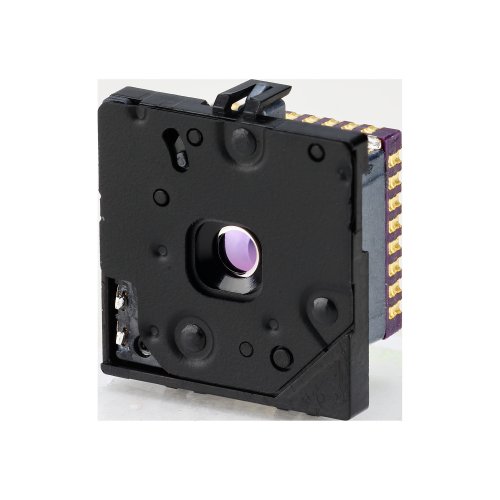
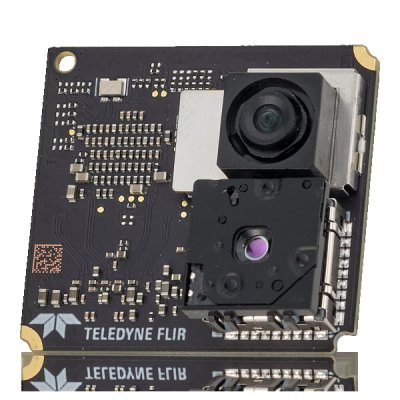
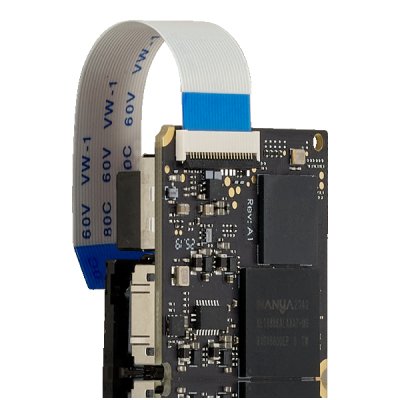
    BARCELONA and GOLETA, Calif.,– Teledyne FLIR OEM, a part of Teledyne Technologies Incorporated (NYSE: TDY), today announced the launch of the Lepton® XDS, a compact dual‑thermal‑and‑visible camera module bringing Teledyne FLIR’s patented MSX® (Multi‑Spectral Dynamic Imaging) technology to a new class of space‑ and power‑constrained Original Equipment Manufacturer (OEM) products. Designed for rapid integration, the International Traffic in Arms Regulations (ITAR) -free Lepton XDS reduces development risk and accelerates time‑to‑market for embedded, mobile, and industrial applications.

    The Lepton XDS pairs a 160 × 120 radiometric Lepton 3.5 micro‑thermal camera with a five‑megapixel (MP) visible sensor, featuring MSX that enhances thermal imagery in real time by embossing visible‑image edges directly onto the thermal scene. This patented software delivers sharper detail, improved context, and a level of actionable thermal intelligence typically associated with more-expensive, higher-resolution camera systems. It is ideal for fire detection and prevention, EV battery monitoring, robotics navigation, unmanned platforms, smart infrastructure, and health and safety systems.

    “MSX technology has long been a defining advantage of Teledyne FLIR, and with Lepton XDS, we are making that capability accessible in a compact, OEM‑ready module,” said Mike Walters, vice president of product management, Teledyne FLIR OEM. “By combining a visible camera, a proven micro‑thermal sensor, onboard Prism ISP processing, and direct access to radiometric overlays including spot meters and regions of interest we’re accelerating innovation and enabling OEMs to deliver clearer thermal imagery for faster user interpretation.”

    Prism ISP: Advanced Imaging Beyond MSX

    The integrated FLIR Prism ISP software ensures real‑time image enhancement while providing a comprehensive out‑of‑the‑box suite of advanced image‑processing features, including thermal‑visible fusion, advanced image processing, and an industry-first radiometric JPEG (RJPEG) output. Built‑in measurement and visualization tools include regions of interest (ROI), spot temperature measurements, isotherms, and customizable color palettes, and it is seamlessly compatible with the Teledyne FLIR OEM software ecosystem for analysis, post‑processing, and reporting. 

    Designed for Scalable OEM Deployment

    The Lepton XDS is a size, weight, and power (SWaP)‑optimized module, and an industry‑standard USB output makes it well-suited for battery‑powered and always‑on systems. It is also ITAR‑free and classified under 6a993.b.4.b enabling broadly available for commercial applications worldwide.

    As the global leader in thermal camera manufacturing, Teledyne FLIR OEM’s global technical services organization and proven high‑volume manufacturing systems have delivered more than six million Leptons supporting scalable production while minimizing supply‑chain risk.

    To see the new Lepton XDS and other exciting products from the Thermal by FLIR collaborative development program, visit booth 7B6 at Mobile World Congress in Barcelona, 2-5 March 2026. Learn more at www.oem.flir.com/lepton.


  • Tattvam AI Emerges with 1.7M Funding to Transform Semiconductor Chip Design

    Bengaluru, Feb 25 : Tattvam AI, a deeptech startup building AI systems to automate semiconductor chip design, today announced it has raised $1.7 million in pre-seed funding led by Seedcamp, with participation from EWOR, Entropy Industrial Ventures, Concept Ventures, semiconductor angel Stan Boland.

    The world is racing to build custom silicon. Unlike general-purpose chips designed to handle a wide variety of tasks, custom silicon refers to specialized processors built and optimized for specific workloads – such as AI training or AI inference. These purpose-built chips can deliver up to 100x performance improvements over general-purpose hardware like GPUs for their targeted applications, while often consuming significantly less power.

    Companies from tech giants to emerging startups are racing to build custom chips. Google has developed its own Tensor Processing Units optimized for AI workloads, Nvidia has partnered with Groq on specialized AI inference chips, and UK startups Fractile and Olix are building custom processors all in pursuit of more powerful, application-tailored silicon that can handle tomorrow’s computational demands more efficiently.

    The stakes are enormous: as AI models grow larger and more complex, and as applications from autonomous vehicles to drug discovery require massive computational power, custom silicon has become a critical competitive advantage.

    Yet the process to design a chip still takes years of painstaking manual work and the pool of engineers who can do it remains small. Meanwhile, on the software side, AI is already writing complex code at record speed. Tattvam AI aims to bring this transformation to the semiconductor world enabling more chips, designed faster, customised for the exact application making the applications built on top of them dramatically faster.

    Tattvam AI is introducing a novel approach to chip design by building an AI system that deeply understands circuit structure and autonomously solves complex design tasks, reducing chip development cycles.

    “Chip design is fundamentally a reasoning problem over an enormous search space, not unlike the kind of reasoning that’s needed to solve hard problems in mathematics. Current AI tools, even the most advanced LLMs, struggle with the deep structural understanding that chip design demands. We’re building a reasoning model that actually understands circuits from first principles – the constraints, the tradeoffs, the interdependencies – the same way a world-class engineer would and doing it in a fraction of the time.” – Bragadeesh Suresh Babu, CEO and Co-founder, Tattvam AI.

    By automating key parts of the design process, Tattvam AI aims to make custom silicon accessible to more companies, reduce development costs, and enable rapid iteration on chip designs – bringing what currently takes 2-3 years down to weeks.

    Bragadeesh is an alumnus of IIT Madras, consistently ranked as India’s 1 engineering institution and alma mater of notable tech leaders including Perplexity CEO Aravind Srinivas. He developed an early passion for mathematics through competitive Olympiads before entering the AI and hardware space.

    He was an early engineer at UK based brain-monitoring startup CoMind, which recently raised $100 million, and later became one of the earliest engineers at UK-based chip startup Fractile. Turning down an offer to join Google’s TPU team, Bragadeesh chose instead to build Tattvam AI and pursue his vision independently.

    “Bragadeesh is one of the most driven, energetic and compelling young founders in today’s chip industry. His conviction that Tattvam AI will dramatically speed-up the complex and iterative process of using EDA tools and models to design chips, cutting timelines from years to weeks, is sure to be embraced by the world’s top teams” says Stan Boland, former founder/CEO at Icera (bought by NVIDIA) and Element 14 (bought by Broadcom).

    Bragadeesh founded Tattvam AI with Lannan Jiang, who has been developing chips at a research lab at ETH Zurich. Tattvam AI plans to launch its first product in the coming months as it works with partners to accelerate the development of next-generation chips. 


  • Meta & Retailers Association of India Whitepaper Highlights AI, Creators, Messaging Driving India’s Omnichannel Shopping Boom

    India, Feb 25: As Indian consumers move fluidly between scrolling on social media and shopping in-store or online, retail journeys are becoming increasingly omnichannel. To understand this shift, Meta, in collaboration with the Retailers Association of India (RAI), has unveiled findings from a new whitepaper highlighting how AI, short-form video, creators, and messaging platforms are reshaping Indians discover, evaluate, and purchase products across digital and physical channels.

    The report finds that omnichannel shoppers are significantly more valuable, with consumers who shop across channels spending 2.5 times more than single-channel shoppers and up to 73% more when engaging across multiple touchpoints. Blending research insights with real-world case studies, the whitepaper outlines how discovery, conversation, and commerce are converging to make unified retail journeys a core growth model.

    Said Meghna Apparao, Director, E-Commerce & Retail (India), Meta,

    “I urge retail leaders to focus on three transformative pillars highlighted in this whitepaper. First, harness the power of Reels and Creators to drive authentic engagement and brand storytelling. Second, embrace omnichannel performance marketing to seamlessly connect with consumers across platforms, optimizing reach and impact. Third, leverage WhatsApp as a direct, personalized channel for customer interaction and commerce. Together, these strategies unlock new growth opportunities, foster deeper relationships, and position your brand at the forefront of digital retail innovation in India’s dynamic market.”

    Said Hitesh Bhatt, Director – Marketing & Communications, Retailers Association of India (RAI),

    “There has been a fundamental shift in retail: consumers no longer move between online and offline; they operate across both at once. Discovery, influence, and purchase now happen through content, creators, conversations, and stores, often in the same journey. For retailers, the challenge is no longer adopting digital tools, but integrating them to drive measurable outcomes. Omnichannel maturity will define competitiveness in Indian retail, and this report outlines what it takes to get there.”

    Social Media & Creators – The New Gateway to Retail 

    The Indian retail landscape is undergoing a clear shift from a search-based transaction model to a scroll-led discovery ecosystem. Today, 77% of retail brand and product discovery happens on social media, with Meta platforms accounting for 96% of this discovery, underscoring the growing influence of Instagram and Facebook on both online and offline purchases.

    Short-form video has emerged as the dominant engagement format, with 97% of consumers watching it daily and 60% of time on Facebook and Instagram spent on video. At the same time, the rise of micro and nano creators is reshaping trust and accelerating purchase decisions, with creator-led campaigns delivering measurable lifts across consideration, intent, and conversion.

    Said Manoj Jain, Senior VP & Head, Omni Channel Marketing, Reliance Digital,

    “Reliance Digital has embraced a Reels-forward strategy, leveraging it to drive brand awareness and business outcomes on Meta. Central to this is our collaboration with regional creators on Meta, enabling authentic connections that resonate with diverse communities, delivering stronger engagement and measurable impact, making Meta an important pillar in our marketing strategy.”

    AI-powered omnichannel is redefining retail growth

    Indian consumers are increasingly adopting a “phygital” shopping behaviour, with more than half researching products online before buying in-store and a similar proportion researching in-store before purchasing online. This shift is pushing retailers to move beyond siloed digital and physical channels toward unified commerce models that integrate discovery, conversion, and fulfillment across touchpoints.

    Retailers that have adopted integrated omnichannel strategies are reporting tangible business gains. Indian retailers using Meta’s Omnichannel Optimization have seen over fourfold improvements in omnichannel return on ad spend, while integrated data strategies have driven up to 15% revenue growth. Those integrating in-store sales data with Meta advertising measurement are also reporting two to fivefold increases in ROAS and up to ninefold incremental sales growth, underscoring the impact of unified data and AI-driven optimisation in connecting digital marketing to offline revenue.

    Said Amit Agarwal, CMO, Croma,

    Meta’s AI-powered solutions have fundamentally elevated our omnichannel approach, enabling us to integrate offline data and activate performance marketing across all touchpoints. This strategic shift empowers us to optimize customer journeys, unlock new growth opportunities, and drive sustained incremental footfall & revenue impact—online and offline—while future-proofing our business in a rapidly evolving retail landscape.”

    WhatsApp Is Transforming Commerce into Conversations

    Bridging discovery and transaction is the rapid rise of WhatsApp as a commerce channel, with messaging emerging as a powerful engine for discovery, conversion, and customer engagement. 72% of product discovery now happens on WhatsApp, highlighting the platform’s growing role in shaping purchase journeys.

    Retailers using Business Messaging and Click-to-WhatsApp campaigns are seeing a 61% average improvement in return on ad spend, a 62% increase in leads generated, and 22% higher order values, reinforcing the role of conversational commerce in driving acquisition and sales.

    Creators are further accelerating this shift, with 71% of consumers making a purchase within a couple of days after seeing creator content on Meta technologies, highlighting how discovery on social platforms is increasingly translating into real-world transactions. 

    Businesses integrating in-store sales data with Meta advertising are seeing 2x–5x+ ROAS uplift and up to 9x incremental sales growth, demonstrating how AI-driven optimization and unified data can connect digital discovery with real-world commerce outcomes.

    Key Stats from the Retail Whitepaper:

    • Rise of Omnichannel Consumer Journeys: More than 50% of retail consumers research a product online before buying in-store and over 50% research in-store before buying online, highlighting the seamless consumer journeys between physical and digital touchpoints.
    • Omnichannel shoppers are significantly more valuable: Consumers who shop across channels spend 2.5× more than single-channel shoppers, making unified commerce a critical business growth lever for retailers.
    • Meta’s Conversions API is unlocking measurable offline impact: Businesses that integrated in-store sales with Meta advertising data via CAPI are able to evaluate the true impact of Meta ads on in-store sales with ROAS uplift ranging from 2x–5x+ and up to 9x incremental sales uplift depending on industry and market.
    • Meta’s Omnichannel Optimization is driving higher marketing efficiency: Indian retailers using Omnichannel Optimization have seen 4×+ omnichannel ROAS lift, demonstrating the impact of AI-driven optimisation across online and offline conversions.
    • Reels and creators are driving measurable retail performance: Retail brands using Reels and creators are seeing 71% higher brand intent lift and 19% lower acquisition costs, showing that creator-led and short-form video content is now a core performance driver.
    • WhatsApp is becoming a key retail discovery and conversion channel: 72% of product discovery happens on WhatsApp, and retailers using Business Messaging and Click-to-WhatsApp are seeing:
    • 61% average improvement in ROAS
    • 62% average increase in leads generated
    • 22% higher order values
  • When things have to be done quickly

    Rail brakes support fast roller changes in laminating units

     SAUERESSIG has evolved from being a manufacturer of printing and embossing rollers to becoming a highly innovative machine manufacturer with a diverse product range.

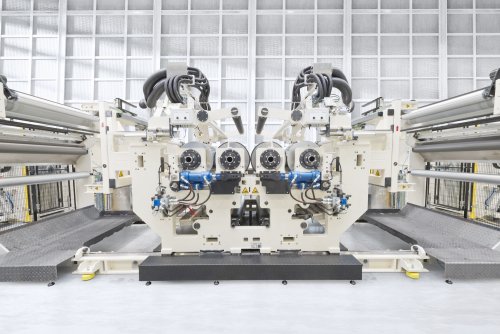
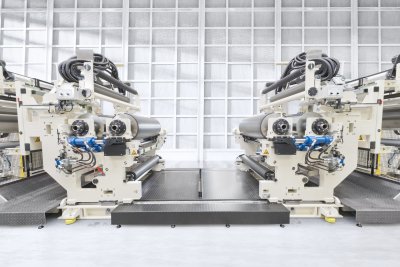
    In a large laminating unit by SAUERESSIG Engineering for laminating steel strip on both sides, rubber rollers press a protective PET film onto hot steel strip. Despite cooling, these rubber rollers do wear down and need to be replaced regularly. Four profiled rail brakes by mayr® power transmission ensure that the laminating process, which takes place 24 hours a day, only has to be interrupted briefly to replace the rollers.

    SAUERESSIG began manufacturing printing and embossing rollers for the packaging and printing industry around 70 years ago. Today, the company is a highly innovative mechanical engineering company with a diverse portfolio. As a leading full-range supplier of calendering, embossing and rotary processing systems in standard and special designs, the company supplies a wide range of industries.

    The machine solutions include both complete production lines and customized systems for embossing, finishing, coating, smoothing, perforating and calibrating sheet materials such as paper, film or metal sheets. The company offers comprehensive expertise from the initial idea to the final customized solution, including planning and designing mechanics, drive and automation technology, pre-assembly and commissioning in the factory, and final approval at the customer’s premises.

    SAUERESSIG’s large laminating unit coats both sides of the steel strip with a protective PET film

     One such customized system, no less than six metres long and around four metres wide, coats a steel strip on both sides with a thin protective PET film. Harald Bartsch, Head of Design/Expert Advisor at SAUERESSIG Engineering, describes the machine’s design concept as follows “The complete laminating unit consists of two nearly identical, symmetrically arranged side frames, each with a rubberized laminating roller and a contact cooling roller. For laminating, the steel strip moves vertically between the two laminating rollers through the laminating unit at a conveying speed of up to 250 m/min. The laminating rollers press the film onto the hot steel strip from both sides.”

    The steel strip’s high temperatures of up to 260 °C heat up the rubber coating on the laminating rollers. Water-cooled contact rollers dissipate this heat and limit the rubber coating’s temperature to a maximum of 90 °C. Despite the cooling, the rubber linings of the laminating rollers are subject to wear and must be replaced regularly. “As the laminating process should ideally be running continuously all year round and 24/7 without interruption,” explains Harald Bartsch, “the time required to replace the laminating rollers must be kept as short as possible. Therefore, the laminating unit is designed in such a way that the automated roller replacement only takes half an hour.”

    The laminating unit consists of two symmetrically arranged side frames. Both side frames are mounted onto profiled rail guides and can be separated axially to replace the worn laminating rollers. While the coating process is in progress, profiled rail brake of the ROBA® guidestop® series by mayr® power transmission hold the two system parts in position backlash-free and with high rigidity. To replace the rollers, these safety brakes are released hydraulically, the two machine halves can be moved apart via rack and pinion gears and the laminating rollers can be replaced.

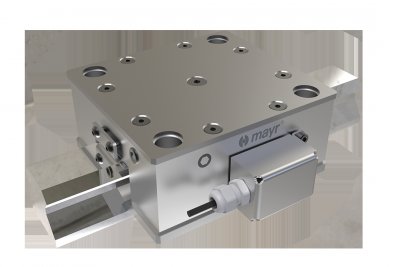
    Profiled rail brake of the ROBA® guidestop® series by mayr® power transmission hold the two system parts of a large laminating unit in position backlash-free and with high rigidity.

     The ROBA® guidestop® profiled rail brake serves as a reliable safety brake and backlash-free clamping unit. It can brake movements safely and quickly and clamps the axes rigidly and backlash-free.

    Just like all safety brakes by mayr®power transmission, the profiled rail brakes also work according to the fail-safe principle. This means they are closed in de-energised condition. The ROBA® guidestop® brakes use pre-tensioned cup springs to press the brake shoes against the ‘waist’ of the profiled rail, thus clamping it in place.

    The hydraulic brake design used in the SAUERESSIG laminating unit is released using a nominal pressure of 70 bar. This is comparatively low in relation to the very high holding forces. The brake mechanism is dimensioned for relatively large strokes. As a result, the brake can compensate for production tolerances on the profiled rails without losing braking force. The ROBA® guidestop® safety brakes are equipped with two independent brake circuits: This allows for either double holding forces or a redundant design.

    The profiled rail brakes are therefore directly mounted onto the masses which are to be braked or held. This minimises the risk of hazards, particularly with gravity-loaded axles, as drive elements between the motor and the moving mass, such as spindles, spindle nuts, shaft couplings and gears, do not affect safety. This is different for concepts with motor brakes, as all drive elements must transmit the braking torque to the carriage. Furthermore, every element between the brake and the carriage has a negative effect on rigidity. ROBA® guidestop® safety brakes are therefore considerably more rigid than motor brakes, rod brakes or band brakes, which are often subject to backlash.

    ROBA® guidestop® safety brakes by mayr® power transmission are available in pneumatic or electromagnetic versions in addition to the hydraulically opening design. The hydraulically releasing ROBA® guidestop® series covers nominal holding forces from 5000 to 34000 N with four sizes. The pneumatically releasing version offers the greatest variety of options: Six sizes with nominal holding forces from 700 to 15000 N are available in the standard product range. Both versions (i.e. pneumatically and hydraulically releasing) are available for all common linear guides. Electromagnetically opening rail brakes do not require any pneumatic or hydraulic equipment. mayr® power transmission developes this variant on request, customizing it for the respective application.

  • Caspia Launches New RTL Security Analyzer Enabling Agentic Silicon Security Verification

    GAINESVILLE, Fla., Feb. 25: Caspia Technologies announced broad availability of its flagship security verification product CODAx. New and unique capabilities delivered by the product were described, along with its impact on the customer base. The company also provided a preview of its plans to build agentic security verification workflows.

    CODAx is Caspia’s security-aware auditing solution that analyzes early (RTL) code of IP/SoC designs to detect coding styles that can introduce security vulnerabilities. Over 150 insecure coding practices are recognized and suggested corrections are also provided.

    CODAx security checks are informed by public vulnerability databases including CWE, CVE, and Trust-Hub, which catalog over 1,000 known hardware security weaknesses. Caspia applies GenAI techniques to systematically map these weaknesses to detectable RTL coding patterns.

    The latest release of CODAx, V2026.1 provides deeper security checks that span across the design hierarchy, enabling identification of weaknesses that travel up and across design modules. The company reported that comprehensive stress testing was performed on this release with 10,000+ intentionally vulnerable designs.

    Caspia also reported that a popular open-source root-of-trust design containing 400+ design files, approximately 3 million gates, and 500,000 lines of RTL code was analyzed by CODAx in about 45 minutes. Multiple security weaknesses were found during this analysis.

    Caspia has been working with all the major EDA suppliers to ensure a smooth integration of its tools with existing design flows. The company also reported that major chip and system companies from around the world are successfully deploying CODAx for designs that support applications such as automotive, data center, communication, storage, multimedia, precision analog and embedded computing.

    Caspia announced that Stuart Audley has joined the company as VP/GM of product management, with a focus on agentic security workflows. Audley brings decades of experience designing and deploying cryptographic hardware and security IP for top defense primes and leading semiconductor companies. He previously led advanced security platform development for FPGAs and ASICs at The Athena Group, Inc. and Mercury Systems.

    “We are expanding our security verification footprint to include both advanced tools and enablement of agentic workflows,” said Rick Hegberg, CEO of Caspia. “I am delighted to add someone with Stuart’s experience and background to the team. This will ensure we can focus on delivering cutting-edge capabilities and AI-driven security automation.”

    “Caspia is evolving from a provider of point security verification tools to an agentic platform supplier where AI orchestrates comprehensive hardware security workflows,” said Audley.

    He went on to say, “the elements of our plan include unifying all our tools with AI-assisted workflows that span the entire hardware security lifecycle: analyzing RTL, identifying vulnerabilities, and verifying the results.

    Traditional design flows remain fully supported, but we are creating a new category for agentic-enabled hardware security verification.”

    Caspia will present its latest technology in booth 702 at DVCon on March 2-5, 2026, to be held at the Santa Clara Hyatt Regency in Santa Clara, CA. 

  • Capgemini Partners with OpenAI to Fast-Track Enterprise AI Transformation

    Mumbai, Feb 25 : Capgemini today announced a new strategic partnership with OpenAI to accelerate the next era of enterprise AI transformation with Frontier, OpenAI’s new platform for building, deploying, and managing AI coworkers that can do real work across the enterprise. As a founding member of the OpenAI Frontier Alliance, Capgemini will work to address the AI opportunity gap by focusing on the business, data, organizational, and systems integration challenges faced by clients, to deploy AI enterprise-wide. By combining deep industry and domain-specific process expertise, data and governance capabilities, and ready-to-deploy digital and AI transformation assets, Capgemini is well placed to help businesses redefine how agents are built and run in their organizations, so AI can be deployed securely, operated reliably, and scaled across the business.

    Capgemini brings deep sector and domain experience, strategy and transformation capabilities, and advanced AI, data and cloud assets to deliver integrated, end-to-end business transformation for clients globally. Backed by OpenAI research and product expertise across enterprise AI Cloud, agents, APIs, and ChatGPT Enterprise, Capgemini will build next-gen enterprise AI operating processes and reshape multi-agent workflows that will enable clients to accelerate time-to-value throughout the business.

    With 2026 identified as the “year of truth for AI,” with more than half of organizations committing to sustained, multi-year investment horizons there is a shift underway from AI experimentation to long-term value creation. At the same time, leaders recognize that the primary barrier to scaling AI is no longer the technology itself, but the readiness of their data, operating models, technology and digital enablement, as well as industry, function and domain knowledge and expertise.

    “Our multi-year partnership with Capgemini will help bring AI coworkers to enterprises,” said Brad Lightcap, Chief Operating Officer at OpenAI.

    “Capgemini’s transformation and global delivery expertise alongside OpenAI’s research and product leadership will help close the gap between what frontier AI can do and what businesses can actually deploy with agents.”

    Our strategic partnership with OpenAI on the Frontier platform strengthens our position at the forefront of AI-powered enterprise transformation,” said Aiman Ezzat, CEO of Capgemini.

    By combining our domain expertise and assets with OpenAI’s cutting-edge models and platform, we move faster, build smarter, and create solutions that weren’t possible before. We see this as a long-term strategic collaboration that will shape the future of our industry.”

    As an OpenAI Frontier Alliance partner, Capgemini will establish a flagship OpenAI Enterprise Frontier delivery function at scale comprised of AI experts from across its global ecosystem that will work alongside OpenAI’s Forward Deployed Engineering (FDE) team. This dedicated team of OpenAI certified professionals will support clients to move from AI experimentation to scaled operations across business units, markets, and geographies, all whilst maintaining consistent high quality and the right level of governance to deliver measurable impact. Together, the partners will co-develop bespoke industry solutions focused on sectors, for example consumer products & retail, financial services, life sciences and energy and utilities.

    With most organizations recognizing that they must scale AI or risk missing strategic opportunities and losing competitive edge2, this partnership represents a pivotal moment for enterprises. Together, Capgemini and OpenAI intend to offer clients the combined enterprise-grade AI products and implementation capabilities needed to deliver measurable business outcomes across their organization.

  • General Magic Raises Oversubscribed US$7.2M to Cut Insurance Quote Time to 3 Minutes

    Toronto, Canada – February 25, 2026; Insurance is complicated. Customers have questions before they quote, need guidance after, and expect clarity when they file a claim. But the work of answering those questions, collecting documents, and following up still runs on calls, emails, and portals stitched together by manual effort. For brokers and carriers, this coordination overhead is one of the most operationally expensive and taxing parts of the business.

     General Magic is building AI agents to solve this problem.

     The company announced a US$7.2M seed funding round led by Radical Ventures, with significant participation from a16z Speedrun and new investment from Figma VP of Product Brendan O’Driscoll and Larry James Erwin from OpenAI. The company has raised $8.4M to date, backed by Radical Ventures, a16z Speedrun, and Comma Capital, along with operators who have built foundational AI and product platforms, including Aidan Gomez, CEO of Cohere, as well as the executive team at Braze, including Kevin Wang, Chief Product Officer, and Spencer Burke, SVP of Growth.

     General Magic builds AI agents that take over the work insurance teams spend the most time on: answering routine questions, collecting documents, and following up with customers when clarity matters. These agents work across the full insurance lifecycle, covering pre-quote eligibility, post quote engagement, and claims coordination. They do all of this while connecting directly to broker management systems, quoting platforms, and CRMs. 

     Early deployments show what’s possible. Working with one of the world’s largest general insurers, General Magic has reduced time-to-quote from roughly 30 minutes down to under 3 minutes via its SMS-based agent. 

     “Too much of insurance still relies on manual follow through across calls, inboxes, and scattered systems,” said Jai Mansukhani, Co Founder and President of General Magic. “We focus on keeping customers engaged at every stage of the lifecycle, not just at quote or claim. Our agents handle the routine work that slows teams down, while giving insurance leaders real visibility into what customers are asking, where they are getting stuck, and how they are feeling. When that engagement and data flow directly into core systems, teams move faster and customers feel genuinely supported.”

     The company’s agentic offerings are centered around a product called Cell, a proactive AI agent that connects directly to the systems insurance teams already use. Cell integrates with broker management systems, quoting and rating platforms and CRMs to support teams. It can be deployed across SMS, iMessage and RCS, and can extend into policy, billing and claims workflows as needed.

    When a customer has a question, they can text Cell over SMS, or the insurance team can proactively deploy it to the customer. The agent responds using real system data, asks for missing information, follows up automatically, and updates records as workflows progress. Conversations stay in one thread, context is preserved, and customers move forward at their own pace without being chased or dropped.

     Early deployments point to the scale of the opportunity. In early rollouts with large personal lines insurers, General Magic is reducing the time required to generate and finalize quotes from roughly 30 minutes to about 3 minutes by automating routine clarification and follow-ups over SMS across auto and life insurance workflows. This increase in speed expands effective quoting capacity while keeping customers engaged through the most failure prone part of the journey after a quote is issued. By handling frequent questions and coordination over text, the agent reduces delays and prevents conversations from stalling. General Magic is currently supporting deployments with carriers across auto and life insurance, where post-quote and customer coordination are most critical.

     In parallel, the team is focused on building agents that understand the realities of insurance distribution, including licensing and regulatory frameworks such as RIBO, OTL, and other broker and advisor exams. By specializing agents around how licensed professionals are trained to communicate, General Magic aims to ensure conversations feel accurate, compliant, and aligned with how insurance teams actually explain coverage to customers.

     General Magic was founded by Anthony Azrak and Jai Mansukhani, second-time founders who previously sold AI products into legacy industries. The company’s move into insurance came from firsthand frustration. After a water leak spiraled into weeks of calls, delays, and higher premiums, the founders began exploring how common this experience really was. What they found was an industry that technically works, but often fails customers and intermediaries in the moments that matter most. That insight shaped General Magic’s decision to go deep into insurance rather than remain a horizontal AI platform.

     The broader industry context underscores the urgency. Retention rates in insurance lag behind other sectors, and acquiring new customers costs significantly more than keeping existing ones. As digital distribution accelerates and customers shop more aggressively at renewal, both carriers and brokers that fail to improve post-quote engagement risk losing revenue they already worked to win.

    Looking ahead, General Magic plans to expand across insurance lines and workflows, staying focused on moments where customer intent is high and coordination most often breaks down. The platform is being built to support high impact workflows across the insurance stack, prioritising areas where follow-through fails today and where fixing it creates meaningful value for customers, brokers, and carriers.

     The long term vision is simple but ambitious: make follow through automatic, reliable, and invisible. By removing the need for manual chasing and fragmented handoffs, teams can spend less time managing processes and more time serving end customers. The team is motivated by solving complex, real world problems that sit at the center of insurance operations, with the goal of delivering tangible improvements to how people experience insurance when it matters most.

     Sanjana Basu, partner at Radical Ventures, commented: “Most of the world’s financial and insurance data is locked inside rigid, legacy systems that were never designed for the AI era. General Magic isn’t trying to convince enterprises to throw away that infrastructure. Instead, they are giving them a way to finally talk to it. By building a reasoning layer that sits on top of existing systems of record, the General Magic team are unlocking a massive amount of trapped value. This is how the Fortune 500 becomes AI-native. Not by rebuilding from scratch, but by bridging the gap between old data and new intelligence.” 

    Troy Kirwin, investment partner at a16z Speedrun, added: “We’ve watched Anthony and Jai grow exponentially both during their speedrun cohort and in the months after. They are building a truly compelling product that we believe will revolutionize workflows across insurance carriers and brokerages globally. I have a personal thesis that outsiders will disrupt legacy industries, and General Magic has helped buttress this thesis with the immense progress they’ve made. We are excited to deepen our partnership through supporting their seed round.” 

    Pete Tessier, BFA, CAIB, President at insurance MGA Taycon Risk, added: “What I have seen with General Magic and their approach to AI was a willingness to adapt to the insurance industry’s needs. This is significant because of the varied nuances of the insurance industry and how its products are distributed, and why internal and external customer journeys are different. The challenge will be making it scale across all channels of insurance product distribution. This might be the first true ‘game changer’ for the industry and deliver on customer experience and expectations”