
New Delhi, Oct 7: The Reserve Bank of India (RBI) on Wednesday raised the benchmark repo rate by 25 basis points to 5.50 per cent, marking a significant shift in its monetary policy stance amid rising inflation, elevated crude oil prices and growing global economic uncertainties.
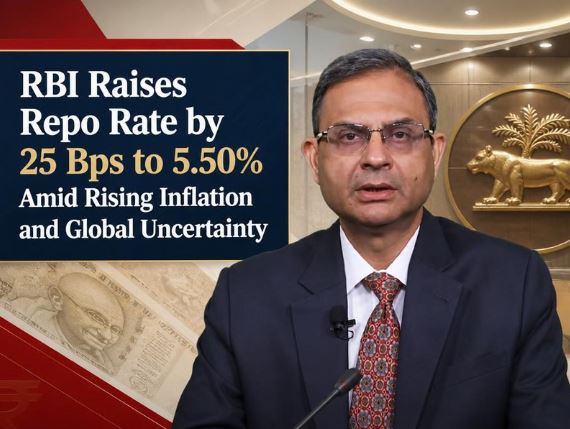
The decision was taken by the six-member Monetary Policy Committee (MPC) headed by RBI Governor Sanjay Malhotra after a three-day review of the domestic and global economic situation.
Following the hike, the Standing Deposit Facility (SDF) rate has been adjusted to 5.25 per cent, while the Marginal Standing Facility (MSF) rate and Bank Rate have been raised to 5.75 per cent.
Inflation, Crude Prices Drive Rate Decision
The RBI’s decision comes against the backdrop of intensifying inflationary pressures and a sharp rise in international crude oil prices, with benchmark prices moving above $100 a barrel amid the ongoing West Asia crisis.
The central bank had maintained the repo rate at 5.25 per cent for an extended period. The latest increase marks the first hike since February 2023, according to the policy assessment.
The MPC’s decision also reflects concerns over the global inflation outlook, with major central banks facing renewed pressure to tighten monetary policy.
Inflationary Risks Mount
India’s retail inflation has been moving higher, with Consumer Price Index (CPI) inflation rising to 4.82 per cent in August from 4.45 per cent in July.
Economists have warned that inflationary pressures could strengthen further due to higher energy costs and weather-related risks. Strong El Niño conditions and below-normal rainfall during October could also affect Rabi crop production, potentially adding to food-price pressures.
Rising global bond yields and tighter financial conditions have further complicated the RBI’s policy choices.
SBI Research Backs Pre-Emptive Action
SBI Research had projected a 25-basis-point rate increase, citing broadening inflationary pressures, worsening global macroeconomic conditions, changing liquidity dynamics and renewed repricing of risks in international markets.
“It would be prudent for us to act pre-emptively rather than be behind the curve,” SBI Research economists said.
With inflation approaching the 5 per cent mark and global uncertainties persisting, economists expect monetary policy to remain closely focused on price stability in the coming months.
The latest rate increase underscores the RBI’s effort to contain emerging inflation risks while navigating a volatile global economic environment.
