Author: admin

  • Government Pushes Crop Diversification, MSP Procurement and Faster Insurance to Strengthen Farmers’ Incomes

    New Delhi, March 17: India’s Union Minister for Agriculture and Farmers’ Welfare and Rural Development, Shivraj Singh Chouhan, has outlined a series of policy measures aimed at strengthening farmers’ incomes and risk protection, including crop diversification, record procurement at Minimum Support Price (MSP), reforms in crop insurance, and stricter monitoring of agricultural schemes.

    Responding to questions from Members of Parliament in the Lok Sabha, Chouhan said the government led by Prime Minister Narendra Modi is encouraging farmers to move away from tobacco cultivation and adopt alternative crops that offer sustainable and profitable returns.

    According to the minister, the government has identified a range of crops suited to regions traditionally dependent on tobacco cultivation. These include hybrid maize, chilli, sweet potato, cotton, potato, chia, feed beans, cowpea, ragi, red gram, sugarcane, soybean, sorghum and groundnut. The objective is to ensure farmers maintain stable cash incomes while shifting to more sustainable cropping patterns.

    Government Pushes Crop Diversification, MSP Procurement and Faster Insurance to Strengthen Farmers’ Incomes


    Focus on Integrated Farming

    Chouhan noted that the majority of Indian farmers operate on small landholdings, making reliance on a single crop particularly risky. To address this challenge, the government has been promoting integrated farming models that combine multiple agricultural and allied activities.

    Under these models, farmers can diversify into cereals such as wheat and paddy alongside vegetables, fruits, livestock, fisheries, beekeeping, goat rearing and agroforestry. Such diversification, he said, helps generate more stable and year-round income streams for farm households.

    Strengthening MSP Procurement

    The minister also highlighted the government’s efforts to ensure remunerative prices for farmers through enhanced MSP procurement. MSP levels for major crops, including wheat, paddy, pulses and oilseeds, have been increased, while procurement operations during the current season have reached record levels.

    Special arrangements have been introduced for pulses such as tur, masoor and urad, enabling registered farmers to sell any quantity of produce to the government at MSP. The measure is intended to provide stronger income security for pulse growers and encourage higher domestic production.

    Faster Compensation Under Crop Insurance

    Chouhan also detailed reforms introduced in the Pradhan Mantri Fasal Bima Yojana, the government’s flagship crop insurance scheme.

    Previously, farmers often experienced long delays in receiving compensation for crop losses. Under the revised provisions, insurance companies are required to compensate farmers even if crop damage affects a single individual farmer. Furthermore, once yield data is available, if the claim amount is not credited to the farmer’s account within 21 days, insurance companies and state governments must pay the amount along with 12 per cent interest.

    Stronger Monitoring and Transparency

    The minister said the government has also established stricter oversight mechanisms to ensure transparency in scheme implementation. Complaints received through digital platforms, including the Krishi Rakshak Portal, are being reviewed carefully and action is taken wherever irregularities are detected.

    He added that in several states, particularly Rajasthan, large sums under crop insurance schemes have been transferred directly to farmers’ bank accounts through the Direct Benefit Transfer (DBT) system in recent years.

    Chouhan emphasised that these policy initiatives collectively aim to build a more resilient agricultural ecosystem in which farmers benefit from improved incomes, better risk protection and greater transparency in government support mechanisms.


  • Cabinet Approves Rs.11,440 Crore ‘Mission for Aatmanirbharta in Pulses’ to Boost Domestic Production

    New Delhi, March 17: The Union Cabinet has approved a centrally sponsored scheme titled Mission for Aatmanirbharta in Pulses aimed at increasing domestic production of pulses and achieving self-sufficiency in the sector. The mission will be implemented over a six-year period from 2025–26 to 2030–31 with a total financial outlay of ₹11,440 crore.

    The mission focuses on strengthening the pulses value chain by expanding cultivation, promoting improved seed distribution, and developing post-harvest infrastructure across the country.

    Processing Units to Strengthen Post-Harvest Infrastructure

    Under the post-harvest infrastructure component of the mission, the government has approved the establishment of 1,000 processing units (dal mills) during the mission period. In the first phase, a target of 528 processing units has been allocated to various states and Union Territories.

    Among the states, Uttar Pradesh has received the highest allocation with 56 units, followed by Madhya Pradesh with 55, Bihar with 37, Maharashtra with 34, and Karnataka and Rajasthan with 30 units each. Other states such as Gujarat, Assam, Andhra Pradesh, Tamil Nadu, and Chhattisgarh have also been allotted processing units to strengthen local processing capacity.

    Free Seed Kits to Expand Pulses Cultivation

    To expand pulses cultivation, particularly in rice fallow areas and other diversifiable agricultural regions, the mission provides support through the distribution of free seed kits to farmers.

    Under the programme, a total of 87.5 lakh seed kits are targeted for distribution over the six-year period based on the Annual Action Plans submitted by states and Union Territories. For the Rabi season of 2025–26, around 10.36 lakh seed kits have been allocated to states.

    The tentative targets for seed kit distribution in the coming years include:

    • 2026–27: 15 lakh kits

    • 2027–28: 16.25 lakh kits

    • 2028–29: 17.50 lakh kits

    • 2029–30: 13.75 lakh kits

    • 2030–31: 12.5 lakh kits

    Focus Districts Identified for Pulses Clusters

    To accelerate the mission’s implementation, 489 districts across the country have been identified as focused districts for developing pulses clusters. The list of districts may be modified in the future based on local requirements and evolving agricultural conditions.

    Area Under Pulses to Expand by 35 Lakh Hectares

    As part of the mission’s long-term strategy, the area under pulses cultivation is projected to increase by 35 lakh hectares by 2030–31. This includes 24.5 lakh hectares in traditional pulses-growing regions and 10.5 lakh hectares in non-traditional areas where pulses cultivation will be promoted.

    The mission is expected to significantly enhance domestic pulses production, reduce dependence on imports, and improve farmers’ incomes through improved productivity and better post-harvest infrastructure.

  • Over 2.12 Lakh Startups Recognised Under Startup India; Over 1 Lakh Have Women Directors

    New Delhi, March 17: A total of 2,12,283 entities have been recognised as startups under the Government of India’s flagship Startup India initiative as of January 31, 2026, reflecting the rapid expansion of India’s entrepreneurial ecosystem over the past decade.

    Launched on January 16, 2016, the initiative aims to build a strong ecosystem that nurtures innovation, promotes entrepreneurship, and encourages investment across sectors in the country.

    According to data shared in Parliament, 1,02,054 recognised startups have at least one woman director or partner, indicating the growing participation of women in India’s startup ecosystem.

    Over 2.12 Lakh Startups Recognised Under Startup India; Over 1 Lakh Have Women Directors


    However, the government also noted that some startups have ceased operations. Data maintained by the Ministry of Corporate Affairs (MCA) shows that 6,789 recognised startups have been categorised as closed (dissolved or struck-off). Among these, 2,950 startups had at least one woman director or partner.

    The recognised startups are registered with the Department for Promotion of Industry and Internal Trade (DPIIT), which oversees the Startup India initiative and maintains the recognition database.

    Key Government Support Schemes

    To support startups at different stages of their growth cycle, the government is implementing several flagship schemes under Startup India.

    One of the major initiatives is the Fund of Funds for Startups (FFS), which aims to catalyse venture capital investment in Indian startups. The scheme is operationalised by the Small Industries Development Bank of India (SIDBI), which provides capital to SEBI-registered Alternative Investment Funds (AIFs) that subsequently invest in startups.

    As of January 31, 2026, AIFs supported under the scheme have invested around ₹25,859 crore in startups, including ₹2,995 crore in women-led startups since 2020.

    Another major initiative is the Startup India Seed Fund Scheme (SISFS), which provides financial assistance to early-stage startups through incubators. Implemented from April 1, 2021, the scheme has approved around ₹592 crore in funding to selected startups, of which ₹294 crore has been allocated to women-led startups.

    The government has also introduced the Credit Guarantee Scheme for Startups (CGSS) to facilitate debt financing for startups through eligible financial institutions. Operational since April 1, 2023, the scheme has guaranteed loans worth around ₹925 crore to startup borrowers, including ₹39 crore to women-led startups.

    Startups Supported and Closure Data

    Under the Fund of Funds for Startups, 1,382 startups have been selected for support, of which 17 are currently categorised as closed. Under the Startup India Seed Fund Scheme, 3,311 startups have been supported, with 26 reported as closed. Meanwhile, the Credit Guarantee Scheme for Startups has supported 281 startups, with one startup recorded as closed.

    State-wise data also shows significant participation of women entrepreneurs in the startup ecosystem across major states such as Maharashtra, Karnataka, Gujarat, Delhi, Tamil Nadu, and Uttar Pradesh.

    The information was shared by Jitin Prasada, Union Minister of State for Ministry of Commerce and Industry, in a written reply to a question in the Lok Sabha.

  • India Leads Global Coconut Production; Centre Announces Coconut Promotion Scheme in Budget 2026–27

    New Delhi, March 17: India continues to hold the top position in global coconut production, contributing 30.37% of the world’s total output, according to information shared in Parliament. The Government of India has also announced a Coconut Promotion Scheme in the Union Budget 2026–27 aimed at boosting productivity and strengthening the country’s competitiveness in coconut cultivation.

    Globally, coconut cultivation spans approximately 12,390 thousand hectares, of which India accounts for about 2,165.20 thousand hectares. The country produces nearly 21,373.62 million coconuts annually, with an average productivity of around 9,871 nuts per hectare, highlighting the crop’s significant contribution to the agricultural economy.

    Coconut farming also plays a crucial role in rural livelihoods. Nearly 30 million people, including around 10 million farmers, depend on coconut cultivation and related activities for their income and employment.

    To further strengthen the sector, the government has proposed the Coconut Promotion Scheme as part of its efforts to enhance agricultural productivity and promote high-value crops. The scheme focuses on rejuvenation of coconut plantations, including the replacement of old and non-productive trees with improved saplings and high-yielding varieties. The initiative aims to increase both production and productivity in major coconut-growing states across the country.

    The scheme forms part of a ₹350 crore allocation for high-value agriculture, which also includes crops such as cashew and cocoa. Through targeted interventions, the government intends to improve crop quality, increase farmers’ incomes, and strengthen India’s position in global agricultural markets.

    However, officials clarified that the state- and Union Territory-wise fund allocation and utilization details are yet to be finalized, as the scheme is currently under formulation.

    The details were provided by Bhagirath Choudhary, Minister of State for Ministry of Agriculture and Farmers Welfare, in a written reply to a question in the Lok Sabha.

     
  • Centre Approves 203 Integrated Ayush Hospitals and 383 Dispensaries Under National Ayush Mission

    New Delhi, March 17: The Government of India has approved the establishment of 203 Integrated Ayush Hospitals (IAHs) and 383 new Ayush dispensaries across various states and Union Territories under the National Ayush Mission (NAM) to strengthen traditional healthcare infrastructure in the country.

    Launched in 2014–15, the centrally sponsored scheme is being implemented through state and Union Territory governments with the aim of promoting and developing Ayush systems of medicine, including Ayurveda, Yoga, Naturopathy, Unani, Siddha, and Homoeopathy. The mission provides financial assistance for setting up 50-, 30-, and 10-bedded Integrated Ayush Hospitals, along with Ayush dispensaries based on proposals submitted by states through their State Annual Action Plans (SAAPs).

    According to the Ministry of Ayush, the approvals have been granted to expand access to traditional healthcare services in different parts of the country. The projects are part of the Centre’s broader efforts to integrate Ayush systems into the public health framework and improve healthcare delivery, particularly in underserved regions.

    Among the states, Rajasthan has received the highest number of approvals for Integrated Ayush Hospitals with 33 units, followed by Uttar Pradesh with 25, Maharashtra with 14, and Madhya Pradesh with 13 hospitals. Other states such as Kerala, Chhattisgarh, and Manipur have also been sanctioned multiple facilities to strengthen Ayush-based healthcare infrastructure.

    Several northeastern states have also received approvals under the scheme, including Arunachal Pradesh, Assam, Manipur, Meghalaya, Mizoram, and Nagaland, reflecting the government’s focus on expanding traditional medicine services in the region. Union Territories such as Andaman & Nicobar Islands, Chandigarh, Lakshadweep, and Puducherry have also been included in the plan.

    In addition to hospitals, 383 new Ayush dispensaries have been approved nationwide. Uttar Pradesh accounts for the largest share with 250 dispensaries, followed by Assam with 100 units. Other states including Jammu & Kashmir, Manipur, Meghalaya, Tamil Nadu, and Maharashtra have also been allotted dispensaries under the programme.

    To support the implementation of these initiatives, the Centre has released ₹424.24 crore as grant-in-aid to states and Union Territories during the current financial year as part of the central share under the mission. The funds are intended for carrying out approved activities under the respective State Annual Action Plans.

    The information was shared by **Prataprao Jadhav, Minister of State (Independent Charge) for the Ministry of Ayush, in a written reply to a question in the Lok Sabha on March 13, 2026.

    The expansion of Ayush hospitals and dispensaries is expected to enhance access to traditional healthcare services and strengthen the integration of Ayush systems within India’s broader public health network.

  • Kore.ai Launches Agent Management Platform to Bring Governance and Control to Enterprise AI

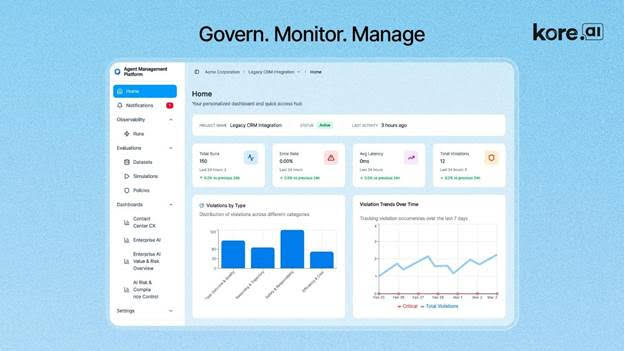
    SAN FRANCISCO, CA — March 17, 2026 — Kore.ai, a provider of agentic applications and a market-leading enterprise AI platform, today announced the launch of its Agent Management Platform (AMP), a unified command center designed to govern, monitor, and manage AI agents and AI systems across the enterprise. 

    As organizations rapidly deploy AI and multi-agent systems, many are encountering “AI sprawl,” a phenomena analysts describe as dozens of AI initiatives across different teams, tools, and clouds without centralized visibility or governance. Gartner predicts that by 2028, enterprises will operate thousands of AI agents across various business functions, making centralized management, policy enforcement, and value measurement critical for the responsible adoption of AI. 

    The Kore.ai Agent Management Platform provides enterprises with a single operational layer to manage AI systems across frameworks, clouds, and development environments, including LangGraph, CrewAI, AutoGen, Google ADK, AWS AgentCore, Microsoft Foundry, Salesforce Agentforce, and proprietary systems. It consolidates AI observability, governance enforcement, performance monitoring, and value measurement, enabling organizations to move from fragmented AI experimentation to controlled, enterprise-scale deployment. 

    Two core capabilities distinguish Agent Management Platform from other emerging solutions. First, the platform provides a comprehensive evaluation studio that allows enterprises to test agent behavior, workflows, and outcomes before production deployment, helping teams reduce uncertainty and accelerate time to reliable deployment. Second, AMP is designed to operate across heterogeneous AI environments. While similar governance offerings from established players are typically limited to their own ecosystems and many startup solutions have limited connectivity with enterprise applications, Kore.ai’s agnostic architecture and deep integration capabilities enable enterprises to connect and govern AI systems built across multiple frameworks, tools, and platforms. 

    “AI agents are rapidly becoming the new software workforce inside enterprises,” said Prasanna Arikala, CTO and Head of Products at Kore.ai. “But without centralized governance, enterprises risk losing visibility and control over how AI operates across the organization. The Agent Management Platform introduces a new operational layer for enterprise AI, giving leaders the ability to manage AI agents with the same discipline, transparency, and accountability as any other critical business system.” 

    Kore.ai Launches Agent Management Platform  to Bring Governance and Control to Enterprise AI


    The new AMP platform integrates with AI agents built across leading frameworks and ecosystems, enabling organizations to manage heterogeneous AI environments through a unified control plane. Enterprises can now track AI performance and costs, enforce governance policies consistently, detect anomalies or drift, and align AI initiatives with measurable business outcomes. 

    “AI is quickly becoming core infrastructure for how enterprises operate,” said Raj Koneru, CEO and Founder of Kore.ai. “But scaling AI responsibly requires more than powerful models; it requires governance, visibility, and accountability. With the Agent Management Platform, we are helping enterprises turn AI from isolated experiments into a trusted, enterprise capability that delivers real business value.” 

    Designed to work across multi-agent environments and heterogeneous AI ecosystems, the Kore.ai Agent Management Platform provides organizations with a centralized foundation to govern AI adoption as it scales across the enterprise. 

  • Numeraire Future Trends Expands Partnerships with Three Contemporary Artists Using AI Authentication Technology

    Abu Dhabi,  March 17— Numeraire Future Trends, the Abu Dhabi–based CultureTech company pioneering AI-powered Digital Product Passports (DPPs) for art, luxury goods, and cultural assets, today announced that three contemporary talented female artists have partnered with the company to secure the identity and provenance of their works using its object-level fingerprinting technology.

    Emerging artists Megan Baker and Colette LaVette, represented exclusively by Gillian Jason Gallery, will integrate Numeraire’s proprietary AI-based authentication technology into their paintings. The platform creates tamper-resistant digital identities for each artwork, enabling collectors, galleries, and institutions to verify authenticity and provenance throughout the artwork’s lifecycle.

    Exploring Old Master influences through a contemporary lens, Megan Baker’s lyrical abstractions transform into dream-like landscapes. Taking moments of stillness within nature, the artist reflects on our contained state as human beings, while evoking a quiet sense of comfort in solitude.

    Colette LaVette’s practice borrows attributes from Rococo aesthetic, characterised by elaborate and ornamental decorations, lightness, a delicate chromatic palette and a focus on the fantastical.

    Millie Foster: “As emerging artists, Baker and LaVette are taking steps to both create and secure their legacy. Numeraire’s technology is an important step to support this endeavour.”

    Caroline Bergeron (ARO)

    Numeraire has also onboarded Caroline Bergeron, known as Aro, a Quebec based artist whose work is gaining increasing visibility through prominent exhibitions and cultural events in Canada and internationally. Her abstract contemporary practice merges emotional intensity with refined visual sophistication, resulting in powerful, immersive works that leave a lasting imprint. Through this collaboration, she further affirms her commitment to innovation, transparency, and the long-term protection and value of her collectors’ acquisitions. “Every artwork holds a story, an energy, and a moment in time. Ensuring its authenticity for generations to come is a responsibility I take seriously as an artist.”

  • Hungarian Study Offers New Insights into the Causes of Smartphone Addiction

    According to research from Semmelweis University, problematic smartphone use is not caused by personality alone, but by weak self-control and a strong fear of missing out on social events (FoMO). The study published in Acta Psychologica also highlights that excessive phone use not only causes psychological difficulties, but can also lead to long-term physical consequences: Poor posture may impair balance, slow reaction time, and make it harder to concentrate.

    Researchers at Semmelweis University investigated how smartphone use relates to mental and physical health, as well as cognitive functions, among students aged 18 to 35. In the online questionnaires, participants reported whether they had ever missed a planned task because of their phone use, and whether their phone was on their mind even when they weren’t using it. Participants were also asked about their daily active smartphone use and the types of activities they used their phones for.

    The participants’ personality traits and mental state were also examined. One questionnaire measured neuroticism, meaning a tendency to experience negative emotions such as anxiety, low mood, fear, and anger. Another assessed self-control, and a third measured FoMO, the fear of missing out on events and peers’ activities.

    Based on usage patterns, the researchers identified three groups. “Purely social” users relied on their phones mainly to communicate with friends and acquaintances, build social connections, and for social purposes. “Moderately process-oriented” users spent less than four to five hours a day on their phones for social purposes, news, entertainment, and passive scrolling, but spent less than four to five hours a day on their devices. About one third of participants were classified as “strong process-oriented” users, spending four to five hours or more per day on their phones, mainly for content consumption rather than social communication.

    “Our main finding is that personality alone—such as a high level of neuroticism—does not make someone addicted to their phone. People who are more prone to negative emotions like anxiety, depression, or stress do not automatically become addicted. What really matters is how well they can control their behavior, emotions, and impulses, and how strongly they fear missing out,” said Dr. Johanna Takács, senior research fellow at the Faculty of Health Sciences at Semmelweis University and lead researcher of the study.

    The study shows that the main problem is not the amount of time spent on phones, but how they are used. Passive scrolling on social media—such as watching short videos or browsing feeds—constantly exposes the brain to fast stimuli. This overloads attention, reduces concentration, and can cause mental fatigue over time.

    Cognitive tests showed that “strong process-oriented” users performed worse on attention and memory tasks than expected for their age. They also slept worse, felt a stronger need for constant new stimulation and had more difficulty controlling their impulses when they wanted to check or do something immediately.

    The study found that the duration of phone use was mainly associated with physical effects.

    “When people hold their phones at waist or chest level and look down at them, the head moves forward, creating a forward head posture, also known as ‘text neck.’ This puts extra strain on the neck and can cause pain or early wear of the neck joints.

    The neck contains sensors that tell the brain how the head is positioned. If a forward head posture is maintained for long periods, these signals can change and lead to balance problems. These effects are not limited to phone use but can also influence everyday movements,” said Beáta Seregély, assistant lecturer and expert responsible for the physical measurements in the study.

    The researchers stress that the goal is not to ban phones or punish young people for using them. Instead, the focus should be on helping them use their phones more consciously. Simple steps can help, such as limiting notifications—especially from social media and messaging apps—setting time limits for social media, avoiding phone use before bedtime, and promoting more physical activity and maintaining good posture.

    For mental prevention, it is especially important to help young people develop better self-control and feel less afraid of missing out on social events. This can be supported through behavioral training and psychological help. When self-control increases and fear of missing out decreases, personality-related vulnerability is no longer a major risk, and even more sensitive, anxious, or stress-prone individuals are much less likely to become addicted to their phones. 

  • Turquoise Health Announces $40 Million Series C to Become the Operating System for Healthcare Contracts and Payments

    SAN DIEGO, CA —March 17– Turquoise Health (“Turquoise”), a multi-sided healthcare pricing and payment platform, today announced it has raised $40 million in Series C funding. The round was led by Oak HC/FT, with participation from existing investors including Andreessen Horowitz, Adams Street Partners, and Yosemite.

    Healthcare’s financial infrastructure is broken in a way that costs the industry nearly $1 trillion in administrative spend annually. The core problem is structural, with the contracts underlying every payment decision stored in disparate systems, inconsistently interpreted, and effectively invisible to the parties bound by them. The result is a world where it’s difficult for anyone to translate those rates into accurate payment amounts. The current system results in both sides losing money due to denials and administrative overhead, or needing to maintain teams of analysts to manage complex reimbursement scenarios and reviews of documentation. This also leads to the poor experience that most patients have with medical bills and the financial infrastructure supporting care. By centralizing data, contract information, and clinical coverage rules, Turquoise addresses the industry’s pricing opacity and revenue leakage, transforming the cost of care from a source of conflict and confusion into a clear, actionable source of truth.

    Turquoise’s platform creates a new way to price, contract and transact in healthcare. Clear Rates synthesizes machine-readable files, claims data, Medicare benchmarks and all other relevant pricing signals into a single, auditable rate for every payer-provider combination. Contracts leverages AI to tag every rate and provision across a customers’ contract portfolio, turning static documents into a dynamic operating system so teams can find contract details, compare performance and model negotiation scenarios in a few clicks. Together, they lay the foundation for a fundamentally different healthcare transaction, one where standardized pricing and aligned contracts dissolve administrative waste and improve the patient experience by making same-day, transparent transactions the norm. Woven across the platform is AskTQ, the AI-powered pricing and contracting layer that cuts weeks of manual research down to seconds.

    “Our goal has always been to move the industry toward clear, accurate, and actionable healthcare pricing,” said Chris Severn, CEO and Co-Founder of Turquoise. “By evolving from a data vendor to a full workflow and transaction platform, we are building the infrastructure for transparent, real-time payments. This round allows us to ensure that this model becomes the industry standard.”

    Turquoise has demonstrated significant market momentum, with 35% of monthly active users now leveraging multiple products on the platform. The company’s platform is now utilized by more than 280 customers, including 10 of the top 25 health systems, 4 of the 5 national payers, 9 of the top 10 pharmaceutical companies, and 6 of the top 10 insurance brokers. The new capital will be used to assist with additional go-to-market efforts, accelerate the buildout of the product roadmap, and increase headcount. Turquoise has grown its team to nearly 200 employees since its founding 5 years ago and looks to add more talented, motivated people to the team.

    “Turquoise is uniquely positioned at the center of the healthcare economy, leveraging a data moat bolstered by their subject matter expertise, extensive library of over 65,000 contracts and best-in-class user interface,” said Vig Chandramouli, Partner at Oak HC/FT. “We have tracked Chris and the team since 2021 and are impressed by their ability to expand adoption simultaneously across providers, payers, employers, and life sciences. Their platform doesn’t just provide data; it embeds transparency directly into the negotiation and payment workflows of the industry’s largest stakeholders.”

  • Pine Launches Message Gateway, Turns Everyday Messages Into AI-Powered Tasks

    PALO ALTO, Calif. – March 17, 2026 – Pine, the trusted AI agent for consumers’ digital chores that delivers results, today announced Message Gateway, a new communication layer that allows users to interact with Pine’s AI assistant from anywhere, including messaging platforms, voice notes and phone calls, while Pine executes tasks in the background through AI agents.

    By turning everyday messages into real-world actions, Message Gateway transforms Pine into an always-available assistant that operates across a user’s digital life. Message Gateway enables Pine to operate across time and channels, managing tasks that may run for minutes, hours or even weeks.

    It transforms messaging from simple conversations into a control interface for AI agents that can perform real-world work.

    “Most AI assistants today still live inside a single app,” said Pine CEO Stanley Wei. “But real life doesn’t happen inside one interface. With Message Gateway, Pine can meet users wherever they already communicate, whether that’s messaging, voice or mobile. Our goal is simple: You talk to Pine naturally, and Pine takes care of the work.”

    Instead of having to open a specific application or interface to interact with an AI assistant, Message Gateway users simply send a message or speak naturally via channels like Telegram, WhatsApp, Slack or the Pine mobile app. Pine will understand the request, launch the appropriate AI agents and manage the task over time. The AI assistant tracks progress and keeps the user updated while tasks are completed.

    Unlike most voice assistants designed for quick commands or chatbots built primarily to answer questions, Pine is designed to manage long-running tasks that require coordination, follow-up and execution across multiple systems. Instead of returning a single response, Pine can start tasks that unfold over time, interacting with services, making calls, researching information and keeping users informed as progress is made.

    Key capabilities of Message Gateway include:

    ·        Multi-channel access: Users can interact with Pine through messaging platforms such as Telegram, WhatsApp, Slack and the Pine mobile app.

    ·        Voice and audio support: Voice notes and audio messages are automatically transcribed and processed, allowing users to speak naturally instead of typing.

    ·        Persistent task management: Tasks can run asynchronously for minutes, hours or days, while Pine tracks progress and provides updates.

    ·        Single assistant experience: Users interact with one assistant, while multiple AI agents work behind the scenes to complete tasks.

    ·        Real-world execution: Pine can perform actions such as negotiating bills, making calls, booking appointments, researching information or generating documents.

    ·        Context and memory: Pine remembers important details from conversations so users do not need to repeat themselves.

    “What makes Pine different is that it doesn’t just answer questions; it actually handles things for you,” said a Pine user. “Being able to send a message and have Pine take care of a task in the background feels like having a real assistant.”

    Message Gateway is part of the Pine AI assistant platform, a subscription-based service designed to help consumers delegate everyday digital tasks through natural conversation. Users can interact with Pine through messaging channels, voice or the Pine mobile app, while Pine manages the work through AI agents operating in the background.

    Message Gateway represents a key step toward Pine’s broader vision of building an AI assistant that operates across a user’s entire digital life. Rather than requiring people to adopt another standalone app, Pine aims to create an AI operating layer for everyday tasks, where simple conversations become the interface for getting things done.