Category: Technology

  • Sightview Unveils Fresh Patient Engagement Tools at Vision Expo 2026

    Digital payment and patient communications offerings alleviate friction throughout the patient journey

    Durham, NC — Mar 11 — Sightview, the only electronic health record and practice management partner focused solely on eyecare, will showcase two recently updated tools for its eyecare-specific EHR/PM offering at Vision Expo 2026 (March 11-14, 2026). Advancements include the addition of new digital payment options to more easily and proactively collect patient payments, and an updated communications package to automate outreach, curb patient leakage, and improve experiences.

    “Patients increasingly expect a digitally-driven experience with eyecare, specifically in optometry, where they want a retail experience alongside their clinical care,” said Tycene Fritcher, CEO of Sightview. “From tapping their phone to pay for their lenses, to automated text reminders, eyecare providers have an opportunity to modernize processes to improve patient loyalty and experiences, while streamlining backend processes, as well.”

    The Sightview Pay solution, powered by Global Payments, enables providers to collect payments before an appointment or at time-of-service via digital options like estimated payments, text-to-pay and card-on-file. These expanded payment options allow eyecare providers to capture patient payments faster, speeding cashflow while likewise reducing paper-based bills and patient frustration.

    Likewise, Sightview Patient Engagement allows providers to personalize and automate outreach to improve appointment volume and patient engagement. Pre-made templates like annual reminders, lens sales, and automated post-service or post-delivery check-ins allow practices to capture patients’ interest while ensuring a positive experience. The system’s automation features mean these new touchpoints won’t add extra work to already burdened staff.

    Sightview will demo these enhanced offerings in booth #4021 at the show, alongside its integrated EHR/PM platform, purpose-built for eyecare.


  • Secureframe Launches Secureframe Defense, an AI-Powered Platform to Strengthen DIB Cybersecurity and Simplify CMMC Certification

    San Francisco, CA – MAR 10, 2026 – Secureframe, the leading AI-powered cybersecurity compliance platform, today announced Secureframe Defense, the only end-to-end solution for CMMC certification. Secureframe Defense delivers the secure infrastructure deployment, AI-built System Security Plans (SSPs), policies, and comprehensive monitoring that Defense Industrial Base (DIB) organizations need to achieve and maintain CMMC certification faster, without unnecessary cost or complexity.

    With CMMC enforcement underway, readiness across the DIB remains critically low. The Department of Defense (DoD) estimates nearly 80,000 organizations will ultimately require CMMC Level 2 certification, yet fewer than 800 organizations—less than 1%—have achieved certification as of January 2026

    Research indicates that most DIB organizations spend over a year and $100K–$300K or more preparing for CMMC Level 2 certification by a Certified Third-Party Assessment Organization (C3PAO). Meanwhile, 47% of contractors have already received flow-down requests from prime contractors requiring proof of certification, making readiness urgent for subcontractors at every tier.

    “Secureframe Defense reflects everything we learned going through our own CMMC Level 2 assessment and the feedback we received from our partner C3PAOs about the real problems organizations face,” said Shrav Mehta, Founder and CEO of Secureframe. “Our AI-powered platform can take organizations with zero infrastructure to assessment-ready in less than 8 weeks.”

    From Zero to CMMC Ready with Secureframe

    Secureframe Defense guides organizations through three critical stages:

    Stage 1: Deploy Secure CUI Environments in Minutes

    Traditional enclave deployments typically take 8–10 weeks and require significant resources from internal IT teams or consultants. With Secureframe, teams can stand up a CMMC-compliant enclave in under 30 minutes. 

    The Secureframe platform automatically configures Google Workspace or Microsoft GCC High with all required CMMC controls, including access control, logging and monitoring, and security event notifications, to isolate CUI. Organizations can then auto-provision secure Azure virtual desktops for CUI access in minutes, or use a FedRAMP Moderate authorized, pre-configured device management solution to enforce CMMC baselines across their fleet of laptops and workstations.

    Stage 2: Document and Manage your Cybersecurity Program

    Turn the CMMC requirements into an AI-guided implementation workflow with Defense Navigator. After configuring your scope, integrations, and enclave, Secureframe’s AI engine generates SSPs and policies tailored to your exact environment. Built-in modules cover risk assessments, vendor reviews, policy assignments, and security awareness training, with continuous monitoring to flag controls the moment they fall out of compliance.

    Stage 3: Get and Stay CMMC Certified

    Secureframe’s Audit Module packages documentation and evidence artifacts automatically for efficient C3PAO review, reducing manual evidence collection and long assessment timelines. Organizations also gain access to the Secureframe network of vetted CMMC Registered Practitioners who can provide additional guidance and a network of vetted C3PAO partners experienced with the platform to complete your assessment.

    Months Saved, Hundreds of Hours Recovered

    Secureframe Defense reduces overall certification timelines from 12-18 months down to 4-8 weeks, cutting readiness time significantly compared to manual processes or point solutions. 

    Manufacturing Consulting Company, a defense contractor supporting U.S. Air Force programs, significantly reduced the operational complexity of documenting and monitoring compliance with Secureframe and passed their CMMC Level 2 assessment months before the Phase 1 deadline.

    “Using Secureframe to get NIST 800-171 and CMMC compliant saved us at least 500 hours,” said David Hoenisch, Lead Cybersecurity Engineer at Manufacturing Consulting Company. “Having a tool that can come alongside and augment your personnel force is a huge blessing. It was a weight off our shoulders.”

    “Everyone in the defense tech space has to be compliant, but many are relying on manual processes. It’s the peace of mind that Secureframe provides, the continuous monitoring, the fact that we have a system as opposed to a person trying to manage and ensure all of this – that’s the value add for us,” said Stephanie Castro, Director of Operations, Adyton.

    Federal-Grade Credentials, Proven in the Field

    Secureframe has been recognized by industry analysts and notable awards for its cybersecurity compliance excellence, reinforcing its position as a trusted platform for federal customers and other regulated organizations. The company continues to demonstrate its commitment to the federal market and the unique challenges it faces through industry-leading credentials:

    • CMMC Level 2 Certified: Among the first 0.5% of the ~80K expected Level 2 organizations to achieve certification in September 2025.

    • FedRAMP 20x Low Authorized: Among the first organizations to be FedRAMP® 20x Low Authorized in August 2025 and one of the few organizations selected for the Phase 2 pilot in January 2026.

    • 25+ CMMC Registered Practitioners: A CMMC Registered Practitioner Organization listed in the CyberAB Marketplace since March 2025.

    Organizations at any stage of the CMMC certification process can explore Secureframe Defense, access cybersecurity compliance resources, and connect with vetted C3PAO partners at secureframe.com/cmmc.

  • AAEON Brings Innovative Robotics, Machine Vision, and Industrial AI Demos to Embedded World 2026

    AAEON Brings Innovative Robotics, Machine Vision, and Industrial AI Demos to Embedded World 2026

    AAEON will be at Hall 1, Booth 306 of NürnbergMesse in Nuremberg, Germany between March 10 and March 12, 2026.


    (Taipei, Taiwan – Mar 10) AAEON, an industry leader in embedded computing, will host live demonstrations showcasing the edge AI capabilities of its products across multiple solutions at Embedded World 2026 in Nuremberg, between March 10 and March 12, 2026.

    Date: March 10 – March 12, 2026

    Booth: Hall 1, Booth 306

    Venue: Nuremberg Messe GmbH, Messezentrum 90471 Nuremberg, Germany


    This year, robotics and edge AI will be central themes of AAEON’s Embedded World showcase, allowing visitors the opportunity to see how scalable AI platforms from across its product portfolio are accelerating intelligent automation across industries.

    At Booth 306, AAEON will present a varied selection of live application demonstrations featuring new, exciting technologies from leading platform providers. Most notable of these is a speak-and-command robot featuring the upcoming BOXER-8741AI, built on NVIDIA Jetson T5000 module.

    Meanwhile, AAEON will host a number of live demonstrations developed in conjunction with key software partners, beginning with a four-wheeled robot running on AAEON’s BOXER-8651AI and remotely controlled by AAEON’s RTC-1030 rugged tablet, built in collaboration with Rover Robotics and Cogniteam.

    On the themes of machine vision and industrial AI, AAEON will introduce visitors to a new AI Workstation powered by the NVIDIA RTX PRO™ 6000 Blackwell, running Ipsotek’s AI Video Analytics from Eviden. The demonstration will feature multiple use-case videos showcasing the adaptability and scalability of Ipsotek’s VISuite software. Demo scenarios include edge-based deployments as well as advanced forensics and investigations, utilizing VLM and agentic AI models. In addition to this, an industrial defect detection application developed with computer vision specialists Awentia will be present, executing Awentia’s VLM engine on AAEON’s new modular MEX-BTS System Box PC, equipped with NVIDIA RTX 5000 Ada Generation GPU, powered by NVIDIA Ada Lovelace architecture.

    In its first public outing, the upcoming MIX-PTLWV1 Mini-ITX motherboard will be used in a demonstration illustrating how its Secure Edge AI reference architecture can be implemented for intelligent perception and decision-making. Powered by Ultralytics and Sandgrain CyberRock, the solution will illustrate the suitability of Ultralytics’ YOLO models on Intel® Core™ Ultra Series 3 Processors, as well as how such licensed models can secured by Sandgrain CyberRock.

    From AAEON’s UP Division, the UP Xtreme ARL AI Dev Kit will be deployed with Network Optix’s Nx AI Manager, showcasing the tool’s cross-hardware compatibility, custom pipeline configuration, and centralized, software-based model management. A further offering from UP will be a voice-controlled robotic arm built on the upcoming UP Xtreme PTL Edge, AAEON’s first Mini PC to host Intel Core Ultra Series 3 Processors.

    On Tuesday 10 March at 15:00, AAEON will participate in a technical workshop featuring a live demonstration on deploying and accelerating real-time computer vision workloads on Intel Core Ultra Series 3 processors using the Intel® OpenVINO™ Toolkit and Ultralytics YOLO. The session will showcase practical implementation strategies and performance optimization techniques for edge and embedded AI applications. Industry professionals and developers are encouraged to register in advance to secure their participation: https://aaeon-intel-ultralytics-vision-ai.eventbrite.com.

    Among its static product demos, AAEON will present a range of products that utilize innovative technologies from leading providers including Qualcomm Technologies and AMD. Notably, visitors will get a public showing of AAEON’s uCOM-Q6490, a SMARC module powered by Qualcomm Dragonwing™ QCS6490 processors, which features an 8-core CPU running up to 2.7 GHz, a dedicated GPU, and an NPU capable of up to 12 dense TOPS to deliver powerful heterogenous compute performance, and the GENE-R8K6, a 3.5″ SubCompact Board with AMD Ryzen™ Embedded 8000 Series processors.


  • Rohde & Schwarz and NETGEAR collaborate for next generation Wi-Fi 8 access point testing

    Mar 10: NETGEAR has selected the CMP180 radio communication tester from Rohde & Schwarz for the development of future Wi-Fi 8 access points. By integrating the tester into their design validation test environment, NETGEAR will be able to speed up the development of performance optimized Wi-Fi products.
     

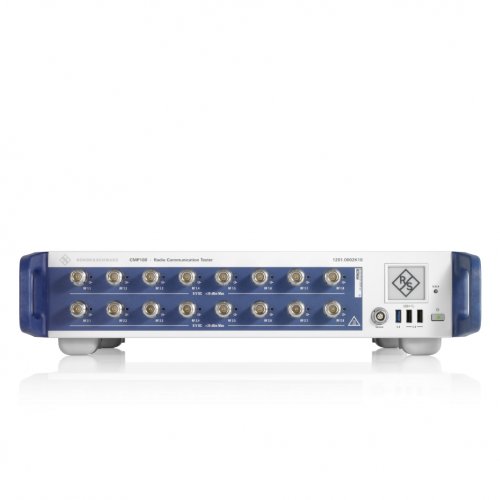
    The CMP180 supports many cellular and non-cellular technologies including Wi-Fi 8.

    Rohde & Schwarz, a leading supplier of test and measurement equipment for wireless applications, and NETGEAR, manufacturer of advanced networking technologies and leading-edge Wi-Fi 7 products, collaborate to get the next generation Wi-Fi 8 products ready for the market.

    Wi-Fi 8 is the next generation Wi-Fi based on the upcoming IEEE 802.11bn standard. With the focus on ultra-high reliable (UHR) WLAN, this new technology will improve the wireless user experience at homes, offices and factories: high-speed connectivity under all conditions with low latency for gaming, learning and working applications which will use augmented reality (AR) and virtual reality (VR) to provide an immersive user experience.

    Design validation of Wi-Fi 8 access points requires test solutions which support the latest Wi-Fi 8 features like distributed resource units (DRU) or unequal modulation (UEQM) with up to 320 MHz wide channels in all supported bands and highest modulation schemes (4096QAM), while providing the performance (EVM), and scalability (4×4 MIMO) required to optimize the wireless device performance.

    Rohde & Schwarz provides NETGEAR with the CMP180 radio communication tester, a future-proof non-signaling testing solution for wireless devices, which can be used in research, development, validation and production. It supports many cellular and non-cellular technologies including the latest Wi-Fi 6E, Wi-Fi 7, Wi-Fi 8 and 5G NR FR1 in frequencies up to 8 GHz and bandwidths of up to 500 MHz.

    The CMP180 comes equipped with two analyzers, two generators and two times eight RF ports in a single box, plus the possibility to scale up by stacking several testers. This makes it a cost-efficient test solution with best-in-class performance, addressing current and future test demands.

    While its fast multi-DUT testing capabilities make the CMP180 ideal for testing in mass-production test environments, test engineers can use the instrument throughout the entire development cycle: from engineering validation tests (EVT), design validation tests (DVT) and production validation tests (PVT) to mass production (MP).

    Joseph Emmanuel, VP, Consumer Business Unit HW Engineering at NETGEAR, says: “Working with Rohde & Schwarz enables us to bring our Wi-Fi 8 products on the market with the expected high quality and extremely high performance for the best multi-gigabit Wi-Fi experience everywhere at home.”

    Goce Talaganov, Vice President Mobile Radio Testers at Rohde & Schwarz, says: “We are grateful for the close collaboration with NETGEAR on the latest Wi-Fi 8 technology. Our experience in wireless device testing and early cooperation with Wi-Fi 8 chipset and device vendors helped us to improve our test solution for the upcoming broad Wi-Fi 8 market.”

  • SRMIST Grants License for Patented Solar Cell Encapsulant Technology to Anabond Ltd., Chennai


    Moving from Fundamental Research to Translational Research”: Prof. C. Muthamizhchelvan, Vice Chancellor, SRMIST, on ₹1-Crore Solar Technology Licensing Agreement with Anabond Limited, Chennai

    SRMIST Licenses Patented Solar Cell Encapsulant Technolgy to Anabond Ltd, Chennai


    Chennai, Mar 09: In a significant step toward strengthening India’s clean energy manufacturing ecosystem, SRM Institute of Science and Technology (SRMIST) has licensed a patented solar cell encapsulant technology to Chennai-based specialty materials manufacturer Anabond Limited. The agreement represents an important milestone in the commercialization of university research and highlights the growing role of academia in advancing indigenous technology development.

    The licensing agreement includes an upfront payment of ₹1 crore for the patented technology, along with a seven-year royalty arrangement linked to the commercial turnover of products based on the technology. The partnership reflects a broader trend of industry–academia collaboration aimed at translating laboratory innovations into scalable industrial solutions.

    India has set an ambitious target of achieving 500 GW of non-fossil fuel energy capacity by 2030, with solar power expected to account for the largest share. As the country rapidly expands domestic solar manufacturing under Production Linked Incentive (PLI) schemes and other policy initiatives, advanced materials such as encapsulants—which play a critical role in protecting solar modules and ensuring long-term performance—are emerging as strategic components of the renewable energy supply chain.

    Dr. P. Sathyanarayanan, Pro-Chancellor (Academics), SRMIST, described the partnership as a significant step toward aligning academic research with industry needs and national priorities. “Universities must move beyond knowledge dissemination to knowledge creation—and ultimately to translating that knowledge into real-world solutions.” He emphasized that while universities traditionally focus on education and placements, research achievements become truly meaningful when they lead to practical technologies that benefit society. “When industry partners come forward to adopt research developed in university laboratories, it brings immense satisfaction to researchers and demonstrates the real impact of academic innovation.” Dr. Sathyanarayanan also revealed that SRMIST is planning to establish an Industrial Research Park, which will bring industry R&D units closer to the university campus and create opportunities for students, researchers, and companies to collaborate on real-world technological challenges.

    Prof. C. Muthamizhchelvan, Vice Chancellor of SRMIST, described the technology licensing agreement as the culmination of a long institutional journey from academic teaching toward research and innovation. Over the past two decades, SRMIST has steadily strengthened its research ecosystem, moving from a focus on scholarly publications to cutting-edge research supported by government agencies and industry partners. According to the Vice Chancellor, the university currently receives around ₹35 crore annually in research funding across domains such as energy, environment, healthcare, water technologies, and disruptive innovations. “If we can enhance the performance of solar cells by preventing environmental degradation and significantly extending their life and performance, then we are truly moving from fundamental research to translational research.” Prof. Muthamizhchelvan also highlighted the university’s growing intellectual property portfolio, noting that SRMIST currently holds more than 538 granted patents. With this expanding IP base, the institution has begun focusing on commercialization pathways that allow research outcomes to benefit society and industry.

    “We wanted to move our research from publications to solutions that benefit society,” he added, emphasizing that the collaboration with Anabond Limited represents a visible example of how academic innovation can translate into industrial applications.

    Dr. Shantanu Patil, Director of the Directorate of Entrepreneurship and Innovation (DEI), SRMIST, explained that the university has developed structured mechanisms to support intellectual property development, startup incubation, and technology commercialization. “The Directorate of Entrepreneurship and Innovation serves as a central hub that helps transform ideas developed by students, faculty, and researchers into startups, technologies, and impactful solutions.” He added that the SRM Center for Intellectual Property Rights and Protection plays a crucial role in identifying and protecting innovations emerging from the university, while the Technology Transfer Office (TTO) focuses on commercializing these innovations through industry partnerships.

    The licensed technology was developed by Prof. K. Ananthanarayanan and his research team from the Department of Chemistry, SRMIST, who have been working on advanced materials for solar energy systems. Explaining the importance of encapsulation technology, Prof. Ananthanarayanan noted that while solar cells are becoming increasingly efficient, they remain highly sensitive to environmental conditions such as ultraviolet radiation, moisture, dust, and temperature fluctuations. “Encapsulants protect solar modules from ultraviolet radiation, moisture, dust, and environmental stress. When panels are expected to operate for 25 to 30 years, the reliability of this protective material becomes critical.” To illustrate the concept, he compared encapsulation to the tempered glass used to protect smartphone displays. “Just as a protective glass layer prevents damage to a phone screen, encapsulation materials protect solar cells and ensure that they continue to function reliably throughout their lifetime.”

    The research team spent four to five years developing a patented polymer encapsulant specifically designed for next-generation solar technologies such as TOPCon and perovskite–silicon hybrid solar cells, which place greater performance demands on encapsulation materials than conventional systems.

    “Solar energy will power the world in the future, and we are proud, in our own small way, to contribute to making that future more reliable and durable,” Prof. Ananthanarayanan said.

    For Anabond Limited, the collaboration represents an important step in expanding its portfolio into renewable energy materials. Founded in 1979 by a scientist with experience in India’s nuclear research establishments, the company has grown into a major manufacturer of specialty adhesives, sealants, and advanced materials.

    Mr. M. Rajan, Managing Director of Anabond Limited, said the company has built its growth on a strong foundation of research and development combined with the ability to scale laboratory innovations into commercial products. “This technology has strong potential for the future, and we are proud to partner with SRMIST in taking this innovation toward commercialization.” He explained that Anabond has extensive experience in technology transfer and industrial scaling, having worked with strategic organizations including ISRO and defense research establishments, where its products have supported demanding aerospace and missile applications. “Scaling laboratory innovations into reliable industrial products is a complex challenge, and we are confident this collaboration will successfully bring the technology to market.”

    The company currently operates multiple manufacturing facilities across India and maintains a wide distribution network that supports industrial clients across sectors including aerospace, automotive, electronics, and defense.

    Highlighting the broader importance of partnerships between universities and industry, Mr. Abraham, Joint Managing Director of Anabond Limited, said such collaborations are essential for converting research breakthroughs into technologies that create economic and societal value.

    “Universities are hubs of innovation and new technologies. Partnering with industry enables these innovations to move from laboratory research to production scale, ultimately benefiting society and contributing to economic growth.” He also acknowledged the role of government initiatives in enabling collaboration between academic institutions and industry, particularly programs that allow companies to access advanced research infrastructure available within universities. “The partnership between SRM Institute of Science and Technology and Anabond Limited will certainly contribute to technological advancement and economic growth, while supporting the national vision of Atmanirbhar Bharat,” he added.

    Institutional leaders at SRMIST emphasized that the licensing agreement was made possible through the university’s growing innovation ecosystem. Together, these institutional platforms help bridge the gap between academic discovery and real-world application.

    According to SRMIST’s Technology Transfer Office, the university has already facilitated more than 17 technology transfer agreements with industry partners. However, the solar encapsulant licensing stands out as one of the first to include a structured royalty model linked to commercial success.

    The university also organizes the Industrial Research and Innovation Summit (IRIS), an annual platform that brings together industry leaders, investors, researchers, and startups to explore commercialization opportunities for emerging technologies. With this licensing milestone, SRMIST reinforces its broader vision of positioning academia not only as a generator of knowledge, but also as a key contributor to India’s industrial capability and sustainable technological future.


  • Ubitium tapes out universal processor to end embedded computing complexity crisis

    Ubitium Tapes Out First Silicon of its Universal Microprocessor Architecture on Samsung 8nm

    DÜSSELDORF, GERMANY, Mar 09: Ubitium, a German semiconductor start-up, today announced the tape-out of its first silicon on Samsung Foundry’s 8nm process. The tape-out was completed in December 2025. The chip is the first universal RISC-V processor to replace the stack of specialized processors used in modern embedded systems.

    Embedded computing, a $115 billion market, has reached a breaking point. Cars once ran on one processor; today’s vehicles contain more than 200, each with its own toolchain, software stack and supplier. Performance is no longer the only limiting factor. Complexity is. As AI workloads move into robots, drones, and industrial machines, this complexity becomes unsustainable.

    Ubitium builds on RISC-V, the open-source architecture already used in billions of chips worldwide and extends it beyond a conventional CPU. Its universal processor runs Linux and RTOS simultaneously, handles radar and audio signals in real time, and executes neural networks for inference at the edge, without separate accelerators or coprocessors. Full RISC-V software compatibility preserved. 

    “This tape-out turns a long-held thesis into silicon,” said Martin Vorbach, CTO of Ubitium. “Embedded workloads have outgrown the architectures the industry relies on today. Consolidation isn’t optional anymore. It’s inevitable.”

    Ubitium does for embedded compute what software-defined radio did for wireless: replaces fixed-function hardware with one reconfigurable silicon. The result: embedded systems that ship faster, cost less, and have long product lifecycles.

    Ubitium is working with Samsung Foundry, Siemens Digital Industries Software and ADTechnology as it advances toward production silicon.

    “The shift toward software-defined, reconfigurable compute is accelerating. Ubitium’s approach, one universal processor replacing multiple specialized chips, aligns with where we see embedded systems heading. We’re proud to manufacture their first silicon.” Said Taejoong Song, vice president and head of Foundry Technology Planning Team, at Samsung Electronics.

    “Shift-left verification helps teams validate system behavior earlier by running more realistic workloads ahead of first silicon,” said Jean-Marie Brunet, Sr. Vice President, Hardware Assisted Verification, Siemens Digital Industries Software. “Ubitium’s use of Siemens’ EDA tools, specifically the Veloce CS hardware-assisted verification and validation system, highlights how early validation can de-risk integration, support design closure, and accelerate time to first silicon.”

    “Advanced-node silicon delivery depends on disciplined back-end execution across timing, power, and signoff,” said Jun-Kyu Park, CEO of ADTechnology. “We are pleased to have supported Ubitium throughout the implementation process as it progressed to tape-out on Samsung Foundry’s 8nm process.”

    Ubitium’s founders have spent decades building programmable architectures and the software stacks that unlock them at scale. CTO Martin Vorbach created PACT XPP, an early commercial reconfigurable processor, and holds 200+ processor-architecture patents. The core team combines deep industry experience from Intel, Texas Instruments, Apple and NVIDIA, with 350+ peer-reviewed publications.

    The tape-out validates the foundational components of Ubitium’s architecture: the Universal Processing Array with runtime reconfiguration and LPDDR5 memory interface. A second tape-out is targeted for later this year, with volume production in 2027.

    Technical Notes

    • Workload coverage: Ubitium’s universal processor spans general-purpose computing, real-time signal processing, and massively parallel AI inference on a single die; in a homogeneous architecture

    Software stack: Full Linux and RTOS support, standard RISC-V toolchains, and compatibility with modern software frameworks. No need for proprietary languages or vendor-specific compilers.Target applications: Radar and multi-sensor signal chains, real-time audio and voice, computer vision, edge AI, automotive cockpits, industrial HMI.Runtime adaptability: The Universal Processing Array shifts execution mode at runtime (CPU, DSP, GPU, parallel accelerator) without context-switch penalty or external offload.System consolidation: One processor, one toolchain, one qualification cycle. Reduces BOM cost, board complexity, and supplier dependencies across product lifecycles.


  • Mirai Robotics raises $4.2M to build autonomous and intelligent maritime systems to master every sea


    Europe’s first dual-use startup developing autonomous vehicles and systems for complex maritime operations.

    Puglia and Milan, Italy – Mar 9: The sea is one of the most critical infrastructures on the planet. Over 80% of global trade moves by sea, more than 90% of Europe’s foreign trade depends on maritime routes, and around 95% of international internet traffic flows through subsea cables. Today, the global blue economy is worth more than $2.5 trillion and, according to international estimates, is expected to exceed $4 trillion by 2030.

    Despite its economic and geopolitical centrality, the maritime domain remains one of the most complex and least digitized environments in the world: high operational costs, limited continuous observability, significant exposure to risk, and a strong reliance on human operators. This is compounded by an increasingly structural trend: a shortage of qualified professionals, with thousands of operational roles difficult to fill and a steadily rising average age among captains and operators. A fully human-centric model is struggling to sustain continuous, safe, and scalable operations.

    It is within this context that Mirai Robotics was founded — a European AI robotics lab with the ambition to build the robotic infrastructure needed to make the sea more governable, safe, and observable.

    Mirai Robotics’ systems are designed to enable persistent surveillance, patrolling, monitoring, and control, reducing human exposure to risk and significantly lowering operational costs compared to traditional models. The company focuses on the deep integration of autonomous vehicles, advanced sensing, artificial intelligence, and control systems, approaching autonomy first and foremost as an engineering and industrial challenge — not merely a software one.

    From a product perspective, Mirai Robotics has already developed two autonomous vehicles designed for different operational needs, targeting ISR (Intelligence, Surveillance and Reconnaissance) and patrolling scenarios in both coastal and offshore environments. The vehicles integrate advanced perception systems, autonomous navigation, remote control, and safety features, and are designed to operate either as standalone units or as part of distributed systems.

    Alongside its proprietary platforms, Mirai Robotics also develops autonomy, navigation, and control solutions that can be integrated into third-party vehicles, enabling industrial and institutional operators to adopt autonomous technologies without having to fully redesign their existing fleets. This approach makes Mirai’s technology applicable across multiple civil and institutional use cases, following a dual-use by design logic.

    The decision to start in Italy is deliberate. The country is historically a global leader in shipbuilding and maritime engineering, with internationally recognized excellence in defense, yachting, offshore, and marine infrastructure. Mirai Robotics was born at the intersection of this industrial heritage and a new generation of technologies based on advanced robotics, artificial intelligence, and autonomous systems.

    Mirai Robotics positions itself as an AI robotics lab, not merely a vertical solution provider. Its goal is to develop physical autonomy technologies capable of operating in extreme, mission-critical environments, where reliability, safety, and control are non-negotiable requirements.

    The company was founded by Luciano Belviso (CEO), Luca Mascaro, and Davide Dattoli, board member. Luciano Belviso has previously built and led highly complex industrial companies, including Blackshape, a benchmark player in aircraft design and manufacturing, later acquired by Angel Holding. Luca Mascaro is an entrepreneur and technological designer, founder of Sketchin, later acquired by the BIP Group, where he served as Chief Innovation Officer, with extensive experience in building digital products and technology platforms at international scale. Davide Dattoli is an entrepreneur, founder of Talent Garden, and an investor in the tech and education ecosystem, with a long track record in scaling innovative companies across Europe.

    Around the founding team, Mirai Robotics has assembled a pan-European team with expertise in artificial intelligence, robotics, complex systems, and mission-critical operations. The team includes top professionals and collaboration with leading universities and research centers.

    The company is headquartered in Puglia, chosen as a strategic hub between the Mediterranean, industry, and research, with the ambition of building a European center of excellence for maritime autonomy.

    Mirai Robotics has closed a $4.2 million pre-seed equity round, one of the largest in Italy in the robotics and deep-tech sector, led by top VC Primo Capital, Techshop and 40Jemz Ventures, with participation from leading Italian and international angel investors. The capital raised will be used to accelerate technology development, strengthen the team, and launch new pilot projects with industrial and institutional partners.

    “The sea is one of the last major physical infrastructures not yet governed by software,” says Luciano Belviso, CEO of Mirai Robotics. “Autonomy is the key to finally making the oceans safe and usable, unlocking enormous resources and addressing critical security challenges. But it must be implemented through systems capable of operating continuously and safely in extreme environments. This is a technological and industrial challenge that requires a true robotics-lab approach.”

    “The maritime domain is at an inflection point. We’re looking at a huge economy that still relies on operational models designed decades ago. The human capital gap alone—thousands of unfilled roles, aging workforces, increasing operational risk—makes the status quo unsustainable. What Mirai Robotics is building isn’t just automation; it’s the fundamental infrastructure layer that will allow the blue economy to scale safely and efficiently. Italy’s shipbuilding heritage combined with this caliber of robotics and AI talent creates a genuinely unique opportunity”  – Gianluca Dettori Partner at Primo Capital, lead investors in the round.

    With Mirai Robotics, Italy strengthens its historic role in the blue economy, projecting it into a new phase where robotics and artificial intelligence become foundational infrastructure for security, industry, and the economies of the future.




  • transcosmos helps Daiwa Connect Securities advance digital customer support channels


    [Tokyo, Japan, Mar 09]

    transcosmos announced that it has helped Daiwa Connect Securities Co., Ltd. (Headquarters: Tokyo, Japan; President: Ryuji Otsuki) advance the digital customer support channels that transcosmos provides. Drawing on its operational expertise, transcosmos designed and delivered an AI chat channel and FAQs. By implementing a human-AI hybrid chat model, transcosmos successfully enhanced the self-service completion rate. Through the use of ProzAnswers—an AI chat system provided by Proz Co., Ltd.—transcosmos led the project by combining operational expertise and advanced tools.

    In deploying the AI chat system for Daiwa Connect Securitiestranscosmos first analyzed the nature of incoming inquiries to the human-chat channel and examined where customers typically stumble in the problem-solving process. Based on these insights, transcosmos developed the FAQs and the AI chat channel. transcosmos also reviewed FAQ descriptions and user flows to make them more intuitive, further increasing the self-service rate via the AI chat and FAQs. Inquiries that the AI chat cannot resolve are seamlessly handed over to human agents, ensuring a stable customer experience.

    proz_service_diagram.jpg

    Daiwa Connect Securities has seen a significant increase in inquiries about account openings and log-in-related issues in recent years. Recognizing that its existing scenario-based and FAQ-based chatbots were no longer sufficient to help users resolve issues on their own, the company decided to introduce an AI chat channel to reduce the workload of human chat agents. Working together closely, Daiwa Connect Securitiestranscosmos, and Proz worked as one to clarify requirements and designed the operational flows, UI, UX, and AI. The team completed the system design in just about 1.5 months. transcosmos supported Daiwa Connect Securities in deploying and operating ProzAnswers, and continues to provide end-to-end support—from AI auto-response to FAQ auto-generation—helping enhance customer support quality and reduce human-handled inquiry volumes.

    transcosmos remains committed to boosting clients’ CX and increasing operational efficiency through ongoing operational enhancements based on operational data and the voice of customers.


  • Rohde & Schwarz enables rapid validation of next-gen Wi-Fi 8 networking platforms, including 5×5 MIMO capabilities

    Mar 6: Using the advanced MIMO test capabilities of the CMP180 radio communication tester from Rohde & Schwarz, Qualcomm Technologies, Inc. successfully completed comprehensive validation and performance testing of its advanced 5×5 radio technology designed for its latest Wi-Fi 8 networking platforms. As a result, Rohde & Schwarz now offers pre-built test routines for its test platform.
     

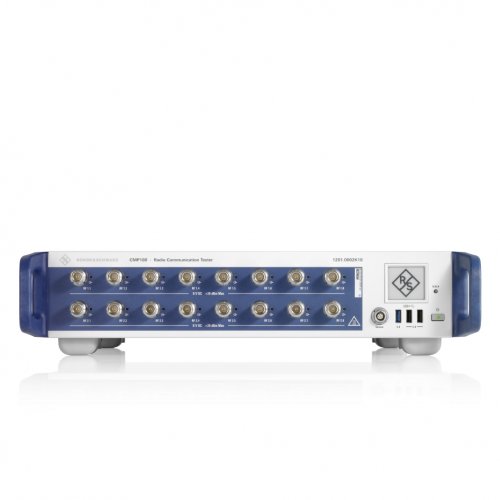
     The CMP180 validates Wi-Fi 8 features including 5×5 MIMO.

    Qualcomm Technologies has used the CMP180 radio communication tester from Rohde & Schwarz to validate advanced multi-antenna capabilities that are designed into its next-generation Wi-Fi 8 platforms, including support for 5×5 MIMO in the 2.4, 5 and 6 GHz band. Advanced 5×5 MIMO architectures help Wi‑Fi 8 platforms deliver higher capacity and more reliable connectivity across a wider range of real‑world deployment scenarios.

    The industry leading CMP180 delivers full bandwidth and seamless scalability for testing leading Wi Fi 8 chipsets across the entire device lifecycle — from development to production. As a result of this collaboration, Rohde & Schwarz now offers pre built test routines and early access to key resources, enabling device manufacturers to accelerate time to market of their products.

    Wi-Fi 8, based on the IEEE 802.11bn specification, builds on the foundation of Wi-Fi 7 to deliver next-level reliability, efficiency and seamless mobility. New PHY and MAC layer technologies work together to extend range, improve spectrum utilization, reduce latency and enable coordinated access across dense environments, setting the stage for ultra-high reliability (UHR) performance. Advanced antenna architectures such as 5×5 MIMO help enhance spatial efficiency and link robustness and provide a more consistent performance in real-world environments.

    This new feature set of Wi-Fi 8 will accelerate the wireless LAN performance at home, in offices, venues and factories and enable applications like extended reality (XR), AI-assisted applications, real-time cloud gaming and ultra-high-definition content streaming. To realize these benefits, test equipment must support all bands, full channel bandwidths, multi-antenna operation (MIMO) and deliver best-in-class measurement accuracy at benchmarking test efficiency. Rohde & Schwarz has designed the CMP180 radio communication tester with these capabilities in mind.

    The CMP180 enables Qualcomm Technologies to validate essential features of its latest Wi-Fi innovation, including:
    • 5×5 MIMO performance to further improve maximum data throughput per link
    • Advanced modulation and coding schemes that enable fine grained adaptation to real time radio conditions.
    • Distributed-tone resource units to improve uplink performance under regulatory limits.

    Goce Talaganov, Vice President Mobile Radio Testers at Rohde & Schwarz, said: “We are excited to strengthen our long-time collaboration with Qualcomm Technologies to provide a unique testing solution for the next area of Wi-Fi innovations. The CMP180’s advanced features and our close collaboration will empower device manufacturers to bring innovative Wi-Fi 8 products to market quickly and confidently.”

    Ganesh Swaminathan, Vice President and General Manager, Wireless Infrastructure and Networking, Qualcomm Technologies, Inc. said: “Qualcomm Technologies’ Wi-Fi 8 portfolio is engineered to deliver next level performance, reliability and scalability across a broad range of networking use cases. As part of this portfolio approach, we are advancing innovations such as higher order MIMO to help increase performance in real world environments. Our collaboration with Rohde & Schwarz highlights the progress of these capabilities as the Wi-Fi 8 ecosystem builds momentum.”

  • AVer To Showcase Medical Grade PTZ Cameras at HIMSS 2026

    AVer To Showcase Medical Grade PTZ Cameras at HIMSS 2026


    Taipei, Taiwan – Mar 6: AVer Information Inc., an award-winning provider of AI audio-video solutions, will exhibit at HIMSS 2026, March 9–12, 2026, at the Venetian Expo & Convention Center in Las Vegas, Nevada. In booth #4016, stand #12 at the Taiwan Medtech Pavilion, AVer will showcase its medical grade PTZ cameras, including the MD330UI and MD331UI, designed to support telemedicine, Tele-ICU, and remote patient monitoring workflows.

    “HIMSS brings together healthcare technology leaders focused on practical solutions that improve the patient experience,” said Aaron Gaunt, Senior Product Manager for AVer Information Inc. USA. “Our medical grade PTZ cameras are built to give clinicians clearer visibility and reliable communication tools in telehealth and acute care environments.”

    AVer will feature the MD330UI, a PTZ medical camera engineered to support detailed, real-time patient assessments. The MD330UI is IEC 60601-1-2 certified and delivers 30X optical zoom with 4K output resolution. The MD330UI’s detachable camera head allows clinicians to move between wide-angle room views and close-up examinations, supporting wound checks, skin inspections, and other detailed evaluations. Featuring integrated audio with noise reduction, fast autofocus, and one-button snapshot functionality, the MD330UI is designed to streamline remote consultations and clinical documentation.

    The MD331UI will also be demonstrated as a flexible solution for Tele-ICU monitoring and telehealth carts. Equipped with 4K resolution, 30X zoom, and remote control functionality, the MD331UI enables clinicians to capture detailed patient images from multiple angles. The MD331UI includes an embedded audio system with omni and directional microphones, a 10W speakerphone and noise reduction to support clear communication between care teams and patients.

    AVer’s medical grade cameras are compatible with secure telehealth platforms, including VSee, Microsoft Teams, Zoom, and RingCentral, enabling integration into existing healthcare IT infrastructures. The MD330UI and MD331UI are designed to support physicians, nurses, and telehealth providers across hospitals, intensive care units, outpatient clinics, and home health environments.