The Great Journey of Mass Communication: From Radio and Doordarshan to Digital Streaming
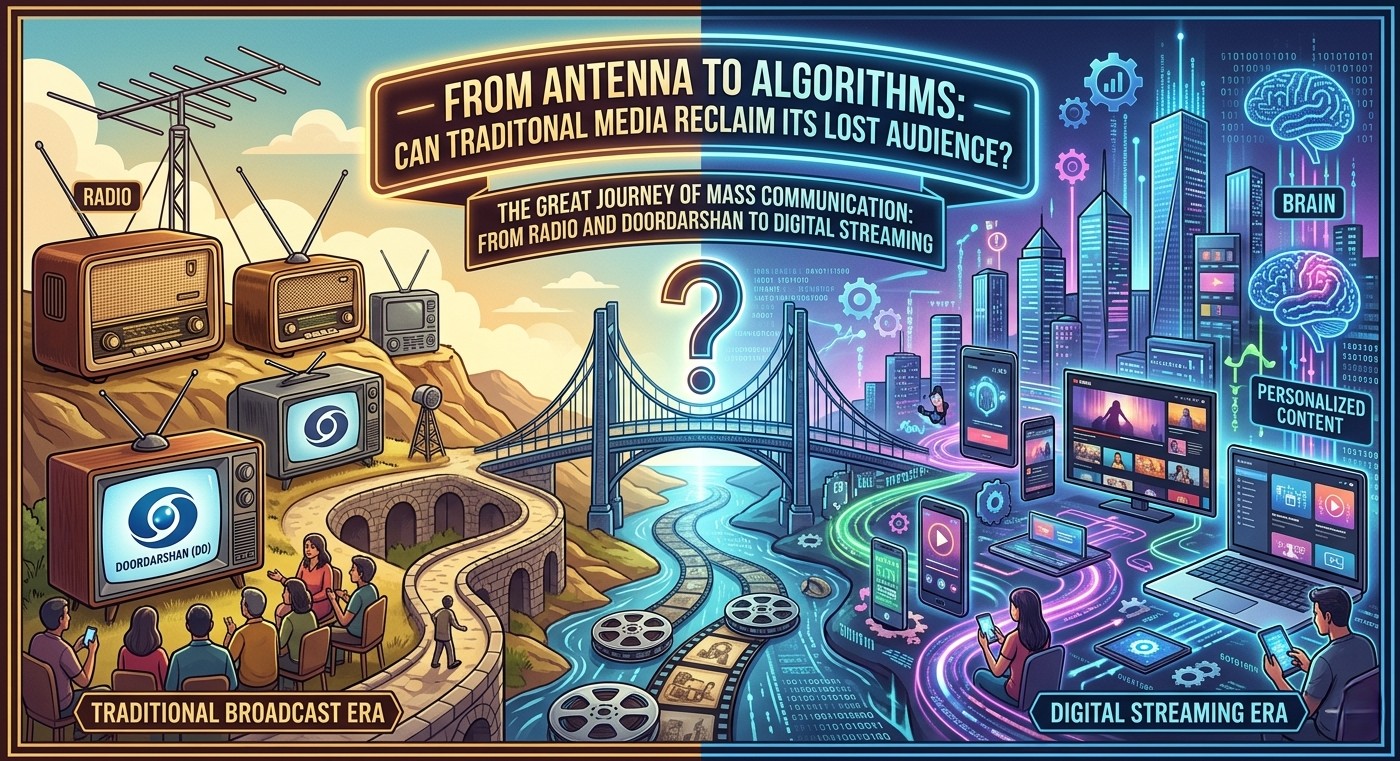
There was a time when information traveled slowly but carried immense value. Families gathered around radio sets to hear news bulletins, cricket commentary, and cultural programs. Later, television became the centerpiece of every household, bringing the nation together through shared experiences. Newspapers arrived every morning as trusted sources of information, while magazines offered in-depth analysis and storytelling.
Today, the media landscape has been completely transformed. Smartphones, fiber broadband, social media, YouTube, OTT platforms, podcasts, AI-powered tools, e-papers, and digital magazines have changed how people consume information.
Ironically, despite having more media platforms and content choices than ever before, traditional media is struggling to retain audiences.
The Evolution of Electronic Media
1. The Radio Era (1930s–1980s)
Before television became widespread, radio was the dominant electronic medium.
In India, radio connected millions through news bulletins, educational programming, music, dramas, and live sports commentary. Families relied on radio for information during elections, wars, natural disasters, and major national events.
For decades, radio was the fastest and most accessible source of news.
2. The Antenna and Doordarshan Era (1970s–1980s)
Television arrived as a revolutionary medium.
Viewers depended on rooftop antennas to receive signals from Doordarshan. Programming was limited but highly influential. Shows such as Ramayan, Mahabharat, Hum Log, Buniyaad, and Chitrahaar became national phenomena.
Television was not merely entertainment—it was a social experience that united families and communities.
3. The Cable Television Revolution (1990s)
Economic liberalization changed the Indian media industry forever.
Cable operators introduced private television channels into homes. Suddenly viewers had access to entertainment, sports, movies, music, and 24-hour news channels.
Networks such as Zee TV, Star TV, Sony, and numerous regional broadcasters transformed viewing habits.
For the first time, audiences had meaningful choice.
4. The DTH Era (2000s)
Direct-to-Home (DTH) technology improved signal quality and expanded access to hundreds of channels.
Consumers enjoyed better picture quality, wider channel selection, and greater viewing flexibility.
Television entered an era of intense competition.
5. The Fiber and Digital Streaming Era (2010s–Present)
The arrival of fiber broadband, smartphones, smart TVs, OTT platforms, social media, podcasts, and video-sharing platforms fundamentally altered media consumption.
Viewers no longer wait for scheduled programming.
News, entertainment, sports, documentaries, and live events are available instantly and on demand.
The audience now controls what to watch, when to watch, and where to watch.
From One Channel to Thousands
The media industry has evolved from scarcity to abundance.
We moved from:
- One television channel to thousands.
- One radio station to thousands of digital audio streams.
- A handful of newspapers to countless digital publications.
- Scheduled programming to personalized content feeds.
Yet paradoxically, more choice has not guaranteed more engagement.
Instead, audiences have become fragmented across multiple platforms.
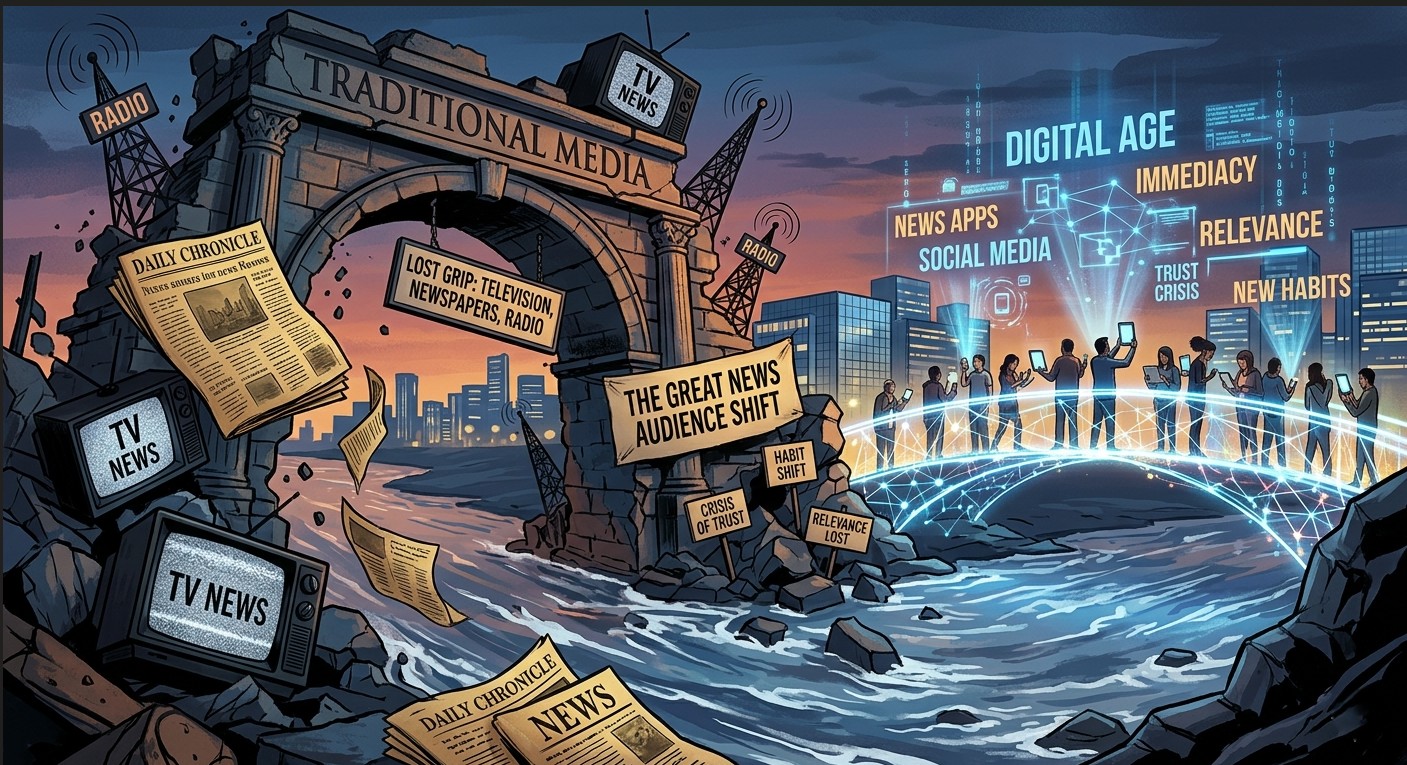
Why Are Viewers Leaving Television News?
Television news once dominated public attention. Today, many viewers are turning away.
Several factors contribute to this trend:
Declining Content Quality
Investigative journalism and original reporting have often been replaced by repetitive debates and sensational discussions.
Loss of Credibility
Audiences increasingly question the neutrality and independence of many news organizations.
Ethical Concerns
Many viewers feel news coverage is becoming overly influenced by political, commercial, or ideological interests.
Technical Negligence
Frequent spelling mistakes, inaccurate graphics, poorly edited tickers, and rushed presentation standards create a perception of declining professionalism.
Endless Live Coverage
Many channels devote hours to repetitive live broadcasts with little new information, reducing the value of the viewing experience.
Rise of Independent Digital Journalism
YouTube channels, digital-first news organizations, podcasts, and independent creators often provide faster, more diverse, and more interactive coverage.
As a result, audiences increasingly seek information outside traditional television.
What Happened to Radio?
Radio remains relevant in automobiles, rural areas, and emergency communication.
However, younger audiences increasingly prefer:
- Podcasts
- Music streaming platforms
- Audio books
- On-demand content
The challenge facing radio is not merely retention but adoption. Many younger consumers never developed the habit of listening to traditional radio in the first place.
Newspapers: Declining but Still Trusted
Unlike television and radio, newspapers continue to enjoy a relatively high level of trust.
Their strengths include:
- Editorial discipline
- Fact-checking processes
- Structured reporting
- In-depth analysis
- Professional accountability
However, print circulation faces significant challenges as younger readers increasingly consume news digitally.
Many readers still trust newspaper brands but choose to access them through websites, mobile applications, and e-paper editions rather than physical copies.
The Slow Disappearance of Magazines
Perhaps no traditional medium has been affected more dramatically than magazines.
Weekly and monthly magazines once occupied a unique space between newspapers and books. They provided long-form reporting, interviews, analysis, and specialized content.
Today, demand for printed magazines has declined significantly due to:
- Instant digital access
- Free online content
- Social media platforms
- Specialized websites and blogs
Many readers now prefer e-magazines and digital subscriptions that offer convenience, portability, and real-time updates.
The future of magazines is increasingly digital rather than print-based.
The Rise of E-Papers and E-Magazines
Digital editions are becoming the new normal.
Readers appreciate:
- Instant availability
- Mobile accessibility
- Lower costs
- Search functionality
- Environmental sustainability
For younger generations, reading news on a smartphone or tablet often feels more natural than reading a printed publication.
The future of print media may depend less on paper and more on the strength of trusted journalism delivered through digital formats.
Can Traditional Media Make a Comeback?
Yes—but only through meaningful reinvention.
Restore Trust
Credibility must become the industry’s highest priority.
Invest in Journalism
Original reporting, investigative work, and field journalism should once again define news organizations.
Improve Editorial Standards
Accuracy in language, graphics, headlines, and presentation remains essential.
Embrace Digital Platforms
Traditional media must meet audiences where they already are—on mobile devices, social media, streaming platforms, and digital ecosystems.
Focus on Public Interest
Issues affecting ordinary citizens should receive greater attention than manufactured controversies.
Engage Younger Audiences
Explainers, data journalism, podcasts, short-form video, and interactive storytelling can help bridge the generational gap.
The Future of Media
Traditional media is not dying—it is evolving.
Television, radio, newspapers, and magazines may no longer dominate public attention as they once did, but their core strengths remain valuable.
The future belongs to organizations that combine the credibility of traditional journalism with the speed, accessibility, and innovation of digital technology.
Audiences have not abandoned information.
They have abandoned formats that no longer meet their expectations.
The real crisis facing media today is not a shortage of content.
It is a shortage of trust.
And trust can only be rebuilt through accuracy, ethics, accountability, professionalism, and a renewed commitment to serving the public interest.
The journey from radio to television, from antenna to cable, from DTH to digital streaming, and from newspapers to e-papers tells the story of media’s past.
The next chapter will belong to those who understand that technology may change, but the public’s need for trustworthy journalism never will.