Bengaluru, Nov 26: The Centre has called on States and Union Territories to accelerate the implementation of the Pradhan Mantri Ayushman Bharat Health Infrastructure Mission (PM-ABHIM), with nearly 20,000 infrastructure units approved across the country to strengthen disease surveillance, diagnostic services and emergency healthcare capacity.
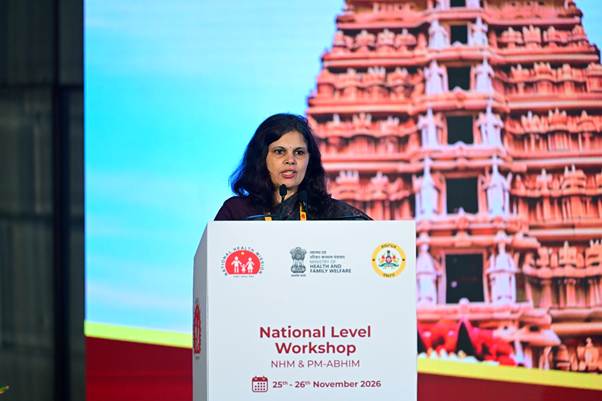
Addressing a national-level orientation workshop on the National Health Mission (NHM) and PM-ABHIM in Bengaluru, Union Health Secretary Punya Salila Srivastava stressed that approved facilities must be made fully operational with adequate equipment, trained personnel and other essential arrangements.
The two-day workshop, which began on November 25, brought together senior officials from the Union Health Ministry and representatives of States and Union Territories to review progress, discuss implementation challenges and identify priorities for strengthening public healthcare.
Nearly 20,000 infrastructure units approved
Launched on October 25, 2021, with a financial outlay of ₹64,180 crore, PM-ABHIM aims to expand public health infrastructure, improve disease surveillance and strengthen the country's ability to respond to outbreaks and future health emergencies.
According to the Ministry, the mission has approved 19,983 infrastructure units, including:
11,001 Ayushman Arogya Mandir-Sub Health Centres at locations that previously lacked buildings.
5,456 Urban Ayushman Arogya Mandirs.
2,151 Block Public Health Units.
744 Integrated Public Health Laboratories at district level.
631 Critical Care Blocks.
48 Virus Research and Diagnostic Laboratories.
The expansion is intended to strengthen healthcare delivery from the grassroots to district and critical-care levels. The Free Drugs and Diagnostics Initiative is also supporting the availability of essential medicines and diagnostic services at designated facilities.
Pandemic lessons shape health preparedness
Srivastava said the COVID-19 pandemic had demonstrated the need for a stronger healthcare system capable of rapidly expanding hospital capacity, research facilities, genomic sequencing and vaccine development during emergencies.
She noted that PM-ABHIM was designed to address these requirements by improving public health infrastructure, institutional capacity, emergency preparedness and outbreak response mechanisms.
While the National Health Mission supports routine healthcare delivery and progress towards health-related Sustainable Development Goals, PM-ABHIM complements it by building the infrastructure and systems needed to improve public health resilience.
The Health Secretary also highlighted the government's emphasis on increased capital investment in healthcare and public-private partnerships to improve infrastructure and service delivery.
Disease surveillance and emergency response strengthened
The mission includes several interventions aimed at detecting and responding to health threats more effectively. These include new branches of the National Centre for Disease Control, quarantine facilities at major airports, stronger health screening arrangements at airports and ports, and metropolitan surveillance units in 20 cities.
She also highlighted the role of the Integrated Disease Surveillance Programme (IDSP) and the Integrated Health Information Platform (IHIP) in identifying and monitoring public health events.
IHIP is operational across all States and Union Territories, covering 50 health conditions and 12 national health programmes through more than 2.5 lakh public and private health facilities. Information generated through these platforms helps the Ministry coordinate support, including through the National Joint Outbreak Response Team.
The Bharat Health Initiative for Sahyog Hita & Maitri (BHISHM) Cubes, which provide rapidly deployable mini-hospital facilities during emergencies, were another key intervention highlighted at the workshop. Support for genomic sequencing research through the Department of Health Research is also intended to improve the country's ability to investigate emerging health threats.
Centre seeks stronger coordination with States
Srivastava urged States and Union Territories to regularly monitor progress, prioritise infrastructure requirements and submit proposals for additional capital investment where necessary.
She emphasised that the success of the mission would depend not only on the creation of infrastructure but also on its timely operationalisation. Facilities must have the required equipment, human resources and administrative arrangements to deliver services effectively.
The workshop included technical discussions on the physical and financial progress of PM-ABHIM, along with presentations by States and Union Territories on achievements, implementation status and pending priorities.
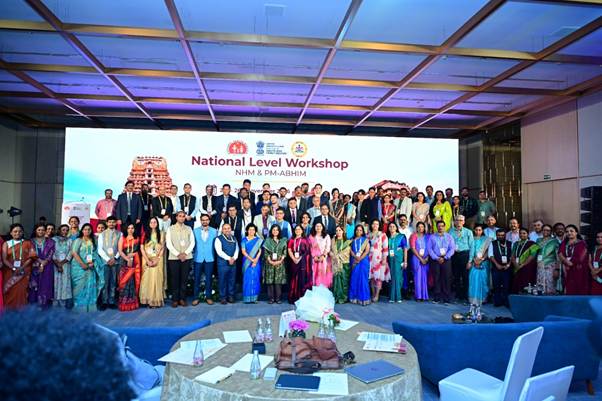
The deliberations focused on coordinated Centre-State action and convergence of investments to ensure that new healthcare facilities translate into improved public services and stronger preparedness for future health emergencies.
The workshop was attended by Karnataka Principal Secretary for Health and Family Welfare Ritvik Ranjanam Pandey, NHM Mission Director and Additional Secretary in the Union Health Ministry Aradhana Patnaik, Karnataka NHM Mission Director S. Akram Pasha and other senior officials.