Madagascar and Zanzibar Announce New National Shark and Ray Protections at Our Ocean Conference

MOMBASA, KENYA, June 18: At a side event this evening at the Our Ocean Conference, the governments of Madagascar and Zanzibar announced sweeping new national protections for sharks and rays, marking the latest milestone in a decade of conservation progress across East Africa.
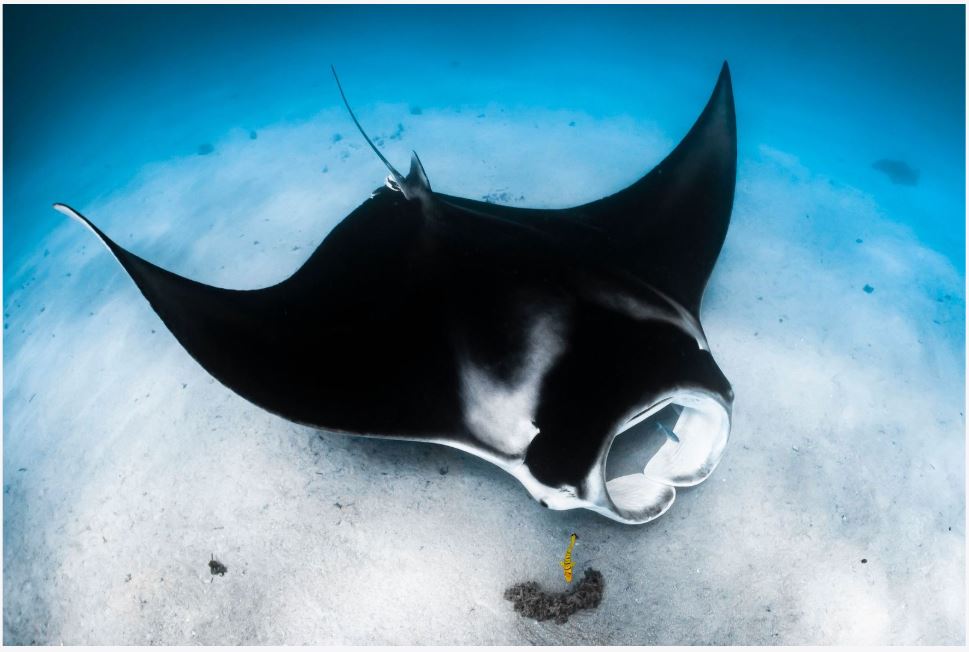
Sharks and rays are experiencing one of the fastest extinction crises of any vertebrate group on Earth—more than 37 percent of species are now threatened with extinction, driven largely by overfishing and an international trade that, for decades, went largely unregulated. Over the last decade major gains in international management of these species have begun to change the trajectory for these species, and we’re now seeing countries implement these protections at a national and local level.
“Sharks are an essential part of healthy ocean ecosystems,” said Luke Warwick, Senior Director of WCS’s Threatened Marine Species program. “This rapidly accelerating global framework of laws, coupled to enforcement and local level conservation action gives us hope we can end the declines of the last half century, and start these ancient predators on the long road to recovery.”
Madagascar announced it will offer full national protection for 14 species of sharks and rays under the country’s Wild Fauna Decree, including the Critically Endangered oceanic whitetip shark, as well as whale sharks and iconic manta rays. Zanzibar also announced full protection for 34 species in its coastal waters, including hammerhead sharks, thresher sharks, and the endemic Zanzibar guitarfish.
“The actions taken by the Madagascar government to protect these species, among other positive actions, comes at a time when sharks and rays need conservation efforts more than ever,” said Ravaka Ranaivoson, Partnership and Program Development Director for WCS Madagascar. “This highlights Madagascar’s commitment to the conservation and sustainable management of its marine resources.”
As recently as a decade ago, the global trade in sharks and rays was largely unregulated, and these species were fast running out of time. Today, that trade has rules, those rules are being enforced, and governments around the world are writing them into national law via species protections and the inclusion of shark specific conservation measures in fisheries and protected area laws and designations. The announcements from Madagascar and Zanzibar are the latest proof that momentum, once built, continues to grow.
Today’s announcements build on past successes and three years of historic global progress. At CITES CoP20 in November 2025, countries adopted every shark and ray proposal on the table, listing more than 70 species and bringing 96 percent of the global shark fin trade and 70 percent of shark and ray meat trade under international regulation for the first time. In total, 180 species are now listed under CITES, with 33 carrying a full commercial trade ban.
“From global decisions to local action on the water, the scale and pace of progress in shark conservation is truly remarkable,” said John Mandelman, Executive Director, Shark Conservation Fund. “Yet threatened sharks and rays, and the habitats they depend on, still require the strongest protections. Together, these efforts are creating an essential pathway toward recovery.”
The announcements were made at a private reception entitled “Celebrating a Decade of Shark Conservation in East Africa: Profiles of Shark Champions,” hosted by Shark Conservation Fund in partnership with the governments of Kenya, Tanzania, and Madagascar, and supported by WCS.
