Blog

  • Time Travel Through Food: At the Imperial Hotel, Tokyo, the Past Is Still Being Served

    A Culinary Legacy That Allows Guests to Move Between Eras in a Single Meal

    TOKYO, June 17: Restaurants worldwide are rethinking how meals are experienced, complementing technical excellence with a greater emphasis on memory, heritage and narrative. This approach reflects a broader shift in consumer expectations, where context, origin and emotional connection carry as much weight as flavor, creating a dining experience that almost transports guests back in time.
    Time Travel Through Food: At the Imperial Hotel, Tokyo, the Past Is Still Being Served

    Industry trends indicate rising demand for immersive, story-driven experiences alongside renewed interest in heritage cuisine and culinary nostalgia. For many operators, this has meant building concepts designed to evoke history. At the Imperial Hotel, Tokyo, that narrative does not need to be constructed; it already exists. What is now emerging as a defining direction in global hospitality has, in effect, long been integral to the hotel’s culinary identity for more than 135 years.
    Time Travel Through Food: At the Imperial Hotel, Tokyo, the Past Is Still Being Served

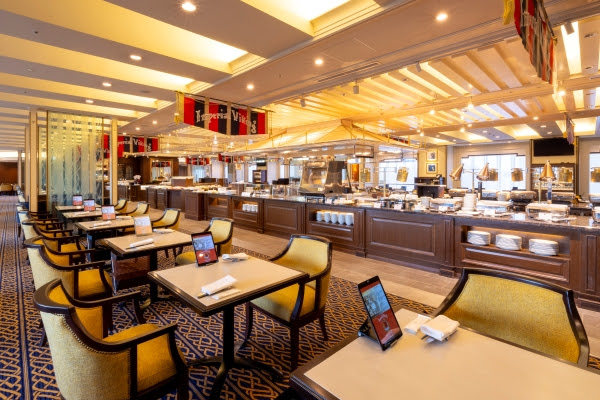
    Within the Imperial Viking Sal, the hotel’s long‑established buffet restaurant, dishes originally created for specific guests and moments in history remain in active service. Introduced in 1958 as Japan’s first “Viking” buffet, the concept marked a turning point in how the country engaged with international cuisine, bringing multiple culinary traditions into a single setting while allowing guests to shape their own experience. Inspired by the Scandinavian smorgasbord encountered by Imperial Hotel president Tetsuzō Inumaru, the format was adapted for a Japanese audience as a dining style centered on variety and individual choice.

    The restaurant’s cultural impact extends beyond the hotel itself. The name “Viking,” originally chosen for its Nordic associations, entered everyday language and became widely used in Japan as a synonym for all‑you‑can‑eat buffet dining, reflecting how the concept was not only adopted but fully integrated into the country’s modern food culture.

    Following its renewal in August 2023, the Imperial Viking Sal now presents more than 50 dishes spanning French, Japanese, and Chinese influences, reflecting its continued evolution from its original smorgasbord roots. Unlike a traditional set menu, the format allows diners to move fluidly across cuisines and eras within a single meal. A single visit can trace a progression from prewar European techniques to postwar Japanese adaptations and into contemporary interpretations, creating a layered experience built plate by plate.

    “Many restaurants today are working to build experiences around history and narrative,” said Kazuhiko Yashima, General Manager of the Imperial Hotel, Tokyo. “At the Imperial Hotel, those stories are already embedded in our dishes. They were created at distinct moments in time for real guests, and they have remained part of our offering ever since.”

    Several signature offerings, both dishes and beverages, anchor this continuity, reflecting the hotel’s role in cultural exchange, personalization, and culinary evolution.

    The Chaliapin Steak, created in 1934 for Russian opera singer Feodor Chaliapin, represents an early example of highly personalized cuisine. Developed to address the singer’s difficulty with tougher cuts of meat, the steak is tenderized using grated onions, whose enzymes break down the fibers to produce a soft, yielding texture. It is finished with sautéed onions that add depth without the need for a traditional sauce, illustrating how technical adaptation can lead to lasting culinary innovation.

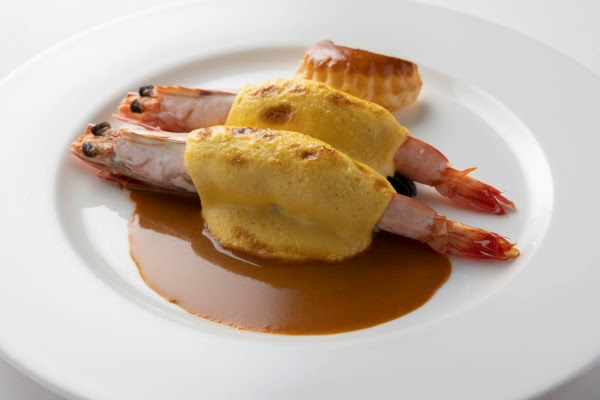
    The Gratin of Prawn and Sole “Queen Elizabeth II”, first prepared during the Queen’s state visit to Japan in 1975, reflects the precision and restraint associated with diplomatic hospitality. The dish combines delicate seafood with a carefully balanced cream-based preparation designed to feel refined rather than overtly rich. Its name, granted with the Queen’s approval, ties it directly to a specific historical moment and reinforces its place within the hotel’s legacy of state occasions.

    The hotel’s Signature Double Consommé Soup, refined over generations, reflects the introduction and evolution of classical French culinary technique within Japan. Achieving its clarity requires a prolonged clarification process that removes impurities while concentrating flavor, resulting in a crystal-clear broth with notable depth. Long regarded as a benchmark of technical discipline, it underscores the precision that underpins the hotel’s culinary foundations.

    Time Travel Through Food: At the Imperial Hotel, Tokyo, the Past Is Still Being Served

    The Imperial Hotel’s signature “Mount Fuji” cocktail, first created in 1924, represents a distinctive moment in the hotel’s history of hospitality and innovation. Conceived as a welcome drink for Western passengers arriving in Tokyo on around‑the‑world cruises, it was designed as a visual tribute to Japan’s most iconic landscape. Its white, foamy surface, accented with a maraschino cherry, evokes the image of a snow‑capped Mount Fuji with the red sun rising above its peak. As the Imperial Hotel’s first original cocktail, its carefully balanced recipe, combining gin, fruit juices, egg white, and cream, has been passed down unchanged since its creation. While later accounts note that the identity of its creator remains uncertain, the Mount Fuji continues to be served at the Old Imperial Bar as an enduring symbol of the hotel’s legacy and its tradition of welcoming international guests.

    Taken together, these dishes trace a progression of influence, adaptation and exchange. They serve not only as menu offerings, but as records of shifting cultural relationships and evolving tastes, shaped by the individuals and moments for which they were originally created. As the industry increasingly favors experience-led formats and narrative-driven menus, dining rooted in real historical moments and figures has gained renewed relevance. The Imperial Hotel, Tokyo offers a distinct point of reference, one grounded not in recreation, but in continuity.

    The result is not a reinterpretation of history, but its continuation. At the Imperial Hotel, Tokyo, guests encounter another era not through imagination, but through a progression of dishes that carries them across time.
  • S8UL Esports’ League of Legends team qualifies to represent India at Asian Games 2026

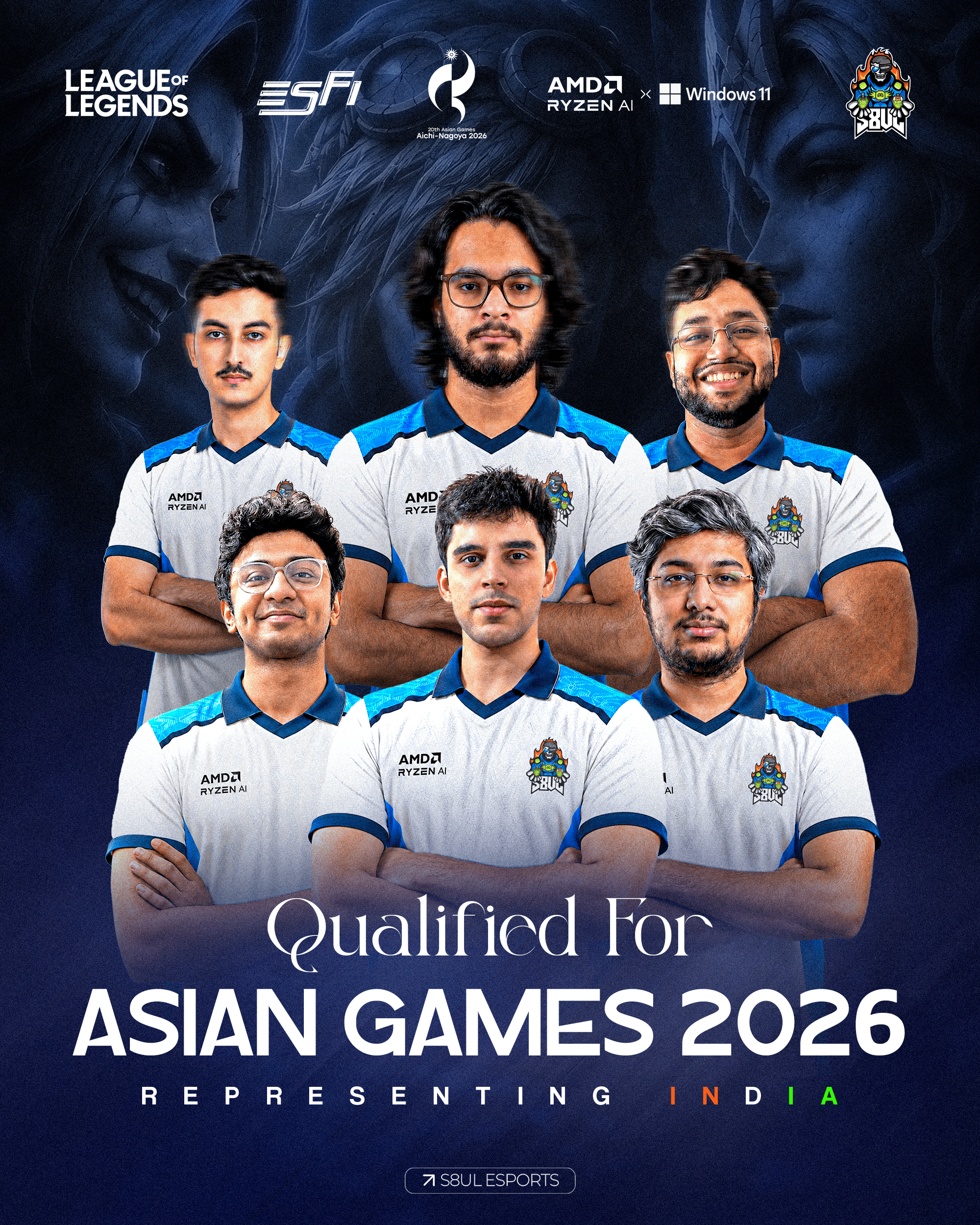
    S8UL Esports’ League of Legends team qualifies to represent India at Asian Games 2026

    Mumbai, June 17: After an impressive run through the regional qualifiers, S8UL Esports‘ League of Legends roster has officially qualified to represent India at the Asian Games 2026, set to take place in Aichi-Nagoya, Japan, from September 19 to October 4. Esports will feature 11 titles at the event, continuing its rise within the continental sporting landscape after debuting as a demonstration event at the 2018 Asian Games and becoming a full medal sport at the Hangzhou Asian Games.

    Competing under the national team‘s banner, the roster comprising Akshaj Shenoy (Kat Bot), Aakash Shandilya (Infi), Sanindhya Malik (Deadcorporal), Mihir Ranjan (Lotus), Ahmed Shahid (Nero), and Rahul Bisht (Bob) entered the regional qualifiers on the back of a dominant victory at the National Esports Championships (NESC) 2026, the official national qualification tournament for the Asian Games 2026.

    The regional qualifiers featured 14 teams competing across a two-stage format. Teams first battled through a round-robin Group Stage before advancing to the Split Stage, where the top-performing sides secured qualification for the Asian Games Main Event.

    Drawn into Group B, the team led by in-game leader (IGL) Kat Bot, delivered an unbeaten performance, defeating Jordan, Sri Lanka, and Kazakhstan to finish atop the standings and progress to the Split Stage. Despite falling short against Vietnam, Hong Kong, and Saudi Arabia in the next phase, the team did enough to punch its ticket to Aichi Nagoya.

    Having booked its berth, India will now compete against some of Asia’s strongest League of Legends nations, including Japan, Chinese Taipei, and Vietnam, as it looks to make its mark on one of esports‘ biggest stages.

    Notably, Kat Bot, Infi, Deadcorporal, and Lotus were also part of India‘s League of Legends contingent at the Hangzhou Asian Games 2023, where the team secured a fifth-place finish. Their return to the continental stage presents an opportunity to build on that experience and test themselves against the region’s elite once again.

    Speaking on the achievement, Akshaj Shenoy aka Kat Bot, captain of India‘s League of Legends team, said, “Qualifying for the Asian Games is a proud moment for all of us. We knew the regional qualifiers would be extremely competitive, and every match demanded complete focus. For many of us, this will be our second Asian Games, which makes this qualification even more special because we understand the level of competition that awaits us. We are grateful to S8UL for believing in this roster and providing us with the support, stability, and opportunities needed to keep improving as a team. Representing India is always an honour, and we’ll do everything we can to make the country proud in Aichi-Nagoya.”

    The milestone also reflects S8UL‘s continued investment in nurturing Indian esports talent. Signed by the organization last year, the roster has benefited from professional infrastructure, sustained competitive support, and opportunities to test itself against some of the strongest teams in the region. Since joining S8UL, the players have represented the organization across major domestic and international competitions, cementing their status as one of India‘s premier League of Legends lineups.

    “Representing India at the Asian Games is among the highest honours an athlete can achieve, and seeing our League of Legends roster earn that opportunity is incredibly special. This team has demonstrated resilience, discipline, and a willingness to continually improve, qualities that are essential for success at the international level. At S8UL, our goal has always been to create pathways for Indian athletes to compete on the biggest stages in the world. We have no doubt they will give their all when they step onto the stage in Aichi-Nagoya and compete for the nation with pride,” said Animesh Agarwal aka 8Bit Thug, Co-founder and CEO of S8UL.

    The qualification also adds to a growing list of Team India representatives from S8UL. Earlier, the organization’s Gurashish Singh (Soul) and Prateek Bhaunt (B Haunt) secured qualification for the Asian Games in Tekken 8 and Street Fighter 6, respectively, after winning their events at the NESC 2026.

    Apart from the Asian GamesS8UL is also flying the Indian flag on the global stage through its participation at the Esports World Cup (EWC) 2026. Selected as a Club Partner by the Esports Foundation for the second consecutive year, S8UL has already secured qualification in Apex Legends, Chess, Fortnite, and Honor of Kings, while continuing to compete across qualification pathways in several other titles.

    With athletes now representing India across multiple disciplines, S8UL continues to strengthen the country’s presence on the international esports stage through long-term investment in player development, professional support systems, and global competitive opportunities.

  • New Book on Property Tax in Europe Spotlights Lessons with International Relevance

    THE HAGUE, NETHERLANDS—Property tax experts from across Europe came together last week to discuss comparative insights and policy lessons at a conference signaling the launch of Property Tax in Europe: A Changing Landscape—the Lincoln Institute of Land Policy’s newest book in a series on international property taxation.

    Edited by Riël Franzsen, Roy Bahl, and William McCluskey, Property Tax in Europe features in-depth case studies from more than a dozen countries—including successful institutional transitions, use of the property tax as a land policy instrument, and innovative technological applications.

    The conference, presented by the Lincoln Institute of Land Policy and the Netherlands Council for Real Estate Assessment, took place at The Hague in the Netherlands on June 8–9. 

    “This must-read volume is full of new information, ongoing challenges, and reform strategies, delivering important lessons for policymakers, practitioners, and scholars working on improving property taxation around the world,” said Jorge Martinez-Vazquez, Regents Professor of Economics Emeritus at Georgia State University.

    Property Tax in Europe follows two other Lincoln Institute books that cover property tax on an international scale, Property Tax in Africa: Status, Challenges, and Prospects (2017) and Property Tax in Asia: Policy and Practice (2022).

    “This is a timely resource, given the current fiscal and political situation in Europe and the diversity of the policies in place throughout the continent,” said Joan Youngman, executive director of Land and Fiscal Systems at the Lincoln Institute. “The local property tax can provide a stable revenue source well suited for local governments, and this book captures the many different approaches found in Europe and analyzes their operation.”

  • Shakti Pumps Hosts Dealer Meet in Varanasi; Mayor Highlights Company’s Role in Supporting Farmers

    Shakti Pumps Hosts Dealer Meet in Varanasi; Mayor Highlights Company's Role in Supporting Farmers

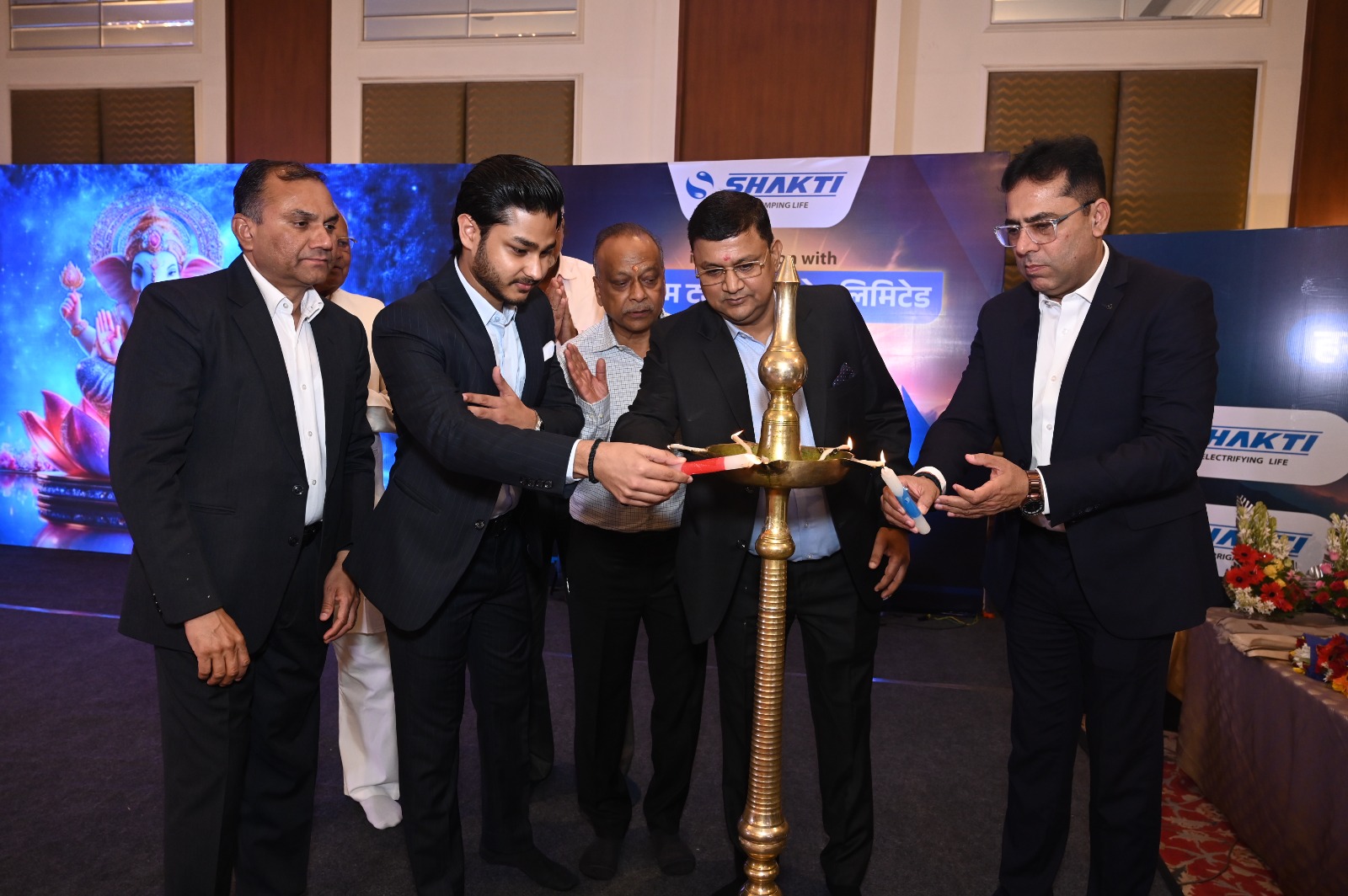
    Varanasi, June 17: Shakti Pumps (India) Limited, one of India’s leading manufacturers of energy-efficient pumps and solar pumping solutions, hosted an exclusive dealer meet in Varanasi on Sunday, 14 June 2026, to strengthen its distribution network and deepen engagement with channel partners across Uttar Pradesh. Shakti Pumps has been working to provide solutions to water management for farmers across the country.

    Shri. Ashok Tiwari, Mayor of Varanasi graced the occasion along with Mr. Ramesh Patidar, Managing Director, Shakti Pumps (India) Limited, and Mr. Rajesh Hingorani, Deputy General Manager and others.

    Shri Anand Tiwari,  Mayor of Varanasi shared, “Shakti Pumps has been working hard for the betterment of farmers across Uttar Pradesh and the country. It is a good sign for UP farmers as they will be able to use state of the art machinery along with latest solar technology which will help in reducing the power consumption and the farmer can water the fields in a timely manner. I congratulate Shakti Pumps for reaching out to the farmers of Varanasi and other parts of Uttar Pradesh.”

    Held at the prestigious Taj Ganges, Varanasi, the event brought together dealers, distributors, and industry stakeholders from the region. During the event, Shakti Pumps announced the appointment of Maniram Tubes Pvt. Ltd. as its key distributor for Varanasi and select parts of Uttar Pradesh, marking a significant step towards expanding the company’s market presence and ensuring enhanced customer service across the region.

    Addressing the gathering, Mr. Ramesh Patidar said, “Uttar Pradesh continues to be an important market for Shakti Pumps, driven by growing demand for efficient water management and sustainable pumping solutions. We are pleased to welcome Maniram Tubes Pvt. Ltd. as our key distribution partner for Varanasi and adjoining regions. Their strong market presence, customer relationships, and commitment to service excellence make them an ideal partner as we continue to expand our reach and deliver value to customers.”

    The event served as a platform to share Shakti Pumps‘ growth strategy, product innovations, and future business opportunities with channel partners. Discussions focused on strengthening market penetration, enhancing customer support, and promoting advanced pumping solutions across agricultural, residential, commercial, and industrial segments.

    It was an opportunity for participants to interact directly with the company’s leadership team, exchange market insights, and explore new avenues for business growth.

    With a strong nationwide distribution network and a focus on innovation, quality, and customer satisfaction, Shakti Pumps continues to strengthen its position as a trusted partner in India’s water and energy management sector.

  • Vogue India Spotlights Senator Dr. Rasha Kelej’s Leadership, Purpose, and Vision for Empowering Women

    MUMBAI, India, June 17 — Senator Dr. Rasha Kelej, CEO of Merck Foundation, has been featured by leading lifestyle media publication Vogue India. The feature article, titled “Empowering Change: Dr. Rasha Kelej’s Vision for Women-Led Development”, highlights her inspiring leadership journey, her vision for empowering women and girls through education and healthcare, and the transformative impact of Merck Foundation’s programs in advancing healthcare capacity, breaking infertility stigma, supporting girl education, and driving social change across Africa and beyond.

    Senator Dr. Rasha Kelej, CEO of Merck Foundation and One of 100 Most Influential African Women (2019-present) shared, “I am truly honoured to be featured by Vogue India, yet again. As a long-time reader of Vogue, I have always admired its ability to celebrate fashion, individuality, and influential voices. This feature not only highlights the impact of my work but also reflects a message I strongly believe in that women should never feel they must compromise their femininity to become effective leaders. Leadership today is multidimensional; it is not only about the decisions we make, but also about how we present ourselves and represent our mission. I believe confidence, authenticity, professionalism, and personal style can coexist seamlessly, and that embracing our individuality can make us stronger leaders and role models for others.”

    Beyond her personal leadership journey, The Vogue India feature also highlights Dr. Kelej’s close collaboration with 33 African and Asian First Ladies, through which she champions programs that empower women in healthcare and STEM, break infertility stigma, support girls’ education, and create lasting impact in communities across Africa and Asia.

    Under Dr. Rasha Kelej’s leadership, Merck Foundation has transformed the lives of millions through their impactful programs including the “Merck Foundation Scholarships Program”, through which more than 2,600 scholarships have been provided for healthcare providers from 52 countries in 44 critical and underserved medical specialties.

    She also created the “Merck Foundation More Than a Mother” movement in 2015, one of the most impactful and widely recognized campaigns, that aims to empower infertile and childless women through access to information, education, health and change of mindset. The campaign is building quality and equitable Reproductive and Fertility Care capacity, breaking infertility stigma, raising awareness about infertility prevention & male infertility, and Supporting Girl Education.

    As a passionate advocate for supporting girls’ education Dr. Kelej has launched Merck Foundation Educating Linda program, which provides annual scholarships to high-performing yet underprivileged schoolgirls, in partnership with African first Ladies. To date, more than 1,500 annual scholarships are awarded to African schoolgirls from 21 countries, covering school fees and other essential educational expenses, including books and uniforms, enabling them to complete their education and reach their full potential.

    The article also showcases how Dr. Kelej has leveraged innovative and creative platforms, including media, fashion, music, animation films, and storybooks, to raise awareness about critical social and health issues. Through these initiatives, Merck Foundation has been able to engage communities and create culture shift in communities across Africa and beyond.

    The feature also spotlights Dr. Kelej’s distinctive style and fashion presence while offering insights into the personal philosophy that has guided her journey, she shares, “My learnings and takeaways from my work and journey have been to never give up and always be yourself. Be consistent, persistent, and disciplined. Not only in your work commitments and goals, but also in your personal ones, such as daily exercise, healthy eating, and self-development, to stay relevant. Most importantly, practice daily stress management, which is the key to sustainable high performance.”

  • Jagatsinghpur to Get Greenfield University; Land Identification Process Begins

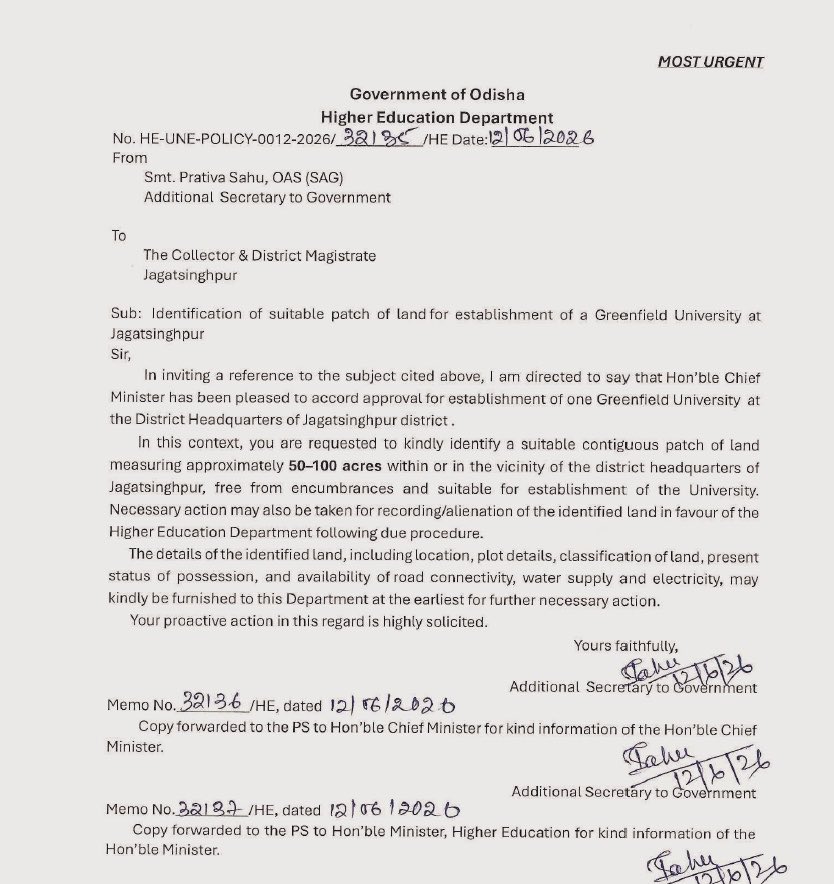
    Bhubaneswar, June 17 (UDN): In a major boost to higher education infrastructure in Odisha, the Higher Education Department has initiated steps for the establishment of a Greenfield University in Jagatsinghpur district. The proposed university is expected to enhance access to quality higher education, research, and skill development opportunities for students in the region.

    Jagatsinghpur to Get Greenfield University; Land Identification Process Begins

    As part of the preliminary process, the Jagatsinghpur Collector and District Magistrate have been directed to identify and earmark a suitable land parcel measuring between 50 and 100 acres within or in the vicinity of the district headquarters. The selected site is expected to have adequate connectivity and infrastructure to support the development of a world-class academic institution.

    The proposed Greenfield University is envisioned as a modern centre of excellence that will cater to the evolving educational needs of students while promoting innovation, research, and multidisciplinary learning in line with the National Education Policy (NEP) 2020.

    The initiative reflects the Odisha Government’s commitment to expanding higher education facilities across the state and ensuring equitable access to quality learning opportunities. Once established, the university is expected to emerge as a key educational hub, benefiting students from Jagatsinghpur and neighbouring districts while contributing significantly to the region’s socio-economic development.

  • Advancing European Aviation: Deutsche Aircraft Showcases Multi-Role Innovation at ILA Berlin

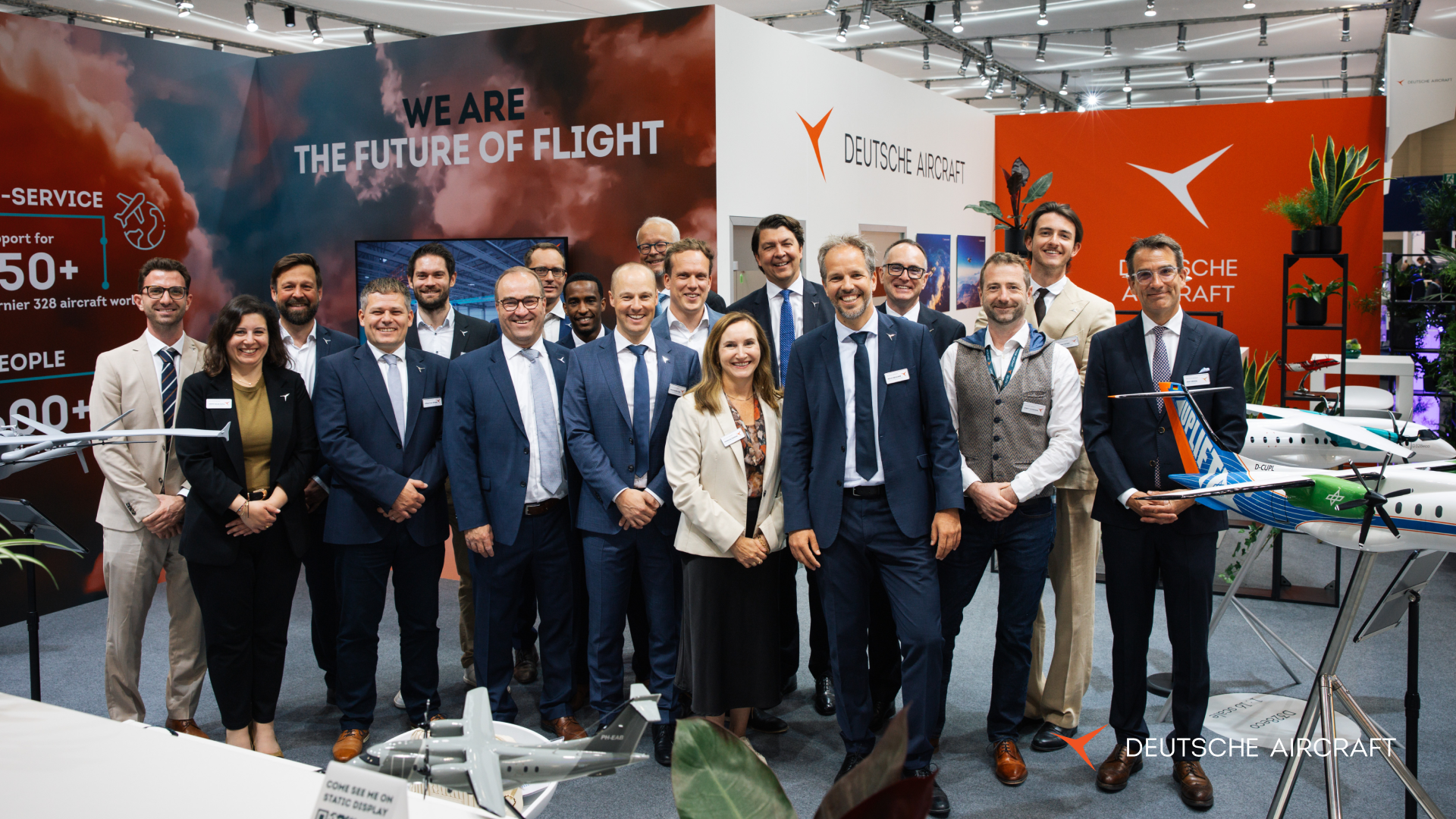
    Berlin, Germany, 16 June 2026 – At ILA Berlin 2026, Deutsche Aircraft demonstrated how visionary aviation concepts are advancing toward operational reality. The German OEM showcased its substantial progress across the commercial and multi-role sectors, making it clear how applied research, portfolio expansion and long-term collaboration are actively accelerating the development and industrialisation of the next-generation D328eco® turboprop.

    Advancing European Aviation: Deutsche Aircraft Showcases Multi-Role Innovation at ILA Berlin

    Together, these announcements reflect Deutsche Aircraft’s broader strategy to integrate sustainable regional aviation with enhanced operational flexibility, industrial resilience and European aerospace collaboration.

    During the event, Deutsche Aircraft announced a series of technological advancements, strategic milestones and industrial partnerships that underscore its commitment to innovation, defence, special missions and aerospace leadership in Europe.

    Key highlights of ILA Berlin 2026 included:

    • Integrated Uncrewed Capability Unveiled: Expanding its portfolio to support civil and governmental multi-role operations, Deutsche Aircraft presented its new uncrewed aircraft capability. Developed in collaboration with Sierra Nevada Corporation, the mature system is designed to complement the D328MR by extending operational reach and strengthening intelligence, surveillance, disaster response and environmental monitoring capabilities across demanding environments.
    • Fuel-to-Flight Concept: In partnership with INERATEC, Deutsche Aircraft showcased a fully integrated fuel-to-flight solution, with a display featuring a D328® Multi-Role Maritime Patrol Aircraft alongside a containerised fuel production unit and autonomous refuelling concepts. This scalable aviation ecosystem enables synthetic fuel production directly at the point of use, supporting flexible, resilient and lower-emission operations in remote and mission-critical environments worldwide. The concept also highlights the potential to reduce logistical dependency while increasing operational autonomy for future aviation missions.
    • Long-Term Industrial Partnership: In a major step for the D328eco production ramp-up, Deutsche Aircraft and Hexcel announced a long-term supply agreement. Hexcel’s advanced composite solutions will be integrated into the D328eco airframe, optimising weight reduction, durability and fuel efficiency to support performance and sustainability objectives. The partnership reinforces long-term operational reliability while boosting the resilience of the European aerospace supply chain.
    • Research-Driven Sustainable Aviation: Supported by Germany’s LuFo Klima programme, Deutsche Aircraft demonstrated how applied research has made an impact on SAF readiness, advanced testing and acoustic optimisation. The DLR’s D328 UpLift research aircraft and simulator featured the instrumentation and systems infrastructure used for ongoing validation trials. These initiatives underline Deutsche Aircraft’s commitment to accelerating practical, data-driven advancements in sustainable regional aviation.

    “ILA Berlin 2026 demonstrated the strength of collaboration across the European aerospace ecosystem,” said Nico Neumann, CEO of Deutsche Aircraft. “From sustainable propulsion concepts and applied research to multi-role mission capabilities and industrial partnerships, we are translating innovation into practical aviation solutions. The momentum and engagement we experienced throughout the week reinforce our commitment to shaping a more sustainable, resilient and sovereign future for regional aviation.”

    Deutsche Aircraft extends its gratitude to partners, customers and visitors for their active engagement and support throughout ILA Berlin 2026.

    Following the event, Deutsche Aircraft continues to advance the D328eco programme while strengthening the partnerships that support the future of sustainable regional and special-mission aviation.

  • Telegram Removed from Google Play Store Amid Temporary Restrictions; iOS Access Continues

    New Delhi, June 16: Messaging platform Telegram has been removed from the Google Play Store in India following temporary government-imposed restrictions, while the application remains accessible through the Apple App Store.

    The development comes amid regulatory measures linked to public examination security and efforts to prevent the spread of misinformation and unauthorized content during sensitive periods. Authorities have reportedly implemented precautionary steps aimed at ensuring the integrity of examination processes and maintaining digital compliance.

    Users attempting to download Telegram through Android devices may currently find the application unavailable on the Google Play Store. However, existing users may continue to access the platform subject to prevailing regulatory directives and service availability.

    Industry observers note that digital platforms are increasingly required to comply with government regulations concerning public safety, content moderation, and information security. Temporary restrictions are often reviewed periodically based on administrative assessments and compliance requirements.

    The move has generated discussion among users and technology stakeholders regarding platform governance, digital accessibility, and regulatory oversight in India’s rapidly evolving digital ecosystem.

    Officials have not indicated any permanent action, and the situation is expected to be reviewed as authorities continue monitoring compliance and operational requirements.

  • Wood Mackenzie: Data centre metals demand isn’t an asset story. It’s a grid story.

    Grid infrastructure requirements reshape base metals demand outlook to 2040

    Wood Mackenzie: Data centre metals demand isn’t an asset story. It’s a grid story.

    LONDON/HOUSTON/SINGAPORE, June 16: Research from Wood Mackenzie finds that the base metals required to power the global data centre boom extend far beyond the servers, cooling units, and enclosures inside the facility. When grid reinforcement, transmission networks, and facility-level power systems are included, total system-level metals consumption reaches an estimated three to four times the volume implied by the asset itself.

    The research, Data centre metals demand: it’s all about the infrastructure not internals (Wood Mackenzie, June 2026), sets out why the conventional framing of this demand story is incomplete, and what that means for commodity markets, infrastructure investment, and energy policy.

    “Most assessments of data centre metals demand stop at the server room door,” said Shashank Sriram, Senior Research Analyst, Al

    uminium Markets at Wood Mackenzie. That captures the smallest part of the picture. The infrastructure required to keep a modern data centre running, redundant power systems, on-site generation, transmission reinforcement, has a metals footprint that dwarfs what is happening inside the facility. At the system level, we are looking at three to four times the volume implied within the asset. For investors and grid planners, that is a material difference.”

    Key findings at a glance

    • Internal aluminium demand peaks at 0.6 to 0.9 million tonnes annually, declining from the late 2030s
    • Cooling represents approximately 55% of internal aluminium demand; racking and enclosures approximately 25%
    • Internal demand grows at approximately 8 to 10% CAGR to the early 2030s, then falls at approximately 2 to 3% per annum
    • Annual data centre power capacity additions are projected to peak at approximately 30 to 33 GW in the early 2030s
    • Asia-Pacific will exceed 50% of global additions at peak; North America leads early deployment

    What is happening inside the facility

    Inside the data centre, aluminium demand is concentrated in cooling systems, at approximately 55% of internal use, and racking and enclosures, at approximately 25%. Copper anchors performance at high-density nodes, driven by power density and system complexity rather than structure. Both metals grow at approximately 8 to 10% per year into the early 2030s, before plateauing and declining at approximately 2 to 3% per annum as efficiency gains and AI-driven design optimisation take hold. Total aluminium demand within the asset peaks at 0.6 to 0.9 million tonnes annually before trending lower toward the late 2030s.

    In short, the internal demand profile is front-loaded and bounded, even as underlying compute demand continues to rise.

    Where demand is actually being generated

    The first structural shift occurs at the facility boundary. As grid connections slow and local power capacity tightens, operators are building power systems into the facility itself. On-site generation now spans solar and wind with storage, gas engines and turbines, solid oxide fuel cells, and emerging small modular reactor concepts. None of this scales with compute load. It sits alongside it, engineered to guarantee uptime regardless of what the grid does. Wood Mackenzie estimates that this layer alone effectively doubles the metals demand implied within the asset, with aluminium expanding across busways, structural housings, and distribution systems, and copper scaling across high-load interconnections and grounding infrastructure.

    The second shift occurs at the grid. Annual data centre-driven power capacity additions are projected to rise from approximately 15 to 20 gigawatts today to a peak of approximately 30 to 33 gigawatts in the early 2030s, stabilising at structurally higher levels thereafter. Asia-Pacific will account for more than half of global additions during the peak phase. North America leads early deployment. These are not incremental grid connections. They are network reinforcement programmes responding to load profiles that existing infrastructure was not designed to absorb.

    At this stage, metals demand is no longer driven by the data centre. It is driven by the power system required to sustain it. Aluminium dominates here, scaling across overhead transmission, conductors, and utility-scale generation frameworks. Copper scales across substations, underground connections, and generation-side electrical systems. The split between the two metals is not a function of price. It is determined by the physical limits of each application. Physics defines outcomes. Price influences the boundaries.

    When all three layers are aggregated, total system-level metals consumption reaches an estimated three to four times the volume implied within the asset. The result, the report concludes, is not substitution between aluminium and copper, but co-dependent expansion across the base metals complex.

  • Isuzu Motors India Announces Nationwide ISUZU I-Care Pre- Monsoon Service Camp

    Isuzu Motors India Announces Nationwide ISUZU I-Care Pre- Monsoon Service Camp

    Pune, June 16: In a constant endeavour to reaffirm ISUZU’s commitment to provide best service and ownership experience, Isuzu Motors India will be conducting a nation-wide ‘ISUZU I-Care Pre-Monsoon Camp’ for its range of ISUZU D-MAX Pick-ups and SUVs. This service camp is aimed at offering customers exciting benefits and preventive maintenance checks for a hassle-free driving experience during the season across the country.

    An initiative of ‘ISUZU Care’, the pre-monsoon camp will be organised across all ISUZU authorised dealer service outlets, between 18th – 24th June 2026 (both days inclusive). During this period, customers can also avail special offers & benefits for their vehicles.

    The Pre-Monsoon Camp will be organised at all authorised service facilities of ISUZU located in Agra, Ahilyanagar, Ahmedabad, Ambikapur, Anantapur, Baramulla, Bareilly, Barmer, Baruch, Bathinda, Bengaluru, Bhopal, Bhubaneshwar, Bikaner, Bilaspur, Calicut, Chatrapathi Sambhaji Nagar, Chennai, Chikkamagaluru, Coimbatore, Dhule, Delhi, Dibrugarh, Dimapur, Durgapur, Ernakulam, Gandhidham, Gorakhpur, Gurugram, Guwahati, Howrah, Hubballi, Hyderabad, Indore (2), Jagdalpur, Jaigaon, Jaipur, Jalandhar, Jammu, Jodhpur, Kadapa, Kalaburagi, Karnal, Kayamkulam, Khammam, Kolhapur, Kolkata, Kottayam, Kurnool, Latur, LB Nagar (Hyderabad), Leh, Lucknow, Ludhiana, Madurai, Mandi, Mangaluru, Mehsana, Mohali, Mumbai (Nerul), Mundra, Mysuru, Nagpur, Namakkal, Nasik, Nellore, Nizamabad, Noida, Ongole, Patna, Pune, Raipur, Rajahmundry, Rajkot, Ratnagiri, Satara, Shivamogga, Sikar, Siliguri, Solapur, Surat, Theni, Thrissur, Tirunelveli, Tirupati, Trichy, Thiruvananthapuram, Vadodara, Vijayawada, Visakhapatnam and Yavatmal.