Blog

  • Indian Equity Markets Remain Range-Bound Despite Strong Corporate Earnings: Report

    New Delhi, March 13: Indian equity markets continue to trade within a narrow range despite strong corporate earnings growth, as global uncertainties and geopolitical tensions keep investor sentiment cautious, according to a recent report by Bajaj Finserv Asset Management.

    The report highlighted that companies in the Nifty 500 index posted a 16 per cent year-on-year increase in profits in the third quarter of FY26, marking the strongest earnings growth seen in nearly two years. The performance reflects improving profitability across sectors and indicates a gradual strengthening of corporate balance sheets.

    Despite this positive earnings momentum, domestic stock markets have not witnessed a major rally and have remained largely range-bound for more than a year. Analysts attribute this trend to external factors, including global economic uncertainties and geopolitical risks, which continue to influence market movements.

    According to market experts, strengthening corporate earnings provide a solid base for the long-term growth of Indian equities. However, global developments have created volatility and limited the immediate upside in the markets.

    The report also pointed to improving domestic economic indicators. Credit growth in the banking sector has returned to double-digit levels, signalling a rise in economic activity and demand for loans. Meanwhile, consumption trends have shown signs of recovery following recent policy measures, including tax relief through GST adjustments.

    Monetary policy easing has also supported the economy. The Reserve Bank of India’s cumulative rate cuts and liquidity measures have helped reduce borrowing costs for businesses and households, which could support investment and consumption in the coming quarters.

    However, emerging global trends are creating new challenges. The rapid expansion of artificial intelligence technologies has raised concerns about potential short-term disruptions in India’s IT services sector, particularly regarding demand patterns and employment dynamics.

    Geopolitical tensions in the Middle East are another key risk factor. As India imports the majority of its crude oil, any disruption in global supply routes could lead to higher oil prices, putting pressure on inflation and the rupee.

    The report warned that prolonged geopolitical instability may also affect sectors such as aviation, chemicals, paints and oil marketing companies, while increasing the risk of foreign investor outflows.

    Meanwhile, the bond market has also witnessed fluctuations due to foreign capital movements and global developments, which have influenced currency movements and government bond yields.

    Despite near-term challenges, analysts believe that improving domestic fundamentals and stable inflation could help support market stability in the medium term, although global developments will continue to shape investor sentiment.

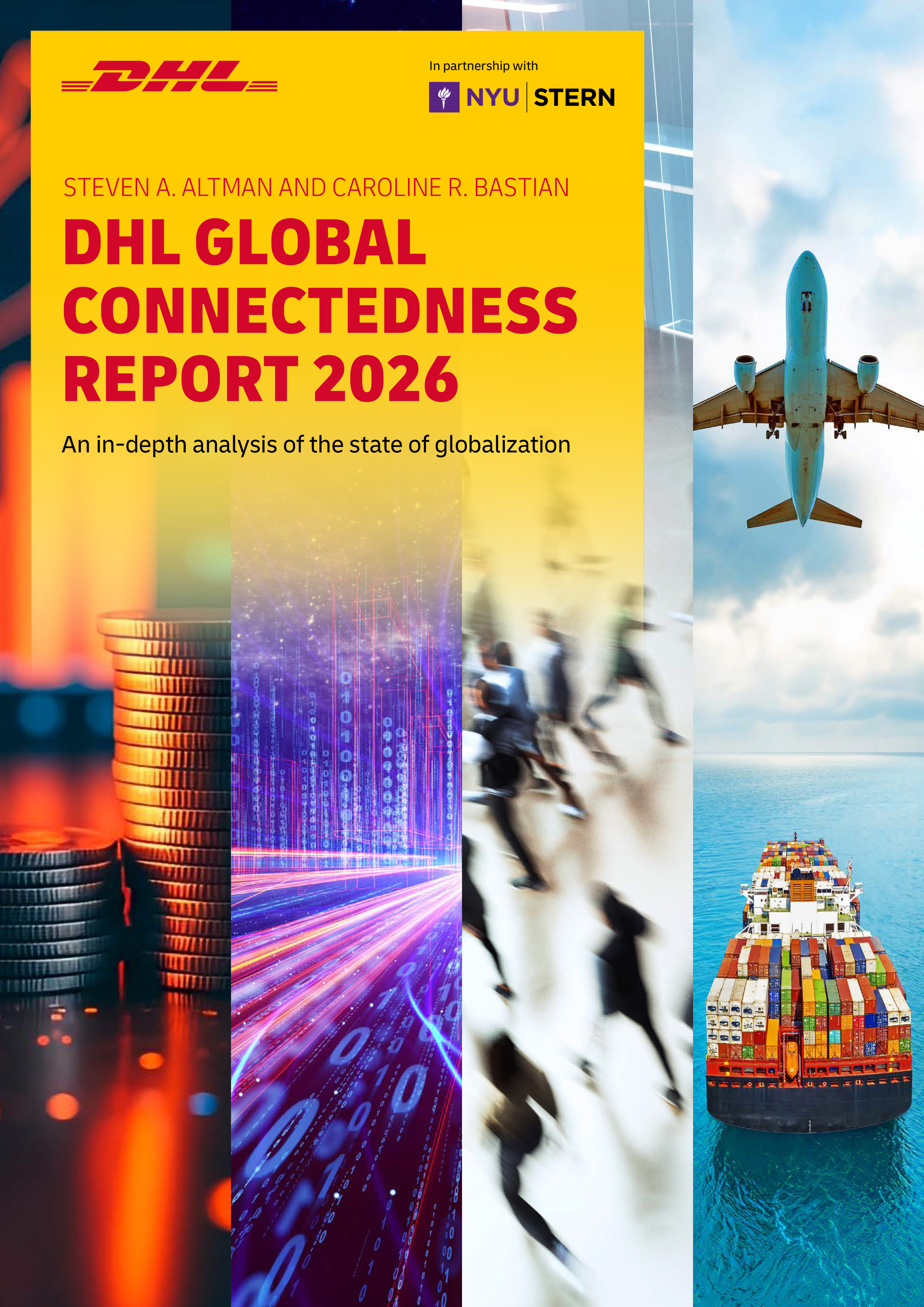
  • Globalization Remains at Record Levels Despite Rising U.S.–China Tensions: DHL Global Connectedness Report 2026

    New York, Mar 13: Despite rising geopolitical tensions, increasing tariffs, and growing uncertainty around global trade policies, globalization continues to remain at historically high levels, according to the DHL Global Connectedness Report 2026, released today by DHL in partnership with the NYU Stern School of Business.

    Globalization Remains at Record Levels Despite Rising U.S.–China Tensions: DHL Global Connectedness Report 2026

     The report, based on more than 9 million data points, tracks international flows of trade, capital, information, and people across 180 countries, representing 99.6% of global GDP and 99% of the world’s population. It provides one of the most comprehensive assessments of the state of globalization worldwide.

    According to the report, global connectedness has remained stable since 2022, with globalization levels reaching 25% in 2025, matching the highest level ever recorded on the report’s scale measuring cross-border flows.

    John Pearson, CEO of DHL Express, emphasized the resilience of global integration despite political tensions. He noted that the continued strength of globalization highlights the importance of global cooperation in addressing major challenges such as poverty and climate change.

    Trade Growth Supported by AI and Pre-Tariff Imports

    The report highlights that global trade growth in 2025 was the fastest since 2017, excluding the volatile pandemic period. Increased trade activity was partly driven by companies accelerating imports before the introduction of higher U.S. tariffs.

    Demand for AI-related infrastructure and technology also played a major role in boosting global trade. According to World Trade Organization (WTO) data, AI-related products accounted for 42% of the growth in goods trade during the first three quarters of 2025.

    While higher tariffs in the United States could slow trade growth slightly in 2026, global goods trade is still expected to expand at an average rate of 2.6% annually through 2029, broadly in line with growth seen over the past decade.

    Limited Impact of U.S.–China Trade Tensions

    The report finds that trade between the United States and China has continued to decline, falling from 3.6% of global trade in 2015 to 2.7% in 2024, and further down to 2.0% during the first three quarters of 2025. However, these flows represent only a small portion of total global trade, meaning their decline has had limited impact on overall globalization levels.

    At the same time, countries and companies are diversifying supply chains and trade partnerships, with nations such as India and Vietnam emerging as key beneficiaries.

    Record Movement of Goods and People

    The report also highlights several major trends in other global flows:

    • Capital: Foreign investment remains resilient, with multinational companies continuing to generate large portions of their sales internationally. While greenfield foreign direct investment announcements declined in 2025, overall FDI flows increased and cross-border mergers and acquisitions remained strong.

    • Information: Growth in cross-border data and information flows has slowed since 2021 due to geopolitical tensions and increasing restrictions on data transfers.

    • People: International travel, migration, and student mobility have rebounded strongly after the COVID-19 pandemic and are now reaching record levels.

    Singapore Tops Globalization Rankings

    In the report’s country rankings, Singapore remains the world’s most globalized country, followed by Luxembourg and the Netherlands. Regionally, Europe ranks as the most globally connected region, followed by North America and the Middle East and North Africa.

    The United Kingdom stands out for having the most geographically diversified international flows, while the United Arab Emirates has recorded the largest growth in globalization since 2001.

    Globalization Still Far From Its Full Potential

    Despite strong global connections, the report notes that the current 25% globalization level shows that the world still has significant room to expand cross-border exchanges if policy restrictions are reduced.

    Professor Steven A. Altman, Director of the DHL Initiative on Globalization at NYU Stern’s Center for the Future of Management, noted that while political debates around globalization may appear volatile, actual global flows have proven to be remarkably resilient.

    “Globalization faces real risks, but the resilience of international flows is equally real,” Altman said, emphasizing the importance of accurately understanding global economic connections when shaping future policy decisions.

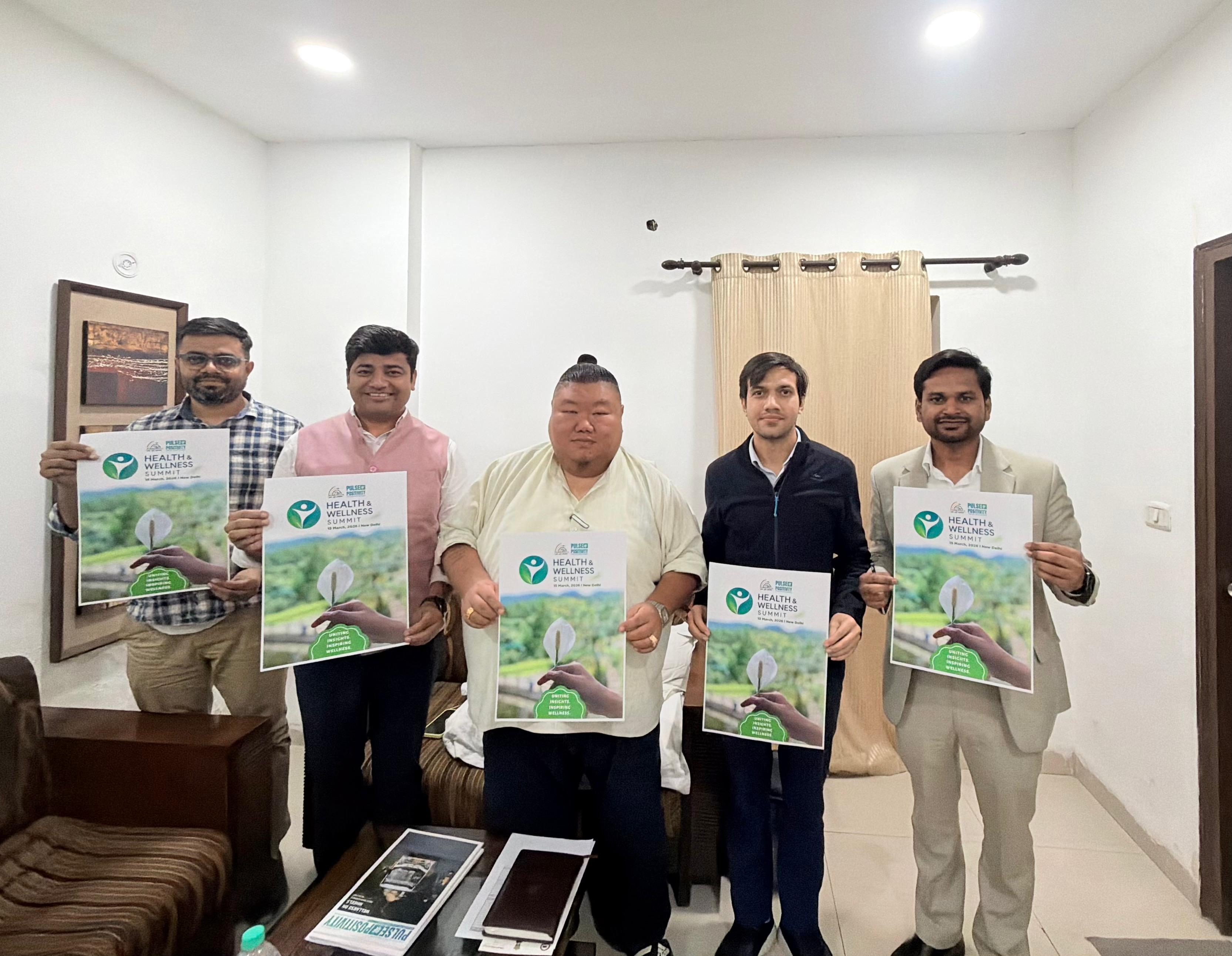
  • Pulse of Positivity Hosts Health & Wellness Summit 2026 on March 15

    New Delhi, Mar 13: Pulse of Positivity will organise the Health & Wellness Summit on March 15, 2026, in New Delhi, bringing together policymakers, healthcare experts, academicians, and thought leaders to deliberate on key issues shaping India’s public health and wellness ecosystem. The summit will be held at Le Méridien, New Delhi, and will serve as a platform for dialogue on preventive healthcare, mental health awareness, lifestyle diseases, and sustainable health systems.

    Pulse of Positivity Hosts Health & Wellness Summit 2026 on March 15

     The inaugural session will feature Gajendra Singh Shekhawat, Union Minister for Culture and Tourism, Government of India, as the Chief Guest. The session will also include addresses from distinguished public leaders and the official launch of the “Health Chaupal” initiative, aimed at promoting community-driven dialogue on health and well-being.

    The event will also be graced by prominent dignitaries including Pankaj Kumar Singh, Minister for Health & Family Welfare, Government of NCT of Delhi, Temjen Imna Along, Minister for Higher Education & Tourism, Government of Nagaland, Anil Jain, President of The Bharat Scouts and Guides and former Member of Parliament (Rajya Sabha), and Raja Iqbal Singh, Mayor of Delhi.

    Designed as a multi-stakeholder platform, the summit will feature a series of thematic sessions bringing together medical practitioners, policy experts, and community leaders to discuss critical health challenges and opportunities.

    “The Health & Wellness Summit 2026 is envisioned as a platform to bring together policymakers, medical professionals, wellness practitioners and thought leaders to engage in meaningful dialogue on the future of healthcare in India. Through this summit, Pulse of Positivity aims to encourage conversations around preventive healthcare, mental well-being and community-driven health initiatives. We believe that collaborative dialogue and shared knowledge are essential to building a healthier, more aware and resilient society.” said Rear Admiral Kapil Gupta, VSM (Retd.), Editor-in-Chief of Pulse of Positivity.

    The summit will feature thematic sessions on mental health and emotional well-being, lifestyle diseases and preventive healthcare, women’s health and maternal–child wellness, and public health policy and sustainable health systems, bringing together experts from medicine, academia, wellness and public policy. Speakers include Gautam Chaubey, M. N. Hoda, Saroj Dubey, Raqib Ali, Vivek Kumar, Acharya Pratistha, Ambika Dhiman, Rajdeep Singh Anand, Shailendra Vyas, Bhawna Garg, Praveen Kumar Garg, Rahul Kashyap, RJ Ragini, Ravi Parashar, Navneet Bali, Arun Kumar Pandey, Rajeev Pathak, and Rajnikant Pandey, who will share perspectives on strengthening India’s healthcare ecosystem and promoting preventive and community-driven health practices.

    The summit will conclude with a Valedictory Session, featuring Tushar Chauhan, who secured All India Rank 216 in the Civil Services Examination 2025, alongside other distinguished speakers.

    Through discussions spanning mental health, preventive care, women’s health, and public policy, the Health & Wellness Summit aims to encourage knowledge exchange and foster collaborative solutions to strengthen India’s healthcare ecosystem while promoting community-driven wellness initiatives.

  • Saatvik Green Energy Launches Energy Storage Arm

    Mumbai,  Mar 13: Saatvik Green Energy Limited, one of India’s fastest-growing fully integrated renewable energy companies listed on the BSE and NSE, has announced the incorporation of its wholly owned subsidiary, Saatvik Power Storage Solutions Limited, in India. The newly formed entity will operate in the renewable energy and energy storage sector, focusing on the development and deployment of battery technologies and energy storage systems.

    The initiative marks an important step in Saatvik’s strategy to build a future-ready clean energy platform that integrates solar generation with storage solutions. The subsidiary plans to explore opportunities in 20 GW of energy storage capacity over the next five years, supporting grid stability and renewable integration across key markets. The company also aims to introduce utility scale, C&I, retail and residential range of battery and energy storage solutions, catering to utility-scale, commercial & industrial, and distributed renewable energy applications.

    Commenting on the development, Prashant Mathur, CEO of Saatvik Green Energy Limited, said:

    “Energy storage will play a critical role in enabling the next phase of renewable energy growth. The incorporation of Saatvik Power Storage Solutions Limited reflects our long-term vision to build a comprehensive clean energy ecosystem that integrates solar manufacturing, EPC capabilities, and advanced storage technologies. This step positions Saatvik to contribute meaningfully to India’s transition toward reliable, round-the-clock renewable power.”

    The subsidiary has been incorporated with an authorised capital of ?10,00,000 divided into 1,00,000 equity shares of ?10 each, with 100% shareholding held by Saatvik Green Energy Limited.

    The establishment of the subsidiary reinforces Saatvik’s commitment to innovation, technology-led growth, and supporting India’s clean energy transition, particularly as the country accelerates deployment of renewable energy capacity supported by grid-scale and distributed storage solutions.

  • Japantastics Introduces the World of Kodaimoji, Bringing Ancient Characters into Modern Spaces

    TOKYO, Mar 13 – Japantastics, Inc. has announced the launch of a new collection featuring Kodaimoji artworks by Kei Sato, a Japanese calligrapher and contemporary artist who reimagines ancient Chinese scripts such as oracle bone and bronze inscriptions as modern expressions of art. These early forms of writing, dating back more than 3,000 years, are recognised as the origins of modern Chinese characters and as vessels of timeless human emotion and spirituality. 


    Guided by the concept “Bringing Ancient Characters into Modern Spaces,” Sato transforms these primordial symbols into living works that resonate with contemporary aesthetic sensibilities. Her art transcends traditional calligraphy, appearing in diverse media such as wood, metal, ceramics, and stone. By merging historical depth with modern design, Sato creates works that channel the spirit of ancient writing into today’s architecture, interiors, and art environments. 

    Kei Sato explains: “Ancient characters are the prototypes of the kanji used today. Although they are the oldest form of written language, their rediscovery in 1988 makes them both ancient and new. Inspired by oracle bone and bronze inscriptions, born from cultures that reflect unchanging human emotions across time, I continue to create under the theme ‘Bringing Ancient Characters into Modern Spaces,’ hoping to share their essence across all environments.” 

    “Child” 

    “Happiness” 

    Through her creative practice, Sato seeks not only to preserve these scripts as historical artefacts but to reinterpret and revitalise them, awakening the fundamental beauty and meaning of written forms within the context of contemporary art and space. 

    “Sun” 

    “Spring” 

    The Japantastics.jp online site now features a selection of Sato’s works, which serve as a cultural bridge, reviving the rhythm and beauty of the world’s earliest scripts for the modern era. Through her reinterpretations, the primitive strokes once carved into bone or cast in bronze are reborn as expressions of universal harmony, emotion, and timeless design. 

    Kei Sato’s major overseas activities: 

    1970: Began practising ancient Chinese calligraphy. 

    1994: Became independent. 

    1997: Established Raira Studio. Developed an original technique of expressing letters with granite in its original stone colour, and presented a lithograph. Held an exhibition at Nagoya Gallery 141, themed “Taking ancient Chinese Calligraphy into modern times”. Her works were exhibited at the Jiangsu Golden Mausoleum Restaurant in Nanjing, China. 

    1999: Her works were exhibited in the Beijing China Museum of History International Calligraphy Exhibition. Held an exhibition at the gallery in Hakuseki Museum in Gifu Pref. 

    2000: Her works were exhibited in the Jiangsu Provincial Art Museum International Calligraphy Exhibitions, Jiangsu, China. Held an exhibition at Nihonbashi Gallery “Kai” in Tokyo, Japan. 

    2006: Her works were exhibited at Melbourne Art Show ’06, Australia. Her works were exhibited at Collingwood Gallery (Art Collection ’06), Australia. 

    2009: Won China-Japan Peace Prize at Tokyo International Art Exhibitions (Sesion Suginami, Tokyo). Her works were exhibited at the Euro-American “America Arts Exhibitions” in Tennessee, USA. 

    2010: Won “Art Gallery Prize” at Tokyo International Art Exhibitions (Tokyo Metropolitan Arts Museum). 

    2011: Exhibited at the International “Japan – France Exhibition of Contemporary Art”, Aoyama Spiral. Won “Art Gallery First Prize” at the International Art Exhibition, Tokyo Metropolitan Arts Museum. Won the Award of Excellence at the Mexico International Art Exhibition, Mexico. Participated in the 21st Century International Artists Exchange and Exhibition, Seoul. Held an exhibition in Salon d’Automne, Paris (France). 

    2012: Participated in International Art Exhibitions “Spain Art Exhibitions”, Spain. Won “Special Prize” (The Window of Art Prize) at *International Japan–France Exhibition of Contemporary Art”, National Art Centre. Participated in the 21st Century International Artists Exchange and Exhibition, Jilin (China). Held an exhibition in Salon d’Automne, Paris (France). 

    2013: Exhibited at the International “Japan–France Exhibition of Contemporary Art”, The National Art Centre. 

    2014: Exhibition at Kyoto International Hotel, Kyoto. Exhibited at the International “Japan – France Exhibition of Contemporary Art”, The National Art Centre. Held an exhibition in Salon d’Automne, Paris (France). Participated in the 21st Century International Artists Exchange and Exhibition. Won Mayor’s Award, Keelung City (Taiwan). 

    2015: International Arts Exhibition (Belgium – Holland Arts Exhibition), Belgium 45th Anniversary. 

    2016: Participated in the Euro-American ‘French Art Prize Exhibition’ featuring a special large-scale display of black and white works (Corsica). 

    2018: Participated in the Euro-American ‘Spanish Art Prize Exhibition’ (Spain). Participated in the Euro-American ‘Japan-France Contemporary Art World Exhibition’ (The National Art Centre, Tokyo). Participated in the 21st Century Calligraphic and Painting Artists International Exchange Exhibition (Seoul). Exhibited at the Salon d’Automne (Paris, France). 

    2019: Participated in the Euro-American ‘Finland Art Prize Exhibition’ (Finland). Selected for the Salon d’Automne (Paris, France). 

    2020: Selected for the Salon d’Automne (Paris, France). 

    2021: Participated in the Euro-American ‘Japan-France Contemporary Art World Exhibition’ (The National Art Centre, Tokyo). Selected for the Salon d’Automne (Paris, France)

  • Australian Fashion Council and R.M.Williams Deliver First-Ever Industry-Backed Plan to Scale Australia’s Fashion & Textile Manufacturing Sector


    The Australian Fashion Council (AFC) and R.M.Williams have launched the National Manufacturing Strategy for Australian Fashion and Textiles 2026 – 2036 at Parliament House in Canberra – the first coordinated national roadmap to rebuild targeted domestic manufacturing capability across Australia’s textile, clothing and footwear (TCF) sector.


    A group of people standing in a row

AI-generated content may be incorrect.

    The National Manufacturing Strategy for Australian Fashion and Textiles 2026 – 2036 launch at Parliament House in Canberra


    As the official print and projection partner of the Australian Fashion Council, Epson are fully supporting this national manufacturing strategy, its strategic outcomes and strategic pillars, as detailed below, that that firmly promote Australia’s onshore manufacturing capabilities.


    A group of people posing for a photo

AI-generated content may be incorrect.

    (l-r) Epson Australia Managing Director Craig Heckenberg, Samantha Delgos, General Manager, Australian Fashion Council, Marianne Perkovic, Executive Chair, Australian Fashion Council and Epson Australia Corporate Marketing Manager, Priscilla Dickason

    The ten-year Strategy is the result of almost a year of industry consultation led by the AFC and R.M.Williams, including 14 national consultations with manufacturers, brands, educators and policymakers across the country. More than 300 stakeholders contributed to the process, generating over 1,000 proposed initiatives and nearly 900 votes on strategic priorities to shape the sector’s long-term manufacturing future.

    The Strategy was unveiled at a breakfast symposium and AFC member showcase in Mural Hall attended by over 90 industry and parliamentary guests, including members of the Parliamentary Friends of Australian Fashion & Textiles, and its Co-Chairs, Matt Burnell MP, Dai Le MP and Zoe McKenzie MP.

    The Strategy comes at a critical time for the industry. With 97 per cent of Australia’s clothing and textile products manufactured offshore, the sector remains vulnerable to ongoing global supply disruptions and trade volatility. Rather than compete against high-volume offshore manufacturing markets, the Strategy is focussed on closing structural gaps and accelerating advanced manufacturing to scale the sector’s comparative advantage, aiming to position Australia to compete globally in premium, technology-enabled and traceable production, built on the country’s natural fibre strengths.

    Table 1: Strategy Outcomes & Australia’s Comparative Advantage

    Outcome

    Comparative Advantage

    1. Capture more value from Australian fibre

    Australia is one of the world’s leading producers of premium natural fibres, including wool and cotton. Expanding domestic processing and spinning enables more of that value to be captured onshore.

    2. Strengthen sovereign manufacturing capability

    Australia has capability in specialised textile products where quality, compliance and supply security matter, including defence, healthcare and emergency service applications.

    3. Build a globally competitive premium sector

    Australia’s strength lies in high-quality, traceable and sustainably produced textiles and apparel, supported by natural fibres, strong design capability and advanced manufacturing.

    The Strategy outlines three strategic pillars underpinned by industry and government coordination as the levers required to deliver these outcomes by 2036.

    Table 2: Strategy Pillars & Coordination

    Strategic Pillar

    Focus

    1. Activate and drive demand

    Demand is the critical enabler. Strategic public procurement (federal and state) can anchor it, while Australian-made identification and coordinated national promotion can extend it through to consumer sectors. 

    2. Secure the workforce of the future

    Create new skilled pathways for advanced manufacturing roles, enable skills transfer (median age of manufacturer is 57), protect women’s contribution and participation (58% of TCF manufacturers are women) and support the diverse communities in the sector (41% are from CALD communities). 

    3. Accelerate advanced manufacturing

    Co-invest in modern machinery, new technologies and advanced manufacturing, rebuild early-stage fibre processing and yarn spinning – the sector’s ‘missing middle’ – and enable innovation in circular manufacturing and fibre-to-fibre recycling.

    AN ECONOMIC CASE FOR ACTION

    Independent modelling by RMIT University that full implementation of the Strategy’s coordinated policy platform will grow TCF manufacturing value added from $2.6 billion to $2.9 billion by 2030/31, delivering a cumulative $1.4 billion economic dividend over five years. The Strategy is also projected to create more than 1,000 new skilled jobs and $864 million in additional wages, with approximately half of those jobs are projected to be filled by women.

    At present, TCF manufacturing already employs more than 27,000 Australians – 58 per cent women (compared to 28 per cent in other manufacturing industries) and 41 per cent from culturally and linguistically diverse communities – and pays over $1.4 billion in wages annually. Strengthening this base will increase the competitiveness of Australia’s $28 billion fashion and textile industry, which employs nearly 500,000 Australians across the broader value chain.

    SPOKESPERSON QUOTES

    “This Strategy sets out a clear roadmap for rebuilding a globally competitive Australian fashion and textile manufacturing sector. Australia already has exceptional design talent, advanced manufacturing capability and globally recognised brands. With the right coordination across industry, skills and procurement policy, we have a real opportunity to strengthen sovereign capability, create skilled jobs and position Australia as a leader in premium manufacturing.”
    Marianne Perkovic, Executive Chair, Australian Fashion Council

    “Australia is the world’s largest exporter of greasy wool and a globally significant cotton producer. Yet we export raw fibre and import finished goods at multiples of the original value. Re-establishing fibre processing and spinning capability restores the missing link in our value chain. Building the next generation of capability to capture this value – capability that is advanced, technology-enabled and circular – will also require stronger demand signals. Strategic public procurement can help anchor that demand and support the growth of Australia’s domestic manufacturing capability.”
    Samantha Delgos, General Manager, Australian Fashion Council

    “R.M.Williams has manufactured in Adelaide for more than 90 years. We employ skilled craftspeople, invest in apprentices and continue to modernise production while competing globally. What’s needed now is to activate a flywheel: demand enables investment in skills, skills enable advanced manufacturing, and technology allows Australian manufacturers to scale while maintaining quality.”
    Tara Moses, Chief Operating Officer, R.M.Williams

    “This Strategy is a serious economic blueprint for communities, supporting skilled jobs, strengthening regional manufacturing, and creating clearer pathways for women into trades and long-term manufacturing careers. It presents a coordinated, cross-portfolio agenda that connects procurement, skills and industry capability. As Co-Chair of the Parliamentary Friends group, I’m committed to supporting the sector to turn this plan into long-term coordinated action.”
    Matt Burnell MP, Co-Chair, Parliamentary Friends of Australian Fashion & Textiles

    “Epson is firmly committed to our partnership with the Australian Fashion Council and our joint goals around improving local manufacturing, furthering innovation and developing digital transformation. To that end Epson are also working closely with the AFC on a feasibility study for a ‘smart factory’ and shared manufacturing hubs similar to those we have already developed and implemented with The Social Outfit and Citizen Wolf where Epson’s direct-to-fabric digital printing technologies play a part in the overall production workflow. This National Manufacturing Strategy represents an important step forward for Australia’s fashion and textile industry. Epson is proud to support this initiative and help accelerate the adoption of advanced digital technologies that can drive greater sustainability, unlock new opportunities, and create the jobs of the future.”

    Craig Heckenberg, Managing Director, Epson Australia

    The Strategy’s launch at Parliament House marked an important moment for Australia’s fashion and textile industry. To showcase the capability already operating in Australia, AFC members from across the manufacturing sector presented a cross-section of domestic production. The showcase featured R.M.Williams, Bianca Spender, Bond-Eye Australia, Clothing the Gaps, ABMT, Sylvia P, Waverley Mills, Silver Fleece and Stewart & Heaton. 


    A group of people standing together holding shoes

AI-generated content may be incorrect.

    The National Manufacturing Strategy for Australian Fashion and Textiles 2026 – 2036 launch at Parliament House in Canberra


    The AFC and R.M.Williams also produced a short film titled ‘Made Here, Worn Everywhere’ profiling AFC members including Australian Defence Apparel, The Social Outfit, Maara Collective, Citizen Wolf, Waverley Mills and Silver Fleece highlighting the diversity of manufacturing already taking place across Australia.


    WHAT’S NEXT: FOUNDATION TO 2029

    The Strategy will be led by the Australian Fashion Council as the peak body for the sector. Progress will be measured through a two-stage assessment framework.

    1. Implementation review (to 2029): This phase will assess progress in establishing the core architecture underpinning the Strategy, including procurement reform, national capability mapping, skills recognition pilots, shared manufacturing infrastructure and governance arrangements to coordinate delivery.
    2. Strategic outcomes review (to 2036): This phase will assess progress against the Strategy’s long-term ambition – a competitive, technology-enabled and domestically anchored manufacturing sector with a sustainable workforce pipeline and globally recognised market position.


    The National Manufacturing Strategy for Australian Fashion & Textiles is supported by the Parliamentary Friends of Australian Fashion & Textiles group, co-chaired by Matt Burnell MP, Dai Le MP and Zoe McKenzie MP, with more than 60 bipartisan members across Parliament. 

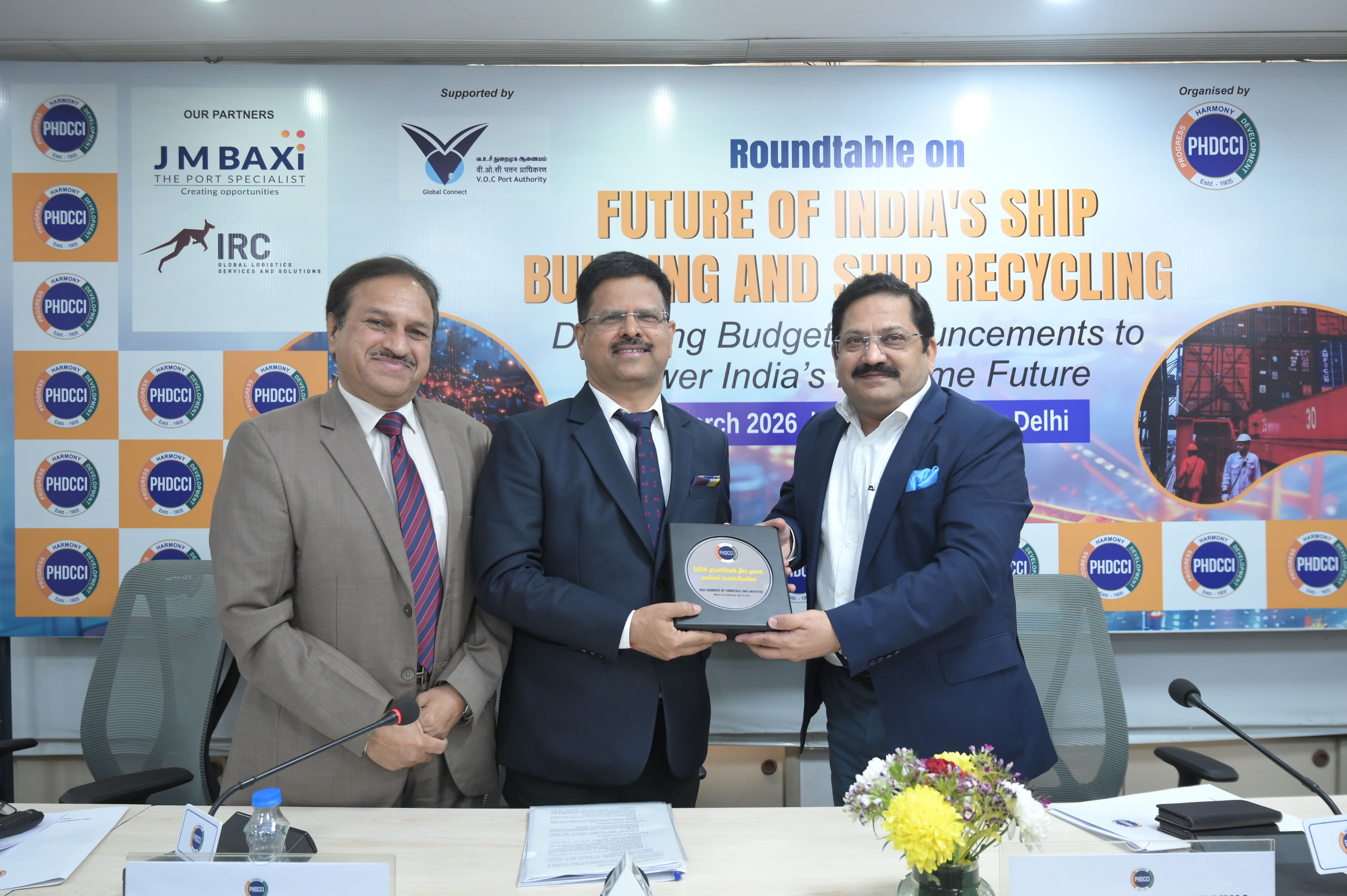
  • PHD Chamber of Commerce and Industry Discusses Budget Impact on India’s Maritime Sector

    PHDCCI organized a Roundtable on “Future of India’s Shipbuilding and Ship Recycling: Decoding Budget Announcements to power India’s Maritime Future”

    New Delhi, Mar 13: Shri Susanta Kumar Purohit, IRSEE, Chairperson of V.O. Chidambaranar Port Authority, addressed a high-level Roundtable on the “Future of India’s Shipbuilding and Ship Recycling,” outlining a transformative roadmap to elevate India’s maritime standing. Speaking to distinguished delegates and industry leaders, Shri Purohit detailed how the visionary leadership of Hon’ble Prime Minister Shri Narendra Modi and the strategic direction provided by the Union Minister for Ports, Shipping and Waterways, Shri Sarbananda Sonowal, have created the fiscal architecture necessary to shift India into a dominant maritime power.

    PHDCCI organized a Roundtable on “Future of India’s Shipbuilding and Ship Recycling: Decoding Budget Announcements to power India’s Maritime Future”

    The Chairperson highlighted that the comprehensive policy framework, championed by the Ministry of Ports, Shipping and Waterways, is built upon four strategic pillars: financing, capacity expansion, policy reform, and skill development. Central to this vision is the ₹69,725 crore Maritime Revitalisation Package, the ₹25,000 crore Maritime Development Fund, and the extension of the Shipbuilding Financial Assistance Scheme through 2036. Shri Purohit emphasised that the 48 per cent surge in the Ministry’s budget allocation to ₹5,164.8 crore signals a clear sovereign intent to reduce the ₹6 lakh crore annual freight drain to foreign shipping lines, fulfilling the Prime Minister’s vision of an Aatmanirbhar Bharat in the maritime sector.

    A cornerstone of this industrial expansion is the newly announced Shipbuilding Project, to be executed through a Special Purpose Vehicle (SPV) named the ‘National Shipbuilding & Heavy Industries Park, Tamil Nadu’. This ambitious project is a 50:50 Joint Venture between the V.O. Chidambaranar Port Authority and the State Industries Promotion Corporation of Tamil Nadu (SIPCOT). With an estimated project cost of ₹30,000 crore and spanning a total land area of 2,000 acres, this facility will serve as a primary engine for India’s domestic maritime manufacturing and heavy engineering.

    Significant focus was also placed on the integration of the circular economy through the Shipbreaking Credit Note Scheme. This innovative policy offers vessel owners a credit note equivalent to 40 per cent of the scrap value of ships recycled at Indian yards, redeemable against the cost of new domestic construction. Shri Purohit noted that under the guidance of Minister Sarbananda Sonowal, India has positioned itself as the world’s most responsible and regulation-ready recycling destination, with 106 yards at Alang already compliant with the Hong Kong International Convention.

    The Chairperson also showcased V.O. Chidambaranar Port as a model for the Maritime Amrit Kaal Vision 2047. As India’s first port to produce green hydrogen and the first to exceed one megawatt of rooftop solar generation, the port is currently executing a ₹15,000 crore Outer Harbour project. This expansion is set to establish Southern India as a premier transhipment hub capable of competing with major international ports such as Singapore and Colombo.

    In his concluding remarks, Shri Purohit extended his gratitude to the PHDCCI for its catalytic role in bridging policy intent with industry action. He urged all stakeholders to move from deliberation to execution, seizing the global moment of supply-chain realignment to propel India into the top five shipbuilding nations by 2047.

  • BIScience Launches TV Intelligence Suite, Expanding AdClarity Into Cross-Media Ad Coverage

    With linear TV data now live alongside digital and CTV, the born-digital platform tracks more than $174 billion in U.S. digital ad spend and $51 billion in U.S. linear TV spend from a single cross-media view

    New York, NY — March 13 — BIScience, the company behind AdClarity, the world’s leading AI-driven ad intelligence platform, today announced the launch of its TV Intelligence Suite, bringing U.S. linear TV coverage into AdClarity’s existing digital, social, video, and CTV capabilities. The platform now delivers cross-media intelligence using one consistent methodology and consistent performance metrics.

    Most legacy ad intelligence providers were built around linear TV and have gradually expanded into digital. AdClarity took the opposite path: born digital, the platform built best-in-class digital coverage before adding television, addressing a need that has intensified since digital ad spend surpassed linear TV around 2019.

    BIScience Launches TV Intelligence Suite, Expanding AdClarity Into Cross-Media Ad Coverage


    As advertising budgets continue migrating from linear television to digital channels, organizations that lack cross-media visibility cannot determine whether they are overspending or underspending relative to the market. For senior marketing leaders, media planners, analysts, and operations teams, this gap creates significant operational overhead and an inability to set strategy with confidence. AdClarity covers more than 250 leading categories and industries in the U.S., including top spending sectors such as CPG, financial services, news and media, technology, and others. 

    According to AdClarity data, total tracked U.S. digital advertising spend reached $174.4 billion in 2025, up 5.5 percent year over year, with CTV the fastest-growing channel at $38 billion (up 8.1 percent). Adding approximately $51 billion in U.S. linear television spend gives customers visibility into how budgets shift across the full media mix.

    AdClarity’s Linear TV coverage spans more than 100 U.S. networks and local affiliates, including ABC, CBS, FOX, NBC, and leading cable, news, and sports channels, with breakdowns by Designated Market Area (DMA), daypart, program, and creative execution. By pairing DMA-specific digital insights with local TV data, the platform delivers what BIScience describes as the most granular picture of U.S. local advertising available. 

    The platform is powered by AdClarity’s proprietary data infrastructure, spanning 52 global markets and 30 million opt-in panelists. Data is updated daily, with point-in-time data available from 2018 onward.

    AdClarity offers capabilities no other solution provides, including real CTR analysis for each ad and campaign and Ad Objective attribution that classifies ads as performance or brand awareness. The platform also provides DMA-level spend analysis and AI-driven insights with a chatbot for automated competitive and media mix analysis.

    “Until now, understanding where advertising budgets are moving between digital and television required stitching together disconnected tools with incompatible metrics,” said Dorit Kaplan, VP Product and Strategy at BIScience. “With the TV Intelligence Suite, AdClarity delivers what the market has been waiting for: a single cross-media view, built on consistent methodology, that enables teams to see the complete picture and make decisions with confidence. Our digital-first foundation gives us a distinct advantage as we bring every major advertising channel into one platform.”

    AdClarity serves more than 2,000 customers worldwide, including 27% of the Fortune 500. The platform is used by global brands such as Adidas, Amazon, Booking.com, Disney, Shell, Sony, and Wix, and is trusted by partners including Nielsen, Kantar, WPP, and MediaRadar.

    The TV Intelligence Suite is available now for enterprise customers in the United States. CTV coverage is currently available in the U.S., Germany, Canada, the U.K., and Australia.

  • Lurie Autism Institute Announces Dr. Huda Zoghbi as the Inaugural Recipient of the Nancy Lurie Marks Prize for Autism Research

    Mar 13 – The Lurie Autism Institute, a joint initiative of Children’s Hospital of Philadelphia (CHOP) and Penn Medicine created to drive discovery, develop new treatments, and improve the lives of individuals and families affected by autism, is proud to announce that geneticist Huda Y. Zoghbi, MD, has been selected as the inaugural recipient of the Nancy Lurie Marks Prize for Autism Research, the Institute’s highest honor recognizing transformative contributions to autism research.

     Zoghbi is a Distinguished Service Professor in the Departments of Molecular and Human Genetics, Pediatrics, Neuroscience, and Neurology at Baylor College of Medicine, and Director of Texas Children’s Duncan Neurological Research Institute (Duncan NRI). She is also an Investigator at the Howard Hughes Medical Institute. A pioneering pediatric neurologist and physician–scientist, Zoghbi has fundamentally reshaped understanding of the genetic and molecular basis of neurological disease – including autism spectrum disorder – by integrating human genetics, animal models, and systems-level neuroscience to define how disruptions in gene regulation, neuronal maturation, and circuit function drive disease.

     “When thinking of an appropriate inaugural recipient of the Nancy Lurie Marks Prize for Autism Research, we wanted to consider the pre-eminent minds whose long history of incredible work in autism research continues to have a lasting effect,” said prize committee chair Frances E. Jensen, MD, Chair of the Department of Neurology and Professor of Neurology at the Perelman School of Medicine at the University of Pennsylvania and co-director of the Penn Translational Neuroscience Center. “Dr. Zoghbi’s record speaks for itself, and we couldn’t think of a more deserving inaugural recipient who exemplifies the pioneering work in autism research that the Lurie Autism Institute wants to make possible.”

     The Prize Selection Committee recognized Zoghbi for her landmark discovery that mutations in the MECP2 gene cause Rett syndrome, an autism-related neurodevelopmental disorder. This breakthrough transformed Rett syndrome from an enigmatic clinical condition into a foundational model for understanding autism genetics and neurobiology. Her work established core principles that have guided modern autism research; these principles now underpin contemporary large-scale genomic studies of autism and have shaped how investigators conceptualize risk, penetrance, and phenotypic variability across neurodevelopmental disorders.

     “I am deeply honored to receive the inaugural Nancy Lurie Marks Prize for Autism Research,” said Zoghbi. “Nancy’s dedication to autism research and to the families she so passionately championed has left an indelible mark on our field. The Lurie Autism Institute’s continued commitment to advancing impactful autism research benefits us all.  I share this recognition with the patients and families who inspire our work every day, and with the remarkable trainees and collaborators whose insight, creativity, and dedication have advanced our understanding of how genetic disruptions alter brain function.” She continued, “I hope that continued progress in this field will lead to better insights and treatments, ultimately improving the lives of individuals with autism and their families. This honor serves as a powerful reminder of the promise rigorous science holds for truly transforming lives.”

     By demonstrating that de novo mutations underlie Rett syndrome, Dr. Zoghbi helped catalyze study designs that enrich for de novo variation. These studies served as an important basis for projects such as the Simons Simplex Collection, a core project and resource of the Simons Foundation Autism Research Initiative (SFARI) that establishes a permanent repository of genetic samples of families of children with autism. This framework was then later adopted by the Simons Foundation Powering Autism Research for Knowledge (SPARK) and the Autism Sequencing Consortium. This paradigm led to the discovery of dozens of de novo variants and hundreds of autism-related genes, many of which encode chromatin regulators, firmly establishing epigenetic and chromatin-mediated mechanisms as central pathways in autism.

     “Dr. Zoghbi’s incredible discoveries of some key biological mechanisms underlying autism are important steps in the journey we’re on with the Lurie Autism Institute to provide patients with more answers,” said Daniel Rader, MD, Interim Director, Lurie Autism Institute and Chief of Translational Medicine and Human Genetics, Penn Medicine and CHOP. “Her central role in advancing our understanding of neurobiology and translating that basic science into clinical progress makes her an extremely deserving recipient of the inaugural Nancy Lurie Marks Prize for Autism Research.”

     The Nancy Lurie Marks Prize for Autism Research honors the legacy of Nancy Lurie Marks, whose visionary philanthropy has played a pivotal role in advancing autism research and improving the lives of individuals with autism. The Prize includes a $100,000 award and recognizes a single individual whose work has made a profound and lasting impact on the field.

     “The Lurie Autism Institute was established to usher in a new era of scientific discovery in autism, and the work of extraordinary talents like Dr. Zoghbi exemplifies the kind of breakthrough discoveries we hope to make possible,” said Jeffrey Lurie, Chairman and CEO of the Philadelphia Eagles and founder of the Eagles Autism Foundation.

     Zoghbi will be formally honored at the 2026 Lurie Autism Institute Symposium, to be held on May 7, 2026, in Philadelphia, where she will deliver a featured lecture.

     The Lurie Autism Institute, which reflects the combined strength of Children’s Hospital of Philadelphia and Penn Medicine, was made possible through the generosity of the Lurie Family Foundation and the Nancy Lurie Marks Family Foundation. Launched in June, 2025, the Institute is dedicated to advancing autism science and care, while aiming to accelerate discovery, deepen understanding of autism’s complexities and improve outcomes for individuals and families.

  • NIH Awards UH $11.8 Million to Study Early Language Development in Houston Toddlers

    Study will follow thousands of young children during a critical window for language development

    HOUSTON, March 12 – University of Houston researchers have secured an $11.8 million grant from the National Institutes of Health to conduct a first-of-its-kind study of early language development, tracking thousands of Houston toddlers during a critical period of early childhood.

    Led by Elena Grigorenko, the Hugh Roy and Lillie Cranz Cullen Distinguished Professor of Psychology, and research professor Jack Fletcher, the project will follow 3,600 children ages 18 to 24 months to better understand how language skills emerge during this early stage and why some children experience delays that can shape later development.

    The NIH funding will support a new national Clinical Research Center on Developmental Language Disorders at UH, bringing together experts from psychology, education, health and measurement sciences to study one of the most fundamental questions in human development: how children learn language. This will be the 14th national research center established at UH.

    How the Study Will Work

    To recruit participants, the research team will partner with the pediatric clinic network at Texas Children’s Hospital, one of the largest in the region. Children will be screened for early language development, allowing researchers to identify those who show signs of delayed speech.

    From that group, the team will follow a cohort of about 2,400 children — including both late talkers and children with typical language development — through early childhood to examine how language abilities evolve over time and how early delays may lead to later challenges.

    “This will be the first national study to estimate how common late talking is using a large, representative sample of Houston toddlers,” Grigorenko said. “By following these children as they grow, we hope to better understand the developmental pathways that can lead to conditions such as developmental language disorder and autism.”

    The Houston Community as a Partner in Discovery

    Houston’s linguistic and cultural diversity makes it an ideal setting for this work. The study will include children from a wide range of backgrounds who speak English, Spanish or both, enabling researchers to examine how early communication develops across different home environments and socioeconomic contexts.

    “This level of investment from the National Institutes of Health reflects the significance of this work to address a complex challenge affecting children, families and communities,” said Claudia Neuhauser, vice president for research at UH. “By bringing together experts from multiple disciplines and partnering with major health systems across the region, the project reflects our commitment to advancing discoveries that impact our community.”

    This research center brings together investigators from multiple UH colleges and departments, along with partners at Baylor College of Medicine and the Texas Center for Learning Disorders. The work also aligns closely with the mission of the Consortium for Translational and Precision Health — a partnership led by Baylor College of Medicine and the University of Houston to accelerate the translation of research into practical health solutions.

    “By studying early language development in Houston toddlers, we’re building the knowledge needed to identify developmental challenges sooner and support children at the earliest possible stages,” Grigorenko said.