Blog

  • India’s Renewable Energy Capacity Grows 20 Percent with 150 GW Under Construction CEEW-GFC

    New Delhi,  May 12 : India’s renewable energy (RE) generation rose 20 per cent in FY26, while coal and lignite-based generation declined 4.3 per cent year-on-year, according to the latest annual edition of the Market Handbook released today by the Council on Energy, Environment and Water’s Green Finance Centre (CEEW-GFC). The Handbook notes that India added a record 57.5 GW of net power generation capacity in FY26, up from 33.2 GW in FY25. RE (including large hydro) accounted for 54.6 GW (~95 per cent) of the net capacity addition. Solar (grid-scale and rooftop) led RE additions with 44.6 GW, followed by wind at 6.1 GW, taking India’s total installed capacity to ~533 GW, with RE (including large hydro) contributing nearly 52 per cent.

    CEEW-GFC’s Handbook tracks key developments in India’s electricity, and green finance sectors and their role in the country’s broader energy transition.

    RE pipeline, tenders and auctions 

    As of March 2026, ~151 GW of RE capacity (including large hydro but excluding rooftop solar) is under construction, with ~90 GW, ~29 GW, ~19 GW, and ~13 GW coming from solar, wind, hybrid, and large hydro respectively. On the tenders announced front, Renewable Energy Implementing Agencies (REIAs) issued 10.4 GW of renewable energy tenders. Auctions by REIAs and state agencies accounted for 14.25 GW, with innovative formats accounting for 76 per cent of auctioned capacity, according to the CEEW-GFC Handbook.

    The Handbook identifies FY26 as a key inflection point for energy storage, with 37 storage tenders announced, including 31 for Battery Energy Storage Systems (BESS), underscoring storage’s critical role in India’s clean energy transition. Andhra Pradesh’s APTRANSCO tender set a new record-low tariff of INR 1.23 per unit for two-hour BESS, 33 per cent below the FY25 benchmark.

    Gagan Sidhu, Director, CEEW-GFC, said, 

    “India’s energy transition continues to gather pace, with RE accounting for ~95 per cent of net capacity addition in FY26 and RE generation seeing a 20 per cent increase over the previous year. CEEW-GFC’s Market Handbook shows that this year, we saw a more competitive market, with a 35 per cent market concentration. However, at the same time the sector is also at an important crossroads. FDI saw a 26 per cent drop in the first three quarters of FY26 compared to the same period in FY25. In light of the multiple global disruptions playing out, it is all the more critical that we keep on track to achieve our RE targets.”

    DISCOM health and smart meters

    The CEEW-GFC Handbook highlights a marked improvement in the financial health of India’s power distribution companies (DISCOMs). Legacy dues owed to generating companies fell sharply to INR 4,109 crore as of February 2026, down from INR 49,451 crore in January 2024, highlighting the success of late payment surcharge rules. ~65 million smart consumer meters have been installed across the country.

    Green finance

    Sovereign Green Bonds worth INR 20,000 crore were issued through four equal 30-year tranches at a coupon rate of 6.98 per cent. Cumulative Foreign Direct Investment (FDI) in RE for the first three quarters of FY26 stood at USD 2.5 billion, with solar energy attracting 79 per cent of these flows.

  • Aarav Delivers Stunning Comeback to Finish on Podium in Meritus Cup Round 1

    Aarav Delivers Stunning Comeback to Finish on Podium in Meritus Cup Round 1

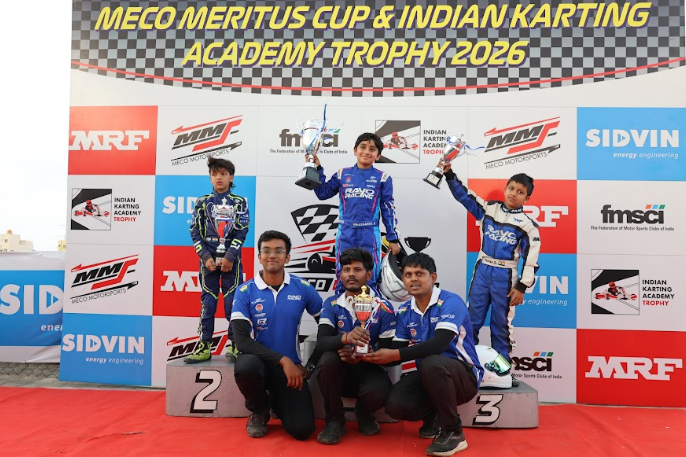
    Mumbai, India  May 12: Young racing talent Aarav from Rayo Racing, Mumbai showcased remarkable pace, determination, and resilience during Round 1 of the Meritus Cup in Bengaluru, securing an overall podium finish after an action-packed weekend of racing.

    Aarav began the weekend strongly in qualifying, finishing P5 after getting caught in traffic during his fastest lap attempt, which prevented him from extracting the full potential of the kart.

    The opening Sprint Race proved dramatic from the very first lap, as a major incident unfolded on track and Aarav was caught in the chaos. Despite the setback, he displayed exceptional composure and fighting spirit to recover through the field and secure an impressive P2 finish.

    Carrying damage and lingering kart issues from the first race incident, Aarav entered the final Sprint Race determined to maximise points. Battling through the challenges, he delivered another mature drive to finish P4 against a highly competitive field.

    At the conclusion of Round 1Aarav secured an overall P3 in the championship standings with 26 points — narrowly missing out on the top spot by just a single point, with both the P1 and P2 drivers ending the round tied on 27 points.

    The weekend highlighted Aarav’s consistency, racecraft, and ability to perform under pressure, marking a strong start to his Meritus Cup campaign and setting the stage for an exciting season ahead.

  • Alvarez & Marsal Appoints Three Managing Directors To Accelerate Sector And Capability Expansion In India

    Bengaluru, India, May 12:  Leading global professional services firm Alvarez & Marsal (A&M) India has announced the appointment of Barathi Srinivasan, KK Venkata, and Dnyanesh Nirwan as Managing Directors across its Business Transformation Services and Infrastructure & Capital Projects practices, with all three leaders based in Bengaluru. These appointments are aligned with A&M’s continued investment in accelerating its presence in India, including the recent expansion of its Bengaluru office, as the firm strengthens its on-ground capabilities to support clients across key sectors.

    Barathi Srinivasan joins the Business Transformation Services practice, focusing on Consumer & Retail transformation. She brings over 15 years of consulting and operating experience, including close to a decade at Amazon India where she built and scaled multiple businesses across categories, private brands, product, and supply chain operations.

    KK Venkata joins the Business Transformation Services practice with a focus on Energy and Natural Resources. With over 20 years of consulting experience, he has advised clients across oil & gas, power, renewables, and mining on growth strategy, cost optimization, and large-scale capital and sustainability initiatives across India, Southeast Asia, and North America. Prior to A&M, he spent nine years at Oliver Wyman, including as the office leader for its Jakarta office, and has also worked with McKinsey & Company and Kearney.

    Dnyanesh Nirwan joins A&M’s Infrastructure & Capital Projects practice. He brings over 24 years of experience advising clients on complex capital programs across power, EPC, transportation, and real estate, with a focus on cost optimization, schedule acceleration, and digital and AI-enabled project delivery. Prior to joining A&M, he spent nine years with McKinsey & Company, where he most recently served as Associate Partner.

    Himanshu BajajManaging Director & Head – A&M India and GCC, said, “A&M continues to invest in building a differentiated platform in India, anchored in sector depth and execution excellence. As clients navigate growth, disruption, and increasing complexity, there is a clear need for integrated capabilities that deliver measurable outcomes. The addition of Barathi, KK, and Dnyanesh further strengthens our ability to support clients across consumer, energy, and infrastructure sectors.” 

    Barathi SrinivasanManaging Director, A&M India, said, “Consumer businesses are being reshaped by evolving customer expectations, digital adoption, and new commerce models. A customer-obsessed approach, combined with disciplined execution, is critical to driving sustained impact. A&M’s focus on practical outcomes provides a strong foundation to support this transformation, and I look forward to working with clients to deliver meaningful change.” 

    KK VenkataManaging Director, A&M India, said, “Energy and natural resources sectors are navigating a period of uncertainty and transition. Leaders have an enhanced challenge balancing immediate needs for resilience while investing into optionalities for future when the growth cycle reopens. A&M’s integrated capabilities provide a strong foundation to support clients through this transition, and I’m excited to join and contribute to this journey.” 

    Dnyanesh NirwanManaging Director, A&M India, said, “India’s ambition to become a developed nation by 2047 will require a significant scale-up of infrastructure across sectors. Delivering these programs will depend on strong execution, cost discipline, and innovation in project delivery. A&M’s track record in large-scale transformation provides a strong foundation to support this opportunity, and I look forward to working with clients to help unlock its full potential.

  • AAEON Adds Two New Embedded AI Systems to its BOXER-865xAI-PLUS Series Featuring NVIDIA Jetson Orin NX with Super Mode

    AAEON Adds Two New Embedded AI Systems to its BOXER-865xAI-PLUS Series Featuring NVIDIA Jetson Orin NX with Super Mode


    The BOXER-8651AI-PLUS, BOXER-8652AI-PLUS, and BOXER-8653AI-PLUS offer distinct features to bring AI functionality to versatile vertical market segments.


    Taipei, Taiwan – May 12: AAEON (Stock Code: 6579), a leading provider of edge AI platforms, today announced the release of the BOXER-8651AI-PLUS and BOXER-8652AI-PLUS, two embedded AI systems powered by NVIDIA Jetson Orin NX module with Super Mode support. The two systems follow the release of the BOXER-8653AI-PLUS back in February 2026, and complete AAEON’s BOXER-865xAI-PLUS series. 

    Designed to provide users across market segments with the enhanced software stack, greater power consumption flexibility and performance optimization offered by Super Mode with NVIDIA JetPack 6.2 SDK, BOXER-865xAI-PLUS series PCs offer up to 157 TOPS of AI performance. The primary differences between the three systems are their form factors and the functions they offer, which in turn influence the types of deployment scenarios AAEON has positioned them for.

    The smallest of the three at 125mm x 90mm x 56mm, the BOXER-8651AI-PLUS is geared towards applications that require high-performance AI inference in space-constrained setups, such as AIoT nodes within the smart building management and retail sectors. As such, the system’s I/O is relatively streamlined, with four USB 3.2 Gen 2 ports and Gigabit Ethernet joining a DB-9 port for CANBus/ RS-232 and a 10-pin physical DIO header. Despite its compact size, the system maintains a -25°C to 55°C operating temperature range alongside a 12V to 24V power input tolerance.

    Also relatively compact at 190mm x 136mm x 75mm, the BOXER-8652AI-PLUS is positioned as a platform for industrial AI applications such as AMR. To host the cameras and sensors required for such solutions, the BOXER-8652AI-PLUS provides two DB-9 ports for CANBus and RS-232/422/485, four USB, and dual RJ-45 LAN. Moreover, the BOXER-8652AI-PLUS includes a box header for out-of-band management support, making it suitable for scaling industrial AMR fleets across factories.

    The most advanced of the three, the BOXER-8653AI-PLUS includes four independent PoE LAN ports. As such, AAEON has indicated it is primarily positioned for smart city installations like roadside units and public safety systems. Lending further credence to this is the BOXER-8653AI-PLUS’s out-of-band management and TPM 2.0 support, which AAEON states have been included to enable secure remote device rebooting, diagnostics, and monitoring on the system when it is deployed as part of broader smart infrastructure setups.

    The full BOXER-865xAI-PLUS series is now in mass production, with detailed specifications available on the product’s respective pages on the AAEON website. Meanwhile, pricing and ordering information can be obtained via the AAEON eShop or via the contact form on the AAEON website.

  • Microsoft, Amazon Talent Eye Flipkart & Zoho Amid Culture Concerns

    May, 12 : Nearly half (48%) of Indian professionals say they would actively look at or seriously consider joining an Indian homegrown company if laid off tomorrow, yet 47% cite toxic workplace culture as their top concern, more than twice as high as higher than pay gap concerns (18%), according to the latest survey of 1,205 Indian professionals by Blind, the anonymous community app for professionals. 

    Quality-of-life concerns dominate economic ones. 47% fear toxic culture and an additional 18% worry about losing work-life balance, meaning 65% prioritize workplace environment over the 18% who cite pay gaps as their biggest concern. This suggests workplace culture, not compensation, is the primary barrier for India’s homegrown sector.

    When asked which Indian homegrown company they would join, Flipkart leads at 20% among all respondents, followed by Zomato and Swiggy at 14%, Zoho at 10%, Paytm and PhonePe at 7%, and Freshworks at 6%. Traditional IT services giants TCS, Infosys, and HCL collectively received just 3% despite being India’s largest tech employers. 40% selected “none of the above,” suggesting that the companies capable of meeting their workplace expectations either don’t exist yet or haven’t built the reputations needed to compete with global employers. 

    The cultural concerns are not unfounded. On Blind, where verified employees can anonymously review their employers and access other companies’ reviews, even top-choice companies face scrutiny. One Flipkart employee wrote, “You will feel at home if you have no life outside of work,” while a Zoho employee cited “No WFH. No overtime benefits. Weekends have to be sacrificed for work. Poor work life balance.” A prior Blind survey found that 83% of Indian IT professionals experience burnout, with 25% working 70+ hours weekly.

    Despite these workplace challenges, interest in Indian homegrown firms comes primarily from employees at global tech giants, with Microsoft (7.6%), Amazon (6.8%), Oracle (4.1%), and Google (3.2%) leading the list of respondents open to joining Indian companies. Blind’s internal AI, which analyzes employee sentiment, search behavior, and engagement patterns across companies, backs this up. Between February 2025 and May 2026, Flipkart, PhonePe, and Infosys ranked as the top three most searched Indian homegrown companies at both Microsoft and Amazon. If Indian firms can address workplace culture problems, they could attract top-tier employees working at the world’s leading tech companies.

    Professionals are vocal about the need for change. In a Blind post discussing toxic tech culture in India, a verified Microsoft employee wrote, “We need to find a way to pivot mindset and boost mental health.” The opportunity is clear: Big Tech employees are watching, and the next Indian unicorn could be built by talent already willing to return, if homegrown firms can prove they’ve adopted Silicon Valley’s best practices rather than its worst habits.

    Methodology

    Blind surveyed 1,205 India-based professionals between April 27–May 6, 2026, on their willingness to join Indian homegrown companies. Response breakdowns by question are as follows:

    • If you were laid off from your current role tomorrow, how likely would you be to join an Indian homegrown company?

      • Actively looking at them already (13%)

      • Would seriously consider it (35%)

      • Only as a last resort (34%)

      • Not a chance (18%)

    • Which Indian homegrown company would you join?

    • Flipkart (20%)

    • Zomato / Swiggy (14%)

    • Zoho (10%)

    • Paytm / PhonePe (7%)

    • Freshworks (6%)

    • TCS / Infosys / HCL (3%)

    • None of the above(40%)

    • What’s your biggest hesitation, if any?

    • Toxic culture (47%)

    • Pay gap (18%)

    • Work-life balance concerns (18%)

    • No hesitation (7%)

    • Job security or layoff risk (6%)

    • Career growth ceiling (4%)

  • Epson named CitySwitch Champion for third consecutive year

    Recognising ongoing commitment to sustainability and carbon management

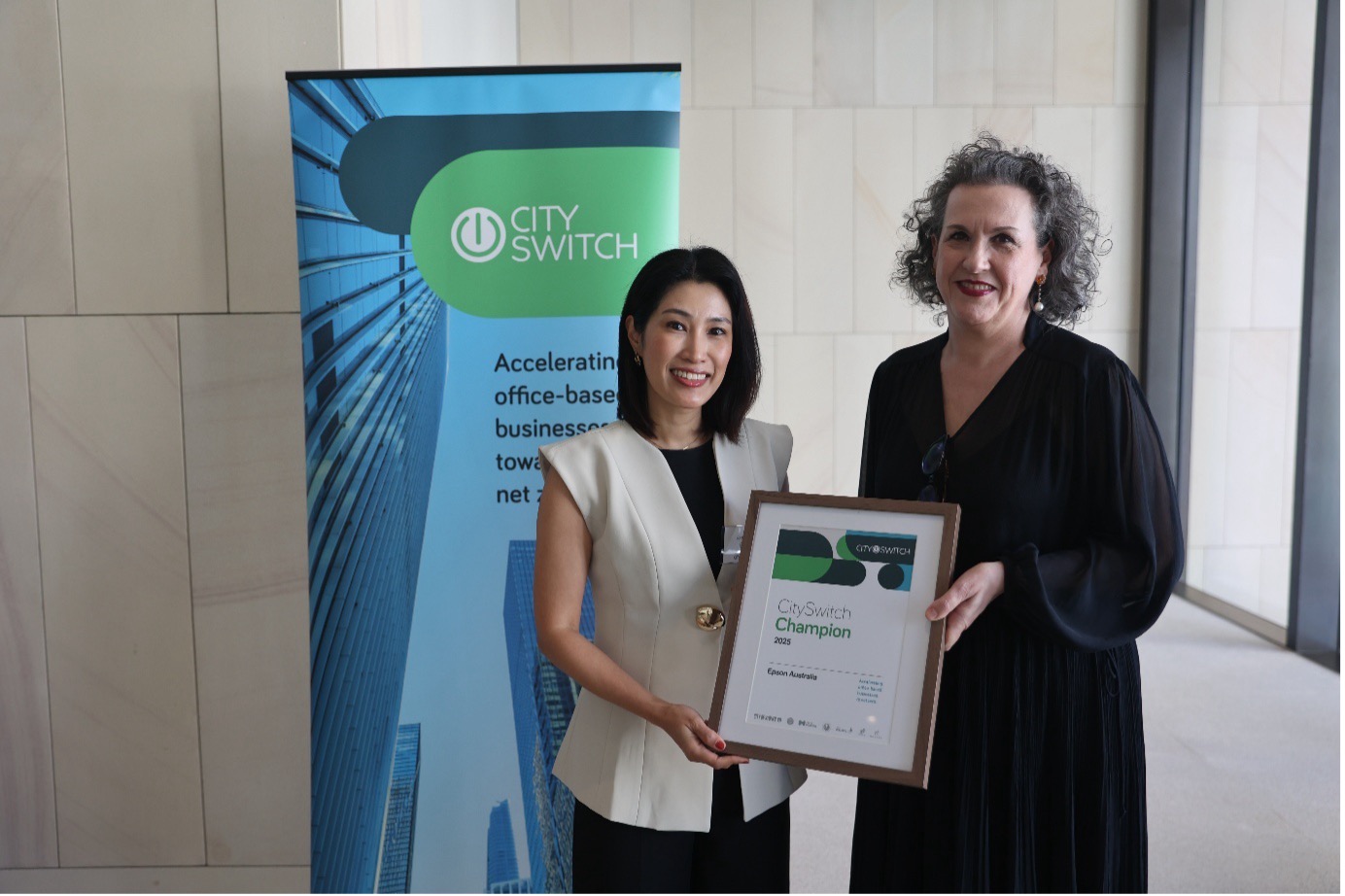
     SYDNEY, May 12– Epson Australia has been recognised as a CitySwitch Champion for the third consecutive year, affirming the company’s long-term commitment to sustainability leadership, carbon management and practical climate action across its Australian operations.


    Epson named CitySwitch Champion for third consecutive year

     (l-r) Epson Australia’s environment and sustainability manager Fatida Un and North Sydney Mayor Zoë Baker

    The CitySwitch Awards celebrate businesses demonstrating genuine progress in areas such as emissions tracking, waste reduction, sustainable procurement and staff engagement.

    Epson was formally honoured at the North Sydney Council Champion Lunch with the award presented by North Sydney Mayor Zoë Baker.

    This achievement reflects Epson’s sustained commitment to transparency, data-driven carbon reduction and continuous environmental improvement.

    CitySwitch is Australia’s flagship decarbonisation program for businesses. Run by council partners and NABERS, the initiative supports office-based organisations to measure, manage and reduce their carbon footprint on the path to net zero emissions.

    Since joining CitySwitch as a signatory in 2023, Epson has reported annually on energy use, emissions and waste across its five Australian workplaces and built a robust foundation for long-term carbon management.

    Key achievements to date include:

    • Transitioning all Australia and New Zealand offices to 100% renewable electricity

    • Reducing landfill waste at its primary warehouse facility by more than half compared with FY2023 levels

    • Shifting inbound freight from road to rail, cutting logistics-related emissions

    • Developing a full Scope 1, 2 and 3 emissions framework, aligning local goals with Epson’s global science-based targets

    • Enhancing energy efficiency at its Sydney head office, reducing overall electricity use

    • Improving recycling processes across its Sydney offices and the recyclability of consumer product packaging 

    While continued emissions reduction remains a priority, Epson is equally focused on building robust systems, data quality and organisational capability to support meaningful, long-term progress.

    Craig Heckenberg, Managing Director, Epson Australia and New Zealand said, “Being recognised for a third time as a CitySwitch Champion is a valued acknowledgement of the commitment and hard work of our teams across Australia. It reinforces our approach of connecting sustainability to everyday decisions from how we source electricity and manage waste, to how we design systems and ship products. Every improvement brings us closer to a low-carbon future.”

    The annual CitySwitch Champions Forum also brings together participants to share practical insights into carbon management. This year, Epson presented on building a practical approach to carbon tracking, drawing from its own journey of “progress over perfection”. This includes:

        • Starting with the data already available

        • Focusing on key emissions hotspots

        • Connecting reduction efforts directly to business priorities

        • Maintaining steady momentum through collaboration and knowledge sharing

    By applying this pragmatic approach, Epson continues to strengthen its operational sustainability while supporting the company’s broader global target of achieving carbon negativity and underground resource-free status by 2050.

    Epson’s recognition as a three-time CitySwitch Champion demonstrates its leadership as an innovation-driven manufacturer that embeds sustainability into products and operations alike.

    Through collaborations like CitySwitch, the company continues its commitment to act decisively on its decarbonisation journey.

    Learn more about sustainability at Epson Australia here: https://www.epson.com.au/about/sustainability/

     Founded in 2005, CitySwitch initially focused on office energy efficiency before expanding to help businesses integrate broader sustainability practices — including waste reduction, green procurement and Scope 3 emissions management.

  • Kafka Media Group Wins 2026 Communicator Award for Soft-Analytics®

    The boutique marketing firm is recognized for its trademarked approach to interpreting marketing and communications impact through human-centered analysis


    ORLANDO, FL (May 12) – Kafka Media Group, an integrated marketing firm, has been named a winner in the 32nd Annual Communicator Awards for its proprietary Soft-Analytics® methodology, recognizing the agency’s innovation in modern communications strategy and marketing intelligence.

    Presented by the Academy of Interactive & Visual Arts, the Communicator Awards honor excellence and innovation across the communications industry, with thousands of entries submitted annually by agencies, organizations, and brands worldwide.

    Soft-Analytics® is Kafka Media Group’s trademarked methodology that combines traditional performance metrics with human insight, strategic interpretation, and contextual analysis to help clients better understand the true impact of their marketing and communications efforts.

    “Soft-Analytics® was built around a simple idea: data alone cannot tell the full story,” said Pierce Kafka, CEO & Creative Director of Kafka Media Group. “In a communications landscape increasingly shaped by automation and AI-generated content, interpretation, strategy, and context matter more than ever. This recognition validates the importance of understanding not just what happened in a campaign, but why it mattered.”

    Unlike traditional reporting that focuses solely on impressions or mentions, Soft-Analytics® evaluates the context, sentiment, momentum, and strategic value behind media coverage and audience engagement.

    Kafka Media Group officially trademarked Soft-Analytics® in 2025 as part of its broader effort to redefine how communications impact is evaluated and interpreted. The methodology has been applied across its integrated marketing and publicity campaigns, helping clients translate visibility into actionable strategic growth.

    “This recognition reinforces what we believe the industry is moving toward: smarter measurement, stronger storytelling, and more strategic interpretation of what drives real influence,” Kafka added.


  • CBSE Class 12 Result 2026 Likely Today; Students Await Official Announcement !

    New Delhi, May 12 (BNP): The Central Board of Secondary Education (CBSE) is expected to announce the Class 12 Board Examination Results 2026 today, creating huge anticipation among lakhs of students and parents across the country. Although the board has not officially confirmed the exact date and time, a recent post by DigiLocker indicating “CBSE Class XII Results 2026 Coming Soon on DigiLocker” has strengthened speculation about today’s declaration.

    As per reports, CBSE will not hold any press conference for the result announcement this year. Instead, students will be able to access their results online through multiple official platforms including cbse.gov.in, results.cbse.nic.in, cbseresults.nic.in, DigiLocker, UMANG app, and SMS services.

    The CBSE Class 12 examinations were conducted from February 17 to April 10, 2026, in a single shift from 10:30 AM to 1:30 PM across India and at overseas examination centres.

    Students are advised to keep their admit cards ready to avoid last-minute inconvenience while checking scores. Candidates can log in using their roll number, school number, admit card ID, and date of birth.

    Students who have not yet activated their DigiLocker accounts can do so by visiting the DigiLocker portal, selecting “Get Started,” entering the access code provided by their respective schools, and verifying their mobile number through OTP authentication.

    With no official result tab activated yet on cbseresults.nic.in, students continue to refresh official websites eagerly as the expected announcement window approaches.


  • Palomar Medical Center Poway Earns an ‘A’ Hospital Safety Grade from The Leapfrog Group

    Spring 2026 Safety Grade is a national recognition for commitment to patient safety    

    ESCONDIDO, CA — May 12, 2026 — Palomar Medical Center Poway earned an “A” Hospital Safety Grade from The Leapfrog Group, an independent national nonprofit watchdog focused on patient safety. Leapfrog assigns an “A,” “B,” “C,” “D” or “F” grade to general hospitals across the country using evidence-based measures of patient safety focused exclusively on errors, accidents, injuries and infections.    

    “This recognition from The Leapfrog Group underscores the exceptional standard of care our team delivers and affirms our unwavering commitment to patient safety,” said Diane Hansen, President and CEO of Palomar Health. “As we continue to thoughtfully reimagine the healthcare experience, innovation and the well-being of our patients will always be at the heart of everything we do.”   

    “An ‘A’ Grade is a strong sign that Palomar Medical Center Poway is deeply committed to protecting patients from harm,” said Leah Binder, president and CEO of The Leapfrog Group. “We commend the leadership, board, clinicians, staff and volunteers for the role each played in this distinction.”      

    The Leapfrog Hospital Safety Grade stands as the only hospital ratings program focused solely on preventable medical errors, infections and injuries that kill more than 500 patients a day in the United States. This program is peer-reviewed, fully transparent and free to the public. Grades are updated twice annually, in the fall and spring. 

  • Beyond Acute-Phase Support: How “Ibasho” Aids Disaster Mental Health Recovery

    Authors propose that rebuilding community, routine, and social roles is essential for long-term recovery after disasters

    Beyond Acute-Phase Support: How “Ibasho” Aids Disaster Mental Health Recovery

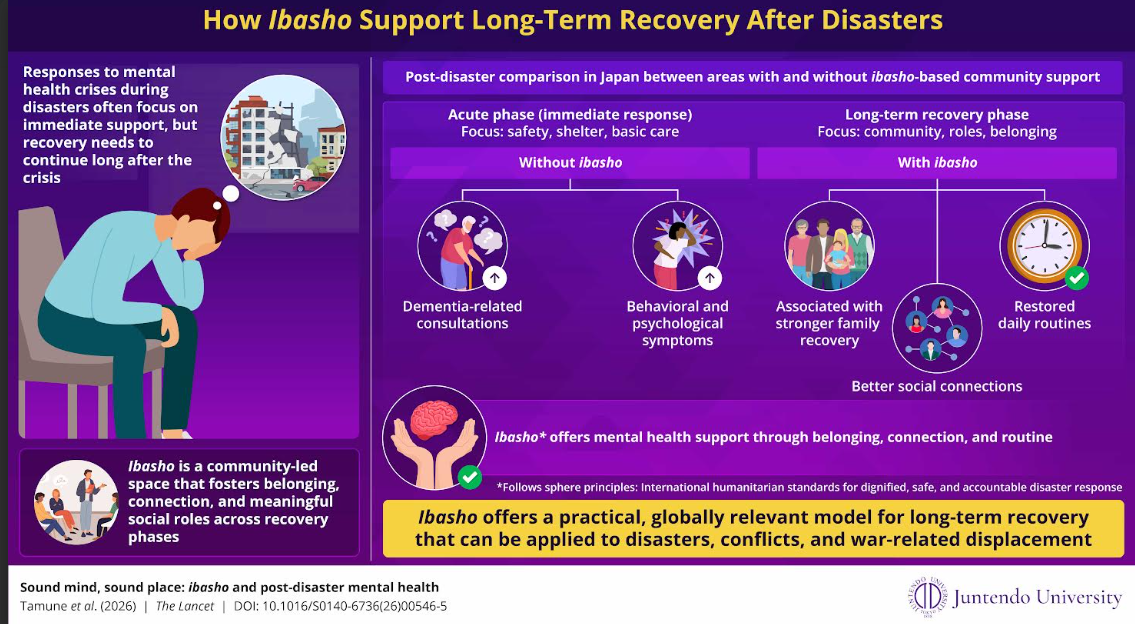
    As disasters increasingly disrupt lives through displacement, conflict, and climate-related emergencies, addressing long-term mental health recovery remains a major challenge. A correspondence from Juntendo University discusses that, while acute symptom assessment remains important, disaster psychiatry may benefit from a community-led approach to care. The authors discuss the importance of ibasho (community spaces of belonging and social purpose) and suggest that rebuilding routines, roles, and neighborhood connections may support long-term recovery and resilience. 

    Natural disasters drastically affect human lives—destroying homes, separating families, leading to disruption of daily routines, which affects their stability. While emergency mental health responses are crucial in the beginning of the crisis, new correspondence discusses that psychological recovery may rely on a more meaningful approach to help restore a sense of place and belonging.

    Ibasho: A Community-led Place for Belonging and Meaning

    In this context, authors from Juntendo University, Japan, led by Associate Professor Hidetaka Tamune from the Department of Psychiatry and Behavioral Science, along with Dr. Yutaka Igarashi from Nippon Medical School, Japan, and Dr. Yuzuru Kawashima from the Disaster Psychiatric Assistance Team, Japan, discussed the approach of ibasho (a community-building concept in Japan) for people affected by disasters. The details were made available online on April 3, 2026, and published in Volume 407, Issue 10537 of The Lancet journal on April 11, 2026.

    Dr. Tamune says, “Disaster recovery is not only about reducing acute psychiatric symptoms. It is also about restoring the social environments that give people stability, dignity, and a sense of purpose. In Japanese, the places that make this possible are called ibasho.

    Ibasho means a place of belonging where people are engaged in social networks, routines, and meaningful roles. The authors suggested that restoring this sense of connection among people affected by disasters may be just as important as detecting early symptoms, as it plays a vital role in supporting community recovery. Supporting this, the correspondence places ibasho within the internationally recognized Sphere humanitarian framework, which focuses on survival with dignity, continuity with care, and coordinated support systems during crises. It also suggests that ibasho aligns closely with those principles by offering social infrastructure for displaced and affected communities.

    Ibasho in Japan: Community-Led Recovery in Practice 

    Compared to conventional interventions, ibasho refers to safe, community-led spaces where individuals can reconnect with others and resume daily routines. This may include neighborhood gathering spaces, shared community programs, and locally led recovery hubs. To support this perspective, the authors cited the evidence from disaster-affected regions in Japan. These include examples from the 2011 Great East Japan Earthquake and the Fukushima nuclear accident. Notably, there was an increase in the dementia consultations and behavioral and psychological symptoms of dementia (BPSD) among older adults near the evacuation zones of the affected areas. In contrast, the communities where older residents were helped by leading ibasho-style programs reported stronger recovery and more stable routines with improved social and family relationships. This suggests that recovery improved when people were able to regain meaningful roles in community life. The older adults not only receive support but are also actively contributing to the recovery efforts and rebuilding community life.

    What appears to be most important is not simply access to services, but whether people can reclaim their place within the community and continue to feel valued, useful, and connected. In Japan, a disaster-prone and super-aged society, we have both the experience and the responsibility to share what we have learned about caring for older adults with dementia, especially those who develop BPSD and delirium,” explains Dr. Tamune.

    Redefining Recovery Through Connection, Culture, and Dignity

    Although particularly relevant to natural disasters, the correspondence suggests that preparedness and recovery both depend not only on services but also on whether people can remain connected to local networks, routines, and meaningful social roles. The authors further note that trauma-informed support should remain culturally congruent; in some communities, restoring routines, roles, and communal life through ibasho may be the most acceptable first step.

    Overall, the correspondence highlights the importance of ibasho in post-disaster mental health. It suggests that, although acute symptom detection matters, recovery also depends on whether people can continue to live safely, sustain relationships, and regain meaningful roles after displacement. In this sense, ibasho may function as a culturally congruent local social infrastructure through which dignity, continuity, and safety are restored in everyday life.