Author: admin

  • Global Gold Demand Rises 2 pc in Q1, Investment Buying Drives Surge: WGC

    Mumbai, Apr 29 (BNP): Global gold demand recorded a modest but steady rise in the January–March quarter, supported primarily by strong investment buying in bars and coins amid persistent geopolitical tensions and elevated price levels, according to the latest World Gold Council (WGC) report released on Wednesday.

    Total global gold demand, including over-the-counter (OTC) transactions, increased by 2% year-on-year to 1,231 tonnes in Q1 2026, compared to 1,205 tonnes in the same quarter last year.

    The standout driver of growth was investment demand, which surged sharply as investors increased allocations to physical gold. Bar and coin purchases rose 42% year-on-year to 474 tonnes, reflecting growing demand for gold as a safe-haven asset during periods of global uncertainty and financial market volatility.

    While overall physical demand growth remained moderate, the value of gold demand witnessed a significant jump. Total demand value soared to a record USD 193 billion, registering a 74% year-on-year increase, driven largely by higher international gold prices.

    Analysts suggest that this trend highlights a shift in investor behaviour, with gold increasingly being used as a hedge against inflation, currency fluctuations, and geopolitical risk. Even as jewellery demand remains relatively stable, investment-led demand is playing a more dominant role in shaping overall market dynamics.

    The report indicates that gold continues to retain its strategic importance in global portfolios, particularly during uncertain macroeconomic conditions, where investors seek stability and long-term value preservation.

    Overall, the Q1 data reflects a resilient gold market, where modest volume growth is being outweighed by strong value expansion, underpinned by robust investment interest.

  • WhatsApp Bans 9,400 Scam Accounts in Major Crackdown on Digital Arrest Fraud!

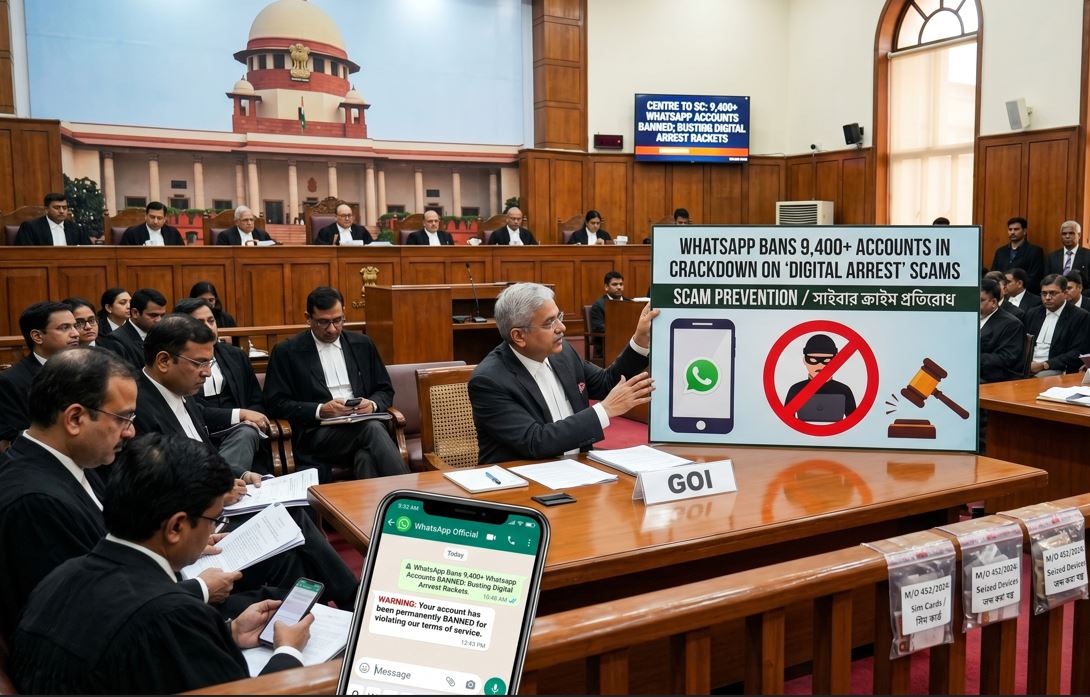
    New Delhi, Apr 29 (BNP): In a significant move against rising cyber fraud, WhatsApp has banned 9,400 accounts allegedly involved in “digital arrest” scams since January this year, the Central Government informed the Supreme Court.

    WhatsApp Bans 9,400 Scam Accounts in Major Crackdown on Digital Arrest Fraud!

    The development was disclosed in a comprehensive status report filed by the Indian Cybercrime Coordination Centre (I4C) under the Ministry of Home Affairs (MHA), in compliance with the apex court’s directions to curb the growing menace of online fraud and digital extortion.

    A bench headed by Chief Justice Surya Kant, which had taken suo motu cognisance of digital fraud cases, had earlier directed the Reserve Bank of India (RBI), Department of Telecommunications (DoT), and other agencies to frame a coordinated mechanism for victim compensation and preventive action.

    According to the report, WhatsApp launched a structured multi-week investigation in January 2026 following concerns raised by I4C, the Ministry of Electronics and Information Technology (MeitY), and the DoT over scams targeting Indian users.

    The investigation reportedly followed a rigorous methodology involving identification of suspicious signals, mapping scam networks, taking action against linked accounts, and deploying automated safeguards to prevent future abuse.

    Authorities said the banned accounts were linked to fraudsters impersonating law enforcement agencies such as police, CBI, customs officials, and other government departments. Victims were allegedly threatened through calls and messages, falsely told they were under investigation, and coerced into transferring money to avoid arrest.

    The Centre also informed the court that a multi-pronged strategy involving telecom regulators, service providers, banks, tech companies, and investigative agencies such as the CBI is being implemented to tackle such cybercrimes.
    Officials urged citizens to remain alert and reminded the public that genuine law enforcement agencies do not demand payments or conduct arrests through messaging apps or video calls.

    The crackdown is being seen as a major step in strengthening India’s response to increasingly sophisticated cross-platform cyber fraud operations.

     
  • Credit Card Spending Surges 2 pc in March to INR 2.19 Lakh Crore

    New Delhi, Apr 29 (BNP): India’s credit card spending recorded a strong month-on-month rise in March, increasing by 24% to ₹2,194 billion (₹2.19 lakh crore), supported by seasonal demand and a lower base effect, according to a recent report released on Tuesday.

    The data indicates that while overall spending saw a noticeable jump, the broader consumption pattern is gradually stabilising, suggesting a normalisation in credit-driven expenditure trends.

    Analysts noted that the increase in March spending was influenced by seasonal factors, which typically drive higher consumer activity during the period. However, when viewed over a longer period, spending growth appears to be moderating compared to earlier high-growth phases.

    The report further highlighted that credit card usage continues to remain an important indicator of urban consumption, reflecting spending behaviour across categories such as retail, travel, and services.

    Despite short-term fluctuations, experts suggest that consumer spending remains steady, with credit usage aligning more closely with income growth and broader economic conditions.

    Overall, the data points to a healthy but stabilising credit card market, where sharp monthly increases are balanced by a more sustainable long-term growth trend.

  • LPG Booking Rules, Delivery System and Prices Set for Key Changes from May 1

    New Delhi, Apr 29 (BNP): Major changes in LPG booking rules, delivery verification, and pricing are expected to come into effect from May 1, along with a continued push towards cleaner fuel usage, according to recent policy updates.

    LPG Booking Rules, Delivery System and Prices Set for Key Changes from May 1

    Under the revised system, booking intervals for LPG cylinders will be extended. Urban consumers will need to wait 25 days between bookings, while rural consumers will have a 45-day gap, compared to the earlier shorter cycle. The move is aimed at improving supply management and ensuring smoother distribution.

    A key update is the introduction of a mandatory OTP-based delivery verification system. Consumers will now need to confirm LPG deliveries through a one-time password sent to their registered mobile numbers. This digital system is intended to improve transparency and reduce misuse, hoarding, and diversion of subsidised cylinders.

    On the pricing front, LPG rates have already seen an increase in recent months, with domestic cylinders rising by about ₹60 in April. Commercial cylinder prices have also increased more sharply, and further revisions may take place depending on global crude oil movements and market conditions.

    The government is also continuing its focus on promoting piped natural gas (PNG). In areas where PNG infrastructure is available, households may be encouraged to switch, with phased restrictions on LPG supply for eligible users expected over time.

    Despite global uncertainties, officials have said LPG, PNG, and CNG supplies remain stable, with priority being given to essential services. Consumers have been advised to avoid panic buying and complete necessary eKYC updates to ensure uninterrupted service.

    Overall, the changes are aimed at improving efficiency, strengthening supply management, and gradually shifting consumers towards cleaner and more sustainable energy options.

  • India to Receive Fourth S-400 Missile Shield by May, Boosting Air Defence!

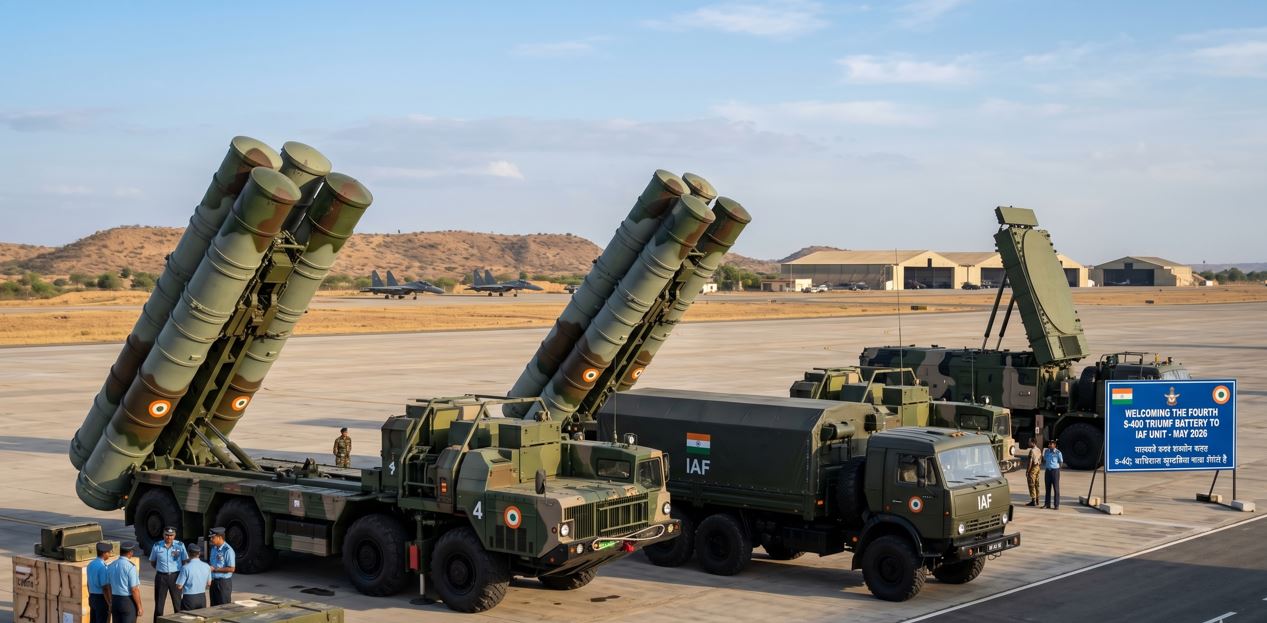
    New Delhi, Apr 29 (BNP): India is set to receive its fourth Russian-made S-400 Triumf air defence missile system by May 2026, significantly enhancing the country’s air defence preparedness and strengthening strategic coverage across key regions.

    News In Pics

    The advanced S-400 system, regarded as one of the world’s most sophisticated long-range air defence platforms, is capable of detecting and engaging multiple aerial threats including fighter aircraft, drones, cruise missiles and ballistic missiles at ranges of up to 400 kilometres.

    The upcoming delivery coincides with the anniversary of Operation Sindoor, during which the S-400 reportedly played a crucial role in intercepting hostile aerial threats and safeguarding military installations across northern and western sectors.

    India had signed a defence agreement worth nearly ₹40,000 crore with Russia in 2018 for the procurement of five S-400 squadrons. So far, three squadrons have already been delivered and deployed in strategically important locations.

    The first unit was deployed near the western border in December 2021, followed by the second near the northern frontier in 2022, while the third was positioned in Rajasthan in January 2023.

    Officials said the fourth squadron will help eliminate critical radar blind spots, improve early warning systems, and further strengthen India’s multi-layered air defence shield alongside systems such as Barak-8, Akash, and NASAMS-II.

    The fifth and final S-400 unit is expected to be delivered by November 2026, completing India’s full order of five squadrons.

    The induction of the fourth S-400 system comes at a time when India continues to modernise its armed forces and bolster national security amid evolving regional security challenges.

     
  • NIT Rourkela Climbs to 186th Rank in THE Asia University Rankings 2026

    Rourkela, Apr 29 (BNP): The National Institute of Technology Rourkela has secured the 186th position in the Times Higher Education (THE) Asia University Rankings 2026, strengthening its position among leading higher education institutions in Asia.

    The latest rankings assessed 929 universities across 36 countries and territories, where NIT Rourkela continued to maintain a strong presence, reflecting its steady academic and research progress.

    The improved ranking highlights the institute’s growing focus on academic quality, research output, and institutional development. It also reflects its expanding reputation in engineering education and innovation at both national and regional levels.

    According to the ranking framework, universities are evaluated on parameters such as teaching standards, research performance, industry engagement, and international outlook. NIT Rourkela’s position indicates positive progress across these key areas.

    Overall, the result reinforces the institute’s standing as one of India’s leading technical education institutions, with ongoing efforts to further enhance academic excellence and global competitiveness.

  • Accor & InterGlobe Partner to Bring The Hoxton to India with Bengaluru Debut

    Bengaluru, Apr 29: Ennismore, in partnership with Accor India and InterGlobe Hotels, today announced the signing of The Hoxton, Bengaluru City, marking the brand’s much-anticipated debut in India. The hotel is slated to open in November 2026 on Richmond Road, bringing The Hoxton’s signature open-house spirit and neighbourhood-focused hospitality to one of India’s most dynamic cities.

    Accor & InterGlobe Partner to Bring The Hoxton to India with Bengaluru Debut

    Located in the heart of Bengaluru, the hotel will feature 149 guestrooms, including The Hoxton’s signature categories—Roomy, Biggy, and four HOMEY suites situated on the top floors, offering sweeping city views. Designed as a “home away from home,” the rooms will reflect a blend of craftsmanship, local influences, and practical residential-style design.

    Food and beverage will play a central role in the guest experience. The ground-floor lobby restaurant and bar will serve as a vibrant social hub throughout the day, embodying The Hoxton’s philosophy of creating spaces that feel like the neighbourhood’s living room. The rooftop will feature Fi’lia, making its second appearance in India as a poolside restaurant and bar, offering a lively setting for dining and socialising against the Bengaluru skyline.

    The property will also include “The Apartment”, The Hoxton’s signature meetings and events concept, featuring a central pantry and meeting rooms for intimate gatherings, alongside a larger event space accommodating up to 240 guests.

    Staying true to its community-first ethos, The Hoxton Bengaluru City will collaborate with local artists, designers, and creators through curated events, guest chef takeovers, the Hox Gallery, and retail offerings via the Hox Shop—celebrating the city’s rich creative culture across art, fashion, music, and food.

    Commenting on the launch, Gaurav Bhushan, Group CEO of Ennismore and Chairman of Accor India, said:

    “India is one of the most exciting hospitality markets globally. The market is ready for a true lifestyle experience, and our focus is on building brands that resonate with Indian guests while maintaining our global DNA. Bengaluru, with its vibrant cultural ecosystem, is the ideal city for The Hoxton’s India debut.”

    Aditya Pande, Group CEO of InterGlobe Enterprises, added:

    “The entry of The Hoxton into India marks a defining moment in our journey to bring world-class, lifestyle-led hospitality to the country. Bengaluru’s creative energy and global outlook make it a natural fit for the brand. We are confident this property will set a new benchmark for urban hospitality in India.”

    Originally launched in London’s Shoreditch in 2006, The Hoxton has grown into a globally recognised lifestyle hospitality brand with 19 properties across the UK, Europe, and the US, and an expanding pipeline in cities such as Melbourne, Oslo, Nashville, and Mexico City.

    This announcement builds on the strategic alliance between Accor and InterGlobe, aimed at creating one of India’s fastest-growing hospitality platforms. The partnership targets a portfolio of 300 hotels under Accor and Ennismore brands by 2030, tapping into India’s rapidly expanding travel and hospitality market.

  • Virat Kohli Becomes Face of Oakley Meta AI Smart Glasses in India

    New Delhi, Apr 29 (BNP): Cricket star Virat Kohli has been announced as the brand ambassador for the new Oakley Meta Performance AI glasses in India, a joint initiative by Meta Platforms and Oakley.

    The partnership aims to promote AI-powered smart glasses designed to support athletes in training and performance. The technology is expected to help users stay focused by offering real-time insights in a lightweight and easy-to-use format.

    As part of the collaboration, fans will also get a closer view of Virat Kohli’s daily routine, including training sessions, match preparation, and behind-the-scenes moments, captured using the smart glasses.

    Meta said the idea behind the product is to bring technology closer to sport, helping athletes access useful information without interrupting their flow during practice or competition.

    Company representatives added that the collaboration reflects how wearable technology is becoming more integrated into sports, offering practical support to improve focus and performance.

    Overall, the partnership highlights the growing link between sports and AI-based wearable devices, aiming to enhance both athlete experience and fan engagement.

  • SIP in Balanced Advantage Funds Promotes Discipline Amid Market Volatility

    Mumbai, Apr 29 (BNP): Systematic Investment Plans (SIPs) in Balanced Advantage Funds are emerging as a disciplined investment approach for retail investors navigating volatile market conditions, according to recent market commentary and investment trends.

    SIP in Balanced Advantage Funds Promotes Discipline Amid Market Volatility

    Balanced Advantage Funds, which dynamically adjust their equity and debt exposure based on market conditions, are increasingly being viewed as a stable option for long-term wealth creation. These funds aim to reduce downside risk during market downturns while capturing growth opportunities during upswings.

    Financial experts note that combining SIPs with Balanced Advantage Funds helps investors maintain consistency in their investment behaviour, especially during periods of market uncertainty. Regular monthly investments reduce the impact of short-term volatility and help avoid emotional decision-making.

    The approach is particularly relevant in the current environment, where equity markets are experiencing fluctuations driven by global cues, interest rate expectations, and geopolitical developments. SIPs ensure that investors continue investing at different market levels, which helps in averaging purchase costs over time.

    Investment advisors highlight that Balanced Advantage Funds are designed to automatically rebalance portfolios between equity and debt, making them suitable for investors seeking a relatively smoother investment experience compared to pure equity funds.

    Overall, the combination of SIP discipline and dynamic asset allocation is being positioned as a strategy that supports long-term financial goals while managing market uncertainty more effectively.

  • UAE Announces Strategic Exit from OPEC; Moves to Independent Full-Capacity Production to Reshape Global Energy Market!

    Dubai, Apr 29 (BNP): In a major development for the global energy sector, the United Arab Emirates (UAE) has announced that it will leave the OPEC and OPEC+ groups of oil-producing nations next month, ending nearly six decades of membership and raising fresh questions over the future of the cartel.

    News In Pics

    The UAE said the decision follows recent investments aimed at boosting its oil production capacity and would help the country meet growing global energy demand in the long term. Officials stated that leaving the group would provide greater flexibility in shaping its own production strategy without quota obligations.

    The move is being seen as a significant blow to OPEC, with analysts warning it could weaken the alliance’s ability to influence global oil prices. Energy researcher Saul Kavonic described the development as “the beginning of the end of OPEC,” noting that the UAE accounts for a substantial share of the group’s production capacity.

    The UAE joined OPEC in 1967 and its departure will reduce the cartel’s membership to 11 nations. OPEC was founded in 1960 by Iran, Iraq, Kuwait, Saudi Arabia and Venezuela to coordinate oil production and safeguard the interests of exporting nations.

    Market analysts believe the exit could trigger greater volatility in crude prices, as traders assess whether the UAE will ramp up independent production and whether other members may reconsider their positions.

    The decision is also being viewed through a geopolitical lens, as it may pave the way for closer energy ties between the UAE and the United States at a time of shifting global alliances.