Author: admin

  • Institut Pasteur injects new sustainable display capabilities inside Paris HQ with a network of Philips ePaper and EcoDesign digital signage

    PPDS, together with integration specialist Exaprobe and digital signage software partner, Telelogos, have combined their expertise to deliver unrivalled high quality, low energy visual performance and remote management capabilities to the Institut’s 3,000 plus staff, with a fleet of 20x sustainability conscious Philips Professional Displays.

     Amsterdam, Feb 20: PPDS, the exclusive global provider of Philips Professional Displays, is excited to announce that its Tableaux ePaper and 3000 Series EcoDesign digital signage displays have been selected to deliver a perfect tonic of high performance, low energy visual capabilities to Institut Pasteur’s 538,000 ft² biomedical research campus in Paris.

     Founded by Louis Pasteur in 1887, the Institut Pasteur is an internationally acclaimed not for profit research and education institute committed to the fight against infectious diseases in France and around the world. A recipient of 10 Nobel Prizes and employing over 3,000 staff, the Institut’s colossal five hectare campus features 39 separate buildings, including a conference centre, and a total of 48,000 m2 of laboratory space.

     Future proofed planning

    With such a vast campus and visual technology playing an increasingly important role in its day to day activities and communications, Institut Pasteur’s AV/IT management team sought to modernise its ageing display infrastructure. Concluding an extensive site review, the project would include a fleet of 20x dynamic displays, strategically placed to support a variety of needs, settings, and light environments, including reception halls, meeting rooms, laboratories, and more.

     The project presented a number unique challenges. As a site of historical significance – containing several listed buildings – retaining the aesthetics during any modernisation, while ensuring minimal disruptions to staff, was imperative. Furthermore, displays would need to meet the Institut Pasteur’s strict standards for electrical safety and durability, while providing greater energy efficiency to reduce its carbon footprint.

     Romain Gentile, Key Account Manager at PPDS, commented: “Performance, readability, and energy efficiency were all key, with the displays disseminating scientific, institutional, and logistical information. For Institut Pasteur, and the invaluable work they do, there can be absolutely no compromise.”

     Effective communication

    Working with AV/IT integration specialists, Exaprobe, PPDS’ multi award winning ‘zero power’ 32” Philips Tableaux ePaper and 55” Philips Signage 3000 Series EcoDesign displays were immediately identified as the only solutions capable of meeting – and ultimately surpassing – the Institut’s high expectations.

     Signalling a new era of visual communications and sustainability, the introduction of Philips Tableaux ePaper displays was selected primarily – but not exclusively – to provide wayfinding information, such as mapping, campus information, and other instructions, to help visitors navigate around the site.

     Fully portable and able to be used entirely unplugged – ideal for use in Institut’s older buildings and in spaces with limited power sources – each Philips Tableaux is capable of displaying full colour, static imagery for days, weeks, months, or even years without using a single kilowatt of energy. The only time Philips Tableaux displays require power is during content updates, with one image change using just 0.0025 kWh.

     The Gold standard

    For the institute’s more advanced and detailed visual needs on a grander scale, including for presentations, corporate videos, and other internal communications, the future proof Philips Signage 3000 Series EcoDesign was the standout choice, ticking all boxes for both performance and sustainability.

     In addition to delivering high impact 4K Ultra HD visual quality, with picture perfect performance down to the smallest detail – be that videos, pictures or numbers – the Philips Signage 3000 Series EcoDesign enables the screens to use less than 50 per cent of the power compared to other digital signage models in the market, without compromising on performance.   

     The Philips Signage 3000 Series EcoDesign display is also the industry’s first EPEAT Climate+ Gold certified display of its kind, which measures the social and environmental impacts of products from extraction to end of life. The Philips Signage 3000 EcoDesign meets the most demanding set of criteria for sustainability leadership in electronics.

     24/7 management

    Both the Philips Tableaux and Philips Signage 3000 Series EcoDesign are also members of PPDS’ growing portfolio of integrated Android SoC displays, offering a vast range of features and benefits, including secure and seamless remote management capabilities with trusted partners.

     Enabling centralised management of the new fleet, PPDS partner, Telelogos’ Media4Display solution was selected and integrated, providing round-the-clock monitoring and management. This also allows the Pasteur technical team to schedule content in real time without having to travel or manually update, further reducing their carbon footprint and costs. 

     The full integration proceeded successfully and without disrupting research activities. Connectivity and content management tests were carried out on site, ensuring a seamless transition.

     Franck Fromet, AV Manager, Institut Pasteur, commented: “The integration of our new Philips Professional Displays has enabled us to modernise our communication while respecting our environmental commitment. The PPDS teams understood our constraints and proposed a solution that is understated, elegant, and effective.”

     Romain Gentile concluded: “The Institut Pasteur now benefits from a modern, sustainable display system that is fully adapted to its scientific environment. Information is disseminated more effectively, content is updated instantly, and energy consumption has been significantly reduced.”

  • Kriti Sanon and Abhishek Sharma unveil “The Beauty Secret” : A Whiter Smile with Colgate Visible White Purple

    Kriti Sanon and Abhishek Sharma unveil

    Bengaluru, Feb 20th:  Colgate-Palmolive India has launched its latest campaign for Colgate Visible White Purple, featuring Bollywood star Kriti Sanon and Indian cricketer Abhishek Sharma, bringing together two of India’s biggest cultural forces of cinema and cricket to redefine teeth whitening as an integral part of every beauty routine. The campaign elevates teeth whitening from just an oral care routine to a modern beauty essential.

    Coming on board for the campaign, Kriti Sanon said, “What drew me to this campaign was the idea of treating a smile as being crucial & central to beauty. As actors, we spend so much time on skincare and makeup, but a beautiful white smile is what truly sets you apart. Colgate Visible White Purple is that secret, literally the makeup you can start your day with. It’s backed by the science of color theory that I have seen work in other beauty categories which have been part of the regimen for a long time.”

    Abhishek Sharma on his association with Colgate Visible White Purple shared, “For me, confidence comes from feeling & looking good whether on or off the field. With the added spotlight & cameras around now,  grooming has even come to the picture. That’s what made this association with Colgate Visible White Purple feel authentic. A confident, white smile can make a real difference in making you feel confident & ready for always being camera ready.

    The star of the campaign is Colgate Visible White Purple, a toothpaste that has taken the internet by a storm with its distinctive color. The Purple toothpaste works by the color theory cancelling yellow in teeth for a whiter smile.  The technology is well established in beauty, from purple color correcting concealers in makeup to the color preserving purple shampoos in haircare. The distinctive color purple has been a breakthrough across categories in beauty both for its aesthetic appeal and effective functional benefit.

    Through this campaign, the brand is entering the beauty and grooming category in association with two of the country’s most aspirational figures, Kriti Sanon and Abhishek Sharma. By linking teeth whitening to beauty rituals, the brand invites consumers to see their smile as a defining beauty asset.

    Speaking about the campaign, Ayan Guha, Director, Marketing, Colgate-Palmolive India, said, “With Colgate Visible White Purple, we’re merging science and beauty to redefine oral care as a daily grooming essential. By pairing our color-correction technology with the influence of Kriti Sanon and Abhishek Sharma, we’re making a whiter smile an aspirational yet effortless first step in every beauty ritual..”

    Designed as a high-impact, multi-platform rollout, the campaign will be amplified across television, digital, social media, and influencer-led content. It is part of Colgate’s broader strategy to drive premiumisation while strengthening its leadership in science-backed, beauty-forward oral care solutions.

    With this launch, Colgate Visible White Purple continues to carve a distinctive space in the whitening category where innovation, beauty, and everyday routines come together to deliver a smile that looks as good as it feels.

  • Liquibase Secure 5.1 Extends Modeled Change Control to Snowflake

    New release makes Snowflake control plane changes governable and auditable across access, data movement, and execution, and adds support for Couchbase, AWS Keyspaces, DataStax Enterprise, and AlloyDB.


    Austin, TX — Feb 20— Liquibase, the leader in Database Change Governance, today announced the release of Liquibase Secure 5.1, extending modeled Change Control to Snowflake. With 5.1, enterprises can govern Snowflake control plane changes with the same rigor and automation they already apply to schema evolution, closing a critical gap in data platform security, compliance, and AI readiness. Liquibase Secure 5.1 also expands database platform coverage, including new support for additional cloud and enterprise data stores.


    Snowflake has become mission-critical infrastructure for analytics, data products, and AI initiatives. As organizations scale DataOps and internal developer platforms, Snowflake changes are no longer isolated technical updates. They are platform-level changes that impact trust, availability, and every downstream consumer. Yet many of the most consequential changes still happen outside standardized governance, often delivered as scripts with limited visibility, weak enforcement, and evidence that is difficult to assemble when it matters most.


    “As enterprises modernize their developer platforms for AI-driven delivery, change control at the database layer has become a prerequisite, not a nice-to-have,” said Mirek Novotny, Sr. Director of Product at Liquibase. “If Snowflake control plane changes aren’t governed and observable, you can’t prove control. Liquibase Secure 5.1 brings predictability and evidence to the changes that matter most, without slowing teams down.”


    Modeled Change Control for Snowflake


    Liquibase Secure 5.1 treats key Snowflake control plane changes as first-class, modeled change types, rather than opaque scripts. That modeling enables precise policy enforcement, object-aware drift detection, and audit-ready evidence at the level where access, movement, and execution are defined.

    With Liquibase Secure 5.1, data platform teams can govern Snowflake changes across access and security configuration, data sharing and movement, platform and cost controls, and automated execution, using standardized workflows across environments and teams.

    Key outcomes include:

    • Stop risky Snowflake control plane changes before they reach production
    • Standardize how Snowflake changes are delivered across environments and teams
    • Automatically generate audit-ready evidence for every change
    • Detect drift and out-of-band updates to governed Snowflake objects
    • Recover faster with traceable, reversible changes and tested rollback procedures

    This closes a long-standing gap for organizations that govern schema evolution, yet still struggle with over-permission creep, ungoverned data movement, and control plane drift that can undermine security posture and AI initiatives.


    Built for DataOps, data products, and AI readiness

    As Snowflake increasingly powers feature engineering, model training, and AI-driven decisioning, the blast radius of ungoverned change grows. A single access change can expose sensitive training data. An unreviewed sharing update can expand compliance scope. An execution change can silently alter business-critical logic. Liquibase Secure 5.1 helps data platform teams keep Snowflake predictable, auditable, and reliable as usage scales, without turning governance into a bottleneck.


    Expanding database support across Liquibase’s industry-leading coverage

    Liquibase Secure continues to deliver broad database coverage across 60+ platforms, from mainframe DB2 to cloud-native data stores. Liquibase Secure 5.1 expands support for Snowflake, Databricks, and MongoDB, and adds new platform support for Couchbase, AWS Keyspaces, DataStax Enterprise, and AlloyDB for Google Cloud. This breadth helps enterprises standardize change governance across heterogeneous environments using a single platform instead of stitching together siloed tools and processes. Teams can apply consistent workflows and generate unified, audit-ready evidence across their database estate, reducing operational overhead while preserving the flexibility to adopt new technologies without rebuilding governance each time.


    Enterprise partnership, not just tooling

    Liquibase brings more than a decade of frontline experience helping enterprises govern database change at scale. In addition to the platform, Liquibase provides hands-on professional services, a dedicated customer success organization, and ongoing advisory support to help teams operationalize Change Control across their delivery model.

  • Regional Community Radio Sammelan (North) Highlights Growth, Innovation and Sustainability of Community Radio Sector


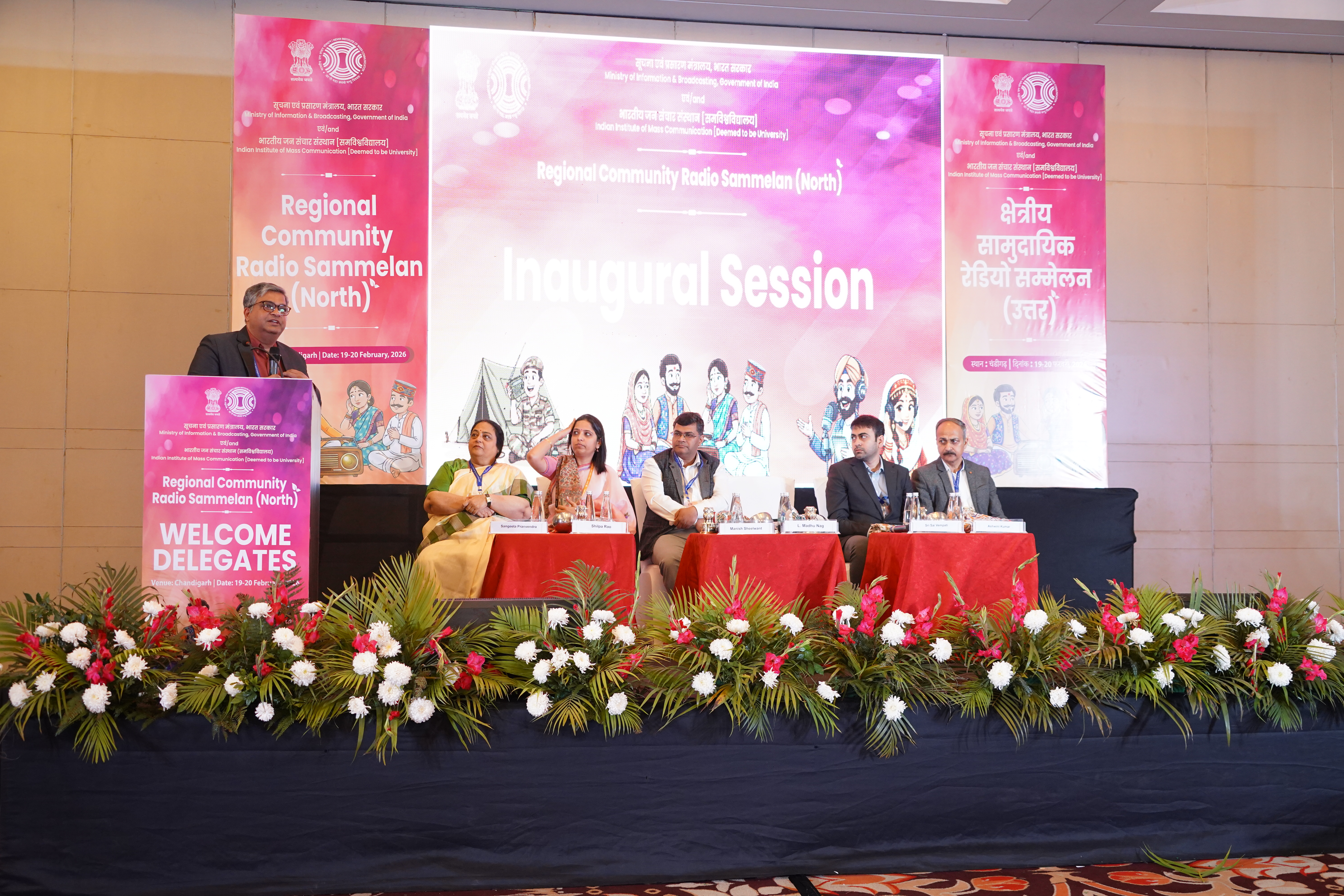
    Chandigarh, Feb 20: The two-day Regional Community Radio Sammelan (North) was inaugurated in Chandigarh. Organised by the Ministry of Information & Broadcasting, Government of India, in collaboration with the Indian Institute of Mass Communication (IIMC), New Delhi, the theme of the Sammelan is “Celebrating 20 Years of Community Radio in India.” More than 75 Community Radio Stations from the Northeastern region are participating in the event.

    Addressing the gathering, Ms. Shilpa Rao, Director (CRS), Ministry of Information and Broadcasting, emphasized that while the Ministry is actively expanding the community radio network, stakeholders must come forward to share their experiences and success stories to further consolidate the sector. She also highlighted that several new innovations are being introduced to support the sustained growth of community radio.

    Speaking on the occasion, Shri L. Madhu Nag, Registrar, Indian Institute of Mass Communication (IIMC), noted that although content continues to be the backbone of community radio, the sector faces challenges in terms of trained manpower. He stressed the importance of developing sustainable operational models and prioritizing the adoption of technology to address these challenges effectively.

    During a technical session, Shri Manish Sheelwant, Deputy Director, Wireless Planning and Coordination Wing, simplified the Saral Sanchar Portal process for participants by clearly explaining procedures related to approvals, auto-renewals, and spectrum charges, thereby making regulatory requirements easier to understand and comply with.

    Another key session was conducted by Shri Sri Sai Vempati, Deputy Director (AV), Central Bureau of Communication (CBC), MIB, who provided detailed insights into the empanelment process and highlighted the role of government advertising in enhancing the outreach and sustainability of community radio stations.

    An experience-sharing session featured representatives from Radio Salam Namaste, Sanjha Radio, and Radio Hewalvani, who shared practical insights on content creation, sustaining community radio stations and engaging effectively with district and state administrations.

    Concluding the series of sessions, Shri Ashwini Kumar from Akashvani delivered an informative presentation on content creation and the AIR Code of Ethics, emphasizing responsible broadcasting and adherence to ethical standards in community radio operations.

    On the second day, the Sammelan will feature sessions on the NaVigate Bharat portal, a presentation by the Ministry on documentation, and discussions on participation, including the sharing of studies, reports on CRS and stakeholder experiences.

    The Sammelan provides Community Radio practitioners a platform to share experiences, raise concerns, explore innovative approaches and collectively strengthen the future of grassroots broadcasting across the northeastern region.


  • INSHUR Appoints Christopher Aragon as Head of US Sales and Operations to Drive Growth and Expand Mobility Insurance Footprint

    Executive from Turo and Outdoorsy will oversee the company’s revenue engine and sales operations, supporting commercial growth across the car share and mobility insurance industry


    (New York, NY, February 19, 2026) – INSHUR, the leader in insurance solutions for the on-demand economy, announced today the appointment of Christopher Aragon as Head of US Sales and Operations. In this role, Aragon will be responsible for overseeing the company’s revenue engine and commercial operations, with a focus on scaling profitable growth, strengthening execution across sales functions, and ensuring tight coordination between commercial strategy and execution as INSHUR continues to expand globally.


    Aragon joins INSHUR with more than 20 years of experience in the insurance and mobility industry, having held senior leadership roles at Tint, Outdoorsy/Roamly, Turo, and Progressive. His background spans sales, underwriting, claims, risk management, and automation, with a focus on designing and scaling data-driven insurance programs for shared economy, fleet, and gig-driver ecosystems, aligning closely with INSHUR’s mission to build insurance infrastructure designed for how mobility actually works today.


    “Christopher brings a strong blend of expertise and insights thanks to his successes in building data-driven insurance programs across the on-demand mobility economy,” said Dan Bratshpis, CEO and co-founder of INSHUR. “His experience at leading mobility and insurance companies gives us valuable perspective on where the market is headed and where we can push it forward. As we scale our first-to-market Off-rental (Period X™) and On-rental (Period Z) car share products, his expertise in this category will be invaluable. His deep understanding of the on-demand economy allows him to translate complex regulatory and operational constraints into innovative products and scalable commercial systems that customers actually need.”


    “I was drawn to INSHUR by the environment they’ve created at the intersection of deep insurance knowledge and modern mobility needs,” said Aragon. “The company’s focus on building durable and cohesive systems is a flywheel where revenue growth, operational integrity, and customer outcomes are constantly reinforcing each other. It’s a rare combination, and I believe it’s the foundation for carrying on the future of mobility insurance in both a responsible and sustainable manner.”


    With over 40 million people in the US involved in gig economy work, rideshare and delivery drivers are the backbone of the on-demand economy, powering one of the biggest economic shifts in decades. INSHUR supports this workforce by simplifying commercial insurance for rideshare, carshare, and last mile delivery, aligning coverage with real driving activity to build trust between drivers, platforms, and insurers. Through embedded, flexible commercial auto insurance, INSHUR enables coverage that fits how people actually work today.

  • Next-generation OLEDs rely on finetuned microcavities

    Researchers have developed a unified theory of microcavity OLEDs, guiding the design of more efficient and sustainable devices. The work reveals a surprising trade-off: squeezing light too tightly inside OLEDs can actually reduce performance, and maximum efficiency is achieved through a delicate balance of material and cavity parameters.  Organic light-emitting diodes (OLEDs) offer several attractive advantages over traditional LED technology: they are lightweight, flexible, and more environmentally friendly to manufacture and recycle. However, heavy-metal-free OLEDs can be rather inefficient, with up to 75% of the injected electrical current converting into heat.

    OLED efficiency can be enhanced by placing the device inside an optical microcavity. Squeezing the electromagnetic field forces light to escape more rapidly instead of wasting energy as heat.

    “It is basically like squeezing toothpaste out of a tube,” explains Associate Professor Konstantinos Daskalakis from the University of Turku in Finland.

    After a certain squeezing threshold, the original energy levels of the emitting material and the electromagnetic field hybridize. These mixed light–matter states are known as polaritons.

    While the static energy levels of polariton OLEDs are well understood, much less is known about how the squeezing affects transitions between these states. As a result, the development of polariton OLEDs has largely relied on trial and error.

    Now, a research group at the University of Turku has developed the first theoretical model that explains how these transition mechanisms change as the squeezing increases. Surprisingly, the model predicts that efficiencies decrease once polaritons are formed. This reduction arises from two distinct effects.

    “Although polaritons emit light very quickly, they are shared states of typically hundreds of thousands of molecules, which dilutes the processes populating them,” explains Postdoctoral Researcher Olli Siltanen. “These population mechanisms can be further weakened if the polariton energies lie too far from the original molecular energy levels.”

    According to the model, maximum efficiency in microcavity OLEDs is achieved through a delicate balance of material and cavity parameters. While the model finds polaritons with many molecules disadvantageous, all hope is not lost.

    “Alternative device architectures allow us to reduce the number of molecules involved from hundreds of thousands to just a few,” says Daskalakis. “Such OLEDs have the potential to achieve record-breaking efficiencies.”

    The results have been published in the journal Materials Horizons.

    Read the research article: https://pubs.rsc.org/en/content/articlelanding/2026/mh/d5mh01958c#!divAbstract

  • UAE Establishes First Integrated Metals Education Ecosystem with World Steel Association

    Metal Park Forms Strategic National Alliance with World Steel Association and Steel University to Build the Middle East’s First Integrated Metals Education Ecosystem (MEEEM)

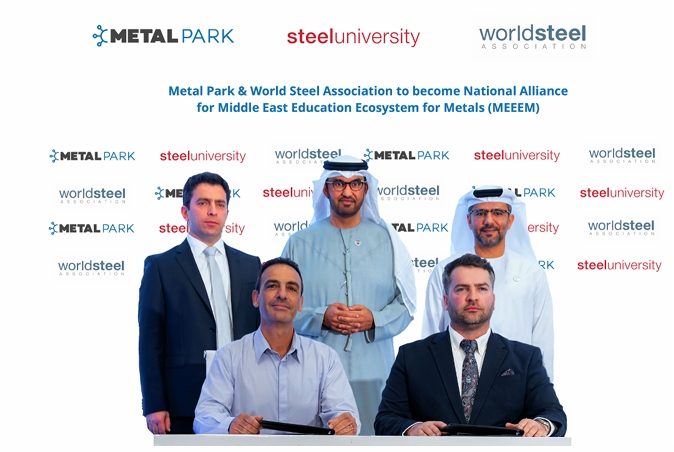
    Abu Dhabi, UAE — Feb 19: Metal Park has signed a strategic agreement with the World Steel Association and

    Steel University, establishing a national-level alliance to develop a fully integrated metals education and capability ecosystem for the Middle East.

    Witnessed by H.E. Dr. Sultan Jaber, Minister of Industry and Advanced Technology; Captain Mohamed Juma Al Shamisi, Managing Director and Group CEO of AD Ports Group; and Mr. Vahid Fouladkar, CEO of Metal Park and signed by Navid Fouladkar, Head of Strategic Partnerships at Metal Park, and Jorge Muract, Director of Steel University.

    This milestone partnership directly supports the UAE’s industrial vision under Make it inthe Emirates and Operation 300bn, reinforcing the country’s ambition to build globally competitive, value-added metal production capabilities from within the UAE.

    The alliance positions Metal Park not only as industrial infrastructure, but as the execution layer where education, standards, talent, and production converge into a single operating ecosystem.

    Vahid Fouladkar, CEO of Metal Park, said: “This alliance marks a defining step in how industrial growth is built and sustained in the region. Metal Park was conceived as more than physical infrastructure—it is an operating

    ecosystem where standards, talent, capability, and production are developed together. By partnering with the World Steel Association and Steel University, we are embedding global best practices directly into the industrial environment, ensuring that education translates into measurable performance, competitiveness, and long-term national value for the UAE.”

    Jorge Muract, Director of Steel University, stated: The alliance seeks to secure the industry talent pipeline through strong collaboration and alignment among academia, industry, its value chain, and government as a key enabler of this interaction, while also providing agile infrastructure to continuously upskill and reskill the workforce and sustain innovation in production systems. Together, we aim to develop high-quality learning and technology solutions that build a more efficient and dynamic workforce. At the same time, the alliance seeks to join efforts with

    similar initiatives in Europe, Saudi Arabia, India and Latin America to create a global education and training ecosystem that enables talent mobility and ensures equal access to education and training, fostering social innovation worldwide.

    Abdullah Al Hameli, CEO of Economic Cities & Free Zones, AD Ports Group, said: “This agreement strengthens the foundation of our industrial ecosystem by aligning global standards with local production capability. KEZAD Group not only provides infrastructure, but also enables performance. By embedding internationally recognised expertise from the World Steel Association and Steel University directly into Metal Park’s operating environment, we are

    accelerating the development of advanced industrial skills, raising productivity, and enhancing the competitiveness of UAE-based manufacturers.

    “This initiative directly supports national industrial priorities under Make it in the Emirates and Operation 300bn, and reinforces Abu Dhabi’s position as a globally competitive hub for value-added metal production, driven by capability, standards, and long-term industrial resilience.”

    From Global Standards to Industrial Output

    At the core of the agreement is a shared commitment to transforming skills development into measurable industrial performance. Through collaboration with the World Steel Association and Steel University, Metal Park will embed internationally recognised standards, certifications, technical frameworks, and sector intelligence directly into its operating environment—ensuring education is applied at the factory-floor level, not abstract.

    This ecosystem-driven model ensures that learning, certification, and best practices translate into higher productivity, improved quality, and enhanced competitiveness across UAE-based metal production.

    Advancing National Industrial Priorities and Regional Workforce Capability The partnership directly contributes to the objectives of Make it in the Emirates and Operation 300bn by:

    • Strengthening domestic metal and steel industrial capability
    •  Developing future-ready technical, engineering, and operational talent
    •  Embedding global standards into local production environments
    •  Enhancing the long-term competitiveness and resilience of regional manufacturing

    By connecting global industry leadership with Metal Park’s integrated infrastructure, the alliance ensures that industrial growth is powered by world-class assets, standards, and people.

    Building the Middle East’s Metals Education & Capability Ecosystem

    The agreement underpins Metal Park’s long-term vision to establish the region’s most comprehensive metals education and capability ecosystem—spanning foundational skills, advanced metallurgy, engineering, processing, and operational excellence.

    This phased, scalable approach ensures that capability building is aligned with real industrial demand, national priorities, and long-term sustainability. Metal Park views this agreement as a foundation for broader collaboration. Delivering a globally recognised industrial talent and standards ecosystem will require continued engagement with government entities, regulators, academic institutions, and industry partners—anchored by Metal Park as the ecosystem platform.

  • Taste of Brasil 2026 Launches in India, Spotlighting Premium Brazilian Foods

    New Delhi, Feb 19: Taste of Brasil 2026, an international food and culinary initiative led by ApexBrasil, the Brazilian Trade and Investment Promotion Agency, officially launched today in New Delhi. The initiative will also be introduced in Mumbai on 23 February 2026.

    Taste of Brasil 2026 Launches in India, Spotlighting Premium Brazilian Foods

    The New Delhi launch was attended by Mr. Jorge Viana, President of ApexBrasil; Mr. Paulo Teixeira, Honourable Minister of Rural Development and Family Farming of Brazil; and Mr. Marcio Elias, Honourable Vice Minister of Development, Industry, Commerce and Services of Brazil, along with other key industry stakeholders, importers, distributors, retailers, chefs, and members of the media.
     
    The campaign focuses on building awareness, encouraging product trials, and strengthening trade and consumer engagement through immersive retail experiences and culinary storytelling for Brazilian food products in India.
     
    Brazil known for its rich biodiversity and fertile landscapes, produces some of the world’s most nutritious nuts, fruits, and superfoods. From the Amazon rainforest to tropical orchards, Brazilian foods offer exceptional taste, nutrition, and versatility for modern lifestyles.
     
    Taste of Brasil 2026 spotlights a curated selection of high-quality Brazilian products including Brazil Nuts, Brazil Nut Milk, Açaí Pulp, Açaí Powder, Tahiti Limes, and Exotic Frozen plant-based meals. These offerings reflect Brazil’s global leadership in biodiversity-driven agriculture and its strong reputation for quality, safety, and sustainability.
     
    Ingredients such as Brazil nuts and açaí have gained worldwide popularity for their health benefits and adaptability across cuisines. As Indian consumers increasingly seek plant-based nutrition, functional foods, and globally inspired flavours, Brazilian products offer a natural and exciting fit within Indian consumers’ evolving food preferences.
     
    Speaking on the occasion, Mr. Jorge Viana, President of ApexBrasil, said,
     
    “India represents a dynamic and fast-growing market with a sophisticated and increasingly health-conscious consumer base. Through Taste of Brasil 2026, we are proud to present the diversity, quality, and sustainability of Brazilian food products. This initiative is not only about promoting exports; it is about building long-term partnerships, promoting sustainability and innovation in food,  and strengthening the bridge between Brazilian producers and Indian consumers.”
     
    Adding to this, His Excellency José Mauro da Fonseca Costa Couto Consul General of Brazil in Mumbai remarked, “Brazil and India share strong diplomatic and economic relations rooted in mutual respect and cooperation. The launch of Taste of Brasil 2026 in both New Delhi and Mumbai reflects our commitment to deepening agri-food trade and enhancing people-to-people connections through culinary exchange. We see tremendous potential for collaboration across retail, hospitality, and food processing sectors.
     
    Looking ahead, ApexBrasil aims to strengthen trade ties between Brazil and India by expanding market access, boosting retail presence, and encouraging culinary innovation. With rising demand for sustainable, plant-based, and globally inspired foods, Taste of Brasil 2026 sets the foundation for long-term partnerships and a stronger Brazilian food footprint in India.​​
  • Padma Shri Awardee Sumitra Guha to Be Honoured at AntarSwar; MP Harsh Vardhan Shringla to Attend

    New Delhi , Feb 19 : AntarHriday Connect, in collaboration with India International Centre and Sawasdee Group, will present AntarSwar – A Journey through Indian Classical Music on February 20, 2026, at the C.D. Deshmukh Auditorium, India International Centre, New Delhi.

    A highlight of the evening will be the conferment of the AntarHriday Excellence Award upon Sumitra Guha, Padma Shri awardee and recipient of the Sangeet Natak Akademi Award, in recognition of her distinguished contribution to Hindustani classical music and her enduring service to society through art.

    The programme will be graced by Chief Patron Harsh Vardhan Shringla, Hon’ble Member of Parliament. The gathering is expected to include Members of Parliament, Ambassadors, and senior leaders from government and corporate sectors.

    The evening’s performances will feature eminent artists:

    • Abhay Sopori – Santoor
    • Ojesh Pratap Singh – Vocal

    Accompanists:

    • Rishi Shankar Upadhyay – Pakhawaj
    • Ujith Udaya Kumar – Tabla
    • Dr. Ashique Kumar – Harmonium

    Conceived as a celebration of India’s timeless classical music tradition, AntarSwar seeks to preserve, promote, and present the spiritual and artistic depth of India’s cultural heritage through meaningful artistic collaborations.

  • Dr Akhter Husain Unveils ‘Vedic Inspirations’ Solo Exhibition at Karnataka Chitrakala Parishath

    Bangalore, Feb 19:  Internationally recognised visual artist Dr Akhter Husain presents Vedic Inspirations, a solo exhibition featuring 25 original mixed media works that reflect India’s spiritual and civilisational heritage through a contemporary visual language. Opening from 28th February to 8th March 2026 at Karnataka Chitrakala Parishath, Bengaluru, the exhibition invites viewers to experience a quiet and immersive visual journey shaped by years of study, contemplation, and artistic exploration. 

    Vedic Inspirations unfolds like a carefully composed raga, where each artwork carries its own tempo, texture, and emotional note. Drawing from temple architecture, ancient symbols, and cultural memory, the works reflect a search for harmony between material and meaning. The series represents a deeply introspective phase in Dr Husain’s artistic journey, shaped by his lifelong engagement with questions of unity, form, and metaphysical resonance. 

    What sets this exhibition apart is Dr Husain’s distinctive mixed media technique, which he describes as “Akhterism.” His process brings together digital imaging, mineral dust, crushed semi-precious stones, dental composites, and plastinated wood, creating layered surfaces that feel sculptural and alive. These textured compositions invite viewers not only see but also feel the rhythm within each piece, where light, structure, and material come together in quiet harmony. 

    Dr Husain’s artistic voice has evolved over decades alongside his distinguished career as an orthodontist, academician, and photographer. An Associate of the Royal Photographic Society, UK, and recipient of prestigious international awards, his works have been exhibited at prominent venues including India Habitat Centre, New Delhi, Karnataka Chitrakala Parishath, Bengaluru, and internationally in Switzerland and Dubai. His art reflects a lifelong commitment to exploring the deeper connections between nature, culture, and human experience. 

    Through Vedic Inspirations, Dr Husain offers viewers a meditative space, a visual composition that reflects the timeless rhythm of India’s spiritual heritage while embracing contemporary artistic expression. The exhibition invites audiences to pause, reflect, and connect with the quiet resonance that exists between tradition and modernity.