Infrastructure Upgrades and Suburban Growth Corridors Drive Mumbai’s Commercial Real Estate Boom

Sep 22: Mumbai’s commercial real estate market is gearing up for a major growth phase, with office space demand projected to expand at a Compound Annual Growth Rate of 12–15% between 2027 and 2030, according to the India Mid-Year Market Outlook FY2027 released by CII and CBRE.
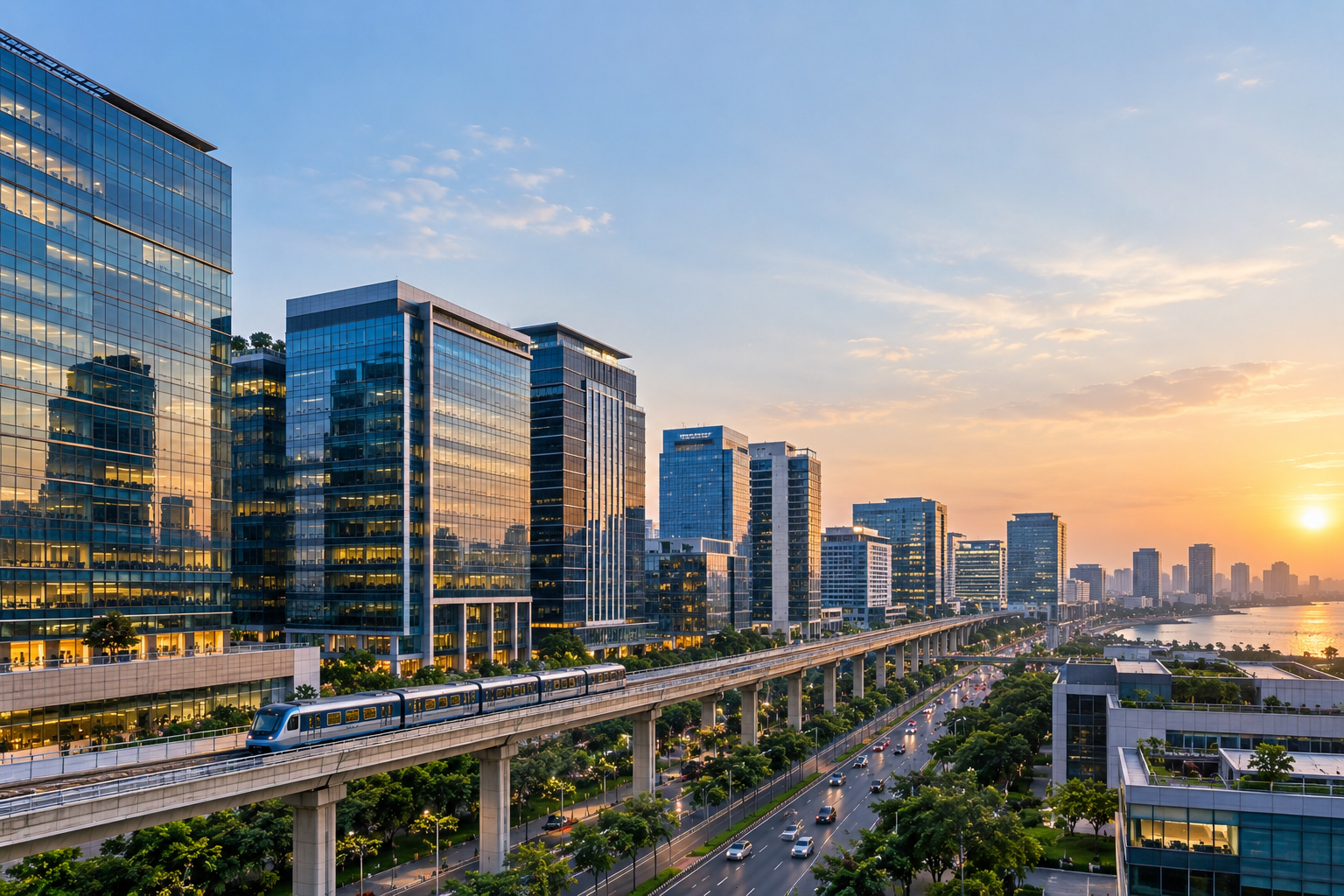
This marks a significant leap from the city’s historical figures, which saw average annual office leasing of approximately 11.8 million sq. ft. between 2022 and 2026. The surge is set to be fuelled by robust business expansions, improved connectivity across the Mumbai Metropolitan Region and the rapid emergence of new decentralised growth corridors.
Office Real Estate: The City’s Growth Engine
Accounting for nearly 16% of India’s total office inventory as of H1 2026, Mumbai’s overall office stock is projected to expand by 1.3 times by 2030. The primary drivers of this accelerated growth include Banking, Financial Services, and Insurance, tech enterprises, and flexible workspace operators seeking modern, investment-grade commercial spaces.
With massive transit infrastructure projectsincluding metro expansion, upgraded road networks, and improved airport access; the market is shifting away from traditional core business districts into connected suburban hubs.
Highlighting the demand shift towards wellness-oriented modern workspaces in the Eastern Suburbs,Mr. Shilpin Tater, Managing Director, Superb Realty said,
“The Eastern Suburbs—particularly hubs like Chembur, Ghatkopar, and Vikhroli—are undergoing a massive transformation into vibrant commercial destinations. Modern businesses are no longer just looking for prime locations; they are prioritizing occupant well-being. Modern office infrastructure is increasingly incorporating advanced indoor Air Quality (AQI) control systems, wellness features, energy-efficient designs, and sustainable architecture. As infrastructure improves connectivity across the Eastern corridor, these micro-markets offer occupiers the ideal blend of accessibility, state-of-the-art office amenities, and health-focused workspaces.”
Commenting on the expanding footprints across the Western Suburbs and emerging micro-markets, Mr. Deepak Nair, Head – Marketing, JP Infra Mumbai Pvt Ltd noted,
“The expansion of transit links has unlocked immense potential in peripheral markets like Mira Road and the extended Western Suburbs. Businesses and occupiers are actively seeking modern commercial infrastructure that combines affordability, seamless connectivity, and world-class amenities. High-grade office spaces equipped with modern lifestyle features, collaborative zones, and robust tech integration are empowering these suburbs to evolve into self-sustaining business hubs, shifting economic activity closer to talent pools.”
Emphasizing the resilience and high demand in established residential and boutique commercial nodes, Ms. Shraddha Kedia-Agarwal, Director, Transcon Developers added,
“Prime Western Suburbs such as Santacruz and Khar are witnessing strong, sustained demand driven by premium redevelopment projects and boutique commercial developments. High-net-worth individuals, creative professionals, and boutique firms prefer these well-established micro-markets due to their proximity to key business nodes, refined urban infrastructure, and superior lifestyle amenities. As urban regeneration accelerates, locations along the western coastal and transit corridors will continue to command premium interest for both residential and commercial spaces.”
A Broad-Based Real Estate Expansion
Beyond office spaces, the report highlights positive momentum across all key segments:
-
Retail Growth: Expected to record the fastest growth among all segments at 14–17% CAGR through 2030, driven by experiential retail, rising consumer spending, and mixed-use transit developments.
-
Residential Real Estate: Projected to grow at 6–8% annually through 2030, supported by infrastructure-led corridors and city-wide redevelopment/slum rehabilitation efforts.
-
Data Centres & Logistics: Mumbai’s industrial and logistics demand is expected to grow at 5–8% CAGR. Concurrently, the city’s market-leading data centre capacity is set to grow 2.1 times by 2030, accounting for nearly 68% of India’s total capacity.
By 2030, Mumbai’s real estate trajectory will be defined less by its traditional downtown business districts and more by a multi-centric network of connected, high-tech growth corridors across the MMR.
