Category: Technology

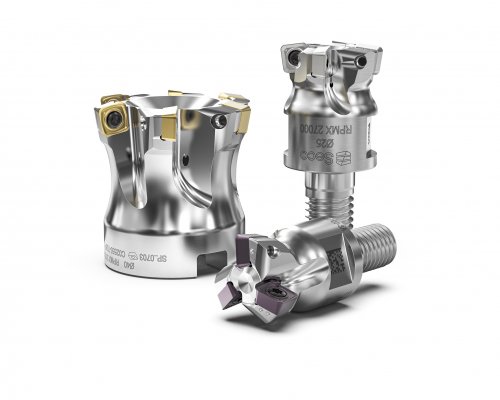
  • Seco® High Feed SP07 reduces inventories and maximizes productivity

    Capable of handling a wide mix of materials, Seco® High Feed SP07 excels in all machining strategies and allows you to push productivity levels, particularly on complex components.


    A positive cutting rake angle ensures optimal chip formation, while the stable insert design and constant lead angle deliver predictable cutting behavior, paramount for unmanned production.

    Reduce the need for skilled labor

    The SP07 addresses common industry challenges: frequent tool changes, unpredictable results, and high costs due to rapid wear. In one reliable solution, it simplifies tool management and reduces the need for skilled labor. Digital traceability via Data Matrix codes further streamlines operations, making the SP07 ideal for high-volume and unmanned production.

    High metal removal rates in shallow depths of cut

    Each insert features four cutting edges, maximizing usage and extending tool life. Even with shallow depths of cut (≤0.8 mm), the SP07 maintains high metal removal rates, ensuring manufacturers stay on track with productivity goals. The result is a significant reduction in cost per part and improved operational efficiency.

    “Our customers need to boost productivity and cut costs. Seco® High Feed SP07 delivers reliable, flexible performance across materials”, says Benoît Patriarca, Product Manager Copy High Feed Milling. “The four cutting edges and digital traceability simplify processes further, even when skilled labor is limited.”

    With its origins in Fagersta, Sweden and present in more than 75 countries, Seco is a leading global provider of metal cutting solutions for indexable milling, solid milling, turning, holemaking, threading and tooling systems. For nearly 100 years, Seco has driven excellence throughout the entire manufacturing journey, ensuring high-precision machining and high-quality 

  • Brookhaven Lab Builds Successful ‘Cloud in a Box’

    Feb 18: In a quiet laboratory, a team of atmospheric scientists and engineers at the U.S. Department of Energy’s (DOE) Brookhaven National Laboratory recently gathered around a workstation to watch as little floating speckles, illuminated by a curtain of green light, swirled into a haze, then wisp of a cloud.

    This instance of creation unfolded inside a programmable atmosphere they’d built from scratch.

    “We saw the birth of a cloud,” said Brookhaven atmospheric scientist Arthur Sedlacek. “There was a lot of excitement and happiness, and relief, in that moment. Needless to say, we definitely weren’t quiet after that.”

    Researchers will use the new convection cloud chamber, a customizable one-cubic-meter metal box, to tackle fundamental unknowns that remain about clouds.

    Clouds might seem simple — white, fluffy shapes drifting overhead — but they remain one of the biggest sources of uncertainty in models of weather and Earth’s complex atmospheric system.

    Scientists know that clouds play important roles in regulating Earth’s energy balance, controlling how water moves through the atmosphere, driving storm formation, and influencing how intense weather systems become. Still, researchers’ understanding of the physics underlying cloud processes is limited.

    “We need repeatable, controlled experiments in order to tease out the key factors and mechanisms governing those underlying small-scale processes,” Sedlacek said. “For example, one long-standing unsolved problem in our community is how drizzle or raindrops are formed in warm clouds. Why do some clouds precipitate while others do not?”

    Collecting key and abundant measurements from clouds in nature, while challenging, provides some data needed to address these questions. Brookhaven scientists and their collaborators have piloted specially equipped aircraft through clouds to collect such data. But each flythrough hits a cloud that has already changed since the plane’s first pass.

    The cloud chamber will allow scientists to study clouds in a more controlled setting.

    “The cloud chamber provides us with a unique environment to isolate and rigorously study important but still poorly understood cloud microphysical processes,” said Brookhaven atmospheric scientist Fan Yang. “We can use it to mimic real atmospheric clouds under well-controlled laboratory conditions and perform detailed, repeatable cloud measurements.”

    Watch as a cloud forms in the chamber. Scientists use a green laser to see the process. (Brookhaven National Laboratory)

    Controlled cloud making

    Brookhaven Lab’s convection cloud chamber combines ingredients needed to make a cloud: air that is supersaturated with water and aerosol particles, tiny particles suspended in the atmosphere that can trigger the condensation of water vapor into cloud droplets.

    Scientists first fill the chamber’s bottom baseplate with water. Then they heat it up, releasing water vapor into the chamber through evaporation. The top panel of the box is cold. As the warm water vapor from the bottom rises and mixes with cool air from the top, it builds up an atmosphere where the air is “thick” with humidity.

    “Cloud formation requires the relative humidity to be greater than 100% — a condition we refer to as supersaturation,” Sedlacek said. “Such a supersaturated environment is achieved in the chamber by the mixing of warm humid air with cold humid air.”

    To trigger cloud droplet formation in this supersaturated atmosphere, scientists inject aerosol particles, such as table salt, into the chamber to serve as “seeds” for cloud formation. When water vapor from the air condenses on the salt particles, it forms tiny cloud droplets. In the humidified environment, these droplets will continue to grow through additional condensation of water vapor. Eventually, this establishes a steady state between the cloud droplet particle size and the relative humidity.

    “One major advantage of a convection cloud chamber, compared with other types of cloud chambers, is that we can maintain a turbulent cloud for hours in a steady state,” Yang said. “This will allow repeated measurements of cloud properties, which improves statistical robustness.”

    The cloud chamber at Brookhaven Lab is made up of individual heating and cooling side panels that allow researchers to steer settings such as relative humidity, temperature, and the degree of mixing and swirling in the air, or turbulence, to create a complex structure. Rearranging the heating and cooling side panels will allow the creation of different internal chamber conditions, resulting in more complex cloud schemes to be formed. Additionally, the chamber is designed so that scientists can measure the influences of things like aerosol composition and size, temperature on cloud formation, cloud droplet size distribution, and cloud persistence.

    “From an experimental perspective, there are lots of knobs we can turn to create specific atmospheric conditions within the chamber,” Sedlacek said. “We’ve started thinking about how we can incorporate artificial intelligence and machine learning into the cloud chamber’s workflow.”

    The unique modular design also offers flexibility for the future. For example, the structure is meant be expandable. Adding another cubic meter on top would expand the working volume, leading to increased cloud lifetime. This would open the door to even more ambitious studies of drizzle and rain drop formation, the researchers said.

    Making measurements with advanced imaging

    A crucial component of these studies is using tools that can take measurements inside the cloud chamber without touching and disrupting the cloud and its environment. The Brookhaven team is developing next-generation instrumentation and methods to make this possible.

    “We want to be able detect the transition of aerosols to cloud droplets to drizzle without sticking instruments inside the chamber so that we don’t disrupt the air flow,” Sedlacek said. “To realize this goal, we’ll use light.”

    Scientists aim to, first, detect aerosols particles that activate into cloud droplets by tagging the particles with fluorescent dye. Tagged and activated aerosols will light up when hit by a laser. Next, researchers will use time-correlated photon-counting lidar — a laser-based remote-sensing instrument — to observe a cloud’s structure at the scale of a single centimeter. Then, to detect drizzle and follow its movement within the cloud chamber, they plan to use novel THz radar that captures individual droplets and measures how fast they fall.

    Powered by collaboration

    What started out as brainstorming, scribbles, and long chats turned into a solid design for a successful convection cloud chamber — one of only two in the nation — thanks to close collaboration between scientists, engineers, and support staff across Brookhaven Lab.

    “The expertise necessary to create something like this chamber requires modelers, observationalists, experimentalists, and engineers to pull it all together — and that is part and parcel of what national labs do,” Sedlacek said.

    Engineers from the Lab’s Instrumentation Department and scientists from the Environmental Science and Technology Department began collaborating on the cloud chamber a few years ago, after a meeting that highlighted Instrumentation’s capabilities and how they could support scientific research. That discussion sparked the idea to build a cloud chamber together.

    As the team formed, engineers refined the design while learning more about the scientific requirements — especially the need for precise temperature control.

    “It was a very iterative process,” said mechanical engineer Nathaniel Speece-Moyer. “We have great people and resources on site, and we used our engineering judgment to weigh different design options with frequent input from the scientific staff. We converged on a final design that the group is happy with.”

    The final design is modular and carefully controls temperature while ensuring that air and particles inside the chamber remain undisturbed. All of the hardware is located outside the chamber to avoid interfering with experiments.

    Many of the components were fabricated in house by Brookhaven Lab’s fabrication services, which reduced costs and allowed the engineering team to make adjustments along the way, said mechanical engineer Connie-Rose Deane.

    “This cloud chamber is a great example of how engineers, scientists, and technicians can collaborate together to achieve something special,” Deane said. “We also had a lot of support from budget, safety, and facilities staff. What really powered me through this work was the excitement everyone brought to the project.”

    Throughout the process, the team also drew on experience gained from the Michigan Technological University’s (MTU) Pi Cloud Chamber, the only other convection cloud chamber in the United States. Raymond Shaw, a professor at MTU, has a joint appointment with Brookhaven’s Environmental Science and Technology Department and was key to developing both chambers.

    “Cloud chamber science is experiencing a resurgence for several reasons,” Shaw said. “Perhaps most importantly, the atmospheric physics community has realized that there are still fundamental questions about how aerosol and cloud particles interact that directly influence how we can simulate atmospheric flows using coarse-resolution models, such as for storm or weather forecasting. The simplified, controlled, repeatable, and well-characterized conditions provided by a laboratory experiment in a cloud chamber can provide important insights.”

    At the same time, additional advances now make it possible to simulate these processes in great detail, enabling direct comparisons between experiments and computational models, Shaw said.

    Yang added: “The cloud chamber at Brookhaven Lab is the outcome of more than 10 years of experience. We’ve learned a lot from the Michigan Tech Pi Cloud Chamber group and from a multi-institution research activity jointly funded by DOE and the National Science Foundation aimed at exploring ideas for a larger-scale cloud chamber facility. We want to shout out all the work that led to this very smart design.”

    Scientists, engineers, and technicians worked together to assemble Brookhaven Laboratory’s convection cloud chamber. (Timothy Kuhn/Brookhaven National Laboratory)

    Looking beyond the clouds

    The potential of Brookhaven Lab’s new “cloud in a box” testbed stretches beyond just studying clouds. Its creators encourage suggestions for other research areas it can support. 

    Ideas floated for potential uses so far include investigations into how atmospheric conditions impact the performance of energy and information infrastructure, as well as the movement of bioaerosols — tiny natural particles such as pollen and pathogens.

    “The environment we create inside this chamber opens up other applications,” Sedlacek said. “We welcome the opportunity for ‘out-of-the-box’ ideas that this brand-new capability at Brookhaven Lab can provide.”

    This work was supported by Brookhaven’s Laboratory Directed Research and Development program.

     Brookhaven National Laboratory is supported by the Office of Science of the U.S. Department of Energy. The Office of Science is the single largest supporter of basic research in the physical sciences in the United States and is working to address some of the most pressing challenges of our time.
  • Airrived Named Gartner Tech Innovator in Agentic AI, Defining the Agentic Era for Enterprise Security and IT

    Gartner recognition spotlights Airrived’s composable multiagent architecture, domain-specialized cybersecurity agents, and leadership in making Agentic AI native to enterprise security, IT, and operations—shifting from bolt-on experimental AI to built-in, standardized AI that delivers infinite outcomes

    DUBLIN, Calif.Feb 18:- Airrived, the company behind the Agentic OS, announced it has been named a Tech Innovator in Agentic AI in the Gartner “Emerging Tech: Tech Innovators in Agentic AI” report (16 September 2025). Airrived was recognized for its composable multiagent architecture and expert cybersecurity agents that enable automated risk remediation, positioning it as a leader in domain-specialized agentic AI for enterprise security, IT, and business operations.

     According to the report, “Airrived offers a no-code platform for the development and management of cybersecurity agents to cybersecurity practitioners. Airrived provides a library of prebuilt security agents as well as tools to create enterprise-specific agents. Airrived offers customization tools, such as RAG, reinforcement learning from human feedback (RLHF) and low-rank adaptation (LoRA) fine-tuning. Airrived’s multiagent solution uses a composite AI architecture that includes open-source large language models, large vision models, domain- and task-specific LLMs, machine learning models, knowledge graphs and vector databases. This multifaceted model and data architecture is unique in its ability to support domain-specialized automation and complex use cases with high accuracy.”

    “Bolt-on AI creates demos; built-in agentic intelligence delivers outcomes. Airrived moves enterprises from experimentation to a true operating model for AI, and that shift is what Gartner recognized with our Tech Innovator designation in Agentic AI,” said Anurag Gurtu, Co-Founder and CEO of Airrived. “The future of enterprise AI is not assistive or scripted—it is standardized, agentic intelligence embedded into the operating layer. This recognition validates Airrived as the enterprise operating system for agentic AI, built to deliver measurable operational advantage at scale.”

     From Bolt-On Experimental AI to Built-In Standardized AI

    Enterprises today are constrained by fragmented agentic AI point products and legacy platforms with bolt-on experimental AI. Intelligence is fragmented, AI is shallow, and only a handful of specialists can make it work. What’s left is AI that summarizes instead of deciding, automation that collapses under real-world complexity, and humans forced to act as the glue stitching systems together to connect workflows, make decisions, and drive outcomes.

     Airrived eliminates that fragmentation entirely with built-in standardized AI.

     Airrived’s Agentic OS is a new operating layer that makes agentic intelligence native to the enterprise. Rather than delivering AI as features, copilots, or scripted automation, Airrived enables organizations to fine-tune LLMs, compose deep-reasoning agents, and orchestrate intelligence across systems, all without requiring AI expertise.

     The platform unifies and operationalizes critical enterprise domains—including SOC, GRC, IAM, vulnerability management, IT, and business operations—within a single agentic system designed to reason end-to-end, take action across tools, and continuously improve over time.

    This is why enterprises don’t just deploy Airrived. They standardize on it.

     Recognition and Momentum

    Airrived has been recognized as a Security Today CyberSecured Award winner, and a BIG Innovator in Agentic AI, underscoring its leadership in shaping the next generation of enterprise AI platforms.

     In addition to industry recognition, Airrived is deployed across many leading enterprises, including a Fortune 150 insurance company, one of the largest fast-casual restaurant chains, a global bank, and a major telecom infrastructure company. These early deployments validate Airrived’s ability to operate at enterprise scale and support complex, high-volume environments where reliability, governance, and speed are critical.

     By positioning agentic intelligence as an operating system—not a feature, Airrived is setting a new standard for how enterprises design, deploy, and scale AI across their most critical operations.

  • Mihup, Qualcomm Technologies Partner to Boost Multilingual Voice AI for BFSI

    New Delhi, Feb 18 : Mihup, a pioneering Indian Voice AI company, today announced a collaboration with Qualcomm Technologies, Inc. to co-create and take to market multilingual, enterprise-grade Voice AI solution for the Banking, Financial Services and Insurance (BFSI) sector, optimized for on-device AI platforms.

    The collaboration aims to enable a new generation of secure, scalable and high-performance voice AI, where intelligence runs directly on the device, reducing dependency on the cloud while delivering low latency, stronger privacy, and reliable performance in real-world enterprise environments.

    As BFSI organizations accelerate digital transformation, the need for AI-powered customer engagement has never been greater. However, cloud-only Voice AI deployments continue to face challenges around cost, bandwidth constraints, latency, and sensitive data exposure. Qualcomm Technologies and Mihup will work together to enable Voice AI that is built for regulated industries, delivering faster customer service, improved agent productivity, and better governance of critical customer data.

    “In a linguistically diverse market and voice-first like India, enterprises and industries such as BFSI need secure, scalable AI to drive efficiency and financial inclusion”,

    said Savi Soin, Senior Vice President, India President, Qualcomm Technologies.

    “Our collaboration with Mihup demonstrates how on-device AI on Qualcomm platforms can bring real-time, multilingual conversational intelligence closer to users. By enabling Mihup’s vernacular Voice AI to run directly on our on-device AI platforms, we are helping deliver high-performance, secure solutions for frontline systems, thereby supporting broader financial inclusion and global scalability.”

    Tapan Barman, CEO, Mihup commented on the partnership

    Mihup’s long-standing mission is to bridge the gap between humans and machines through seamless, voice-first interactions. In a market as vast as India, it requires intelligence that is both local and affordable. By merging Qualcomm’s NPU capabilities with Mihup’s proprietary voice stack – engineered specifically for vernacular and on-device usage – we have eliminated the barrier of recurring infrastructure costs. We are delivering an 80% cost reduction and total data sovereignty directly on the silicon. This is the shift from vision to production reality, providing the Indian frontline with Voice AI that is secure, instant and built to scale.”

    Mihup’s Voice AI contact center solution will operate on a hybrid architecture, with its vernacular speech recognition and custom language models optimized to run on Qualcomm NPUs, enabling real-time transcription and agent to assist directly on-device. High-volume and repetitive workloads such as speech-to-text and real-time agent support will run locally, while advanced tasks can scale through cloud resources when required.

    This architecture is designed to significantly reduce cloud reliance and improve cost efficiency. According to Mihup’s internal deployment analysis, shifting high-volume speech workloads on-device can reduce total cost of ownership by up to 78%, depending on scale and usage patterns. For BFSI institutions, the solution enables multilingual customer service, sales, and collections powered by real-time conversational intelligence that mirrors how customers naturally speak. By bringing intelligence closer to the conversation, it delivers quicker responses, real-time insights, and a more secure and consistent customer experience.

    With commercial deployments in India acting as a proof-of-scale, the collaboration is expected to validate the on-device AI model for Voice AI adoption at enterprise scale. While built for India’s linguistic diversity and cost sensitivity, the solution will be positioned for expansion into other developing markets and regulated industries globally.

  • MediaMatrix Inducted into NAMM TECnology Hall of Fame

    MERIDIAN, MS — Feb 18 — MediaMatrix, the groundbreaking networked DSP and control platform from Peavey Commercial Audio, has been officially inducted into the NAMM TEC Awards’ TECnology Hall of Fame during this year’s NAMM Show in Anaheim, California.

    Founded by veteran industry journalist and engineer George Petersen to honour technologies that have fundamentally shaped the professional audio industry, the NAMM TECnology Hall of Fame recognises innovations that stand the test of time. MediaMatrix joins a distinguished roster of legendary audio technologies that have redefined how the industry designs, deploys and manages sound.

    Since its introduction, MediaMatrix has been a trailblazer in digital signal processing and networked audio control, helping to pioneer scalable, software-based audio architectures long before they became industry standard. Its influence spans stadiums, transportation hubs, theme parks, higher education campuses, government facilities and large-scale commercial environments worldwide.

    At a time when much of the industry was still analogue-centric, MediaMatrix introduced a forward-thinking, programmable DSP revolution that enabled integrators and consultants to design complex routing, processing and control systems within a flexible, networked framework. That foundation laid the groundwork for today’s converged AV-over-IP and enterprise-scale audio ecosystems.

    Courtland Gray, CEO of Peavey Commercial Audio, commented: “MediaMatrix was ahead of its time and a genuine game-changer in audio distribution. It fundamentally changed how systems could be designed and managed, moving intelligence into software and onto the network. To see it recognised by the NAMM TECnology Hall of Fame is not just an honour for Peavey, but recognition of the engineers, integrators and partners who trusted the platform and pushed it into some of the world’s most demanding environments.”

    The induction celebrates not only MediaMatrix’s technological innovation, but also its longevity and continued relevance. Over the decades, the platform has evolved to support modern network protocols, expanded processing power and increasingly sophisticated control capabilities, while maintaining the core philosophy of scalable, mission-critical reliability.

    Today, MediaMatrix continues to underpin major global installations where resilience, flexibility and audio clarity are paramount — reinforcing its legacy as one of the most influential DSP platforms in professional audio history. SCION, the third generation of MediaMatrix, was recently demonstrated at the ISE show in Barcelona. With MediaMatrix being the industry pioneer of real-time network audio streaming, SCION is the first with input – processing – to output for CobraNet 1998, Dante 2009 and RAVENNA compatible with the new MediaMatrix sNET (AES67) protocol. 

  • Methane Gas Leak Detection and Monitoring at LNG Pressure Regulation Facilities Using Flir OGI Cameras and AI

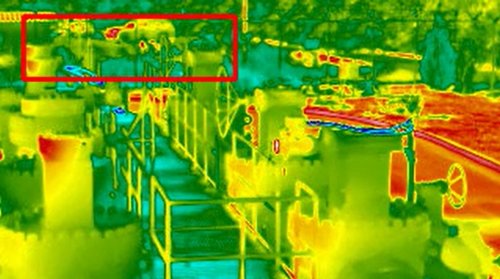
    In 2025, a public corporation in South Korea responsible for domestic LNG operations introduced the Flir GF77a optical gas imaging (OGI) camera to strengthen methane leak monitoring at the pressure regulation facilities of the Boryeong LNG Terminal.


    The solution combined real-time OGI video with an AI-based plume detection engine to support safer, more effective monitoring particularly in outdoor, unmanned environments where conventional sensors can be less reliable.

    The challenge: outdoor equipment + unmanned monitoring

    LNG pressure regulation facilities are mission-critical and can be vulnerable to leakage risks. While fixed gas sensors were already installed on site, the operator faced an ongoing challenge with remote, unmanned management—especially outdoors.

    As the facility manager explained:

    “LNG pressure regulation facilities are extremely critical yet prone to leakage risks. While gas sensors are installed on-site for operation, unmanned remote management posed a problem: the equipment is installed outdoors, reducing the likelihood of gas sensors detecting leaks if they occur. While seeking ways to further improve overall leak monitoring and safety for outdoor gas pressure regulation equipment, we discovered that the Flir OGI camera could detect gas leaks at an early stage.”

    The approach: validate methane visibility before full deployment

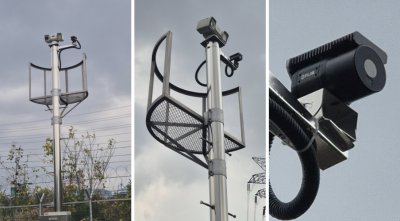
    Pole-mounted gas leak monitoring cameras at an outdoor LNG pressure regulation facility.

    Before installing the system at the LNG pressure regulation site, the team conducted an on-site test by intentionally releasing a sample methane gas to validate performance. The Flir GF77a—optimised specifically for methane detection—enabled the operator to observe the gas release pattern immediately on a monitor. Following the successful trial, the customer installed the GF77a alongside the existing CCTV infrastructure.

    Solution deployment: Flir GF77a + AI-based gas leak detection

    Installation location

    1. Field of view covering the entire outdoor pressure regulation facility

    2. Network-based installation, similar to CCTV (leveraging existing structures)

    Operating workflow

    1. The GF77a transmits real-time OGI video

    2. An AI analysis engine detects leak/plume patterns automatically

    3. Alarms are triggered and events are logged when a leak is detected

    4. Operators respond immediately based on site procedures and the situation


    Outcomes: wider coverage, faster awareness, lower complexity

    By adopting Flir’s visual gas detection approach, the customer strengthened monitoring across a wide area without deploying multiple cameras. Because the solution could be integrated with existing CCTV infrastructure, the operator avoided additional structures—helping to reduce overall installation complexity and cost.

    Compared with conventional sensor-only approaches, the solution also enabled visualisation-based monitoring over a broader area, supporting earlier awareness of potential risk indicators. As an AI-powered, image-based monitoring layer that complements existing sensors, the system improved surveillance capability for outdoor, unmanned LNG pressure regulation facilities.

    Operator perspective and continuous improvement

    The facility manager noted both the operational value and the roadmap for refinement:

    “We expect that applying both the AI-based gas detection system and the OGI camera system will enable more effective gas leak detection operations. While there are areas for improvement, such as sensitivity adjustment and environmental impact correction in the method of detecting gas leaks and visualizing their patterns, we clearly see the advantage of enhancing detection performance while supplementing existing measurement methods. Although it is in the early stages of installation, we expect it to help prevent safety accidents before they occur.”

    Next steps

    Looking ahead, the customer plans to:

    • Advance AI models tailored to site-specific conditions

    • Expand monitoring to broader sections for integrated facility-wide oversight

    • Extend automation capabilities across additional gas equipment types

    Conclusion

    This case demonstrates how Flir OGI cameras paired with AI plume detection can complement traditional sensor systems and raise the standard for intelligent, visual methane leak detection—supporting safer, smarter operations in LNG pressure regulation environments.

  • Jeanologia urges industry to accelerate PP Spray phase-out following ZDHC Watchlist update

    Since 2015, Jeanologia has set the standard with laser, Light Bright and G2 Ozone technologies, achieving authentic vintage effects in denim without chemical spraying.

     Valencia (Feb 17). Potassium permanganate has officially entered the Chemical Watchlist of the ZDHC Foundation, signaling increased scrutiny and potential phase-out of one of the most hazardous chemicals still used in denim finishing. The inclusion confirms an industry shift that Jeanologia anticipated more than a decade ago.

     For years, Jeanologia has called for the elimination of PP spray, warning about its impact on worker health, operational safety and the environment. Now, the industry is formally acknowledging what has been evident on factory floors worldwide.

     PP spray is commonly used to create localized vintage effects in denim, but it exposes operators to chemical micro-particles and presents serious occupational risks. Despite growing awareness and available alternatives, this practice continues to be used in parts of the industry. According to Jeanologia, millions of workers globally are still affected by this process.

     Jeanologia eliminated the need for PP spray in 2015, becoming the first technology provider to offer a scalable industrial alternative through laser-based finishing. Today, the company replaces PP spray through its laser technology with Light Bright tool and combined with G2 Ozone technology, delivering authentic vintage effects without chemical spraying. The solution offers full digital control, safer working conditions and reliable industrial performance.

     This approach is reinforced by Jeanologia’s Environmental Impact Measuring (EIM) platform. In its Innovations and Challenges in Denim Finishing 2024 Report, EIM identifies potassium permanganate as one of the remaining high-risk processes in garment finishing and highlights the urgent need for safer technologies, reinforcing laser-based solutions as a low-impact alternative.

     “PP spray belongs to the past. This is not about compliance; it’s about protecting people and transforming the way denim is made. The tools to eliminate PP already exist and are fully scalable. What the industry needs now is courage to move forward. It’s time to BAN

      PP SPRAY and embrace a cleaner, safer future for denim.” claims Jeanologia’s Global Marketing Director Carmen Silla.

     Over the past decade, Jeanologia has progressively replaced the most hazardous denim finishing processes with eco-efficient technologies, becoming the first company to eliminate sandblasting and to advance alternatives to stone washing, manual scraping and PP spray. Today, its laser and G2 Ozone technologies are implemented worldwide, enabling denim brands to achieve the same aesthetic results while improving worker safety, reducing chemical use and lowering water consumption, with measurable impact across global production.

     As transparency requirements, ESG reporting frameworks and chemical management standards continue to evolve, early adoption of safer technologies is increasingly becoming a competitive advantage. Jeanologia calls on brands, laundries and manufacturers to accelerate the transition toward chemical-free finishing. The technology exists. The transition is achievable. The time to act is now. BAN PP SPRAY is no longer a vision. It is already an industrial reality.

  • PEAK by HMS Networks – New look, proven strengths remain

    PEAK by HMS Networks – New look, proven strengths remain HMS Networks integrates PEAK as a product brand Since fall 2024, PEAK-System Technik GmbH has been part of the HMS Networks Group. Now, in early 2026, it is time for the next logical step in this integration as PEAK visually becomes a product brand of the HMS family. For customers and partners, this shows direction, clarity, and continuity – because PEAK’s key values, products, and contacts remain unchanged.

    Darmstadt, Germany – Feb 17:


    One shared look – with a clear origin


    PEAK’s visual appearance now follows the design of HMS Networks, making it clear that the pioneering PEAK products now have the solid backing of Industrial ICT leader HMS Networks. The previously dominant colors red and black are replaced by the established HMS colors blue and white.


    A central element is the PEAK logo. It keeps its distinctive, recognizable outline while being clearly linked to the group through the addition “by HMS Networks”. This way, the PEAK brand remains clearly identifiable and at the same time benefits from the strong HMS backing. Globally known Industrial ICT product brands are already united under this umbrella, such as Anybus, Ewon, Intesis, Red Lion, N-Tron, Owasys, and Ixxat.

    PEAK by HMS Networks: The visual appearance of the PEAK brand keeps its distinctive, recognizable outline while being clearly linked to the group through the addition “by HMS Networks”.

    Why this step makes sense


    The visual integration of the PEAK brand is a natural continuation of the acquisition in 2024. Through the merger, PEAK has already gained access to global development resources, extensive know-how, and the financial stability and independence of the HMS Networks Group. At the same time, customers benefit from HMS Networks’ worldwide sales and service network, which makes it easier to access PEAK products and other solutions from HMS.


    “A unified brand appearance helps customers find their way faster and understand connections more clearly and intuitively – especially in a technologically complex environment like ours,” explains Christian Adolph, Director Marketing, Business Development & Technical Support. “That PEAK also visually is now part of HMS reflects exactly that: a strong brand with its own identity and recognition, embedded in a group that stands for reliability, stability, and long-term perspectives.”

    Christian Adolph, Director Marketing, Business Development & Technical Support.

    Aiming for future growth


    With the updated look, PEAK and HMS Networks underline their commitment to offering customers secure, high-performance, and future-proof hardware and software for Automotive, Medical, and Industrial Communication.


    “‘#1 Choice for Engineers’ remains our top priority and our central guiding principle,” adds Adolph. “We will communicate this message together with the fresh look repeatedly in the coming months and make it visible through campaigns. Because PEAK remains PEAK – but now clearly visible as part of HMS Networks.”


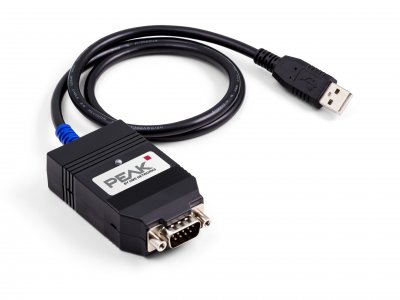
    A new product in a fresh guise: The PCAN-USB XL is one of the latest product releases of PEAK by HMS Networks. With the CAN XL technology inside and the new PEAK logo outside it is ready for the future!

  • Bill Gates, CM Chandrababu Inspect RTGS Centre, Review Tech in Governance

    Amaravati, Feb 16: The Chief Minister, Mr. Chandrababu Naidu, on Monday explained in detail to the Gates Foundation Chairman, Mr. Bill Gates, who is on a visit to Amaravati, how faster civic services are being provided and the results being achieved through Real Time Governance.

    Mr. Bill Gates asked how Data Lake, Aware 2.0, WhatsApp Governance, Sanjeevani project and the capital Amaravati projects are functioning. He also inspected the presentations on the display walls in the RTGS during which Mr. Chandrababu briefed Mr. Bill Gates that all the Government wings are interconnected with Data Lake.

    Mr. Bill Gates appreciated the efforts being made to simplify the citizen services through Data Lake and WhatsApp governance. The Chief Minister also informed Mr. Bill Gates that Real Time information is being gathered through Aware 2.0 following which decisions are being taken faster.

    Also, Mr. Bill Gates examined the way the State Government is gathering public opinion on the implementation of various schemes and policies. Mr. Chandrababu told Mr. Gates that the growth of the GSDP is being assessed regularly through Key Performance Indicators.

    When Mr. Bill Gates asked about the steps being taken for the safety and security of the property records, the officials informed him that land records are being preserved with the help of Black Chain Technology and similarly steps are being taken to ensure transparency with policies such as QR Codes for land records.

    While Mr. Gates termed the tax collection system as amazing, Mr. Chandrababu informed him that the tax collection in the country has increased significantly with the GST system. Mr. Bill Gates inquired about the implementation of the Sanjeevani project, which is being run in Chittoor district with the support of the Gates Foundation and also asked how the details of tests like blood pressure and diabetes are being recorded.

    Expressing deep satisfaction over the functioning of the Sanjeevani project at Kuppam commenting that ‘It is nice.” The officials explained that they are providing advice to the patients on their lifestyle and diet based on their digital health records. Mr. Chandrababu said that they are planning to take further steps to improve public health services by using AI which Mr. Bill Gates praised as ‘Great’. Mr. Gates felt that if diagnostic services are made available at a lower cost, it will further help the poor.

    Mr. Bill Gates also inquired about the progress of the ongoing construction works in the people’s capital of Amaravati and felt that 30 per cent green and blue plan is good in Amaravati. When Mr. Chandrababu explained in detail to Mr. Bill Gates the ongoing construction works in the capital, the Gates Foundation chairman responded terming it as ‘Great Work.”

  • UiPath Acquires WorkFusion to Boost Agentic AI in Financial Services

    India, Feb 16 :UiPath a global leader in agentic automation, today announced the acquisition of WorkFusion, a pioneer in AI agents for financial crime compliance. The acquisition expands and strengthens the UiPath portfolio of agentic AI-powered industry solutions for the financial services and banking industries, including processes and workflows for financial crimes compliance such as anti-money laundering and know your customer operations.

    WorkFusion’s pre-built library of AI agents automates the most labor-intensive aspects of financial crime compliance, from customer screening to investigations. Coupled with UiPath’s agentic automation and orchestration platform, banks and financial institutions can automate intricate workflows, analyze complex patterns, and help prioritize cases requiring human expertise, while maintaining the security, governance, and regulatory controls they require to reduce operational costs and improve compliance effectiveness.

    “Joining UiPath is a moment of validation for the years our team has poured into creating something bold, different, and deeply needed in financial crime compliance, AI agents that automate work and mitigate risk,”

    Adam Famularo, CEO of WorkFusion.

    “Now, UiPath gives us the scale to grow faster than we ever could alone, without losing the heart of who we are, our people, our products, and our mission. Together, we’re creating something bigger than any one company: we are modernizing financial crime compliance. I’ve never been more excited for our future or more proud of the team carrying us there.”

    “Financial institutions need intelligent solutions to combat sophisticated financial crimes and navigate evolving compliance requirements,”

    Daniel Dines, CEO of UiPath.

    “Incorporating WorkFusion’s purpose-built AI agents for financial crime compliance into our platform expands our portfolio of agentic AI solutions for these industries, extending our ability to deliver comprehensive business orchestration and automation solutions to our customers. We’re delivering a powerful set of AI-powered solutions capable of automating and orchestrating critical compliance processes and workflows while working alongside people to deliver impact.”