
Bengaluru, Dec 8: Indo–Italian experts from India, Italy, Malaysia, and Singapore convened in Bengaluru for the Indo–Italian Consensus Meet on Sarcoma and Complex Orthopaedic Reconstruction, held on December 5th & 6th at Bengaluru. The two-day conference, is a collaborative medical conference organised by the Global Healthcare Academy, focusing on paediatric/adult sarcoma care, complex reconstructions, 3D printing, regenerative medicine, and precision orthopaedic oncology via expert panels and hands-on workshops.
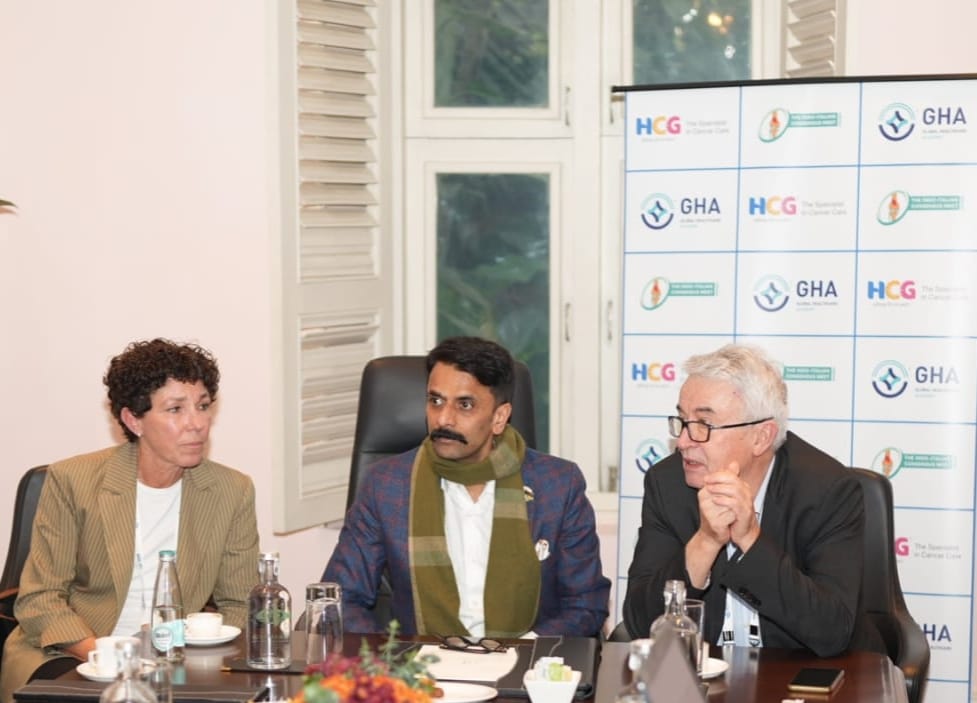
Experts at the meet advised that late detection, misdiagnosis, and gaps in national cancer policy continue to cost young lives and limbs. The conference, themed “Sarcoma Advances, Genomics & Immunotherapy,” brought together more than 200 leading specialists in orthopedics, oncology, paediatric oncology, radiology, and reconstructive surgery for high-level discussions, live demonstrations, and consensus building on clinical protocols.
The deliberations were led by eminent global faculty, including Dr. B.S. Ajaikumar, Founder & Chairman, HealthCare Global Enterprises Ltd; Dr. Pramod Chinder, Orthopaedic Surgeon and Group Director – Orthopaedic Oncology, HCG Cancer Centre; Dr. Marco Manfrini, Orthopaedic Surgeon, Istituto Ortopedico Rizzoli, Bologna; Dr. Laura Campanacci, Musculoskeletal Oncology, Istituto Ortopedico Rizzoli, Bologna; as well as keynote speakers Dr. Vivek Ajit Singh, Professor and Head of Orthopaedic Oncology, University Malaya, and Dr. Kumaran Rasappan, Adjunct Assistant Professor, National University of Singapore.
Dr. B. S. AjaiKumar, Founder & Chairman, HealthCare Global Enterprises Ltd said that
“Sarcomas are preventable when diagnosed early and treated the right way, the first time. The Indo-Italian Consensus Meet marks an important milestone in bringing together global expertise to complement and strengthen our standards of care. By increasing awareness, ensuring rapid access to MRI, and establishing a national Sarcoma Registry, we can enable timely diagnosis, higher limb-salvage rates, and equitable care for patients across India – whether they live in Bengaluru or in a small rural town. The central goal in sarcoma management is to prevent recurrence. This is only possible when every patient – child or adult – receives evidence-based, multidisciplinary, first-time-right treatment. Over several decades, HCG has built one of the largest sarcoma programs in the country. Our experience – particularly that of Dr. Pramod Chinder, who has treated more than 5,000 sarcoma cases – shows that these cancers can be definitively treated with strong long-term outcomes when handled correctly from the outset.
While international protocols provide a basic scientific platform, our true strength lies in making these guidelines patient-centric and India-specific. We refine them using our own extensive clinical data, high case volumes, and deep understanding of disease patterns unique to Indian patients. With the integration of genomics, precision diagnostics, and innovative treatment planning, we continue to improve outcomes and ensure that no patient is denied the chance of a cure.”
He further added that
“One of the most compelling examples of what timely, expert, multidisciplinary care can achieve is the limb-saving surgery Dr. Pramod performed on a 20-day-old newborn – an outcome that reflects the level of expertise now available in our country and underscores what is possible with the right approach. With continued collaboration, scientific rigor, and a national commitment to early detection, we can significantly reduce recurrence rates and ensure that every sarcoma patient – child, adolescent, or adult – receives world-class, first-time-right care.
Imagine a young person waking night after night with leg pain, dismissed as growing pain or a sports injury – until scans finally reveal bone cancer. This is the reality we must change. It reinforces why early diagnosis and timely, first-time-right treatment are absolutely critical.”
Experts highlighted that sarcomas are often diagnosed late in India, particularly in children, because early signs are frequently overlooked by parents and primary care physicians. Symptoms such as swelling around the knees or shoulders or persistent pain are commonly mistaken for minor injuries, leading to avoidable delays. Population-based cancer registry data reinforce this concern, showing that 68% of Ewing Sarcoma cases occur in the 0–19 age group, with the highest incidence in children aged 10–14 years.
Parents are advised to watch for red flags such as persistent bone pain for weeks, night pain, a growing lump or swelling, limping or reduced mobility, fractures from minor injuries, and unexplained fever, weight loss, or fatigue. These symptoms warrant immediate medical evaluation.
Dr. Pramod S. Chinder, Orthopaedic Surgeon, Group Director – Orthopaedic Oncology, HCG Cancer Hospital, said:
“The biggest tragedy in sarcoma care is when a child loses a limb simply because the first surgery was not done right. Early MRI, correct biopsy, and a multidisciplinary approach are non-negotiable. Our collaboration with leaders from the Rizzoli Orthopaedic Institute, Italy, brings world-class limb-salvage techniques, 3D-printed implants, and precision navigation to Indian practice.”
He further added that this partnership will directly strengthen clinical pathways, reduce misdiagnosis, and help save more limbs and more childhoods across India. Over 15 years, “We have managed more than 6,000 bone tumours, including up to 3,000 sarcomas, and our experience shows one clear truth that sarcomas are highly curable when treated correctly the first time. With proper chemotherapy, high-quality limb-salvage surgery, and standardised reconstruction, long-term survival exceeds 70%, and our survivors go on to become doctors, engineers, entrepreneurs, and athletes.”
In India, cancers affecting the bones and muscles make up only about 1% of all cancers, making them among the rarest forms; yet they are nearly 70% curable when diagnosed early and treated appropriately, especially in children. The Indo–Italian collaboration holds particular significance as India’s policy framework for bone and muscle sarcomas is still evolving, while Italy’s sarcoma program is widely regarded as a global gold standard.
According to Dr. B. S. AjaiKumar, this conference marks a Significant step toward developing an organized Sarcoma Registry for India, a crucial requirement in today’s AI-driven healthcare era, where accurate data and precision-guided care can significantly improve survival outcomes.
Specialists cautioned that sarcoma outcomes worsen when the first surgery is performed incorrectly, often due to swelling being mistaken for infection or a harmless lesion. Such errors can lead to improper incisions or incomplete tumour removal, severely limiting limb-salvage options.
The meet highlighted advanced technologies transforming sarcoma care, including robotic navigation, 3D-printed implants, targeted chemotherapy, and image-guided minimally invasive treatments. Experts noted that these innovations, supported by genomics and immunotherapy, are dramatically improving limb-salvage success.
Despite being highly treatable when diagnosed early, sarcomas remain excluded from most public health schemes, leaving families with significant financial burdens. Experts called for insurance coverage, wider MRI access, regional referral centres, and a mandatory national Sarcoma Registry to improve timely, equitable care.