
Baghdad/Damascus,May 4 (BNP): In a major strategic shift, Iraq has resumed oil exports through Syria after more than a decade, as ongoing conflict has severely disrupted shipments through the Strait of Hormuz—one of the world’s most critical energy corridors.
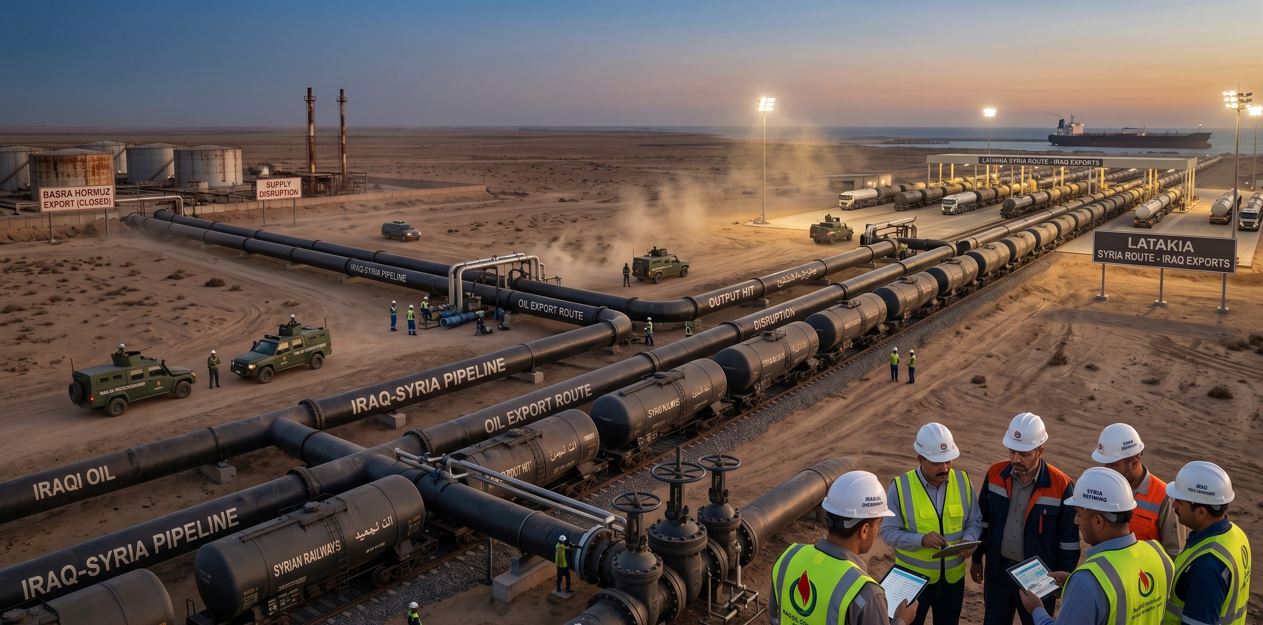
The move comes as Iraq grapples with what analysts describe as one of the largest energy supply disruptions in decades. While the Strait of Hormuz remains technically open, military tensions and heightened security risks have effectively curtailed tanker movement, forcing Baghdad to seek alternative export routes.
Alternative Export Route
In response, Iraqi crude is now being transported overland via tanker trucks through key border crossings into Syria, before reaching the Mediterranean port of Baniyas for onward shipment to global markets. Initial convoys have included hundreds of tankers, marking the beginning of a critical land-based export corridor.
Revival of Strategic Infrastructure
Authorities in both countries are also evaluating the revival of the historic Kirkuk–Baniyas pipeline, along with proposals for new pipelines linking Iraqi oilfields directly to the Mediterranean. However, these projects are expected to take years to materialize.
Impact on Production and Economy
The disruption in Hormuz has dealt a severe blow to Iraq’s oil-dependent economy. Production has fallen sharply—from over 3–4 million barrels per day (bpd) before the crisis to nearly 1.3–1.5 million bpd—due to storage constraints and export bottlenecks.
With nearly 90% of government revenue tied to oil, the crisis has significantly strained state finances, prompting urgent measures to diversify export routes and stabilize supply chains.
Strategic Implications
The resumption of exports via Syria marks a significant geopolitical and economic shift, reviving a corridor that had remained largely inactive since the early 2000s. The move not only underscores Iraq’s vulnerability to maritime chokepoints but also highlights the growing importance of alternative energy transit routes amid regional instability.
As the situation evolves, global markets remain on edge, with energy security and supply stability emerging as key concerns.
Further developments are expected as Iraq expands its contingency export strategies and monitors the situation in the Strait of Hormuz.
