Blog

  • SIPs and Equities Dominate 80 pc of Digital Investors’ Wealth in India

    New Delhi, June 23: Systematic Investment Plans (SIPs) and equities together account for nearly 80% of the wealth held by digital investors in India, according to a recent report.

    The findings highlight a strong preference among retail investors for market-linked instruments, reflecting growing financial awareness and increasing participation in capital markets through digital platforms.

    The report notes that SIPs have become a key entry point for long-term wealth creation, particularly among young and first-time investors. Equities, meanwhile, continue to attract significant interest due to their potential for higher returns compared to traditional savings instruments.

    Experts attribute this trend to rising financial literacy, easier access to digital investment platforms, and a shift in investor behaviour towards disciplined, long-term investing. The growing adoption of fintech solutions has also made investing more convenient and transparent.

    Analysts believe this shift indicates a structural change in India’s investment landscape, with more individuals moving away from traditional savings and toward diversified, market-linked portfolios.

    Overall, the report underscores the increasing dominance of SIPs and equities in shaping the wealth-building strategies of India’s digital investor base.

  • Bhagwati Products Crosses INR 17,000 Crore Revenue Milestone, Advances Vision to Build India’s Electronics Design Platform

    Bengaluru, June 23: Bhagwati Products Limited has crossed the INR 17,000 crore revenue milestone, marking a significant step in the company’s growth journey and reflecting the momentum created by its expanding manufacturing footprint, strong position in the smartphone ecosystem, and growing capabilities across the electronics value chain. The milestone builds on a period of rapid growth for the company, with revenues increasing nearly tenfold from approximately Rs 620 crore in FY24 to Rs 6,200 crore in FY25, underscoring the pace at which the business has scaled over the past two years.

    The smartphone business continues to be the company’s largest revenue driver. With the capacity to manufacture up to 40 million smartphones annually, Bhagwati Products serves leading global brands including Vivo, OPPO and Lenovo. The Rs 17,000 crore milestone has been supported by the continued expansion of its manufacturing capabilities, particularly the scale-up of SMT and FATP lines, enabling higher throughput and greater flexibility across product categories. Beyond smartphones, the company is steadily expanding its presence across adjacent categories such as tablets and TWS devices, strengthening its participation in fast-growing segments of the consumer electronics market.

    The milestone also reflects Bhagwati Products’ evolution beyond large-scale manufacturing. The company is steadily building capabilities across design, engineering, components and advanced manufacturing, creating a more integrated electronics platform that supports both current growth opportunities and future technology categories.

    Commenting on the milestone, Rahul Sharma, Co-Founder, Bhagwati Products Limited, said,

    “Our ambition is to build India’s leading Electronics Design Platform. We believe India’s opportunity lies not just in manufacturing products at scale, but in building deep capabilities in design, engineering, components and advanced manufacturing. By strengthening design-led innovation and integrating global technology capabilities into India, we aim to enable global brands to scale with confidence while positioning India as a stronger force in the global electronics value chain.”

    The company has established capabilities across electronics manufacturing services (EMS), memory technologies and tooling. It is also evaluating opportunities in deep-tech and semiconductor-linked investments as part of its broader strategy to strengthen domestic value addition and build deeper capabilities across the electronics value chain.

    The company’s partnership with Huaqin has been another important growth catalyst. Through its 51:49 joint venture with the global ODM leader, Bhagwati Products has strengthened its product development, engineering and manufacturing capabilities while enhancing its ability to scale alongside global brands. The partnership played a key role in supporting the company’s rapid ramp-up in FY25, when revenues grew tenfold to Rs 6,200 crore, and helped accelerate orders across smartphones and connected devices. Beyond supporting scale, the joint venture has also reinforced Bhagwati Products’ transition towards a more integrated electronics platform with stronger design and technology capabilities.

    The company is now preparing to build a significant presence in IT hardware and computing, which it sees as a major near-term opportunity. Automotive electronics is expected to emerge as another key growth engine as vehicles become increasingly connected, software-driven and electronics intensive.

    Looking ahead, as India’s electronics manufacturing landscape continues to evolve, Bhagwati Products is positioning itself not just as a high-scale manufacturer, but as a broader electronics platform with capabilities spanning design, engineering, manufacturing, components, memory, and semiconductor-linked technologies. The Rs 17,000 crore milestone reflects both the scale the company has achieved today and the foundation it is creating for its next phase of growth.
  • India–Russia Eastern Sea Route Gains Strategic Importance Amid West Asia Crisis

    New Delhi, June 23: The India–Russia eastern sea route is gaining increased importance amid ongoing geopolitical tensions in West Asia, with shifting global trade patterns prompting renewed focus on alternative shipping corridors.

    The development comes as disruptions and uncertainty in key West Asia-linked maritime routes continue to impact global supply chains. In this context, the eastern sea route between India and Russia is emerging as a more stable and strategically viable option for trade and energy movement.

    Industry observers note that the route is likely to play a key role in ensuring continuity of shipments, particularly in sectors such as energy, commodities, and industrial goods. The corridor is also being viewed as part of broader efforts by countries to diversify trade routes and reduce reliance on geopolitically sensitive passages.

    Experts believe the increased significance of this route reflects a wider global trend of strengthening resilient and alternative supply chains to safeguard against geopolitical risks.

    The development underscores the evolving nature of international trade logistics amid ongoing global uncertainties.

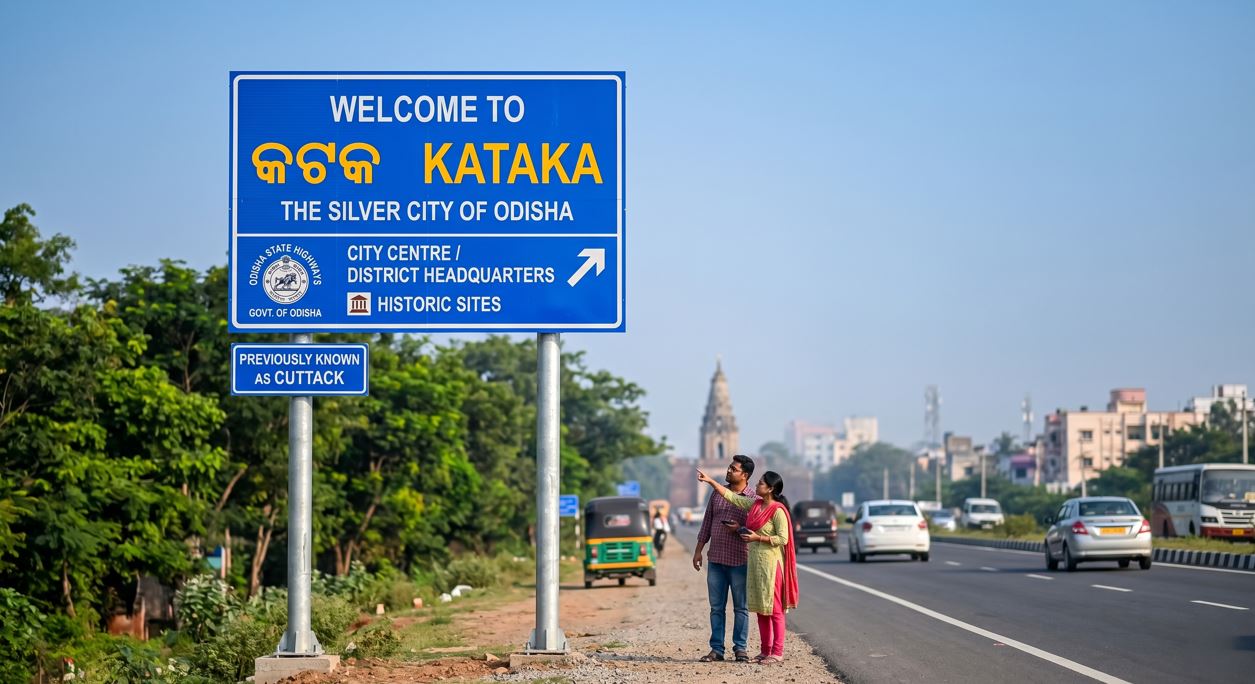
  • Odisha Updates English Spellings of Key Cities and Towns to Reflect Authentic Odia Pronunciation

    Bhubaneswar, June 23 (UDN): The Odisha Government has officially notified revised English spellings for several districts, towns, and administrative blocks across the state in an effort to better align them with their original Odia pronunciation and linguistic roots.

    Odisha Updates English Spellings of Key Cities and Towns to Reflect Authentic Odia Pronunciation

    Representational image

    Under the updated nomenclature, several prominent place names will now be represented in official English records as follows: Cuttack will be spelt as Kataka, Balasore as Baleshwar, Berhampur as Brahmapur, Khurda as Khordha, and Rourkela as Raurkela.

    Officials said the decision has been taken to preserve Odisha’s linguistic heritage and ensure that government records, signage, and official communications more accurately reflect the authentic Odia names of places.

    The revised spellings will be implemented across administrative documents, maps, and public communication systems in a phased manner by various government departments.

    The move is expected to strengthen cultural identity and promote uniformity in the representation of place names across official platforms.

    The government has not commented on public reactions yet, though the decision is likely to generate discussions among residents, historians, and language experts on its cultural and practical implications.

  • Preventive Health Measures Could Deliver Massive Global Savings: WEF

    New Delhi, June 23, 2026: Investing in simple preventive healthcare measures could help the world save nearly USD 6 trillion by 2040, according to a World Economic Forum (WEF) report.

    The report highlights that shifting focus from treating diseases to preventing them can significantly reduce long-term healthcare costs while improving overall public health outcomes. It notes that early diagnosis, routine health check-ups, vaccinations, healthier lifestyles, and timely medical interventions can help avoid the progression of serious and costly illnesses.

    According to the findings, a large share of global healthcare expenditure is driven by chronic conditions such as diabetes, cardiovascular diseases, and respiratory disorders. Many of these conditions can be managed more effectively—or even prevented—through early action and consistent primary healthcare support.

    The WEF report further emphasizes that preventive healthcare not only reduces pressure on healthcare systems but also improves workforce productivity and quality of life. Healthier populations are likely to contribute more effectively to economic growth, reducing absenteeism and long-term medical dependency.

    Experts suggest that stronger primary healthcare networks, increased public awareness, and greater investment in digital health tools such as telemedicine and early screening technologies will be key to achieving these outcomes.

    The report also calls for collaboration between governments, private sector players, and healthcare providers to build systems that prioritize prevention alongside treatment.

    Overall, the findings underline a clear message: investing in preventive healthcare today could lead to substantial economic savings and healthier societies in the decades ahead.

  • Gold and Silver Prices Decline Up to 3 pc Amid US Fed Rate Hike Concerns

    New Delhi, June 23: Gold and silver prices fell by up to 3% amid growing concerns over a possible interest rate hike by the US Federal Reserve, which has weighed on investor sentiment in global bullion markets.

    The decline reflects increased caution among investors, as expectations of higher interest rates tend to strengthen the US dollar and reduce the appeal of non-yielding assets such as gold and silver.

    Market analysts said precious metals came under pressure as traders reassessed their positions in response to evolving monetary policy signals from the US central bank. A stronger dollar and higher bond yields typically reduce demand for safe-haven assets like bullion.

    Despite the short-term decline, experts noted that gold and silver continue to remain important hedging instruments amid ongoing global economic uncertainties, including inflation risks and geopolitical tensions.

    Traders are closely watching upcoming US economic data and Federal Reserve commentary for further cues on the interest rate trajectory, which is expected to influence bullion prices in the near term.

    Overall, the precious metals market remained under pressure as global investors adjusted expectations around US monetary policy.

  • Odisha Vigilance Raids Seven Locations Linked to Sambalpur CADA Executive Engineer in DA Case

    Bhubaneswar, June 23 (UDN): Odisha Vigilance on Tuesday launched simultaneous searches at seven locations associated with Padmalochan Nayak, Executive Engineer of the Command Area Development Authority (CADA), Sambalpur Division, over allegations of possessing assets disproportionate to his known sources of income.

    Odisha Vigilance Raids Seven Locations Linked to Sambalpur CADA Executive Engineer in DA Case

    Acting on allegations of amassing disproportionate assets, Vigilance officials conducted the raids on the strength of search warrants issued by the Special Vigilance Judge, Sambalpur.

    The search operation is being carried out by a team comprising four Deputy Superintendents of Police (DSPs), 13 Inspectors, seven Assistant Sub-Inspectors (ASIs), and other supporting staff.

    The simultaneous raids are underway at Nayak’s rented residence at Dhanupali in Sambalpur, his triple-storeyed residential building at Bidyadharpur in Cuttack, and a double-storeyed house at Mukhalis under Basta police limits in Balasore district.

    In addition, Vigilance officials are also conducting searches at Nayak’s office chamber in Dhanupali, two premises linked to his associates in Cuttack city, and another property associated with one of his associates at Kalimela in Malkangiri district.

    During the searches, officials are verifying documents related to movable and immovable assets, bank deposits, investments and other financial transactions to ascertain whether the assets are disproportionate to Nayak’s known sources of income.

    Further details regarding the assets unearthed during the raids are awaited as the searches are still in progress.

  • Fatal Fire Breaks Out at Pharma City Chemical Plant Near Vizag

    Visakhapatnam, June 23: Two people were killed after a fire broke out at a chemical factory located in Pharma City near Visakhapatnam, officials said on Monday.

    The incident occurred at a manufacturing unit within the industrial zone, leading to an emergency response by fire services and other rescue teams. Efforts were made to bring the blaze under control and prevent it from spreading to nearby facilities.

    Authorities confirmed that two fatalities were reported in the incident, while further details regarding injuries or the exact cause of the fire are yet to be officially released. An investigation has been initiated to determine the circumstances that led to the accident.

    Emergency teams were deployed immediately, and safety measures were intensified in surrounding industrial units as a precautionary step.

    Officials said a detailed probe will be conducted to assess compliance with safety norms and prevent such incidents in the future.

    The situation is now under control, and further updates are expected as the investigation progresses.

  • Northern Railways, Indus Towers Boost Women’s Hygiene Access

    New Delhi, June 23: Northern Railways, in collaboration with Indus Towers, has strengthened access to women’s hygiene facilities across 175 railway stations, marking a significant step towards improving sanitation and passenger comfort.

    The initiative focuses on enhancing hygiene infrastructure for women travellers by improving availability and accessibility of clean and safe sanitation facilities at key railway stations. The project aims to ensure better hygiene standards, especially for women passengers during long-distance and daily travel.

    Officials said the collaboration reflects a broader commitment to improving passenger amenities and promoting inclusive infrastructure across the railway network. By prioritising women’s hygiene needs, the initiative seeks to create a safer and more comfortable travel experience for female passengers.

    The partnership between Northern Railways and Indus Towers is part of ongoing efforts to modernise railway infrastructure and align it with improved public health and hygiene standards. It also supports the larger goal of making railway stations more inclusive and passenger-friendly.

    Authorities added that continued focus on sanitation and passenger welfare will remain a key priority in upcoming infrastructure upgrades across the railway system.

    The development underscores the growing emphasis on collaborative public-private efforts to enhance essential services and improve travel experiences across India’s railway network.

  • Digital Shift Accelerates in MSMEs with Rising AI Adoption

    New Delhi, June 23: Digital payment systems such as UPI and Aadhaar-enabled banking services now account for 61% of MSME transactions, highlighting the rapid shift towards digital financial ecosystems in India, according to a recent report.

    The findings underline the growing dependence of micro, small, and medium enterprises (MSMEs) on digital platforms for daily business operations, including payments, receipts, and financial management. The report notes that improved access to seamless and low-cost digital infrastructure has significantly boosted financial inclusion and operational efficiency across the sector.

    Alongside the rise in digital payments, the report also highlights a steady increase in artificial intelligence (AI) adoption among MSMEs. Businesses are increasingly leveraging AI-powered tools for customer engagement, inventory management, fraud detection, and data-driven decision-making.

    Experts say the combined growth of digital payments and AI adoption is transforming the MSME landscape, enabling greater transparency, faster transactions, and improved productivity. This shift is also helping smaller enterprises integrate more effectively into formal financial systems.

    The report further suggests that continued expansion of digital infrastructure, coupled with supportive policy measures, will play a crucial role in strengthening India’s MSME ecosystem and driving long-term economic growth.

    Overall, the findings reflect a significant digital transformation within the MSME sector, positioning it as a key driver of India’s evolving digital economy.