Blog

  • Cement Industry Set for Record Capacity Expansion; Utilisation Seen at 70–71 pc

    New Delhi, June 19: India’s cement sector is expected to witness record capacity additions in the coming period, which is likely to keep industry utilisation levels stable in the range of 70–71 per cent, according to a recent industry report.

    The report highlights that while cement demand continues to remain strong, supported by sustained infrastructure development, housing growth, and government-led capital expenditure, the simultaneous addition of new production capacities is expected to balance overall utilisation levels.

    Analysts noted that demand for cement remains robust, driven by ongoing construction activity across roads, railways, urban infrastructure, and housing projects. However, large-scale capacity expansions by major industry players are likely to prevent a sharp increase in utilisation rates in the near term.

    Despite this, the sector’s long-term outlook remains positive, with steady demand visibility supported by India’s infrastructure-led growth trajectory. Continued investments in construction and urban development are expected to sustain consumption momentum.

    Experts also believe that stable utilisation levels could help maintain pricing discipline in the market, thereby supporting profitability across key cement manufacturers. Efficient capacity planning and phased expansions are expected to ensure a balanced industry environment.

    Overall, the report indicates that India’s cement industry remains well-positioned to support the country’s ongoing economic and infrastructure development while maintaining operational stability.

  • Illinois Study: How Cracks in Dry Soil Impact Moisture Evaporation

    URBANA, Ill. – Soils that are exposed to prolonged drought often develop desiccation cracks, which impact soil properties and exacerbate moisture loss through evapotranspiration. A new study from the University of Illinois Urbana-Champaign examines the evolution of soil cracking and how cracks interact with storage and movement of water in the soil. The findings can help improve hydrological models essential for water management. 

    “As moisture evaporates from the soil, it induces stress. Once this stress exceeds the tensile strength of the soil, the soil breaks and desiccation cracks form. The cracks open additional surface area for moisture to transfer from the soil to the atmosphere, causing soil with cracks to become even drier,” said lead author Kristelle Dela Cruz, a doctoral student in the Department of Agricultural and Biological Engineering, part of the College of Agricultural, Consumer and Environmental Sciences and The Grainger College of Engineering at Illinois.

    Soils are generally described based on their texture and structure, explained co-author Maria Chu, professor in ABE. “Texture refers to the percentages of sand, silt, and clay that make up the soil. Structure describes how these different components are arranged into clumps or aggregates. When the soil cracks it affects the organization of components, changing the soil structure.” 

    The research team built a lysimeter – an instrument which measures the water balance of soil – to replicate field conditions in the lab. The lysimeter contained a column with one cubic foot of silt loess, a soil common in the U.S. Midwest. They added an environmental chamber with temperature control and a tile drain to allow for drainage flow.

    In the lysimeter, the researchers simulated heat wave conditions at 40 degrees Celsius and exposed the soil to multiple cycles of wetness and drying to mimic soil crack evolution. 

    “We cannot directly measure evaporation, but we can estimate the total loss of water from the soil by tracking the changes in weight through time, which can indicate the amount of water that has been lost from the system,” said co-author Jorge Guzman, research assistant professor in ABE.

    The researchers also attached a camera on top of the environmental chamber and monitored the propagation of cracks through time, measuring the area occupied by cracks relative to the total area of the soil surface. They correlated this information with the hydrologic variables observed from the subsurface and evaporation rate. 

    “Most hydrological models assume soil structure to be static, whereas we’re trying to determine how changes in soil structure affect the hydrologic variables over time. This will be helpful in assessing drought impacts, as well as the soil water availability,” Dela Cruz said.

    Once soil cracks have developed, they tend to remain stable over time if there is no intervention, permanently affecting the soil’s ability to retain moisture.

    “Soil without cracks is more protected against water loss. We can see from our data that the cracks accelerate the process of water transfer from the soil to the air. Then, the soil area that contacts the air becomes drier, and it changes the dynamic of how water redistributes in the soil. Eventually there is a decrease in evaporation, but that’s because the water is already gone,” Guzman explained.

    “While the experiment focused on bare soil, it will also be important to evaluate the impact of vegetation and transpiration from plants,” he added. “What happens once you have soil cracks and vegetation, and the soil and plants are competing for water?”

    The paper, “Desiccation cracks and their impacts on bare soil evaporation,” is published in Soil & Tillage Research [DOI: 10.1016/j.still.2026.107207].

     Research in the College of ACES is made possible in part by Hatch funding from USDA’s National Institute of Food and Agriculture. The study was also supported by a seed grant provided by the University of Illinois Urbana-Champaign Department of Agricultural and Biological Engineering and the University of Illinois Urbana-Champaign Campus Research Board.
  • Sambhav Launches First-Ever Sustainability E-Book for Students After Odisha Olympiad Success

    Bhubaneswar, June 19: In a pioneering step to promote environmental awareness among schoolchildren, Sambhav has launched a first-of-its-kind E-book on Survival and Sustainability following the successful completion of Odisha’s inaugural Olympiad on Survival and Sustainability in Bhubaneswar.

    The Olympiad was held at DAV Public School, Unit-8 Campus, and saw enthusiastic participation from 147 students representing both Odia- and English-medium schools from Bhubaneswar and Cuttack. The event highlighted growing interest among young learners in environmental issues and sustainable living practices.

    As a key outcome of the initiative, Sambhav introduced an interactive digital learning resource titled the “Info-Action Picture Book.” Available in both Odia and English, the E-book is designed to go beyond traditional learning formats by integrating concepts, practical insights, and activity-based guidance. It aims to encourage critical thinking, environmental awareness, and reduced screen dependency through experiential learning approaches.

    Students who emerged as winners of the Olympiad were felicitated with certificates and trophies during the 5th Memorial Programme of Padma Professor Radhamohan. In addition, each winner will receive an Experiential Learning Fellowship of ₹10,000, enabling hands-on exposure to nature-based learning and sustainability practices.

    Speaking on the occasion, noted environmentalist and Padma Shri awardee Sabarmatee said the initiative is intended to inspire children to become active environmental stewards rather than passive learners. She emphasized the importance of nurturing young minds that can think critically, act responsibly, and contribute to environmental protection.

    The E-book will be distributed across schools in Odisha to support environmental education and help students develop a deeper understanding of ecology and sustainability. Volunteers Tushar and Prapti, who were instrumental in the initiative, noted that the project aims to bridge classroom learning with real-world environmental action.

    Through this initiative, Sambhav hopes to nurture a generation of environmentally conscious students equipped with the knowledge, values, and skills needed to address future sustainability challenges.

  • Nifty IT Tumbles 6% Amid Global Tech Weakness

    Mumbai, June 19: Indian equity markets witnessed sharp pressure in the technology space on Thursday, with the Nifty IT index falling over 6 per cent after global IT major Accenture’s revised guidance dampened investor sentiment across the sector.

    The decline was driven by concerns over weakening demand outlook in global technology services, triggering a broad-based sell-off in Indian IT stocks. Market participants reacted negatively to the external cues, leading to heavy profit booking across major IT counters.

    Analysts noted that Accenture’s guidance revision has raised caution regarding near-term revenue visibility for the sector, especially for companies with significant exposure to international markets. The development also sparked weakness in related technology and export-oriented stocks.

    Despite the sharp correction in IT shares, broader market sentiment remained relatively stable, supported by strength in select defensive and financial stocks. However, IT remained the primary drag on benchmark indices during the session.

    Experts believe that while short-term volatility may persist in the sector, long-term fundamentals remain supported by digital transformation trends, enterprise technology spending, and outsourcing demand. Investors are expected to track upcoming global earnings and management commentary for further clarity on sector recovery.

    Market participants will continue to monitor global macroeconomic indicators, currency movement, and demand trends in key export markets, which are likely to influence near-term performance of the IT sector.

  • Thomas Cook India introduces industry-first cross-border rewards programme for its forex card customers

    Mumbai, June 19:As Indian travellers become increasingly digital-first in their spending behaviour, the way they pay overseas is evolving rapidly. From spending on daily essentials and transportation to swiping for experiences, dining, or shopping, travellers are increasingly choosing contactless and wallet-based payments over cash. However, while rewards programmes have become commonplace in India’s payments ecosystem, benefits linked to international prepaid forex card spends remain limited. Addressing this gap, Thomas Cook (India) Limited – India’s leading omnichannel foreign exchange services company, has introduced an industry-first cross-border rewards programme for customers using its forex cards, rewarding international spends on leading global brands.

    Under the programme, Thomas Cook’s Forex Cards customers will now enjoy 10% rewards-back on POS, contactless and e-commerce spends across  brands including Grab, 7-Eleven, Starbucks, McDonald’s, KFC, Careem and Burger King. Applicable on a minimum spend of USD 25 per merchant, customers can earn cashback of up to USD 10 per day across participating merchants, with rewards issued in the form of Amazon vouchers, subject to applicable terms and qualifying spend thresholds.

    The rewards programme is expected to drive greater usage of prepaid forex cards for everyday overseas purchases, encourage a shift from cash withdrawals to retail spends, and deepen customer engagement through repeat usage. By rewarding transactions across travel, dining and lifestyle categories, Thomas Cook India is further enhancing the value proposition of its forex cards for international travellers.

    Available across all Thomas Cook India’s Visa and Mastercard Forex Cards, the initiative complements the cards’ existing benefits, including multi-currency capabilities, global acceptance and integration with digital payment platforms such as Google Pay.

    Mr. Deepesh Varma, Chief Business Officer – Foreign Exchange, Thomas Cook (India) Limited, said,

    “International travellers today expect their payment solutions to be as seamless and rewarding as the travel experience itself. While prepaid forex cards are already a secure and cost-efficient way to manage overseas spending, we see a significant opportunity to drive greater usage for everyday purchases abroad. Our industry-first cross-border rewards programme has been designed to encourage customers to actively transact using their Borderless Travel Card across transport, dining, retail and lifestyle categories while earning meaningful benefits in return. The initiative also supports our broader objective of accelerating the shift from cash withdrawals to secure, contactless and digital-first payment solutions. Together with our recent expansion to 28 currencies, we are strengthening our Borderless Travel Card proposition to deliver greater convenience, value and flexibility for the globally mobile Indian traveller.”

  • Bharat Buildcon 2026 Inaugurated to Boost Construction Sector

    New Delhi, June 19: The government on Thursday inaugurated Bharat Buildcon 2026, a major industry platform aimed at deepening engagement and collaboration among builders, developers, and key stakeholders in the construction and infrastructure sector.

    The initiative seeks to bring together industry leaders, policymakers, and technical experts to exchange ideas, explore new technologies, and promote best practices in construction and urban development. Officials said the platform will help accelerate knowledge sharing and strengthen coordination within the rapidly growing infrastructure ecosystem.

    Bharat Buildcon 2026 is expected to focus on modern construction techniques, sustainable building practices, smart infrastructure solutions, and innovation-driven growth in the real estate and construction sectors. The event will also highlight opportunities for investment and partnership across housing, commercial development, and infrastructure projects.

    Government representatives emphasized that the construction sector plays a vital role in driving economic growth, generating employment, and supporting urban transformation. Strengthening industry interaction is expected to improve project efficiency, reduce delays, and enhance overall quality standards.

    From an economic perspective, increased collaboration within the construction ecosystem is likely to boost capital formation, stimulate demand across allied industries such as cement, steel, logistics, and engineering, and contribute to broader infrastructure-led growth.

    The government reiterated its commitment to fostering a transparent, efficient, and innovation-friendly environment for the construction sector, aligning with its vision of modern and sustainable urban development.


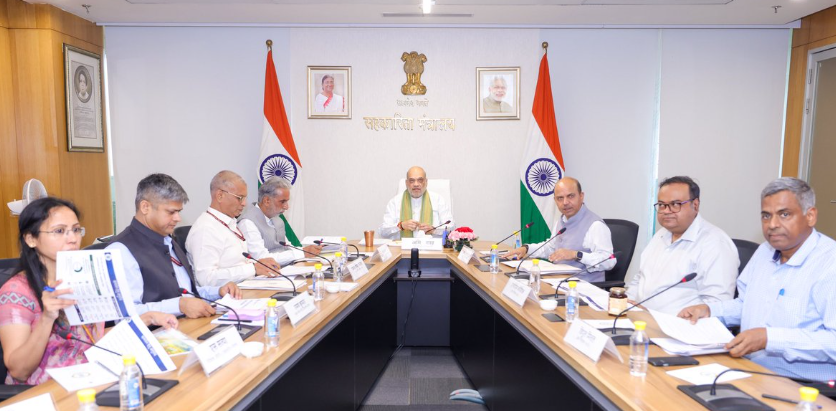
  • Amit Shah Reviews Steps to Strengthen Cooperative Banks and Boost Exports

    New Delhi, June 19: Union Home and Cooperation Minister Amit Shah on Thursday reviewed a set of ongoing measures aimed at strengthening the cooperative banking sector and enhancing India’s export competitiveness.

    Amit Shah Reviews Steps to Strengthen Cooperative Banks and Boost Exports

     Pic Credit: https://x.com/AmitShah

    The review focused on improving the financial stability, governance, and operational efficiency of cooperative banks, which play a key role in providing credit support at the grassroots level, especially in rural and semi-urban regions. Discussions also highlighted the need to deepen financial inclusion and expand the reach of cooperative institutions.

    Alongside this, the meeting assessed strategies to boost exports by improving global competitiveness, supporting diversification of export products, and ensuring better institutional coordination for trade promotion. Emphasis was placed on enabling stronger linkages between financial institutions and export-oriented industries.

    Officials noted that modernising the cooperative sector is essential to strengthening rural credit systems and supporting economic activity at the grassroots level. The Minister underlined the importance of ensuring transparency, accountability, and long-term sustainability within cooperative banking institutions.

    The review forms part of the government’s broader effort to reinforce the cooperative sector as a pillar of inclusive growth while simultaneously advancing India’s export-led economic expansion.

  • Kolkata Metro to Begin Early Morning Services on June 21 for Yoga Day and NEET-UG

    Kolkata, June 19: In a passenger-friendly move, Kolkata Metro Railway will commence services from 4:00 a.m. on June 21 to facilitate commuters on the occasion of International Yoga Day and the NEET-UG examination.

    The early start has been planned to ensure smooth and timely travel for students appearing for the national medical entrance examination, as well as participants attending Yoga Day events across the city. Officials said the decision aims to reduce travel stress and provide convenient connectivity during peak early morning hours.

    Metro authorities have advised passengers to plan their journeys in advance and make use of the additional services being introduced for the day. Security and operational arrangements will be strengthened to manage the expected rise in early morning footfall.

    The special schedule reflects Kolkata Metro’s continued focus on passenger convenience, particularly during important national events and examinations, ensuring reliable and efficient urban transport for the city’s commuters.

  • Strong Growth in Direct Taxes: Up 14.6 pc to INR 5.21 Lakh Crore

    New Delhi, June 19: India’s net direct tax collections have registered a robust growth of 14.6 per cent, reaching ₹5.21 lakh crore in the current financial period, signaling sustained economic momentum and improved compliance across taxpayer segments.

    The rise in collections has been supported by healthy advance tax inflows, steady corporate tax payments, and continued growth in personal income tax contributions. Officials said the performance reflects broad-based economic activity and strengthening financial discipline across sectors.

    The data highlights improving tax buoyancy, driven by higher corporate profitability, stable employment trends, and widening participation in the formal economy. Enhanced digital compliance systems and stronger enforcement measures have also contributed to better reporting and revenue realization.

    From a macroeconomic standpoint, the increase in direct tax collections is expected to strengthen the government’s fiscal position, providing greater flexibility to sustain capital expenditure, infrastructure development, and welfare spending without compromising fiscal prudence.

    Economists view the growth in tax revenues as a positive indicator of underlying economic resilience, suggesting steady demand conditions and improving income levels. The trend also reinforces investor confidence in India’s medium-term growth outlook.

    Authorities are expected to continue focusing on compliance expansion and broadening the tax base to maintain revenue momentum in the coming months.

  • Gujarat Approves INR 1,567 Crore Industrial Incentives to Boost Manufacturing and Jobs

    Gandhinagar, June 19: In a significant push to industrial growth, the Gujarat government has cleared incentive support worth ₹1,567 crore for projects in the chemical, automobile, and textile sectors, aiming to strengthen manufacturing capacity, attract investment, and generate employment across the state.

    The approved incentives are expected to speed up project execution and encourage new investments across key industrial clusters. Officials said the move reflects Gujarat’s continued focus on building a strong, diversified manufacturing base and reinforcing its position as one of India’s leading industrial destinations.

    The chemical sector is set to benefit from expanded production capabilities and stronger downstream linkages. In the automobile segment, the incentives are expected to support component manufacturing and supply chain integration, while the textile industry—one of Gujarat’s core strengths—will see further modernisation and capacity expansion to improve competitiveness in domestic and global markets.

    Beyond sectoral gains, the initiative is expected to generate significant employment opportunities and stimulate growth in allied industries such as logistics, engineering, packaging, and infrastructure. It is also likely to improve capital inflows and enhance overall industrial productivity in the state.

    From an economic standpoint, the package is expected to have a wider multiplier effect by boosting manufacturing output, increasing exports, and strengthening MSME participation in supply chains. Higher industrial activity is also expected to support income generation and contribute to broader economic momentum in the region.

    The state government reiterated its commitment to fostering a competitive and investment-friendly environment while promoting sustainable and inclusive industrial development.