Blog

  • Odisha Intensifies Survey and Digitisation of Ancient Manuscripts Under ‘Gyan Bharatam Mission’

    Bhubaneswar, Apr 20 (BNP): Odisha has stepped up efforts to document and preserve its rich manuscript heritage through an extensive survey and digitisation initiative under the Government of India’s Gyan Bharatam Mission.

    A review meeting held at Lok Seva Bhavan was chaired by Chief Secretary Anu Garg, where progress on the ongoing survey of palm-leaf manuscripts and ancient texts was assessed.

    Preserving a Rich Literary Legacy

    Odisha is home to a vast collection of traditional manuscripts written on palm leaves and paper, preserved over centuries in Sanskrit, Odia, Pali, and other regional languages. These manuscripts are considered a vital source of the state’s cultural, historical, and intellectual heritage.

    Officials informed that nearly 53,950 manuscripts have already been registered across the state, with survey and digitisation work actively underway by the Department of Odia Language, Literature and Culture.

    Digital Preservation Push

    The initiative aims to create a comprehensive National Digital Repository, ensuring that rare and fragile manuscripts are preserved in digital form and made accessible for researchers, students, and institutions.

    ପ୍ରାଚୀନ ତାଳପତ୍ର ପୋଥି ଏବଂ ପାଣ୍ଡୁଲିପି ଗୁଡ଼ିକର ସର୍ବେକ୍ଷଣ, ସଂରକ୍ଷଣ ଓ ଡିଜିଟାଇଜେସନ ସଂପର୍କରେ ଏକ ବୈଠକ ଆଜି ଲୋକସେବା ଭବନଠାରେ ମୁଖ୍ୟ ଶାସନ ସଚିବ ଶ୍ରୀମତୀ ଅନୁ ଗର୍ଗଙ୍କ ଅଧ୍ୟକ୍ଷତାରେ ଅନୁଷ୍ଠିତ ହୋଇଯାଇଛି।

    ଏହିସବୁ ମୂଲ୍ୟବାନ ସମ୍ପଦର ସଂରକ୍ଷଣ ଓ ସୁରକ୍ଷା ପାଇଁ ସହଯୋଗ କରିବା ଓ ସ୍ୱେଚ୍ଛାକୃତ ଭାବେ ନିଜ ପାଖରେ ଥିବା… pic.twitter.com/nR7dzPp7Q4

    — I & PR Department, Odisha (@IPR_Odisha) April 18, 2026

    Authorities have encouraged public participation, urging individuals, monasteries, temples, and libraries to voluntarily register manuscripts in their possession. Registration can be done through the dedicated Gyan Bharatam mobile application, while departmental teams will also conduct field visits to assist in documentation.

    Focus on High-Priority Districts

    The current phase of the survey, which began on March 16, 2026, will continue for three months. Special focus is being given to districts such as Ganjam, Cuttack, Bhadrak, Nayagarh, and Puri, which have reported significant manuscript collections.

    Officials said manuscripts will be systematically mapped and verified district-wise to ensure accurate documentation and smooth coordination with local administrations.

    Safeguarding Knowledge for Future Generations

    The state government emphasized that the project is not only about preservation but also about ensuring long-term digital access to India’s traditional knowledge systems.

    The initiative is expected to strengthen research, promote cultural awareness, and safeguard Odisha’s manuscript heritage for future generations by bringing centuries-old knowledge into the digital era.

  • Strong Jewellery Sales Mark Akshaya Tritiya Despite Record High Gold Prices

    New Delhi, Apr 20 (BNP): Jewellery retailers across India reported strong consumer demand on the occasion of Akshaya Tritiya, with buoyant sales in the gems and jewellery segment despite elevated gold prices.

    Industry players said customer footfall remained healthy throughout the day, with buyers continuing to make purchases of gold jewellery, coins, and investment products, driven by the traditional belief that buying gold on this auspicious day brings long-term prosperity.

    The resilience in demand comes even as gold prices remain at high levels, indicating sustained consumer confidence and strong cultural sentiment associated with the festival.

    Retailers noted that while some buyers opted for lighter-weight jewellery and digital gold options, overall sales volumes remained encouraging compared to expectations, reflecting the enduring significance of Akshaya Tritiya in India’s gold buying season.

    The festival once again reinforced its position as one of the most important occasions for the gems and jewellery industry, blending tradition, sentiment, and investment-driven purchasing behaviour.

     
  • MENA Fintech Association Welcomes Facephi as a Member to Support Digital Identity and Secure Financial Onboarding Across the Region

    MENA Fintech Association Welcomes Facephi as a Member to Support Digital Identity and Secure Financial Onboarding Across the Region


    Abu Dhabi, UAE – Apr 20 – The MENA Fintech Association (MFTA), the region’s leading not-for-profit fintech industry body and globally ranked among the top fintech associations, is pleased to welcome Facephi, a global technology company specializing in digital identity verification and AI driven fraud prevention solutions, as a new scaleup member.

    Facephi joins MFTA at a time when financial institutions across the Middle East are accelerating digital transformation initiatives and prioritizing secure digital onboarding, identity verification, and fraud prevention capabilities. As banks and fintech providers continue to expand digital services, robust identity technologies are becoming a critical foundation for secure, compliant, and seamless financial experiences.

    Facephi delivers advanced end-to-end solutions that enable financial institutions to securely verify users, prevent fraud, and streamline digital onboarding processes. Its technology combines artificial intelligence, biometric recognition, and digital identity verification to help organizations provide secure, frictionless access to financial services while meeting evolving regulatory requirements.

    With a strong global footprint, Facephi works with banks, financial institutions, and digital service providers across multiple regions, supporting secure customer authentication, regulatory compliance, and digital identity management in increasingly digital financial ecosystems.

    As part of its engagement with the Association, Facephi will contribute its expertise to MFTA’s ecosystem initiatives focused on digital identity, cybersecurity, fraud prevention, and secure financial infrastructure. As digital banking adoption accelerates across the region, biometric authentication and identity verification technologies are playing a growing role in enabling trusted financial services and protecting both institutions and customers.

    Henry Rosas, Senior Commercial Director, Facephi Middle East, commented:

    “Joining the MENA Fintech Association marks a strategic step in reinforcing our commitment to the region’s digital transformation. At Facephi, we are seeing a significant acceleration in demand for secure digital identity and fraud prevention solutions, driven by the rapid growth of digital banking and financial inclusion initiatives”.


    Digital identity and biometric authentication have become key enablers of financial inclusion and secure digital transformation. Financial institutions across the Middle East are increasingly investing in identity technologies to support digital onboarding, strengthen compliance frameworks, and mitigate fraud risks while delivering seamless user experiences for customers.

    MFTA continues to serve as a trusted platform for industry leaders, policymakers, and innovators through working groups, roundtables, partnerships, and thought leadership initiatives. Facephi’s membership further strengthens the Association’s commitment to advancing secure digital infrastructure, responsible fintech innovation, and collaboration across the MENA ecosystem.

    Nameer Khan, Chairman of the MENA Fintech Association and Founder of Fils, added:

    “The MENA region continues to demonstrate strong progress in digital financial services, underpinned by resilience, regulatory advancement, and increasing institutional participation. At the MENA Fintech Association, we remain committed to actively supporting this growth by working closely with regulators, financial institutions, and technology leaders across the region. As digital identity becomes increasingly critical to enabling secure and inclusive financial ecosystems, we welcome Facephi to the Association. Their expertise will further strengthen our collective efforts to build trusted, compliant, and resilient financial infrastructure across MENA.”

  • Ministry of Industry Joins ALUMINIUM Arabia as Strategic Partner

     
    Apr 20: ALUMINIUM Arabia has announced the participation of the Ministry of Industry and Mineral Resources as a Strategic Partner for its upcoming edition, reinforcing the Kingdom’s commitment to advancing its aluminium and mining sectors in line with Vision 2030. The partnership underscores the Ministry’s role in driving industrial diversification, strengthening value chains, and positioning Saudi Arabia as a global hub for aluminium production and innovation.
     
    The Ministry’s participation will provide high level strategic visibility and thought leadership, while supporting policy development and ecosystem enablement across the aluminium sector. Through its participation, the Ministry aims to accelerate non-oil GDP growth by further strengthening the aluminium sector’s position as a targeted sector within the National Industrial Strategy, which targets a mining sector contribution of SAR 240 billion by 2030. The platform will also highlight Saudi Arabia’s competitive advantages, including world class industrial assets such as Ma’aden’s Ras AlKhair complex, to attract foreign direct investment and global industry players.
     
    The event is expected to facilitate B2B engagement, enabling partnerships, technology transfer, and the development of advanced manufacturing clusters. It will also support job creation, skills development, and Saudization efforts within downstream aluminium industries. In addition, the Ministry will leverage the platform to promote sustainable practices, strengthen international collaboration, and gain insights into global market trends and emerging technologies.
     
    As a Strategic Partner, the Ministry aims to drive investment and strengthen connectivity and efficiency across the sector’s stakeholder ecosystem.
     
    The upcoming edition of ALUMINIUM Arabia will take place from 15-17 June 2026 in Riyadh, bringing together industry leaders, policymakers, and global stakeholders to shape the future of the aluminium sector in the region, following a recent update to the event schedule.
  • UP Simplifies Wheat Purchase System, Eases MSP Procurement Norms for Farmers

    Lucknow, Apr 20 (BNP): In a significant relief for farmers, the Uttar Pradesh government has relaxed procurement norms by allowing wheat sales at government purchase centres without mandatory online registration.

    As per an official statement, the earlier requirement of completing a digital Farmer Registry for crop identification and verification will now be optional for wheat procurement under the Minimum Support Price (MSP) system.

    The decision has been taken to reduce procedural hurdles and address difficulties faced by farmers, particularly those in rural areas with limited access to digital facilities.

    Chief Minister Yogi Adityanath has instructed all District Magistrates to ensure immediate implementation of the revised guidelines across the state.

    Officials said the move is aimed at making the procurement process more accessible, ensuring that farmers can sell their produce smoothly without being affected by technical or administrative barriers.

    The change is expected to boost participation in government procurement centres and improve ease of selling wheat during the current procurement season.

  • Gold and Silver Futures Decline Amid Weak Demand and Profit Booking

    New Delhi, Apr 20 (BNP): Precious metals witnessed a decline in futures trading on Monday, with both gold and silver prices falling due to weak spot demand and increased selling pressure from market participants.

    Gold and Silver Futures Decline Amid Weak Demand and Profit Booking

     On the Multi Commodity Exchange of India, silver futures for May delivery dropped sharply, reflecting a broad-based sell-off. The decline was attributed to reduced investor interest and profit booking after recent price movements.

    Gold futures for June delivery also traded lower during the session, weighed down by subdued spot demand and weak global cues. Market analysts noted that cautious sentiment in international markets contributed to the downward pressure on prices.

    Traders observed that both metals came under selling pressure as participants reduced positions amid uncertain global trends. The movement indicated a shift toward caution in the precious metals segment, with investors reassessing short-term price direction.

    Overall, the session reflected a softer tone in bullion markets, driven by weak demand signals and global market influences.


  • Crude Oil Futures Rise on Strong Spot Demand and Fresh Buying Interest

    New Delhi, Apr 20 (BNP): Crude oil prices witnessed a sharp rise in futures trading on Monday, supported by firm spot demand and increased participation from market players.

    On the Multi Commodity Exchange of India, crude oil futures for May delivery rose significantly, reflecting strong buying momentum in the market. The upward movement was driven by fresh positions built by traders amid steady demand conditions in the spot market.

    Market analysts noted that the increase in open interest indicated renewed confidence among participants, contributing to the sustained strength in prices during the trading session.

    The rally in crude oil futures highlights the influence of underlying demand trends and trader sentiment on commodity markets, as energy prices continue to respond to both domestic and global factors.

    Overall, the session reflected a positive bias in crude oil trading, with demand-side support playing a key role in price movement.

     
  • India and Sri Lanka Discuss Proposed Oil Pipeline and Strengthening of Bilateral Cooperation

    Colombo, Apr 20 ( BNP):  Vice President of India C P Radhakrishnan held discussions with Sri Lankan President Anura Kumara Dissanayake in Colombo on Sunday, focusing on strengthening bilateral relations and exploring new areas of cooperation, including a proposed India–Sri Lanka energy link.

    According to Foreign Secretary Vikram Misri, both leaders discussed the idea of a cross-border oil pipeline, which could serve as a key component of future energy connectivity between the two neighbouring countries.

    The talks also covered a wide range of issues aimed at deepening the multifaceted partnership between India and Sri Lanka. These included cooperation in housing development projects, energy security initiatives, and long-standing concerns related to fishermen from both countries.

    Officials noted that several India-led initiatives already underway were reviewed during the meeting, along with new proposals aimed at enhancing regional connectivity and economic integration. The proposed energy corridor was highlighted as a significant step toward strengthening long-term strategic and economic ties.

    Both sides reaffirmed their commitment to further expanding cooperation in areas of mutual interest, reflecting the shared vision of stable and forward-looking relations between the two South Asian neighbours.

    The discussions are expected to pave the way for closer coordination on infrastructure, energy, and people-centric development initiatives in the coming years.

  • Jindal Stainless launches ‘Jindal Infinity’ stainless steel rebars in Punjab, takes product to retail

    Amritsar, Apr 20: Jindal Stainless, India’s leading stainless-steel manufacturer, has announced the retail debut of its stainless steel rebars, ‘Jindal Infinity’, with a launch in Punjab, marking a strategic step towards bringing advanced construction solutions closer to end consumers. 

    Jindal Stainless launches ‘Jindal Infinity’ stainless steel rebars in Punjab, takes product to retail

    The product was unveiled in Amritsar through a two-day event hosted by Jindal Stainless, bringing together contractors, architects, and structural engineers, key stakeholders who play a critical role in material selection at the ground level. The interactions focused on driving material awareness, enhancing product understanding, and showcasing end-use applications. The product rollout is supported by an initial retail and distribution network of approximately 20 partners across Punjab.

    Commenting on the development, Managing Director, Jindal Stainless, Mr Abhyuday Jindal, said,

    “As India continues to build at scale, the focus must shift beyond speed and upfront cost towards materials that deliver long-term performance, safety, and lifecycle value. Our entry into the retail segment with Jindal Infinity marks a strategic extension of our capabilities into the construction value chain. Stainless steel rebars have proven their relevance globally in demanding environments, and through this endeavour, we aim to bring these advanced solutions closer to Indian consumer. This is aligned with our larger vision of supporting a quality-first, safer, and more resilient environment.”

    ‘Jindal Infinity’ stainless steel rebars have proven their mettle in critical infrastructure applications such as coastal developments, metros, and real estate. Compared to conventional rebars, stainless steel rebars offer significantly higher resistance to corrosion, including a higher critical chloride threshold, which enhances durability in aggressive environments. They are engineered to deliver high load-bearing capacity, improved tensile strength, and superior seismic performance due to a higher tension-to-yield strength ratio, enabling better energy absorption under stress. Additionally, their inherent fire resistance at elevated temperatures and reduced concrete cover requirements contribute to enhanced structural safety and design efficiency. With a service life that can exceed twice that of conventional rebars, stainless steel reinforcement supports lower maintenance needs and improved lifecycle value, making it a viable solution for long-term infrastructure resilience.

    Commenting on the launch, Head of Sales, Jindal Stainless, Mr Rajeev Garg, said,

    “This effort is focused on building a robust last-mile ecosystem, anchored in retail availability and direct engagement with key stakeholders like consumers, architects, engineers and contractors. With a growing distributor and dealer network, we are creating the foundation for scale. The initial response underscores the need for high-performance, differentiated materials, particularly in applications where long-term durability and reliability are critical.”

    ‘Jindal Infinity’ stainless steel rebars are manufactured from billets casted at Jindal Stainless’ Hisar plant in Haryana and further processed into rebars at the company’s Ghaziabad facility. They form part of the company’s long product portfolio and are used across applications ranging from infrastructure and railways to bridges, highways, and real estate.

    While stainless steel rebars have seen established adoption in global markets such as Japan and parts of Europe for critical infrastructure in high-risk zones, Jindal Stainless aims to drive similar awareness and adoption in India through this targeted retail approach.

    Availability of ‘Jindal Infinity’ stainless steel rebars will be expanded to other key markets of Punjab including Ludhiana and Chandigarh, followed by select markets across Haryana and Andhra Pradesh over the next six to twelve months. With this move, Jindal Stainless aims to catalyse a shift in the evaluation of construction materials even at the last point of consumption. By bringing stainless steel rebars to the last mile, the company is laying the foundation for a more durable, resilient and future-ready construction practices in India.

  • Modi’s Jhalmuri Stop in Jhargram Wins Hearts During Bengal Visit

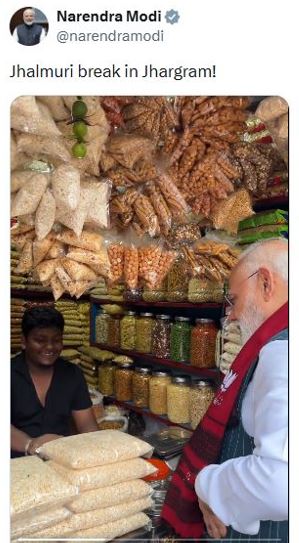
    Jhargram, West Bengal,Apr20(BNP): In a notable and candid moment during his election campaign, Prime Minister Narendra Modi made an unscheduled stop at a roadside jhalmuri stall in Jhargram, adding a local flavour to a day packed with rallies across the state.

    Modi’s Jhalmuri Stop in Jhargram Wins Hearts During Bengal Visit

    During his visit to College Mor, the Prime Minister interacted warmly with the vendor, enquired about the price, and insisted on paying for the popular snack despite initial reluctance from the seller. He was also seen sharing jhalmuri with children and supporters present at the spot, creating a lively and engaging atmosphere.

    The spontaneous gesture, captured on camera and widely shared on social media, drew positive reactions from locals and supporters. Such interactions are seen as part of the Prime Minister’s broader approach to connect with people through culturally relatable moments, especially in regions that hold significant political importance.

    The brief pause amid a hectic campaign schedule blended local culinary culture with public engagement, further amplifying its impact beyond the immediate gathering.