Blog

  • Armani Exchange Launches Summer 2026 Styles with a New Take on the Iconic Sync Platform

    Armani Exchange Launches Summer 2026 Styles with a New Take on the Iconic Sync Platform

    11 June: Summer styling this season embraces radiant gold tones, textured dials and polished details that effortlessly catch the light. Inspired by the energy of long sunlit days and vibrant city nights, the mood feels confident, expressive and easy to wear, blending sleek silhouettes with statement accents that transition seamlessly from daytime plans to evening moments.

    Capturing this spirit of the season, Armani Exchange introduces its new Summer 2026 watch collection featuring contemporary styles for both him and her. The collection brings together refined metallic finishes, sport inspired elements and modern silhouettes designed to balance statement style with everyday versatility, reflecting a fresh and elevated take on seasonal accessorising.

    LADIES SYNC: A NEW CHAPTER IN THE ICONIC SYNC PORTFOLIO

    Building on the success of the iconic Men’s Sync platform, one of Armani Exchange’s bestselling watch portfolios since its launch – the new Ladies Sync collection introduces a refined feminine evolution of the signature design. Retaining the platform’s clean modern aesthetic and versatile appeal, the collection reimagines Sync through polished gold finishes, sleek proportions and elevated detailing designed for contemporary styling.

    Marking the platform’s expansion into women’s watches, the collection also introduces refined new elements including a laboratory-grown diamond accent at the 6 o’clock marker, bringing a subtle touch of sophistication to the signature silhouette. 

    AX6031

    The AX6031 reinterprets the signature Sync aesthetic through a softer, more elevated lens. Defined by a textured gold-tone dial and matching stainless steel bracelet, the design balances clean lines with luminous detailing for a look that feels polished yet effortless. A laboratory-grown diamond accent at the 6-hour marker introduces a refined point of shine, while the rounded case and seamless bracelet construction create a sleek silhouette designed to move easily from day to evening. It is also available in two other colourways – Blue and Silver. 

    AX5738

    The AX5738 brings together vintage-inspired elegance and modern sophistication. A rectangular gold-tone stainless steel case is paired with a warm brown sunray dial, creating a rich, light-catching finish, while the matching bracelet adds a polished, jewellery-like appeal. Complete with clean three-hand detailing and an Adjust-O-Matic closure for a tailored fit, the design offers a refined statement that seamlessly transitions from day to night. 

    AX4298

    The AX4298 combines sharp contrast with understated sophistication through its two-tone construction and textured dial detailing. Designed with a balanced, modern aesthetic, the watch features a clean three-hand movement alongside a functional day-date display that enhances everyday wearability. The layered dial surface introduces depth and dimension, while the polished bracelet and secure clasp complete the design with a refined yet versatile finish suited for both daytime dressing and evening occasions. It is also available in three other colourways: Blue, Gunmetal and Black. 

    AX7178SET

    The AX7178SET delivers a sleek and polished statement through its dark dial contrasted against warm metallic tones. Defined by a clean case structure and minimal three-hand movement, the watch carries a sharp, contemporary presence that feels both elevated and versatile. Designed as a multi-piece set, it offers styling flexibility while maintaining a cohesive aesthetic rooted in modern sophistication and everyday ease. 

  • UP Government Strengthens Investment Promotion Efforts Through Strategic Partnership Between Invest UP and Invest India


    New Delhi, June 11: A key meeting was held between Invest UP and Invest India to accelerate investment growth in Uttar Pradesh. The high-level meeting, held in the presence of Invest India Managing Director and CEO Nivruti Rai, focused on exploring new investment opportunities in the state and strengthening the strategic partnership between the two organizations.

    The main objective of the meeting was to enhance cooperation in investment promotion, identify new investment opportunities across key sectors, and facilitate the implementation of investment projects in Uttar Pradesh. Special discussions were held on joint strategies to attract and facilitate Foreign Direct Investment (FDI). Both organizations reaffirmed their commitment to leveraging their respective strengths and expertise to position Uttar Pradesh as one of India’s most attractive investment destinations.

    UP Government Strengthens Investment Promotion Efforts Through Strategic Partnership Between Invest UP and Invest India

    During the meeting, Nivruti Rai gave a detailed presentation on the national investment landscape, the progress of major projects across various states, and emerging trends in investment promotion. The presentation provided valuable insights into opportunities across sectors, investor expectations, and strategies that could be adopted to attract both domestic and global investments.

    The discussions also focused on improving investor outreach, strengthening the investment facilitation mechanism, and enhancing coordination between state and national investment promotion agencies. Both organizations expressed their commitment to working together to ensure faster project implementation, stronger engagement with investors, and a seamless investment experience.

    The meeting was attended by Invest UP CEO Vijay Kiran Anand, Additional CEO Prerna Sharma, Shashank Chaudhary, and other senior officials of the department. The dialogue reflected a shared commitment to driving economic growth through strategic investments and establishing Uttar Pradesh as a preferred destination for global investors.

    The collaboration between Invest India and Invest UP will further strengthen the state’s investment ecosystem and provide fresh momentum to Uttar Pradesh’s long-term economic growth and development goals.


  • LetzRyd Introduces LetzOwn to Build a More Financially Inclusive Gig Mobility Economy

    LetzRyd Introduces LetzOwn to Build a More Financially Inclusive Gig Mobility Economy


    The first-of-its-kind driver ownership model aims to help commercial drivers move from daily earning to long-term asset creation

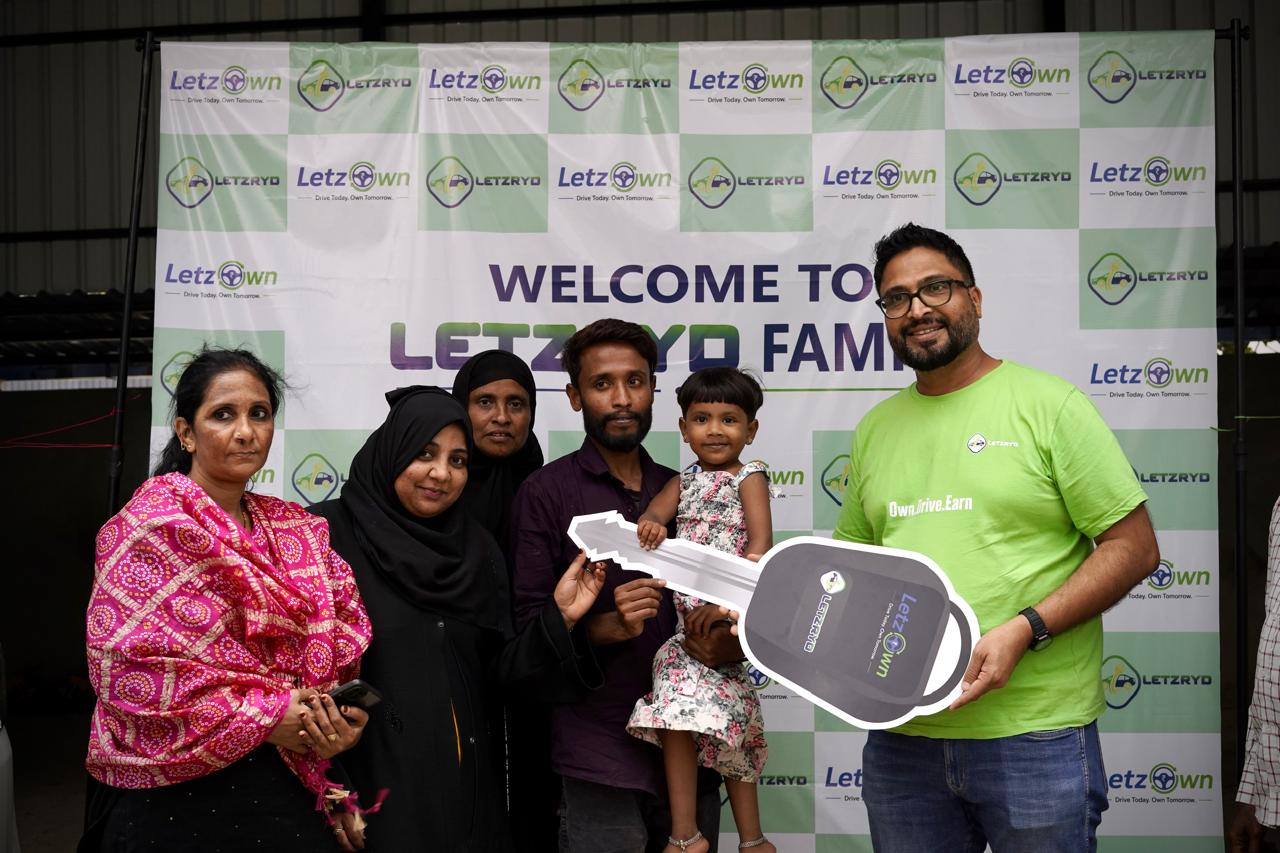
    New Delhi, June 11: LetzRyd, a mobility supply infrastructure platform focused on organising and scaling urban transport through technology, has introduced LetzOwn, a first-of-its-kind driver ownership model designed to make India’s gig mobility economy more financially inclusive.

    LetzOwn, an innovative ownership platform developed by LetzRyd, tackles a longstanding challenge in the mobility sector by helping commercial drivers transition from earners to asset owners. While drivers form the backbone of urban mobility and gig-led transport services, many remain outside the formal financial ecosystem. They earn every day, power fleet operations and support city movement, but often do not have access to vehicle ownership, formal credit, predictable financial planning or long-term asset creation.

    LetzOwn has been created to change this journey from short-term earning to structured ownership. The programme allows eligible drivers to access a brand-new vehicle with a low upfront contributioninstead of the high down payments of 20%-30% of asset value usually required in traditional financing. The model does not depend on conventional barriers such as CIBIL history, income proof or collateral, making it more accessible for working drivers who have earning capacity but limited formal documentation.

    Through a predictable monthly earning structure, drivers can operate the vehicle while building a pathway towards ownership. The programme also includes free four-year vehicle insurance, medical protection for the driver and their family and EMI protection, offering added support during periods of accident, illness or income disruption. After completing the 48-month programme, drivers can take full ownership of the vehicle, with the RC and keys transferred to them.

    For drivers, this creates a meaningful shift. Instead of remaining only operators within the gig economy, they get an opportunity to become asset owners. This can improve income stability, strengthen financial confidence and enable deeper participation in the formal economy.

    Commenting on the launch, Tarun Jain, Founder & CEO, LetzRyd, said, “India’s gig mobility economy cannot become truly sustainable unless the people powering it have a path to financial progress. Drivers should not remain locked into daily earning without ownership, security or long-term upside. LetzOwn has been built to give them a structured and transparent route to owning the vehicle they drive.”

    He added, “This is not just a vehicle access model. It is a financial inclusion model for mobility workers. By reducing upfront barriers, enabling predictable payments and creating a clear ownership pathway, we are helping drivers move from operating assets to owning assets. When drivers build financial stability, the entire mobility ecosystem becomes stronger.”

    The LetzOwn model is supported by AI based automated sourcing, digital onboarding, KYC verification, payments collection, GPS monitoring and structured asset protection. The company retains ownership during the lease period, making the model asset-backed while creating a clear risk-management framework.

    LetzOwn started deployments in Bengaluru and Mumbai, with plans to scale across major cities in India. With this launch, LetzRyd is expanding its driver-first mobility approach beyond fleet operations into ownership enablement, reinforcing its belief that mobility must be built with better economics, stronger operations and real financial progress for the people who power it.


  • 300 years of the office: Artificial Intelligence named most significant indicator of modern technological revolution


    New Delhi, June 11: Artificial intelligence has been named as the most influential office innovation by global CEOs in a landmark report, “IWG: 300 Years of Office Innovation”, commissioned by International Workplace Group to mark the 300th anniversary of the modern office. AI was followed by laptops, video calling, Wi-Fi and hybrid working, as technology continues to transform the office. 

    The findings come at a time when Indian organisations are also moving rapidly towards AI-enabled ways of working. Microsoft’s 2025 Work Trend Indexreleased last year reported that 93% of Indian business leaders intended to use AI agents to extend workforce capabilities within the next 12-18 months, indicating that AI is increasingly being viewed as a fundamental enabler of how work will be organised and delivered.

    The report, commissioned by International Workplace Group (IWG) to celebrate 300 years since the world’s first purpose-built office – London’sOld Admiralty Building, which opened in 1726– surveyed business leaders about how the modern workplace has evolved.In India, Kolkata’s Writers’ Building, finished in 1780, is believed to be the first-ever purpose-built office. Meanwhile, Chennai’s Fort St. George, built in the 1640s, began functioning as a secretariat in 1782.

    The results show that CEOs view the technological shift workers are going through right now as being as significant as anything the office has gone through in the last 300 years, such as the rise of the typewriter, smartphones or even the internet.

    The top five is dominated by modern developments in technology that have transformed working life over the past decade. All are now firmly entrenched across IWG’s global network, the largest in the world.

    Top five workplace innovations of the past 300 years for CEOs

    1. AI (36%)

    2. Laptops and tablets (35%)

    3. Video call/conferencing (Teams/Zoom) (31%)

    4. Wi-Fi/Bluetooth (29%)

    5. Hybrid working (26%)

    Hybrid working – selected by a quarter (26%) of CEOs stands out as the defining shift in how, where and why people work amidst developments in hard and software.

    This transformation is already embedded in day-to-day working life. Compared to a decade ago, 35% of CEOs say technology has made it easier for employees to work from anywhere, while 30% say meetings are now more likely to be virtual than in person. 

    The evolution of the office is already visible in India’s commercial workplace market. According to JLL,flexible workspaces and Global Capability Centres (GCCs) accounted for 21.5% and 37.7%, respectively, of full-year leasing, even as India recorded an all-time high of 83.3 million sq. ft. of gross office leasing in 2025. Flexible workspace operators leased an additional 5.56 million sq. ft. in the first quarter of 2026 across India’s top seven cities. These developments suggest that Indian businesses are increasingly seeking workplaces that are flexible, digitally enabled, and suited to evolving work patterns.

    Transformational decades: the 2020s and 1990s

    The 2020s are viewed as the most transformational decade to date, driven by the rapid adoption of hybrid models, AI, automation and flexible working practices. 

    This marks a significant leap from the 1990s, the second most impactful era, when the internet, email and early computing technologies first connected workplaces on a global scale.

    From fax machines to failed fads

    But many of these ‘90s innovations are lost on younger workers. When asked if they could describe some of these innovations, only one in five (20%) could do so for fax machines and 16% for floppy disks – despite it being the instantly recognisable “save document” icon.

    Despite this generational knowledge gap, there remains a sense of nostalgia. Over two-thirds (68%) of CEOs say they feel nostalgic for workplace tools and technologies of the past.

    Much like typewriters and dial-up internet, not all modern technology is expected to survive. Innovations that CEOs expected to transform how we work but turned out to be short-lived include smart glasses (41%), desk treadmills (39%) and interactive whiteboards (35%).

    Today’s workplace boosts productivity

    More than a third (35%) of business leaders say it’s AI that has had the greatest impact on productivity in their organisation, ahead of laptops and video calling. Overall, 83% of CEOs say recent changes in how we work have been positive, while 81% believe today’s workplace is better designed for collaboration and productivity.

    Mark Dixon, CEO and Founder of IWG, commented: “For the past 300 years, the office has continually evolved alongside each major wave of innovation, but AI represents the most significant shift in workplace life since the modern office first emerged. 

    It is fundamentally changing how, where and why people work, and is now intrinsically linked with other transformative innovations such as hybrid working and digital connectivity.”


  • Seattle’s Back to Business Program deepens support to small businesses affected by crime and vandalism

    Reimbursement caps to small businesses for repairs and preventative measures increase.

    Seattle | June 11- The Seattle Office of Economic Development increased reimbursement caps to small businesses affected by crime and vandalism or are making improvements to preventative measures for their business. Unexpected expenses from vandalism and property damage can create real and burdensome financial challenges from repairs and restoration. The Back to Business Program is designed to help businesses overcome these challenges so they can focus on what they do best – growing their small business.

    Today, the Storefront Repair Fund increased the reimbursement limit from $3,000 per incident to $5,000 per incident for up to three incidents in a calendar year for repairs costs. The Storefront Security Fund increased the one-time reimbursement for approved security improvements from $6,000 to $10,000. Building on the success of 2022 – 2024 COVID-19-era program designed to help businesses recover from damages from vandalism, the City of Seattle launched the Back to Business Program in August of 2025, with renewed $3.3M in funding for 2026.

    “Since taking office I have met with hundreds of small business owners, and the message to me has been clear. It is difficult to be a small business owner right now, and the City can and should do more to help,” said Mayor Katie B. Wilson. “That’s why I am glad programs and services like Back to Business exist, and am proud to support them. If we can provide even a little relief to small businesses when they are impacted by crime or vandalism or when they want to do more to protect their business, that can go a long way for the business being able to invest back in itself and its community.”

    Between August 2025 and the end of May 2026, the Back to Business Program awarded 437 grants to 325 businesses totaling more than $1,030,000 in reimbursements. Because the program application is simple to use, a business may apply to the Storefront Security Fund and the Storefront Repair Fund at the same time, provided they meet eligibility and have the correct documents.

    “After administering the program for several months and evaluating applications, our program team found ways to deepen the support we provide to small businesses who are impacted by crime,” said Beto Yarce, director for the Seattle Office of Economic Development. “Increasing the limits provides more meaningful support to more small businesses and will have a greater impact on a business owner’s bottom line. The Back to Business Program is just one tool in our suite of services to make Seattle an easier and more affordable place to do business.”

    This increase will result in the Back to Business Program covering one hundred percent of a business’s recovery and preventative cost for about ninety percent of eligible businesses who apply. Business owners who had eligible expenses that exceeded the previous limits will retroactively receive a payment for the difference between their original request and the updated limits, if they originally submitted invoices for an amount higher than the original limits. No action is needed by a business to receive the retroactive payment.

    Laura Schneider, owner of West Seattle’s Meeples Games received support from the Back to Business Program in January of 2026. “As a small business owner, every break-in is a massive setback, but the Back to Business program provided us with a real path forward. Thanks to the program, we received immediate help replacing our doors through the Storefront Repair Fund,” said Schneider. “The Storefront Security Fund helped us proactively upgrade our security with astragals and security film. It has restored my peace of mind. Seattle’s investment in independent storefronts works, and Meeples Games is incredibly grateful for this vital support.”

    Applications for the Back to Business Program are open until December 31, 2026 or until funds are exhausted. To find out more about the program, eligibility and to apply, visit seattle.gov/back-to-business.


    What people are saying

    Council President Joy Hollingsworth (District 3)
    “OED’s Back to Business Program has been instrumental in helping small businesses recover and get back on their feet. Without this support, many local businesses may not have been able to afford the costly repairs needed to reopen their doors. I love seeing this program expanding so that even more small businesses that call Seattle home can access the resources they need to recover, grow, and continue serving our communities.”

    Councilmember Rob Saka (District 1)
    “Operating a small business in Seattle is tough already – even without being the victim of crime or vandalism. The Back to Business Program has been a great resource for many of the small business in our district to help cover the cost of repairs. From family-friendly establishments like Meeples Games or West Seattle Arcade in West Seattle, to Georgetown Pizza and Arcade, to our coffee shops and art galleries in Pioneer Square, the program has helped make it just a little more affordable to stay in business. I am excited that OED is announcing these reimbursement increases, which will remove even more of the financial burden on small business when they are recovering from a crime, or making plans to prevent it.”

    Councilmember Eddie Lin (District 2)
    “District 2 is home to some of the best food in the city, from Hood Famous and Pho Bac in the CID/Little Saigon to Island Soul and King Donuts in the south end. Small businesses serve community across needs, including food, day care, healthcare, finance and accounting, tech, security, and support services, yet many of these organizations are struggling with skyrocketing costs. Further, broken systems around public safety, mental and behavioral health are pushing additional risks and costs onto community. I am excited that the City can provide a bit of relief to these businesses and the community leaders that run them. Thank you Mayor Wilson and the Office of Economic Development for your care and leadership.”

    Councilmember Alexix Mercedes Rinck (Position 8 – Citywide)
    “Small businesses are the heartbeat of our neighborhoods. This financial investment in preventative measures and increasing the threshold for reimbursements signal our city’s dedication to our small business ecosystem. As Chair of the Human Services, Labor, and Economic Development Committee, I am committed to action to support our small businesses throughout this turbulent time for our economy.”

    Daniel Abraha, Owner, Madrona Market
    “As a small business owner who came from a different state to start a business in Seattle, we have faced a lot of challenges – especially in this economy. As a business owner getting help such as training or grants goes a long way. When we get Back to Business Funding, it helps big time and it goes a long way.”

    Kelsey Lewin, Co-Owner, Pink Gorilla Games
    “The Back to Business Program has been invaluable to us, providing huge relief during frustrating situations. Recovering from property damage via the storefront repair fund took a huge weight off of our shoulders.”

  • JS Institute of Design Hosts Summer Internship 2026, Introducing Young Learners to the World of Digital Design

    JS Institute of Design Hosts Summer Internship 2026, Introducing Young Learners to the World of Digital Design

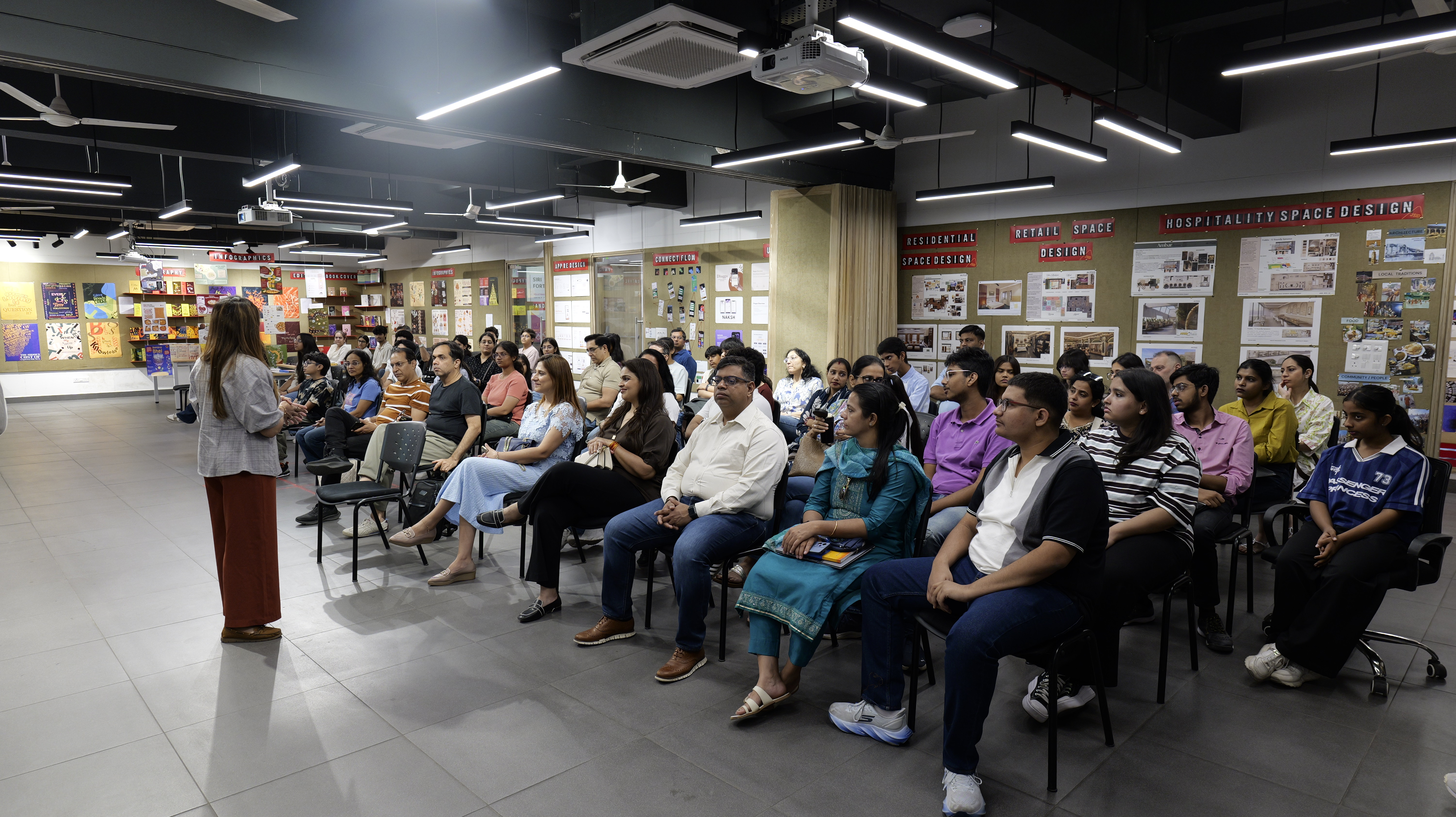
    New Delhi, June 11: JS Institute of Design (JSID), in academic collaboration with a French Design School, École Intuit Lab, hosted its Summer Internship 2026 in Digital Design, an immersive learning initiative designed for students from Classes 8 to 12. Ran from 30th May to 5th June 2026 at the JSID campus in New Delhi, the program offered participants a hands-on introduction to design, creativity, technology, and innovation through experiential learning and industry-oriented exposure.

     
    Curated as an engaging and multidisciplinary program, the internship introduced students to the fundamentals of design thinking, visual storytelling, digital tools, and problem-solving through studio-based projects, workshops, and guided learning experiences.
     
    The Summer Internship 2026 witnessed participation from 39 students representing diverse academic backgrounds and geographies. The cohort included students from leading institutions such as Kunskapsskolan Gurgaon, Modern School Barakhamba Road, Manav Rachna International School, Shiv Nadar School, GD Goenka Public School, Delhi Public School (DPS), Step by Step School, Lotus Valley International School, among others. Participants travelled from cities including Delhi, Gurugram, Solan, Mohali, Gangtok, Jaipur, Meerut, and Sonipat, creating a vibrant learning environment enriched by varied perspectives and experiences.
     
    Participants engaged across learning tracks tailored to different levels of exposure and skill development.
    The Beginner Track featured modules such as:
    • Environment Design
    • UI/UX Design
    • Window Display (Retail)
    • Editorial Design
    • Animation & Motion Design
    • AI in the Design World
     
    As part of the initiative, JSID also hosted a special parent interaction session titled “Design as a Career: Interaction with the Dean,” led by Prof. Nien Siao, Dean, JS Institute of Design. The session offered insights into evolving opportunities within design education and creative industries, while helping parents better understand future-focused career pathways available to aspiring designers.
     
    Commenting on the program, Prof. Nien Siao, Dean, JS Institute of Design, said: “The Summer Internship 2026 reflects our belief that creativity flourishes through exploration, experimentation, and real-world exposure. It has been inspiring to see young learners from different schools and cities engage so enthusiastically with design thinking, storytelling, and emerging technologies. Programs like these play an important role in nurturing curiosity, confidence, and creative problem-solving skills that will serve students well in the future.”
     
    Through collaborative projects, studio-based learning, and exposure to emerging design and AI tools, the internship provided young learners with an opportunity to explore creative disciplines while interacting with peers from diverse backgrounds. The programme reinforces JSID’s commitment to experiential learning and early creative exposure, empowering students to discover their interests and make informed decisions about future academic and professional pathways in design. Reflecting the institute’s philosophy of “Fearless Today. Iconic Tomorrow.”, the internship encouraged participants to think boldly, embrace experimentation, and confidently express their ideas laying the foundation for the next generation of creative innovators and design leaders.
  • USD 2 Trillion a Year Never Makes It from Obligation to Settlement. Rivvun AI Is Built to Recover It

    Icertis veterans raise $7.55 million seed for Rivvun AI to recover enterprise spend and revenue leakage — Co led by Sitara Capital and 3one4 Capital

    Seattle, WA – June 11, Rivvun AI Inc. announced a $7.55 million oversubscribed seed round led by Sitara Capital and 3one4 Capital, to deploy an autonomous AI execution layer purpose-built for enterprise spend and revenue recovery.

    The scale of the problem is staggering. McKinsey research finds that enterprise procurement functions lose up to one-third of planned savings during execution — with an additional 3– 4% of total external spend lost to transaction inefficiency and noncompliance. Across fortune 2000 revenues that compounds to more than $2T in value that never reaches the bottom line. The money isn’t lost to fraud or bad contracts. It disappears in the gap between what was contractually committed and what enterprise systems were ever built to collect.

    Built by the Executives Who Saw This Problem at Scale

    Anand Veerkar and Niranjan Umarane spent the last decade as senior executives at Icertis, where they helped scale the company to more than $350 million ARR and built a platform governing some of the world’s largest commercial portfolios. Across every industry, the pattern was consistent: terms of trade were precisely structured; financial execution against them was not. Money owed under negotiated agreements quietly went uncollected — not because anyone decided to leave it, but because no system in the enterprise stack was designed to recover it. They left to build that system. They are joined by serial entrepreneur Patrick Linton, who brings deep experience scaling global operations for enterprise software companies.

    The Problem Is Structural. So Is the Solution.

    ERP systems record transactions. CRM tools track relationships. Procurement platforms manage approvals. None of them enforce outcomes. Rivvun’s autonomous AI execution layer connects to existing ERP, CRM, and procurement systems, interprets commercial obligations, identifies what hasn’t settled as agreed, and initiates recovery at the transaction level. No rip-and-replace. No new system of record.

    Two agentic families power the platform: Spend Assurance on the buy side — recovering supplier rebates, pricing commitments, and procurement obligations that have gone unenforced; and Margin Defense on the sell side — recovering customer settlement variances, trade term discrepancies, and revenue that left the P&L without authorization.

    Built Vertical-First, Because Leakage Isn’t Generic

    Chargeback mechanics in pharma — GPO compliance, government pricing obligations — look nothing like settlement gaps in banking or trade term failures in CPG. Generic AI produces generic results. Rivvun deploys with vertical-specific agent logic tuned to the precise failure patterns of each industry, across Pharma, Healthcare, Banking, CPG/Retail and Industrial

    Anand Veerkar, CEO and Co-Founder, Rivvun AI commented: “The enterprise has spent years being told AI will transform how it operates. What it needed was AI that creates direct, measurable impact on the P&L – not productivity narratives, not dashboards. Rivvun closes the gap between what was agreed and what was collected, recovering money that goes straight to the bottom line.

    Sachin Bhanot, Managing Partner, Sitara Capital added: “We’ve invested in enterprise technology for years. The winners tie their value directly to a number the CFO can see on the P&L. Rivvun does exactly that with precision rare for a company at this stage – and with a founding team that has already built a category-leader in this space.”

    Anurag Ramdasan, Partner, 3one4 Capital said: “The team at Rivvun is one of the strongest founder-market fit we’ve seen in the vertical AI category so far. They are not pitching a horizontal AI solution and hoping for enterprises to extract value out of it. They are delivering ROI on AI for large enterprises from the first day of implementation, which is very critical for enterprise AI adoption. This rigor comes from the deep expertise of the founders, and we are incredibly excited to back such a transformational team at seed stage.”


  • Fortinet launches Singapore NDR cloud PoP to strengthen threat detection across ASEAN

    SINGAPORE, June 11 - As organisations across Singapore and the wider ASEAN region accelerate cloud adoption, hybrid work and digital transformation, many continue to grapple with fragmented security environments, growing alert volumes, and increasing pressure to improve visibility and operational efficiency. 

    To address this and as part of its continuing investments in strengthening cyber resilience across the region, Fortinet has launched a new FortiNDR Cloud Point-of-Presence (PoP) in Singapore, bringing cloud-delivered network detection and response capabilities closer to customers in the region. 

    The move reflects a broader cybersecurity trend: organisations are looking for stronger visibility across on-premises, cloud, hybrid and operational technology environments as attackers use legitimate tools and trusted platforms to move laterally and remain undetected for longer periods. Fortinet’s new Singapore-based PoP is designed to help regional customers improve detection, speed up response and support operational requirements around performance and regional compliance. 

    Visibility becomes the front line 

    Security teams are no longer dealing with threats only at the perimeter. Modern attacks increasingly unfold across distributed networks, unmanaged devices, Internet of Things (IoT) assets and cloud workloads, making it harder for traditional approaches alone to deliver consistent visibility. 

    FortiNDR Cloud is built to address that challenge by using artificial intelligence (AI)-powered analytics, behavioural detection and FortiGuard Labs threat intelligence to analyse network traffic and metadata for signs of suspicious activity. By identifying anomalous behaviour that may blend into ordinary business operations, the platform aims to help organisations detect threats earlier and reduce attacker dwell time. 

    From detection to faster response 

    The Singapore PoP also highlights a shift in how organisations are approaching security operations. Rather than simply adding more tools, many are looking for platforms that can streamline investigation and response while giving analysts a clearer view across complex estates. 

    FortiNDR Cloud includes AI-powered guidance, natural language capabilities and up to 365 days of retrospective hunting, allowing security operations centre teams to investigate incidents more efficiently and look back across historical network activity when needed. This is particularly relevant as organisations explore how to operationalise AI in security operations without losing control of fragmented environments and incomplete data. 

    Local infrastructure, regional resilience 

    Hosting the FortiNDR Cloud PoP in Singapore gives organisations in ASEAN and Asia Pacific access to security services delivered closer to where they operate, which can support latency, operational efficiency and regional compliance needs. The launch also expands Fortinet’s broader cybersecurity infrastructure footprint in Asia Pacific as demand grows for localised cloud-delivered security services. 

    Organisations across ASEAN and Asia Pacific are operating in increasingly complex digital environments, where security teams must manage growing cloud adoption, hybrid operations and rapidly evolving cyber risks. At the same time, many organisations are looking to leverage AI to improve security outcomes, but fragmented environments and limited visibility continue to create operational challenges,” said Jack Chan, VP, Product Management and Field CTO APAC, Fortinet. “Fortinet’s continued investment in Singapore reflects our long-term commitment to helping customers build stronger cyber resilience through integrated, AI-powered security capabilities delivered closer to where they operate.” 

    Jess Ng, Country Head, Singapore and Brunei, Fortinet, said: “In Singapore, organisations are increasingly prioritising visibility, operational efficiency, and faster response as cyber threats become more sophisticated and difficult to detect. The new Singapore-based FortiNDR Cloud PoP brings advanced detection and response capabilities closer to customers, helping them improve visibility across distributed environments, strengthen operational resilience, and support faster, more efficient security operations.” 

  • Global Triumph: True IDC, Backed by CP Group and GIP, Wins ‘Digital Infrastructure of the Year’ at IJGlobal Awards

     True IDC, Backed by CP Group and GIP, Wins ‘Digital Infrastructure of the Year’ at IJGlobal Awards, Set to Transform Thailand’s Digital Economy with EEC Mega Data Center Project

    BANGKOK, June 11 - True Internet Data Center, or True IDC, Thailand’s largest data center operator, backed by Charoen Pokphand Group (CP Group) and Global Infrastructure Partner (GIP), a part of BlackRock, has announced a landmark achievement in winning the ‘Digital Infrastructure of the Year’ award at the IJGlobal Awards, a globally recognized institution for infrastructure and project finance intelligence. This recognition not only reflects the organization’s success but also signals Thailand’s capabilities on the international stage. 

    The ‘Digital Infrastructure of the Year’ award affirms the stature of the AI Hyperscale Data Center project, spanning over one hundred megawatts in the Eastern Economic Corridor (EEC), Rayong Province, as a world-class development drawing global attention. The project features a robust financial and investment structure, developed under advanced data center technology across all dimensions and international sustainability and environmental standards. The first phase is expected to go live in Q3 2026. The project is also among those receiving BOI investment promotion, with a total value exceeding THB 77 billion. 
     
     Global Triumph: True IDC, Backed by CP Group and GIP, Wins 'Digital Infrastructure of the Year' at IJGlobal Awards, Set to Transform Thailand's Digital Economy with EEC Mega Data Center Project

    Thanasorn Jaidee, President of True IDC, commented, “The IJGlobal Award is proof of the strength of this mega data center project, both in financial structure and operations, which True IDC has been developing since 2025. This project is a magnet for investor confidence worldwide and marks a turning point that firmly positions Thailand as a regional technology infrastructure hub, generating substantial long-term economic value. True IDC extends its gratitude to all partners who have driven this project forward, securely, safely, and sustainably, to meet every challenge of the digital era”. 

    Panuwat Hirunpatawong, Chief Investment Officer of True IDC added, “This award reflects our proven ability to structure and finance world-class data center projects. As the country’s longest-established data center provider operating in one of the fastest-growing data center markets in the region, we combine that financial capability with unparalleled operational expertise and local market knowledge. True IDC is well positioned to support hyperscalers as they establish and grow their presence in Thailand.” 

    This achievement at the IJGlobal Awards confirms that True IDC is ready to lead Thailand toward becoming a prominent digital hub in the Asia-Pacific region. 

  • AI Translation and Captioning Emerge as 2026 Graduation Season Trend in Higher Education

    LOS ALTOS, CA – June 10, 2026This year’s commencement season highlighted the use of AI translation and real-time captioning as one of the fastest-growing trends in higher education event technology. While educators continue to debate how AI should be used in classrooms, Wordly, the pioneer in live AI translation and captioning, has seen rapid adoption of its platform during commencement ceremonies. 

    The trend comes as U.S. campuses are becoming more global and institutions look for scalable ways to support multilingual students, families, and guests during major campus events. According to the Institute of International Education’s Open Doors Report, approximately 1.2 million international students during the 2024/2025 academic year, reflecting growing linguistic and cultural diversity that is driving stronger demand for real-time language access at milestone events. 

    “Commencement is one of the most meaningful moments in a student’s life,” said Lakshman Rathnam, Founder and CEO of Wordly. “Every family should be able to experience it in real time, in a language they understand What we’re seeing is an increasing number of institutions using AI translation as practical infrastructure for inclusion.” 

    Industry data shows demand for AI translation in higher education has doubled over the past year as colleges and universities seek more scalable ways to support increasingly diverse campus communities. Institutions across North America, including SUNY Oswego, Mount Saint Mary’s University, and the University of New Mexico are among the universities that have implemented AI translation and captioning for large-scale campus events, including commencement ceremonies. 

    SUNY Oswego first introduced AI-powered translation and captioning at its December 2024 commencement ceremony and has since expanded its use to additional campus events. Attendees access real-time captions and translations through a QR code, providing a new layer of accessibility for families who previously had limited language support options. Usage has steadily increased as awareness has grown, demonstrating demand for more inclusive graduation experiences. 

    Beyond commencement, universities are increasingly extending Wordly across orientation programs, student advising sessions, parent and family engagement events, campus-wide town halls, faculty meetings, and virtual gatherings, enabling broader language access without adding logistical complexity or requiring advance interpreter coordination. 

    Higher education institutions cite several factors driving adoption, including improved accessibility for multilingual communities, increased participation and engagement, scalability across dozens of languages, operational efficiency compared with coordinating multiple interpreters, and ease of access through attendees’ personal devices without the need for headsets or specialized equipment. 

    As institutions continue to welcome growing numbers of international students and serve multilingual families, AI translation and captioning are rapidly becoming a standard feature of major campus events and an example of technology enhancing connection, inclusion, and belonging at one of life’s most important milestones.