Blog

  • Pemmasani Calls for Design Driven Growth and Higher R&D in Telecom Sector

    Bhubaneswar, Apr 24 (BNP): Union Minister of State for Telecommunications, Pemmasani Chandra Sekhar, has urged stakeholders in India’s telecom industry to move beyond cost-driven models and embrace design-led innovation as a core growth strategy.

    Addressing industry representatives at a recent forum, the minister emphasized that India must strengthen its capabilities in research and development (R&D) to remain competitive in the rapidly evolving global telecom landscape. He noted that while the country has made significant progress in expanding connectivity, the next phase of growth will depend on indigenous innovation and technological leadership.

    Pemmasani highlighted the need for telecom companies to invest more in developing homegrown solutions, particularly in areas such as 5G, network infrastructure, and emerging digital technologies. He stressed that a shift toward design-centric approaches would not only improve product quality but also enable Indian firms to capture greater value in global markets.

    The minister also pointed out that collaboration between industry, academia, and government institutions will be essential to build a strong innovation ecosystem. Encouraging startups and supporting local manufacturing were identified as key pillars in driving this transformation.

    Industry experts at the event echoed the minister’s views, noting that increased R&D spending and a focus on original design could help India transition from being primarily a consumer of telecom technology to a global innovator.

    The call aligns with the government’s broader vision of strengthening domestic capabilities and reducing dependence on imports in critical technology sectors.

  • Divorced Singles in India Redefine Modern Relationships

    Re-entering the matchmaking and matrimony scene after divorce and separation is not like restarting the dating journey. It takes a lot more smart choices. A study by the one-of-its-kind matchmaking platform for second-chance seekers, Rebounce, reveals that previously married singles from different Indian cities are approaching their second shot at love in their own unique ways, each no less notable than the other. From early cut-offs in Hyderabad to scheduled emotional bandwidth in Bengaluru, divorced singles are creating a highly personalized style of seeking love.

    The survey was conducted among 6843 divorced and separated singles between 28 and 45, who are active on matchmaking platforms. Respondents were chosen from Delhi, Mumbai, Hyderabad, and Bengaluru. The data collected highlights the different systems previously married singles have strategically put in place to protect their hearts in their second time seeking love.

    Rebounce’s Founder and CEO, Ravi Mittal, commented,

    “Divorced and separated singles are not hesitant to try new methods of finding love the smart way. They are already self-aware and have a higher level of clarity, so reactive matching is not really their style. What’s more interesting is that every city has a hero style, whether it is setting boundaries or exiting at the first sign of incompatibility, different city singles have different trends that adds an additional layer of protection.”

    3 dates rule, but reverse

    While young daters have been following the 3-date rule, where they wait for at least 3 dates to decide whether or not to commit, the divorced and separated singles between 30 and 40 from Hyderabad are reportedly using the same rule, but in reverse. 31% of these singles shared that they make decisions within the first three interactions. If things don’t seem to be going the way they imagined, after the 3rd date, they choose to respectfully exit the connection. This is not rash but rather a very calculated move. While connections can grow over time, 7 out of 10 divorced singles claimed that if the spark or compatibility is missing in the first three interactions, it is almost always certain that the relationship is not built to last. Their years of lived experience help them identify misalignment and avoid getting into a doomed relationship.

    Scheduled emotional bandwidth

    For 33% of divorced singles in Bengaluru, finding love the second time looks very structured. Rebounce users reveal that they use the “calendar blocking” method to schedule interactions, virtual meetups and maintain regular conversation without overextending themselves emotionally. This careful approach stems from their difficult past, a desire to avoid getting hurt and evade emotional burnout. These singles also avoid multiple matches and tend to focus on one quality match for a less overwhelming and more aligned experience.

    Delhi take accountability

    From the survey data, it is seen that divorced and separated singles in Delhi are more sensitive to inconsistencies. Almost 8 in 10 previously married women and 6 in 10 men disclosed that they pay closer attention to contradictions in talk vs effort, inconsistencies in past history details, unclear communication, mixed signals and overall, not taking any accountability for their failed marriages. Neelam, 35 year old mother of two, said, “I know I have some hand in my marriage not working out. Usually it takes two to make a marriage, and two to break too. For me, a person who shakes all responsibility off their shoulder and places the entire blame on their ex is a red flag. That’s just avoidance and denial and I wouldn’t wanna commit to a person like that.”

    Selective merging in Mumbai

    Rebounce’s internal data and survey show that 29% of divorced singles from Mumbai are opting for selective merging. Instead of blending their entire routine with their partner, they are maintaining individuality in certain aspects while integrating some other parts of their lives quickly. For instance, single parents tend to delay introducing their match to their kids for as long as six months into the relationship.

  • Israeli Strikes Kill 5 in Lebanon Despite Ceasefire, Truce Under Strain

    Apr,24(BNP): At least five people, including a journalist, were killed and another injured in fresh Israeli airstrikes in Lebanon on Wednesday, despite an ongoing ceasefire, further heightening tensions in the region.

    Israeli Strikes Kill 5 in Lebanon Despite Ceasefire, Truce Under Strain

    According to reports, the strikes occurred even as Lebanon prepares to seek a one-month extension of the existing truce during upcoming talks with Israel in Washington, D.C. under United States mediation. The current 10-day ceasefire, announced following initial negotiations last week, is set to expire on Sunday.

    Lebanese officials stated that their delegation will push for an extension of the truce, a complete halt to Israeli military operations in affected areas, and firm commitments to uphold the ceasefire agreement. Lebanese President Joseph Aoun confirmed that diplomatic efforts are underway to prolong the ceasefire period.

    Meanwhile, Israeli Foreign Minister Gideon Saar called for cooperation from Lebanon against the Iran-backed militant group Hezbollah, which has been central to the ongoing conflict. Although Hezbollah opposes direct negotiations, there are indications it may consider indirect talks facilitated by the United States.

    The conflict, which began on March 2, has resulted in significant casualties and destruction. Lebanese authorities report that at least 2,454 people have been killed since the escalation began, with over 50,000 housing units damaged or destroyed.

    In the latest incident, journalist Amal Khalil was among those killed in the strikes, while another journalist was injured. Lebanese officials condemned the attack, stating that media personnel were targeted while performing their professional duties. The Israeli military, however, stated that the strikes targeted individuals allegedly linked to Hezbollah and accused them of violating ceasefire terms.

    Despite the truce, sporadic exchanges of fire have continued, with Hezbollah also claiming retaliatory strikes against Israeli positions in southern Lebanon.

    The situation remains volatile, with international stakeholders closely monitoring developments. Calls for restraint and adherence to ceasefire agreements continue to grow amid fears of further escalation.

  • From India to Africa: Sculpture of Maharaja Ranjit Singh Unveiled in Malawi on Baisakhi

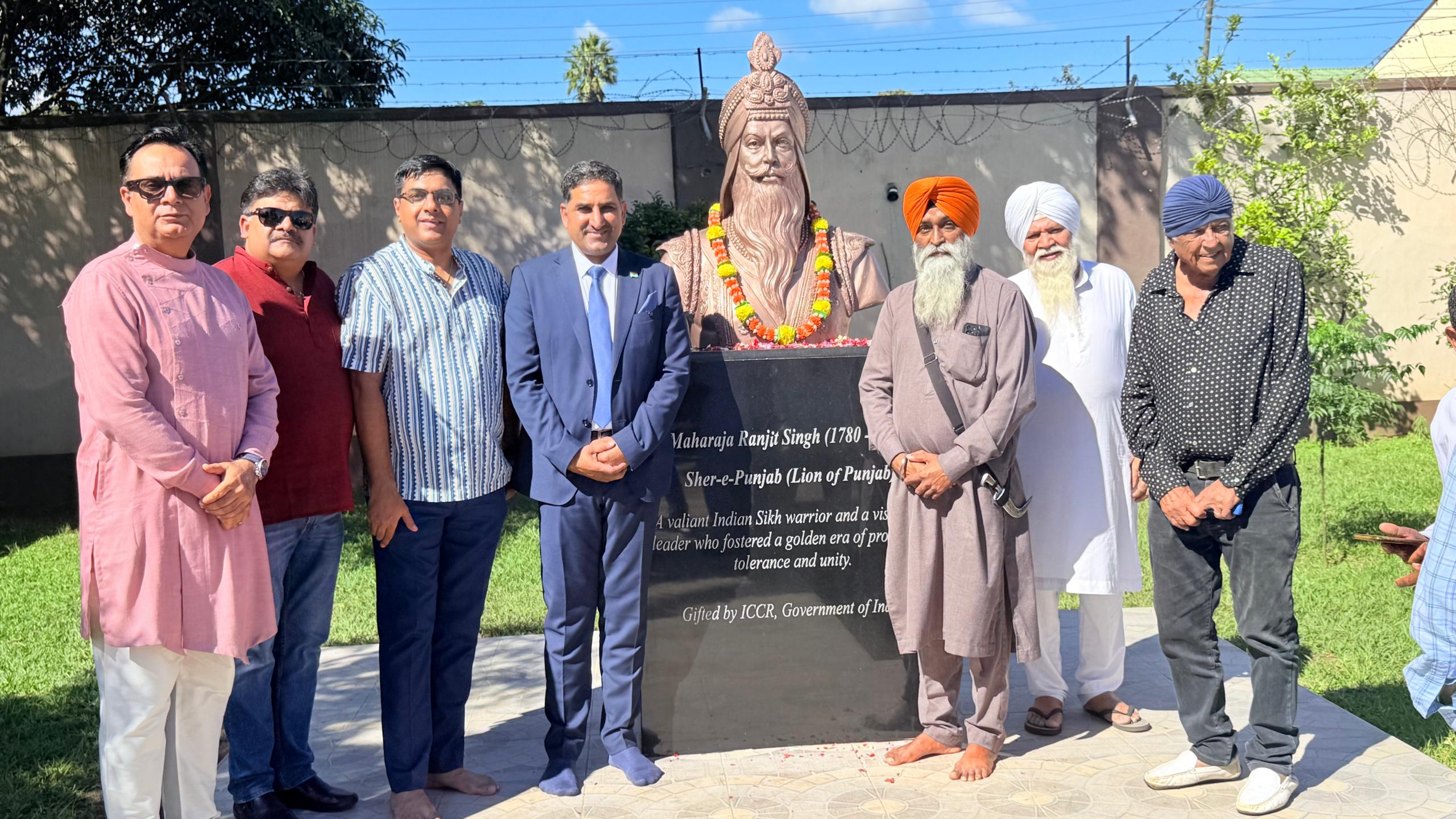
    From India to Africa: Sculpture of Maharaja Ranjit Singh Unveiled in Malawi on Baisakhi

    New Delhi, Apr 24: The unveiling of the Maharaja Ranjit Singh sculpture in Malawi, Africa, on April 19 was a beautiful moment that brought together geography, culture, and heritage. The sculpture was made by the famous Indian sculptor Mr Naresh Kumar Kumawat and is another milestone for the Sikh community. The event happened around the auspicious celebration of Baisakhi, which made it even more special.

    The ceremony took place at a Gurudwara in Malawi. About 400 Sikhs were there to see the historic moment. It was a very special time that made them feel proud and connected to their culture. Watching the statue of Sher-e-Punjab find its place thousands of miles away from its homeland was beautiful in more than one way.

    The sculpture’s installation was more than just an artistic achievement. It is a strong symbol of identity, resilience, and belonging for the Sikh community in Malawi. The statue serves as a memory that connects them to their roots in India. It is a beautiful step toward preserving Maharaja Ranjit Singh’s legacy and strengthening a shared heritage across continents.

    Speaking on the occasion, Mr. Naresh Kumar Kumawat expressed his deep gratitude and emotional connection to the project. “It is very humbling to see my work touch so many people in a community far from home. It was very moving to see over 400 members of the Sikh community come together during Baisakhi to celebrate this unveiling. As an artist, there is no greater reward than knowing that your work becomes a bridge between people and their heritage. Maharaja Ranjit Singh’s legacy of courage and leadership now stands tall on African soil, inspiring generations to come.”

    The unveiling also showed how Indian culture is still present around the world and how art helps keep it alive. Maharaja Ranjit Singh was a great leader, a secular ruler, and a skilled soldier. He is still an important part of Indian culture today. His statue in Malawi is a tribute to his legacy and a reminder of the values he stood for: unity, strength, and inclusion.

    The event ended with prayers and community celebrations. It renewed the sense of pride among attendees. The sculpture stands tall in Malawi and symbolises the unbreakable bond between the Indian immigrants and their cultural heritage. It also assures that distance can never diminish the identity of one’s roots. 

  • Record Voter Turnout in West Bengal, Tamil Nadu; CEC Hails Historic Participation

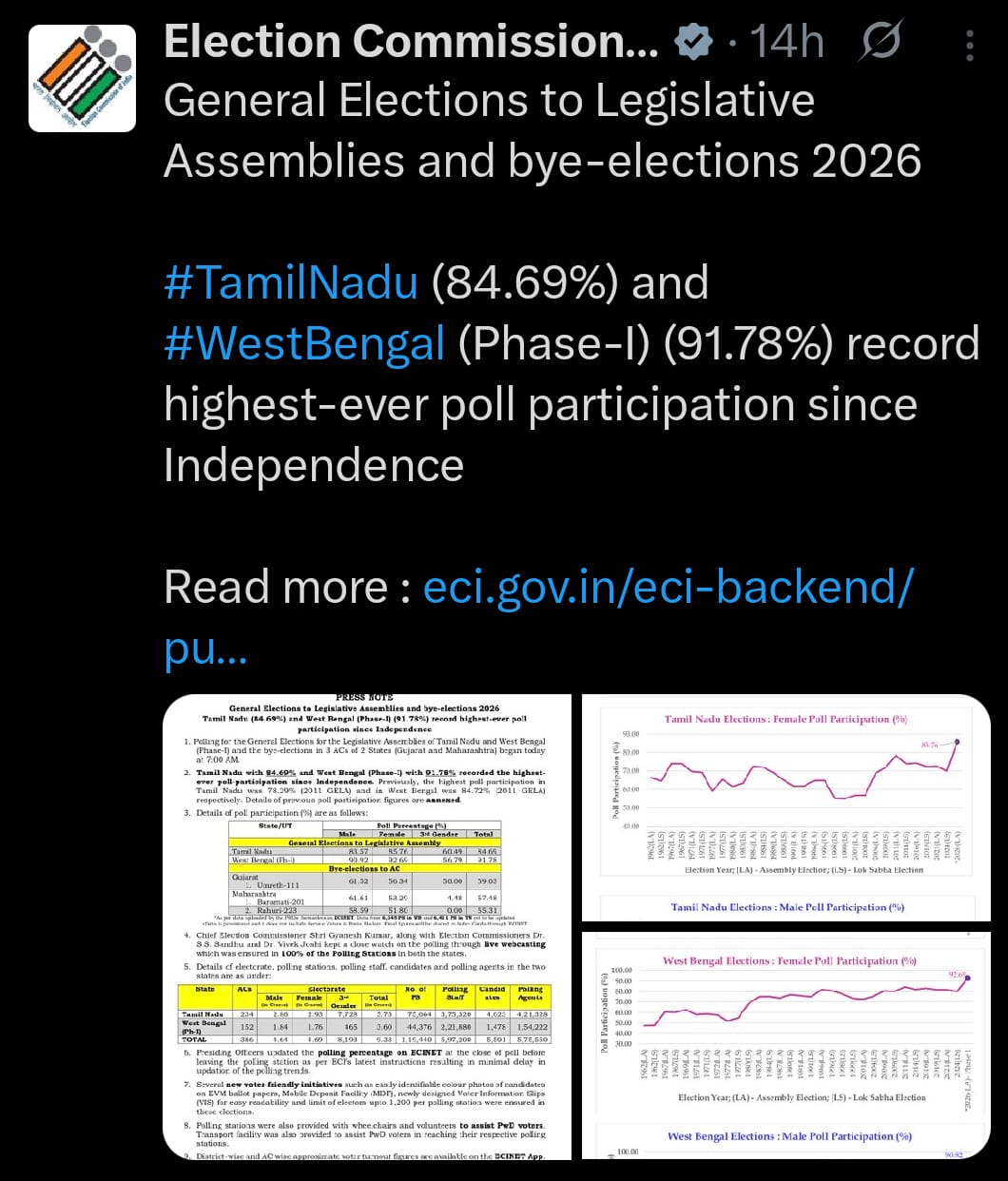
    Apr 24 (BNP): The Chief Election Commissioner, Gyanesh Kumar, has lauded the voters of West Bengal and Tamil Nadu for recording the highest-ever voter turnout since Independence, describing it as a historic milestone in India’s democratic journey.

    Record Voter Turnout in West Bengal, Tamil Nadu; CEC Hails Historic Participation

    According to the Election Commission of India, Tamil Nadu registered an impressive voter turnout of 84.69%, while West Bengal (Phase I) recorded a remarkable 91.78%. Both figures surpass previous records set in 2011, when Tamil Nadu had recorded 78.29% and West Bengal 84.72%.

    Commending the electorate, the CEC said the unprecedented participation reflects rising voter awareness, strong faith in the electoral system, and a deep commitment to democratic values. “This is the highest-ever polling percentage since Independence. We salute every voter in West Bengal and Tamil Nadu,” he stated.

    The polling process was closely monitored through 100% live webcasting across all polling stations in both states. The CEC, along with Election Commissioners Dr. S. S. Sandhu and Dr. Vivek Joshi, maintained continuous oversight to ensure transparency and the smooth conduct of polling.

    Special arrangements were made for Persons with Disabilities (PwD), including the provision of wheelchairs, volunteer assistance, and transportation to polling stations, ensuring inclusive participation.

    The Election Commission also commended polling personnel, security forces, and administrative officials for conducting the elections in a peaceful, free, and fair manner.

    The record turnout is being widely seen as a strong indicator of growing civic engagement and the continued strengthening of democratic processes in the country.

  • Panerai returns to the Salone del Mobile.Milano as Official Time Keeper of the 64th Edition

    Panerai returns to the Salone del Mobile.Milano as Official Time Keeper of the 64th Edition

    Panerai, the historic luxury watch brand merging Swiss precision with Italian design, confirms for the fourth consecutive year its role as Official Time Keeper of the Salone del Mobile.Milano, sealing its partnership with the most prestigious international design event, now in its 64th edition.

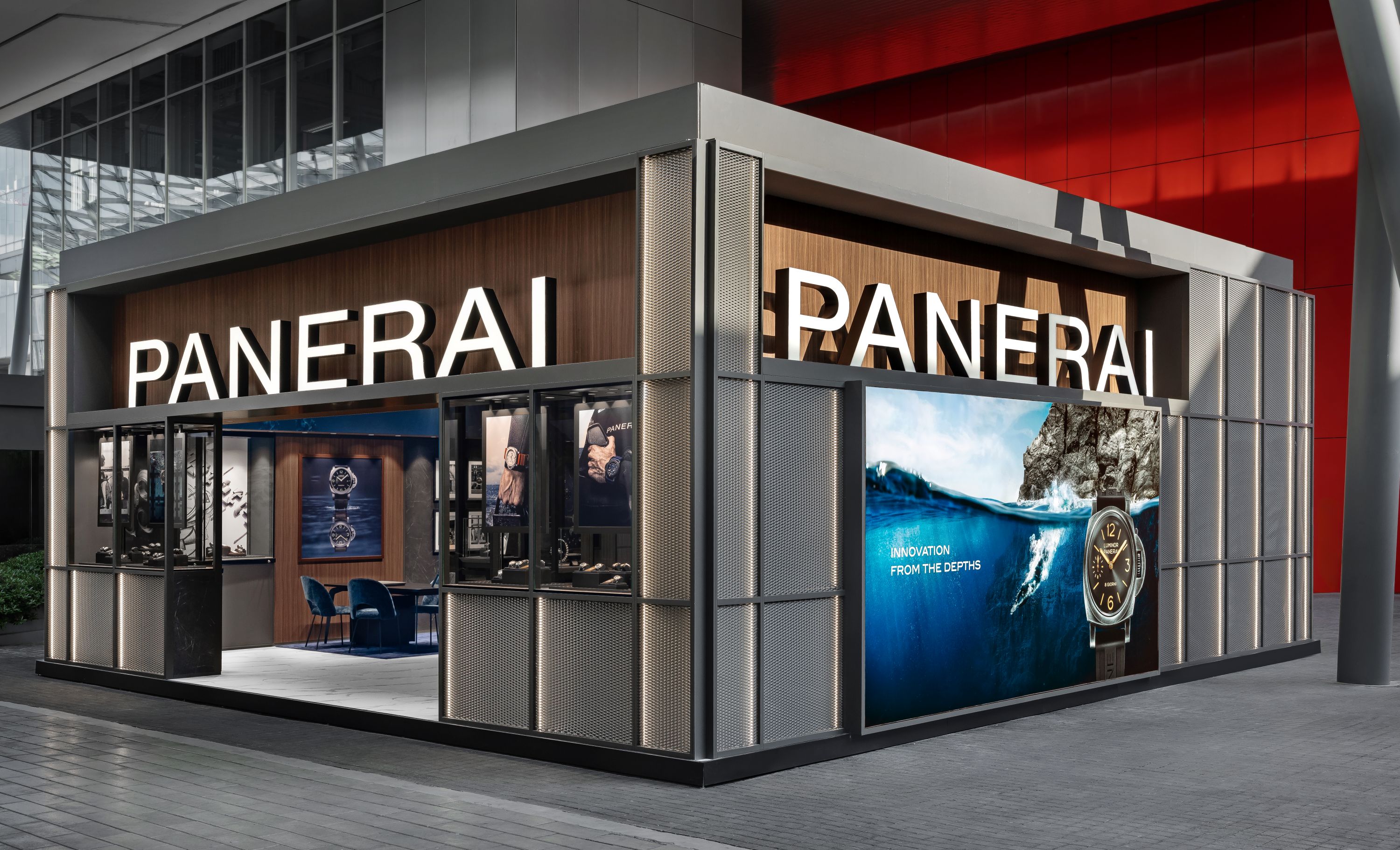
    From April 21 to 26, 2026, Panerai will reopen the doors of its pop-up store in the heart of Milan Rho Fiera, along the very central Corso Italia, offering both visitors and watch enthusiasts the opportunity to experience a new immersive journey into the Maison’s universe.

    In a temporary space of approximately 100 square meters, Panerai will unveil a curated selection of watches from its iconic collections – Luminor, Submersible and Radiomir, in addition to the Luminor 8 Giorni PAM01733, a new timepiece that, unveiled at Watches and Wonders Geneva 2026, will be early available and previewed to the Italian Market during the week of the Salone del Mobile.

    The pop-up has been renovated to further enhance Panerai’s intrinsic and unique identity, including the Maison’s Italian origins, its legendary history, and its connection to the world of the sea, through a carefully curated selection of materials and decorative elements. Among these, the Panerai timeline stands out, tracing the most significant stages of the brand’s history, accompanied by a rich display of evocative images. The narrative finally culminates with a video positioned at the center of the space, inviting viewers to discover the technical innovations and distinctive features of Panerai’s latest releases.

    The Italian bar, conceived as a convivial meeting space, offers customers not only an informal area for a break in perfect Italian style, but also an additional exhibition and sales area.

    “We are pleased to renew our collaboration with Salone del Mobile.Milano, the most important event in the international design landscape. A consolidated bond, founded on common values and similar visions, driven by a passion for excellence, innovation, and functional design. This year, with the return of EuroCucina, we hope to welcome even more visitors, industry experts, and enthusiasts from all over the world to both our pop-up at the Fair and our Milanese flagship in Montenapoleone,” states Alessandro Ficarelli, CMO of Panerai.

    Throughout the entire week, a rich program of appointments and exclusive initiatives will animate the pop-up store in Rho Fiera, while in the city downtown, at number 19 of Via Montenapoleone, Casa Panerai will host a series of evening events marking the time of Fuorisalone 2026, while celebrating the Italian spirit and dynamic essence of the brand.

    Panerai

    Founded in Florence in 1860, Panerai began as a workshop, shop, and subsequently school of watchmaking. This foundational expertise soon led to forging a pivotal partnership with the Royal Italian Navy, commencing in the 1910s, with initial commissions to design precision instruments and leading in 1935 to the development of its first dive watch prototype, Ref. 2533, with a luminescent Radiomir dial. For many decades thereafter, Panerai maintained its role as a highly secretive supplier to Italian Navy commandos, manufacturing professional-grade tool watches and high-precision instruments built to withstand their challenging missions.

    The defining technical features Panerai developed to meet the Italian Navy specifications—exceptional luminescence, superior water resistance, extended power reserve, and robust construction—remained a military secret until 1993. That year marked a key moment: the introduction of the first watches to the civilian public, including the first Luminor 44mm, whose now-iconic crown protecting bridge and bold design would soon achieve international recognition.

    In 1997, Richemont acquired Panerai, leading to its debut at SIHH (Salon International de la Haute Horlogerie) in 1998. This event propelled Panerai’s rise as a prominent international brand within the watchmaking industry.

    Today, Panerai honors its heritage by manufacturing its movements and watches at its Neuchâtel manufacture since 2002, where cutting-edge technology and Swiss precision converge with Italian design. Panerai watches are available worldwide through a carefully selected network of distributors and boutiques.

  • Emerald Month – The Joy of Colour by Gemfields

    Emerald Month: the joy of colour

    Mumbai, Apr 24: Gemfields is celebrating Emerald Month by taking a moment to appreciate the joy of colour. This May, for which the birthstone is emerald, it feels fitting to revere green once again. Emeralds are often associated with hope and growth, with a luscious hue reminiscent of the green shoots of spring and new beginnings.

    In colour theory, green marries the calming stability of blue with the energetic warmth of yellow, bringing a sense of balance and harmony. The green of an emerald comes from traces of chromium, vanadium, and iron. Compared to emeralds of other origins, Zambian emeralds in particular are lacking in vanadium, resulting in their desirable bluish-green tint and often eye-clean crystals, and ever-so-slightly richer in iron,  which is pivotal in bonding the elements more tightly. Consequently, Zambian emeralds boast a distinctive colour, which can be described as a sharp, evenly distributed green that glows with a tint of blue.

    Highly prized emeralds display an even saturation of colour, and a vivid hue. Early humans’ fascination with colour and the desire to own lasting examples of it made them fall in love with gemstones, for their vivid beauty remained unchanged with every passing day. In a world where people aged, flowers wilted, and sunsets faded, only the colour of gemstones remained unchanged. For them, the only logical explanation was that gems were divine, forever linking gemstones to the spiritual world.

    This enduring allure of gemstones continues to captivate and remind us of the beauty and permanence found in a transient world.

    Choosing a Gemfields Zambian emerald of your very own is easier than you might think! Gemfields collaborates with a number of international jewellery brands at differing price points, offering an array of jewellery designs to suit your unique style.

    Mohar Fine Jewels x Gemfields Diamond & Emerald Floral Heritage Necklace (POA); Mohar Fine Jewels x Gemfields Diamond & Emerald Drop Studs (POA); DIACOLOR x Gemfields Majestic Bloom Ring (POA); DIACOLOR x Gemfields Verdant Majesty Ring (POA)

    For a masterclass in the enigmatic allure of emerald, see the DIACOLOR x Gemfields Majestic Bloom Ring, which boasts a 26.49 carat pear-cut Gemfields Zambian emerald, diamond and south sea pearls, or the DIACOLOR x Gemfields Verdant Majesty Ring, which frames a 38.43 carat emerald-cut emerald with diamonds. For a complete emerald celebration, look no further than Mohar Fine Jewels x Gemfields Diamond & Emerald Floral Heritage Necklace, featuring 18 octagon-cut Gemfields Zambian emeralds totalling 35.95cts. An elevated everyday emerald look is easily achieved with Mohar Fine Jewels x Gemfields Diamond & Emerald Drop Studs, which frame striking octagon emeralds with round diamonds, blending bold geometry with refined sparkle.  

  • Curtain call for paper: PPDS delivers crystal clear DooH advertising to historic German theatre with a scene-stealing 12m2 Philips Urban LED 7000 Series installation

    Multitalented solution: Spectacular new 6×2 metre high brightness Philips Urban LED 7000 Series display transforms communication capabilities, helping to eliminate paper waste, boost workplace efficiencies, and drive ticket sales at the acclaimed Saarländisches Staatstheater venue.
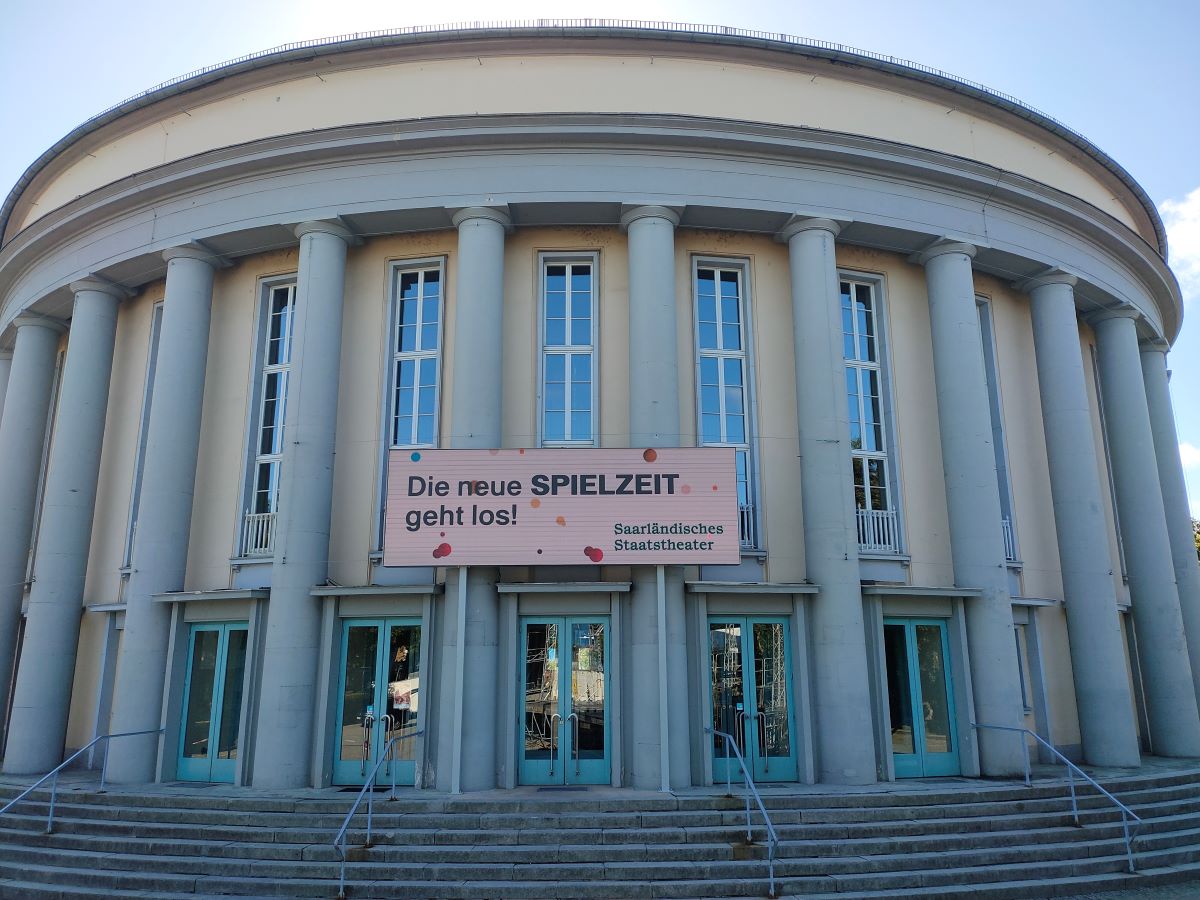
     

    Curtain call for paper: PPDS delivers crystal clear DooH advertising to historic German theatre with a scene-stealing 12m2 Philips Urban LED 7000 Series installation


     Amsterdam, Apr 24: PPDS, the exclusive global provider of Philips Professional Displays and complementary solutions, is proud to announce the latest results of its rapidly accelerating DooH strategy, with the installation of a new 6 x 2m LED advertising wall at the historic Saarländisches Staatstheater in Southwest Germany. Delivering instant results, this transformative project has helped eliminate paper wastage, boost workplace efficiencies, and increase ticket sales.

     Opened in 1938, the Saarländisches Staatstheater (Saarland State Theatre) is a cultural landmark in Saarbrücken – the largest city in Saarland, bordered by France and Luxembourg – renowned for its diverse entertainment offerings, including opera, drama, ballet, standup comedy, concerts, and movies.

     Hosting around 30 new productions annually, amounting to some 700 events – including outside events – advertising and information are critical to ensuring ticket sales and the theatre’s ongoing success. Previously, all promotional banners and posters had to be created, printed and changed manually by staff daily, which was deemed impractical, unsustainable, and visually limited.

     The stage is set

    Seeking a modern, digitised solution, the theatre teamed up with local AV/IT integration and event technology specialists, DooH Concept and LE-Eventtechnik GbR, with framework from Metallbau Patric Schmidt GmbH, to transform its communications with a fully digital, centrally managed LED solution, enabling fast, simple, and unlimited content creation and updates.

     With PPDS continuing to make significant waves in the outdoor LED market, which has already seen installations and exclusive partnerships with the likes of FC Barcelona, PSV Eindhoven and Oracle Red Bull Racing, the Philips Urban LED 7000 Series was the standout choice for this challenging project, with a stunning 2 x 6 metre wall installed on the front of the iconic building, as well as with.

     To ensure crystal clear advertising, whether viewed up close or from a distance, the 3.9 pixel pitch, high brightness Philips Urban LED 7000 Series was selected, delivering high contrast ratio and refresh rates for smooth broadcasting and more colour subtlety, shading, and saturation.

     Designed for the full range of weather conditions, from bright sunshine to inclement sleet and snow, the Philips Urban LED 7000 Series has been built to perform and last. Thanks to the display’s ambient light adjusted brightness, content remains clear and visible in all conditions, while its IP66 certification (dustproof, waterproof, and salt spray resistant) and level 6 ingress protection ensure product longevity and peace of mind.

     Crowd pleaser

    Completed within a strict 10 day window, the new Philips Urban LED wall has exceeded all expectations, providing a striking and highly effective communication platform. Using a mix of static imagery, animated previews, and video content, the new display has already proven to capture the attention of pedestrians in a way simply unachievable before, while also improving its staffing and sustainability efficiencies.

     The theatre’s marketing department now manages the display centrally and independently. With easy to use, dynamic multimedia templates in place, staff can quickly update content and engage audiences directly, eliminating reliance on paper posters and supporting traditional media channels and social media campaigns.

     Konstantin Flabouriaris, PPDS Sales Director for the DACH region, commented: “Installing the display on a listed building presented several challenges. A key requirement was designing a self supporting substructure that could be securely mounted to the theatre’s façade without causing any damage. The substructure was installed using a mobile crane on day one, with the LED wall fully completed by day ten, just in time for the theatre’s new season the following day. Working closely with the theatre’s team and its partners, it was a challenge we embraced, and the results speak for themselves.”

     Prof. Michael Schulz, General Artistic Director, Saarländisches Staatstheater, added:The new digital daily advertising board from Philips enables us to make the wide ranging program of the Saarländisches Staatstheater even more visible, reaching out directly to visitors. There has been a significant increase in theatre attendance since installing our new LED wall.”


  • Nissan Motor India and Avis India Announce Partnership for Leasing and Subscription-based solutions

    Gurugram, Apr 24: Nissan Motor India Pvt. Ltd. (NMIPL) and Avis India today announced a strategic partnership to strengthen corporate mobility and leasing solutions in India by introducing integrated leasing and subscription offerings. The collaboration aims to address the growing demand for flexible, asset-light mobility models among enterprises, while enabling convenient and cost-efficient access to Nissan’s vehicle portfolio through a structured, end-to-end ecosystem. 

    The offering provides access to Nissan’s product portfolio, including the Nissan Magnite and the All-New Nissan GRAVITE, through flexible leasing and subscription plans designed for a tenure of up to 60 months and 50,000 km usage. The solutions are structured to deliver cost efficiency and convenience to corporate customers.

    Commenting on the announcement, Mr. Saurabh Vatsa, Managing Director, Nissan Motor India, said, “This partnership reinforces Nissan’s long-term commitment to the Indian market through strategic, customer-centric initiatives that deliver greater value by expanding accessible and flexible mobility solutions. By collaborating with Avis India, we are enabling a seamless leasing ecosystem that complements our product portfolio and supports the evolving needs of corporate customers seeking efficient, scalable, and asset-light mobility solutions.” 

    Speaking on the announcement, Mr. Aman Naagar, Managing Director, Avis India, added, “This partnership is an opportunity for us at Avis India to strengthen our relationships with key manufacturers and deepen our operational capabilities. It is aligned with our focus on building and providing scalable and structured platforms for enterprise clients.” 

    As part of the partnershipAvis India will manage the complete lease lifecycle, including vehicle procurement, registration, maintenance, insurance, and end-of-term services, ensuring a seamless, end-to-end experience with predictable cost structures, while enabling organizations to adopt scalable, asset-light mobility solutions.

  • Quantum Science & Technology, crucial for India’s development”, aver experts at Amity

    Quantum Science & Technology, crucial for India’s development”, aver experts at Amity


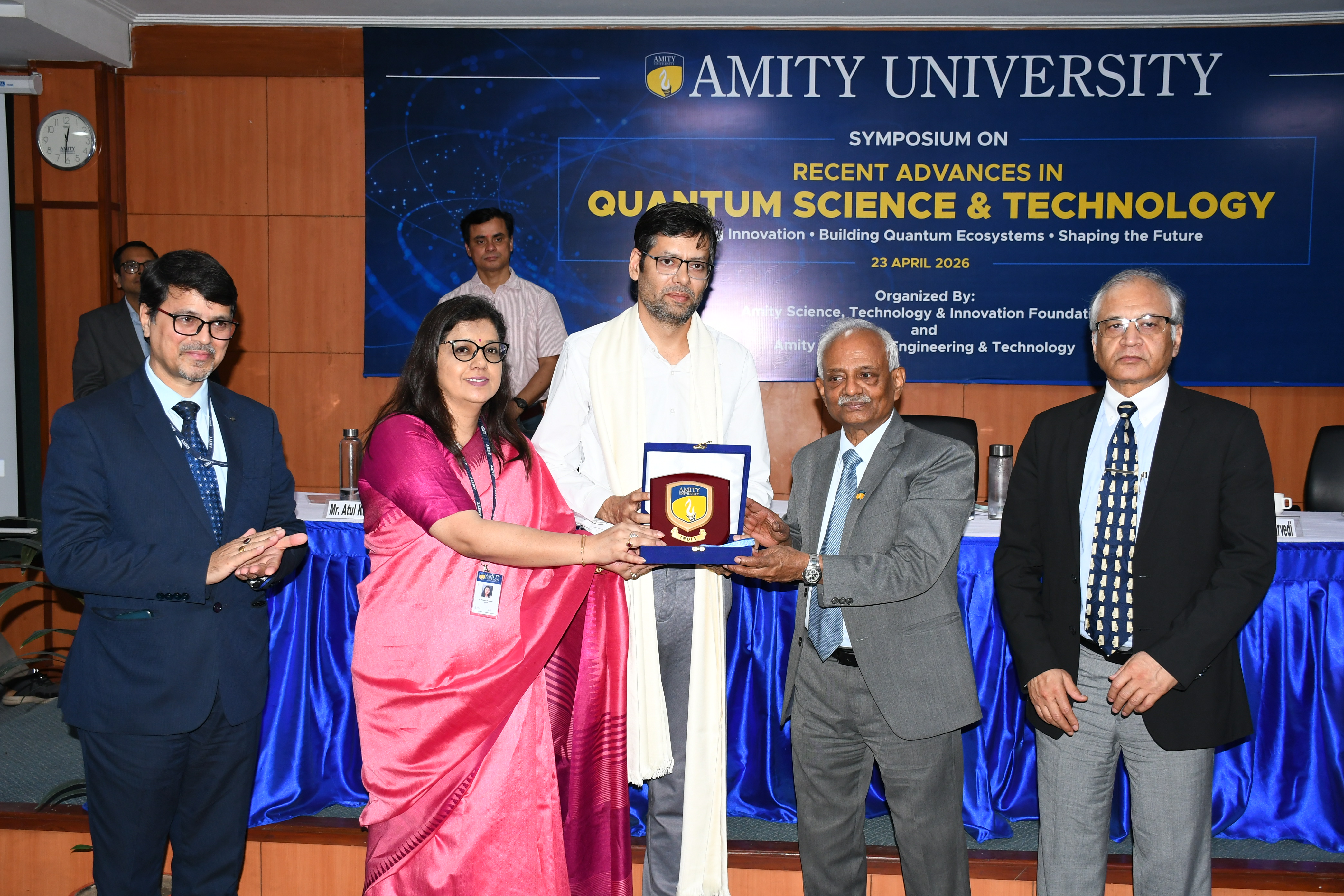
    Amity University Uttar Pradesh Noida campus organized a one-day Symposium on “Recent Advances in Quantum Science & Technology”. The Symposium aimed to bring together leading experts, scientists, academicians, and industry stakeholders to discuss recent advancements in quantum technologies, including quantum computing, communication, sensing, and materials.

    Highlighting the significance of Quantum Science & Technology, Dr. Poornendo Chaturvedi, Scientist G, DRDO, averred, “Quantum Technology is extremely crucial in today’s scenario. It includes principles like superposition, entanglement, and interference to create capabilities which are impossible for classical systems. Quantum Technology speeds up the processing and its impact can been in every key economic sector, creating new job opportunities and driving economic growth, however, many problems and challenges need to be addressed. The youth must come forward and work on new innovations based on Quantum Technology since the future lies here.”

    Providing information about the National Quantum Mission, Dr. L. Venkata Subramaniam, CEO, Qbit Force (Ex-IBM India Quantum Head), opined, “All mobile chips are designed by Indians and India has the largest talent pool in the area of Quatum Technology, however, India lacks products. Under the National Quantum Mission, it is our aim to create a vibrant ecosystem in Quantum Technology and give India a “quantum jump” by developing homegrown technology. The government is providing funding of Rs25 crores for startups and the youth must launch their own ventures. Institutions like Amity must take the lead and new talent must develop new technologies, which wil make India a developed country.”

    Dr. Atul Chauhan, Chancellor Amity University, stated, “Amity has been at the forefront fo research and innovation. It is Amity’s mission to nurture the youth who wil take our country ahead of all the other countries in the world. India has the best brains in the world, however, we need to become a product nation. There is a need to translate research into real-world applications.”

    Dr. Chauhan announced 30 fellowships in the area of Quantum Technology and also launched the Amity Quantum Mission website on this occasion.

    Explaining the history of Quantum Technology, Mr. Atul Gupta, Scientist G & Head, CoE Quantum Technologies, C-DOT, stated, “Quantum Technology is not new and was discovered 125 years ago. The first Quantum Revolution took place in 1940s which included transistors, semiconductors, lasers, solar cells, etc and the second revolution is taking place now which includes Quantum Computing, Quantum Communication, Quantum Sensing and Quantum Materials, resulting in a paradigm shift in computation, communications, sensing and device technology. The reason for a sudden Quantum boom is technological advancement and use of Quantum technology in various areas such as Drug Discovery, Logistics & Supply Chain Optimisation, Climate Modelling and Weather Prediction, and many others. Under the National Quantum Mission, the government is actively investing in quantum R&D, infrastructure and ecosystem building. Quantum Technology has also been included in AICTE Curriculum and UG & PG curricula in Quantum Technology have been launched to build India’s quantum-ready talent across institutions. C-DOT is keen on partnering with academia and industry to build, secure and advance India’s Quantum Future.”

    Dr. W. Selvamurthy, President-ASTIF, stated, “The insightful symposium will deliberate upon emerging trends, foster collaborations, and strengthen the quantum ecosystem across academia, industry, and government. Eminent organizations such as DRDO, IBM Quantum, QNu Labs, NXP Semiconductors, C-DAC, and leading academic institutions are participating in the Symposium, reflecting a strong convergence of academia–industry-government collaboration.”

    Dwelling upon DRDO’s contribution in Quantum technology, Dr. Santu Sardar, Director (DYSL-QT), DRDO, noted, “DRDO is working on building expertise in the area of Quantum Technology and building technologies for import substituion. Therefore, it is engaging with industries, coordinating with National Quantum Mission and working on upskilling the scientists. DRDO Young Scientists Lab for Quantum Technologies( DYSL-QT) was established in the year 2019 and DRDO is closely working with the academia and start-ups, thereby extending joint activities. it is also offering paid internships to Junior Research Fellows(JRFs), Research Assisants, and providing them with employment opportunities.” He called upon the young aspiring scientists to join DRDO and contribute to nation-building.

    Stressing upon the need for “Quantum Accelerators for enabling Quantum Computing on Supercomputers”, Dr. Abhishek Tiwari, Associate Director, Scientist F, C-DAC Noida, asserted, “There is a need for Quantum Accelerator since classical computers are not able to solve the problems at a fast rate. Physical quantum computers are expensive, error-prone and limited and our country lacks the indigenous access to quantum hardware for researchers and students. Therefore, when Quantum Accelerators, are used in Quantum Computing, they make the process faster and the job easier.”

    On this occasion, a Panel Discussion on “Industry–Academia–Government Partnership for Leadership in Quantum Technologies”, was organized wherein experts such as Dr. Anindita Banerjee, Sr. Quantum Technologist, C-DAC Pune, Dr. Harish Sahu, Scientist F, SAG, DRDO, Dr. Abhijeet Mitra, Assistant Professor, IIIT Delhi and others participated. In addition, student presentations were also held as part of the Symposium.