Blog

  • Dr Ishita Joshi Wins ‘NariFirst Jewel of India Season 3’ Award

    Apr 22 (BNP): Indore-based gynaecologist Dr Ishita Joshi has been awarded the prestigious NariFirst Jewel of India Season 3 title, recognising her contributions to women’s healthcare and community awareness initiatives.

    The award was presented in the presence of Malaika Arora, who felicitated the winners for their achievements and impact across diverse professional fields.

    Dr Joshi was selected for her dedication to advancing women’s health services and her efforts in promoting awareness around reproductive health and maternal care. Her work has been acknowledged as a significant contribution to both clinical practice and social outreach.

    The NariFirst Jewel of India initiative celebrates women achievers from across India in sectors including healthcare, education, entrepreneurship, and public service. Season 3 of the platform continued its mission of recognising impactful women leaders who are driving change in society.

    The recognition underscores the growing importance of women professionals in shaping India’s healthcare landscape and community development efforts.

  • India Real Estate Hits Record Dollar 5.1 Billion Inflows in Q1

    Apr 22 (BNP): India’s real estate sector has achieved a historic milestone, recording approximately $5.1 billion in investment inflows during the first quarter (January–March), marking its strongest quarterly performance to date.

    The growth was primarily driven by robust participation from domestic investors and the expanding role of Real Estate Investment Trusts (REITs), which are increasingly channeling capital into income-generating commercial assets.

    Investment activity remained concentrated in key urban centres, including Bengaluru, Mumbai, and Delhi-NCR, with strong interest in office spaces, mixed-use developments, and core real estate assets.

    The sector continues to demonstrate resilience amid global economic uncertainties, supported by strong domestic demand, institutional confidence, and evolving investment structures.

    Experts highlight that the rising dominance of domestic capital reflects a structural transformation in India’s real estate market, moving toward a more stable, transparent, and institutionally driven investment ecosystem.

    With REITs gaining further traction and investor appetite remaining strong, India’s real estate sector is expected to maintain steady growth momentum in the coming quarters.

  • Meghalaya Accelerates Entrepreneurial Ecosystem, hosts “PRIME IGNITE 2026”

    Mumbai / Shillong, April 22: Marking a significant step in building a strong and self-sustaining entrepreneurial ecosystem, PRIME Meghalaya hosted ‘PRIME IGNITE 2026’. Held at the Durbar Hall, Lok Bhavan, Shillong, the convergence brought together the State’s entrepreneurs and officials to showcase creativity and launch critical infrastructure aimed at empowering Meghalaya’s enterprise community.
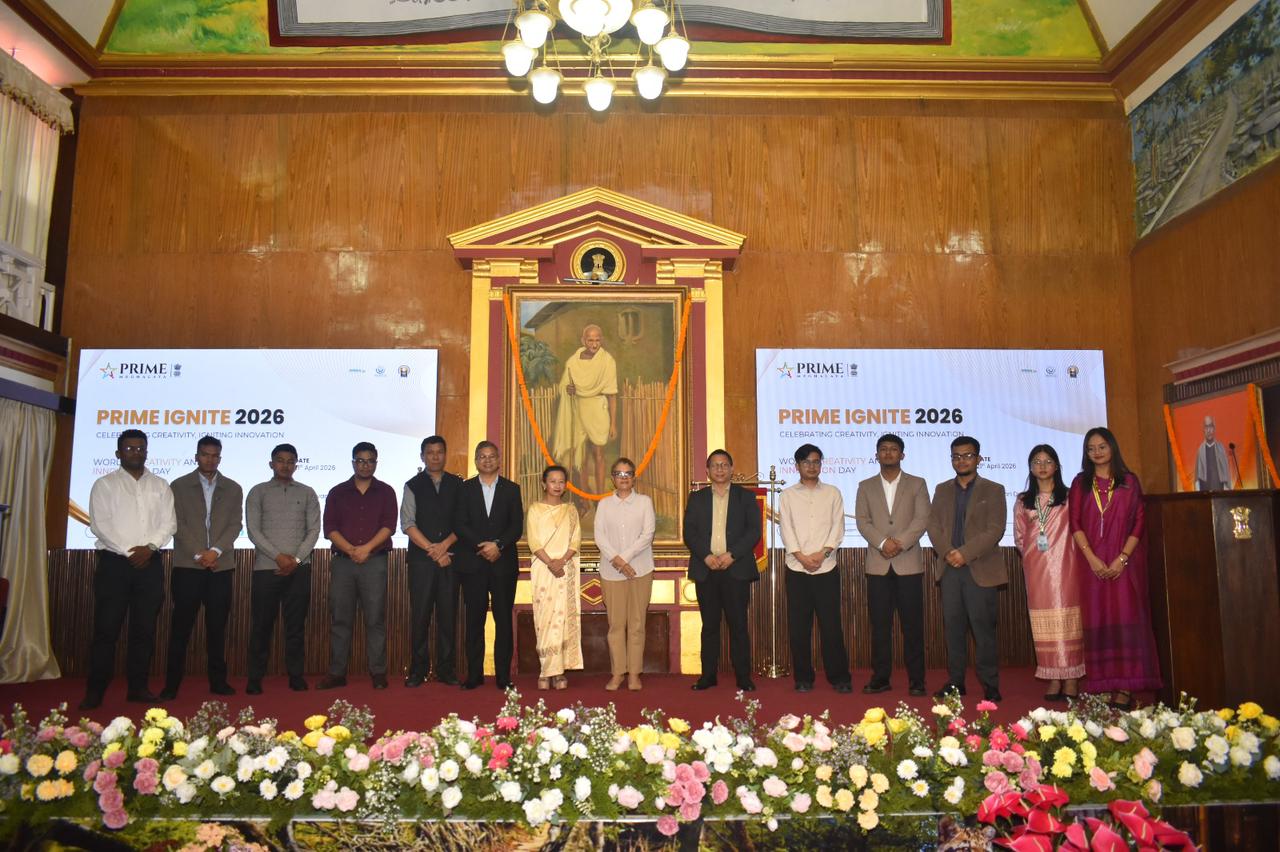
    Meghalaya Accelerates Entrepreneurial Ecosystem, hosts “PRIME IGNITE 2026”

    A key highlight of the event was official launch of the ‘PRIME Annual Booklet’ and recognition of contributors and the editorial team. The publication captures a year of progress, partnerships, and impact across the PRIME ecosystem.

    It also recognised the role of youth leaders in driving the State’s economic growth. Cheques and certificates were presented to the winners of the ‘PRIME Student Ambassador Contest’, reinforcing the importance of nurturing the entrepreneurial spirit at the grassroots level. The top prize was awarded to the team of College of Community Science while students from Jaintia Eastern College secured the 1st and 2nd runner up positions.

    Addressing the assemblage, Dr. Mazel Ampareen Lyngdoh, Adviser to the Government of Meghalaya, Planning, Investment Promotion and Sustainable Development, stated that the State is resolutely focused on transforming the entrepreneurial landscape. She remarked,

    We don’t look at innovation as a chance thing, but we look at the word ‘ignite,’ which means ideas come from citizens, government merely supports, and government will put in all effort to ensure that your innovativeness is supported from the start of the innovation to the market levels.”

    Illustrating the scale of this mission, she highlighted the initiation of 2,847 entrepreneurs in CM ELEVATE, the funding of over 885 entities, and the registration of 1,350 PRIME startups. Furthermore, she noted the active engagement with Business Facilitation Services to directly empower 459 young entrepreneurs, ensuring they receive the essential market linkages, mentorship, and financial backing required to scale their innovations from localized ideas to globally competitive businesses.

    Delivering the keynote address, Shri D D Shira, MCS, Director, Meghalaya Institute of Entrepreneurship, stated that innovation and creativity play an important role in addressing global challenges. He highlighted the transformative impact of PRIME since its inception, under the vision of Shri Conrad K. Sangma, Hon’ble Chief Minister. He noted that the system has successfully helped thousands of local entrepreneurs and enterprises by offering mentorship, financial support and market linkages. He concluded by reaffirming the State’s commitment towards strengthening the entrepreneurial ecosystem.

    The event also saw the official launch the official launch of three key digital initiatives. The PRIME Digital Service Providers Platform (PRIME DSPP) to centralise and enhance service delivery, the Ekanbha Website to empower artisans with disabilities through sustainable e-commerce and the ONG YI delivery App, Upper Shillong’s first online home delivery service. These platforms will facilitate end-to-end support to entrepreneurs and bridge the gap between them and essential services.

    Demonstrating a universal approach towards enterprise promotion and incubation, the event featured dedicated showcases from local innovators. Presentations spanned different sectors, including creative products by student teams SECZOOLOGY and Smart Tourist Spot Crowd Management; healthcare manufacturing solutions by Joy Dey’s Corale Health and Hygiene; and advanced GIS, IT, and IoT service innovations by Banaibor Kharmynthon’s Mechatron Pvt Ltd.

    As Meghalaya continues to champion its local innovators, PRIME IGNITE 2026 stands as a powerful statement to the State’s commitment to economic development and empowerment.


  • Odisha Steps Up Safety Measures for Census 2027 Enumerators Amid Field-Work Risks

    Apr 22 (BNP): The Odisha Government’s Revenue and Disaster Management Department has issued a fresh advisory to district collectors and municipal commissioners, stressing enhanced safety protocols for enumerators engaged in the first phase of Census 2027—the houselisting and housing census exercise.

    The field operation, which began on April 16, 2026, and will continue till May 15, 2026, involves door-to-door surveys across the state to collect data on housing conditions, household amenities, and assets owned by families.

    The advisory comes after reports of multiple incidents during fieldwork in different districts, including a suspected health-related death of an enumerator in Subarnapur, a missing enumerator case in Mayurbhanj, heat-related illness and minor accidents in Balasore, and a road accident in Rourkela.

    In view of these concerns, the department has directed local administrations to strengthen on-ground monitoring, ensure real-time tracking of field staff, and take preventive steps to reduce exposure to heat and other operational risks. District authorities have also been asked to identify vulnerable areas and ensure quick medical response wherever required.

    Officials have further been instructed to sensitise enumerators on safety guidelines, particularly given the physically demanding nature of door-to-door data collection and prevailing weather conditions.

    The advisory underscores the state’s focus on balancing the efficiency of the nationwide census exercise with the safety and well-being of frontline field workers.

  • Centre Approves New Rail Line to Boost Connectivity in Odisha’s Mining Belt

    Apr 22 (BNP): The Central Government has approved a new railway project to strengthen connectivity in Odisha’s mineral-rich Rayagada district. The Cabinet has sanctioned the Gunupur–Therubali new rail line, a 73.62 km route aimed at improving transportation infrastructure in one of the state’s key mining regions.

    The project, estimated at a cost of around ₹1,362 crore, is expected to enhance regional mobility and provide more efficient and reliable rail services. It will connect important industrial and mining zones, improving the movement of both passengers and freight.

    Officials noted that the new rail corridor will play a significant role in supporting economic activity in southern Odisha by improving access to remote areas and strengthening logistics efficiency for the Indian Railways network.

    The development is also expected to contribute to long-term regional growth by enabling smoother transportation of resources, boosting local connectivity, and integrating the region more effectively with broader economic corridors.

  • FIA President H.E. Mohammed Ben Sulayem hails collaborative effort as Formula One agrees 2026 regulatory refinements

    Dubai, UAE, 22nd April 2026:  FIA President H.E. Mohammed Ben Sulayem has paid tribute to all parties across the FIA Formula One World Championship for coming together to agree a package of targeted regulatory changes for the 2026 season.

    A number of refinements to the current regulations were agreed during an online meeting between the FIA, Team Principals, CEOs of Power Unit Manufacturers and FOM on Monday.

    The changes covered qualifying energy management, race safety and power controls, race start-line safety systems, and wet weather visibility and grip improvements.

    FIA President H.E. Mohammed Ben Sulayem hails collaborative effort as  Formula One agrees 2026 regulatory refinements

    The final proposals will now be put before a FIA WMSC e-vote with a view to implementation before the Miami Grand Prix on May 3, except for the race starts proposals which will be tested and analysed during that weekend. 

    H.E. Mohammed Ben Sulayem, FIA President, said: “I would like to praise everyone across the Formula One ecosystem – the FIA staff, teams, drivers and the Power Unit Manufacturers – for the constructive and collaborative work carried out in a very short space of time.

    “While we have faced an unexpected gap in the calendar due to circumstances beyond the sport, all parties have remained fully committed to acting in the best interests of Formula One.

    “More than ever, the drivers have been at the heart of these discussions, and I would like to thank them for their valuable input throughout this process.

    Speaking on the sidelines of the FIA Region I Spring Meeting in Budva, Montenegro today, the FIA President added: “Safety and sporting fairness remain the FIA’s highest priorities. These changes have been introduced to address the issues identified in the opening events and to ensure the continued integrity and quality of the competition.

    “We now look forward to the rest of what promises to be an exciting 2026 season.”

    Monday’s discussions around potential adjustments were based on data gathered from the first three events of the 2026 season. 

    The agreed changes include an increase from 8 to 12 in the number of events where alternative lower energy limits may apply, allowing greater adaptation to circuit characteristics. 

    Other measures are designed to reduce excessive closing speeds while maintaining overtaking opportunities and overall performance characteristics. 

    Meanwhile, the rear light systems have been simplified, with clearer and more consistent visual cues to improve visibility and reaction time for following drivers in poor conditions. 

    The FIA Region I Spring Meeting in Budva reaches its conclusion tomorrow after three days of discussions by representatives from 102 FIA Member Clubs in the Middle East, Europe and Africa to advance safe and sustainable mobility for motor sport fans and road users.


  • PM Modi Urges Civil Servants to Embrace ‘Nagrik Devo Bhava’ in Governance

    New Delhi, Apr 22 (BNP): Prime Minister Narendra Modi has called upon India’s civil servants to place the principle of ‘Nagrik Devo Bhava’—the citizen as god—at the core of all governance decisions, emphasizing that public service must remain firmly focused on people-centric delivery and welfare.

    In letters addressed to over one crore civil servants ahead of Civil Services Day, the Prime Minister highlighted that governance should be guided by compassion, accountability, and a continuous commitment to learning. He stressed that those entrusted with public responsibility must set an example through dedication and ethical service.

    The letters, issued on April 20, were released in 12 languages, including Hindi, English, Marathi, Odia, Gujarati, Bengali, Kannada, Punjabi, Assamese, Malayalam, Telugu, and Tamil. This multilingual outreach was aimed at ensuring wider accessibility across ministries, departments, states, and Union Territories.

    The message underscores the government’s focus on strengthening citizen-centric governance and reinforcing the role of civil servants as key drivers of policy implementation and public trust.

  • Govt to Hold Open House on Steel Import Issues on April 27

    Apr 22 (BNP): The Government is set to conduct an Open House session on April 27 to address concerns related to steel imports, bringing together key stakeholders from the industry, trade bodies, and policymakers.

    The meeting is expected to focus on rising import pressures, pricing trends, and the impact of global steel supply dynamics on domestic producers. Industry participants are likely to present their views on competitiveness, demand conditions, and possible policy measures to ensure stability in the sector.

    The Open House initiative is seen as part of the government’s broader effort to engage directly with industry stakeholders and develop a balanced approach that supports both domestic manufacturing and market requirements.

    Steel remains a critical sector for infrastructure, construction, and manufacturing, and any policy discussion around imports is expected to have wide-ranging implications for pricing, supply chains, and industrial growth.

    The session is likely to play an important role in shaping future decisions aimed at strengthening India’s steel ecosystem while addressing concerns over import dependency and market fluctuations.

  • Gartner, Inc. Forecasts Global IT Spending to Reach USD 6.31 Trillion in 2026, Driven by AI Infrastructure Boom

    Stamford, Conn., April 22: Gartner, Inc. announced that worldwide IT spending is projected to reach $6.31 trillion in 2026, marking a 13.5% increase from 2025, according to its latest market forecast.

    The report highlights a significant acceleration in investments driven by artificial intelligence (AI), particularly in infrastructure and high-performance computing systems.

    “This latest forecast underscores the accelerating momentum in AI infrastructure and advanced memory,” said John-David Lovelock, Distinguished VP Analyst at Gartner. “As AI workloads scale, data center investment is ramping rapidly, creating strong growth opportunities for AI-optimized processors, accelerators, and enabling technologies.”

    AI Infrastructure Drives Market Expansion

    Among all segments, data center systems are expected to witness the highest growth, projected to surge 55.8% in 2026, reaching nearly $788 billion. This growth is fueled by rising demand for hyperscale cloud infrastructure and AI workloads.

    Meanwhile, IT services are forecast to remain the largest spending category, exceeding $1.87 trillion, driven by increasing adoption of cloud services, infrastructure implementation, and managed services.

    Other key projections include:

    • Software spending expected to grow 15.1%, supported by rapid expansion in AI and GenAI applications
    • Devices spending projected to reach $856 billion, with growth moderated by rising memory costs
    • Communications services anticipated to grow steadily at 4.8%

    AI and GenAI Reshaping IT Priorities

    The report notes that AI-led demand is creating a multi-speed IT market, where segments such as data centers and AI-driven software are significantly outperforming traditional IT categories.

    Hyperscale cloud demand is accelerating investments in servers and data centers, while Generative AI (GenAI) is driving strong growth in software, particularly in model development and enterprise AI solutions.

    “Robust demand combined with supply constraints has led to record price increases in high-bandwidth memory,” Lovelock added. “This makes AI infrastructure one of the most attractive segments for investment in the IT ecosystem.”

    Market Outlook and Methodology

    Gartner’s forecast reflects stronger-than-anticipated growth compared to previous projections, driven by sustained momentum in AI infrastructure, software, and Infrastructure-as-a-Service (IaaS).

    The analysis is based on extensive research covering sales data from over a thousand vendors across IT hardware, software, services, and telecommunications sectors.

    As organisations continue to prioritise digital transformation, AI is emerging as a central driver of enterprise strategy, reshaping how businesses allocate technology investments and scale operations globally.

    Gartner’s insights continue to guide C-level executives and technology leaders in navigating evolving market dynamics and capitalising on emerging opportunities in the AI-driven economy.

  • AI Growth Increasingly Constrained by Computing Power, Says Goldman Sachs

    Apr 22 (BNP): Global AI development is now being limited less by model capability and more by the availability of computing infrastructure, according to Goldman Sachs.

    While AI models continue to improve rapidly in performance and efficiency, the key constraint has shifted toward computing resources required to train and deploy them at scale. This includes access to advanced semiconductors, large-scale data centers, and sufficient energy supply.

    The report highlights a widening gap between fast-moving AI innovation and the physical infrastructure needed to support it. Rising demand for computing power is being driven by the expansion of generative AI, large language models, and enterprise-level automation systems.

    Experts note that the next phase of AI growth will depend heavily on investments in chip manufacturing, cloud infrastructure, and energy-efficient computing systems. Without corresponding expansion in these areas, the pace of AI adoption could face structural limitations.

    The findings underscore a broader shift in the AI ecosystem—from software-led progress to infrastructure-led scaling—where computing capacity is becoming a critical strategic asset in the global technology race.