Blog

  • Operation Sindoor Still On, Says Army; Strong Message to Terror Groups !

    New Delhi,Apr22(BNP): Reaffirming its unwavering resolve against terrorism, the Indian Army on Tuesday issued a strong message on the eve of the first anniversary of the Pahalgam terror attack, asserting that any act of terror or violation of national boundaries will be met with a decisive response.

    On April 22 last year, terrorists killed 26 innocent people—mostly tourists—in Pahalgam, in an attack that shook the nation and drew widespread condemnation from governments and leaders across the world.

    In response, the Indian Armed Forces launched Operation Sindoor during the intervening night of May 6 and 7. The operation involved well-coordinated and precise strikes targeting nine terrorist camps in Pakistan and Pakistan-Occupied Kashmir (PoK), resulting in the elimination of over 100 terrorists, including trainers, handlers, and associates linked to groups such as Jaish-e-Mohammed, Lashkar-e-Taiba, and Hizbul Mujahideen. The strikes were carried out with a focus on maximizing damage to terrorist infrastructure while minimizing civilian casualties.

    In a social media post, the Army issued a stern warning to perpetrators of terrorism, stating that “when boundaries of humanity are crossed, the response is decisive. Justice is served. India stands united.” The post also featured a digital poster referencing Operation Sindoor with the message: “Some boundaries should never be crossed. India does not forget.”

    Senior military officials have reiterated over the past year that Operation Sindoor remains ongoing, emphasizing the need for sustained vigilance and a high level of military preparedness round the clock.

    As a tribute to the victims, a memorial has been erected in the meadows of Baisaran Valley in Pahalgam. Built of black marble along the banks of the Lidder River, the memorial bears the names of the 26 victims, including 25 tourists and a local resident, Adil Shah, honoring their memory and sacrifice.


  • Life Insurance Industry Achieves Record INR 4 Trillion New Business Premium in FY26

    Apr 22 (BNP): The Indian life insurance sector has recorded a landmark achievement by collecting approximately ₹4 trillion in new business premiums in FY26, marking the highest-ever annual figure for the industry.

    Life Insurance Industry Achieves Record INR 4 Trillion New Business Premium in FY26

    This milestone reflects strong consumer demand for life insurance products, increased financial awareness, and wider adoption across diverse market segments. Growth has been supported by digital transformation, improved accessibility, and expansion into emerging regions.

    The industry’s performance highlights a growing focus on financial protection and long-term savings among Indian households. Insurers have also benefited from enhanced distribution capabilities and evolving product offerings tailored to customer needs.

    The achievement underscores the sector’s steady expansion and its critical role in strengthening India’s financial security ecosystem.

  • PLI Food Processing Scheme Creates 3.39 Lakh Jobs, Exceeds Target

    New Delhi, Apr 22 (BNP): The Government’s Production-Linked Incentive (PLI) Scheme for the Food Processing Industry has achieved a significant milestone by generating approximately 3.39 lakh direct and indirect jobs as of February 2026, surpassing its target of 2.5 lakh jobs set for 2026–27.

    Since its inception, the scheme has facilitated the disbursement of over ₹2,162 crore in incentives to beneficiaries, supporting growth, capacity expansion, and technological advancement in the sector.

    PLI scheme for food processing creates 3.39 lakh jobs, disburses ₹2,162 crore in Incentiveshttps://t.co/vzfq4OTdLc

    via NaMo App pic.twitter.com/tmDzj8fq78

    — PMO India (@PMOIndia) April 22, 2026

    The initiative has played a key role in strengthening India’s food processing ecosystem by encouraging investment, enhancing value addition, and improving supply chain efficiency. It has also contributed to increased income opportunities for farmers and supported the growth of food-based industries across the country.

    The continued success of the PLI scheme reflects the government’s commitment to boosting manufacturing, generating employment, and promoting sustainable growth in the food processing sector.

  • RuPay Credit Cards Near 40 pc Share in New Issuances on UPI Boost

    News Delhi, Apr 22 (BNP): India’s credit card landscape is witnessing a significant shift, with RuPay credit cards rapidly gaining traction and nearing a 40% share in new issuances.

    The growth is being driven by the integration of RuPay credit cards with the Unified Payments Interface (UPI), enabling users to make seamless payments through QR codes across a wide network of merchants. This feature has expanded the usability of credit cards beyond traditional swipe and online transactions.

    RuPay credit cards ride UPI growth, approach nearly 40% share in new issuances https://t.co/94cue2lzmJ

    via NaMo App pic.twitter.com/EaIC9cDs6C

    — PMO India (@PMOIndia) April 22, 2026

    The increased convenience is encouraging wider adoption, particularly among first-time credit users and consumers in smaller cities, where QR-based payments are deeply embedded in everyday transactions.

    Banks and financial institutions are also supporting this trend by promoting RuPay credit cards as a cost-effective and accessible option, aligning with the country’s push for strengthening domestic payment systems.

    The rising share of RuPay credit cards reflects the evolving digital payments ecosystem in India, where innovation and infrastructure are enabling greater financial inclusion and transforming consumer spending behaviour.

    With UPI continuing to expand its footprint, RuPay credit cards are expected to play a growing role in bridging digital payments and formal credit access.

  • Maharashtra Cabinet Approves Compressed Biogas Policy 2026, Clears UGC Pay Scales for Model Colleges

    Mumbai, Apr 22 (BNP): The Maharashtra Cabinet has approved the Compressed Biogas (CBG) Policy, 2026, aimed at promoting scientific waste management and reducing greenhouse gas emissions across the state.

    The policy envisions the development of biogas projects through public-private partnerships under a hybrid annuity model. To ensure smooth execution, district-level coordination committees will be established to oversee implementation and facilitate project development.

    The initiative is expected to strengthen waste-to-energy infrastructure, improve waste disposal practices, and contribute to cleaner and more sustainable energy generation.

    In addition, the Cabinet has approved the implementation of UGC-recommended pay scales for faculty in model colleges, reinforcing its commitment to enhancing the quality of higher education and supporting academic professionals.

    These decisions underline the state government’s focus on sustainable development and educational advancement, aiming to create long-term environmental and institutional benefits.

  • Tesla Expands India Journey with New Model YL and Stronger Service Network

    Mumbai, Apr 22 (BNP): Tesla has announced the launch of its second offering in India, the Model YL, a three-row, six-seater electric SUV .

    The launch marks a significant step in Tesla’s India expansion, aimed at meeting the growing demand for premium electric vehicles with greater space and versatility.

    In addition to expanding its product portfolio, Tesla will strengthen its service and body shop network across cities including Kolkata, Hyderabad, Chennai, and Ahmedabad. The company is also enhancing its charging infrastructure along major highways to support seamless intercity travel.

    Commenting on the development, Sharad Agarwal, General Manager, Tesla India, stated that the company is committed to improving accessibility and delivering a superior ownership experience through expanded infrastructure and customer support.

    Tesla’s continued investments underscore its long-term commitment to the Indian market and its role in advancing the transition to sustainable mobility.

  • India’s Seafood Exports Cross INR 72,325 Crore in FY26, Driven by Shrimp Demand and New Market Growth

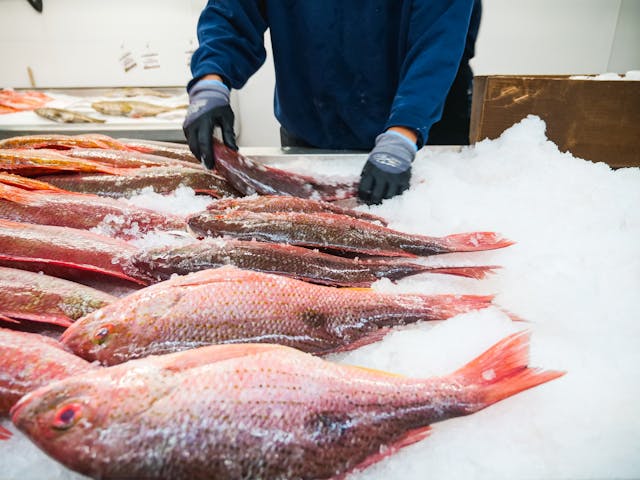
    Apr 22 (BNP): India’s seafood exports have crossed ₹72,325.82 crore in FY26, supported by strong global demand for shrimp and continued diversification into new international markets.

    Industry data indicates that shrimp remains the dominant export segment, contributing the largest share of overall seafood shipments. Improved aquaculture practices, better quality control, and expanding export linkages have further strengthened India’s position in global seafood trade.

    India’s Seafood Exports Cross INR 72,325 Crore in FY26, Driven by Shrimp Demand and New Market Growth

    Exporters have also benefited from gradual diversification beyond traditional markets, with increasing demand emerging from newer destinations across Asia, the Middle East, and select Western regions. This shift has helped cushion the sector against regional trade fluctuations and price volatility.

    Despite global supply chain challenges, India’s seafood industry has maintained steady growth, supported by advancements in cold chain infrastructure, processing capacity, and compliance with international standards.

    Trade experts note that sustained investment in aquaculture and market expansion strategies will be key to maintaining export momentum in the coming years, especially as global demand for seafood continues to rise.

    The sector’s performance underscores its growing importance in India’s agricultural export basket and its contribution to rural livelihoods, particularly in coastal states.

  • Chardham 2026: Helicopter Operator Warns of Rising Booking Scams

    Apr 22  (BNP): As the Chardham Yatra 2026 season gets underway, a Dehradun-based helicopter operator has alerted pilgrims about a rise in fraudulent booking activities targeting devotees planning helicopter travel to Himalayan shrines.

    Chardham 2026: Helicopter Operator Warns of Rising Booking Scams

    The operator has reported an increase in fake websites, impersonated travel agents, and misleading social media promotions offering guaranteed or discounted helicopter bookings for routes including Kedarnath. These scams, officials say, are particularly active during the early phase of the pilgrimage season when demand is high.

    In response, the operator has released a free safety advisory guide aimed at helping pilgrims identify authentic booking channels, avoid advance-payment frauds, and verify authorised service providers before making reservations.

    The advisory emphasises that helicopter services for the Chardham circuit are strictly regulated and bookings should only be made through verified and official platforms. Pilgrims have been urged to exercise caution and avoid unverified online offers.

    Tourism stakeholders note that such fraudulent activities tend to spike during peak pilgrimage periods due to heavy demand and limited service slots. Authorities are expected to step up awareness efforts to protect devotees and ensure safe travel arrangements.

    With increasing pilgrim turnout expected in 2026, officials have also highlighted the need for stronger digital vigilance and public education to curb scam networks targeting religious tourism.

  • 5 Indian Sustainability Startups Leading the Way

    Earth Day is no longer just a symbolic reminder. It has become a moment to look at how businesses are responding to the climate challenge in practical ways. In India, a growing number of startups are building solutions that go beyond intent and focus on implementation, whether that means restoring farmland, rethinking waste, decentralising energy, or connecting agriculture with carbon markets. These companies are building sustainability into the way their businesses operate.

    Here are five startups in India translating climate action into on-ground impact:

    Hosachiguru

    Hosachiguru is reimagining how individuals and companies engage with agriculture and land. Through managed farmland and regenerative farming practices, the company is helping restore soil health, encourage biodiversity, and make farming more viable. This becomes even more relevant in the context of rapid urbanisation. Recent studies in Bengaluru suggest there is roughly one tree for every six people, pointing to the growing pressure on urban green cover. At its core, Hosachiguru brings together sustainable agriculture and lifestyle farming, turning degraded or underutilised land into thriving ecosystems. 

    Phool

    Phool.co is addressing one of India’s most overlooked waste streams: floral waste from temples. The startup upcycles discarded flowers into eco-friendly products such as incense sticks, biodegradable packaging, and Fleather, a plant-based leather alternative. Its model helps reduce river pollution and creates livelihoods for women in waste collection communities.

    Saahas Zero Waste

    Saahas Zero Waste works with institutions, corporates, and communities to build end-to-end waste management systems. From segregation to recycling and composting, the company focuses on diverting waste from landfills and bringing it back into the circular economy.

    Varaha

    Varaha is focused on large-scale carbon removal through regenerative agriculture and ecosystem restoration. The startup works with farmers to adopt climate-positive practices that improve soil health while also generating carbon credits. Its approach connects rural livelihoods with global climate action markets.

    Husk Power Systems

    Husk Power Systems provides decentralised renewable energy solutions through biomass and solar hybrid mini-grids. By powering rural communities that are off-grid or underserved, Husk is helping bridge the energy access gap while reducing dependence on fossil fuels.

    Across these startups, sustainability is embedded into everyday systems, from farms and homes to waste streams and energy access. As India’s climate challenges become more complex, these models reflect a larger shift where sustainability is becoming central to the way businesses are being built and scaled.

  • India Faces Food Inflation Risks Ahead of Kharif Season

    Apr 22 (BNP): India could witness emerging food inflation risks ahead of the Kharif agricultural season, even with significant government support measures in place, including subsidies valued at approximately USD 18.6 billion, according to a senior economist from the Food and Agriculture Organization (FAO).

    The outlook is influenced by disruptions in global supply chains, particularly those linked to geopolitical tensions affecting critical maritime routes such as the Strait of Hormuz. These disruptions have contributed to volatility in the movement of essential commodities and agricultural inputs.

    While domestic policy interventions and subsidy mechanisms continue to provide stability to the agriculture sector, external supply-side pressures remain a key concern for price control and market equilibrium.

    The FAO economist noted that maintaining food security will require a combination of strong domestic production, efficient supply chain management, and close monitoring of global trade dynamics.

    Authorities are expected to remain vigilant to ensure price stability and protect consumer interests during the upcoming agricultural cycle.