Author: admin

  • SDM Udyogam 2026’ Job Fair Scheduled for April 6–7

    Ujire, Apr 2: A two-day mega job fair titled ‘SDM Udyogam – 2026’ will be held on April 6 and 7 under the aegis of the SDM Educational Society. The event is being jointly organised by SDM College (Autonomous), SDM Engineering College, and SDM Polytechnic College, said SDM College Principal Prof. Vishwanath P.

    Addressing a press conference at SDM College here on Wednesday, he stated that the job fair will be inaugurated at 9.30 am on April 6 by Dr. Satishchandra S., Secretary of the SDM Educational Society. More than 100 companies have already registered to participate in the fair, aiming to fill over 4,000 vacancies. Registration for job seekers is free of cost, he added.

    Wide Range of Sectors

    Companies from diverse sectors including IT and software development, pharmaceuticals, banking and finance, IT and IT-enabled services (ITES), sales and marketing, retail, education, tourism and hospitality, accounting and tax consultancy, manufacturing, automobile, telecom and media, construction and infrastructure, and financial consultancy will take part, offering a wide range of opportunities to candidates.

    Eligibility and Participation

    Candidates with qualifications ranging from PUC to postgraduate degrees—including BA, BBA, BCom, BCA, BSc, B.Voc, ITI, Diploma, Engineering, BTech, BEd, MA, MCJ, MSW, MCom, MCA, MSc, MBA, and GNM Nursing—are eligible to participate. Final-year students from various educational institutions across Belthangady taluk are also welcome to attend.

    A Google Form link has been created for registration, through which over 2,000 job aspirants have already enrolled. The entire recruitment process, including registration and selection, will be paperless and conducted online. A dedicated software system has been developed to enable candidates to receive interview results directly on their mobile phones, Prof. Vishwanath said.

    Polytechnic Principal Santosh, Engineering College In-charge Principal Girish Kumar, faculty members Dr. Subrahmanya Tolpadiththaya, Amaresh Hebbar, Dr. Nagaraj Poojary, Shailesh Kumar, Sunil Hegde, and others were present at press conference.


  • Mahindra Last Mile Mobility Tops India’s EV Commercial Vehicle Market for 4th Year

    New Delhi, April 2 :  Mahindra Last Mile Mobility Limited (MLMML), India’s leading electric commercial vehicle manufacturer, continued its strong market leadership in FY’26. MLMML reinforced its position as India’s No.1 electric commercial vehicle manufacturer for the fourth consecutive financial year. This milestone is a testament to the trust of numerous drivers and fleet owners who have chosen their entrepreneurship journey with MLMML. The Company also crossed the milestone of 1 Lakh EV sales in a single financial year. Cumulatively, MLMML has sold more than 3.4 Lakh EVs till date.

    Mahindra Last Mile Mobility Tops India’s EV Commercial Vehicle Market for 4th Year

     MLMML commands a strong presence in the L5 category, with a market share of 39.7%. The Company has achieved several notable milestones in FY’26, including:

    ·Crossed 1 Lakh EV sales in FY’26, becoming the first commercial vehicle manufacturer to achieve this milestone.

    ·Completed 6 Billion+ e-kilometre cumulatively, reducing ~240 kilo MT of carbon emissions and supporting India’s sustainability goals.

    In FY’26, MLMML expanded its product portfolio with the launch of the all-new Mahindra UDO. The UDO has been developed keeping customer insights in mind. It boasts segment-first features like Reverse Throttle, an aerodynamic design and a 200 kilometre real-world driving range. MLMML’s continued focus on innovation, reliability, and sustainability positions it at the forefront of India’s last-mile electric mobility transformation.

  • Realta Fusion and Commonwealth Fusion Systems Form Strategic Partnership to Commercialize Magnetic Mirror Fusion Energy

    MADISON, Wis. and DEVENS, Mass., Apr 02:  Realta Fusion and Commonwealth Fusion Systems (CFS) today announced a long-term strategic partnership for the design and manufacturing of high-temperature superconducting (HTS) magnets that Realta will use to accelerate the commercialization of its compact, scalable, modular – CoSMo fusion™ – energy systems.

    Realta Fusion and Commonwealth Fusion Systems logos

    CFS will develop magnets for Realta’s demonstration prototypes as well as its commercial fusion power plants under the agreement, which has the potential to reach a multi-billion dollar value. The partnership also includes novel talent-sharing of CFS expertise to support the design, manufacturing, deployment, and operation of HTS magnets for magnetic mirror fusion systems.

    “Commercializing magnetic mirror fusion systems requires integrating multiple cutting-edge technologies. By working with the world’s leading HTS magnet manufacturer, we are significantly de-risking one of the most critical of these technologies,” said Realta Fusion CEO Kieran Furlong. “Knowing that we can get the magnets we need, when we need them, from the best developed supply chain, is a huge leap forward for Realta.”

    This partnership formalizes a long relationship between the Realta and CFS teams that dates back to 2020, when the U.S. Department of Energy’s Advanced Research Projects Agency – Energy (ARPA-E) funded the University of Wisconsin-Madison to build the Wisconsin HTS Axisymmetric Mirror (WHAM) experiment. Realta spun out of the WHAM initiative in 2022, and CFS provided WHAM with the HTS magnets used to confine its first plasma at a world-record breaking magnetic field strength of 17 tesla in 2024.

    “As the world leader in HTS magnet technology development and manufacturing, we are pleased to share our expertise with Realta, and give our growing industry another promising technological opportunity to bring fusion energy to the grid,” said Bob Mumgaard, CEO and Co-founder of CFS. “This partnership allows Realta to tap into the world-class supply chain we built to support our advanced manufacturing capabilities, and that will help it to bring commercial fusion energy to the grid faster.” 

  • Govt Exceeds FY23 Spending by ₹54,067 Crore; Debt Repayment Drives Overshoot

    New Delhi: The Union government exceeded its approved expenditure by ₹54,067 crore in the financial year 2022–23, largely due to higher-than-expected debt repayments, according to a report by the Public Accounts Committee.

    The report, recently tabled in the Lok Sabha, highlighted concerns over gaps in budget planning and expenditure management. It noted that despite seeking additional funds through supplementary grants during the year, actual spending still surpassed the sanctioned limits.

    A significant portion of the excess—over 99%—was attributed to debt servicing under the Department of Economic Affairs in the Finance Ministry. A smaller share of the overspending was linked to capital expenditure by the Ministry of Railways.

    As per parliamentary procedures, the excess expenditure will now require formal approval for regularisation. The development has raised questions about the accuracy of budget estimates and the effectiveness of financial controls within key government departments.

    The findings underscore the need for more precise fiscal forecasting and tighter monitoring of public spending to ensure better alignment with approved budgets in the future.

  • QNET India Region Champions Wellness with HealthyLivingEveryDay Campaign on World Health Day

    Hyderabad, Apr 02: Marking World Health DayQNET, one of Asia’s leading e-commerce-enabled direct selling companies, is reinforcing the importance of healthy daily habits through its latest digital-first campaign in India, #HealthyLivingEveryDay, amplified via its health and wellness brand, Nutriplus. Centred on the theme of nutrition, the campaign encourages individuals to embrace simple, consistent choices that contribute to long-term well-being.

    Rooted in the belief that good health begins with everyday consumption choices, the campaign shifts focus from short-term health trends to sustainable daily practices. Through engaging and relatable content, QNET highlights how small, intentional changes in diet and routine can create meaningful impact on overall health.

    The campaign brings together QNET’s Nutriplus range, thoughtfully integrated into narratives around everyday wellness. Nutriplus Qafé is positioned as a healthy green coffee addition to modern routines, while Nutriplus Monofloral Honey (Ramtil & Tulsi variants) serves as a natural, healthy substitute for sweeteners. Complementing this, Nutriplus Celesteal Herbal Teas (Apple Cinnamon & Rose flavours), rich in antioxidants, help create a calm and soothing effect on the body.

    With a clean, calming, and informative visual approach, the campaign showcases practical wellness tips, daily routines, and nutrition-led habits that resonate with today’s health-conscious audience – including busy professionals, style-conscious youth, and senior citizens. From morning rituals to mindful consumption choices, the content aims to simplify wellness.

    Commenting on the initiative, Nischal C, Head of Corporate Communications, QNET India Region, said, “World Health Day reinforces the importance of everyday choices in shaping long-term health. With this campaign, we aim to inspire simple, sustainable habits while strengthening our role as a trusted wellness partner through Nutriplus.”

  • India’s First Coal Gasification-Based Ammonium Nitrate Plant Planned in Odisha

    Bhubaneswar/New Delhi: A major industrial boost is on the horizon for Odisha with the signing of a key agreement for a large-scale ammonium nitrate project in Jharsuguda. The project, to be set up in Lakhanpur, is expected to attract an investment of around ₹25,000 crore.

    The agreement was signed between Coal Gasification and Chemicals Limited and Mahanadi Coalfields Limited for leasing land required to establish the facility. The signing took place in New Delhi in the presence of Union Coal and Mines Minister G. Kishan Reddy.

    The project will come up on nearly 350 acres of land under MCL and is being developed as India’s first coal gasification-based ammonium nitrate plant. It will use indigenous technology developed by Bharat Heavy Electricals Limited, marking a significant step toward self-reliance in the chemicals and energy sector.

    Once operational, the plant is expected to produce around 2,000 tonnes of ammonium nitrate per day. The project is being implemented by Coal Gasification and Chemicals Limited, a joint venture involving BHEL and Coal India Limited. Engineering and development work has been assigned to BHEL and Larsen & Toubro, with groundwork already underway at the site.

    Officials indicated that preparatory work, including land development and infrastructure setup, is progressing, with a target to complete the project within 42 months.

    The initiative is expected to significantly reduce India’s dependence on imported ammonium nitrate while strengthening domestic manufacturing capabilities. It is also likely to generate employment and support industrial growth in the region, positioning Odisha as a key hub for advanced industrial projects.

  • AVer Goes “Modus Match” Official: TR Series Auto Tracking and Professional PTZ Cameras Now Verified for Precision 3D Installation Planning

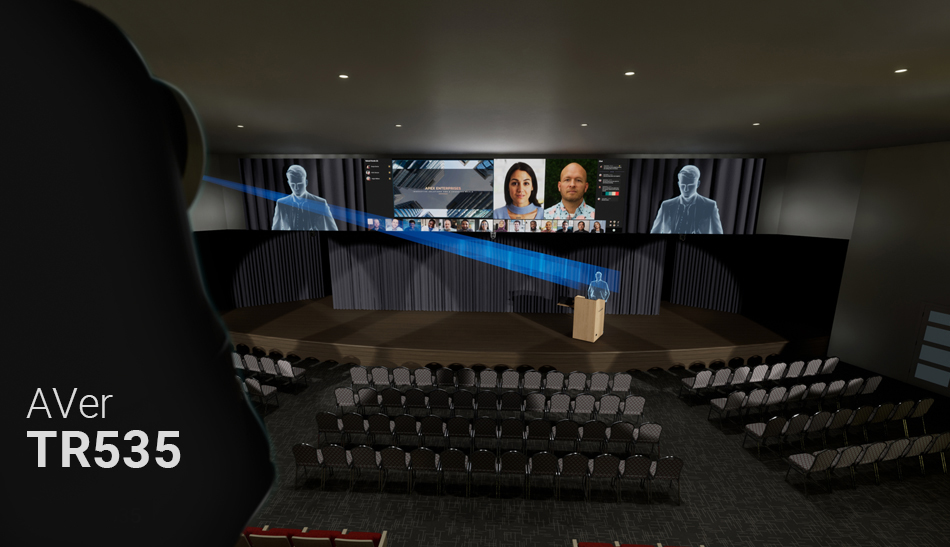
    AVer Goes


    Taipei, Taiwan – Apr 02: AVer Information Inc., an award-winning provider of AI audio-video solutions, today announced its official entry into the Modus Match Partner Program. Following comprehensive technical integration, AVer’s high-performance TR Series AI Auto Tracking cameras and PTZ Series cameras are now fully verified and supported within the ModusVR ecosystem — bringing manufacturer-certified 3D planning to one of the industry’s most trusted camera lines.

    Don’t Just Place a Camera. Simulate the Experience.

    In the world of Pro AV, “guessing” camera placement is a recipe for a costly truck roll. With this official Modus Match integration, integrators can now move beyond 2D blueprints and experience AVer cameras in fully immersive 3D environments before a single bracket is mounted.

    When deploying the latest TR Series models alongside PTZ cameras, ModusVR users can now:

    • Visualize Camera Sightlines: Instantly see the exact Field of View (FoV) to ensure the camera can capture presenters over podiums, monitors, or pillars
    • Test Pan-Tilt-Zoom Coverage: Adjust PTZ positions in real-time to verify the camera’s mechanical range covers the entire stage, classroom, or conference room
    • Validate Mounting Locations: Virtually position cameras at different heights and angles to find optimal placement before installation begins
    • Eliminate Installation Guesswork: Identify blind spots, mounting challenges, and coverage gaps in the virtual environment, not during the truck roll
    • Optimize the Design Experience: Enable system integrators and end users to preview TR and PTZ cameras within their specific spaces, experiencing the layout to ensure optimal performance and accelerated AV project adoption
    • Generate Accurate BoMs: Transition seamlessly from design to purchase with manufacturer-verified specifications

    The “Modus Match” Guarantee: Digital Twins, Not Generic Models

    The “Modus Match” seal means these aren’t just generic 3D shapes: these are digital twins. Every focal length, pan/tilt limit, zoom range, and physical dimension has been manufacturer-verified by AVer’s engineering team. When you drag an AVer TR or PTZ camera into your ModusVR project, the Bill of Materials (BoM) is 100% accurate, and the field-of-view simulation reflects real-world optical performance.

    “Presentation cameras are an important part of many of the spaces our users design in Modus,” says Ken Brueck, Co-Founder of Modus VR. “With AVer’s TR Series now part of the Modus Match program, integrators can accurately visualize placement and confidently define camera coverage in classrooms, divisible training spaces, and auditoriums before installation begins.”

    Total Design Certainty for Professional AV Installations

    “Our TR Series cameras are built for intelligence and movement,” says David Kuo, President at AVer Information Inc. “By joining the Modus Match program, we’re giving our partners the power to validate camera placement and coverage in a virtual twin of their client’s space. It’s about total design certainty and ending the era of onsite adjustments. Whether it’s a university lecture hall, corporate boardroom, or K-12 classroom, integrators can now design with confidence knowing exactly what AVer cameras will capture.”

    Key Benefits for AV Integrators:

    • Pre-Installation Confidence: Test multiple camera placements and validate coverage before purchasing equipment
    • Faster Client Approval: Present immersive 3D walkthroughs showing exactly what cameras will capture, accelerating stakeholder buy-in
    • Reduced Site Visits: Eliminate unnecessary truck rolls by identifying coverage issues in the virtual environment
    • Time Savings: Compress weeks of planning into hours with real-time, accurate 3D simulation

    Availability

    The AVer TR Series and PTZ Series camera libraries are available now for all ModusVR subscribers at no additional cost. Simply update your ModusVR library to start building more accurate room designs with precise camera coverage validation. For demonstrations or technical specifications, visit www.modusvr.com or contact your local AVer representative.

    ABusiness News For Profit

  • Odisha Men’s and Women’s Hockey Teams Clinch Titles at Khelo India Tribal Games

    Bhubaneswar/Raipur: Odisha has achieved a proud sporting milestone as both its men’s and women’s hockey teams emerged champions at the inaugural Khelo India Tribal Games held in Raipur.

    ଛତିଶଗଡ଼ର ରାୟପୁରଠାରେ ଆୟୋଜିତ ପ୍ରଥମ ‘ଖେଲୋ ଇଣ୍ଡିଆ ଜନଜାତି କ୍ରୀଡ଼ା’ ରେ ଓଡ଼ିଶାର ଓଡ଼ିଶାର ଉଭୟ ମହିଳା ଓ ପୁରୁଷ ହକି ଦଳ ଚମ୍ପିୟାନ ହୋଇଥିବାରୁ ସମସ୍ତ କ୍ରୀଡ଼ାବିତ୍‌ଙ୍କୁ ଆନ୍ତରିକ ଶୁଭେଚ୍ଛା ଜଣାଉଛି। ଏହି ସଫଳତା ଆମ ରାଜ୍ୟ ପାଇଁ ଅତ୍ୟନ୍ତ ଗୌରବର ବିଷୟ।

    ଆମର ଜନଜାତି କ୍ରୀଡ଼ା ପ୍ରତିଭାଙ୍କ ଏହି ଅସାଧାରଣ ସଫଳତା ଓଡ଼ିଶା… pic.twitter.com/3ZjlyQ64yV

    — Mohan Charan Majhi (@MohanMOdisha) April 2, 2026

    The double victory highlights the exceptional talent and determination of athletes from the state’s tribal communities, marking a significant moment in Odisha’s sporting journey.

    Sports enthusiasts and officials have extended heartfelt congratulations to the players, praising their dedication and outstanding performance on a national stage. The achievement is being seen as a major boost for grassroots sports development, especially among tribal youth.

    This success not only brings pride to the state but also signals a promising future for Odisha in Indian hockey. With continued support and recognition, these athletes are expected to scale even greater heights and further strengthen the state’s reputation in the sporting arena.

  • RateGain Partners with Razorpay as Platinum Partner for RG Pay to Power High-Conversion Checkout Experiences for Global Travel Brands

    Noida, Mar 02: RateGain Travel Technologies Limited a global leader in AI-powered SaaS solutions for the travel and hospitality industry, today announced a strategic partnership with Razorpay, India’s omnichannel payments platform for businesses, as a Platinum Partner for RG PayRateGain’s unified technology infrastructure for the global travel and hospitality ecosystem.

    Through this partnership, RG Pay will bring Razorpay’s payment gateway and processing capabilities into its ecosystem to improve payment outcomes at the final step of booking. Travel brands will be able to offer locally preferred payment options such as UPI, cards, net banking, and EMI, enabling smoother transactions aligned with how travelers pay in different markets. This will help reduce friction during checkout and improve booking completion rates.

    As travel companies expand across regions with diverse payment behaviors, delivering a consistent and reliable checkout experience becomes critical. This partnership supports travel brands in adapting to these variations while maintaining performance and reliability at scale.

    RG Pay brings together adaptive checkout experiences, affordability options, virtual card (VCC) enablement, and cross-border settlement capabilities to help travel and hospitality companies strengthen conversion outcomes and manage payments more effectively across global markets.

    Commenting on the partnership, Rahul Kothari, COO, Razorpay, said, “Travel and hospitality is at an inflection point, where digital adoption is accelerating rapidly, and traveler expectations are being shaped in real time. As more bookings move online and across borders, payments are no longer just a backend function; they are central to the overall customer experience. At Razorpay, we believe payments are a key driver of conversion, trust, and global scale. Our partnership with RateGain brings together deep ecosystem intelligence and payment innovation to help travel and hospitality businesses deliver seamless, locally relevant checkout experiences wherever their customers are.”

    RG Pay is built to address how payments influence conversion in travel,” said Parijat Tiwari, Executive Vice President & General Manager, Distribution, RateGain. “With Razorpay as a Platinum Partner, we are strengthening our ability to support high-quality payment experiences that improve booking completion and reduce transaction friction for travel and hospitality companies worldwide.”

    Together, RateGain and Razorpay enabling travel and hospitality brands to deliver more consistent and dependable payment experiences as they scale across markets with varying payment preferences.

  • Quanscient and Haiqu Announce Breakthrough Algorithm for Scalable Computational Fluid Simulations on Quantum Computers

    This advancement in quantum algorithms could help accelerate some of the most computationally intensive simulations used in engineering today.


    Helsinki, Finland – April 2, 2026  Researchers from Quanscient, a leader in cloud-based multiphysics simulation technology and quantum algorithms, and Haiqu, a leading developer of quantum middleware, today announced a new algorithm that can significantly advance the use of quantum computing in real-world engineering applications. The teams conducted a 15-step nonlinear fluid benchmark with an obstacle, making this the most physically complex, publicly documented variant of a Quantum Lattice Boltzmann Method (QLBM) hardware demonstration to date.

    Developed and tested on IBMs largest-available quantum computer, the IBM Heron R3, the algorithm reduces the number of qubits required to run complex simulations in computational fluid dynamics (CFD) on quantum computers, demonstrating a viable path toward future industrial-scale solutions.

    CFD is widely used to model how air, water, and other fluids behave around objects, such as airflow over an aircraft wing. It plays a critical role in product development and testing across industries, including aerospace, automotive, and energy. However, these simulations are extremely demanding for even today’s most powerful supercomputers, often taking days or even weeks to complete, if possible at all.

    The new algorithm addresses one of the key challenges in applying quantum computing to CFD: high resource requirements. By significantly reducing the number of qubits and computational operations needed, this approach makes it more practical to run complex simulations on quantum computers. It demonstrates a more efficient path toward using quantum systems for real-world applications, and ultimately could help companies design better products and optimize complex systems more quickly.

    “This is an interesting and timely contribution to quantum CFD,” said Oleksandr Kyriienko, Professor and Chair in Quantum Technologies at the University of Sheffield. “It proposes a more flexible quantum LBM framework while keeping the core algorithm efficient, and it strengthens the case with applications ranging from linear acoustics to IBM-QPU-assisted nonlinear flow simulations. We need more works like this to achieve industrially relevant quantum solutions.”

    “This is one of the most realistic CFD simulations ever executed on a quantum computer. It is an important signal that quantum CFD research is moving toward simulating how fluids interact with real-world shapes and obstacles on quantum hardware,” Mykola Maksymenko, CTO of Haiqu. “This is the direction that any industrially meaningful workflow would have to take to reach commercial viability.” 

    “CFD is one of the most computationally difficult branches of simulation with some of the largest impact on the world’s biggest sectors,” said Valtteri Lahtinen, Chief Scientist of Quanscient. “Quantum computers offer a future path to simulations that are far more complex than what classical computers can handle, which may allow for the design of more efficient vehicles and aircraft, better energy systems and more. Our work with Haiqu is a critical step toward making this a reality.”

    Researchers from Quanscient and Haiqu developed and tested a novel One-Step Simplified LBM (OSSLBM) based on a quantum Lattice Boltzmann Method (QLBM) algorithm, which is a powerful generalization of an important classical CFD technique. Their approach allowed them to run a nonlinear fluid‑flow simulation with an obstacle, such as fluid moving around a solid object, over multiple steps on IBM quantum hardware. Haiqu’s algorithmic and runtime layer was critical to making this possible, reducing circuit depth, improving and developing new key algorithmic subroutines, and applying targeted error‑reduction techniques that allowed the quantum system to execute a multi‑step, complex workflow that would otherwise be out of reach for today’s devices.

    The researchers believe their work represents a new algorithmic framework that reshapes how fluid simulations are performed on quantum computers, turning a complicated sequence of calculations into a simpler, more efficient process designed for quantum hardware. The hybrid quantum-classical OSSLBM can be executed on current hardware, outlining a practical path for moving beyond simple linear demonstrations toward more realistic, engineering‑relevant quantum fluid simulations as quantum systems continue to mature.